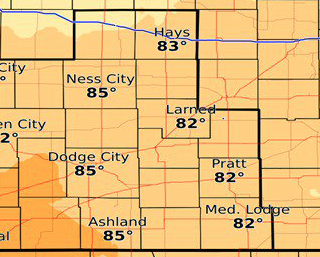
Today Cloudy through mid morning, then gradual clearing, with a high near 82. South wind 9 to 13 mph.
Tonight A 20 percent chance of showers after 1am. Increasing clouds, with a low around 58. East southeast wind around 8 mph becoming northeast after midnight.
Tuesday A 30 percent chance of showers before 1pm. Partly sunny, with a high near 70. Windy, with a north wind 13 to 18 mph increasing to 20 to 25 mph in the morning. Winds could gust as high as 36 mph.
Tuesday Night Partly cloudy, with a low around 46. North northeast wind 5 to 11 mph.
WednesdayMostly sunny, with a high near 69. North wind around 7 mph becoming south in the afternoon.
Wednesday NightMostly clear, with a low around 48.
ThursdaySunny, with a high near 74.
Thursday NightMostly clear, with a low around 49.
FridayA 20 percent chance of showers. Mostly sunny, with a high near 66.
RILEY COUNTY —The 21-year old Manhattan man who died Saturday after suffering a gunshot wound, Felix K. Flores, was a Geary County Corrections officer. He was off-duty at the time of the shooting Saturday night in Manhattan.
Geary County Sheriff Tony Wolf confirmed Flores had been a corrections officer for the sheriff’s department for about one year. “A great kid to be around, a really good worker, had a great attitude about things. ” Wolf said he really liked Flores. “He was just one of those guys that you are around them for a little while and the more you’re around him the more you liked him. That was definitely the case with him. This just really took the wind out of my sails when I heard about this.”
Flores was initially from the state of Texas.
RILEY COUNTY —Law enforcement authorities are investigating a shooting and have made an arrest.
Just after 7:40p.m. Saturday, the Riley County Police Department received a call of an unresponsive individual in the 1400 block of Vista Lane, according to a media release.
When officers arrived on scene, they found Felix K Flores, 21, Manhattan, with life-threatening injuries, suffering from a gunshot wound. He was transported to Via Christi in Manhattan then life-flighted to Stormont Vail in Topeka where he died.
Early Sunday, police reported the arrest Gregoria Elizabeth Baez, 21, in connection with the shooting. according to the daily arrest report. She is being held on a $20,000 bond for involuntary manslaughter; Recklessly, according to the RCPD report.
TOPEKA – Influenza season is rapidly approaching in the United States and Kansas. While activity remains low, influenza cases have already been reported to the Kansas Department of Health and Environment (KDHE).
Although the flu vaccine can vary in how well it works, it is the best way to prevent flu illness and serious flu complications, including those that can result in hospitalization and death. The Centers for Disease Control and Prevention (CDC) recommends receiving the vaccine before influenza activity begins in your community, ideally by the end of October.
“The influenza vaccine is recommended for nearly everyone six months of age or older. Being vaccinated against influenza is especially important for anyone at high risk of complications, including babies and young children, pregnant women, older persons and people with certain chronic conditions,” said Dr. Farah Ahmed, State Epidemiologist, KDHE. “Getting vaccinated also protects people around you, so getting vaccinated is important for persons caring for young children and those caring for persons with medical conditions that put them at a higher risk of severe complications.”
Depending on the severity of the influenza season, 5-20 percent of the population may get influenza each year. Symptoms of influenza include fever, dry cough, extreme tiredness and muscle aches. Complications can include pneumonia, ear and sinus infections and dehydration; influenza may also worsen other chronic conditions.
In addition to receiving the flu vaccine, the following actions are recommended to help stop the spread of germs and prevent respiratory illnesses like the flu:
Wash your hands.
Avoid close contact with people who are sick.
Stay home when you are sick.
Cover your mouth or nose when coughing or sneezing.
2017-2018 Influenza Season Statistics
During the peak of the 2017-18 influenza season in Kansas, approximately 12 percent of all health care visits in sentinel clinics were due to influenza-like illness. Influenza or pneumonia contributed to or was the direct cause of almost 1,600 deaths among Kansas residents during the 2017-18 influenza season. More information on influenza surveillance in Kansas for the 2017-18 season can be found at https://www.kdheks.gov/flu/surveillance.htm.
For information about receiving the influenza vaccine, please contact your health care provider or your local health department.
JEFFERSON COUNTY —A jury deliberated just 40 minutes before finding a Kansas man and his wife guilty on Thursday of possession with intent to distribute nearly 15 pounds of methamphetamine, according to a media release from Colorado’s First Judicial District.
Jose Chavez-Tellez-photo Jefferson Co. District AttorneyRhonda Chavez-Tellez -photo Jefferson Co. District Attorney
On January 2, 2018, Jose Chavez-Tellez, 49, and his wife were traveling eastbound though Jefferson County on I-70 when they stopped at a truck stop at Ward Road and 44th Avenue. After leaving the truck stop, Chavez-Tellez struck a curb, popping both tires on the passenger side of the vehicle.
A Jefferson County Sheriff’s deputy noticed Chavez-Tellez backing eastbound in the westbound lanes of 52nd avenue with two flat tires, and the deputy stopped Chavez-Tellez to offer aid.
The deputy found a large amount of methamphetamine in a shopping bag in the back cargo area of the car. There were 14.65 pounds, or 6,644 grams, of methamphetamine divided into 15, quart-sized Ziploc baggies.
Jose Chavez-Tellez’s wife, Rhonda Chavez-Tellez, 52, was a passenger in the car. They live in Kansas and had driven to Los Angeles to pick up the methamphetamine. They were returning to Kansas with the drugs when they were stopped in Jefferson County.
The street value of the methamphetamine was approximately $350,000.
Jose Chavez-Tellez was found guilty of Possession with intent to Distribute a Controlled Substance.
He will be sentenced on October 29 and faces a mandatory minimum of 8 to 32 years in prison.
Rhonda Chavez-Tellez pled guilty to Conspiracy to Distribute Methamphetamine and on September 19 was sentenced to six years in prison.
KANSAS CITY, Mo. (AP) — Kansas City University medical students are pushing for a partner treatment plan for sexually transmitted diseases amid rising local and national STD rates.
Students Mianna Armstrong and Megan McMurray are bringing attention to the legal limits of expedited partner therapy in seven states, including Kansas and Oklahoma. The medical students and their professor John Paulson published research this year about the treatment plan to write prescriptions for both a patient diagnosed with an STD and their sexual partners.
The treatment outlines that STD patient’s sexual partners can get prescriptions even if the doctors or nurses haven’t personally examined them.
Missouri law explicitly allows licensed doctors to use expedited partner therapy to treat chlamydia and gonorrhea, though health officials still tread carefully. The practice is limited in Kansas law, which doesn’t address whether doctors can prescribe drugs to patients they haven’t seen.
The Centers for Disease Control and Prevention recommends that doctors and nurses practice expedited partner therapy for chlamydia and gonorrhea.
The American Osteopathic Association this summer drafted a resolution in line with the CDC recommendation. The association endorsed the legalization of expedited partner therapy in all states for doctors, in part due to Armstrong and McMurray’s research.
“We can advocate for (it), as an organization,” said Bill Mayo, the association’s president. “But we cannot draft legislation and pass laws.”
Mayo said the students’ research would inform state osteopathic associations’ positions on legislation.
Armstrong recommended that Congress standardize the patchwork of state laws by enacting federal legislation that allows expedited partner therapy.
“It can give people who don’t have access to health care access to the medications they need to treat the infection,” she said.
TOPEKA, Kan. (AP) — Republican gubernatorial candidate Kris Kobach is proposing capping property appraisal increases, which he said would give taxpayers a more predictable property tax bill, but some experts say the change likely would require changes to the state constitution.
Kobach during the debate at the Kansas State Fair-photo courtesy Kobach for Governor
Kobach’s plan would cap property appraisal increases at no more than 2 percent a year, regardless of how much the property increases in actual fair market value, He said the change would especially help the elderly and those on fixed incomes.
“Those individuals need to be able to plan out their retirement and have some knowledge that their home value is not going to be jacked up by 50 percent over a four- or five-year period, which is not unusual in some parts of the state,” Kobach said.
Property taxes determine how much tax each property owes, with the higher values meaning higher tax bills for property owners. The taxes are based on annual property appraisals.
Linda Terrill, a Johnson County attorney who has practiced property tax law for about 40 years, said Kobach’s plan might violate a constitutional amendment that requires the state to have “a uniform and equal basis of valuation and rate of taxation of all property subject to taxation.”
She said capping increases would mean properties that appreciate in value over time would no longer be valued or taxed at their actual fair market value, while others would be, and that could cause problems for local governments and some taxpayers.
“The more you move away from uniform and equal, the more difficult it is to fix it when you finally realize it wasn’t a good idea,” she said.
Kobach said he hasn’t decided whether his plan should cap appraisal increases for all time, or whether the state should allow the sale of a property to trigger a new appraisal. He said the Legislature should make that decision.
It is also unclear whether the Kansas Supreme Court would allow any kind of variation from the fair market standard for any extended period of time. In 2016, the court struck down a law that imposed a similar kind of cap for people who successfully protested their appraisal values and had the values lowered.
Kobach said he doesn’t believe that case would apply to his proposal
RUSSELL – The next exhibition at the Deines Cultural Center in Russell is The Art of Peggy Wambold: A Solo Painting Exhibition. Wambold’s passion for art has been a life-long pursuit.
She graduated from Fort Hays State University in 1971 with a Bachelor’s in Art and began teaching in McCook, Nebraska in 1972. She has taught art at all grade levels, Kindergarten through college in three states. Wambold retired from teaching in 2010 and currently lives in Newton, Kansas.
Wambold’s current focus is on the pursuit of beauty in Nature. Inspired by French Impressionism, she studied painting in France in 2016. She is a member of the Carriage Factory Art Gallery in Newton and frequently shows in galleries around Kansas.
The Art of Peggy Wambold will be on exhibition September 21 through October 27, 2018 with an opening reception on Friday September 21 from 5-7 p.m. Admission is free and open to the public.
The Deines Cultural Center is located at 820 N. Main in Russell, Kansas. Call 785-483-3742 for information.
TOPEKA — Law enforcement authorities are investigating a burglary and have a suspect in custody.
Jackson -photo Shawnee County
Just after 11 p.m. Saturday, police responded to a report of an aggravated burglary in the 2400 block of SE Colorado in Topeka, according to Lt. John Trimble.
The victim reported that a white male subject wearing a white shirt and light colored shorts had entered the residence through a window. Once the victim confronted the suspect, he fled on foot in an unknown direction.
Just after 11:30p.m. the police responded to the 2700 block of SE California to a report of a stolen vehicle that had just occurred. A Kansas Highway Patrol Trooper was in the area and saw the stolen vehicle at 29th and California. The vehicle was stopped and William Jackson, Sr., was taken into custody.
Further investigation showed Jackson was also the suspect in the aggravated burglary. He was ultimately arrested and booked into the Shawnee County Department of Corrections on the following charges: Aggravated Burglary, Auto Theft, and Theft.
PRATT – Experience Kansas state parks in a whole new way: a group bike ride! As part of the Adventure Cycling Association’s biggest event in North America – “Bike Your Park Day” – outdoor lovers from all over will come together September 29 to enjoy the fun and beauty of our state parks and public lands by bicycle.
If you’ve got air in your tires, staff at select Kansas state parks have events for you to participate in! And to really add to the celebration, you can win prizes, too. Everyone who registers (www.adventurecycling.org) will receive a special “Bike Your Park Day” sticker by mail and will be entered for a chance to win a Co-Motion Cycles Divide bike or two Amtrak tickets to Glacier National Park.
Participating Kansas State Parks Cedar Bluff State Park-WaKeeney
Course location: North side of the park
Time: 8 a.m.
Distance: 3 miles
This course is all pavement, with some hills. Participants can expect an easy to moderate ride. Following the ride, participants can enjoy refreshments inside the park office.
Contact: (785) 726-3212
Glen Elder State Park
Course location: Waconda Trail
Time: 9 a.m.
Distance: 3 miles
Participants can expect an easy ride, but if a little extra “adventure” is desired, both “advanced” and “kids” obstacle courses will be set up.
Contact: (785) 545-3345
Meade State Park
Course location: Eagle Trail
Time: 2 p.m.
A mix of pavement and hard earth make up the terrain for this course. Participants can expect an easy to moderate ride, which will begin at the west side of the park office parking lot.
Contact: (620) 873-2572
Pomona State Park
Course location: Flint Hills Nature Trail
Time: 10 a.m.
Distance: 24 miles
Participants will meet at Pomona State Park, take a quick tour of the area, and then bike to Pomona, KS and back. A support team will be with the group, and the ride will include two rest stops.
Prairie Dog State Park-Norton
Time: 8 a.m.
Distance: 5 miles
Though one mile of this course is gravel, the majority of the ride will take black on asphalt. Participants can expect a moderate ride.
Contact: (785) 877-2953
There is no cost to participate; however, participants must bring their own bike and have an annual vehicle permit or purchase a daily vehicle permit, $5.00, to enter a Kansas state park.
WASHINGTON (AP) — The Federal Aviation Administration would be required to set new minimum requirements for seats on airplanes under legislation to be considered in the House this week, possibly giving passengers a break from ever-shrinking legroom and cramped quarters.
photo courtesy United Airlines
The regulation of seat width and legroom is part of a five-year extension of federal aviation programs announced early Saturday by Republican and Democratic leaders of the House and Senate committees that oversee the nation’s air travel.
Congress faces a Sept. 30 deadline to keep FAA programs running. The Senate will also need to take up the bill this week or both chambers will need to pass a short-term extension.
The bill would prohibit the involuntary bumping of passengers who have already boarded a plane. But in a nod to the power of the commercial airliners, lawmakers declined to include language that would have prohibited airlines from imposing fees deemed “not reasonable and proportional.”
Democratic Sen. Bill Nelson of Florida said lawmakers from both chambers agreed it was time to take action on “ever-shrinking seats.”
“Relief could soon be on the way for weary airline passengers facing smaller and smaller seats,” Nelson said.
In July, the FAA rejected the idea of setting minimum standards for airlines seats and legroom as a safety measure. But Congress appears determined to require the FAA to do so.
The room between rows — measured from a point on one seat to the same point on the seat in the next row — has been shrinking for many years as airlines squeeze more seats onto their planes. It was once commonly 34 or 35 inches, and is now less than 30 inches on some planes.
Lawmakers also included several provisions to address concerns about increased airport noise levels caused by new flight paths. The bill would require the FAA to study the potential health impacts of flight noise and the feasibility of amending existing departure procedures.
The bill would also mandate that flight attendants get a minimum of 10 hours of rest between their work shifts and require airlines to communicate better with customers during mass flight cancellations and groundings.
Sen. John Thune, R-S.D., chairman of the Senate Commerce, Science and Transportation Committee, said he expects the House and Senate to move quickly to send the bill to the president’s desk.
The United Way of Ellis County will be hosting a Dine-Out Day with Whiskey Creek on Monday, September 24 from 5 p.m. to 9 p.m. at 3203 Vine St. in Hays.
Come join in the social media fun! A portion of the proceeds will benefit the United Way and their 15 partner agencies.
Watch for upcoming Dine-Out Days with participating restaurants online at www.liveunited.us.
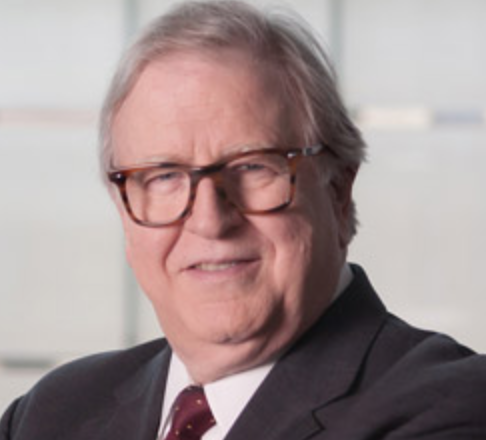
Edward Cross is president of the Kansas Independent Oil & Gas Association.
By EDWARD CROSS Kansas Independent Oil & Gas Association President
More often than not, activists’ comments and media accounts continue to get it wrong when it comes to the issue of injection wells and induced seismicity. Whether this frustrating pattern is due to a deliberate mischaracterization of the facts or if an honest lack of understanding of the issue is to blame, the unfortunate byproduct in both instances is a misinformed public. The information provided by activists and media often confuses the public with assertions that are out of context and need more information for a complete and informed discussion. So, it is worth examining some of these claims to see just how much they diverge from reality.
Regarding seismic activity in Kansas, here are some facts. Prior to 2015, there were very few seismic monitors in Kansas. Therefore, very few seismic events were recorded. When the State Task Force on Induced Seismicity was formed in 2014, one of the first things they did was install additional seismic monitors in south-central Kansas. When you install more monitors, you will almost assuredly measure more seismic activity. With these new monitors installed, more seismic events were recorded (most which are not felt earthquakes). But, that is not to say these events were not occurring prior to 2015, only that they were now being recorded.
The Kansas oil and gas industry has taken the issue of induced seismicity very seriously. The Kansas Geological Survey, Kansas Corporation Commission and Kansas Department of Health & Environment are devoting significant resources to analyzing seismicity causes. Industry has supported these efforts to provide assurance that an improved understanding of seismic issues is available to all. These efforts are producing results. The latest data (September 13, 2018) shows a 41% decrease in seismic activity in Kansas since January 2015.
Let’s look at the injection well application notice issue. Here are the facts. Between October 2008 and February 2018, about 4,300 injection well applications were reviewed by the Kansas Corporation Commission (KCC). From these reviews, 1,007 applications regarding 2,111 wells were issued injection permits after operators published notice of the permit application with a 15-day notice instead of the required 30 days. The average time between KCC’s receipt of an injection well permit application and issuance of the permit during that 2008-2018 period was about 90 days. Only 29 applications, or 2.88% of the 1,007 applications, were issued a permit in less than 30 days. It should be noted that 21 of the 29 applications were issued at 28 or 29 days, probably allowing for mailing time.
The injection wells permitted in the 2008-2018 period met the regulatory requirements, protected usable water and correlative rights and helped prevent waste. The discrepancy between the notices published by the operators and the legal protest timeframe is a harmless error that did not violate any KCC regulation. The law is clear that such discrepancies were not fatal defects to the KCC’s jurisdiction or authority to approve the injection applications. Finally, there is no evidence that any person’s due process rights were affected by the publications.
The KCC’s September 6th Order saying no action shall be taken by the KCC against the subject permits in the docket was very pragmatic and appropriate. Arguments by those who called for the KCC to revoke the permits offered no real evidence and used weak logic.
Mischaracterizing oil and gas activity has been and continues to be a common practice and strategy of activist groups across the nation. This pattern of accusation without scientific evidence is intended to create public anxiety about oil and gas production and to discredit effective regulatory programs. Activists across the country commonly assert that the oil and gas industry is under-regulated or even unregulated. These are false assertions. Examination of the issues demonstrates its mendacity.
Nevertheless, they continue tactics to denigrate and demean current state regulatory programs. This is a tired, worn-out, unsuccessful strategy and we now see this happening in Kansas.
We continue to see activist groups attempt to advance political agendas by using fear. Fear has become a principal means of directing public opinion away from the facts, and in the case of injection wells and earthquakes, it is occurring with a well-known and historically acceptable process associated with recovering oil and gas from the earth. Fear of the unknown is primal and instinctive and is part of all of us. I cannot, and will not, criticize the fear of those who are afraid of what they do not know.
Rather, I applaud those who raise relevant questions and want answers concerning activities they do not understand. My criticism is reserved for those who exploit and pander to fear by repeatedly citing unproven anecdotes to advance political agendas.
Several recent studies and reports have found very few injection wells have been linked to induced seismicity, and the risk from these wells is low.
The most recent comprehensive study based on data from the U.S. Geological Survey (USGS) and peer-reviewed studies found that less than one percent of injection wells across the nation and in Kansas have been linked to induced seismicity.
The USGS states in its Myths and Misconceptions regarding induced seismicity that “Most injection wells are not associated with felt earthquakes.”
A report conducted by StatesFirst, an initiative of the Ground Water Protection Council and Interstate Oil & Gas Compact Commission, took a comprehensive look at potential induced seismicity associated with injection wells. The report finds that seismicity linked to oil and gas development is rare; that the risk associated with these rare occurrences are minimal; and that understanding of induced seismicity is growing and mitigation techniques are proving effective. The report also notes that a “vast majority of earthquakes are tectonic, or attributable to natural causes.”
The EPA says Class II injection wells are “a viable technique for subsurface storage and disposal of fluids when properly done.” There is extensive information available on the EPA’s website, which describes how Class II wells “protect drinking water resources” and “prevent surface contamination of soil and water.” A separate section of EPA’s website describes all injection wells, not just the Class II variety, as a “safe” option for disposal.
The bottom line is these studies and more confirm what have long been true – that seismicity induced by injection wells is rare and certainly not a widespread issue. Despite misleading claims exaggerating risks and incorrectly linking seismicity to injection wells, the risk of induced seismicity from injection wells is small, rare, and manageable.
The problem with activist and media reports on injection wells and induced seismicity is they work backward from a conclusion. They try to support their ideas by cherry-picking and misrepresenting data and information to suggest a problem, conveniently ignoring crucial details that would provide a more complete representation of the issues discussed. Their condemnations do not hew to strict scientific precision, but instead are hyperbole, heated rhetoric, and non-verifiable statements of subjective opinion. The reality is this. State regulators, in conjunction with the EPA, carefully oversee injection wells with tight regulations and high operating standards.
Activists and media have the responsibility of reporting and clarifying the facts regarding injection wells and induced seismicity. The facts are readily available. Facts are stubborn things; and whatever may be our wishes, our inclinations, or the dictates of our passions, they cannot alter the state of facts and evidence.
Neither fear-mongering nor unproven anecdotes can conceal or deny that Class II injection wells are safe and well-regulated.
Let’s not be afraid of injection wells.
Edward Cross is president of the Kansas Independent Oil & Gas Association.
Gene PolicinskiTo err is human — but, it would seem, corrections are not seen by many as divine.
Inevitably, when journalists in all kinds of mediums start fresh each day, sometimes assembling the equivalent content of a paperback book, mistakes will be made.
Once upon a time — ironically, in a time when a free press was held in higher public esteem though mistakes were made — corrections were made less frequently and, at least in newspapers, often placed in lesser-read spaces.
As first thought, efforts to correct errors more quickly and prominently should bring both praise and satisfaction from news consumers — and for some, it does. But for others, the mere existence of corrections (and let’s count the lesser cousin, “clarifications” too) are signs of media malfeasance, proof that so-called “fake news” exists or is grounds for online versions of public floggings.
There’s no question that news operations should be called out when mistakes are made. Social media has made that calling much easier and much louder.
Case in point: The New York Times’ correction in print editions after the Emmy Awards, noting “A picture caption … using information from a photo agency, misidentified a woman presenting the award for outstanding lead actress in a comedy series. The woman was Angela Bassett, not Omarosa Manigault Newman.” An earlier tweet from the Times said that while the caption error was first made by Getty, the photo provider for the image, it was a mistake that should have been spotted and corrected by the Times.
The Twittersphere lit up as critics slammed the newspaper and its website for sins ranging from embarrassing carelessness to the much more serious reminder of the error’s racial overtones. One online post asked, “Do all dark-skinned black women look the same to your editors??”
There is value to be found in considering the full spectrum of those criticisms, particularly if we can avoid simple social media “piling on” that can distract from that value.
But from photo captions and factual errors to plagiarism and invented sources, what other profession fixes missteps so quickly, so publicly and so thoroughly? Answer: Few come to mind, if any.
While examples are available from any number of news outlets that make corrections quickly and publicly, for this discussion, let’s stick with corrections the Times published Sept. 18:
• “The Here to Help column on Friday about three books on the sexism women face in Hollywood misstated the year that ‘Bossypants’ was published. It was 2011, not 2018.
• “An article on Monday … gave an incorrect title for Jens Stoltenberg of NATO. He is the organization’s secretary general, not its general secretary.
• “An article on Sunday … misspelled the surname of the European Union’s Brexit negotiator. He is Michel Barnier, not Bernier.
• “An article on Monday … misidentified the winner of a game between the Los Angeles Rams and the Arizona Cardinals. The Rams won by a score of 34-0.”
None of these corrections — save perhaps the last one, for Cardinals fans — involved an earth-shattering mistake. None rose to the level of whatever fluid description applies today to the highly politicized “fake news.” Clearly, mistakes of facts, not of motives; more oversight than heinous skullduggery.
Yet, even as such corrections take place daily, in pages and online, from news organizations large and small, those who would weaken, restrict or even do away with a free press find traction in such open admissions. Better to continue in a combined effort to make news reports as accurate as possible — and perhaps to extend such self-reviews to social media posts.
Another case in point, yet again from the Times, from its Sept. 19 report about “Debunking Five Viral Rumors about Christine Blasey Ford, Kavanaugh’s Accuser” — in each of the five cited rumors, the newspaper reported, misinformation was conveyed online by a variety of individuals or groups, noting the misidentification and errors remained, days later, uncorrected or without factual support.
An unfortunate truth about the unprecedented Age of Information in which we now live is the huge amount of misinformation or outright fabrication that now clogs the systems bringing us news and information. So let’s end with a very proactive step by the Times in which, on Sept. 17, it invited the public to join its efforts to avoid misinformation.
The item, “If You See Disinformation Ahead of the Midterms, We Want to Hear From You,” says that “as November’s midterm elections approach, The New York Times is looking for examples of online ads, posts and texts that contain political disinformation or false claims and are being deliberately spread on internet platforms to try to influence local, statewide, and federal elections.”
“Times journalists are hoping to use your tips to advance our reporting. If you see a suspicious post or text, please take a screenshot and upload it” using a form provided by the newspaper.
Making corrections in a very public way will not restore all public confidence in a free press — that may be better achieved by not making mistakes in the first place — but fixing errors and taking proactive steps to sort out deliberate misinformation ought to be encouraged, not weaponized.
Gene Policinski is president and chief operating officer of the Freedom Forum Institute. He can be reached at [email protected], or follow him on Twitter at @genefac.