We have a brand new updated website! Click here to check it out!

Kan. man sentenced for scooter crash that killed 8-year-old

SHAWNEE COUNTY— A Kansas man who admitted his role in a moped accident that killed an 8-year-old boy is going to prison.

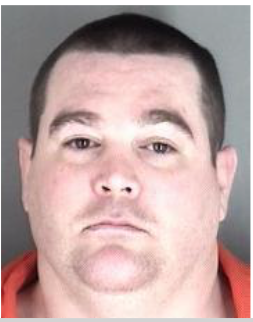
Tibbs-photo Shawnee County

Marvin Tibbs III, 36, Topeka, was sentenced this week to 48 months in prison, according to Shawnee County District Attorney Michael Kagay.

Authorities say Tibbs was giving Trenton Feliciano a ride on his motorized scooter in October 2014 when it crashed, fatally injuring the boy.

Tibbs was also originally charged with aggravated child endangerment, reckless driving, failure to stop at a stop sign and failure to wear protective gear.

Tibbs will also be subject to 36 months post release supervision and is required to register as a violent offender for 15 years, according to the county attorney.

USGS reports another cluster of Kan. earthquakes

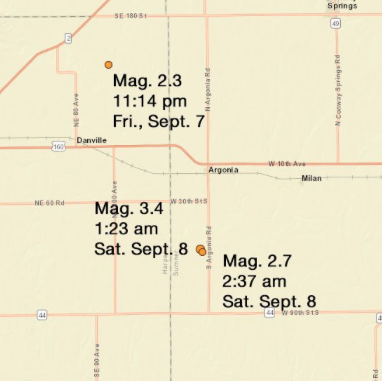
HARPER COUNTY —A series of earthquakes shook portions of Kansas late Friday and early Saturday.

Image courtesy Kansas Geological Survey

At 11:14p.m. Friday, the Kansas Geological Survey reported a 2.3 magnitude quake approximately 4 miles east of Runnymeade in Harper County.

At 1:23 a.m. Saturday, a magnitude 3.4 quake was centered 12 miles northeast of Anthony, according to the U.S. Geological Survey. A 2.7 quake hit the same area at 2:37 a.m.
Less than one hour later, a 3.7 magnitude quake was recorded approximately 90 miles south near Fairview Oklahoma, according to the USGS.

There are no reports of damage or injury, according to the Harper County Sheriff’s Department.

Washington Monthly ranks FHSU 10th in nation for educating adult learners

FHSU UNIVERSITY RELATIONS

Among the 100 U.S. colleges and universities judged by The Washington Monthly as the Best Four-Year Colleges for Adult Learners out of 1,124 across the nation, Fort Hays State University was ranked 10th.

The ranking – which in addition to master’s universities such as Fort Hays State also covered national research institutions, liberal arts colleges and baccalaureate colleges – was announced in the magazine’s September-October issue, available online at https://washingtonmonthly.com. The complete listings are available athttps://washingtonmonthly.com/2018college-guide.

Gilad Edelman, editor of The Washington Monthly, said in the introduction to the magazine’s adult learner rankings that “a full 30 percent of undergraduates” in America are “adults, defined by the government as 25 years old or older.” This category of students, he said, “are too often ignored by university leaders and policymakers, whose own college experience was typically the traditional full-time, straight-out-of-high-school kind.”

“That’s why,” he said, “in 2016, The Washington Monthly became the first publication to rank colleges according to how well they cater to adult learners.”

Fort Hays State was also ranked No. 25 of 385 universities in the 12-state Midwestern region (one of five) for a category called Best Bang for the Buck, and No. 116 of the 695 institutions in the Master’s Universities category.

“The Washington Monthly’s focus on accessibility and perseverance mirrors our own,” said FHSU President Tisa Mason.

“Their criteria also focus on the benefits to the student and society, and those are also large parts of our mission,” she said. “It is extremely gratifying to see someone give priority to measuring the things that really matter, and for our success in them to be recognized.”

The Best Bang Midwest region, in addition to Kansas, has Illinois, Indiana, Iowa, Michigan, Minnesota, Missouri, Nebraska, North Dakota, Ohio, South Dakota and Wisconsin. The five regions covered 1,488 institutions, which included the 1,124 in the adult learners category.

The institutions were broken down into classifications: 695 Master’s Universities; 316 National Universities (“big, research-focused institutions”); 228 Liberal Arts Colleges; and 249 Baccalaureate Institutions.

Washington Monthly’s top 100 in the adult learners category were based on nine criteria aiming at a measure of social mobility, including:
•        Ease of transfer (FHSU had five of five points possible)
•        Flexibility of programs (seven of nine)
•        Services for adult students (six of six)
•        Percentage of students over the age of 25 (31 percent at FHSU)
•        Graduation rate of part-time students (80 percent)
•        In-district tuition and fees
•        Percentage of credentials awarded as bachelor’s degrees (97 percent at FHSU)

Other criteria for adult learners were mean earnings of independent students 10 years after college entry, and loan repayment rate of independent students five years after leaving college. Data for those categories was drawn from a federal database that cross-checked information from the U.S. Department of Education and the IRS.

Criteria for the Best Bang for the Buck were 21 categories of data, which were also aimed at achieving a determination on social mobility.

“Unlike most traditional college rankings, the Washington Monthly’s have always made colleges’ contribution to social mobility a priority,” said Robert Kelchen in the introduction to the Best Bang rankings. Kelchen, an assistant professor of higher education in the Department of Education Leadership, Management, and Policy at Seton Hall University, South Orange, N.J., is data manager for Washington Monthly.

In addition to U.S. Department of Education data previously available, such as loan repayment rates, earnings and percentage of first-generation students, Kelchen said, data is also now available on graduation rates for all students, not just first-time, full-time students, and on Pell Grant recipients.

Other data included in the ranking are college loan repayment rates, predicted and actual performance, net price of attendance for families below $75,000 income, median earnings, predicted median earnings, and a ranking based on the difference.

Fort Hays State was one of only two Kansas schools to make the top 150 of Master’s Universities list. Fort Hays State, at 116, was tops in Kansas. Southwestern College, Winfield, was No. 149.

This category ranked universities and colleges by three sets of criteria:
•        Nine social mobility measures, including percentage of students graduating within eight years, a first-generation performance rank and a net price rank;
•        Two research criteria – total amount of money spent on research and the number of “bachelor’s recipients who go on to receive Ph.D.s, relative to college size”;
•        and five service criteria, two based on the number of alumni who serve in the Peace Corps, another on ROTC service, Work Study funds spent on service grants, AmeriCorps matching grants and voting engagement points.

The magazine also had separate rankings for Best Colleges for Vocational Certificates in each of 12 areas and Best Two-Year Colleges for Adult Learners.

The Washington Monthly is supported by the Lumina Foundation, the Kresge Foundation and the Bill and Melinda Gates Foundation.


WINKEL: Soil pH — what is it and why does it matter? 

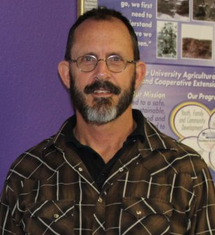
Rip Winkel

Here is a brief explanation on the importance of soil pH from the KSU horticulture specialist Chandler Day that I came across recently. This may help in understanding why so many of our trees, bushes and even grass turn yellow from iron chlorosis.

Have you ever applied fertilizer, but didn’t see any results? Soil pH might be the problem. Before we talk about why your plants can’t uptake essential nutrients, let’s talk about what pH is.  Soil pH stands for potential Hydrogen and is measured on a 1-14 scale where 1 is very acidic, 7 is neutral, and 14 is very alkaline.

“Building Soils for Better Crops” states that most agronomic crops prefer a soil pH ranging from 6 to 7.5, depending on the crop. Soil pH influences your plants’ ability to uptake nutrients. This is important because you might see symptoms of a nutrient deficiency, green veins and yellowing around the leaf, on your plant, but that doesn’t mean the nutrients are not in the soil.

For example, in Kansas the micronutrient iron is plentiful in soils, yet we see iron chlorosis in plants, especially oak trees. This is because iron is in a soluble form and is easily taken up by oak trees when the soil pH ranges from 5.0 to 6.5, but when the soil pH is above a 7 iron is no longer soluble and the tree can’t use this micronutrient.

Understanding soil pH when applying fertilizers, especially nitrogen, is important too because fertilizer has the potential raise or lower your soils pH.  One of the best, and most accurate, ways to determine your soils pH is to send a soil sample to the K-State soil testing lab. Follow this link for more information about soil testing. For more information about soil acidity and pH management, check out this video provided by the USDA and follow this link to Chapter 20 in “Building Soils for Better Crops” called Other Fertility Issues: Nutrients, CEC, Acidity, and Alkalinity.

Rip Winkel is the Horticulture agent in the Cottonwood District (Barton and Ellis Counties) for K-State Research and Extension. You can contact him by e-mail at [email protected] or calling either 785-682-9430, or 620-793-1910.

FIRST AMENDMENT: Can social media be ‘fixed’?

Lata Nott
This week, executives from Twitter, Facebook and Google testified before Congress. Again. This was the third congressional hearing this year where the internet giants were grilled on their content policies, their privacy and security practices and their role in democracy.

It’s been a rough couple of years for social media platforms. They’ve come under fire for so many different things it can be hard to remember all of them. To recap: For enabling Russian propagandists to influence our presidential election and terrorist organizations to find new recruits. For allowing fake news stories to go viral. For exacerbating political polarization by trapping their users in “filter bubbles.” For giving hate mongers and conspiracy theorists a platform to reach a wider audience. For filtering or down-ranking conservative viewpoints. For collecting private user data and selling it to the highest bidder. For siphoning profits away from struggling local news organizations.

The social media platforms are taking various actions to mitigate these problems. But every potential solution seems to bring forth another unanticipated consequence. YouTube is currently trying to debunk conspiracy videos on its site by displaying links to more accurate information right alongside of them — but there’s concern that the presence of a link to an authoritative source will make a video seem more legitimate, even if the text and link directly contradict the video.

Twitter CEO Jack Dorsey has expressed a desire to break up his users’ filter bubbles by injecting alternative viewpoints in their feeds. But new research suggests that exposing people to opposing political views may actually cause them to double down on their own — ironically, actually increasing political polarization. Facebook instituted a system for users to flag questionable news stories for review by their fact-checkers — but soon ran into the problem that users would falsely report stories as “fake news” if they disagreed with the premise of the story, or just wanted to target the specific publisher.

Some doubt the sincerity behind these efforts. As former Reddit CEO Ellen Pao says, “[S]ocial media companies and the leaders who run them are rewarded for focusing on reach and engagement, not for positive impact or for protecting subsets of users from harm.” In other words, what’s good for a company’s bottom line and what’s good for society as a whole are often at odds with each other.

It’s no wonder that the government is looking to step into the fray. If the numerous congressional hearings don’t make that clear, a proposed plan to regulate social media platforms that leaked from Senator Mark Warner’s office last month ought to. Just last week, President Trump announced that he wanted to take action against Google and Twitter for allegedly not displaying conservative media in his search results.

It’s unlikely that the president would be able to do much about that, just as it’s unlikely that Congress would be able to force Facebook to say, ban all fake news stories from its platform. Twitter, Facebook and Google are all private companies, and the First Amendment prohibits government officials from limiting or compelling speech by private actors.

So what can the government do? It can encourage (and, if necessary, regulate) these companies to be more transparent. It’s shocking how little we know about the algorithms, content moderation practices and internal policies that control what information we receive and how we communicate with one another. It’s reckless that we only become aware of these things when something catastrophic happens.

Lata Nott is executive director of the First Amendment Center of the Freedom Forum Institute. Contact her via email at [email protected], or follow her on Twitter at @LataNott.

Area innovations to be on display at Encountering Innovation event Oct. 8

FHSU University Relations

TOPEKA – Innovators from across the Midwest will pitch their ideas to technology scouts from the U.S. Department of Defense at Encountering Innovation: Delivering Innovation to the DoD and Beyond – a weeklong event starting Monday, Oct. 8, at the Kansas SBDC at Johnson County Community College in Overland Park.

The public is invited to learn about technology commercialization from the DoD and view the 70-plus innovations on display during the Conference Day on Tuesday, Oct. 9, at JCCC.

Participants will be able to network with innovators, Federal agency technical scouts, incubator managers, investors, intellectual property attorneys, Small Business Innovation Research applicants, and others involved in the innovation ecosystem. Registration to the conference is open HERE.

This is the second year for the Encountering Innovation event. At the 2017 event, U.S. DoD tech scouts expressed interest in 44 of the 57 technologies; 27 of 57 innovators connected with a DoD contact; and 17 of 57 innovators were referred to another federal agency. Five additional innovators received a referral or recommendation that could help move their product or innovation forward.

“Regional technology events are critical to the Department of Defense and to the very backbone of American innovation,” said Tim N. Fowler, a field science and technology advisor for the U.S. Strategic Command.

“Frankly,” said Fowler, “in the past we have done a poor job of finding breakthrough technologies that have direct effect on our warfighters from the small business owners, university students and staff, or the small business that has that something we need. The innovation, collaboration, and passion we have found at these events is amazing.”

About Kansas SBDC
The Kansas SBDC is a statewide advising, consulting, and training service for small business (typically less than 500 employees) funded by federal, state, and local partners. Funding allows the Kansas SBDC to provide advising and training (i.e. financial analysis, marketing, and management) to businesses across the state at low or no cost. Kansas SBDC is an accredited member of America’s SBDC, the most comprehensive small business assistance network in the United States.

To learn more, visit kansassbdc.net.

Now That’s Rural: Anjan Ghosh Hajra, Immersion 3D Plus

Ron Wilson is director of the Huck Boyd National Institute for Rural Development at Kansas State University.

By RON WILSON
Huck Boyd National Institute for Rural Development

I looked into a human brain. Don’t worry, I wasn’t doing brain surgery. I was witnessing a demonstration of an incredible new, high-tech three-dimensional imaging system. This process is being pioneered by a team of entrepreneurs in the heart of Kansas.

Anjan Ghosh Hajra is the CEO of Immersion 3D Plus, the innovative company which developed this technology. Anjan’s father, Ashish Ghosh Hajra, came to the U.S. from India in 1971. After working back east, Ashish was transferred to a job in Salina where he enjoyed a long career with what is now Philips Lighting. He also worked on advanced degrees in chemical engineering at K-State.

“I fell in love with Kansas,” Ashish said. He also connected with Dr. Swapan Chakrabarti, a University of Kansas electrical engineering and computer science professor, who shared innovative ideas about 3D imaging.

Ashish started a company named Immersion 3D Plus, or I3DP, in Salina to commercialize these ideas. I3DP acquired the exclusive rights to the initial patents on Dr. Chakrabarti’s work from the University of Kansas and has since developed and filed additional provisional patents. Ashish also invested in Abilene where he is interested in expanding. Abilene is a rural community of 6,844 people. Now, that’s rural.

Ashish’s son Anjan studied at a medical school, in India, and at K-State before joining the business. “He has made a big difference,” Ashish said. Besides Anjan and Ashish, the company’s leadership team includes Dr. Chakrabarti as chief technology officer, K-State-Polytechnic engineering technology professor Dr. Raju Dandu as consultant, and research associate Alec Cork.

“We’ve developed a technology that allows you to see all sides of an image – and even what’s inside,” Anjan said. Using digital equipment, their process enables amazing volumetric visualization of what is inside people and things.

“We call it true 3D,” Anjan said. “This is more than a hologram or just wearing glasses in a movie theater,” he said. In fact, no 3D glasses are required.

The demonstration depicted the inside of a human brain and more. Thanks to this technology, we could see from all angles as well as through the brain itself.

Imagine the applications of this technology. Perhaps a doctor or specialist could more accurately see the inside of a human organ. Perhaps an engineer could see the inside of a building or a piece of equipment, or scan the earth for water or oil and gas. Perhaps a surgeon could conduct more precise operations using this technology.

There would also be applications for gaming, education and training.

Another innovation of this company is High Dynamic Range imaging. For example, a standard range has a measure of gradiant called 8 bits per color, while High Dynamic Range can depict up to 16 bits per color.

This produces more vivid, richer colorations in movies, photos, or other images, for example. It’s like Technicolor with depth.

In October 2017, I3DP presented the Immersion 3D Plus concept at a special event called Encountering Innovation, hosted by the Kansas Small Business Development Center. It was an opportunity for innovative small businesses to present their concepts to representatives of potential federal customers, primarily the Department of Defense. “The DoD is the largest customer on earth,” said Alan Badgley of the Kansas SBDCs. “They need innovation and technology, and we can be a match-maker to connect them with innovative Midwestern small businesses,” he said.

Another round of Encountering Innovation will be held in October 2018 in Johnson County. For information on that session, see www.encounteringinnovation.com.

“It was a real confidence boost to see their interest in our technology,” Anjan said. Imagine high-tech in the middle of the country. “What Silicon Valley has done in California, why can’t we do that here with Kansas kids?” Ashish said. For more information, see www.i3dplus.com.

I looked into a human brain. Immersive, 3D imaging enabled us to see inside and through the brain and other organs. We commend Anjan and Ashish Ghosh Hajra and all those involved with Immersion 3D Plus for making a difference with their innovative technology. I could see this business has a lot of brain power – and a lot of heart.

Kansas’ Unmatched Tracking Of Ex-Convicts Attracts One Legal Challenge After Another

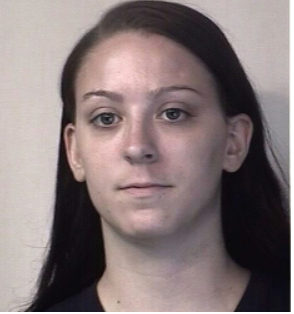
Tabitha Carter -photo Kansas Dept. of Corrections

In 2015, a woman donned a clown mask and slipped into a Dollar General Store in Wichita just before closing time.

In the final moments of the robbery that eventually got her three years in prison, she did something that could complicate her life for many more years to come.

She flashed a stun gun, stuffed the $3,400 in her coveralls and fled.

A screenshot of the Kansas offender registry’s mapping tool shows the addresses of people in Wichita who are currently required to check in at least four times a year with law enforcement.

Now the state is fighting to list Tabitha Carter online as a violent offender. That case hangs on her use of a “deadly weapon” — the Taser that her lawyer argues doesn’t fit the bill.

Because of that stun gun, the state says she must check in with her local sheriff’s office at least four times a year for another 15 years.

That court battle is just one in a barrage of legal challenges aimed in recent years at the Kansas public offender registry, an expansive system that publicly tracks convicted criminals long after they’ve served their time.

Do you have a personal story to share about the Kansas public offender registry? Email the reporter.

A Kansas News Service analysis found no other state imposes such demanding rules on such a wide range of people.

Critics say the Kansas system ballooned over decades without justification. They say it piled expenses on taxpayers and worsened prison crowding — all without evidence it improved public safety.

“If there was data that showed this was actually cutting down on new crime, that would be something else,” said Scott Schultz, executive director of a state agency that wants Kansas to pare the registry back — the Kansas Sentencing Commission. “But we don’t have any of that.”

The sentencing commission wants Kansas to delete nearly a quarter of its registry and save an estimated $1 million a year.

Court challenges

The Kansas criminal registry has withstood a slew of legal challenges over the years. The Kansas News Service found at least 17 that made their way to the Kansas Supreme Court in the past five years alone, many unsuccessful.

Some registrants claim that it’s unconstitutional. That it violates the right to a jury. That the state shouldn’t make changes to the registry rules and apply them to people convicted years earlier.

This is the Kansas News Service’s second in-depth look at the state’s criminal registry. Missed the first? You’ll find it here.

The registry once looked vulnerable to such arguments.

In 2016, the narrowly divided Kansas Supreme Court concluded the registries were punitive in four separate rulings. The state couldn’t, for example, tighten registry rules on people retroactively.

But in a bizarre twist, the court overruled that position in a fifth decision issued on the same day.

Its new stance? That the registry system isn’t subject to the same constitutional limits as, say, a prison sentence, because it’s not punishment. It aims to boost public safety.

The jaw-dropping timing came because the justices took up the fifth case later than the others — after Caleb Stegall joined the bench and tipped its narrow split.

One justice said the new majority held back the initial rulings for nine months until the reversal was ready to go.

Justice Lee Johnson called that “a denial of justice.” Not because the registrants ultimately lost their cases — they won. But because they had to wait so long, Johnson contended that delay aimed to prevent their victories from benefiting any more registrants who hadn’t yet brought suit.

“They had to wait for many months,” he wrote in a passionate opinion, “to reap the benefits of their respective wins.”

Deadly or not?

This screen shot shows some of the search results for people in Topeka required to check in four times a year with the Shawnee County Sheriff.

Carter’s challenge to the registry is different than past ones that failed. So far, she’s winning.

At its heart is a legal question about whether Kansas is bending state law to pull more people into its registry.

Using a weapon to commit certain felonies is a registerable offense — but only if the weapon is “deadly.”

Public defenders complain prosecutors consider non-deadly things “deadly.” BB guns, stun guns — even a stiletto shoe.

A fight over money at a club near Wichita ended with a stripper who goes by “Sugar” giving her coworker “Gypsy” a head wound and concussion with a high heel.

In another example, a shoplifter fleeing a security guard in Topeka pointed — but didn’t spray — a can of mace.

“Some things are dangerous and some things are deadly,” said Jennifer Roth, a public defender handling Carter’s appeal. “There is a distinction there, and I like to think that people would recognize that.”

The Kansas Court of Appeals agreed. In April, it struck down the state’s plan to force Carter onto the registry.

“Deadly,” the panel of judges argued, means “likely to cause death.” Tasers are literally designed to avoid that.

Their decision could have wider implications, but the attorney general’s office is appealing to the Kansas Supreme Court — citing conflicting rulings on what’s worth putting someone on the registry.

Read the state’s argument to the Kansas Supreme Court

A national outlier

Kansas’ criminal registry began the same way it did in so many other states — as a list of sex offenders that the government wants to keep tabs on.

Over the past quarter-century, Kansas lawmakers expanded it time and again.

Today, Kansas adds more than 1,000 names a year. Less than a third are sex offenders. The rest? People convicted of drug or violent crimes.

The Kansas News Service reviewed statutes from the 19 states that, according to the National Conference of State Legislatures, have expanded beyond the traditional role of offender registries.

Their registries are often narrower. Kansas logs people for a wider array of violent crimes than Illinois, for example, which only includes first-degree murder and violence against youth. Louisiana focuses on violence against law enforcement.

Other states often reveal less information publicly. Minnesota doesn’t post the names of many registrants online — as long as they follow a regimen of check-ins at a sheriff’s office. Alabama’s list of drug offenders isn’t online at all — the state uses it to block those people from buying meth ingredients.

Other states often let people with less serious crimes off the registry sooner than Kansas’ 15-year minimum. They often tier their monitoring, too, so that only sex offenses or other crimes seen as particularly serious demand frequent check-ins with law enforcement.

In Kansas, a registrant checks in with law enforcement at least four times a year, regardless of the severity of the crime.

It can easily be more visits than that. Dye your hair, try online dating, leave town for a week, get a Facebook account — each requires checking in another time.

Read more about rules that Kansas registrants have to follow

Looking for evidence

The Carter case and others highlight debates about whether it’s fair to encroach on the lives of convicted criminals beyond prison, parole and probation.

“When a person is being reintegrated into communities,” says Ed Klumpp, a retired Topeka chief of police who lobbies the Kansas Legislature on behalf of law enforcement agencies, “it’s very important that that person feels that they are being monitored to be in compliance with the law.”

Klumpp and Roth, the public defender, spar over the issue when lobbying lawmakers.

“These are people who had to satisfy a probationary period and successfully complete (it),” Roth said. “Or these are people who had to go to prison and then be on supervision. These are not people who walked away with no consequence.”

J.J. Prescott, a law professor at the University of Michigan, suggests settling the matter with data analysis.

Read Prescott’s research on sex offender registries and recidivism

“At first blush, it seems obviously likely to do at least something,” Prescott said. “Worst case scenario — it just does nothing.”

Yet, he says, the numbers suggest something else. The registries may even be backfiring — at least based on studies that focus on sex offenders.

Listing sex offenders on a public registry can make it hard for them to find jobs, homes and other basic opportunities. The more miserable people are, experts say, the less they fear doing something that would toss them into prison.

“There’s lots of psychological reasons why we want to know,” Prescott says. “It can’t hurt me to know, can it? And that’s actually where people make a mistake.”

Celia Llopis-Jepsen is a reporter for the Kansas News Service. You can reach her on Twitter @Celia_LJ.

Mostly cloudy, mild Saturday, chance of showers

Today
A 30 percent chance of showers, mainly before noon. Areas of fog before 10am. Otherwise, cloudy, with a high near 69. North northeast wind around 9 mph.

Tonight
Patchy fog after 4am. Otherwise, mostly cloudy, with a low around 59. East wind 5 to 9 mph.

Sunday
Patchy fog before 7am. Otherwise, partly sunny, with a high near 75. South southeast wind 6 to 9 mph.

Sunday Night
Mostly clear, with a low around 58. Southeast wind around 8 mph.

Monday
Sunny, with a high near 82. South wind 7 to 14 mph.

Monday Night
Mostly clear, with a low around 62.

Tuesday
Sunny, with a high near 84.

Tuesday Night
Mostly clear, with a low around 64.

Wednesday
Sunny, with a high near 84.

Wednesday Night
Clear, with a low around 65.

Thursday
Sunny, with a high near 86.

Former Kansas mayor appointed SBA advocate for Great Plains states

Adrienne Vallejo Foster (Photo courtesy Friends University)

SBA

WASHINGTON, D.C. – Adrienne Vallejo Foster has been appointed to serve as the Region 7 Advocate for the Office of Advocacy at the U.S. Small Business Administration. In this role, Foster will advocate on behalf of small businesses in Kansas, Missouri, Iowa and Nebraska. She will work with small business owners, state and local government agencies, state legislators, and trade associations, to be their voice in Washington, D.C., regarding burdensome regulations and other small business roadblocks.

“Small businesses in the Great Plains have a strong advocate in Ms. Foster,” said Acting Chief Counsel Major L. Clark, III. “Her strong background in local government and private sector advancing small business interests has well prepared her for her new role as Region 7 Advocate.”

Foster stated, “It is an honor and a privilege to serve the small businesses in Region 7 and under the leadership of President Trump. The economy is stronger than it has been in decades, and opportunities abound for small businesses to flourish. I look forward to assisting the small businesses in our region, helping them to grow and prosper by working to reduce the number of regulations that are imposing excessive burdens and strengthening their voice in Washington, D.C.”

Foster has worked with small businesses for the last 15 years as a city council member and Mayor of Roeland Park, Kansas, and as executive director of the Governor’s Hispanic & Latino American Affairs Commission under Governors Brownback and Colyer.  She facilitated the transfer of best business practices to over 500 small business owners and entrepreneurs, primarily assisting small women-owned and minority businesses, thereby dramatically increasing the contribution of small businesses to the Kansas economy. She won Latina of the Year award in 2017 from the National Latino Peace Officer Association.

The Office of Advocacy has regional advocates in each of the 10 federal regions, plus a national rural affairs advocate, and a manufacturing and technology advocate. This team identifies new issues and concerns of small business owners. They work closely with local government officials, state officials and legislators, and the Chief Counsel for Advocacy to develop programs and policies that support small business growth.

Football Score Sheet Week 2 – August 31st

11-Man
Western Athletic Conference
Hays (0-1) 7 Great Bend (1-0) 15
Wichita North (1-0) 13 Liberal (1-0) 6
Valley Center (0-1) 41 Garden City (0-1) 20

Ark Valley Chisholm Trail I
Dodge City (0-1) 27 Salina South (0-1) 17

Mid-Continent League (11-Man)
Ellis (0-1) 7 TMP (0-1) 14
Plainville (1-0) 3 Phillipsburg (1-0) 31
Smith Center (1-0) 40 Norton (0-1) 0

Hi-Plains League
Oakley (1-0) 33 Syracuse (1-0) _12
Ellinwood (0-1) 46 Sublette (0-1) 0

North Central Activities Association
LaCrosse (1-0) 12 Russell (1-0) 50
Republic Co. (0-1) 22 Ellsworth (0-1) 55
Salina Sacred Heart (0-1) 17 Minneapolis (1-0) 20

Central Kansas League
Nickerson (0-1) 14 Hoisington (0-1) 28
Hesston (1-0) 28 Larned (0-1) 21

Great West Activities Conference
Colby (1-0) 35 Hugoton (0-1) 6
Scott City (1-0) 34 Holcomb (1-0) 0
Goodland (0-1) 14 Ulysses (0-1) 62

8-Man
Central Prairie League
Victoria (1-0) 8 Central Plains (1-0) 32
Kinsley (0-1) 36 St. John (0-1) 24
Ness City (0-1) 50 Macksville (1-0) 28
Bucklin (0-1) 0 Otis-Bison (0-1) 50

Mid-Continent League
Hill City (0-1) 48 Trego Community (1-0) 18
Sylvan Lucas (1-0) 26 Stockton (0-1) 54

Northern Plains League
Lincoln (1-0) 42 Wilson (1-0) 14

Twin Valley League
Washington Co. (1-0) 6 Thunder Ridge (1-0) 54

Northwest Kansas League
Osborne (1-0) 20 Hoxie (1-0) 52
Dighton (0-1) 46 Decatur Comm. (1-0) 0
St. Francis (1-0) 38 Greeley Co. (0-1) 0
Quinter (0-1) 44 Rawlins Co. (0-1) 50

Hi-Plains League
Wallace Co. (0-1) 6 Wichita Co. (1-0) 54

Central Plains League
Hodgeman Co. (1-0) 36 Medicine Lodge (1-0) 24

Western Kansas Liberty League
Triplains-Brewster (1-0) 22 Northern Valley (1-0) 62
Wheatland-Grinnell (1-0) 14 Logan-Palco (0-1) 50

6-Man
North
Pawnee Heights (1-0) 59 Weskan (1-0) 37
Rolla (0-1) 43 Cheylin (1-0) 74
Moscow (0-1) 25 Golden Plains (1-0) 53

South
Natoma (0-1) 60 Fowler (0-1) 51

Other games of note
Topeka High (1-0) 20 Manhattan (1-0) 21
Bishop Carroll (0-1) 36 Wichita Heights (1-0) 20
St. Mary’s Colgan (1-0) 14 Frontenac (1-0) 0
Silver Lake (1-0) 17 Rossville (1-0) 14

 Andale 28, Wellington 0
     Andover 20, Maize South 3
     Augusta 7, Circle 6
     Axtell 64, BV Randolph 12
     Baxter Springs 20, Riverton 18
     Bishop Miege 49, BV West 7
     Bonner Springs 40, Eudora 0
     Buhler 19, El Dorado 6
     Caldwell 62, Flinthills 6
     Caney Valley 41, Eureka 0
     Central Plains 32, Victoria 8
     Centre 46, Herington 0
     Chapman 22, Wamego 8
     Cherryvale 42, Bluestem 28
     Cimarron 44, Meade 6
     Clifton-Clyde 56, Valley Falls 6
     Colby 35, Hugoton 6
     Conway Springs 28, Cheney 7
     Council Grove 52, Central Heights 20
     DeSoto 47, KC Wyandotte 8
     Derby 63, Salina Central 0
     Dighton 46, Oberlin-Decatur 0
     Elkhart 45, Southwestern Hts. 14
     Ellinwood 46, Sublette 0
     Ellsworth 55, Republic County 22
     Emporia 56, Topeka West 7
     Frankfort 52, Onaga 6
     Galena 36, Girard 2
     Garden Plain 31, Douglass 0
     Gardner-Edgerton 48, Olathe West 27
     Goddard 34, Arkansas City 0
     Goddard-Eisenhower 21, Andover Central 14
     Goessel 56, Rural Vista 6
     Great Bend 15, Hays 7
     Harrisonville, Mo. 29, BV Northwest 24
     Hays-TMP-Marian 14, Ellis 7
     Hesston 28, Larned 21
     Hill City 48, Trego 18
     Hillsboro 42, Lyons 0
     Hodgeman County 36, Medicine Lodge 24
     Hoisington 28, Nickerson 14
     Hoxie 52, Osborne 20
     Hutchinson Trinity 38, Inman 0
     Jackson Heights 38, Atchison County 0
     Jayhawk Linn 18, Uniontown 6
     Jefferson West 54, Royal Valley 14
     KC Schlagle 18, Atchison 12
     KC Sumner 36, Highland Park 34
     Kapaun Mount Carmel 6, Wichita West 0
     Kingman 56, Belle Plaine 18
     Labette County 36, Independence 0
     Lansing 14, Basehor-Linwood 13
     Lawrence Free State 41, Olathe East 0
     Little River 48, Peabody-Burns 0
     Louisburg 27, Tonganoxie 7
     Madison/Hamilton 20, Waverly 0
     Maize 49, Hutchinson 0
     Manhattan 21, Topeka 20
     Maur Hill – Mount Academy 48, Oskaloosa 0
     McPherson 47, Winfield 7
     Mill Valley 14, St. James Academy 13
     Mission Valley 40, Wabaunsee 14
     Mulvane 42, Clearwater 14
     Natoma 60, Fowler 51
     Nemaha Central 38, Hiawatha 14
     Oakley 33, Syracuse 12
     Olathe North 55, SM North 27
     Olathe South 35, Olathe Northwest 7
     Olpe 31, Burlington 0
     Osage City 41, Lyndon 0
     Oswego 30, Marmaton Valley 22
     Otis-Bison 50, Bucklin 0
     Paola 42, Fort Scott 0
     Pawnee Heights 39, Weskan 37
     Perry-Lecompton 46, Holton 0
     Phillipsburg 31, Plainville 3
     Pittsburg 52, Chanute 0
     Pittsburg Colgan 14, Frontenac 0
     Pleasanton 8, Southeast 0
     Prairie View 26, Lincoln, Mo. 7
     Pratt 32, Halstead 16
     Rawlins County 50, Quinter 44
     Riley County 26, Centralia 21
     Russell 50, La Crosse 12
     SM East 43, Lawrence 13
     SM Northwest 41, Leavenworth 12
     SM South 27, SM West 6
     Sabetha 55, Riverside 0
     Santa Fe Trail 40, Osawatomie 0
     Satanta 18, South Gray 14
     Scott City 24, Holcomb 0
     Sedan 54, Oxford 6
     Shawnee Heights 37, KC Turner 6
     Silver Lake 17, Rossville 14
     Smith Center 40, Norton 0
     Smoky Valley 44, Haven 0
     South Central 24, Spearville 8
     Southeast Saline 14, Beloit 13
     St. Mary’s 32, Rock Creek 9
     St. Thomas Aquinas 49, BV Southwest 8
     Stafford 62, Minneola 14
     Topeka Seaman 13, Topeka Hayden 0
     Troy 18, Pleasant Ridge 0
     Ulysses 62, Goodland 14
     Valley Heights 44, Horton 0
     Washburn Rural 34, Junction City 24
     Wellsville 35, Iola 16
     West Franklin 24, Northern Heights 0
     Wichita Bishop Carroll 36, Wichita Heights 20
     Wichita Campus 29, Newton 20
     Wichita Collegiate 36, Rose Hill 3
     Wichita County 54, Wallace County 6
     Wichita Home School 59, Cair Paravel 8
     Wichita North 13, Liberal 6
     Wichita South 36, Wichita Southeast 7
Copyright Eagle Radio | FCC Public Files | EEO Public File