The National Society of Collegiate Scholars chapter at Fort Hays State University was recently recognized as a Gold Star chapter for the 2017-18 academic year.
“The achievement of Gold Star Status is highly coveted among our 320 chapters throughout the country,” said Mitchell Altman, public relations coordinator for the NSCS. “All Gold Star Chapters were leaders in implementing engaging, student-centered events on their campuses and in their local communities, including a new member induction ceremony, Integrity Week and Planning to Achieve Collegiate Success,” he said.
The ACHS-certified organization recognizes high-achieving undergraduates who show high academic performance during their first and second years of college. NSCS has three pillars of scholarship, leadership, and service. The organization gives out more than a million dollars in scholarships, awards and chapter funds annually, provides leadership and service opportunities along with career and graduate school connections.
“NSCS members are deeply committed to scholarship, leadership and service, and as a result, they are impacting their campus and local communities every day,” according to NSCS’s website.
NSCS, founded in 1994, is a member of the Association of College Honor Societies and is recognized at more than 330 campuses throughout the country.
“The chapter has truly proven their commitment to the ideals that NSCS holds dear,” said Altman. “Their exceptional work is not only a credit to them as a chapter, but as students of FHSU as well.”
LOGAN COUNTY —One person was injured in an accident just before 3:30p.m. Sunday in Logan County.
The Kansas Highway Patrol reported a 2000 Ford passenger vehicle driven by Chloe R. Paisley, 20, Perryville, MO., was westbound on Interstate 70 just south of Grinnell.
The vehicle entered the median. The driver overcorrected to the right and then back to the left and the vehicle entered the median striking a guardrail and rolled.
Paisley was transported to the Logan County Hospital. She was properly restrained at the time of the accident, according to the KHP.
SHERMAN COUNTY —One person was injured in an accident just after 3p.m. Sunday in Sherman County.
The Kansas Highway Patrol reported a 2006 Honda passenger car driven by Lewis R. Lambert, 71, Colorado Springs, CO., was westbound on Interstate 70 one mile east of Goodland.
The vehicle left the roadway to the right and struck a delineator post. The driver lost control causing the vehicle and trailer to overturn. Vehicle came to rest on the passenger side in the middle of the driving lane. The trailer came to rest in the westbound ditch.
Lambert was transported to the hospital in Goodland. He was notwearing a seat belt, according to the KHP.
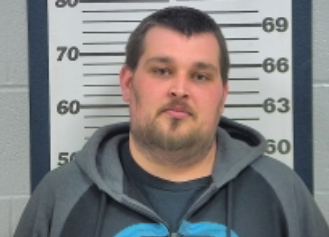
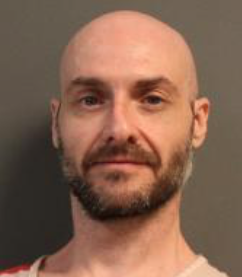
KANSAS CITY(AP) – A Kansas City man has been convicted of raping a woman he met on a dating website.
Everhart- photo Platte Co.
A Platte County jury deliberated less than two hours before finding 31-year-old Bradley Everhart guilty of rape.
Prosecutors said the 31-year-old woman met Everhart on the dating website Plenty of Fish. She went to his home in August 2016 and they watched a movie in a bedroom.
The women told police Everhart raped her despite her repeatedly telling him to stop.
The woman fled the house, went to a hospital, and reported the encounter to police.
Zahnd said after woman left, Everhart sent her more than 60 text messages in less than an hour. He repeatedly apologized and asked her not to say anything because he would lose his children.
WICHITA – Each year, the Kansas Leadership Center provides 1,500 scholarships to civically engaged organizations across the state to participate in KLC’s leadership programs. This is one way we work toward developing stronger, healthier, more prosperous communities throughout our state.
We’re seeking partners for our 2019 Leadership Transformation Grants who aspire to spread a culture of leadership through their organization or community. These grants allow participation into KLC’s core programs, which teach that leadership is an activity — not a position — and that anyone within an organization can exercise leadership effectively. These programs offer a framework by which organizations can share a common language and skills to approach their challenges.
Eligible organizations are those that:
1) Have individuals who have already experienced KLC’s leadership training,
2) Show an ability to recruit 20-40 participants into KLC leadership training,
3) Have the support of senior authority to spread a culture of leadership throughout their organization.
Some types of groups we could imagine applying:
Education: School districts, school support organizations, school boards Community-minded business organizations: Civic clubs, business associations, chambers, rotary clubs Government: City, Count, State entities Nonprofits: Community foundations, coalitions, United Ways, Faith: Churches, district level entities, collaborative faith alliances
Application for the 2019 Leadership Transformation Grants are open until Aug. 31, 2018. Interested in learning more? Watch these videos first. If you still have questions, contact Ashley Longstaff at [email protected].
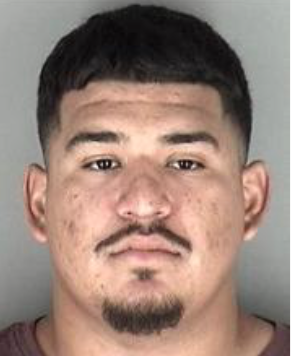
SHAWNEE COUNTY — Law enforcement authorities are investigating a suspect for alleged aggravated assault.
Fernandez -photo Shawnee Co.
Just before midnight Friday, officers were sent to the 1200 block of NW Van Buren in Topeka for a domestic disturbance, according to Lt. Ron Eakis.
As officers were arriving on scene, they heard yelling and what sounded like rapid fire gunshots. Officers located Jaime Fernandez, 19, who is suspected of firing a gun and took him into custody.
No one was injured during this incident. He was booked into the Shawnee County Department of Corrections for aggravated assault on law enforcement officers, aggravated assault (domestic violence), and criminal discharge of a firearm.
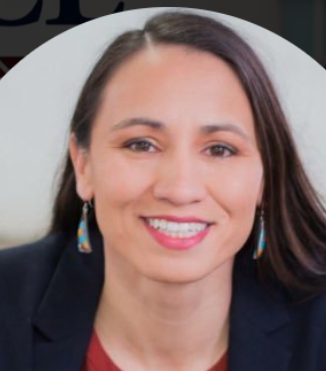
KANSAS CITY, Kan. (AP) — Kansas Democratic congressional candidate Sharice Davids is getting some help for her campaign from a national Democratic committee.
The Democratic Congressional Campaign Committee on Friday named Davids to its “red-to-blue” list of top-tier candidates, which makes her eligible for organizational and fundraising help, staff resources and candidate training.
Davids-courtesy photo
Davids, from Kansas City, Kansas, won Tuesday’s six-way Democratic primary and will take on incumbent GOP Rep. Kevin Yoder in the general election. Davids, an attorney, is the state’s first lesbian, Native American congressional nominee.
Committee chairman Ben Ray Lujan said in a statement that Davids has the grassroots energy and momentum to move the seat from Republicans to Democrats.
The committee on Thursday began airing a television ad in the Kansas City market supporting Davids.
HATTIESBURG, Miss. (AP) — A man whose death sentence was overturned in 2014 has been resentenced to life in prison.
Gillett photo Forrest Co. Mississippi Sheriff
State prison records show 44-year-old Roger Gillett was resentenced in July.
Gillett and then-girlfriend Lisa Jo Chamberlin were convicted of killing Gillett’s cousin and the cousin’s girlfriend in 2004 because they wouldn’t open a safe. Dismembered bodies of Vernon Hulett and Linda Heintzelman were found stuffed in a freezer on a farm near Russell, Kansas.
The Mississippi Supreme Court voided Gillett’s death sentence, finding jurors wrongly considered Gillett’s attempted escape from a Kansas jail.
Forrest County District Attorney Patricia Burchell consulted victim families before deciding against the death penalty.
Chamberlin’s death sentence was reinstated in March after a federal appeals court dismissed accusations of racial bias in jury selection.
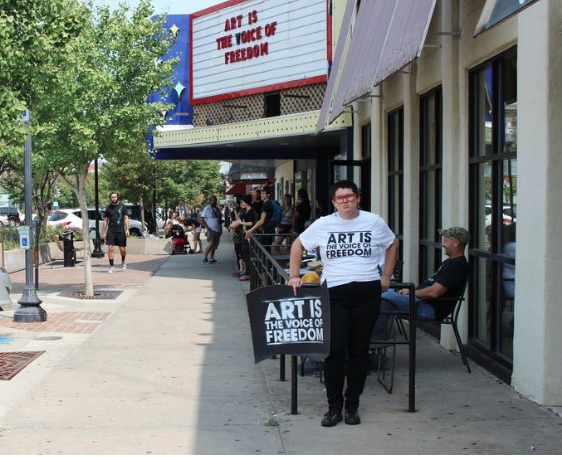
Hundreds in T-shirts reading ‘art is the voice of freedom’ fanned out along either side of Massachusetts Street in Lawrence, Kansas, Saturday in anticipation of a so-called ‘Defend the Flag’ demonstration.
Hundreds gathered along Massachusetts Avenue in Lawrence, Kansas, Saturday in anticipation of a so-called ‘Defend the Flag’ demonstration. Both gatherings were partly in response to a recent art installation at the University of Kansas. photo by ANDREA TUDHOPE
Clay Mead, owner of Hog Holler Saloon in Ozawkie, Kansas, organized the ‘Defend the Flag’ event, which he told KCUR, was not a demonstration or a protest.
“We’re just walking with the flag, that’s it. Showing it honor and respect. It’s not a protest against anybody else,” Mead said.
Mead sat on a bench in South Park with a group of about 10 people wearing red, white and blue T-shirts, sunglasses and hair pieces. They waved American flags.
Around a dozen gathered in South Park as part of a so-called ‘Defend the Flag’ event Saturday. The group did not follow through with their original plan to march down Massachusetts Avenue, where hundreds of counter-protesters lined the storefronts from 11th to 7th Street. CREDIT ANDREA TUDHOPE
“I think that the American flag is the one true symbol of unity that we have in America,” he said. “People of every social group you can divide us into have sacrificed life, limb, loved ones, and this is a symbol of that sacrifice toward freedom.”
The piece by New York City-based artist Josephine Meckseper looks like an American flag, altered with stains and adorned with one child’s sock. It’s part of a nationwide public art project exhibiting commissioned flags intended to reflect the current political climate.
Dressed in an ‘art is the voice of freedom’ shirt, playwright and community member Darren Canady said the art was definitely a spark for Saturday’s turnout.
“Arguably all art is political, but what concerns a lot of people is the silencing of the ability to talk about American identity,” he said.
Some of the counter-protesters Saturday. Organizers estimated 600 came out to stand against the anticipated ‘Defend the Flag’ demonstration.
CREDIT ANDREA TUDHOPE
Another reason the community turned out in such large numbers, according to counter-protest organizers, was because of a previous demonstration in February, which reportedly got heated after people showed up with Confederate flags, despite instructions from Mead and other ‘Defend the Flag’ organizers not to.
“There was a lot of fear,” Canady said.
Organizer Courtney Shipley said Lawrence mobilized after February’s event to take a stand against hate groups.
This Saturday’s event in Lawrence also came on the anniversary of a decisively confrontational ‘Unite the Right’ rally in Charlottesville, Virginia, attended by white supremacist and white nationalist groups, which turned deadly.
“Those rallying and walking into this peaceful community… that you take advantage of people’s pain and you whip up people’s fear on the anniversary of Charlottesville, you are looking for a violent engagement, and we need to be an nonviolent society,” said Eleanor McCormick, associate pastor at Plymouth Congregational Church.
Mead told KCUR he knows “nothing” about what happened in Charlottesville last year, only what the media reported. But, he said, he doesn’t associate with white supremacist or nationalist groups. As for the timing, Mead said it never crossed his mind, and that they decided to gather today because of a community safety fair for children happening at the same time in South Park, where dozens of law enforcement and first responders set up at booths.
“We decided we’ll carry the flag, invite anybody who would like to join us, it’s not about any political leaning or social group. Everybody’s invited in unity,” he said. “I guess some didn’t believe us.”
Meanwhile, the hundreds along Massachusetts Avenue assumed Mead’s group would march up and down the street like they did last time, so they waited in silent protest, with instructions to remain peaceful. Both groups expressed that they didn’t want confrontation, and on the whole, the gathering and counter-protest were uneventful.
Counter-protester Sam Beeson, 25, from Baldwin, Kansas, said though she wasn’t expecting fights, she definitely thought more would happen.
“It feels great that we’re getting together in a nonviolent way,” she said.
Amy Baughman came Saturday to show her support for the American flag.
CREDIT ANDREA TUDHOPE
Mead’s group remained on the benches in South Park waiting for more people to show up. At one point, an older woman approached and asked Tina Montgomery if her granddaughter could see the flag she was holding, saying she’d never seen one up close.
“This is the American flag,” Montgomery told the child. “It stands for freedom and all kinds of stuff.”
Another member of the group, Amy Baughman, said she stands up for the flag because she feels like it doesn’t get the showing of support she feels it deserves.
“We still should be proud of our country. Everything doesn’t have to change just because some things can change,” she said. “I see our world changing a little too much. I think we still need to keep some of our old-fashioned values.”
By mid-day, Mead’s group left, and the hundreds along the street began to disperse, after walking up and down and hugging to celebrate a peaceful demonstration.
Ron Wilson is director of the Huck Boyd National Institute for Rural Development at Kansas State University.By RON WILSON Huck Boyd National Institute for Rural Development
The roller coaster drops and turns as the riders yell happily. But this roller coaster is not 40 feet up in the air or outside in a hot carnival. This roller coaster operates in virtual reality. It’s an example of the creative work of an innovative, high tech marketing company.
Jeff Hake is the founder of JNT Company and JNT VR, an interactive web and marketing agency that is also doing innovative work in virtual reality.
Jeff grew up at Beloit. He was an athlete in high school, even breaking a 30-year-old league record in the discus throw. Jeff studied information systems at Cloud County Community College.
While visiting Manhattan one day, he met a pretty blonde girl named Tara. Upon meeting her parents at their first date, he learned that her father was the man who set the 30-year-old discus record which he had broken: Awkward…
The relationship improved from there. Jeff ultimately married Tara. She earned her optometry degree in Memphis. One day while in Memphis, Jeff got word that he had been accepted for the K-State computing and telecommunications position for which he had applied. “That’s great, but what am I going to do?” Tara said. “One hour later, she got a call from Ron Janasek, asking if she would be interested in buying his optometry practice in Manhattan,” Jeff said. The timing worked perfectly for them, and Tara bought the business. Today, she is a doctor at Manhattan Eyecare.
Jeff worked in computing and telecommunications for K-State and founded a website company as a side project in February 2008. He called it JNT Company. Why? “Jeff’s Never Telling,” he said with a smile, but apparently Jeff `N’ Tara was the original source of the acronym. By September 2009, JNT Company became his sole focus.
JNT Company began as a website design business but it grew and expanded quickly. “We developed a content management system called Merlin,” Jeff said. The company now offers brand identity and social media, copywriting, print design, e-commerce, video production and advertising, search engine optimization, and web application development.
“Everything we do is backed by a promise to understand how marketing impacts business growth,” Jeff said. “Our work has touched industries including banking, telecommunications, professional services, consumer packaged goods, healthcare, real estate, agriculture and higher education — including being recently named one of Kansas State University’s official on-call agency partners,” he said.
In 2015, Jeff was researching virtual reality as a marketing strategy. “Marketing research tells us that a person has to read something 17 to 30 times for it to soak in,” Jeff said. “But virtual reality can generate the adrenaline and emotion that makes you remember.”
JNT Company developed the concept and built a virtual reality trailer in 2016. The trailer contains four moving seats linked to a virtual reality viewing system. “No one had synched multiple headsets with a single experience like this before,” Jeff said.
One of their first clients was Whoville, which sponsors the Christmas-tree lighting in downtown Manhattan. During the holidays, the trailer provided a virtual Santa sleigh ride experience. In the summer, it can be a virtual roller coaster ride.
In the trailer, people sit in the chairs, buckle up, and wear the headsets while the chairs move in coordination with the remarkably realistic image which appears on the screen. The trailer travels around Kansas, where it provides a lifelike experience at county fairs and elsewhere.
“There’s a thrill in seeing the eyes light up on the faces of these people,” Jeff said.
Jeff and Tara have two children of their own. They reflect the values of their small town roots. Jeff is from Beloit and Tara is from the rural community of Scandia, population 372 people. Now, that’s rural.
The virtual roller coaster rolls to a stop and the giddy riders remove their seat belts – as well as their virtual reality goggles. We salute Jeff Hake and all those involved with JNT Company and JNT VR for making a difference with marketing innovation and technology. That combination makes for a good ride.
Are 3-D printer designs protected by the First Amendment? This was the legal defense raised by Cody Wilson back in 2015, who faced prosecution for violating federal gun export laws after he created a gun with a 3-D printer and then posted the blueprints online for others to download and use. Wilson claimed that this violated his right to share information freely.
Lata Nott
The State Department settled its case against him in July 2018, and for a few days Wilson was able to distribute the blueprints on his website and revel in his success at using the First Amendment to protect the Second Amendment. But by the end of last week, attorneys general in 20 states had filed suit against both the State Department and Wilson, in an effort to force the State Department to rescind its settlement. The states raised a constitutional claim of their own — that the settlement violated the 10th Amendment, which gives states the right to make their own laws, including those governing gun control.
Earlier this week, a federal judge issued a temporary restraining order blocking the government from allowing the blueprints to be distributed. A follow-up hearing will take place on August 10.
What does all this mean, aside from an amazing day for Bill of Rights bingo?
The NRA’s official statements have been along the lines of, “absolutely nothing,” pointing out how prohibitively expensive printing a gun is at this time. It’s true that we’re unlikely to witness the rise of a 3-D printer armed militia in the next couple of weeks. But this also sidesteps the real issue.
Right now, 3-D printers are expensive and clunky, but they won’t always be. How should we deal with a world where the technology has caught up with Wilson’s aspirations?
As Senator Bill Nelson put it, “There are many limits on our First Amendment rights of speech. You cannot say ‘fire’ in a crowded theater. Why in the world would you assert First Amendment rights to publish instructions to [make] a plastic gun that someone could take through a metal detector into a crowded theater and start shooting in that theater instead of shouting ‘fire,’ which is clearly an understood limitation upon our First Amendment rights of speech.”
That cuts to the heart of the issue — the danger inherent in a world where absolutely anyone can manufacture their own gun — but it’s not quite the right analogy. The First Amendment may not protect your right to yell “Fire!” in a crowded theater. But it does protect the right to publish something like the “Anarchist Cookbook,” which contains instructions for manufacturing explosives. It may be illegal to build your own bomb, but the government can’t censor the instructions for doing so.
And to add another wrinkle: At this time, making your own gun at home actually is legal, provided that you don’t intend to sell it and you aren’t otherwise prohibited from owning one. Kits that let you assemble your own firearm have existed for years and are legally available.
3-D printing puts us in a murky situation. The law protects your right to share information. It protects your right to build your own gun. But put those two principles together, add some 3-D printing technology, and take things to their natural conclusion and the end result is discomfiting — even to staunch supporters of the Second Amendment like Guy Benson, who writes, “I’m both extremely hesitant to embrace government-imposed prior restraints, and skeptical of new regulations on guns. I do, however, realize that advancing technology can present thorny legal challenges…I am alarmed by the idea that a mental[ly] unstable individual or convicted criminal could bypass background check requirements and other important restrictions by manufacturing their own illegal firearms.”
Benson goes on to express skepticism at the proposed solutions to this, observing that, “Banning people from doing things that are already illegal through other means strikes me as mostly symbolic.” Fair point. It’s already illegal for convicted criminals to manufacture their own guns, whether it’s using a 3-D printer, a kit or a garage-based gunsmithery.
This isn’t a loophole in the law that needs to be closed. This is a fundamental shift in what it means to create something. In one sense, 3-D printing a gun isn’t all that different conceptually from building one from a kit. It’s the same basic idea — it’s just that 3-D printing has the potential to be much more accessible and efficient on a mass scale. And in that sense, it has the potential to change everything. (It’s kind of like how Napster used to argue that using their peer-to-peer file sharing system to download music was no different than sharing music with a friend.)
There are a few different approaches we can take here.
1. We can argue that it’s not protected by the First Amendment.
However, whether or not code counts as speech remains an open question.
2. We can consider the blueprints to be speech — but still regulate their dissemination.
It’s a bit of an overstatement to say that the First Amendment protects speech from any government interference. The government can regulate political speech if that regulation is narrowly tailored to achieve a compelling government interest. It can regulate commercial speech as long as its laws are substantially related to an important government interest. Banning anyone from posting 3-D gun designs online isn’t exactly a “narrow” regulation, but you could argue that a gun blueprint is essentially a commercial product, and that banning someone from posting one is the only way to keep guns out of the hands of people who shouldn’t have them — an important government interest if there ever one was.
3. We can allow the blueprints to be distributed freely, but regulate the hell out of 3-D printers.
The First Amendment protects speech, but doesn’t stop the government from regulating conduct. In this case, that might mean licensing the usage of 3-D printers, or the components and materials necessary to print a gun.
None of these are perfect solutions. How could they be, when the implications of 3-D printing technology are so complicated? The issue’s not going away, and it’s not just about guns. It’s about how the lines between speech and conduct and information and action, are growing increasingly blurry.
Lata Nott is executive director of the First Amendment Center of the Freedom Forum Institute. Contact her via email at [email protected], or follow her on Twitter at @LataNott.
Corn and beans harvested early can leave your ground bare for seven to nine months. Instead, let’s plant some crops to grow and cover it until next season.
After silage harvest or combining corn or beans early, ground that lies bare has two things working against it. One is exposure to wind and water erosion. And two, it isn’t growing anything. Cover crops might help you overcome both problems.
But what should you plant? That depends on what you want to achieve with your cover crop. For example, hairy vetch and winter peas are good cover crops if you want to improve your soil by planting a legume that will provide 30 to 40 pounds of nitrogen per acre for next year’s crop. Or maybe use a deep-rooted radish to breakup some hardpans.
Are you still hoping for some feed this fall? Then oats, spring barley, annual ryegrass, and turnips might be better choices. These plants have the greatest forage yield potential in the fall. Oats and barley will die over winter so they won’t interfere with next year’s crop. But, dead residue from oats and barley is not very durable, so it provides less effective soil protection and for a shorter duration.
For better soil protection, winter rye is the best choice among the cereals. And cereal rye can provide abundant grazable growth early next spring to get cows off of hay sooner. Wheat and triticale also can be good cover crops. Of course, wheat then can be harvested later for grain while triticale makes very good late spring forage.
What is becoming especially popular is planting a mixture of several types of plants to reap some of the benefits of each one.
Cover crops can preserve or even improve your soil, and can be useful forages as well. Consider them following your early harvests.
To learn more about growing cover crops, especially for grazing, attend our Rotational Grazing in the Rangeland workshop on August 16th. The tour will begin at Greg Axman’s farm located at 1253 NW 80 Ave Olmitz, KS 67564. RSVP at 620-793-1910 or [email protected] for a meal head count.
Alicia Boor is an Agriculture and Natural Resources agent in the Cottonwood District (which includes Barton and Ellis counties) for K-State Research and Extension. You can contact her by e-mail at [email protected] or calling 620-793-1910
Kansas State University’s Agricultural Research Center in Hays will host its annual Fall Field Day on Aug. 22, featuring a half-day that is chock-full of field tours and timely management tips.
Registration and refreshments are available at 8:30 a.m. at the center, located at 1232 240th Avenue on the south side of Hays. There is no charge to attend.
Bob Gillen, the head of the Western Kansas Agricultural Research Centers, will welcome attendees at 9 a.m., followed by five short field tours in the morning:
Pre- and Post-Herbicide Tools for Weed Control in Corn, led by weed scientist Vipan Kumar
Sorghum Hybrid Development for Early Season Planting, led by sorghum breeder Ram Perumal
Palmer Amaranth and Kochia Control in Roundup Ready 2 Xtend Soybeans, led by Kumar
Nitrogen Fertilization and Occasional Tillage in Wheat-Sorghum-Fallow Rotations, led by soil scientist Augustine Obour
Sorghum Hybrid Performance Comparisons, led by Perumal
Following lunch, K-State Research and Extension agricultural economist Dan O’Brien will give an outlook for markets and crop profitability for western Kansas; and entomologist JP Michaud will talk about insect management in grain sorghum.
More information on this and other events at the Agricultural Research Center in Hays is available at www.hays.k-state.edu, or by calling 785-625-3425.
 FHSU University Relations