On Tuesday, October 15 the Kansas Small Business Development Center and Fort Hays State University will host the Rural & Independent Innovator Conference (RIIC) in Hays, Kansas.
The event will be held 8 a.m. to 4:30 p.m. in the FHSU Robbins Center.
Rural & Independent Innovators Conference (RIIC) is designed for innovators and entrepreneurs throughout rural Kansas. It will provide information, education, connections to resources and experienced entrepreneurs.
Topics that the RIIC will cover include:
Commercializing an innovative concept or prototype
Access to capital, research grants, and other means
Protecting intellectual property
Hearing from entrepreneurs about their journeys, challenges, failures, and successes
Meeting multiple resource partners and industry experts who can answer questions in person
RSVP: $15.00 registration includes lunch, refreshments, and networking. Register online by clicking HERE.
Contact our office at 785-628-5615 for more information.
Longtime Goodland resident Henry “Hank” Donald Elliott, 91, passed away suddenly on Thursday, October 3, 2019 at the Goodland Regional Medical Center in Goodland.
Hank was born on September 18, 1928 in Rural Sherman County, Kansas to Bert and Nettie (Smalley) Elliott. He was one of 10 children. Growing up around Edson, Hank attended school in Edson and graduated from Edson High School in 1946.
Hank served in the United Stated Army as a paratrooper from December 6, 1950 to December 6, 1952. On June 23, 1951, he married Dolores Jean Peter in Clarksville, TN. They had one daughter, Susan.
After serving time in the Military, Hank and Dolores moved to Goodland, where they made their home. Hank worked as a meat cutter in Goodland and the surrounding areas for many years, retiring in 1996. After retirement, he worked part time in Goodland until December 2008. He was a member of the Calvary Gospel Church and the Sugar Hills Golf Club. Playing golf was one of his biggest hobbies.
He coached Susan’s little girls’ softball team and he bowled on a father/daughter team with Susan. He also coached American Legion Baseball for several years, and pitched fast pitch softball for as well. Most of all he enjoyed spending time with his family.
Preceding him in death were his parents, his step mother Virginia Elliott, his brothers; Elmer, Leonard, Edgar, Chuck, Gene and John, and his two sisters Rhea and Thelma.
He is survived by his wife Dolores of the home in Goodland, his daughter Susan (Alan) Stasser of Kingfisher, OK, his sister Betty Wright of Goodland, 3 sister-in-laws Esther Elliott and Eleanor Elliott of Edson, KS and Bernice Peter of Finger, TN. He is also survived by 4 granddaughters; Talia Stasser of North Platte, NE, Autumn and Lisha Stasser of Kingfisher, OK, and Lindsey (Norman) Imes of Kingfisher, OK, and 6 great grandsons; Kolin and Tyce Pate of North Platte, NE, Jaxxyn Stasser, Elijah, Liam and Cole Henry Imes, all of Kingfisher, OK.
Donations may be made to Juvenile Diabetes Foundation and may be left at the services or mailed to Koons-Russell Funeral Home, 211 N. Main Ave., Goodland KS 67735.
WICHITA —Deanna Caudill hasn’t used an inhaler since she was a child. That all changed for the 25-year-old Wichita State graduate student this month when, after getting a back-to-school cold, she never seemed to recover.
“It’s like every morning I wake up and I cannot breathe,” she said. “It’s just a feeling I’ve never had in my whole life be this bad.”
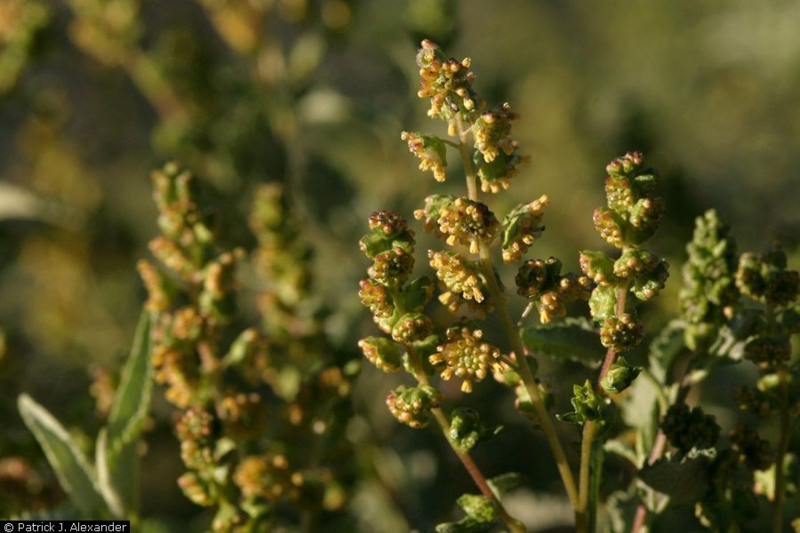
Caudill suffers from an allergic reaction to ragweed pollen and the lingering effects of a cold — a combination that’s becoming increasingly common for Kansans in September.
While ragweed pollen is typically at its peak this month, increased average temperatures caused by climate change are upping the total amount of ragweed pollen in the air every year. That means for many people with allergies, every year is worse than the last.
Plus, the third week of September is typically known as Asthma Peak Week: More allergy attacks happen now than any other time of the year.
Caudill’s symptoms are so bad that she’s already ran out of the first inhaler her doctor prescribed to her.
“I’m hoping that they don’t tell me I need to do breathing treatments,” she said. “Because I’m really busy and I don’t have time for all of this.”
Off the charts
As busy as Caudill is, doctors at Children’s Mercy Hospital in Kansas City, Missouri, are likely even busier.
Doctors at the hospital monitor and forecast the pollen count every day. Usually people who are sensitive to ragweed begin getting itchy eyes, noses and throats when the count gets above 100 per cubic meter in the air.
“We’ve been getting counts in the 1,000 to 1,500 range which is off the chart — until we made the chart get taller,” said Jay Portnoy, an allergist and immunologist at Children’s Mercy Hospital.
It’s led to more people seeking medical attention, especially now. To prepare for the influx of patients, Portnoy’s team makes sure to increase staffing levels. He also said he typically takes vacation in July or October so that he’s available during peak season.
Because increased amounts of ragweed pollen is a regularly occurring event, Portnoy said people should prepare themselves each year by seeing their doctor and making sure all of their medications are filled. He also encouraged people with worsening symptoms to go back to their doctors to see what other prescriptions might be available.
A pollen explosion
While it’s regular for ragweed pollen to spike in September, its peaks have been increasing in the past few years.
Lewis Ziska, an environmental health professor at Columbia University, said there’s a correlation between increasing temperatures and higher pollen counts in the Northern Hemisphere. By analyzing temperature and pollen count data at 17 monitoring stations with histories greater than 20 years, Ziska found that as temperatures increased, so did pollen counts.
The longer growing season (between spring’s last freeze and fall’s first freeze) is also increasing how long plants are producing pollen, lengthening allergy season.
“It turns out carbon dioxide isn’t a political molecule,” Ziska said. “It can stimulate both good plants and bad plants.”
But it’s not all bad news for those suffering through puffy eyes and endless boxes of tissues. Ragweed season in Kansas usually ends near the beginning of October — just in time for increased levels of mold.
Brian Grimmett reports on the environment, energy and natural resources for KMUW in Wichita and the Kansas News Service. You can follow him on Twitter @briangrimmett or email him at grimmett (at) kmuw (dot) org. The Kansas News Service is a collaboration of KCUR, Kansas Public Radio, KMUW and High Plains Public Radio focused on the health and well-being of Kansans, their communities and civic life.
Trick or Treat So Others Can Eat is Oct. 8 from 6 to 9 p.m. in Hays.
The annual Trick or Treat So Others Can Eat canned food drive is set for Tuesday, October 8, 2019 in Hays. Volunteers will be going door to door collecting non-perishable food items from 6:00 – 9:00 p.m. Food items such as canned meats, canned vegetables, canned fruit, and boxed meals are much needed at this time.
To assure residents that the items collected are for the Community Assistance Center, all volunteers will be wearing an identification badge with “Trick or Treat So Others Can Eat” clearly printed. Please leave items on the porch if you will not be home or do not want someone ringing the doorbell. Youth and adult volunteers from Hays give of their time to make this food drive a success.
Any house missed or those living in a rural area may take food items to the Community Assistance Center in Hays located at 12th and Oak until noon October 31, 2019.
Contact Shaina Prough at Hays High School, 623-2600, if you need further information.
TOPEKA – Kansas lawmakers spent years imposing ever tougher restrictions on abortion and then saw the state Supreme Court declare that women hold a right to the procedure.
Now Republicans and abortion opponents appear determined to amend the Kansas Constitution to reverse that ruling.
They’re looking to protect years of wins on the contentious issue, efforts that peaked during the term of Republican then-Gov. Sam Brownback. Those anti-abortion victories included blocking most abortions after the 21st week of pregnancy and requiring parental consent for minors to get an abortion.
Groups such as the influential Kansans for Life warn that the high court’s ruling earlier this year puts those laws in danger.
“They’re in jeopardy,” said Jeanne Gawdun, a senior lobbyist for Kansans for Life. “The Legislature’s been able to enact over 25 different pro-life provisions, because it’s the will of the people.”
That risk is a rallying cry for conservative lawmakers. On Wednesday, a special committee made up of members from the Kansas House and Senate recommended an amendment to the state constitution. They want to specify in the document that there is no right to abortion.
Changing the Kansas Constitution is no easy task. Both the Kansas House and Senate would have to approve an amendment with a two-thirds majority. Then the issue would go on a ballot for a statewide vote.
“All Kansans should be concerned about this matter,” Republican Senator Eric Rucker said after the committee vote. “(They) have a right to vote on whether or not to uphold this most unusual decision by the Supreme Court.”
Republicans hold large majorities in both chambers of the Kansas Legislature. The GOP has 84 of the 125 seats in the House, the exact number of votes needed to approve a constitutional amendment. In the Senate, 27 of 40 senators must approve a constitutional amendment and Republicans hold 29 seats.
In both chambers, a few moderate-leaning Republicans will be critical swing votes. Lawmakers narrowly failed to override Democratic Gov. Laura Kelly’s veto of an abortion bill last session. An override requires the same two-thirds majority as a constitutional amendment.
As some Republicans rally behind the threat of undoing abortion restrictions, Democrats are preparing to push back.
“It completely opposes our platform,” Kansas Democratic Party Chair Vicki Hiatt said. “We strongly believe in a woman’s right to choose.”
The lawsuit that triggered the Kansas Supreme Court’s landmark decision this year is still pending. The high court clarified that the state constitution promises abortion rights and sent the case back to a lower court.
Because of that uncertainty, Democratic Rep. Pam Curtis said it’s unclear that existing abortion restrictions will be wiped out. She served on the committee that recommended a constitutional change and voted against the proposal.
“We really don’t know that yet,” she said. “We’re already jumping to a conclusion.”
Stephen Koranda is Statehouse reporter for the Kansas News Service. Follow him on Twitter@kprkoranda or email skoranda (at) ku (dot) edu.
The Kansas Department of Transportation expects to begin work on a mill and overlay project on a portion of K-27 in Cheyenne County the week of Oct. 7.
The project covers a 13-mile area starting at the Sherman County line and extending north to the east U.S. 36 junction. Traffic will be reduced to one lane through the construction zone and directed by flaggers and a pilot car during daylight hours. Minor delays not exceeding 15 minutes should be anticipated. Work is expected to be finished by the end of November, weather permitting.
Venture Corporation is the primary contractor for the project with a total contract cost of approximately $2.2 million.
SEDGWICK COUNTY— One person died in an accident just before 11:30p.m. Saturday in Sedgwick County.
The Kansas Highway Patrol reported a 2013 Suzuki motorcycle driven by Dalton J. Heard,20, Wichita, was eastbound on Kansas 96 at 21st Street at a high rate of speed. The driver was unable to negotiate the curve, went into median, and struck guardrail.
Heard was pronounced dead at the scene. He was wearing a helmet, according to the KHP.
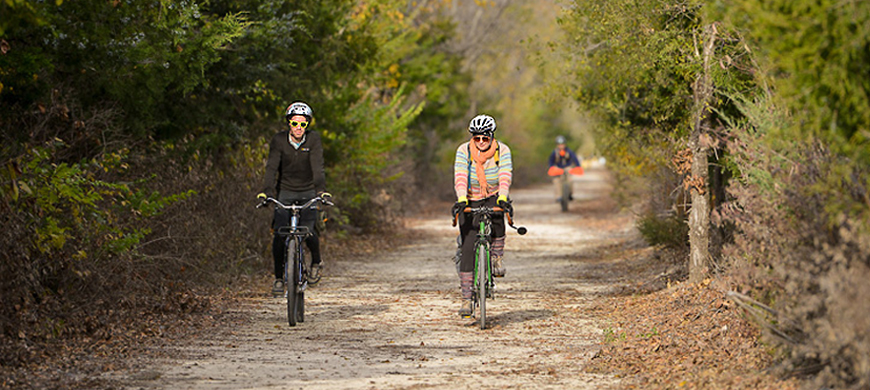
PRATT – In a 5-1 vote, Kansas Wildlife, Parks and Tourism (KWPT) Commissioners approved the use of electric-assisted bicycles, or e-bikes, at Kansas state parks. The decision was made during the Commission’s Sept. 19 public hearing at the Kansas Wetlands Education Center in Great Bend.
E-bikes, also referred to as pedal-assist bikes, have a small motor that engages when a rider pedals. Once engaged, the motor provides a “boost” of acceleration, allowing the rider to more easily maneuver hills and rough terrain. Only e-bikes that cease to provide assistance when the bicycle reaches a maximum of 20 miles per hour may be used at Kansas state parks. E-bikes will also only be allowed on trails already approved for bicycle use.
“We have over 500 miles of trails at Kansas state parks,” said Linda Lanterman, Kansas state parks director. “E-bikes will allow more users to enjoy these trails, including individuals who have previously been unable to because of age, disability, or physical capacity. We’re really excited about the opportunities this will open up.”
State park staff plan to increase public education efforts promoting safe trail use and trail etiquette, as well as increase signage on trails where bicycles are allowed. For a complete list of trails at Kansas state parks, including biking trails, visit ksoutdoors.com/trails.
The next KWPT Commission meeting will be Nov. 14 at the William Carpenter 4-H Building in Scott City.
TOPEKA – Governor Laura Kelly officially proclaimed Oct. 6-12, 2019, as Fire Prevention Week in Kansas. The Office of the State Fire Marshal (OSFM) and Safe Kids Kansas teamed up with the National Fire Protection Association (NFPA) — the official sponsor of Fire Prevention Week™ for more than 90 years — to promote this year’s Fire Prevention Week campaign, “Not Every Hero Wears a Cape. Plan and Practice Your Escape!” The campaign works to educate everyone about the small but important actions they can take to keep themselves and those around them safe.
In Kansas, there were 2,621 home fires in 2018, which accounted for 33 deaths and 189 injuries.
NFPA statistics show that in 2017 U.S. fire departments responded to 357,000 home structure fires in the United States. These fires caused 2,630 fire deaths and 10,600 fire injuries. On average, seven people died in a fire in a home per day during 2012 to 2016.
Today’s home fires burn faster than ever. In a typical home fire, you may have as little as one or two minutes to escape safely from the time the smoke alarm sounds. Knowing how to use that time wisely takes planning and practice.
While many are focusing on home fires, these messages apply to virtually any location.
“Situational awareness is a skill people need to use wherever they go,” Doug Jorgensen, Kansas State Fire Marshal, said. “No matter where you are, look for available exits. If the alarm system sounds, take it seriously and exit the building immediately.”
While people feel safest in their home, it is also the place people are at greatest risk to fire, with four out of five U.S. fire deaths occurring at home. That over-confidence contributes to a complacency toward home escape planning and practice.
The Office of the State Fire Marshal recommends Kansans should practice their home fire escape drill at least four times a year, during the day and at night. They should also teach children to escape on their own in the event an adult cannot help them.
“Everyone in the home should know how to call 9-1-1 or the local emergency number from a cell phone or a neighbor’s phone, and they should practice using different ways out,” Jorgensen said.
Safe Kids Kansas would like to remind families that Saturday, Oct. 12, is Home Fire Drill Day. This is an opportunity to plan, talk about and practice your fire plan with all your family members, especially young children, so they know what to do when they hear a smoke alarm.
“Teach children to get low and get out when they hear the smoke alarm,” Cherie Sage, Safe Kids Kansas, said. “A child who has practiced getting out of the home and to a safe meeting spot will have a better chance of getting out of danger safely during a real emergency, so practice your escape plan regularly as a family. “
To learn more about this year’s Fire Prevention Week campaign, “Not Every Hero Wears a Cape. Plan and Practice Your Escape!” and home escape planning, visit https://fpw.org.
ENID, Okla. (AP) — A woman was shot in the thigh when a dog inside the vehicle with her jumped onto a back seat console, causing a gun under the console to fire.
Tina Springer was in the passenger seat of the vehicle that had stopped Thursday to wait for a train in Enid in northern Oklahoma. The yellow Labrador retriever, which belongs to the 79-year-old driver Brent Parks, was in the back seat and jumped onto the folding console. That’s when the .22-caliber handgun under the console went off.
Police say cloth from the seat covers could have gotten into the trigger well of the gun, making it discharge.
The 44-year-old Springer, who lives in Nash, Oklahoma, and is Parks’ caretaker, was taken to a hospital for treatment of a serious injury.
Police say Parks told them the gun isn’t usually loaded.
WICHITA, KAN. – A Wichita woman was sentenced today to 40 months in federal prison for taking part in four commercial robberies, according to U.S. Attorney Stephen McAllister.
Savannah Cole photo Butler Co.
Savannah Cole, 22, Wichita, pleaded guilty to four counts of robbery. In her plea, she admitted committing the following robberies:
The Dollar General Store, 915 S. Glendale in Wichita, Nov. 22, 2017. Cole admitted she and co-defendant Kenneth W. Cade, 29, Wichita, Kan., went into the store together to rob it. Cade pointed a gun at an employee and demanded money a the C-Store, 837 S. Oliver in Wichita, Feb. 7, 2018. Cole admitted she pointed a gun at an employee and demanded money. Cade stayed outside as a lookout.
At the Arby’s, 4308 E. Harry in Wichita, Feb. 14, 2018. Cole and Cade went into the store to rob it. Cade pointed a firearm at an employee and demanded money and at Circle K Store, 515 N. Seneca in Wichita, Feb. 14, 2018. Cole and Cade went into the store to rob it. Cole pointed a gun at the clerk and demanded money. Cade grabbed the cash.
Last month, co-defendant Cade was sentenced to 12 years in federal prison.

 SBDC
SBDC