Not a day goes by that we don’t hear something in the news that involves the abuse of drugs. Whether it is a crime spree with the perpetrator high on drugs or an accident caused by someone unable to drive safely while taking a prescription medication – the opioid epidemic has become a public health crisis with devastating consequences.
A couple of years ago when I broke my arm in a cycling accident I needed pain medication to get me through the rough times. I didn’t like the way I felt while taking the prescribed pain pills so worked hard to get off of them as quickly as possible. I was happy to get completely off of the pain medicine a few weeks after surgery and get back to my normal routine.
So, what exactly is an opioid? Opioids include powerful prescription pain medications and the illegal drug, heroin. The statistics show that 25% of patients prescribed opioids for pain misuse them. This misuse translates to 115 Americans who die each day from opioid overdose. Another eye-opening statistic is that 80% of heroin users first used prescription opioids.
Opioids work by binding to opioid receptors in your body to relieve pain. Prescription opioids can be an important part of treatment but carry significant risks for addiction and overdose because of the addictive euphoria they create and the tolerance that occurs after repetitive dosing. There are effective treatment options for opioid dependence, yet only 10 percent of people who need such treatment receive it. Naloxone, also called Narcan or Evzio,(both registered trademark names) can completely reverse the effects of an opioid overdose and prevent death.
To avoid opioid misuse and overdose:
Do not take more medication than what is prescribed.
Do not take other people’s prescriptions.
Do not mix opioids with alcohol, antianxiety medications, muscle relaxants, sleep aids, and other opioids.
Be proactive in addressing pain. Experts suggest exploring various methods of alleviating pain, such as over-the-counter pain medications, exercise, or alternative therapies.
There are several signs to watch out for if you think someone might be experiencing an opioid overdose.
These include:
Shallow breathing
Gasping or choking for air
Pale skin
Blue lips and/or fingertips
Small, pinpoint pupils
Unconsciousness
Erin Yellend, a specialist with K-State Research & Extension, has written an excellent educational fact sheet titled, “The Opioid Crisis: What You Need to Know”. It covers all of the information I have shared today in great detail. You can download and print a copy by visiting the KSRE bookstore and typing in publication MF3404.
Donna Krug is the Family & Consumer Science Agent and District Director for the Cottonwood Extension District. You may reach her at: (620)793-1910 or [email protected]
John Richard Schrock is a professor at Emporia State University.
The first months of 2018 have seen a flurry of research on human aging. Some news reports predict humans will soon be living much longer. But new science research indicates otherwise.
Birth and early childhood were a historically risky time. Tetanus, whooping cough and a range of infections took a severe toll on youngsters. Pioneer families had large numbers of children but few would survive and grow up to take care of their parents in old age. Today, half a century into the use of vaccines and antibiotics, couples average two children and they survive.
Average life expectancies have increased in the last century. A child born in America in 1900 would on average live to be 49. Today, average American life expectancy is up to 79. Worldwide, women tend to live longer and men live shorter lives. The current longest average life expectancy is 83 years in Japan.
But today’s increase in older populations is not an extension of maximum human longevity. Back in Greek and Roman days, a few people lived into their eighties and nineties. Today, many more folks are living to that age. But the maximum life expectancy has remained about the same.
In 1997, Jeanne Calment died in a nursing home in France at the age of 122, the oldest person with a confirmed birth date. However, the likely maximum old age for most people is 115, according to research by Vijg and colleagues (“Evidence for a limit to human lifespan” in the journal Nature 538: 257–259).
In the early 1800s, Benjamin Gompertz in Britain examined extensive death records and did the math. After age 30, a person’s risk of dying doubles about every 8 years. This formula, called the Gompertz law, applies to other adult mammals as well. For individuals who make it to 100 years, their chances of having a birthday at 101 drop to about 60 percent.
But then a strange turn occurs at age 105. In this June 28 issue of the journal Science, Italian researcher Elisabetta Barbi and colleagues examined an extensive Italian database and found that the risk of dying no longer increases after 105. They do not know the cause for this “risk plateau.”
Long ago, Leonard Hayflick had described our decline into old age as our inability to completely repair the cell damage we accumulate. So perhaps, at age 105, our body lives at a slower rate and produces less cell damage. This would then allow us to repair more of our cells, a theory that will require further research.
However, turtles—that are not active mammals and therefore live at a much slower rate—do live for much longer times without any reduction in physical abilities. This is where science makes a careful distinction. “Aging” is merely the passage of time. “Senescence” is a decrease in ability over time. Therefore turtles “age” without “senescence.”
Yet, even if we retained all of our youthful strength and vigor in old age, there would still be a limit on our lifespan. This is the “broken test tube hypothesis.” Glass test tubes do not weaken over time. But some can be broken each year, just as some living organisms die due to diseases or predators each year. So we can take a set of perhaps 10 test tubes and randomly break three each year. We then replace them with three new ones (reproduction). As years go by, although there is no difference in each test tube’s strength, this random breakage of test tubes will produce an average “age limit.” The chances of any test tube avoiding the random one-in-four breakage year-after-year will make it unlikely any test tube survives more than 12 years. This may explain why slow-living turtles eventually die.
But high-energy mammals such as humans must have been selected to have a limited life span.
A famous scientist once remarked that new ideas in science do not get accepted because of the force of their arguments, but because the old scientists with old ideas die off. Or to put it into an everyday setting, if you are over 60 and trying to work that new smartphone, you probably have to ask for help from a youngster. In a changing world, there is natural selection for re-starting the learning process. And whether we decline in ability with age, or are random broken test tubes, death is good for the species.
John Richard Schrock is a professor at Emporia State University.
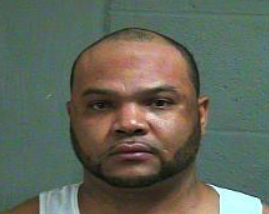
OKLAHOMA COUNTY, OK —A man wanted for removing his court-ordered ankle monitoring device during his Kansas trial for attempted murder is in an Oklahoma jail.
Shears-photo Oklahoma Co. Sheriff
On Monday, U.S. Marshals arrested 30-year-old Tremain Shears, according to the Sedgwick County District Attorney’s office.
On July 16, in Sedgwick County District Court, Shears was found guilty of two counts of attempted first degree murder, two counts of aggravated battery, two counts of criminal discharge of a weapon and three counts of possession of a weapon by a convicted felon. On the last day of his trial, Shears left the area. The trial continued despite his absence and a warrant was issued. The jury found Mr. Shears guilty of the nine charges against him.
Shears will be given the opportunity under the interstate extradition act to either contest or waive extradition back to Kansas, according to the District Attorney’s office.
If he waives extradition to Kansas, transportation will be arranged between law enforcement officials in Oklahoma City and the Sedgwick County Sheriff’s Department. If he contests the extradition, the DA’s office and state government officials have 90 days to complete the paperwork needed to obtain a Governor’s warrant to return him to Wichita for sentencing.
———–
SEDGWICK COUNTY —Wichita Police Department (WPD) Officials are requesting the help of the community to locate an absconded dangerous felon, 30-year-old Tremain Shears, according to officer Charley Davidson.
Shears -photo Wichita Police
Shears has a warrant through Sedgwick County for removing his court-ordered ankle monitoring device. Shears is a documented gang member, and is considered armed and dangerous. He has a previous conviction for aggravated, according to the Kansas Department of Corrections.
If you know the whereabouts of Shears please call 911 or Crime Stoppers immediately
Norton resident Deb Christy rounds the barrels at the 2017 Cheyenne Frontier Days. The barrel racer will compete in Phillipsburg during slack on Tuesday, July 31. Photo courtesy Deb Christy.
PHILLIPSBURG – The first weekend of August in Phillips County always means rodeo time, and for the 89th time, Kansas Biggest Rodeo will be in Phillipsburg August 2-3-4.
Nearly 450 cowboys and cowgirls will make their way to north central Kansas for the chance at over $118,000 and beautiful gold buckles for the champions of each event.
Among those contestants are two local barrel racers who won’t have to travel far for the rodeo.
Deb Christy and Jenna Rolland will compete at the rodeo during slack on Tuesday, July 31.
Christy, who is married to long-time rodeo committee member Steve Christy, trains horses and will have been at futurities in South Dakota the week before the rodeo. Because her younger horses will have run at the futurities, she’ll give them a break and run one of her older horses, probably Blitz.
Blitz, a ten-year-old gelding, is a full brother to Christy’s famous horse The Chocolate Dash, who passed away seven years ago. Blitz looks like his brother but has a different personality. He’s very fast, and he loves running, Christy said. “He has such a joy for life. He loves to run.”
Christy broke her leg last April and wasn’t able to rodeo till early July, so she isn’t in the standings for any of the associations in which she usually competes. She knows she won’t be going to any of the association finals, so she’s chosen to pro rodeo with another barrel racer, Jenna Rolland.
Ten years ago, Rolland, who grew up in Hays, called Christy, asking to learn how to barrel race. Rolland was an accomplished breakaway roper and team roper, and Christy began to mentor her.
Deb Christy competes at the 2017 Phillipsburg rodeo. Photo by Jacque Bretton.
The two will compete at pro rodeos this summer, Christy showing Rolland the ropes. Rolland will run at rodeos in Burwell, Crete and Wahoo, Neb., before meeting up with Christy as the two haul together to Phillipsburg, Hill City, Abilene, and Sidney and Carson, Iowa.
Rolland looks forward to pro rodeo with Christy. “I’m so excited,” she said. “It’s like when you’re a little kid and you see these rodeos on TV. I get to live that dream this summer.”
Christy speaks highly of her protégé, who is a high school English teacher at Northern Valley School in Almena. “She is doing phenomenal,” Christy said of Rolland. “She has turned into an incredible trainer. It’s been fun for me, because she wasn’t even out of school when I started working with her. Now she has her master’s degree. I’ve watched her grow up, and it’s been fun.”
Rolland loves her job at Northern Valley High School as much as she loves running barrels. “I have the best job in the world,” she said. Her students are special to her. “They are wonderful. I cannot tell you how wonderful they are.”
And she’s excited to be on the rodeo road, running barrels. “I can’t believe I’m living this life. Who wouldn’t want to?”
The 2017 Phillipsburg barrel racing champion Christine Laughlin returns to defend her title.
The Pueblo, Colo. woman rounded the barrels at last year’s rodeo in 17.05 seconds to win first place and the buckle.
This year, as of press time, she was ranked twenty-second in the world standings and fighting to get into the coveted top fifteen in the world, who go on to the Wrangler National Finals Rodeo. Laughlin, who will run during slack on August 1, wasn’t sure which of her horses she will ride in Phillipsburg. She won last year’s rodeo on Jessi, a nine-year-old mare owned by Jack Vanwey. Jessi does well on softer ground, because “she uses her rear end quite a bit,” Laughlin said. “She prefers something she can get in and slide.” If Jessi isn’t her mount, Laughlin will ride her thirteen-year-old gray gelding named Six Pack, on whom she made the WNFR in 2014.
Laughlin has competed everywhere from Cheyenne to Salinas, Calif., Nampa, Idaho, and Ogden and Salt Lake City, Utah before coming to Phillipsburg. It takes a team to keep a barrel racer and her horses going on the road. Laughlin’s best friend, Josey Groves, drives a second truck and trailer, and Laughlin’s fiancé, Dean Derenzo, also drives. Derenzo’s sister, Doreen Wintermute, owns one of Laughlin’s backup horses. Making the WNFR is the ultimate goal, she said. “It’s how we make our living. We compare the WNFR to the super bowl, and like any pro athlete, it’s what you work for all year long.”
She is amazed at the prize money a town the size of Phillipsburg is able to raise. Rodeos in big towns in her home state don’t add as much to the purse as Phillipsburg. “It’s a really good rodeo to hit. Phillipsburg is so little, and they add more money. That’s just nice.”
Among the nine champions from the 2017 Phillipsburg rodeo, seven of them return: bareback rider Steven Dent (Mullen, Neb.); steer wrestler Tom Lewis (Lehi, Utah); team roping header Tyler Wade (Terrell, Texas); tie-down roper Blane Cox (Cameron, Texas); Laughlin; bull rider Wyatt Edwards (Sulphur, Okla.) and all-around hand Trevor Brazile (Decatur, Texas).
Twenty-five states and one Canadian province are represented among the contestants.
The rodeo begins with slack, the extra competition that doesn’t fit into the performances, on July 31 and August 1 at 7 pm both nights. The performances are August 2-3-4 at 8 pm each night.
Tickets range in price from $15 to $18 for adults and $11-14 for children ages 3-12, and can be purchased at Heritage Insurance Co. in Phillipsburg (685 Third Street) or over the phone (785.543.2448). They are also available at the gate.
WASHINGTON (AP) — Congressional auditors say about 30 million people — 21 percent of U.S. taxpayers — will have to come up with more money to pay their taxes next year because their employers withheld too little from their paychecks under government tables keyed to the new tax law.
FILE / CREATIVE COMMONS-FLICKR
New tax withholding tables for employers were put together by the government early this year. About 30 million workers received pay that was “under-withheld” — making their paychecks bigger this year but bringing a larger bill at tax time next spring, according to the Government Accountability Office’s report.
About 27 million taxpayers would have been affected even if the new law hadn’t been enacted. The changes, however, added 3 million to that number.
JOPLIN, Mo. (AP) — A 36-year-old Kansas man remains hospitalized with a head injury he suffered three weeks ago when a Joplin police officer used a stun gun on him.
Police say James Wary, of Pittsburg, Kansas, was recently moved to a transitional care unit and is listed in stable condition at Freeman Hospital West.
Wary -photo Crawford Co.
Wary fell July 9 and hit his head on pavement at a Walmart store after an officer used the stun gun to stop him from fleeing. Wary had previously been banned from the store.
Capt. Trevor Duncan said when Wary ran, officer Isaac Costley used his stun gun. Duncan Wary became unresponsive after falling and striking his head. He became unresponsive.
Duncan said an internal police review board cleared the officer of any wrongdoing.
LAWRENCE, Kan. (AP) — Police say a 10-year- boy brought a gun to a science camp in Kansas and accidently discharged it.
No one was injured but the incident caused the evacuation Tuesday of the room at the New Century Fieldhouse in Johnson County where the camp was being held.
Capt. Rob Weber of the Johnson County Parks and Recreation Department Police says about nine to 10 children were in the room.
Police say the boy brought the gun from home in his backpack to “show it around” at the camp. The child later thought better of that plan and kept the gun in the backpack. He accidently hit the gun’s trigger when he reached into the backpack to get something out. The single round shot into the floor.
SALINE COUNTY —The Rolling Hills Zoo has lost one of its more famous painters.
photo courtesy Rolling Hills Zoo
According to information provided by the zoo, personnel are saddened by the loss of Frank, the mandrill, who passed away Monday.
Frank was a beloved member of the RHZ family and one of the zoo’s signature artists. He was the only one who created his art through finger painting. Frank enjoyed finger painting as an enrichment activity, often painting himself as well as the canvas, by rubbing the scented paint onto his chest and chin as an olfactory sensation.
Born October 14, 1996, Frank has called RHZ home since May 1999. He was one of the original mandrills when the zoo opened, along with his half-brothers Jesse and Doug, otherwise known as the James Gang. Doug, the oldest, left the zoo in 2008 on a breeding recommendation by the Species Survival Program (SSP), and Jesse, the youngest, left the following year. Mandrills, the largest and most colorful of all monkey species, reach full maturity as males based on their rank within the group. With the absence of his half-brothers, Frank came into full maturity with his beautiful facial colors of vibrant reds and blues.
Frank creates a painting. Photo courtesy Rolling Hills Zoo
His companion, Julie, now 24 years old, joined Frank at RHZ in March 2009. Due to reproductive issues of the pair, he never sired offspring, but they were a great match otherwise. Julie was very protective of Frank and often bobbed at staff if they focused too much attention on him.
“Frank was a good boy who liked attention and training, even though the keepers were not able to get him to present his feet for inspection,” said Lynne Rank, great ape keeper at RHZ. “He was a respectful mate with Julie, and when she would scold him he would run away from her. Even so, they were never found far apart.”
Frank, one of the zoo’s featured painters, will be greatly missed by RHZ staff, visitors, and those who loved his signature artwork.
Mandrills are listed as a Vulnerable species on the International Union for Conservation of Nature Redlist.
TOPEKA –The Kansas Department of Health and Environment (KDHE) is reporting two cases of neuroinvasive West Nile virus (WNV) disease in individuals who reside in Johnson County, according to a media release.
Four regions of the state remain under a high-risk warning for WNV, including north central, south central, northwest, and southwest Kansas. Northeast and southeast regions are at moderate risk for WNV infections.
KDHE image
WNV can be spread to people through mosquito bites, but it is not spread from person to person. About one in five people who are infected develop a fever and other symptoms. Roughly one out of 150 infected people develop the more severe version of the disease, neuroinvasive disease, which includes swelling of the brain or brain tissue and, in some cases, death. There are no vaccines or medications to treat WNV. People who have had WNV before are considered immune.
“Although for most people West Nile virus may not cause a great deal of concern, we encourage residents, especially our vulnerable populations, to take steps to prevent infection because of the potential for complications,” said Dr. Greg Lakin, Chief Medical Officer, KDHE.
KDHE recommends you know your risk of WNV and take action to prevent mosquito bites and protect yourself against WNV.
WICHITA, Kan. (AP) — Authorities say a $51,433 default judgment has been entered against the owner of a now defunct Wichita car dealership.
Google image
Sedgwick County District Attorney Marc Bennett’s office said Tuesday in a news release that that the lawsuit brought against Lucky 7 Used Cars LLC alleged deceptive and unconscionable practices involving car sales to eight consumers.
The complaint alleged Lucky 7 failed to disclose safety recalls, provide titles to customers or honor warranties. The business also was not properly licensed.
The judgment against owner Alonso Anderson requires he pay statutory civil penalties, restitution and costs and fees. Three former salesmen entered in to a consent judgment in February and a default judgment was entered against the business in March.
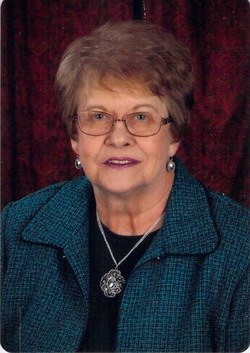
Shirley (Donn) Parnell, 74, passed away Sunday, July 29, 2018 at Citizens Medical Center in Colby, KS surrounded by nieces and nephews. She was born on September 21, 1943 to Carsen and Freda (Duden) Donn in Colby, KS at St. Thomas Hospital.
Shirley attended Levant schools until its closure and transferred to Colby where she graduated in 1961. In her early years, she worked at Rexall drugstore and was a switchboard operator for Southwestern Bell.
Shirley married James “Dick” Parnell on May 2, 1973, and lived in Goodland, KS. They moved to Lincoln, NE in 1974 where she worked at her brother John’s bowling alley, and then moved to York, NE in 1979. While in York, Dick and Shirley were active members of the Elks, and Shirley was a member of the Elk Does where she served as president. She worked as a teller at York Bank and also owned a liquor store that she and Dick operated. In 1992, they moved back to Colby to take care of her elderly mother. She worked at Colby Public Schools, USO 315, as a bookkeeper in the Administration Office from 1994-2010.
Shirley was also a member of the American Legion Auxiliary. She joined Sacred Heart Catholic Church in 1994 and served as a Eucharistic minister, server, hospitality, parish council, and was also on the Arts and Environment committee, decorating the church for several years.
Shirley’s hobbies included spending time with family, cooking, canning, making Christmas candies, and family genealogy. She enjoyed maintaining contact with high school classmates and hosting class reunions at her home. Traveling was something that she and Dick enjoyed doing through the years. Shirley also loved passing down traditions to her family.
She is preceded in death by her parents; husband “Dick”; brothers Vern, Jim (Eva), John, and sister Erma (Eugene); great-niece Ami Donn; great-nephews Mickey Jr. Donn and Jason Donn; and great-great niece Everly Graham.
Surviving are nieces and nephews James “Ike” (Diane) Donn, Glenda Merideth, Greg Hein, Julie (Drew) Barnes, all of Colby; Carsen (Patti) Donn, Colorado; Roy Donn, Texas; David Donn, Mickey Donn, Gary {Cathy) Donn, Kenny (Pari) Donn, Jackie (Dennis Sr.) McGuire, and sister-inlaw Frances Donn, all of Florida; and sister-in-law Mary (Rob) Heninger and family. She also leaves behind many great nieces and nephews as well as great-great nieces and nephews.
Visitation will be held from 2:00-7:00pm on Thursday, August 2nd at Kersenbrock Funeral Chapel with vigil services at 7:00pm. Funeral Mass will be held at 11:00am on Friday, August 3rd at Sacred Heart Catholic Church, Colby. Burial will follow at Beulah Cemetery.
Memorials to the Church in care of the Funeral Chapel.