We have a brand new updated website! Click here to check it out!

USACE, FOTWW to assist in recovery of endangered whooping cranes

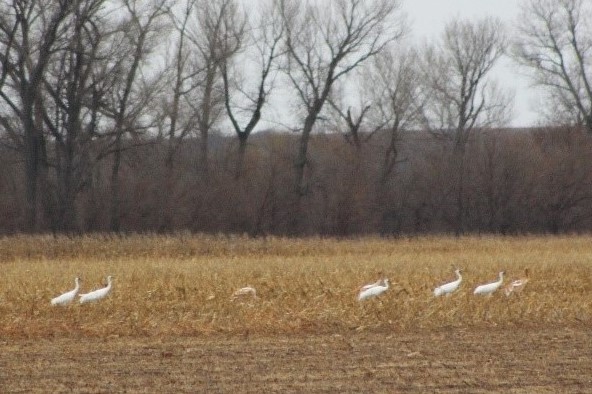
A flock of whooping cranes stop to feed and rest in a field at the U.S.Army Corps of Engineers Kanopolis Lake during their fall migration. In 2017, conservation efforts in the U.S. and Canada have seen the population increase to an estimated 431 birds.

USACE

KANSAS CITY – The U.S. Army Corps of Engineers announced Tuesday the signing of a Memorandum of Understanding with the Friends of the Wild Whoopers to assist in the recovery of endangered whooping cranes.

Per the MOU, USACE and Friends of the Wild Whoopers will jointly assess whooping crane migration stopover habitat at USACE water resources development projects. The assessments will be used by USACE to develop work plans that maintain and improve existing habitat and create additional habitat for this critically endangered bird as part of USACE Environmental Stewardship Program.

The whooping crane is one of the most endangered bird species in the world and is commonly seen as America’s symbol of conservation. Standing 5 feet tall with a wing span of 7 feet, it is the largest bird in North America.

Once fairly common, the species was reduced to just 16 birds by 1943. Market hunting and indiscriminate shooting along with habitat loss led to the decline of the species. Conservation efforts in the United States and Canada have seen the population increase to an estimated 431 birds in 2017.

The Aransas-Wood Buffalo population of whooping cranes nest and rear their young in Wood Buffalo National Park, Alberta/Northwest Territories, Canada, during spring and summer. After the chicks fledge, they migrate 2,500 miles through six states in the midsection of the United States to the U.S. Fish and Wildlife Service’s Aransas National Wildlife Refuge on the Gulf Coast of Texas where they spend the winter.

Cranes must stop 15-20 times to rest and feed during their migration. Radio telemetry conducted by the U.S. Geological Survey and direct field observation has documented many times that these migration stopovers are made on USACE-managed water resource development projects in the migration corridor.

“Our efforts with USACE will allow us to focus on whooping crane habitat assessment and management recommendations on lands under USACE jurisdiction,” said Chester McConnell, president of Friends of the Wild Whoopers. “We are looking to determine if any suitable areas could be managed or appropriately developed to provide migration stopover habitat for whooping cranes. Additional habitat may be needed to support the migration, especially in drought years when surface water is reduced and areas adjacent to USACE multipurpose reservoirs become even more important.

“Ensuring that ongoing management of these areas is conducive to whooping crane use during migration is the primary goal of our partnership,” added McConnell.

Whooping cranes from the Aransas-Wood Buffalo population have consistently been documented using areas at several USACE-managed projects within the established 2,500-mile-long by 200-mile-wide primary migration corridor according to USACE officials.

“The annual migrations of the Aransas-Wood Buffalo population of whooping cranes cross portions of our Omaha, Kansas City, Tulsa, Fort Worth and Galveston districts,” said Jeremy Crossland, Land Uses and Natural Resources Program Manager at USACE Headquarters here.

“There have been a few rare instances where whooping cranes were observed on USACE project lands outside the established migration corridor. Our management and restoration efforts on these areas provide important feeding and resting areas for whooping cranes during their migration. These efforts typically provide benefits to numerous other species of native wildlife including waterfowl and shorebirds,” Crossland added.

USACE biologists and team members with Friends of the Wild Whoopers have begun to make assessments of areas that whooping cranes have traditionally used and are assessing habitat management actions to maintain these areas and improve additional habitat.

“Our preliminary assessments of areas on USACE-managed lands has confirmed our initial belief that these areas do currently provide important migration stopover habitat and with some minor habitat management actions those benefits can be increased,” said McConnell.

This partnership is consistent with USACE’s responsibilities under the Endangered Species Act, which states that federal agencies may use their existing authorities to assist in the recovery of listed species said Crossland.

For information on the Friends of the Wild Whoopers visit their website at: www.friendsofthewildwhoopers.org. Information on the U.S. Army Corps of Engineers Environmental Stewardship Program can be found at: www.usace.army.mil.
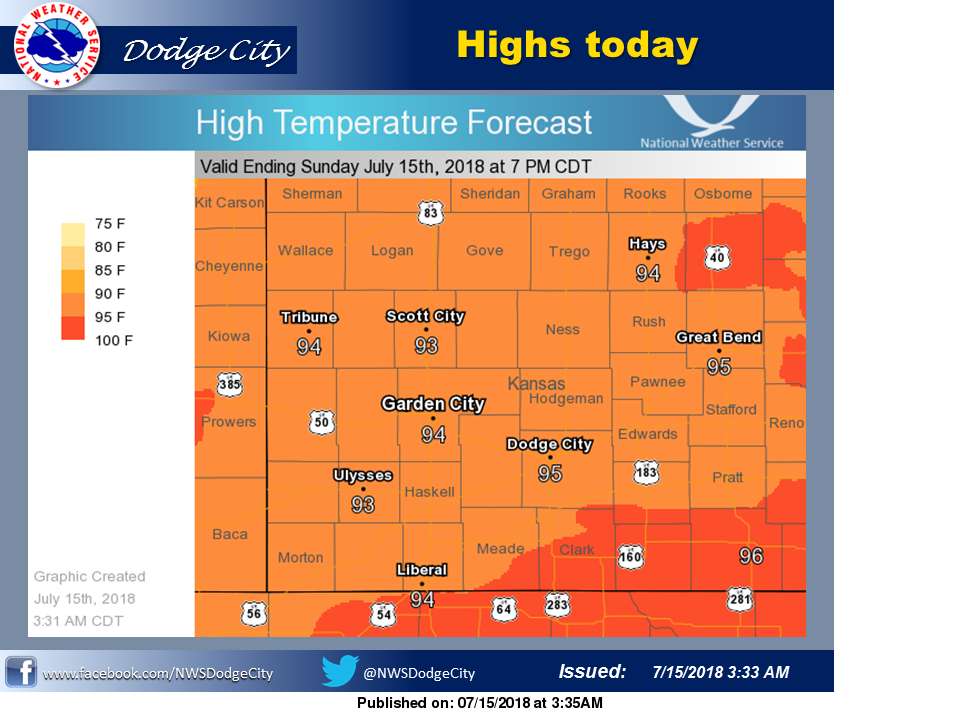
Sunny, hot Sunday, chance of rain late

Today
A 20 percent chance of showers and thunderstorms after 4pm. Patchy fog before 9am. Otherwise, mostly sunny, with a high near 93. Light southeast wind becoming east 5 to 9 mph in the morning.

Tonight
A 40 percent chance of showers and thunderstorms, mainly before 1am. Mostly cloudy, with a low around 69. Northeast wind 7 to 9 mph.

Monday
A 30 percent chance of showers and thunderstorms, mainly after 1pm. Partly sunny, with a high near 87. East wind 6 to 8 mph.

Monday Night
A 50 percent chance of showers and thunderstorms. Mostly cloudy, with a low around 68. East wind 5 to 9 mph.

Tuesday
A 50 percent chance of showers and thunderstorms. Mostly cloudy, with a high near 87. Southeast wind 6 to 11 mph.

Tuesday Night
A 40 percent chance of showers and thunderstorms. Mostly cloudy, with a low around 69.

Wednesday
A 20 percent chance of showers and thunderstorms before 1pm. Mostly sunny, with a high near 92.

Wednesday Night
Mostly clear, with a low around 68.

Thursday
Sunny, with a high near 94.

Kan. teen sentenced in death of semi-pro football player

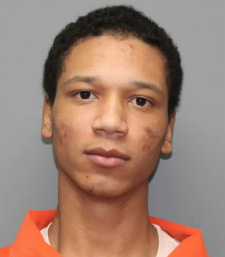
WICHITA, Kan. (AP) — One of the men accused of killing a semi-pro football player in Wichita last summer has been sentenced to life plus 13 months in prison.

Randle -photo KDOC

A jury convicted Ritchie Randle Jr. of Wichita in May of first-degree premeditated murder and criminal discharge of a firearm in the death of 19-year-old Timothy Golden.

Golden was found shot to death in his apartment in July 2017. He was a tight end for the Kansas Cougars, a semi-pro team based in Wichita.

Investigators say Randle and two other men, Dakahri Sanders and Larry Triplett, fired more than a dozen rounds in Golden’s apartment.

Randle was sentenced last month and won’t be eligible for parole until he spends at least 50 years in prison.

Sanders and Triplett have not yet been tried in the case.

25-year-old dead in Kan. house fire; cause under investigation

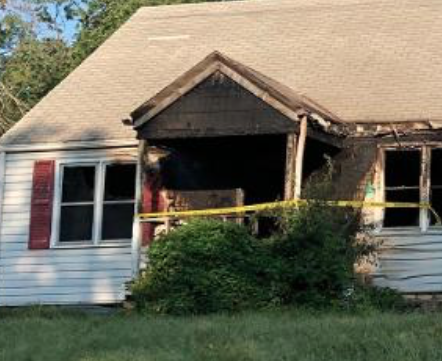
Topeka — Officials are investigating the cause of a fatal Friday morning house fire and have identified the victim as 25-year-old  Kennedy Karioki Ndungu.

Scene of the fatal fire photo courtesy WIBW TV

Just before 2a.m., fire crews responded to the fire located at 2949 SW Burlingame Road in Topeka, according to Fire Captain Michael G. Martin.

Upon arrival, fire crews reported smoke and flames visible from the single story wood framed house.  Fire crews quickly extinguished the fire; one fire victim was located within the residence.

Estimated structural dollar loss is $40,000 structure, $10,000 content loss.

The home had working smoke alarms at the time of the fire.

Kobach rails against illegal immigrants at pro-ICE rally

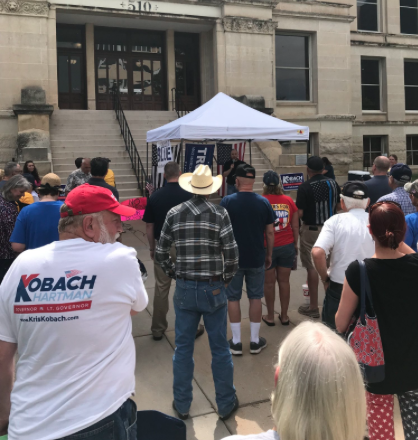
WICHITA, Kan. (AP) — GOP gubernatorial candidate Kris Kobach railed against people in the U.S. illegally at a Wichita rally intended to show support for federal Immigration and Customs Enforcement.

Kobach blamed those immigrants for everything from stealing American jobs to causing a tuition hike this year at state universities at the Saturday rally that drew only about 80 people. If elected governor, he says he would end in-state tuition for young people brought to the U.S. illegally as children.

Kobach was joined at the rally by his running mate, Wink Hartman, and Republican state Sen. Ty Masterson, of Andover.

Bill Anderson was one of three rally protesters who held signs and shouted at Kobach and other speakers, noting that nearly all of the rally supporters attending were white.

Kobach addressed the three protesters during his time at the microphone, calling them “snowflakes” who express “fake outrage.”

Police: Missing Mo. woman found dead in Kan., suspect arrested

SHAWNEE, Kan. (AP) — Police say a Missouri woman missing for a week has been found dead in an eastern Kansas house, and a man has been arrested on suspicion of killing her.

Cooper-photo KCPD

The Kansas City Police Department says the body of 43-year-old MeShon Cooper, who had been missing from Kansas City since July 6, was found early Saturday morning in a house in Shawnee, Kansas.

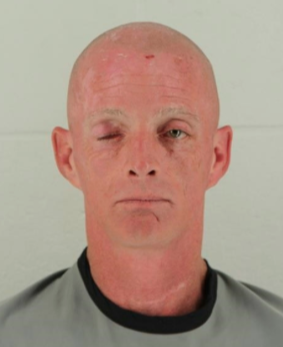
Shawnee police say 47-year-old Ronald Lee Kidwell, of Shawnee, was arrested and charged with second-degree murder. He remains in jail on $1 million bond.

Kidwell -photo Johnson Co.

Police say Cooper’s body was found as part of a joint investigation by the Kansas City, Shawnee and Lenexa police departments. Prosecutors say Kidwell is suspected of having killed her sometime between July 6 and Friday.

Leave a light on and catch fish

KDWPT

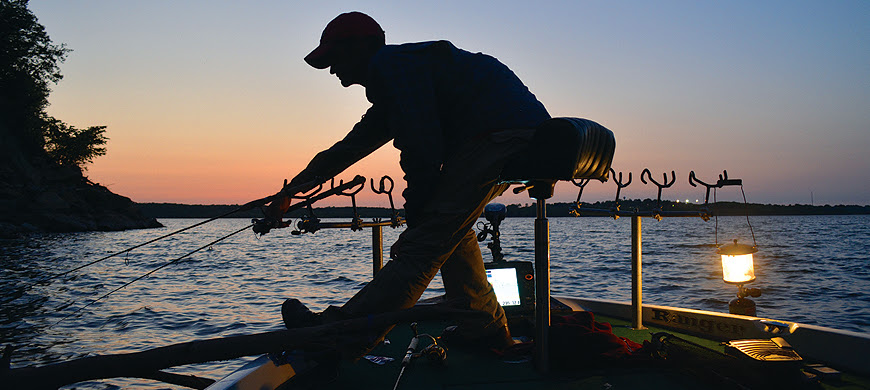
PRATT – You don’t have to quit fishing just because it’s hot. You just have to adjust your schedule to fish at night rather than during the day. Oh yeah – and leave a light on.

July and August are perfect months to catch white bass, crappie and wipers under lights. Young-of-the-year gizzard shad, the primary forage in Kansas reservoirs, are just getting to “bite size” and sport fish are busy filling their bellies.

To catch fish under the lights at night, you first need to anchor your boat in a strategic location just before dark. Your best bets are over a deep brush pile or cube cluster, creek channel ledge or mudflat. Once the sun sets, set out lanterns, floating lights or submersible halogen lights, and wait.

What happens is a natural but amazing phenomenon of the aquatic food chain. The light will attract microscopic zooplankton, which in turn will attract minnows and shad. When the lights have congregated a large school of shad ­– which will often swim in circles around the light as if disoriented – the predators will show up below. You’ll see the shad under the lights, and if you watch your sonar, you’ll know when the predators show up beneath the shad school. Drop a jig or minnow down and you’re in business.

It may take a trip or two to become accustomed to fishing at night, and there are safety considerations to keep in mind. Once the sun sets, your boat needs to have navigation lights on. Motor boats less than 40 feet long should have a white light at the stern, visible all around, and a light at the bow, showing red on the port side and green on the starboard side. A white light should be visible when the boat is at anchor. Wear your lifejacket and become familiar with the area before it gets dark. Go slow and use a hand-held spotlight to locate shorelines or obstacles while under power. If your sonar has GPS, use the map page with the trackback function on so you’ll have a safe route back to the ramp in the dark.

For some great tips on catching crappie under the lights, check out the July/August 2018 issue of Kansas Wildlife and Parks Magazine (ksoutdoors.com/Services/Publications/Magazine). Expert angler and guide, Joe Bragg, shares his night fishing know-how in a feature article authored by Brent Frazee.

Kansas GOP House candidate denies mulling run as Democrat

TOPEKA, Kan. (AP) — A Kansas Republican candidate for Congress is denying claims from three Democratic officials that he considered running as a Democrat and expressed socially liberal views before announcing as a GOP candidate last year.

Steve Watkins courtesy photo

Steve Watkins, an Army veteran seeking the GOP nomination in Kansas’ 2nd District, met with the Democrats at the Shawnee Democratic Party headquarters in Topeka in August 2017 when he was considering launching a campaign.

Ty Dragoo, the Democratic vice chairman for the 2nd District, said Watkins was trying to determine if the party would support him and expressed liberal social views during the meeting, including supporting labor unions, sensible gun laws and LGBT rights.

“He sounded like a Kansas Democratic Party member,” Dragoo said. “His social views were liberal.”

Watkins disputed Dragoo’s characterization of the meeting.

“I was not at any point looking to run as a Democrat, nor was I ever approached about running as a Democrat,” Watkins said. “I was taking some meetings with political types . and an associate advised me to reach out to Ty. At some point, I realized he had arranged the meeting to take place at the Democratic HQ. I didn’t back down from that. I’ve met with insurgents and warlords.”

Watkins, 41, said he didn’t participate when the Democrats expanded the discussion to include more liberal policies.

He announced his campaign as a Republican in November, four months after the meeting took place.

The Star reported it could find no evidence that Watkins ever voted or registered to vote before he voted last year in a local Topeka election, shortly before he announced his candidacy. Watkins said he couldn’t recall if he ever registered but he was well known of his conservative views as a graduate student at Harvard University after he left the Army in 2004.

He agreed to the meeting because he wanted to learn about transportation policy after being told by an adviser Dragoo was a transportation lobbyist, Watkins said.

Dragoo is the state legislative director for the Kansas chapter of SMART, a union that represents transportation workers. He called The Star about the 2017 meeting after seeing Watkins support a Supreme Court ruling that limits the ability of public sector unions to collect fees. Watkins said he didn’t know Dragoo was a union representative until being told by the newspaper Thursday.

Luke Domme, a Shawnee Democratic Party’s vice chairman and a business representative for the Bakery, Confectionery, Tobacco Workers and Grain Millers’ union, was at the meeting and supported Dragoo’s contention that Watkins was trying to decide whether to run as a Democrat or Republican.

Sarah Coats, a Democratic candidate for the Kansas Legislature, also attended the meeting and said Watkins expressed fiscal conservatism but more liberal views on social issues.

“He said that he thought he was too much of a moderate, so he was really interested in being in the Democratic Party,” she said.

Watkins said he was surprised that Coats was at the meeting. He also denied that Domme attended but the three Democrats said Domme set up the meeting and was there.

“The politics were middle of the road to me,” Domme said of Watkins. “I didn’t expect him to immediately swing to the Republicans.”

Watkins said the Democrats are bringing up the meeting now because they “want to damage me because they know I stand the best chance of beating Democratic front runner Paul Davis in the general election.

Gove Co. Medical Center golf tourney is Aug. 10

Gove County Medical Center is holding the 3rd annual charity golf tournament Friday, Aug. 10, at the Grinnell Cow Paddy Golf Club in Grinnell, KS.

Registration starts at 8:30 a.m., with shotgun start at 9:00 a.m.

Entry fee for the 2 person scramble is $90.00, which includes 18 holes golf, lunch, prizes, and 1 Mulligan per team.

Registrations received before July 27th will receive a free event t-shirt.

Proceeds benefit the Long Term Care Facility and will purchase patient care items such as new mattresses, patient lift.

For more information, visit our website at www.govecountymedicalcenter.org or Call 785-754-3341.

– SUBMITTED –

ALLEN: Supreme Court justices should have term limits

Neal Allen is an Associate Professor of Political Science at Wichita State University.

Life tenure for Supreme Court Justices, combined with increasing partisan polarization, is a toxic combination that is poisoning our democracy.

It is time to find a better way that preserves judicial independence while reducing the level of conflict over nominations. A move to a non-renewable 18-year term is a one way to reduce the stakes of confirmation battles, while preserving judicial independence.

Soon after Associate Justice Anthony Kennedy announced his resignation, President Donald Trump said “We have to pick a great one, we have to pick one that’s going to be there for 40 years, 45 years.”

While this statement will likely be a talking point for Democrats who oppose Judge Brett Kavanaugh, Trump’s 53-year-old nominee for Kennedy’s seat, it also accurately describes the way Supreme Court nominees are currently chosen.

Supreme Court nominations have become a way to preserve a party’s policy positions even after those policies cannot command a majority of voters in national elections. This practice is good for the party that has the Presidency when a vacancy occurs, and wonderful for relatively young lower-court judges who have a record that predicts ideological purity on the Court.

But it is bad for our democracy in general. It creates incentives for Senate leaders to use all means available to block nominees from the President of the other party, and to then push through the most conservative (or liberal) nominee possible. The norms of democracy and civility have not withstood such pressure, as shown by the unwillingness of Senate Republicans to grant President Obama’s nomination of Merrick Garland a vote.

One way to lower the temperature in Washington would be to lower the stakes of Supreme Court nominations. Judicial independence does not require a Justice serve as long as they live (or decide to retire after decades of service), but only that they are not susceptible to removal by a President or Congress.

Eighteen years is not the only number that would work, but it would have the advantage of ensuring that every President would get at least one appointment during their term. Thus we would avoid situations like in Democrat Jimmy Carter’s only term or Republican President George W. Bush’s first term, where a democratically-elected President had no appointments. A long, but defined term would also increase the likelihood that qualified potential appointees in their 60s would be considered.

The extreme partisanship of our current nomination politics makes such a proposal highly unlikely to even get a vote in either house of Congress, let alone enough support to begin the necessary process of constitutional amendment. But de-escalation must start somewhere, and ideally with the actions of a President or Senator.
Kansas Senators Pat Roberts and Jerry Moran, while loyal Republican partisans throughout their careers in elected office, are ideal candidates to start a conversation on reform of the Supreme Court nomination process. Neither one is in electoral danger, with Moran overwhelmingly reelected in 2016 and Roberts serving what is likely his last term. They could both withstand the pressure that would surely come from questioning the wisdom of the current nomination process when their party is on the verge of locking in their desired policy positions for a generation or more.

If either Kansas Senator would use their leverage in the current 50 Republican/49 Democrat Senate, they could at least secure a pledge from Majority Leader McConnell to schedule debate after the November elections on nomination reform. It is in their long-term interest, and the interest of Kansans in general, to reduce the level of partisanship on judicial nominations.

The Democratic Senators that are excluded from the nomination process will be less likely to collaborate with Senator Roberts on agriculture issues. When Senator Moran continues his fight to preserve rural Post Offices, he will need the help of Democratic Senators who also represent states with large rural populations.
Scorched-earth politics on nominations will not be contained to just Supreme Court nominations, but will continue the degradation of the personal relationships that are crucial to good-faith negotiation across party lines.

Senators Roberts and Moran would be wise to consider how to preserve the Senate as a broadly-representative governing institution, instead of continuing the destruction of bipartisan norms.

Neal Allen is an Associate Professor of Political Science at Wichita State University.

Last of 3 inmates who escaped Ark. jail caught in Kan.

ASH FLAT, Ark. (AP) — The last of three inmates who escaped from an Arkansas jail has been apprehended in Kansas.

Sledge- photo Sharp Co.

Sharp County Sheriff Mark Counts said that Randall Paul Sledge was arrested Friday by troopers with Kansas Highway Patrol. Counts did not provide details on the arrest.

Sledge, Chris Frey and Robert Pollard escaped early Wednesday from the Sharp County jail. The other two were apprehended later in the day.

Sledge prior to his escape was being held on various charges that included fleeing on foot.

Frey -photo Sharp Co.
Pollard -photo Sharp Co.

Counts says the men unscrewed the deadbolt from a jail door and lifted the bottom of a fence to escape. He says two jailers also failed to do a head count that could have revealed the escape earlier.

NW Kan. students earn distinction at Wichita State University

WICHITA — Wichita State University has announced the names of more than 2,750 students who were on the WSU dean’s honor roll for spring 2018.

To be included on the dean’s honor roll, a student must be enrolled full time (at least 12 credit hours) and earn at least a 3.5 grade point average on a 4.0 scale.

The following northwest Kansas students were included:

Bird City, KS
Bergan W Bock

Colby, KS
Kaitlyn R Flanagin
Talitha R Scranton

Downs, KS
Rachel C Renken

Goodland, KS
Amanda R Coon
Kaitlyn K Daise

Hays, KS
Brianna M Burns
Ashlyn M Parrish

Kensington, KS
Maira Banuelos Galicia

Osborne, KS
Emma C Carlin

Phillipsburg, KS
Falon D Bretton
Kinzee L Hoover

Russell, KS
Caitlyn M Hammack
Joseph A Oste

Saint Francis, KS
Alyssa M Schlepp

Wakeeney, KS
Cade A Papes

Copyright Eagle Radio | FCC Public Files | EEO Public File