Author: Hays Post

Kansas conservatives push to undo abortion rights ruling
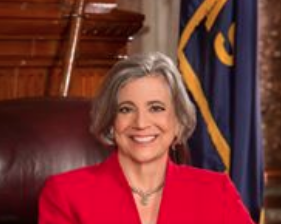

A legislative study committee opened two days of hearings Tuesday on a ruling in April by the state’s highest court that access to abortion is a fundamental right under the Kansas Constitution. The Republican-led committee is expected to urge the full, GOP-controlled Legislature to put a proposed constitutional change on the ballot next year for voters to consider.
Anti-abortion groups and legislators said Tuesday that they’re still drafting their proposal. Mary Kay Culp, executive director of Kansans for Life, said the measure wouldn’t seek to ban abortion outright but would declare that the Legislature determines how it is regulated.
If the effort succeeds, Kansas would be among a handful of states in which voters have added provisions to their state constitutions to declare that they don’t grant a right to an abortion. Alabama and West Virginia approved theirs last year, and Louisiana voters are considering a ballot question next year.
“We’re really stuck here,” Culp told the committee. “There is no other way to do it.”
Abortion rights opponents didn’t push for action before lawmakers adjourned their annual session in May, saying they wanted to confer with lawyers throughout the country and build political support.
The Legislature has long had anti-abortion majorities, but abortion opponents were a bit spooked in early May, when anti-abortion lawmakers narrowly failed to override Democratic Gov. Laura Kelly’s veto of a bill that would have required providers to tell patients about a disputed treatment to stop a medication-induced abortion after it has been started.
Overriding a veto requires the same two-thirds majorities in both chambers that are required to put a proposed constitutional amendment on the ballot for a statewide vote.
And in Iowa, another Republican-leaning state where the highest court issued an abortion-rights ruling in 2018, lawmakers have failed to move forward with a constitutional change, and one couldn’t go before voters there until 2022.
“Those politicians who are very opposed to abortion, for whom this is their No. 1 issue, realize that this isn’t an easy task anymore,” said Rachel Sweet, a lobbyist for Planned Parenthood Great Plains. “It’s going to be tricky for them to get the votes that they need.”
The Kansas court decision came as other states moved to ban most abortions in direct challenges to the U.S. Supreme Court’s historic 1973 Roe v. Wade decision. In Kansas, the April decision means that even if Roe were overturned, state courts could reject new restrictions or invalidate those enacted under Kelly’s conservative Republican predecessors.
The Kansas Supreme Court declared that the state constitution’s Bill of Rights grants a “natural right of personal autonomy” protecting a woman’s right to end her pregnancy. Critics see that as an overreach because most abortions were illegal in Kansas Territory when the state constitution was adopted in 1859.
Two justices in the 6-1 majority have announced their retirements, and Kelly, an abortion rights supporter, will name their replacements in the coming months, with no oversight from lawmakers. Abortion foes also are pushing a proposed constitutional change to require state Senate confirmation of Supreme Court justices, hoping that the court eventually would move to the right.
“Then, we are inserting politics into the judicial decision-making process, and that’s a very bad idea,” said state Rep. John Carmichael, a Wichita Democrat who supports abortion rights.
The Kansas court’s abortion decision blocked enforcement of a first-in-the-nation ban on a common second-trimester procedure. Special health and safety regulators for abortion providers have been tied up in state court since 2011.
Abortion opponents worry that even long-standing laws, such as one requiring a parent’s consent for a minor’s abortion, could be in jeopardy if the decision isn’t overturned.
“Personally, it’s my top priority,” Kansas Senate President Susan Wagle, a conservative Wichita Republican, said in an interview. “And I have a lot of colleagues who agree that this is most important.”
DEA agents find Kansas man with meth near day care facility
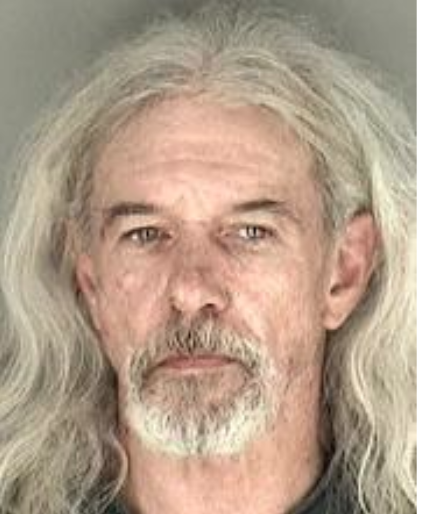
SHAWNEE COUNTY — Law enforcement authorities are investigating a suspect on drug charges after an arrest near a day care facility.

On Monday, the Shawnee County Sheriff’s Office and the Rossville Police Department assisted Agents with the Drug Enforcement Administration (DEA) on a narcotic search warrant in the 3500 Block of SE California Avenue, according to Sgt. Todd Stallbaumer.
DEA agents arrested Dwayne A. Zinn, 57, of Topeka, and booked him into the Shawnee County Department of Corrections for Possession of Narcotics with Intent to Distribute. They seized approximately 5 oz of methamphetamine, with a street value of around $5000.
With a daycare facility nearby, neighbors spoke with Law Enforcement and expressed their appreciation of the drug enforcement efforts in reference this ongoing investigation.
Innovators conference to be held at Fort Hays State

 The Kansas Small Business Development Center will host the Rural and Independent Innovators Conference at Fort Hays State University from 8 a.m. to 4:30 p.m. on Tuesday, Oct. 15, in the Robbins Center on the university campus.
The conference is to help product and technology innovators who want to know how and when to advance their ideas and provide business connections to grow and evolve.
Registration for the event is $15 and includes lunch. Click HERE to register.
For more information, call 785-628-5615.
— FHSU University Relations
Area officers among newest graduates of Kan. police academy
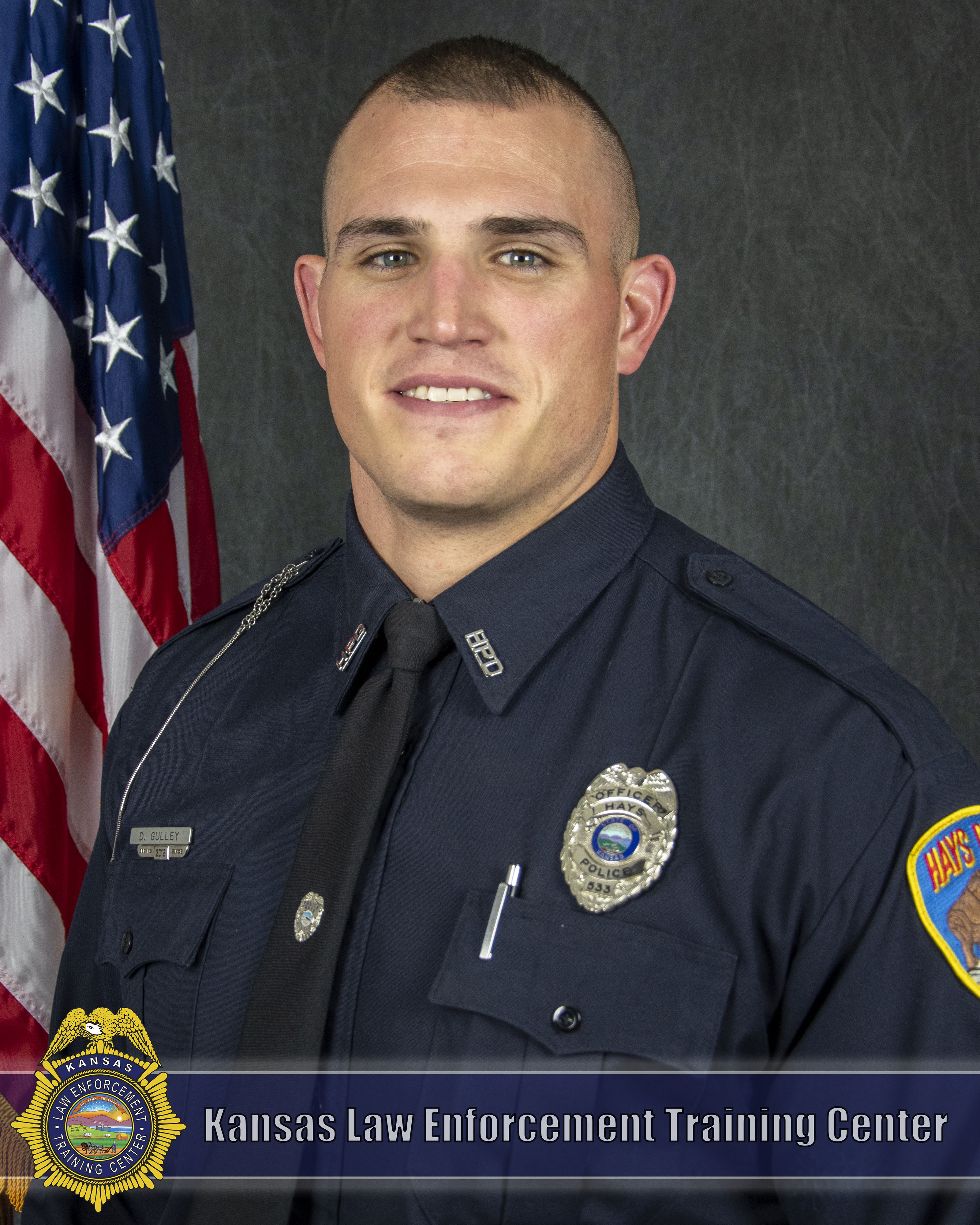

YODER — Fifty-one new law enforcement officers graduated from the Kansas Law Enforcement Training Center on Sept. 20. Sheriff Randy Henderson, of the Reno County Sheriff’s Office, was the speaker for the ceremony in KLETC’s Integrity Auditorium.
The new officers were members of the 257th basic training class at the center. Located one mile west and one mile south of Yoder, near Hutchinson, the center is a division of University of Kansas Professional & Continuing Education.
The graduates, who began their training June 10, represented 39 municipal, county and state law enforcement agencies from across Kansas.
Graduates receive certificates of course completion from KLETC and Kansas law enforcement certification from the Kansas Commission on Peace Officers’ Standards and Training, the state’s law enforcement licensing authority. The training course fulfills the state requirement for law enforcement training. Classroom lectures and hands-on applications help train officers to solve the increasingly complex problems they face in the line of duty.
Established by the Kansas Legislature in 1968, the center trains the majority of municipal, county and state law enforcement officers in Kansas and oversees the training of the remaining officers at seven authorized and certified academy programs operated by local law enforcement agencies and the Kansas Highway Patrol.
About 300 officers enroll annually in KLETC 14-week basic training programs. The center offers continuing education and specialized training to over 10,000 Kansas officers each year.
Northwest Kansas graduates who granted permission to release their names are listed below by agency.
Ellis County
- Hays Police Department; Dakota Gulley; patrol officer; Hays

Rooks County
- Stockton Police Department; Jessie Goodenow; patrol officer; Stockton
Thomas County
- Colby Police Department; Joshua Griffith; patrol officer; Colby
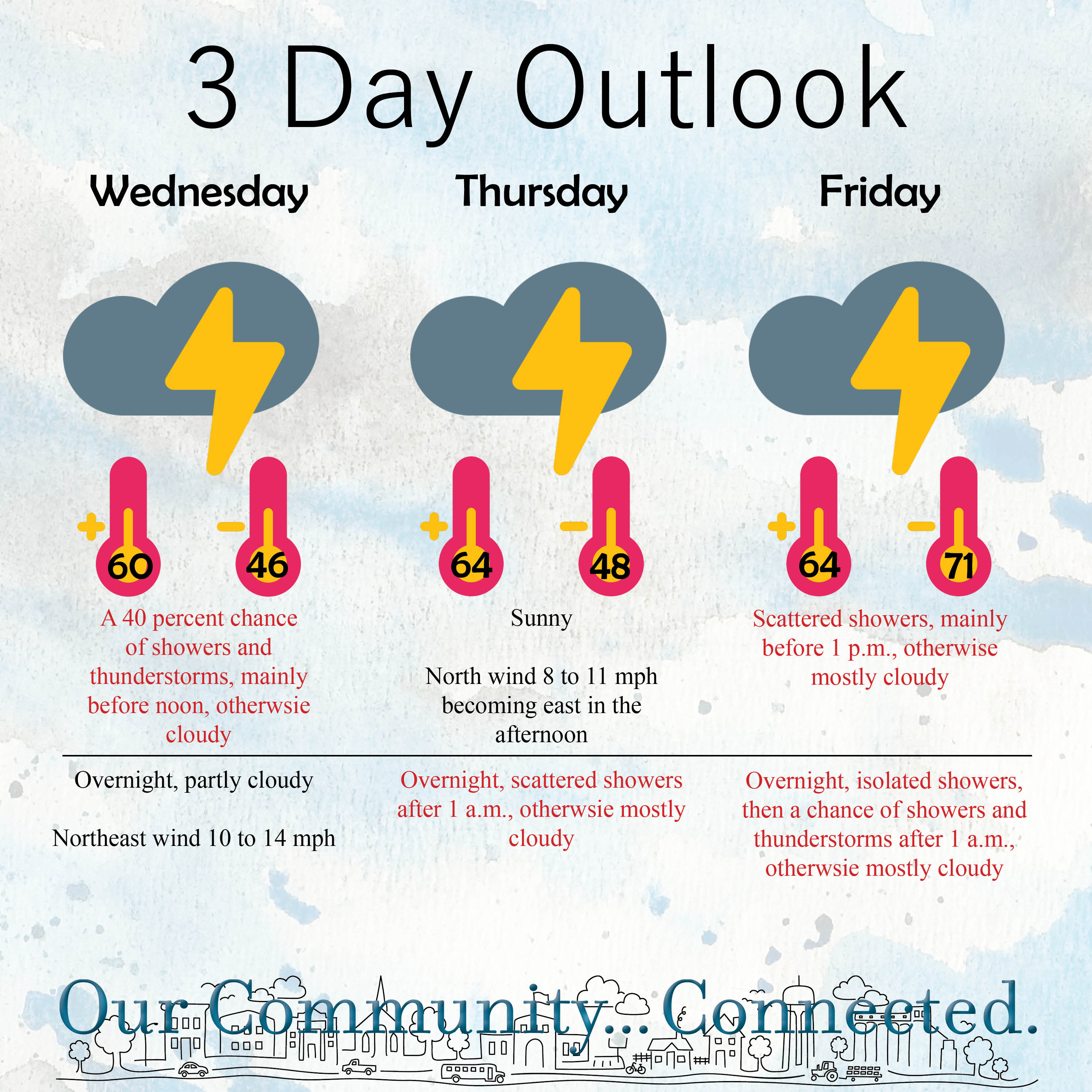
Three-day weather outlook

‘

Hays City Commission work session canceled

 City of Hays
Thursday’s Hays City Commission work session has been canceled.
Kansas woman pleads not guilty in young son’s death

LEAVENWORTH, Kan. (AP) — A 31-year-old Leavenworth woman has pleaded not guilty in the death of her 19-month-old son.

Catherine Smith is charged with second-degree murder after her son’s death in November 2018. She pleaded on Monday.
Smith allegedly left her son in a room where the temperature exceeded 90 degrees without checking on him for an extended time.
Smith is free on bond. Court records indicate she was released Sept. 16 on a $25,000 bond.
The trial is scheduled for Jan. 21.
Kansas man dies after SUV strikes guardrail, overturns
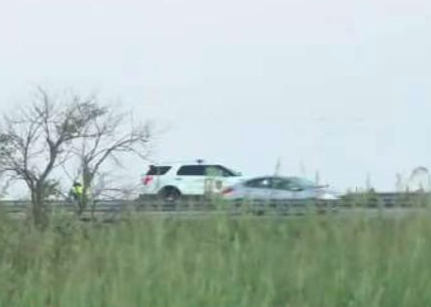
SEDGWICK COUNTY — One person died in an accident just after 5:30a.m. Tuesday in Sedgwick County.

The Kansas Highway Patrol reported a 1996 GMC Suburban driven by Bruce Lee Strawder, 61, Wichita, was northbound on Interstate 235 in the right lane when he lost control of vehicle. The SUV struck the guardrail and overturned.
Strawder was pronounced dead at the scene and transported to the Sedgwick County Coroners Office. He was not wearing a seat belt, according to the KHP.
Director named for national biodefense lab in Manhattan

MANHATTAN, KANSAS —Dr. Alfonso Clavijo has been appointed as Director of the National Bio and Agro-Defense Facility (NBAF), a state-of-the-art U.S. Department of Agriculture (USDA) research and diagnostic facility designed to protect the nation’s agricultural systems and stakeholders against the threat and potential impact of serious animal diseases.
“Dr. Clavijo brings with him a wealth of technical knowledge in the diagnosis of transboundary, emerging and zoonotic diseases,” said Dr. Chavonda Jacobs-Young, Administrator for USDA’s Agricultural Research Service (ARS). “As NBAF’s first permanent director, his extensive leadership experience will be a great asset in helping NBAF achieve its vision of being a national asset that protects U.S. agriculture and consumers through cutting-edge research, diagnostics, training, and development of vaccines and other countermeasures.”
ARS partners with USDA’s Animal and Plant Health Inspection Service (APHIS) to operate NBAF. The facility is currently under construction by the U.S. Department of Homeland Security (DHS) with commissioning scheduled for completion in 2021.
Clavijo, who starts October 13, will play a key role in ensuring the smooth transition of responsibility from DHS to USDA once the 574,000 square-foot facility becomes fully operational in 2023.
Prior to his appointment at NBAF, Clavijo served as Laboratory Executive Director of the Canadian Food Inspection Agency’s (CFIA) National Centres for Animal Disease, which operates laboratories in Winnipeg and Lethbridge. As Director, Clavijo oversaw the administration of diagnostic services, related technology development and research to detect and prevent transboundary, emerging and zoonotic animal diseases.
He also directed the management of biosafety level (BSL) 2-4 facilities that allow for the contained study of pathogens that cause foreign animal diseases, including foot-and-mouth, African swine fever, classical swine fever and highly pathogenic avian influenza.
Under Clavijo’s leadership, CFIA’s National Centre for Foreign Animal Diseases in Winnipeg was named by the Food and Agriculture Organization (FAO) as reference center for emerging and zoonotic pathogens.
Clavijo’s leadership also earned him Canada’s 2018 President’s National Award in “Leadership in People Management.” This prestigious honor cited Clavijo’s exemplary people-management skills and his demonstration of excellence in advancing CFIA goals, values and ethics as a human resources manager.
Clavijo has held leadership or advisory positions at CFIA laboratories, as well as Kansas State University, Texas A&M University, the Pan American Health Organization, and National University in Bogota, Colombia.
Clavijo earned a doctorate degree in Veterinary Microbiology/Virology while attending the University of Guelph in Ontario, Canada, from June 1990 to March 1995 and a Doctor of Veterinary Medicine degree from National University in Bogota, Columbia, 1986.
Clavijo has published numerous scientific works and continues to serve as an adjunct professor or advisor at affiliate organizations.
Man who attacked TV station employees charged in Kan. jail assault
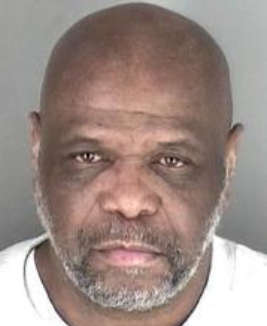
TOPEKA, Kan. (AP) — A man who attacked staff members at a Kansas television station in 2012 is now charged with assaulting a county corrections officer.

Shawnee County District Attorney Mike Kagay announced Monday that Ray Miles is charged with attempted first-degree murder and aggravated battery.
Prosecutors allege Miles attacked Shawnee County Corrections Officer Kourtney Flynn in July while she was trying to get him to return a phone. Investigators say the attack continued until other officers intervened. Flynn was treated at a hospital for several injuries.
During a court appearance Tuesday, Miles said he wanted to represent himself.
Miles assaulted several employees of WIBW-TV in May 2012, stabbing two of them. His sentence was scheduled to end in November. He is being held on $500,000 bond on the new charges.
Sheriff: Deputies seize meth worth $100,000 in Barton Co.
BARTON COUNTY— Law enforcement authorities are investigating a suspect on drug charges after a finding him hiding in an attic and making arrest.

Just after 3:30p.m. Monday, Sheriff’s Officers were looking for Roosevelt T Henderson of Great Bend. Henderson wanted for outstanding warrants from Barton and Russell Counties, according to Sheriff Brian Bellendir.
The Sheriff located the suspect vehicle and attempted to make a traffic stop at which point the vehicle fled. A short vehicle chase ensued in the west part of Great Bend. The driver of the 2007 GMC Yukon pulled into the driveway at 5918 Aspen and attempted to enter the garage. The vehicle struck part of the building, at which time the suspect fled on foot to the backyard while carrying a package. He was able to enter the house. With permission of the occupants of the residence Sheriff’s Officers entered the house and determined Henderson was hiding in the attic. After a short standoff Henderson surrendered to deputies without incident.

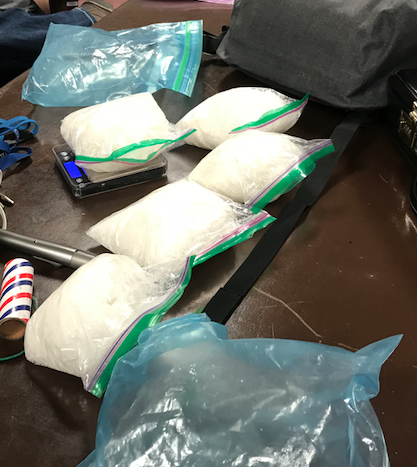
During the course of the investigation Sheriff’s deputies discovered nearly 5 pounds of methamphetamine. The estimated street value of the seizure is in excess of $100,000. Henderson has been booked into the Barton County jail on requested charges of possession of methamphetamine with intent to distribute within 1000 feet of a school, criminal possession of a firearm, possession of drug paraphernalia, attempt to flee and elude law enforcement, as well as resisting arrest and numerous traffic violations. Henderson also had a no bond warrant issued from Barton County as well as a no bond warrant from Russell County. At the time of his arrest Henderson was out on bond stemming from charges in the drug raids on September 13, 2019.
The Latest: Inmate with rare medical condition executed
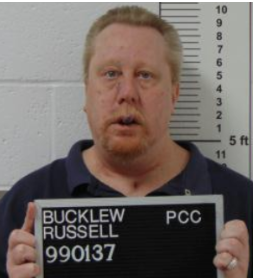
BONNE TERRE, Mo. (AP) — The Latest on the execution of Russell Bucklew in Missouri (all times local):
6:48 p.m.
A Missouri man has been executed for killing a man during a violent 1996 crime spree, despite concerns that the inmate’s rare medical condition would cause a gruesome lethal injection.
Russell Bucklew was executed Tuesday evening at the state prison in Bonne Terre. It was Missouri’s first execution since January 2017.
Bucklew looked around and twitched his feet beneath the sheet as he lay on the gurney just before the lethal injection. He suddenly took a deep breath and all movement stopped.
There were no outward signs of distress.
Bucklew had twice previously been within hours of execution, only to have the U.S. Supreme Court grant last-minute reprieves over concerns that Bucklew might suffer during the execution process. He had a condition called cavernous hemangioma and had blood-filled tumors in his head, neck and throat.
Bucklew’s attorneys said in a clemency request to Gov. Mike Parson that a throat tumor could burst, causing Bucklew to choke to death. Parson denied clemency earlier Tuesday.
Bucklew killed Michael Sanders in March 1996, raped his former girlfriend, shot a state trooper and, after escaping from jail, attacked his ex-girlfriend’s mother and her boyfriend with a hammer.
___
10:30 a.m.
Missouri Gov. Mike Parson has denied clemency for a convicted killer hours before the man is scheduled to be put to death.
Russell Bucklew has a rare medical condition that his attorneys say could result in a gruesome execution, which is scheduled for 6 p.m. Tuesday.
Defense attorney Cheryl Pilate confirmed Parson denied clemency.
Bucklew was convicted of killing Michael Sanders in 1996.
He suffers from cavernous hemangioma. He has blood-filled tumors in his head, neck and throat. A permanent tracheostomy in his throat helps him breathe. His attorneys said in the clemency request that if one of the throat tumors bursts, Bucklew could choke to death.
The U.S. Supreme Court gave the go-ahead for the execution in April; Pilate didn’t say if any last-minute court appeals are planned.
___
KANSAS CITY (AP) — The fate of a condemned inmate rests with Missouri Gov. Mike Parson, who must decide if the risk posed by Russell Bucklew’s unusual medical condition is grave enough to halt his execution.

Bucklew, 51, is scheduled to be put to death Tuesday evening for killing a man during a 1996 crime spree. The U.S. Supreme Court in April gave the go-ahead for Bucklew to be executed, so court appeals appear to be exhausted.
Parson, a Republican supporter of the death penalty, is still weighing a clemency request, a spokeswoman said Monday.
Bucklew suffers from cavernous hemangioma. The rare disease causes blood-filled tumors in his head, neck and throat. A permanent tracheostomy in his throat helps him breathe. His attorneys say in the clemency request that if one of the throat tumors bursts, Bucklew could suffer an excruciatingly painful death.
“These unstable tumors are highly likely to hemorrhage during the stress of the execution, causing Russell to cough and choke on his own blood,” the clemency request states.
The execution would be the first in Missouri since January 2017.
Missouri uses a single dose of pentobarbital as its execution drug but refuses to say where it gets it. The source is believed to be a compound pharmacy since large pharmaceutical companies prohibit the use of their drugs in executions.
It wasn’t known if the Missouri Department of Corrections planned any extra precautions to address the risk that Bucklew could suffer, in violation of the Eighth Amendment to the U.S. Constitution. A spokeswoman for the department said aspects of the state protocol are confidential, including what medical personnel are involved.
Bucklew was within hours of execution in 2014 and again in 2018 , only to get reprieves from the U.S. Supreme Court amid concerns about whether he might suffer.
Human rights groups and death penalty opponents, including all four Roman Catholic bishops in Missouri and the American Civil Liberties Union, have urged Parson to intervene. The ACLU and Missourians for Alternatives to the Death Penalty presented the governor’s office on Thursday with petitions that they say had more than 57,000 signatures.
Shortly after the 2018 reprieve, Bucklew contracted meningitis, requiring insertion of the tracheostomy tube , said one of his attorneys, Jeremy Weis. The tube is narrow and could fill with blood if the tumors burst, Weis said.
In 2017, the execution of twice-convicted killer Alva Campbell, who suffered from smoking-related breathing problems, had to be halted in Ohio when a usable vein couldn’t be found to administer execution drugs. He died in 2018 at age 69.
In 2018, Alabama halted the lethal injection of Doyle Lee Hamm when the execution team had trouble getting the intravenous line connected. Hamm had damaged veins because of lymphoma, hepatitis and drug use. A doctor hired by Hamm’s lawyers wrote in a report that Hamm had at least 11 puncture sites and bled heavily from his groin during the attempts to connect the line.
Bucklew’s girlfriend, Stephanie Ray, left him on Valentine’s Day 1996. Over the next few weeks, according to court records, he harassed her, cut her with a knife and punched her in the face. Ray feared for her life and the lives of her children, so she moved into the Cape Girardeau County mobile home that her new boyfriend, Michael Sanders, shared with his children.
On March 21, after stealing his nephew’s car and taking two pistols, handcuffs and duct tape from his brother, Bucklew followed Ray to Sanders’ home. Sanders confronted Bucklew with a shotgun inside the home. Bucklew fired two shots, one piercing Sanders’ lung. He bled to death.
Bucklew then shot at Sanders’ 6-year-old son and missed. Court records say he struck Ray in the face with the pistol, handcuffed her and dragged her to his car. He later raped Ray before heading north on Interstate 55.
A trooper spotted Bucklew’s car and eventually became engaged in a gunfight near St. Louis. Both men were wounded. Bucklew later escaped from the Cape Girardeau County Jail. He attacked Ray’s mother and her boyfriend with a hammer before being recaptured.