

I’m not a very opinionated man, but I do have a few annoyances. I try hard to keep these “pet peeves” on their leashes, but occasionally they break free.
Bad signs really irritate me; hard to read, too small, homemade looking, bad signs! For instance, a bad “for sale” sign might as well say” I really don’t want to sell this, but my wife won’t let it stay, so after you’ve read this sign, please just drive away.”
Speaking of bad signs, a major “pet peeve” of mine is trespassing and hunting without permission, and with the myriad of fall hunting seasons already underway, allow me to offer some pertinent information. I am a hunter and I have been a land owner, so I’ve been on both sides of this “fence” so to speak. Are you land owners and sportsmen aware that regulating trespassing and hunting on private property DOES NOT even require a “bad sign” but in fact, requires no sign at all?
In Kansas, law requires hunters to gain land owner permission even on unmarked property. Let me also note the difference between “hunting with permission only” and “hunting with WRITTEN permission only.” “Hunting with permission only” allows for any form of permission, written, verbal or over the phone, and requires the land owner’s signature on any ticket or formal complaint issued by the conservation officer. “Hunting with WRITTEN permission only” is satisfied only by permission in writing, and gives law enforcement personnel free rein to issue citations, and /or make arrests with no further authorization.
By the way, land owners, the fish and game dept. furnishes both the signs and permission slips, at no cost, for this type of posting. I’m sure we hunters have all seen the bright purple paint on fence posts and old tires along property lines. These purple markers along property boundaries also mean “hunting with WRITTEN permission only,” and corresponding compliance is required. The local conservation officer told me that trespassing violations are misdemeanors, so fines are determined and levied by the judge. A few years ago in McPherson County, the minimum was two hundred fifty dollars plus court costs of ninety-eight dollars, and could easily have run up to five hundred dollars depending on circumstances and the judge’s decision.
We hunt mostly deer and turkeys, and trap coyotes, raccoons and beavers. Lots of land owners, especially farmers, are willing to let respectful, responsible hunters help them control deer, turkey, predator and beaver populations on their land. In my assessment, there are very few reasons why hunting and trapping permission is denied. One is because the owner wants to reserve the privilege for themselves and their family. Another is because someone else has “beaten us to the punch.” There are also land owners who simply do not want game animals harvested. These are all legitimate reasons we hunters must respect. The explanation that makes me cringe is when a land owner denies hunting or trapping permission because of a bad experience with previous hunters or trappers. Trespassing, cut or broken-down fences, gates left open, muddy ruts in fields, indiscriminate shooting and other disrespectful actions toward the owner or his property; I’ve seen or experienced them all! Sadly, these actions by a few of our comrades adversely affect all hunters in the end.
Remember, NO SIGN of any kind is required to keep unwelcome hunters off your land, nor to have them prosecuted for trespassing! I was once denied permission to hunt deer during firearms season on a man’s property because years before he and his wife had dodged bullets whizzing through the trees as they attempted to cut firewood. Evidently the shooter had never before heard the sound a chainsaw makes…Continue to Explore Kansas Outdoors.
Steve Gilliland, Inman, can be contacted by email at [email protected].
The Kansas High School Activities Association has unveiled the KSHSAA Gallery of Champions.
The online feature, which can be found HERE, showcases “every state championship team, ever!” KSHSAA tweeted Monday.
The page includes a search function, which allows searches by name, school, activity or year. The database includes season results, championship histories, rosters and more.
Every state championship team, ever! Find it on the Gallery of Championshttps://t.co/0VKJxGht3a pic.twitter.com/VCeoSIif5m
— KSHSAA (@KSHSAA) September 30, 2019

Huck Boyd National Institute for Rural Development
Who is the only native Kansan ever to be elected President or Vice President? (If you guessed Dwight D. Eisenhower, you would be wrong. Although Eisenhower claimed Abilene, Kansas as his home, he was born during his family’s brief stay in Texas.) Who is the first Native American Indian ever to be elected President or Vice President? The answer to that question is the same as the correct answer to the first one: Charles Curtis is the first native Kansan and first Native American Indian to be elected to the nation’s second-highest office. His life is an amazing example of how education and hard work created a rags-to-riches success story. Thanks to the Kansas Historical Society and the U.S. Senate website for this information.
Charles Curtis was born in north Topeka. His father was Orren Curtis and his mother was Ellen Pappan who was one-quarter Kaw Indian. Charles was the great-grandson of White Plume, a Kansa-Kaw chief who had offered assistance to the Lewis and Clark expedition. White Plume’s daughter married a French-Canadian trader, so Charles grew up speaking French and Kansa before he learned English.
His mother died in 1863 at about the time his father left to fight in the Civil War. Charles was raised by his grandparents at the Kaw Reservation near the rural community of Council Grove, population 2,051 people. Now, that’s rural.
Young Charley learned to ride Indian ponies bareback. He became a successful jockey. He was also the hero of a cross-country run to warn Topeka about upcoming Cheyenne Indian raids.
After his grandfather’s death in 1873, Charles was headed to Indian territory. His grandmother advised him to get a formal education instead. “I mounted my pony and with my belongings in a flour sack, returned to Topeka and school,” Curtis recounted. “No man or boy every received better advice, it was the turning point in my life.”
In Topeka, he attended school while living with his other grandmother, a strong-minded woman. It was said of her that “she regarded being a Methodist and a Republican as essential for anyone who expected to go to heaven.”
Charles did well in school and went on to study law, supporting himself by working as a custodian and driving a horse-drawn taxi. When he had no customers, he would stop under streetlamps to read his law books.
After being admitted to the bar, the young lawyer opened his own firm, invested in real estate, and married Anna Baird. He was elected Shawnee County Attorney. Known as a law-and-order prosecutor, he won an upset victory over Democrat and Populist opponents for a U.S. House seat in 1892.
Curtis rose through the ranks in Congress. He was elected to the Senate where he ultimately served as majority leader. A strong advocate of farmers, he sponsored numerous bills related to agriculture and to Indian affairs. He was a master tactician who built strong relationships with both the conservative and progressive wings of his party. One senator described Curtis as “a great reconciler, a walking political encyclopedia, and one of the best political poker players in America.”
At the 1928 Republican convention, Charles Curtis was nominated for Vice President with Herbert Hoover. They were elected in a landslide but defeated for re-election in 1932.
After his term concluded, Curtis practiced law in Washington and continued his interest in politics. He liked to tell audiences that he was “one eighth Kaw and one hundred percent Republican.”
Curtis died in 1936 and is buried next to his wife Anna in a Topeka cemetery. The Charles Curtis State Office Building in downtown Topeka is named in his honor.
When the Curtis gravesite was rededicated, Vice President Dick Cheney sent a letter lauding Curtis as a “champion of the farmer and an advocate for women’s suffrage” and as a strong supporter of legislation granting citizenship to Native Americans.
Who was the first native Kansan and Native American Indian to be elected Vice President? It was Charles Curtis, whose education and hard work would make a difference and transform his life. We can be proud to claim him as a Kansan.
WASHINGTON COUNTY —One person died in an accident just before 3p.m. Monday in Washington County.
The Kansas Highway Patrol reported a 1992 International Dump truck driven by David Towner, 77, Ottawa, was northbound on Kansas 15 just east of Maple. The driver lost control, entered the east ditch and the truck flipped end over end after traveling down the embankment.
Towner was pronounced dead at the scene and transported to Ward Funeral Home. He was not wearing a seat belt, according to the KHP.
TOPEKA, Kan. (AP) — Kansas’ Republican attorney general declared Monday that Democratic Gov. Laura Kelly’s administration lacked the legal authority to impose what some experts see as the nation’s most aggressive policy for collecting state and local taxes on online sales.
Top Republicans in the GOP-controlled Legislature called on Kelly to rescind the state Department of Revenue policy immediately after they received a legal opinion from Attorney General Derek Schmidt.
But the department’s top administrator, Secretary Mark Burghart, a veteran tax attorney himself, said in a statement that the department is obligated to follow its current course unless told otherwise by the courts. He maintained that that the agency is only trying to enforce existing Kansas tax laws in light of a U.S. Supreme Court decision last year allowing states to collect sales taxes on internet sales.
“The Department of Revenue cannot select which laws it enforces,” Burghart said.
The department issued a notice Aug. 1 saying any “remote seller” doing business with Kansas residents must register with the department, collect state and local sales taxes and forward the revenues to the state, starting Tuesday.
Most states now have policies to collect such taxes, but almost all set minimum annual sales or transaction thresholds to exempt small businesses, according to groups tracking tax laws. Tax experts said Kansas was the first to attempt to collect the taxes on online sales without exempting any businesses.
Diane Yetter, founder of the Sales Tax Institute in Chicago, said she has been advising clients outside Kansas not to register with the state before Schmidt issued his legal opinion. In August, she called the department’s move “insane,” and she said Schmidt has “set it up for the taxpayer to win” a legal dispute with Kansas.
“I think the department would be remiss in not withdrawing the notice,” she said.
Schmidt said Kansas law does not give the department the authority to impose such a policy through a notice, without a public hearing or review by officials outside the department. He said the policy “has not been lawfully adopted and is invalid.”
“The last thing Kansans want is to be on the hook for more costly lawsuits,” Kansas House Speaker Ron Ryckman Jr., a Kansas City-area Republican, said in a statement calling on Kelly to cancel “what appears to be an unlawful tax mandate.”
It’s the second time within three months that Schmidt has questioned a Kelly administration policy. In July, he threatened to go to court to block a Department for Children and Families policy allowing several thousand adults to keep receiving food assistance after failing to meet a work requirement. Kelly dropped the policy the next day.
State officials have felt some pressure to collect more taxes from online sales to prevent Kansas businesses from facing a competitive disadvantage. The Department of Revenue has estimated that the state would collect between $20 million and $40 million a year in additional tax revenues, and Burghart said about 600 out-of-state businesses have registered with Kansas since Aug. 1.
Legislators included provisions on taxing Internet sales in two GOP tax-cutting bills this year, but Kelly vetoed both measures, saying they would destabilize the state’s finances.
The Department of Revenue imposed its policy under an existing tax law that applied to out-of-state businesses but wasn’t enforced because court decisions had prevented it. Its officials argued that it was trying to enforce existing tax laws fairly and consistently, without overstepping its legal authority by exempting some business and not others.
“The notice does not reflect a change in policy, but only restates long-established statutory provisions regarding the duty to collect and remit Kansas taxes,” Burghart said.
The U.S. Supreme Court last year overturned a previous ruling that states could not collect their sales taxes unless a business had a physical presence within their borders. It upheld a South Dakota law requiring businesses to collect its taxes if they had $100,000 in sales or 200 transactions in the state within a year.
Schmidt said it’s “reasonable to conclude” that some threshold is required for a state to avoid violating the U.S. Constitution by burdening interstate commerce too much.
“You still have to have substantial activities,” Yetter said.
But Schmidt focused his opinion more on the technical question of whether the Department of Revenue can set policy with a notice and concluded it could not. If the agency had tried to issue a formal administrative rule, it would have been required to have a public hearing and outside agencies, including Schmidt’s office, would have reviewed the proposed policy.
___
TOPEKA, Kan. (AP) — Kansas Attorney General Derek Schmidt has issued a legal opinion declaring that a new and aggressive state policy for taxing online sales is invalid.
Top Republicans in the GOP-controlled Legislature immediately demanded Monday that Democratic Gov. Laura Kelly require the Department of Revenue to rescind the policy.
The department issued a notice in August saying any “remote seller” doing business with Kansas residents must collect state and local sales taxes and forward the revenues to the state, starting Tuesday. It cited a U.S. Supreme Court decision last year allowing states to collect such taxes.
The GOP attorney general said the department didn’t have the authority to impose such a policy through a notice.
Legislators included provisions on taxing internet sales in two tax-cutting bills this year, but Kelly vetoed both.
LEAVENWORTH COUNTY —One person died in an accident during a chase by law enforcement just after 2p.m. Monday in Leavenworth County.

The Kansas Highway Patrol reported a 2000 Chevy Tahoe driven by Anthony Dorsey, 29, Kansas City, was westbound on Interstate 70 attempted to flee law enforcement.
The driver made a U-turn prior to the eastern entrance toll plaza. While traveling eastbound in the westbound lanes, a 2017 Subaru driven by Nathan Pena, 19, Brookfield, IL., made an evasive maneuver to avoid the Tahoe. The Tahoe collided with the Subaru in the north ditch.
Pena was pronounced dead at the scene. Dorsey was not injured. Both drivers were properly restrained at the time of the accident, according to the KHP.
Authorities have not released details on what prompted the chase and possible charges against Dorsey.
POINT LOOKOUT, Mo. (AP) — A man has been sentenced to 20 years in prison for forcing two Christian college students to perform sex acts on each other after they violated curfew and were locked out of their southwest Missouri campus.

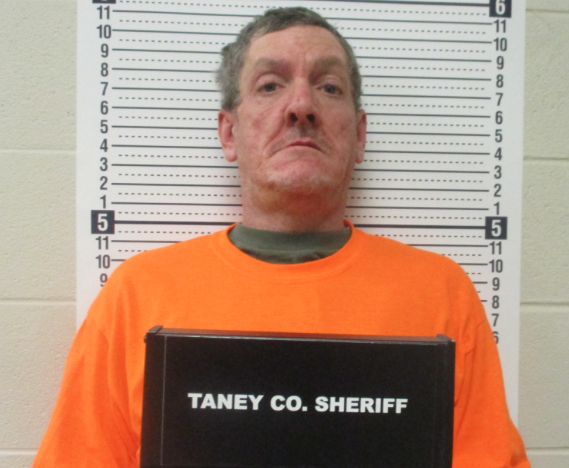
49-year-old Robert Hyslop was sentenced last week for first-degree sexual abuse and two counts of first-degree kidnapping.
Charging documents say the College of the Ozarks students fell asleep in a commuter parking lot in October 2018 because the campus’ front gate was locked when they returned after curfew.
The documents say Hyslop made the man and woman drive to a highway lookout, where he forced them into sex acts at gunpoint. Hyslop also is accused of making the woman touch him sexually. He was on probation at the time for a drug conviction.
KANSAS CITY, KAN. – A Kansas woman was sentenced to 12 months and a day in federal prison Monday for her role in crashing a car into a Cabela’s store to steal guns, according to U.S. Attorney Stephen McAllister.

Brenda Tosh, 28, Kansas City, Kan., pleaded guilty to one count of conspiring to steal guns from a federally licensed firearms dealer.
In her plea, she admitted that she and a co-defendant crashed a car into a Cabela’s store in Kansas City, Kan. They took long guns from the firearms section of the store and placed them into a shopping cart. According to court records, the guns included two 12-gauge shotguns, a .22-caliber rifle, a .308-caliber rifle and a .223-caliber rifle.
Law enforcement officers arrived and arrested Tosh before she could leave the store. The co-defendant was arrested later, after fleeing the store and stealing a car from a nearby dealership.
Co-defendant Kyle Mendez, 29, Kansas City, Kan., is scheduled for sentencing Nov. 26.

By JONATHAN ZWEYGARDT
Hays Post
An Ellis man pleaded guilty to second-degree murder in the shooting death of a Hays man in February.
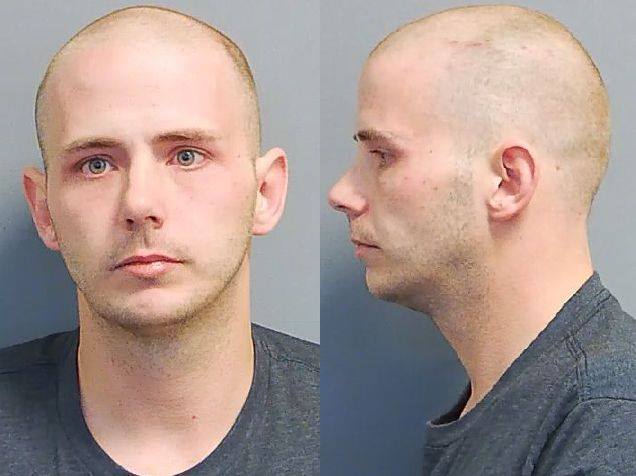
Ryan Paul Thompson faces more than 23 years in prison after pleading guilty Monday to shooting 26-year-old Diego Gallaway on Feb. 27 in the 2700 block of Indian Trail in Hays.
Thompson was originally charged with premeditated first-degree murder, criminal possession of a firearm by a convicted felon and possession of methamphetamine with the intent to distribute.
According to court documents, Thompson shot Gallaway in the back of the head while holding him in a choke hold.
Under the plea agreement, Thompson faces 272 months in prison for second-degree murder and another 15 months on the drug charge, for a total of 287 months in prison. The gun charge was dropped.
Thompson’s sentencing will be scheduled for later this year.
Also on Monday, Kylie Waldschmidt was bound over as charged with aiding and abetting first-degree murder during commission of inherently dangerous felony.
Ellis County Attorney Tom Drees said Waldschmidt and Thompson went to the 2700 block of Indian Trail to commit an aggravated battery or aggravated assault that escalated to murder.
Waldschmidt was also bound over for interference with law enforcement for allegedly lying to police.
A formal arraignment for Waldschmidt has not been set.

By JOHN P. TRETBAR
Kansas Common crude at CHS in McPherson starts the week at $46.25 per barrel, after dropping fifty cents on Friday.
Independent Oil & Gas Service reports thirty new well-completions for the week. Eight of those were in eastern Kansas and 22 west of Wichita, including one in Barton County. So far this year, operators in Kansas have completed 1,028 wells. That’s down from the 1,141 reported at the end of the third quarter last year.
Operators have 16 new drilling permits across Kansas this week, 741 so far this year. That’s a little over half of the third-quarter total last year. There are eight new permits east of Wichita, and eight in Western Kansas, including one each in Ellis, Russell and Stafford counties.
The oil-patch in the U.S. continues its record-level production. On Wednesday, The Energy Information Administration reported the second-largest weekly production total ever, 12.472 million barrels per day for the week ending September 20. That’s up from the week before by nearly 50,000 barrels per day. The record of 12.5 million barrels per day was set August 23.
The Kansas Geological Survey has released updated production figures through June of this year, with a statewide total of 16.68 million barrels, or just over 92,000 barrels per day. Barton County operators pumped more than 816,000 barrels through June, while Ellis County produced 1.26 million barrels. In Russell County, total oil production through June was over 754,000 barrels. The total in Stafford County was nearly 437,000.
Activity in the Texas patch declined in the third quarter, according to a survey of energy executives by the Federal Reserve Bank of Dallas. The Houston Chronicle reports abundant crude supplies and slowing global demand led energy companies to pull rigs out of service and cut jobs.
Refineries imported about 6.4 million barrels per day of crude oil last week, down more than 600,000 barrels per day. The four-week average for U.S. imports is 13.1 percent less than the same four week period a year ago.
U.S. crude oil stockpiles increased last week by 2.4 million barrels. The government said that at 419.5 million barrels, inventories are rising but remain at the five-year average.
Independent Oil & Gas Service reports a slight increase in its weekly Kansas rig report. There are ten active rigs in the eastern half of the state, up one, and 29 west of Wichita, also up one. Drilling is underway at two wells in Barton County and one in Ellis County. Operators are preparing to spud new wells at one lease in Ellis County, one in Russell County and one in Stafford County.
Baker Hughes reported a big drop in its weekly Rotary Rig Count Friday. Across the U.S. there were 860 active rigs, down six oil rigs and down two seeking natural gas. The count in Texas dropped by five rigs.
Activity in the Texas patch declined in the third quarter, according to a survey of energy executives by the Federal Reserve Bank of Dallas. The Houston Chronicle reports abundant crude supplies and slowing global demand led energy companies to pull rigs out of service and cut jobs.
Oil-by-rail traffic dropped nearly ten percent in the latest weekly tally from the Association of American Railroads. Operators filled 11,862 rail tanker cars with petroleum and petroleum products during the week that ended September 21. As total freight-train traffic continues to decline, the oil-by-rail weekly total is down 9.7% from a year ago, marking the first such decline in recent memory. The cumulative, year-to-date total remains 17% above the same figure a year ago. Amid the railroad industry’s broad decline, only one freight category, chemicals, showed an increase over a year ago.
Another huge acquisition for Texas-based Energy Transfer is expected to dramatically increase the pipeline and processing company’s scale and connectivity. The company will buy SemGroup of Tulsa in a stock-cash-and debt deal valued at over five billion dollars. The announcement last week said both firms will continue to operate separately until early next year when the transaction closes.
A federal judge has blocked enforcement of some new laws in South Dakota that were passed with the aim of preventing disruptive demonstrations against the Keystone pipeline expansion. A lawsuit alleges that the law chills protected speech. In issuing a preliminary injunction halting several provisions of the legislation, U.S. District Judge Lawrence Piersol said the plaintiffs are likely to win most of their challenges.
Saudi Arabia has a new energy minister, and for the first time he’s a member of the royal family. Prince Abdulaziz bin Salman is the half-brother of Crown Prince Mohammed bin Salman and is the first member of the royal family to hold the job. In his first public appearance as minister, the prince signaled no radical change in Saudi oil policy.
Dorothy Ellen Campbell, daughter of William and Mettie (Watkins) Waggle, was born August 18, 1917, in Graham County, Kansas, and passed away at the Andbe Home in Norton, Kansas, on September 28, 2019, at the age of 102.
Dorothy grew up in Graham County and attended country school to the 8th grade. On July 9, 1942, she was united in marriage to her sweetheart, Millard L. “Bud” Campbell, in Norton. They made their home in Salina, Kansas, and San Diego, California, before returning to Norton, where they raised their family. Dorothy also enjoyed her time working at LuJon’s Department Store. Her husband, Bud, passed away March 16, 1998. Dorothy remained in their home in Norton, before moving to Hays to be near her son in 2001. She returned to the Norton Manor in 2009, and later the Andbe Home.
Dorothy was a member of the Norton Christian Church where she was active for many years. She enjoyed doing needlework, playing board games and cards, especially 13 point pitch. Her greatest joy in life was spending time with her loving family.
Survivors include: her son, William “Bill” Campbell, Norton; other relatives and friends.
Dorothy was preceded in death by her parents, her husband, one son, Ronald, three brothers, Howard, Owen and Luther, and four sisters, Goldie, Thelma, Mettie, and Rosa, several nieces and nephews.
FUNERAL SERVICE – Thursday, October 3, 2019—10:30 a.m.
PLACE – Norton Christian Church – Norton, KS
INTERMENT – Norton Cemetery – Norton, KS
VISITATION – Wednesday, October 2, 2019—5:00 p.m. until 7:00 p.m.
PLACE – Enfield Funeral Home – 215 W. Main – Norton, Ks
MEMORIAL – Dorothy Campbell Memorial Fund