MAIZE, Kan. (AP) — A Kansas teacher faces several charges accusing him of sexual relations with a student.
Yelverton -photo courtesy Maize High
Johnny Paul Yelverton, 44, Maize was charged last week with six counts of unlawful sexual relations between a teacher and a student 16 or older. Yelverton also is charged with one count of sexual exploitation of a child.
Prosecutors say Yelverton had relations with a student in March and April, and possessed a sexually explicit image or recording of a child in May. A preliminary hearing is June 5.
Yelverton taught fire science and law and public safety courses to Maize High School and Maize South High School students. He was named Kansas DARE officer of the year in 2015. At that time, he was working as a police officer.
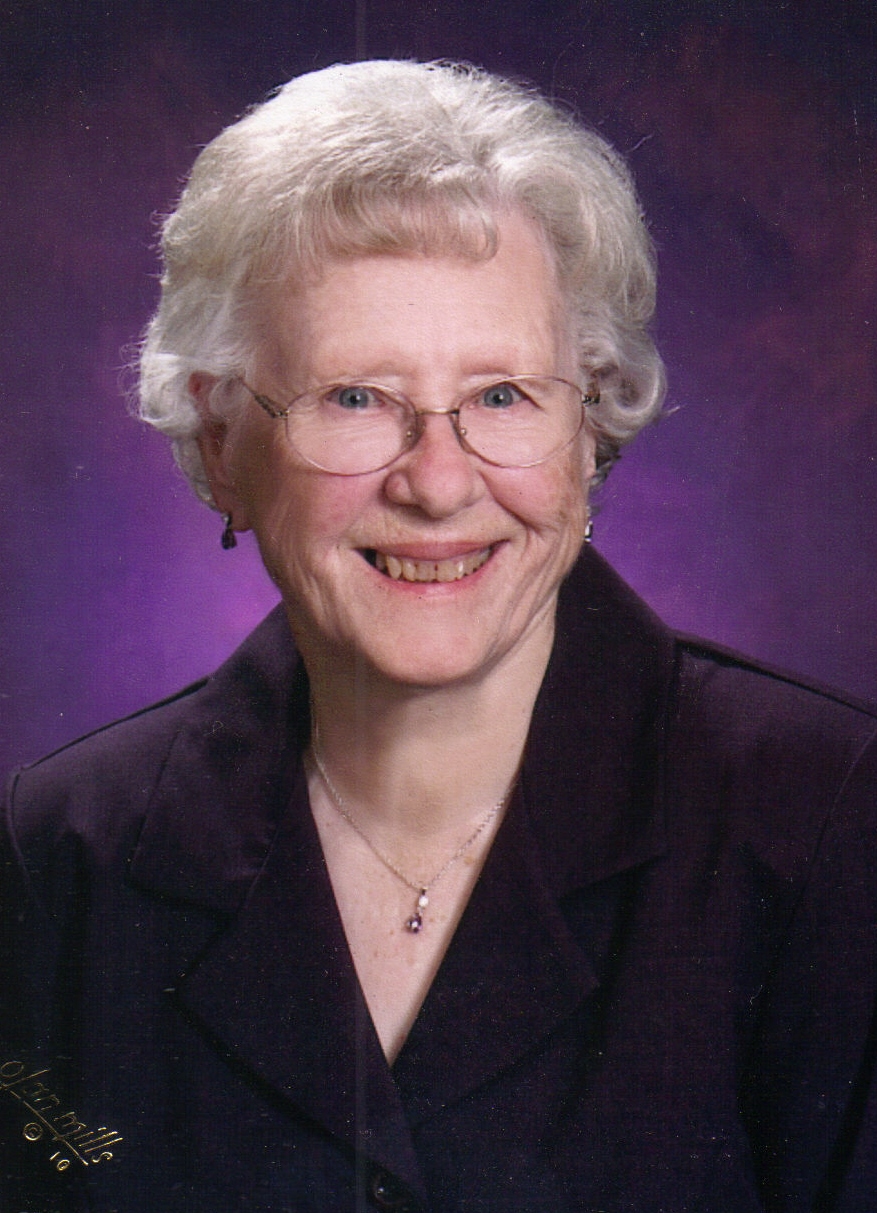
Kathleen Kay “Kathy” Ukele, age 59, of Hays, Kansas a loving mother, wife and grandmother, passed away unexpectedly on May 26, 2018 while spending time with family and friends at the place she loved most, Wilson Lake.
Kathy was born on October 18, 1958 in Oberlin, Kansas to Earnest Keith and Imogene (Harold) Gallatin. She graduated from Decatur County High School in 1976. Kathy was a long-time office manager at Karst Water Well before graduating from Fort Hays State University in 1996 with a bachelor’s degree in Sociology. She was the treatment director at Smoky Hill Foundation from 2001 – 2013 when she became the Executive Director.
Kathy enjoyed quilting, traveling to Nebraska to spend time with her sisters, cooking, spending time with her grandchildren and being at Wilson Lake.
Kathy is survived by her husband, Mel Karst of Hays; her children, Jason Ukele and wife Stephanie of Salina, Corey Ukele and wife Brandy of Salina, Dylan Karst of Hays, Ben Karst and wife Joan of Hays, Mark Karst and wife Nikki of Kansas City, Jon Karst of Big Sur, California and Clayton Karst of Mission, Kansas; two sisters, Debbie Macfee of Oberlin and Linda Jackson of Cortez, Colorado; nine grandchildren, Ike Ukele, Cooper Goodrow, Connor and Coltyn Ukele, Katrina and Kailey Delimont, Hendrix and Jaxon Karst and Cadence Karst all of whom she loved and adored with all her heart.
She was preceded in death by her parents and two sisters, Connie Gallatin and Jo Marintzer.
Funeral services will be 10:30 AM, Thursday, May 31, 2018 at Brock’s-Keithley Funeral Chapel and Crematory, 2509 Vine St., Hays, KS 67601.
Visitation will be Wednesday from 4 PM – 8 PM and Thursday 9:30 AM until service time, all at the funeral chapel.
Memorial contributions are suggested to the Humane Society of the High Plains.
Condolences may be left by guest book at www.keithleyfuneralchapels.com or by email at [email protected]
WASHINGTON — The U.S. Supreme Court had a change of heart Tuesday about a case where interview disclosures led to a Kansas police officer facing felony charges.
Matthew Vogt had been a police officer for the city of Hays in 2013, when he applied for a position on the Haysville Police Department outside Wichita.
Though Vogt admitted during the interview that he once kept a suspect’s knife during the course of his work in Hays, the Haysville department still offered Vogt the job, on one condition: He had to first tell Hays police about the knife.
Vogt agreed and included a one-sentence declaration about keeping the knife when he offered his two weeks’ notice.
Haysville wound up rescinding its job offer, however, when the Hays police chief called for a criminal investigation.
Though Vogt did evade felony prosecution — the charges were dismissed for lack of probable cause — he brought a civil lawsuit against that accused Hays and Haysville of violating his civil rights.
A federal judge dismissed the case, but the 10th Circuit found last year that Vogt could have a case against the city of Hays.
Vogt’s case appeared destined to go to Washington in September then when the U.S. Supreme Court granted Hays a writ of certiorari.
On Tuesday, however, the court dismissed the writ as improvidently granted.
The opinion includes no other details on the case except a note that Justice Neil Gorsuch, formerly of the 10th Circuit, took no part in its consideration or resolution.
SEDGWICK COUNTY Authorities have determined the cause of a weekend fire at a Wichita restaurant.
Crews on the scene of Saturday’s restaurant fire-photo courtesy KWCH
Just before 10p.m. Saturday, crews responded to a fire a 6S Steakhouse in the 6000 Block of West 21 Street North in Wichita, according to Lt. Jose Ocadiz.
Upon arrival, crews found smoke and flames coming from the rear of the building. The first arriving crews took action to contain the fire to the rear of the building.
Investigators determined the fire started due to complications within the natural gas fueled fire feature on a fireplace. The gas built up and had enough fuel to start a fire, according to Ocadiz.
Total loss was approximately $70,000 including $20,000 for contents of the restaurant, according to Ocadiz. The restaurant was closed at the time of the fire.
Ellis County has many roads closed due to water topping them. Please avoid the northwest part of the county, especially near the Saline River.
When the water recedes we will look for damage. Please remember not to drive thru water covered roads.
“Turn Around Don’t Drown”
Roads to avoid:
2800 Block 130th
2900 Block 130th
500 Block of Wiles Rd
400 Block of Saline River Rd
500 Block of Saline River Rd
Riverview Rd between 170th and 180th avenues
Intersection of 150th and Saline River Rd.
2700 Block of 170th
SALINE COUNTY — A teen died in a weekend accident in Saline County.
Taylor Patterson -photo courtesy GoFundMe
Just before 5p.m. Sunday a 2017 Can-Am Maverick X3 UTV driven by Taylor Patterson, 15, Woodstock, Georgia, was westbound in the 4000 Block of East Assaria Road, according to the Saline County Sheriff Roger Soldan.
She lost control of the vehicle on a gravel road, was partially ejected and pinned underneath the vehicle.
CPR was performed at the scene and EMS transported her to the hospital in Salina where she died, according to Soldan.
Patterson and a passenger Tony Jennings, 60, Salina, were not wearing helmets, according to Soldan.
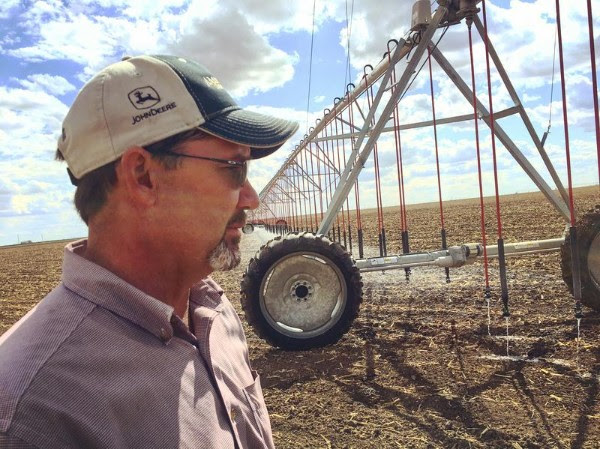
Dwane Roth relies on high-tech gear to water his crops only as much as he absolutely needs to. (Photo by Ben Kuebrich, Kansas News Service)
By BEN KUEBRICH Kansas News Service
GARDEN CITY – Flying east to west over Kansas, the land transforms from lush green to desert brown. Rectangular farm plots fill in with emerald circles, the work of center-pivot irrigation.
Outside Garden City, in the middle of one of those circles, Dwane Roth scoops up soil to reveal an inconspicuous PVC pipe. It’s a soil moisture probe that tells Roth exactly how much water his crops need. The device is one of many new technologies designed to help farmers make the most of every drop.
“All that you have to do is open up your app,” said Roth. “It’s going to tell you, you don’t need to irrigate or you’re going to need to apply an inch within six days.”
For generations, farmers like Roth have looked not to the heavens for the rain to nurture their crops, but to wells, pumps and sprinklers that heaved water up from the Ogallala Aquifer — America’s largest underground reservoir. They transformed the semi-arid region into some of the nation’s most productive farmland.
But the water’s running out.
“Those shallower wells, there’s no more water left in them,” said Roth.
If pumping continues at current rates, most of southwest Kansas will exhaust its water reserves within 25 to 50 years. That could dry up the agriculture at the heart of the region’s economy.
The threat of that impending crisis drives farmers, Roth among them, to adopt technology that helps preserve their wells without hurting the bottom line.
Other farmers are rallying together to self-impose strict local pumping limits.
But yet another faction fears conservation efforts can’t stave off the inevitable. They think the region needs a more radical solution. And soon. They want to create a giant canal to pump new water west — even if it means spending billions.
Pushing pumping limits
In 2013, Sheridan County farmers created the state’s first local enhanced management area, or LEMA, to set strict, enforceable limits on how much farmers could pump.
After Sheridan County had success with limits on irrigation, less strict measures spread to the surrounding area.
A 2017 study showed that farmers within that water district pumped 25 percent less water, in part from switching from corn to less thirsty crops such as sorghum and wheat. Notably, they made similar profits to nearby farmers who didn’t face pumping limits.
After Sheridan County had success with limits on irrigation, less strict measures spread to the surrounding area.
After that success in Sheridan County, the entire surrounding water district adopted limits. Its water restrictions are less severe, but it expands the conservation approach into parts of 10 counties in northwest Kansas.
“We’ve put in some restrictions which should lessen the decline rate,” said Ray Luhman, the manager of Groundwater Management District 4, which contains Sheridan County. “But, you know, we’re not anywhere near anything that would stabilize the water table.”
A LEMA has been proposed for southwest Kansas as well, but getting farmers to agree on its terms has been hard.
Pumping limits, in general, have been called into question. Some farmers in the expanded LEMA around Sheridan County, for instance, say the pumping restrictions violate their water rights and court fights may lie ahead.
The Great Canal of Kansas
Clayton Scott also uses the latest water technology on his farm in Big Bow, Kansas.
Yet he said that just using water carefully won’t be enough.
He thinks any pumping limits severe enough to preserve the aquifer would dramatically cut back the region’s harvest. That would push up local grain prices, and without cheap grain, livestock feed yards would close, and meatpacking plants would follow.
At its core, the western Kansas economy is built on irrigation.
A 2015 study calculated that losses in irrigation could cost some 240,000 Kansans their jobs and wipe out $18.3 billion of yearly economic activity, or about 10 percent of the state economy.
Scott and others in the region have their eyes on a more drastic solution to the water problem. Kansas could invest in a 360-mile series of canals and pumping stations to bring in water from the Missouri River.
Water from the Colorado River is channeled through Arizona, much the way some people think it should be diverted from the Missouri River across Kansas. (Photo courtesy U.S. Bureau of Reclamation)
He knows it sounds extreme, but Arizona has already built a similarly-sized aqueduct. The Central Arizona Project diverts water from the Colorado River and there’s been extensive research into building a similar canal across Kansas.
“Arizona looked at their situation and decided, ‘We have no other choice,’ ” Scott said. “They estimate almost a trillion dollars of benefit to the economy of Arizona.”
Arizona’s aqueduct has always been controversial. The federally funded canal remains at the center of multi-state disputes of water usage.
Experts say that a generation later, the legal and regulatory hurdles of building a long-distance canal through Kansas only look more daunting.
Water from the Colorado River is channeled through Arizona, much the way some people think it should be diverted from the Missouri River across Kansas.
Pricey pipeline
Still, Kansas and surrounding states have been considering aqueducts for a long time. A 1982 study came up with a plan to bring water from the Missouri River to a reservoir near Utica, Kansas, but nothing ever came of it. At the time, though, losing the Ogallala seemed like a distant prospect.
In 2011, while western Kansas was in a drought and farmers struggled to pump enough water to keep their crops alive, the Missouri River was flooding. Scott says that sparked renewed interest in a canal.
“It’s a long-term solution,” Scott said. “We can harvest the high flows of water off of the eastern rivers and bring them out here into the western High Plains, offset the droughts … and bring things into more of a balance.”
In 2015, the Kansas Water Office and the U.S. Army Corps of Engineers re-assessed that 1982 study. The agencies estimated that, depending on the capacity of the canal, it would now cost between $5 billion and $20 billion to build.
Because the water would have to be pumped uphill as it goes west, it could take more than $500 million a year in energy costs alone, for the largest-capacity canal. With interest costs from construction, the yearly tab could exceed $1.5 billion.
At the time, the head of the water office said, “this thing we studied is unlikely to happen.” The costs would simply run too steep.
The proposed path of a Kansas aqueduct. (Image courtesy SW KS Groundwater Management Dist.)
A canal project would have other barriers. Although the Missouri river sometimes floods, it also experiences lows, and levels would have to be maintained to permit barge traffic. There would also be challenges displacing people in the path of the aqueduct. While a highway can be redirected to avoid a town, a canal’s path is more constrained by topography.
“This thing we studied is unlikely to happen.”
At the same time, environmental issues could come both from taking water from the Missouri and in the path of any aqueduct. Upstream and downstream states on the waterway already tangle over how to manage the water. An effort to siphon away water would further complicate the situation.
Scott knows the project would be massive, and massively controversial, but that’s why he’s talking about it now — before the Ogallala runs dry.
An uncertain future
At a conference in April, Kansas Secretary of Agriculture Jackie McClaskey said public support for an aqueduct is unlikely unless Farmers show first that there’s no other way to water their crops.
“Until we can show people that we are utilizing every drop of water in the best way possible,” said McClaskey. “No one outside of this region is going to invest in a water transfer project.”
Clayton Scott says he isn’t looking for the rest of Kansas to bail out the farmers out west.
Scott imagines the canal would be a federal project, similar to Arizona’s aqueduct. Water users would repay the costs of construction and maintenance through a water use fee.
He also contends that an aqueduct could help a broader region.
Scott says an aqueduct could extend out to Colorado’s Front Range to supply booming cities such as Denver and Colorado Springs that draw water off of the dwindling Colorado River. If they drank from Kansas’ aqueduct instead, that would leave more water to trickle down the Colorado, which extends out into water-starved southern California.
A canal, advocates contend, could supply water at a fraction of the price that southern California farmers pay now and help alleviate shortages in that region.
Scott’s interest in water transfer is common in southwest Kansas but far from universal. For example, Roth isn’t convinced.
“It’s impractical and it’s one heck of a distraction.”
“It’s impractical and it’s one heck of a distraction,” said Roth. “Right now we need to concentrate on local conservation with what we do have, what we can do right now.”
Ray Luhman, Northwest Water district manager, thinks the state should consider all options, including channeling water across the state.
“The conversation needs to be had,” Luhman said. “But to, let’s say, mortgage your future on a project maybe 20 to 30 years from completion? We also need to look to something in the interim.”
Ben Kuebrich reports for High Plains Public Radio in Garden City and the Kansas News Service, a collaboration of KMUW, Kansas Public Radio, KCUR and HPPR covering health, education and politics. Follow him on @Ben_Kuebrich.
.@State_IRF Ambassador-at-Large Sam Brownback on the 2017 International #ReligiousFreedom Report: “Our goal is to protect the freedom of conscience for all people … We’ve seen some progress. But there’s so much more work to be done.” pic.twitter.com/LSY8eYeBoY
The Trump administration says ethnic cleansing targeting Rohingya Muslims in Myanmar has not stopped despite growing condemnation from the international community.
In November, the United States declared that violence against the Rohingya in Myanmar’s Rakhine state constituted ethnic cleansing, and the U.S. imposed sanctions. U.S. Ambassador Sam Brownback said Tuesday as he unveiled the State Department’s annual report on international religious freedom that the violence is continuing.
The report estimates that about 680,000 people fled Myanmar to neighboring Bangladesh to escape the violence.
The report covering 2017 also highlighted other U.S. concerns about religious freedom abroad, including some 80,000 to 120,000 political prisoners are being held in prison camps in North Korea, some for religious reasons.
“Protecting and promoting global respect for #ReligiousFreedom is a priority of @POTUS Administration… we are committed to promoting religious freedom around the world – both now and in the future.” – @SecPompeopic.twitter.com/V3pR3Foklg
It says hundreds of thousands of Uighur Muslims in China have been forcibly sent to re-education centers.
___
9:10 a.m.
The Trump administration is estimating that 80,000 to 120,000 political prisoners are being held in prison camps in North Korea.
That’s according to the State Department’s annual report on international religious freedom. It says some of the prisoners are being held for religious reasons. The report adds that prisoners are held “under horrific conditions” in remote areas. Yet it also notes that North Korea’s constitution guarantees “the right of faith” to citizens.
The report covering 2017 also says that “hundreds of thousands” of Uighur Muslims in China have been forcibly sent to re-education centers in China.
Secretary of State Mike Pompeo is formally unveiling the report Tuesday.
Former Almena resident Eileen Cramer passed away May 26, 2018 in Rice, MN at the age of 99. She was born Sept. 3, 1918, the daughter of Ralph & Jennie (Dailey) Dixon.
Survivors include her son, Ron of Fallbrook, CA; 3 daughters, Judy Whitney of Grand Rapids, MN, Bonnie Fox of Rice, MN and Patty Englert of Belton, MO; 9 grandchildren, 21 great grandchildren & 4 great great grandchildren.
A graveside service will be held Sat. June 2 at 2:00 p.m. in the Mt. Hope Cemetery, Almena with Rev. Larry Danforth officiating.
Visitation will be from 5:00 to 9:00 p.m. Friday at the Almena United Methodist Church, Almena.
Online Condolences: www.olliffboeve .com
Olliff-Boeve Memorial Chapel is in charge of arrangements.
Doug Williams has been appointed interim director of the Ellis County Coalition for Economic Development. He assumes the duties of Aaron White, who recently left the organization after seven years at its helm. Williams will lead the operations until a long-term replacement is found.
Williams is a lifelong entrepreneur and has been involved in a wide variety of business interests during his 30 year career. He spent the first 14 years of his career in the real estate business as a broker/owner of a RE/MAX franchise. During that time, Williams was involved in numerous real estate investment projects and gained considerable experience and knowledge in creatively structuring and financing transactions. He was 1985 Realtor Associate of the Year for the Hays Board of Realtors and the President of the Hays Board of Realtors in 1986.
In 1991, Williams founded System Solutions Inc., a company involved in the sale of IBM information systems. The company began with two employees and grew to 75 employees at the time it was sold to Rural Telephone Service in 1997. Williams then started InfiniTec, Inc. and Medical Business Resources. Infinitec, Inc., a computer software company, was the primary software provider for over 70 of the 105 county governments in Kansas. Infinitec, Inc. was sold to Wheatland Electric Cooperative in 1999. Medical Business Resources, a physicians billing service, was sold in 2003. In 2005, Williams re-entered the real estate business in Hays. He was the 2010 President of the Hays Board of Realtors and 2016 Hays Board of Realtors Realtor of the Year.
“The coalition is critically important to the long term growth and prosperity of our community, and I know that the Board of Directors and I are committed to work towards making that happen any way we can,” Williams said.
Williams has attended advanced courses in the areas of entrepreneurship, business ownership, and salesmanship. These courses include The Wharton Business Schools Entrepreneurship Class, IBM Sales School, and the Owner-Presidents course at The Harvard Business School. In 1997, he was the first recipient of the Harley L. Rhoads Small Business Achievement Award presented by the Hays Chamber of Commerce.
“We want to sincerely thank Aaron for his dedicated service to the Coalition over the last seven years,” said Ron Fields, board chairman. “Aaron was a valued contributor to the economic growth and development of Ellis County.
“The Coalition has reached an important transition point, and it is well-positioned to advance the economic expansion of this region,” he added. “Doug Williams brings a wealth of experience and long-established relationships to the organization. He will guide the Coalition during this interim phase to continue all current projects.”
The Coalition is a not-for-profit organization aimed at advancing the economic health and vitality of Hays and the surrounding communities. Long known for its efforts to promote a robust local economy through business creation, retention, expansion, and recruitment, the Coalition has offered instrumental support toward numerous community successes. A few of those include the arrival of Hobby Lobby, a soon-to-be constructed convention center, development of innovative job training initiatives, and BriefSpace, a co-working space and business incubator that will be opening soon in downtown Hays. The Coalition also administers a housing redevelopment program and training programs designed to offer skilled-trade training to area workers.
DISCLOSURE: Ron Fields is director of converged media at Eagle Communications.
From the Enersys parking lot. Photo courtesy Stephen Pate
From the Enersys parking lot. Photo courtesy Stephen Pate
From the Enersys parking lot. Photo courtesy Stephen Pate
With spotty rain still persisting Tuesday morning, northwest Kansas awoke to several inches of rain in gauges today.
In Graham County, major flooding was reported after Monday night’s storm. There was a report of 6.92 inches of rain from Hill City. Eastern Gove and western Trego counties also had reports of more than 6 inches of precipitation.
In Ellis County, a report south of Ellis saw 2.27 inches of rain in the gauge. While the amounts tapered to the east, most of the county received at least 1.5 inches of rain. Western Russell County also received about 1.5 inches of rain, while the eastern half of the county only received about a half inch.
Farther west in Thomas County, there was a report of 2.38 inches from Colby.
The chance for more thunderstorms continues today, with the chance of precipitation late this afternoon at 70 percent. Click HERE for the complete extended forecast.
Madeline Lela Schoenthaler, age 94, of Ellis, Kansas passed away Friday, May 25, 2018 at the Good Samaritan Society, Hays, Kansas. She was born June 17, 1923 in Ellis County, Kansas to John and Minnie (Schwab) Huck.
She graduated from Ellis High School in 1941 and from the Salt City Business College in Hutchinson, Kansas. On October 21, 1945 she married Raymond F. Schoenthaler. He preceded her in death on March 22, 2007.
Madeline was a homemaker and enjoyed flower gardening, cooking and baking especially her delicious pies. She was a member of Christ Lutheran Church where she was very active in church activities including the quilting group. She was also a member of PEO.
She is survived by a son, Terry Schoenthaler and wife Pat of Ellis; a daughter-in-law, Linda Schoenthaler of Hays; a brother, Clayton Huck of Ellis; four grandchildren, Chad Schoenthaler and wife Kimberly of Mission Hills, Kansas, John T. Schoenthaler and wife Keriann of Gilroy, California, Scott Schoenthaler and wife Brianna of Salina, Kansas and Amy church and husband Bryan of Hays as well as twelve great grandchildren, Emma, Bode, Madison, Noah, Sophia, Jonah, Myja, Gabby, Dominic, Alyssa, Aydan and Anthony.
She was preceded in death by her parents; a son, Lynn Schoenthaler; and a great granddaughter, Timberlynn.
Funeral services will be 10 AM Wednesday, May 30, 2018 at Christ Lutheran Church 106 E. 8th in Ellis. Burial will follow in Mt. Hope Cemetery.
Visitation will be Tuesday 5 PM – 8 PM with a prayer service at 7 PM and Wednesday 9 AM until service time all at Christ Lutheran Church.
Services in care of Keithley Funeral Chapel 400 E. 17th Ellis, KS 67637.
Memorial contributions are suggested to Christ Lutheran Church, Hospice at HaysMed or the Ellis Public Library.
Condolences may be left by guest book at www.keithleyfuneralchapels.com or by email at [email protected]