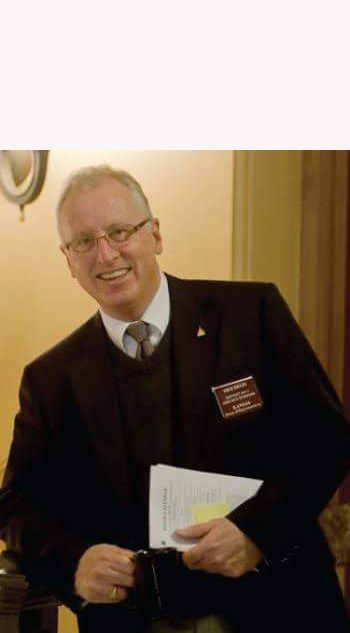
Michael Golub was 27 when he went missing 13 years ago. Golub was on his way to pick up his 5-year-old son at the Stanton County home of Shannon Floyd, his ex-girlfriend and the mother of his child. He never returned, and his vehicle was discovered days later on an isolated county road.
Floyd and her husband were accused of killing Golub, but charges were dismissed after two juries couldn’t reach verdicts in the case.
Golub was 15 when his family moved to Johnson City in 1994. His stepfather Jim Hines says the town has carried on after the disappearance, but he’s “just waiting for the truth to be known.”
OKLAHOMA CITY (AP) — Lack of rainfall and above-average temperatures are prolonging the drought conditions that have stressed crops and rangelands and placed new pressures on groundwater sources across the U.S. Southern Plains, climatologists from the region said Monday.
US Drought Monitor image
While some areas of the Texas Panhandle and southwestern Oklahoma have received plentiful precipitation in recent days, other parts of those states plus New Mexico, Colorado and Kansas have experienced only spotty precipitation since October, New Mexico State Climatologist Dave Dubois said during a national briefing.
“Over the majority of the area it’s been pretty light,” DuBois said.
Drought conditions are so severe across much of the Southwest that they rival those during the disastrous Dust Bowl period of the 1930s, when severe dust storms killed livestock and caused crops to fail.
Oklahoma State Climatologist Gary McManus said some climatological stations in the western part of his state have recorded less than 2 inches of rain since October.
“Some of those stations are pegging the driest 7-to-8 months on record for those locations,” McManus said.
DuBois said the region’s low rainfall totals have been aggravated by temperatures that he said have been as much as 10 degrees above normal during the past couple of weeks. Higher temperatures cause what little rain that does fall to evaporate rather than soak into the ground and recharge water tables.
“Drought is not just precipitation, it’s a bunch of things,” DuBois said.
Less-than-normal rainfall affects the viability of vegetation in the region, including fields cultivated by the region’s farmers and open prairies that provide habitat for wildlife, DuBois said.
“That’s a big concern with croplands and also rangelands,” DuBois said. “There’s a lot more stress on our plant systems.”
He said there’s a link between drought conditions and a decline in Oklahoma’s wheat harvest in recent years. The Oklahoma Wheat Commission has estimated that farmers will harvest about 36 percent less wheat this year than they did a year ago.
“So far, the numbers coming in are not very good,” DuBois said.
Precipitation generally increases across the region during the winter and spring months as rainfall and snowmelt replenish water supplies, but DuBois said the Southern Plains has received “very little to no runoff” from snow this year.
Consequently, farmers and ranchers are being forced to rely more heavily on groundwater supplies, which could lead to a decline in the levels of many water wells.
“Irrigation can jump significantly in drought years,” DuBois said.
Dubois said the months from July to September could relieve the worst of the drought conditions in New Mexico and elsewhere in the arid Southwest, when monsoonal rains traditionally saturate the region.
“The further you go west, the further influence you get from monsoon,” DuBois said.
TOPEKA, Kan. (AP) — Police have arrested 18 people protesting inside Kansas Secretary of State Kris Kobach’s office as part of a demonstration against policies he champions.
Protesters outside Secretary of State’s office Monday -photo courtesy WIBW TV
Kansas Highway Patrol spokesman Adam Winters said the demonstrators were arrested Monday for criminal trespassing by the Capitol Police.
About 40 protesters with the Poor People’s Campaign gathered outside the building housing Kobach’s office to decry his stance against illegal immigration and for tough voter identification laws. The protesters called those policies tools of white supremacy.
Kobach was not in the building after attending a political luncheon in Leavenworth. He issued a statement defending his fight against illegal immigration, saying, “the law is the law.”
It was the second of six weeks of planned protests. The campaign is focused on array of social and economic issues.
OLATHE, Kan. (AP) — A Kansas man who yelled “Get out of my country!” before killing one Indian immigrant and wounding another in a suburban Kansas City bar has pleaded guilty to three federal hate-crime charges.
Adam Purinton pleaded guilty in March to murder and attempted murder. Friday, he was sentenced to life in prison by the Johnson County District Court. CREDIT ANDREA TUDHOPE -Kansas News Service
Fifty-three-year-old Adam Purinton entered the plea Monday in federal court. He previously pleaded guilty to first-degree murder in state court in the February 2017 death of 32-year-old Srinivas Kuchibhotla. The shooting in Olathe, Kansas, also wounded Kuchibhotla’s friend and a man who tried to intervene.
The attack stirred fears that immigrants were facing more violence after the election of President Donald Trump. It also attracted attention in India, where officials publicly wondered if Indian citizens are safe in the U.S.
Witnesses said Purinton was asked to leave the bar after uttering racial slurs, then returned and opened fire.
Edward Cross is president of the Kansas Independent Oil & Gas Association.By EDWARD CROSS Kansas Independent Oil & Gas Association president
Just a few years ago, many experts were relying on traditional economic models to suggest the economy would be in trouble when oil prices started going up. However, now that the U.S. is a leading oil producer, that economic modeling dynamic is no longer true.
The drastic drop in crude oil prices in 2015 and 2016 slowed economic growth. But since that time, oil prices have more than doubled and the U.S. economy has shown strong growth.
The U.S. Energy Information Administration (EIA) recently reported that the daily output of crude oil in the U.S. in 2017 was the highest since 1972, and U.S. oil production is expected to set a new record of approximately 10.6 million barrels in 2018.
The U.S. is projected to produce 18% of the world’s oil within the next 20 years; ahead of Saudi Arabia, which will likely fall to second place at 13%.
In the U.S., oil and natural gas are projected to supply 60% of U.S. energy needs by 2040, even under the most optimistic scenarios for renewable energy growth. Worldwide energy consumption is projected to increase by 27% by 2040, and 77% of that energy consumption will be met by fossil fuels.
Energy analysts point to several reasons for this turnabout they call ‘flipping’. Historically, high oil prices slowed economic activity and low oil prices led to a strong economy. However, the leadership role the U.S. plays in world oil markets has helped ‘flip’ the historic model.
The Asian financial crisis in 1998 impacted the deep decline in oil prices, but the trade-off was a sharp boost to the U.S. economy. Ten years later, that model continued when oil prices skyrocketed, and a weak economy followed.
Today, with the U.S. leadership role in world oil markets, higher oil prices give rise to an increase in production and jobs in the U.S. Consumers are affected by rising oil prices, but many experts now believe job creation is a huge positive trade-off.
When oil prices were in a slump at the end of 2015, shipments of manufactured goods tied to commodities like fabricated metal products and construction machinery were down by 12% from the year before. A year later, as oil prices recovered, so too did shipments of manufactured goods. By the end of 2017, the tide had turned and shipments were up by 9%.
All Americans benefit from a safe, environmentally responsible, and thriving oil industry.
ELLIS COUNTY — One person was injured in an accident just after 9a.m. Monday in Ellis County.
The Kansas Highway Patrol reported a 2005 Chrysler passenger vehicle driven by Cody B. Ambrister, 23, Norton, was northbound on 130th four miles north of Ellis. The vehicle traveled off the right side of the roadway. The driver overcorrected. The vehicle crossed both lanes, entered the west ditch and overturned.
Ambrister was transported to Hays Medical Center. He was properly restrained at the time of the accident, according to the KHP.
Gov. Jeff Colyer signs the bill allowing faith-based adoption and foster care agencies to get state reimbursement for placement services. BRIAN GRIMMETT / KANSAS NEWS SERVICE
Kansas Gov. Jeff Colyer signed into law a measure allowing faith-based adoption and foster care agencies to get state reimbursement for placement services — even if they turn away prospective parents on religious grounds.
Colyer and the head of Kansas’ child welfare agency, Department for Children and Families Secretary Gina Meier-Hummel, have said they want to keep Kansas open to as many adoption agencies as possible as the state grapples with a record number of kids in foster care. As of April, there were 2,540 Kansas children in DCF custody up for adoption.
“It is imperative that we have policies and law that encourages more child placement agencies, not less,” said Colyer, flanked by conservative Republican lawmakers for the bill signing Friday at Youth Horizons Kinloch Price Boys Ranch in Valley Center.
Opponents of the measure object to taxpayer dollars going to agencies that won’t serve all Kansas families, calling it state-sponsored discrimination.
Republican gubernatorial candidate Jim Barnett, who sent out a statement immediately after the bill was signed, said it could lead to fewer adoptions of Kansas kids, as single parents and same-sex couples are turned away.
Kansas Democrats also chimed in, taking aim at Colyer and independent state Sen. John Doll, who is gubernatorial candidate Greg Orman’s running mate, for supporting the measure.
The Legislature only narrowly passed the adoption bill earlier this month, with debate over the religious protections going into the wee hours, and the issue could be pivotal in the upcoming campaigns for governor and the Kansas House.
The state’s major contractors still must serve all prospective foster parents and adoptive families referred to them, but their subcontractors do not.
A spokeswoman for St. Francis Community Services, one of the state’s two case management contractors, said of the 2,043 children it currently has placed with foster families, 288 were placed through faith-based subcontractors. The agency does not subcontract adoptions through any other child placement agency.
KVC, the state’s other case management contractor, wasn’t able to provide data by deadline.
Even before the law was signed, child placement agencies that refuse to place children with same-sex couples, single parents or non-Christians could get state reimbursement for adoptions they facilitate on behalf of a DCF contractor.
The new law, however, means that future administrations won’t be able to shut out subcontractors that factor their organizations’ religious views into choosing adoptive and foster parents.
Similar policies in other states have prompted legal pushback. The ACLU sued Michigan in 2017 over its practice of permitting state-contracted child placement agencies to reject qualified same-sex couples based on the agencies’ religious beliefs.
Madeline Fox is a reporter for the Kansas News Service. You can reach her on Twitter @maddycfox. Kansas News Service reporter Brian Grimmett contributed to this report.
PHILLIPS COUNTY — Law enforcement authorities are investigating a suspect on attempted involuntary manslaughter charges.
Deputies on the scene Sunday in Phillipsburg -photo Phillips Co. Sheriff
Just before 9:30 p.m., Sunday, deputies were dispatched to 1060 Second Street in Phillipsburg for a report of a disruptive subject at the residence, according to a media release.
Speake -photo KDOC
Upon arrival, deputies located Thomas Stacey, 59, Phillipsburg, in the front yard with injuries. Phillips County EMS transported Stacey to Phillips County Hospital. He was later transferred to a Kearney area hospital with critical injuries.
Craig J. Speake, 56, Phillipsburg, was taken into custody Monday morning and charged with attempted involuntary manslaughter.
A search warrant was executed at 9:30 a.m. Monday at 1060 Second Street. Prescription medication and marijuana where located and charges are pending for unlawful possession of narcotics and possession of marijuana.
Speake has a previous drug conviction, according to the Kansas Department of Corrections.
Eber Phelps, D-Hays, is the 111th Dist. state representative.
Dear Constituent,
It was the best of times, it was the worst of times. I’ve been inside voting or outside observing the legislature for more than 18 years and it was a year to remember. We passed some good, killed some bad. Some good bills were killed and some bad bills got through. This was the shortest session in anyone’s memory, recent or otherwise, and the campaign cycle has officially begun. Do you sense a “but” coming?
The only caveat to that is the Kansas Supreme Court’s consideration of the school finance bill detailed below.
SCHOOL FINANCE
My colleague, Rep. Melissa Rooker, is well-versed in all things K-12 education and she produced a series of reports detailing the cost studies commissioned, House’s work on education this year, the bill sent to the Court at the end of the regular session (SB 423), the $80 million drafting error included in the bill, and the “trailer bill” to fix that error. For an easy-to-read, thorough, and well-cited overview of the education process this year, I highly encourage you read the series.
When we came back to session on April 26, we had two jobs – pass the budget to “true up” the budget passed last year with this year’s actual revenues, and pass a “trailer bill” to fix the error mentioned above. We did both, to varying degrees of success, depending on where you sit.
House Substitute for Senate Bill 61 (H Sub SB 61) became a compromise of fixing the drafting error and some taking the opportunity to include further policy measures some weren’t able to slide into the last bill. It includes a requirement for all districts to have at least a 15% Local Option Budget (LOB) which is derived from local property taxes levied by our school board. Most districts have far higher than that already, but the bill seeks to ensure districts aren’t keeping local taxes down in order to secure more funding from the state. How LOB is derived will also change by using the current year’s funding total instead of the previous year, which will make the overall amount higher.
The original bill (SB 423) increases per pupil spending by $548, which, adjusted for inflation still would not meet what funding would have been had the legislature maintained the level of funding deemed constitutional following the 2005 Gannon lawsuit. The bill includes some positive steps:
Infusing new money into 4-year old at-risk programs and expanding them to 3-year olds if classes are not full.
Adds more than $74 million in special education funding over five years, and
Launches a mental health pilot project to partner community mental health centers and school districts to work together to improve mental health among our students.
Hays KNEA teachers visited the Capitol a few weeks back in support of the a new school finance formula.
If you take last year’s bill and combine it with this year’s bill, the increases are as follows:
The bill passed the Senate, 31-8, and the House, 92-27. I voted yes.
Specific to my constituents, our districts will see the following in new money:
Victoria: $82,155 Hays: $647,415
TAX CUTS
There’s nothing more appropriate than a description of the hundreds-of-millions we need to put in to properly fund our schools, than to follow that conversation with one about tax cuts. It was odd to many of us as well. I like lower taxes as much as the next guy, but we have a documented recent history of not running our government well. With just one year under our belts following the 2017 tax changes which brought thousands of Kansans back onto the tax rolls, we are still uncertain of the long-term impacts of the law.
To add further confusion, the ink is barely dry on the federal tax law and many wanted to make massive tax cuts hoping the dice would fall in our favor. I will support tax cuts when we are performing the basic operations of government at a functional level. We began that path last year and in order to keep that positive change, we cannot reverse course to the errors of 2012 and the sales tax increases that followed.
Last year’s bill phased in the restoration of tax deductions eliminated during Brownback’s reign, with full deductibility of medical expenses, mortgage interest, and property taxes paid by 2020. Among other sweeping changes, this bill would have sped that up to next year and allowed those who do not itemize on their federal taxes to itemize on their state taxes.
Now is the time to:
Restore more than $2 billion borrowed from KDOT in the last eight years,
Repay the “loan” from the KPERS program and begin to shore up its unfunded liability,
Pay state employees a competitive wage so those with oversight of foster families know what they’re doing and families provide a safe home, and we have enough corrections and mental hospital employees to maintain safe employee-to-inmate/patient ratios.
There are about 25 other examples I could list, but you get the idea. Now is the time for proactive, pragmatic action, not another ill-advised and ill-timed tax cut.
The Senate passed it, 21-19, but the House killed it for lack of 63 votes, 59-59. I voted NO.
BUDGET
Last year, when we crafted the two-year budget bill for July 1, 2017-June 30, 2018 and July 1, 2018-June 30, 2019, we used well-researched estimates to decide how much to spend on what. With the 2017 tax bill seeing its first tax year come to fruition, we needed to amend that budget to reflect revenue changes and increases in caseloads for Medicaid and other program beneficiaries. This “supplemental” budget (House Substitute for Senate Bill 109) made additional strides toward fixing the way Kansas government runs, but still relies partially on borrowing from KDOT, not repaying a loan from KPERS, and other shell games.
However, I supported this budget because it is a step in the right direction. It would be financially irresponsible and unsustainable to make all the budgetary changes many of us think should happen in just one or two years. Recovering from the Brownback years will take a decade, many have said, and in the process, we will slowly begin to repay the record debt those years created.
Of the high points, we began the process of restoring the disastrous cuts to our higher education system and increased state employee pay again after years without raises:
$15 million for higher education will include $637,554 for Fort Hays State, $1.9 million for KSU, $2.6 million for KU, and another $2.1 million for the medical school.
State employees not included in last year’s raise will see an 5% increase, and those from last year will receive another 2.5% increase this year.
Proactive investments like early childhood education and the State Water Plan were also included:
$1 million for Parents As Teachers
$1 million for Tiny-K
$4.2 million for a Pre-K Pilot project
More than $3 million for various water plan projects
I’m thrilled our seniors and their nursing facilities will begin to see better treatment from the Medicaid program via increased reimbursement rates to the tune of $22 million.
Finally, I supported an effort to keep Kansas taxpayers from paying more than $51,000 in legal fees assessed to Secretary of State Kris Kobach due to contempt charges levied against him during his most recent court case. The Senate stripped that language out of the budget bill.
When all was said and done, this is a much better budget than the legislature has seen in recent years. It passed the Senate, 26-14, and the House, 98-23, I voted yes.
It is a special honor to serve as your state representative. I both value and need your input on the various issues facing state government. Please feel free to contact me with your comments and questions. My office address is Room 43-S, 300 SW 10th, Topeka, KS 66612. You can reach me at (785) 296-4683 or call the legislative hotline at 1-800-432-3924 to leave a message for me. Additionally, you can e-mail me at [email protected]. You can also follow the legislative session online at www.kslegislature.org.
LAWRENCE — The University of Kansas has fired the Athletic Director.
Zenger-Photo University of Kansas
In an email to the campus Monday, Chancellor Douglas A. Girod wrote, “This morning I met with Director of Athletics Sheahon Zenger and informed him that I am relieving him of his duties, effective immediately.
Sheahon has been a loyal Jayhawk, and our athletics department has improved in many areas under his leadership. But Athletics continues to face a number of challenges, and progress in key areas has been elusive. To achieve the level of success we need and expect, I have determined a change in leadership is necessary.
Sean Lester, our deputy athletics director, will serve as interim director. I have spoken with Sean about my expectations for the coming months, and I am confident he will provide sound leadership and stability during this transition.
I have begun the process of identifying a permanent athletics director. To lead this process, I have enlisted Drue Jennings, one of our most respected and accomplished alumni. Many of you know Drue as our interim athletics director in 2003 and for his role in leading the search processes that brought Chancellor Gray-Little and Coach Self to KU. Jed Hughes, a consultant with the Korn Ferry executive search firm, will assist Drue.
In addition, earlier today I spoke with Coach Beaty and shared my expectation that he will continue recruiting hard and getting his team ready for the season.
Since becoming chancellor, I have spent countless hours with higher education peers and Jayhawks to hear their perspective on KU. A common thread in these conversations is that, as a major public university with national aspirations, we must continue to strive for excellence in all areas — including athletics. As I have said many times, a successful athletics department is inextricably linked to our broader mission as a flagship research university.
The other common thread in these conversations is optimism for Kansas Athletics. Across the country, we are recognized as having elite programs, a proud tradition, and a loyal fan base. These assets will serve us well as we identify a new leader for Kansas Athletics.
I want to thank Sheahon for his service during the past seven years. Under his leadership, student-athlete GPAs reached an all-time high. Rock Chalk Park, McCarthy Hall, and the DeBruce Center are lasting tributes to his efforts. Most importantly, he prioritized our student-athletes and represented KU with integrity and class.”
The Ellis County Commission will discuss using economic funds to support business corridor improvements northwest of Hays.
With the continued expansion of several businesses north of Interstate 70 in the area of 230th Avenue and Feedlot Ellis County staff believe it’s time to get updated costs on road projects in the area, according to County Administrator Phillip Smith-Hanes.
The county had previously explored the possibility of improving the infrastructure in the area but a lack of funding caused the commission to delay consideration of the project.
The commission will also consider staffing changes presented by County Treasurer Lisa Schlagel.
The board will meet as the Public Building Commission as 5 p.m. on Monday with the regular commission meeting to follow at the Ellis County Administrative Building at 718 Main St.