
Author: Hays Post
Vera Lynn Kruse
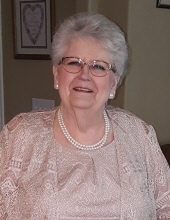
 Vera Lynn Kruse passed away Sunday, May 13, 2018, at Hays Medical Center at the age of 72. She was born in Plainville, Kansas on April 11, 1946 to John T. and Ruth (Hoff) Thummel. Vera attended school in Plainville and graduated from Plainville Rural High School in 1964. On July 3, 1965 she married Domenico “Mimi” Kruse in Plainville, Kansas. They were blessed with four children: Mary, Patricia, Anthony, and Michael.
Vera was a hard worker, helping her husband with his accounting business after she retired from many years with Southwestern Bell Telephone. She was full of love, amazingly strong faith, and laughter; never missing the opportunity to joke around. She enjoyed reading, watching movies and theatre, and playing cards. But the time she cherished the most was the time spent with her family and watching her grandchildren grow.
Vera is survived by her sons Anthony Kruse and wife Monica of Wichita and Michael Kruse of Lenexa; daughter Mary Rhodes and husband Dennis of Gardner; brothers Mark Thummel and wife Melinda of Plainville and Ralph Thummel and wife Wanda of Hays; sisters Elizabeth Striggow of Hill City, Rose Hardman and husband Duance of Hill City, Sister Mary Jo Thummel of Oakley, Theresa Kriley of Stockton, and May Munk of Hays; eight grandchildren, Drew Rhodes, Daniel Rhodes, Joshua Rhodes, Sarah Rhodes, Gabrielle Rhodes, Nathan Kruse, Braden Kruse, and Madelyn Kruse; and two great-grandchildren, Brilynn Rhodes and Jacob Wright.
She is preceded in death by her parents John and Ruth Thummel, husband Mimi Kruse, daughter Patricia Kruse, brother Jon Thummel, sister Grace Thummel, and brothers-in-law Robert Kriley and James Munk.
Our Lord Jesus told us, “If you have faith the size of a mustard seed, you will move mountains.” Greater than a mustard seed, Vera’s faith was a constant source of strength for herself, and all of her friends and family, as she daily prayed for the mountains each one of us faced. Our own lives will forever bear witness to her faith, as even now she intercedes on our behalf, to help us move the mountains we do not yet see.
A Mass of Christian Burial will be held on Thursday, May 17, 2018 at 10:30 A.M. at the Sacred Heart Catholic Church in Plainville, Kansas with burial to follow in Sacred Heart Cemetery. Visitation will be Wednesday 1:00-4:00 P.M. at the funeral home and 6:00-8:00 at the Sacred Heart Catholic Church with a Vigil service at 7:00 P.M.
Memorials are suggested to Sacred Heart Catholic Church or the National Domestic Violence Hotline and may be sent in care of Plumer-Overlease Funeral Home, 320 SW 2nd, Plainville, KS 67663.
Glenda Jean Bauer
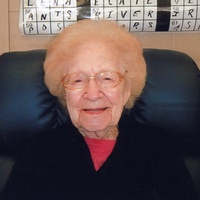
 Glenda Jean Bauer, age 94, died on May 11, 2018 at the Lane County Hospital Assisted Living Facility. She was born on April 6, 1924 in Beaver, Kansas the daughter of John and Hallie Stosopf Charles.
She was a Nurses Aide at Grisell Memorial Hospital, Ransom. She was a member of the United Methodist Church and the Go-Getters Senior Center, both of Ransom and a member of the Rebekah Lodge.
On December 25, 1951 she married Fred “Hermie” Bauer. He preceded her in death on August 7, 2005. She was also preceded in death by her parents; two daughters, Lexie Rose Dines and Barbara Sue Sunley; a brother, Keith Charles; and four sisters, Dorothy Hosman, Ruby Snodgrass, Jessie Haug, and Darlene Benton.
Glenda is survived by her son, Fred Philip Bauer, Agra; her daughter, Gloria Jean Sims, Hays; eight grandchildren, 4 step-grandchildren; 17 great grandchildren and 4 great-great grandchildren.
Funeral Service will be at Fitzgerald Funeral Home, Ness City on Wednesday, May 16, 2018, 10:30 A.M. with burial in the Arnold Cemetery. Friends may call at the funeral home on Tuesday from 9:00 A.M. until 9:00 P.M. with the family present from 7-9 P.M.
Memorial Contributions may be given to Go-Getters Senior Center, Ransom.
Ellis County lawsuit: Blue Sky Acres matter left to judge
 By JONATHAN ZWEYGARDT
Hays Post
The case of the Blue Sky Acres residential subdivision was once again before a judge in Ellis County District Court on Tuesday.
Ellis County resident and property owner Mary Alice Urein filed a lawsuit in December 2016 against the Ellis County Commission and Commissioner Marcy McClelland. The suit was filed after the commission failed to approve the final plat on the 20-acre subdivision on a 1-1 vote on the measure.

Commissioner Barb Wasinger recused herself because of a conflict of interest. Commissioner Dean Haselhorst voted in favor and McClelland opposed. Because there was no majority, the measure failed.
Unrein and her attorney Don Hoffman contend in the lawsuit that the approval of a plat is considered an “administrative/ministerial act” and part of the duty of county commission and that a commissioner cannot exercise “unlimited discretion.”
The suit also argues that McClelland’s vote was “arbitrary, capricious and unreasonable” and that a writ of mandamus would force the commission to approve the final plat.
In testimony Tuesday, McClelland continued to assert that her decision was made based on her life experiences and research she did after consulting with parties involved.
She contends that the possibility of groundwater contamination from septic systems and lack of available water in the area were her main reasons for voting against the measure.

McClelland, who was the last of several Hays and Ellis County officials who took the stand Tuesday, reaffirmed her “No” vote when asked by the county’s attorney, Kevin Case of Case Linden, if she wanted to change her vote.
And when asked if she thought her vote was a mistake she answered emphatically, “No!”
She said while living in McPherson County her family experienced water well contamination and said, “I was not wanting to put any citizens in that situation.”
“I felt if I voted in favor of this and something happened, I felt that could come back on Ellis County and the taxpayers,” McClelland said.
McClelland also denied having a bias against Unrein and said that she knew of one resident living in the VonFeldt Addition before the project was brought to the commission but said they did not talk about the Blue Sky Acres because of the litigation.
The land purchased by Unrein borders the VonFeldt Addition, and McClelland tetified she was concerned additional water wells in the area could jeopardize the water supply and the septic and water runoff from the Blue Sky Acres could contaminate existing lots in the VonFeldt Addition.
County Commissioner Dean Haselhorst, who voted in favor of the plat, was called to testify on behalf of the plaintiff.
Haselhorst said he voted in favor of the plat because, “Everything we have asked, she (Unrein) has went above and beyond.”

He pointed to the fact the Unrein increased the lot size when residents of the VonFeldt Addition reached out to her with their concerns.
According to Unrein, the plat called for six lots; four that would be 3 acres and two 2.7 acres. State and county regulations require lots with septic systems in rural developments to be at least 2 acres.
Haselhorst also said Ellis County Sanitarian Karen Purvis told the commission residents in the VonFeldt Addition were more likely to contaminate each other because they are 1-acre lots.
The VonFeldt Addition was constructed in the 1970s before the county adopted zoning regulations in the early 1990s.
Purvis was not available to testify at the trial Tuesday because she was on vacation so Public Works Director Bill Ring testified in her place.
Commissioner Haselhorst also reaffirmed his support for the project saying, “If I did (have any concerns), I wouldn’t have voted for it.”
In his testimony, Haselhorst said McClelland still has not told him why she refused to approve the plat.
During cross examination the county’s attorney, Kevin Case asked Haselhorst if McClelland owed him an explanation, which set off a tense exchange between the two.
Case asked Haselhorst the same question twice before he responded by saying, “No. If that’s what you are fishing for.”
Haselhorst also said the suit is having an impact on development within Ellis County and that he knows of at least three developers that are interested in building in Ellis County but are waiting on the outcome of the lawsuit. But, when pressed by Case to name them, he refused.
During her testimony, Mary Alice Unrein revealed she and McClelland had had a private meeting along with Hays real estate agent Errol Wuertz at Unrein’s home to discuss the project.
Unrein testified that McClelland, “seemed OK” with the project.
McClelland said during her testimony she wanted to listen to the proposal and tried to give Urein advice but that she did not say that she would approve the project.
McClelland said she was not against all development when asked by Attorney Don Hoffman.
He then asked, “Just this one?”
“The way this was put in, yes,” McClelland answered.
Both McClelland and Haselhorst echoed their support of the county and city employees who worked and gave their input on the project.
But McClelland said she took into account advice from legal counsel, county officials and officials with the Trego Country Rural Water Board before making her decision. She said after talking with them and looking at the information provided she, “could still have my own (opinion).”
The county’s lawyer attempted to have the case dismissed about midway through Tuesday’s proceedings. Kevin Case argued that the plaintiff had failed to present enough evidence that shows McClelland acted “arbitrary, capricious and unreasonable.”
Judge Bruce Gatterman of the 24th Judicial District is overseeing the case and denied the motion, saying he believes there could be evidence for a prima facie case — “on its face,” there is sufficient evidence to try the case.
After the denial, the county called two more witnesses, including McClelland, before wrapping up its case.
The judge did not issue a ruling in the case, but instead requested that closing arguments be submitted to his office in Larned within 10 days of receiving the court transcript.
Reita Maxine (Gibson) Glassman
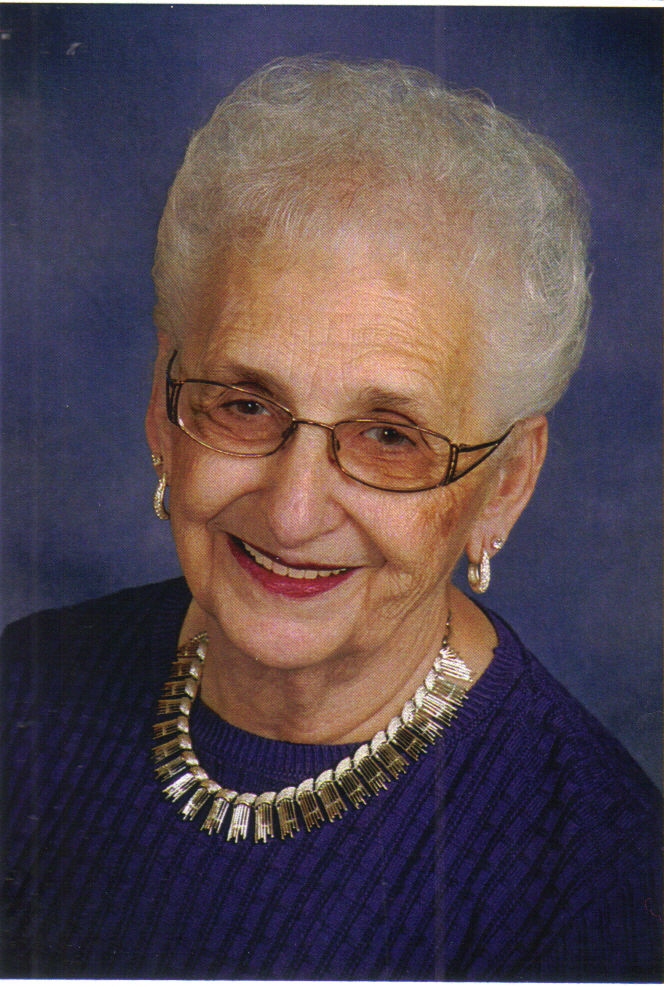
 Reita Maxine (Gibson) Glassman, died May 14, 2018. She was born December 19, 1929 in Paradise, Kansas to Hylas and Hazel (Finkenbinder) Gibson.
She married Florian Joseph Glassman on June 26, 1949 in Russell, Kansas, enjoying 48 years of marriage before the death of her spouse on February 22, 1997.
Reita graduated from Russell High School in 1947. After marriage, she and her husband settled in Salina, Kansas for 20 years, where they raised a family of six children. They eventually moved back to the area of their roots, Hays, Kansas in 1970, where Reita began working for Dr. J.E. Akers as a receptionist and eyeglass technician for 18 years, retiring in 1998.
She was also actively involved with the local election board, was a member of St. Joseph’s Catholic Church, the VFW Auxiliary, and the United States Bowling Congress. She loved bowling and participated in a regular league, local, state, and national tournaments until the age of 86. She enjoyed gardening, crocheting, knitting, and was an accomplished seamstress, often donating her work to area charities for sale to raise money for their projects. She was an extraordinary supporter of Kansas University basketball, watched every game faithfully, and accumulated a large collection of KU memorabilia. Her children, grandchildren, and great-grandchildren were the center of her life and always made her time spent with them special.
Reita was preceded in death by her husband, Florian (Bunch) Glassman, parents, Hylas and Hazel Gibson, one brother, Howard Gibson, and one sister and brother-in-law, Zelda and Vernon Mai.
Survivors include: one daughter, Debra Lorson and husband Phil of Hope, Kansas; five sons, John and wife Rhonda of Russell, Kansas, Rick and Cheryl of Hays, Kansas, Mike and wife Sandy of Victoria, Kansas, Mark and wife Dee of Allen, Texas, and Chris of Hays, Kansas; nine grandchildren, Kerry Ditto and husband Darren of Abilene, Kansas, Kelly Coup and husband Justin of Solomon, Kansas, Chad Lorson and wife Brittney of Hope, Kansas, Scott Glassman of Hutchinson, Kansas, Ursula Gage and husband Ty of Topeka, Kansas, Urlene Glassman and fiancé Tyler Smith of Aurora, Colorado, Heidi Glassman of Kansas City, Missouri, Sara Glassman and fiancé Brady Weston of Long Island City, New York, and Nick Glassman of Hays, Kansas; thirteen great-grandchildren, Tatum and Reagan Ditto of Abilene, Kansas, Spencer, Breken, Kierstyn, and Quincy Coup of Solomon, Kansas, Brighton, Brirton, and Bristol Lorson of Hope, Kansas, Elin and Emery Glassman of Hutchinson, Kansas, Keaton and Logan Gage of Topeka, Kansas; three step-grandchildren, Allen Burch and wife Jenny of Afton, Oklahoma, June Karlin and husband Galen of Plainville, Kansas, and Chris Livengood of Salina, Kansas; eight great-grandchildren, Jacob Karlin and wife Haley of Ellis, Kansas, Andrea Karlin of Ellis, Kansas, Josh Burch of Cedar Hill, Texas, Alec Burch and wife Keeshia of Cedar Hill, Texas, Zach Burch of Cedar Hill, Texas, Sam Hintz of Claremore, Oklahoma, Aaron Hintz of Claremore, Oklahoma, and Nick Burch of Afton, Oklahoma; and one sister-in-law, Dottie Gibson of Sun City West, Arizona.
Funeral services will be 10 AM Friday, May 18, 2018 at St. Joseph’s Catholic Church in Hays. Burial will follow services in St. Joseph cemetery.
Visitation will be Thursday 4 PM – 8 PM and Friday 9 AM – 9:30 AM all at Brock’s-Keithley Funeral Chapel and crematory 2509 Vine Hays, KS 67601.
A VfW Auxiliary memorial service and rosary will be Thursday at 6:30 PM followed by a parish vigil service at 7 PM all at the funeral chapel.
Suggested memorials should be made to Thomas More Prep-Marian High School or St. Joseph’s Catholic Church.
Condolences may be left by guest book at www.keithleyfuneralchapels.com or by email at [email protected]
Fake doctor who worked in Kansas sentenced to prison
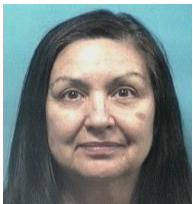
BIRMINGHAM, Ala. (AP) — A federal judge has sentenced a woman described as a fake doctor who worked in Kansas and three other states to more than six years in prison.

U.S. District Judge Madeline Hughes Haikala imposed the sentence Tuesday on 61-year-old Isabel Kesari Gervais.
Authorities say Gervais described herself as a naturopathic doctor but wasn’t licensed. A statement from prosecutors says she claimed to use naturopathic medicine to cure illnesses including cancer.
Gervais pleaded guilty last year to defrauding patients at a clinic in suburban Birmingham, Alabama.
In her plea agreement she acknowledged operating multiple offices over 15 years in Leawood, Kansas; Montgomery, Alabama; Springdale, Arkansas; and metro Atlanta.
Investigators determined Gervais moved frequently and used aliases including Rose Starr and Debra Lynn Goodman to avoid detection. She had been in Hoover, Alabama, since 2015.
Rhonda Hyman
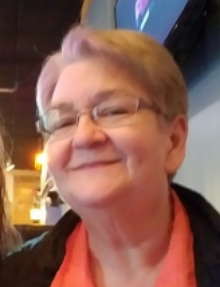
 MARION, KS – Rhonda Hyman, age 61, passed away on Tuesday May 15, 2018 at St. Luke Hospital in Marion, KS.
Arrangements are pending. Click HERE for details.
Westar Wants Kansans To Pay For Peak Power

By BRIAN GRIMMETT
Perhaps conserving energy is important to you. You’ve switched out all of your incandescent light bulbs with LEDs. You keep your thermostat set at 78 in the summer. You might even get mad at your kids when they leave a light on.
Your neighbor, on the other hand, isn’t quite as concerned. He keeps the thermostat set consistently at 68 and he hasn’t replaced any of his light bulbs because, in his words, who wants to pay $10 for a new one?
Even though you do a lot to conserve energy, every other Tuesday you host book club. So, you crank up the air conditioning, put some cookies in your electric oven, turn on all the lights and use several appliances at once as you get ready.
Still, over the course of one month, you use fewer total kilowatt hours than that guy next door. Today, that means you pay a smaller electric bill than your neighbor. In the future, maybe not.
Some utility companies want to begin billing you not just for how much you use in a month, but also for your highest peaks (like the ones you hit during book club).
That charge is known as a demand fee — named for the most demand you’d put on the power system at any given moment. In its latest request to state regulators, Westar Energy is seeking permission to add the charge to residential rates.
The program would be optional, but if it accomplishes the company’s goals it would likely become mandatory.
Westar says it needs the new fee to help recover the costs of keeping enough power plants available to promise reliable electricity to all of its users.
“A demand charge … recognizes the fact that a smaller load is less expensive to serve than the bigger load,” said Ahmad Faruqui, an economist at the Brattle Group.
He provided Westar with testimony for its rate case.
Faruqui says the traditional two-part rate — service and volume — on current bills doesn’t let customers know that their high demand increases costs for Westar. That’s because Westar has to produce enough electricity at any particular moment to meet the needs of all of its users. As that total demand increases, so does the number of power plants Westar has to start up.
In the new rate, Westar would still bill you for a service and volume fee. But it would then add the demand fee based on your highest average hourly demand that occurs between 2 p.m. and 7 p.m. That’s when Westar typically sees the highest demand on the system.
“What we’re trying to do is incentivize the right behaviors to make sure we don’t get to the point where we have to add additional generation to the mix,” Westar Vice President of Regulatory Affairs Jeff Martin said.
Nationally, about 50 other utility companies have imposed some kind of residential demand pricing. Only six small companies have made the fee mandatory for all of their customers.
Westar says the demand rate was designed to save enough customers money that they’d be willing to sign up for the change. The savings would come from cutting the volume charge by a little more than a cent per kilowatt hour.
But a Kansas News Service analysis of the proposed rates shows switching would cost the average customer $10 more per month in the winter and about $60 more per month in the summer.
“If your goal is to stick it to people with intermittent usage, a demand charge is a terrific way to do that,” said Jim Lazar, a senior advisor with the Regulatory Assistance Project, which advocates for energy efficiency.
Lazar has been researching utility rate design for almost 40 years. He argues few consumers will understand the change. And if they don’t understand what’s happening, they’re unlikely to cut back their peak usage.
“A usage charge, ideally, that varies by time of day,” he said, “does that much better than a demand charge.”
That’s because you’d pay the same demand fee for a peak that lasts one hour, or three hours, or 30. The demand charge is set by that high point.
“If you’ve got a cake in the oven and your daughter is going out on a date, the oven and the hairdryer are going to run at the same time,” Lazar said. “And then you’re going to pay all month for the capacity that you only needed for 15 minutes.”
This problem is amplified even more for people who use less electricity. Their bills might currently total only $50 or $60, and without doing anything, a demand charge would add another $30.
“High demand charges are just grotesquely unfair to people who live in apartments and those happen to be, generally, lower-income people who can least afford it,” he said.
For now, the three-part rate is just a proposal. It’s a portion of Westar’s larger rate case before the Kansas Corporation Commission. If approved, Martin said, the optional rate will be used as as a test to see if it should eventually become mandatory.
“We’ll have plenty of time to think about this and figure it out,” he said. “But we’ll just have to wait and see.”
The first public hearing for the rate case will be May 22 in Topeka. State regulators are expected to make a decision on the case by the end of September.
With the calculator below, you’ll be able to find out how Westar’s proposed demand rate could impact you.
Using numbers from a current or previous bill, enter how much electricity you use (volume). Then move the slider to how much demand you need. A residential user can typically expect a demand of 6 to 10 kW.
Westar customers can also log into their account online to find out their exact volume and demand numbers.

The calculator is meant as an approximation. For simplicity, it rounds to the nearest dollar. It also only includes Westar’s charges and not any municipal or sales taxes. For this reason, it may not match up exactly to the amount you paid on your bill.
The formulas used were created using information from Westar’s publicly available rates and testimony filed with the Kansas Corporation Commission.
The demand calculator was created by the Kansas News Service’s Stephan Bisaha and can be found on github.
Brian Grimmett reports on the environment and energy for the Kansas News Service. Follow him on Twitter @briangrimmett.
Kansas Originals fourth annual Art Show begins May 26
 WILSON — The Post Rock Opportunities Foundation in Wilson invites all Kansas artists to enter the fourth annual Kansas Originals Art Show. This show gives Kansas artists the opportunity to showcase their work and gives travelers from across the United States the chance to view a variety of art from throughout Kansas. This year the Foundation has added some exciting elements to the show. Entries will be accepted from artists 18 and over in one division and artists 17 and under in a separate division. Also new, 3-D art, including jewelry, glass, pottery, etc. will be in a category separate from the 2-D entries–allowing more competition and more chances to win. Juror for the show is Cori Sherman North, Curator at the Birger Sandzen Gallery in Lindsborg.
Entries will be accepted through May 24. The show will begin on Saturday, May 26, and will end at 2 pm on July 1. The pictures and pieces will be on display at Kansas Originals, Wilson. The show is exceptionally exciting because visitors from across the United States vote on the People’s Choice Award. A benefit for the artists is that they have the ability to offer their work for sale with the buyer taking possession at the end of the show.
Artists do not need to be members of the Post Rock Opportunities Foundation. Each artist may enter up to 5 pieces with an entry fee of $10 for each piece. For more information on the rules and for entry forms please contact Kansas Originals Market at (785) 658-2602 or by email at [email protected]. Entry forms are also available in Events at kansasoriginals.com.
The show is sponsored by the Post Rock Opportunities Foundation, which operates Kansas Originals Market & Gallery locations at Wilson and Topeka. Kansas Originals offers the largest selection of Kansas-made products found under one roof in the United States and represents over 200 member artists craftsmen, authors, and food producers.
— Submitted
BEECH: The ettiquette of thank you notes


The month of May is an especially busy season for gift-giving: graduations, Mother’s Day, baby showers, bridal showers, weddings, and other special occasions.
When we give someone a gift, we try to choose something we feel they will really like. We wrap it nicely and present it to them with great expectations. We can’t wait to see their reaction and their “thank you” is music to our ears.
The people who give gifts to us feel the same way. They want to know that their gift was received and that we enjoyed it. The best way to acknowledge the gift and express appreciation to the giver is with a written thank you note.
Proper etiquette says that for any gift received, a thank you note should be sent as soon as possible. Even in the same town between relatives, a short written thank you note acknowledging the gift and the giver should be sent within a week, if possible. A handwritten note is best, but a printed note with an original signature is an acceptable option. Do not use e-mail to send a thank-you note. A verbal thank-you can be made in addition to the written note– but not in place of it.
The Basic Etiquette of Thank You Notes
A thank you note is an expression of appreciation for a gift or thoughtful act. But the potential formality of this situation can be intimidating. Many people think that the wording has to be perfect, and this causes so much anxiety that sometimes the notes are never sent. Before all the other rules, just remember that an imperfect note that comes with heartfelt sentiment is better than a perfect note that was never written.
In order to relieve some of the anxiety on this subject, here is a simple guide to the do’s and don’ts of thank you notes:
The Do’s of Thank You Notes
Do send your thank you notes as quickly as possible. Notes may be sent on informal stationery, except for wedding thank you notes which are generally sent on formal stationery. Always make specific reference to the gift that is the subject of the note, such as “Thank you so much for the blue sweater. How did you know blue was my favorite color?”
Always send notes in the following situations:
• For wedding gifts.
• For sympathy flowers, memorial contributions or mass cards.
• To the hostess after a party that was hosted in your honor.
• For bridal or baby shower gifts.
• For gifts that were received by mail.
• After being entertained by your boss.
• For gifts received during a hospital stay.
• After being hosted as a houseguest for one or more nights (unless it’s a close relative or friend who is doing the hosting).
Thank you notes are not required in the following situations, but would still be a nice gesture:
• After being a guest at a dinner party.
• After a job interview (not required, but definitely a smart idea).
• When a friend has helped you out with a special favor such as babysitting, a meal when you were sick, or running errands for you.
The Don’ts of Thank You Notes
Don’t delay in sending thank you notes. Generally notes should be sent within a week of receipt of the gift or gesture. Being busy is not an excuse for neglecting a written thank you. To tell someone (who has spent time and money on a gift for you) that you are too busy to acknowledge their efforts is bad manners. The only exception to this timing is thank you notes for hospital gifts which should be sent as soon as the patient is well enough to send them, whenever that is.
There’s no need to fib if you dislike a gift. Even if something is not to your taste, you should still show appreciation for the gift and the time, money and thought that went into selecting it for you. You can always say “Thank you for the thoughtful gift. I will always think of you whenever I see it.”
Linda K. Beech is Cottonwood District Extension Agent for Family and Consumer Sciences.
CLINKSCALES: Sometimes you have to get on the floor, Part 2

The last article I wrote about Easter being special. It was special because my six-month-old grandson, Alex, came to our house. It was his first Easter. It was the first time I saw him crawl.
Along the way, I discovered if I really wanted to communicate with Alex I needed to get on his level. What I mean by that is I needed to get on the floor and get eye to eye with him. I had to travel with him on my hands and knees to see what the world looked like from his point of view.
We played for quite a while on the floor. He showed me stuff and I showed him stuff. He verbalized things that I did not understand, but I know it was him trying to communicate with me. I am sure I said a lot of things to him he could not quite figure out, but both our communications involved an exchange of love.
I do not sit still very well. I tend to always have some kind of project going on. It may be work related or it may be recreational, but I just have a hard time sitting still.
Sometimes I have a difficult time shutting off my mind. So, even if I am trying to watch a television show with my wife, or if I am at a play at the Encore Series, my mind seems to be racing on trying to figure out something, or worried about something that is going on.
I thought it was pretty amazing when I was crawling on the floor with Alex that my total attention was on him. All I cared about was spending that precious time that we had together, one on one.
Alex was at our home Saturday evening and most of Sunday. He went to church. I was that obnoxious grandparent holding my grandson, so proud of him. I feel so blessed to have a grandson. I am so blessed to have that time to spend with him.
It was so interesting after Alex left. I certainly was heartsick that I was not going to see him for a while, but, do you know what I discovered?
I discovered that I had really taken a time out. My mind had been totally on Alex; it was not on work; it was not on projects that I needed to get done; it was on Alex.
For a while, Alex helped me relax. For a while, Alex helped me remember what was important in much of my life.
Many times I have families come to me with so much going on. Perhaps there has been a diagnosis of Alzheimer’s or some other chronic illness. Perhaps there is a situation with an adult child and that child’s marriage. Perhaps there are financial issues. Perhaps there is the prospect of needing long-term care.
My hope is that they will all have an Alex event in their life: a time when they can completely shut down, relax, and enjoy the moment.
Alex is only six months old, but he has already reminded me of a lot of important things in life, such as taking time to be with my family.
Alex, thanks for a great Easter. I am looking forward to many, many more.
Randy Clinkscales of Clinkscales Elder Law Practice, PA, Hays, Kansas, is an elder care attorney, practicing in western Kansas. To contact him, please send an email to [email protected]. Disclaimer: The information in the column is for general information purposes and does not constitute legal advice. Each case is different and outcomes depend on the fact of each case and the then applicable law. For specific questions, you should contact a qualified attorney.
BEYERS: What Trump doesn’t know

By KURT BEYERS
A while back I told a group of my Christian friends that God had told me Trump is a son of Satan. Trump voters all, most of them took exception. One asked if that meant he is going to hell because he voted for Trump. Naturally, he didn’t ask me this because he thought I knew the answer. He asked because he thought I was being a partisan jerk.
Which I was, but only a little, and only in style, not substance, because let’s be clear: Trump is a son of Satan. God did and continues to confirm me in that perception. Christian or non-Christian, people should know this about Trump.
Trump, God love him, does not know this about Trump. Things of the Spirit, other than certain words he needs to use with certain audiences as part of his con game, do not register with him. One of my prayers is that some day he will wake up and repent.
What started me thinking of Trump in spiritual terms was his almost exact resemblance to Simon the Magician in Acts 8:9-10a (NASB): “Now there was a man named Simon, who formerly was practicing magic in the city and astonishing the people of Samaria, claiming to be someone great; and they all, from smallest to greatest, were giving attention to him.”
Then I found a partial transcript of a meeting Trump had with about a thousand self-proclaimed leaders of a large part of American evangelical Christianity. The meeting was so that Trump could appeal for their votes and the votes of the millions of Christians they lead, who are mad and scared about the way the world looks. By far the large majority of the people at that meeting went out and implicitly if not explicitly pushed Trump as God’s choice for president.
I went wrong in thinking that was the day Trump officially became a son of Satan. But he didn’t. Trump and Simon came out of their respective meetings as exactly the same people they were going in.
The difference was that Simon met apostles – who knew Jesus’ name was not theirs to sell. When Simon offered cash money for a Jesus franchise, he came away with nothing but a rebuke.
Trump met with Jerry Falwell Jr., Franklin Graham, Mike Huckabee and those others like them.Trump offered judges. Trump offered his audience the freedom to endorse candidates and keep their tax-free status. Trump offered to make people say “Merry Christmas” again. He came away with everything he wanted.
You can find the transcript here: https://yhoo.it/28RorZ6.
If anybody officially became sons of Satan that day in June 2016, it was the people who agreed to use their status as disciples of Jesus to market Trump under a Jesus brand. I wonder whether they ever pray that someday Trump will see the light. A Christian would.
Is their regard for Trump the same as his for them – a straight-up deal? I wonder if that’s the real meaning of some Christians’ defense of their votes for Trump: “I don’t like him, but I like his policies.” It’s like this: Is a deal with the devil – or the son of the devil – really a deal with the devil if you get a Neil Gorsuch out of it?
The foundation of Trump’s appeal is indisputably fear and anger. “Indisputable” because nobody disputes it. His supporters love him for it. His opponents don’t.
Set aside the constant lies, the vicious slanders and personal attacks, the relentless self-glorification, and you are still left with the fact that no vision of the Christian God is holy if it is built on fear and anger based in the institutions, customs and manners of this world. Jesus, quoting Isaiah, in Mark 7:6-7: “This people honors Me with their lips, but their heart is far away from Me. But in vain do they worship Me, teaching as doctrines the precepts of men.”
This applies whether you’re talking 1st-century Pharisaic handwashing rituals or 21st-century American social customs and immigration laws.
Is my friend going to hell because he voted for Trump? I don’t think so, and I don’t even think he needs to ask forgiveness for being a Trump voter, at least not forgiveness from God.
Of course, I can’t say for sure. I know how grandiose it sounds to say something like “Donald Trump is a son of hell and James Dobson is too.” I know I am not God, and I know I am not a good Christian, so I end up asking God about a lot of things, which lately have included Donald Trump’s relation to hell: “Hey, Father. Here is what I’m thinking. Am I right or not? Please tell me.”
And He did, and He gave me this one thing to say: Donald Trump is a son of Satan. Period.
For myself, I say that I believe my friends, like so many others, have fallen for a monstrous con. In saying it I am only trying to apply lessons they have taught me. Most of the men in that group I was talking about at the beginning are among the people who introduced me to Jesus.
Their essential characters of charity, grace and mercy come from long-term, in some cases lifelong, association with Jesus. These men helped persuade me by many examples that the Son of God was – is – real. Therefore, seen in the spiritual light they helped turn on for me, their support for Trump and his “policies” is absolutely incomprehensible.
So my answer to the question I began with – Is a vote for Trump a ticket to hell? – is the same as it is for all spiritual questions: “Ask God.”
Kurt Beyers, a former journalist, works in public relations at Fort Hays State University.
SCHROCK: The value of labs


“Labs are not important” was the conclusion of a recent article in a physics education journal. The basis for this conclusion was a college experiment. Students in a large physics lecture class were divided into two groups, half who also took the physics lab and half who did not. Analysis of their lecture class tests showed absolutely no difference in performance.
Of course! It was not a lab test.
But the authors and the journal reviewers saw no difference.
For over 20 years, with the ascendancy of computer simulations, I have seen the same cluelessness in the journal Advances in Physiology Education. Again and again, a lab-versus-no-lab or lab-versus-computer-simulation would be “tested” and show no differences in student performance. Sometimes the article provided sample questions. Other times I had to contact the author. When I saw the questions, they were—you guessed it!—lecture questions.
I would ask the experimenter why he did not set up lab questions, such as the dissected critter with labeled pins stuck in various organs, and ask the student to identity the organ?
“Oh, that would be unfair!” was always the reply. Absolutely clueless!
Any veteran science teacher has given tests or quizzes where the student gets the question correct when identifying a structure on a diagram in a written lecture test, but then got the question wrong when asked to actually identity the exact same structure in a real specimen.
Seeing a structure on a computer screen is no improvement because much anatomy is identified by actually detecting where the structure came from or is going to. It is “hands on.”
And do any of us want a doctor, nurse or veterinarian whose only experience with anatomy was on a video screen?
One of the most important aspects of real labs is seeing that not all specimens are picture-perfect or identical with the perfect illustration selected for the textbook or computer-screen. Indeed, a lab cat with four kidneys instead of two is not uncommon. When these variations are discovered, the lab instructor will call everyone over to see the anomaly. That variation-from-the-norm is a lesson that you want your doctor, nurse and all other health care workers to understand.
To really understand how to conduct physics experiments or discern anatomy is a hands-on experience. That requires hands-on tests to evaluate that new understanding. Textbook tests don’t cut it.
I had an alternate route student teacher who understood this well. Her major was biology. When I visited her biology class in a rural Kansas school a few years back, she did fairly well. I also stayed for her next period class which was in earth sciences. She did not have any advanced college courses in earth sciences. So her teaching was straight-from-the-book. It was obvious—not only to me but to every high school student in her classroom—that she was only one day ahead of them in class.
I returned to my university and asked earth science professors to donate their extra textbooks. Textbook companies send professors potential textbooks and only one gets adopted; my colleagues usually have a supply of alternate texts laying around. The next time I visited my alt-route teacher, I gave her this stack of earth science books so she could self-study and have some examples to use in class that were different from the high school textbook.
She said “Thank you, but I really need to take these courses and their labs.”
That was a brilliant answer, but I asked her why she thought that.
“I need the labs so I know what I am talking about. Otherwise its just words in the book. To me. And to the students. And I need to learn to use the lab equipment, so I can show my kids how to do the science. And I need to know more so I can help the bright student who wants to learn more.”
Wow! What a reply.
I told her that I wished I could drive her up to the State Board and have her repeat what she had just told me, because the Board had just voted to let teachers add another teaching field by just taking a test—a lecture test. The Board was clueless about the importance of laboratory experiences. And so were those authors and reviewers of the physics and anatomy journals.
John Richard Schrock is a professor at Emporia State University.