RAWLINS COUNTY — One person was injured in an accident just before 1a.m. Sunday in Rawlins County.
The Kansas Highway Patrol reported a 2008 Ford F350 driven by Caleb S. Kastens, 32, Atwood, was northbound on Kansas 25 just north of Rawlins County Road V.
The truck left the roadway to the east. The driver overcorrected and crossed the center line before again overcorrecting and leaving the roadway to the east for a second time.
The truck overturned and came to rest in the east ditch. The trailer came to rest on top of the hood and cab of the truck.
Kastens was transported to Rawlins County Health Center and later flown to a hospital in Denver for treatment. He was not wearing a seat belt, according to the KHP.
PRATT – In an age of information overload and ever-changing news, it can be frustrating to locate accurate information when you need it. This is especially true for anglers whose success can often hinge on getting the “right” information in a timely manner, because anyone who has ever wet a line knows: fish don’t wait for you.
For a quick (and accurate) rundown of what you’ll need before hustling out to the water this fishing season, follow the Kansas Department of Wildlife, Parks and Tourism (KDWPT)’s tips below.
GRAB YOUR LICENSE
There are a few things you should have before your first fishing trip, and number one, if you’re a resident age 16-74, or a nonresident age 16 and older, is a fishing license. There are several options for residents: a one-day license for $8.50, annual fishing license for $27.50, senior (age 65-74) annual fishing license for $15, or combination hunting/fishing license for $47.50.
Nonresident anglers can purchase a one-day license for $14.50, five-day license for $27.50, annual fishing license for $52.50, or combination hunting/fishing license for $137.50.
SIGN UP FOR AUTO-RENEW
Your fishing license will be valid for 365 days from the day you purchase it, rather than the calendar year licenses of the past. So, why not keep that year-round coverage ongoing with KDWPT’s new auto-renew feature? When making your purchase online at ksoutdoors.com, simply click the “auto-renew” box next to your fishing license before finalizing your purchase. This way you can ensure you have a valid fishing license every year without another thought. You can also buy your license at more than 600 license vendors around the state.
READ UP ON THE RULES
Once you have a license, grab a copy of the 2018 Kansas Fishing Regulations Summary. The 48-page pamphlet has all fishing regulations, of course, but you’ll also find color fish I.D. illustrations, as well as a listing of all reservoirs, state fishing lakes and community lakes with locations and special regulations. The regulation pamphlet should be in every angler’s tackle box.
FISH SMART: FOLLOW THE DATA
Another handy item no angler should be without is the 2018 Fishing Forecast, available at KDWPT offices and online at ksoutdoors.com. The forecast is assembled using survey data fisheries biologists gather while sampling fish populations in the lakes they manage each summer and fall. The forecast can help anglers find a lake that provides good fishing for the kind and size of fish they prefer. Every lake is different; one may provide high numbers of 12- to 15-inch bass while another has fewer bass, but many that are 18 inches long or longer.
Visit ksoutdoors.com or drop by your local sporting goods store and get your fishing necessities, so you’re ready when your buddy calls and says, “the fish are biting!”
JACKSON COUNTY — Law enforcement authorities are investigating a suspect on multiple charges following an arrest.
Dugan -photo Jackson Co.
On Thursday evening, Jackson County Sheriff’s Office Deputies arrested Dave Lamoine Dugan, 54, of Hoyt. Dugan was arrested at his residence on an outstanding Jackson County District Court warrant for telephone harassment, according to Sheriff Tim Morse.
At the time of the arrest, deputies began to investigate possible drug activity at the residence located at 9410 T.4 Road.
Deputies seized drug related items from the property. Dugan was booked into the Jackson County Jail on the following charges: possession of methamphetamine, possession of marijuana, cultivation, possession of drug paraphernalia, distribution of marijuana, interference with law enforcement, and telephone harassment. Dugan was released on $10,000.00 bond.
TOPEKA, Kan. (AP) — Several doctors at Larned and Osawatomie state hospitals and Kansas state prisons are working with special “institutional licenses” despite not having a full medical license, in part because the state has a severe shortage of psychiatrists, state officials said.
Larned State Hospital photo-Kansas News Service
Nine of the 13 physicians at Larned and 10 of the 22 physicians at Osawatomie are currently on “institutional licenses,” according to Kansas Department for Aging and Disability Services. And at the state’s prisons, one of nine medical doctors and four of nine doctors who specialize in psychiatric medicine have the limited licenses, according to Corizon Health, the state’s corrections health care contractor, The Kansas City Star reported .
The practice is not new and it is necessary because the state doesn’t have enough psychiatrists, said Tim Keck, secretary of the aging and disability services.
“The agency appreciates our institutionally licensed doctors,” Keck said in an emailed statement. “They are dedicated and they work hard every day to provide good care to our patients.”
But Rick Cagan, executive director of the National Alliance on Mental Illness’ Kansas branch, said allowing institutional licenses at state facilities means Kansans who need the most help often are cared for by doctors who, at least on paper, are less qualified.
“I am concerned that the most acutely ill individuals are receiving treatment from physicians who do not meet the highest standards for practice,” Cagan said. “It’s counter-intuitive that those most seriously ill have access to physicians who are denied the ability to establish a community-based practice.”
Although the practice has occurred in Kansas and elsewhere for decades, Republican state Sen. Barbara Bollier, a retired physician from Mission Hills, said it might be time to discuss whether the practice should change.
“Why are we still doing this?” Bollier said. “That’s the biggest question. I don’t have an answer. … If that is good enough for (state hospitals), why aren’t these same things in place for the entire population of the state? Why do we have different standards?”
None of the doctors practicing on institutional licenses has been sanctioned for violating standards of care, according to Kathleen Lippert, the executive director of the Kansas Board of Healing Arts.
Kansas and about 20 other states offer limited licenses to allow doctors who aren’t able to start a private practice to work in state mental institutions. After three years with institutional licenses, doctors also can practice at other public facilities like community mental health centers.
Kansas established the institutional medical license in 1969, when the nation began shifting away from long-term institutionalization for the mentally ill to community-based care. Larned and Osawatomie are the last state hospitals in Kansas and have about 300 beds between them.
Missouri, which employed a national-high 47 limited license physicians in its mental health program in 1990, has phased out the program.
Debra Walker, spokeswoman for the Missouri Department of Mental Health, said its seven state mental institutions recruit psychiatrists by working closely with medical school residency and fellowship programs. The department also allows flexible work schedules so its psychiatrists can work outside the state system for additional income.
Walker said the department currently employs 34 psychiatrists and has 6.5 openings, a vacancy rate of about 16 percent.
BARRY COUNTY — Law enforcement authorities are investigating after human skeletal remains were found in a rural area of southwest Missouri and they’re asking for the public’s help, according to the Barry County Sheriff’s Department.
The remains were found March 26 by a landowner near Jenkins, about 45 miles southwest of Springfield.
photos courtesy Barry Co. Sheriff
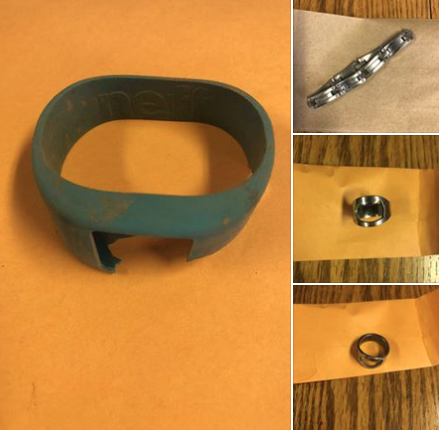
The Barry County Sheriff’s Office has posted photos on social media of jewelry found with the body in hopes that someone might recognize it.
The items include a bracelet, two rings and a rubber NEFF-brand watchband.
A forensic dentist says it appears the person was an adult, but investigators have not yet determined if the remains are that of a man or woman.
Detective Doug Henry says the circumstances of the person’s death are considered suspicious.
As Johnson County District Court Judge Charles Droege told 52-year-old Adam Purinton on Friday that he likely “won’t leave prison alive,” the convicted murderer briefly lowered his head.
Adam Purinton pleaded guilty in March to murder and attempted murder. Friday, he was sentenced to life in prison by the Johnson County District Court. CREDIT ANDREA TUDHOPE
Purinton was sentenced to life in prison for the February 2017 murder of Srinivas Kuchibhotla at an Olathe, Kansas, bar. He received an additional 28-year sentence for the attempted murders of Alok Madasani and Ian Grillot.
He still faces federal hate crime charges that could mean the death penalty. A hearing in that case is set for later this month.
In court Friday, Purinton’s lawyer, Michael McCulloch, said his client had shown from the beginning that he is “remorseful and sorry for the actions he took.”
Purinton has 14 days to appeal the sentencing.
In March, Purinton, 52, pleaded guilty, agreeing to maximum sentencing on all counts.
The murder of Kuchibhotla, and attempted murder of Madasani — two Indian immigrants in the United States on work visas — earned Purinton federal hate crime charges. Before the shooting, Purinton approached the men on the patio of Austin’s Barn and Grill and asked, “Where are you from? How did you get into this country?”
Before Friday’s sentencing, Assistant District Attorney Aubrey Sample read a written statement addressed to Purinton, from Sunayana Dumala, Kuchibhotla’s wife. Dumala said she hoped Purinton would one day realize the “magnitude of your mistake.”
“I learned from the cops that the murder of of my husband was premeditative and racially motivated,” she wrote. “In the few minutes that you have seen Srinu you built so much hatred for him that you decided he did not deserve to live . . . I wish you had the ability to see beyond my husband’s skin color and the beautiful and kind-hearted person underneath it.”
Federal authorities allege that Purinton targeted the two men because of their race, ethnicity or national origin. The U.S. District Court in Kansas City, Kansas, will take up the case in a hearing on May 21.
With no possibility of parole for 50 years in the life sentence, Purinton will spend the rest of his life behind bars, unless the U.S. Attorney’s office decides to seek the death penalty against him.
Andrea Tudhope is a reporter for KCUR, a partner in the Kansas News Service. Follow her on Twitter @_tudhope.
TOPEKA – Last year’s “repeal and replace” fight in Congress underscored how deep−and deeply confusing−disagreements over health care policy can be.
In October and November of 2017 David Jones, Ph.D., an assistant professor at Boston University’s School of Public Health, traveled to Kansas and Colorado to learn what Republican and Democrat legislators and other state policy leaders are concerned about when it comes to health reform. KHI helped facilitate Jones’ visit to Topeka, where he met with 16 health policy stakeholders, including legislators, agency officials, health insurance representatives, health care providers, and advocates. His visit also included meeting with a bipartisan focus group of legislators at KHI.
Jones’ report, Views from the Heartland: Prospects for Bipartisanship in Health Reform, finds that leaders in both Topeka and Denver are frustrated with the volatility of national politics, have divergent views on what the problems are with health reform and health policy and their root causes, but share the desire to focus on health and health outcomes and improve access to care, especially in rural communities.
After more than 15 years of extraordinary efforts by KidsAndCars.org and other advocacy groups, a long-overdue auto safety standard became fully effective May 1, 2018.
This standard helps to improve passenger vehicles’ rear visibility and prevent deaths from drivers backing into children and adults they cannot see. For over 100 years, vehicles were manufactured without any regulation on what the driver should be able to see behind them when backing.
This measure will save countless lives, especially of children. It is the first federal regulation for rear visibility in our nation’s history. It doesn’t matter where on earth a vehicle is manufactured, all new passenger vehicles sold or leased in the U.S. will now be equipped with a rearview camera as standard equipment.
In 2008 Congress enacted the Cameron Gulbransen Kids Transportation Safety Act. The law was named after Cameron Gulbransen who died in 2002 at age 2 after his father, a pediatrician, accidentally backed over him in the driveway because he was unable to see the toddler in the blindzone behind his vehicle.
Each year an average of 226 individuals are killed and over 12,000 injured in backover crashes, reports the National Highway Traffic Safety Administration (NHTSA). Drivers using all three mirrors still cannot see anything in a blindzone 10-50 feet long directly behind their vehicles. Over half of those killed in backover accidents are children under 5 or adults 70 or older, NHTSA’s analysis shows.
Bill Nelson, another parent who lost his son, said, “Our family is thrilled that the rule has finally been issued – not just for those of us who worked so hard in memory of our children, but also for families whose children’s lives will be saved by this safety standard.” The Nelson family lost their son Alec after he was backed over because his grandfather could not see him in the large blindzone behind his SUV.
Dr. Greg Gulbransen added, “It’s been a long fight, but we’re thrilled this day has finally come. It’s a bittersweet day, because this rule should have been in place many years ago. Though his own life was short, my son Cameron inspired a regulation that will save the lives of countless others.”
Listen to Mike Cooper interviewing Dr. Chelsea Powell, MD; and Margo Straub, PA; from the Pediatrics Department at Haysmed, by clicking the link above and then clicking the play button
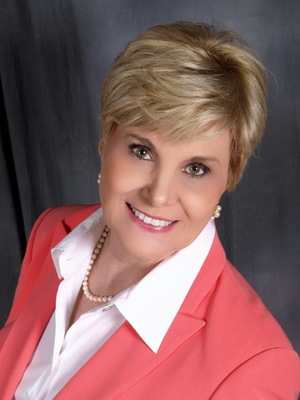
During her high school years, 2013 graduate Delphine Burns was an editor of “The Guidon,” a Chamber Singer and president of the Gay-Straight Alliance. Burns often made an effort to engage herself in political and social activism as a teenager—a theme that has remained present throughout her life.
Burns often faced backlash and opposition for her strong stances on political and social causes throughout her time at Hays High but feels as though the adversity she overcame was well worth it.
“I’ve worked incredibly hard to get where I am now, and I deserve the life I’ve made for myself,” Burns said. “I wasn’t happy in high school, but I knew what I wanted, and I worked to arrive there.”
After her graduation, Burns moved to California where she earned her bachelor’s degree in Political Studies and Sociology at Pitzer College.
Following her graduation from Pitzer College, Burns worked for a short stint as an intern at a local newspaper in Santa Cruz, Calif. While discussing journalism-related job opportunities with fellow reporters, Burns decided to find a more long-term career in the field of public relations.
Burns’ current primary job is at a public relations firm in Santa Cruz called FortyThree PR—an occupation that presents itself with a unique set of challenges.
“Public relations is a fast-paced career,” Burns said. “Some days, your clients don’t ask much of you, but other days you’re working around the clock. You never know what sort of project you’ll be working on next, which is actually part of the fun for me.”
In addition to her main job, Burns also works part-time at a local non-profit that serves survivors of sexual assault, domestic violence and human trafficking. She works on a 24-hour crisis line and is a certified peer counselor in the state of California.
Among the most challenging aspects of her advocacy job, Burns said, is the emotional toll it takes to speak to individuals who are in crisis. Burns considers herself a passionate opponent of sexual and domestic violence and feels supporting survivors is her life’s work.
If she could go back in time to give her high school self any direction, Burns said she would advise her past self to practice more self-care.
“(During high school) I always felt like an outsider, and even though it usually didn’t bother me, sometimes it really hurt,” Burns said. “I would tell my high school self not to take high school drama and dynamics to heart, because now it seems like a different lifetime, almost.”
As for future plans, Burns said she may potentially take her LSAT and attend law school in her later 20’s. For the time being, she would like to continue to refine her writing and advocacy skills.
“Eventually, I’d like to be a civil rights lawyer, a journalist at a top-tier publication such as ‘The New York Times,’ or maybe a public servant like a senator or a judge,” Burns said. “I’m only 22 so I’ve got plenty of time and ambition.”
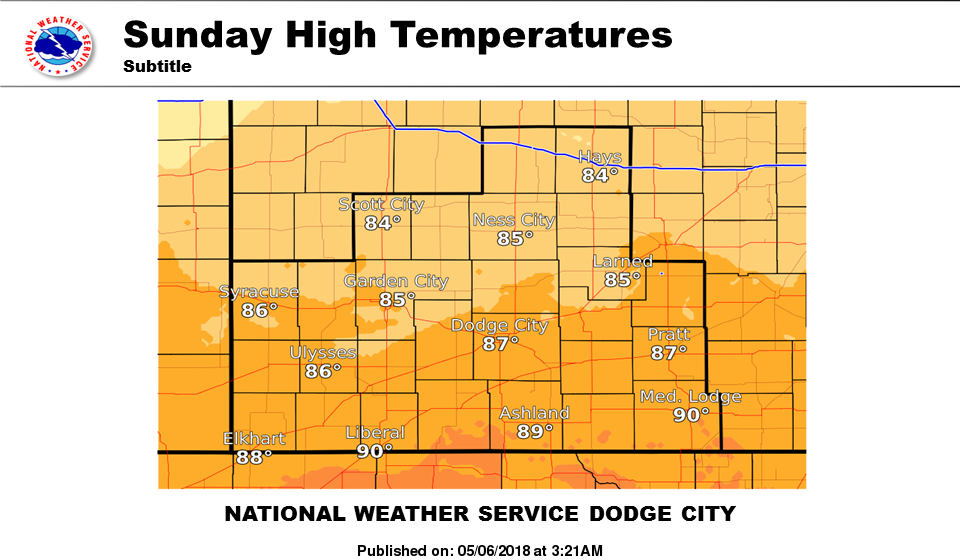
 Today










 Listen to Mike Cooper interviewing Dr. Chelsea Powell, MD; and Margo Straub, PA; from the Pediatrics Department at Haysmed, by clicking the link above and then clicking the play button


