We have a brand new updated website! Click here to check it out!

New urologist joins staff of HaysMed

Samavedi
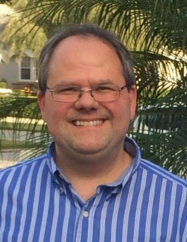
HaysMed recently welcomed Dr. Srinivas S. Samavedi, urologist, to the medical staff.

Dr. Samavedi completed medical school at Kakatiya Medical College in Warangal, India. He completed fellowships in uro-oncology at the University of Miami; robotic urology at Ohio State University and Global Robotic Institute; transplant surgery in Columbus, Ohio and advanced robotic urology at the Global Robotic Institute. Areas of focus include general urology, endo-urology, oncology (prostatectomy, cystectomy, neobladder) and robotic surgery (prostatectomy, nephrectomy).

Dr. Samavedi is now accepting new patients. Call 785-628-6014 for information.

— HaysMed

PHELPS: House wraps up most work by end-of-March deadline

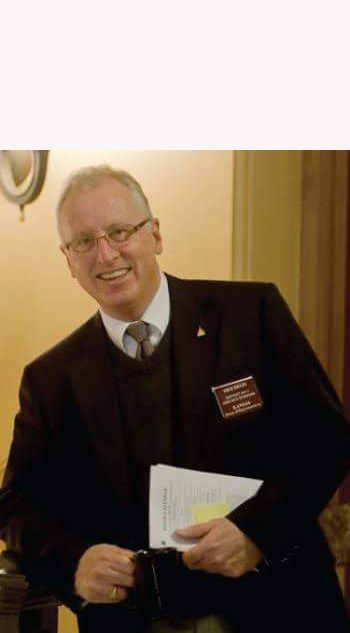
Eber Phelps, D-Hays, is the 111th Dist. state representative.

The House wrapped up the bulk of our Regular Session work as of the end-of-March deadline after which most bills are no longer available for consideration.

The House will adjourn the Regular Session by Fri., April 6, while legislative staff completes the paperwork on the dozens of bills passed in recent weeks. We will return on Thursday, April 26th for the Veto Session.

On Monday, April 2nd, the House began debate on a new school funding formula in response to the Kansas Supreme Court’s decision in October, declaring the current formula underfunded per the requirements laid out in Article 6 of the Kansas Constitution.

While debate before the full House only just began, many have been working behind the scenes for months to craft a solution. On Tuesday, the House passed out HB 2445, 71-53, and I voted yes. The bill was then sent over to the Senate for review and deliberation. I will keep you updated as we continue work on this critical issue for our state.

At Home in Hays
I want to give a special thank you to all the firefighters that combated the fires in Hays that occurred last month. We are grateful for your service and sacrifice.

Legislative Lingo
Every industry has “terms of art” that are unique to their work and not broadly understood outside of the industry. In my experience, if I can help you understand legislative action without using all of the jargon, you have more power because you understand the process.  Empowering you makes you a better citizen and when more citizens engage, the more representative our democracy becomes.To that end, you will see some new terms in this newsletter which have not come up in previous editions, specifically “Conference Committee” and “Substitute Bill.”Substitute Bills
First, a quick primer on how to read a bill in the KS Legislature:
If the bill amends existing statute:

  • Words deleted from existing statute will have strikethroughtext.
  • Words added to existing statute will be in italics.
  • If an entire section is added, it will be in regular type, but the heading will be in italics New Section or New Sec.
  • Amendments made in House Committee will be in bold type.
  • Amendments made by House Committee of the Whole will be in [bold, bracketed type].
  • Amendments made in Senate Committee will be in bold italic type.
  • Amendments made in Senate Committee of the Whole will be in [bold, bracketed italic type].
  • If the House of Origin deletes material in original bill, it will be in strikethroughtype or deleted new material in italic strikethrough.
  • If the Other house (not the House of Origin – House changes to a SB, or Senate changes to a HB) deletes material in the original bill, it will be in strikethrough underline type or deleted new material in strikethrough underlined italics.

You could probably guess that when a committee makes numerous, long, or complicated changes to a bill, it becomes difficult to read and a substitute bill with the same number is often passed. For example, S Sub H Sub HB 1234 would read “Senate Substitute for House Substitute for House Bill 1234.” In this instance, the House Committee or floor made significant changes, then the Senate made even more changes and substitute bills were passed in place of other substitute bills, but the bill number remains the same. It can be quite confusing, and you won’t see any that complicated below, but it is also is a tip-off that big changes were made to a bill, so paying very close attention to its contents is important.

Conference Committee: 
For a bill to be sent to the governor for signing into law, it must pass both the House and the Senate in the exact same form. Because changes can be made in committees and during consideration by each full chamber, it’s not typical for bills to make it through the process without amendment. Once the bill has passed both the House and Senate, the chamber where the bill originated gets to vote on whether they like the changes made by the secondary chamber. House and Senate personalities, being what they are, they rarely agree with what the other did.

A motion to concur with changes made in the secondary chamber means they agree with the changes and wish to send the bill in its current form to the governor for his signature. A motion to nonconcur means the original chamber doesn’t like the changes made to its bill, and they request a conference committee. The committee is made up of the chair, vice-chair, and ranking minority member from the House and Senate committees which passed the bill.

  • Those six legislators hammer out differences between the versions passed by each chamber, and submit a committee report with those changes to their respective bodies.
  • The committee report cannot be changed and must be passed “as-is” by both the House and Senate before heading to the governor for approval. If one chamber does not pass the report, the bill stays in the committee for continued deliberation until a compromise is reached that passes both chambers. Some bills die in conference committee due to the inability to reach a compromise.

In the House
SB 324 prohibits vehicle manufacturers from coercing or requiring a vehicle dealer to make improvements to the facility if the dealer has made required improvements approved by the manufacturer within the past 10 years. The bill would also prohibit the use of unfair or unreasonable criteria for measuring the sales and service performance of dealers, while requiring them to consider the local and regional data. The Senate approved the bill, 33-2, to which the House made amendments, and approved the bill 123-2. A conference committee was requested by the Senate to work on the bill.

HB 2526 requires every agency that drafts or amends a rule or regulation to include a description of the businesses directly affected by the change. In addition, the agency would describe the benefits to businesses and any actions to be taken to minimize the impact of the rule or regulation on economic development in Kansas. The House passed this legislation as amended 95-26. Hearing testimony is available here. It sits in the Senate Federal & State Affairs Committee, which is exempt from deadlines, so it can still be heard, debated, and passed out of committee.

SB 282—Several synthetic opioid fentanyl compounds and an opioid analgesic drug would be among several drugs added to the list of Schedule I drugs under this legislation, which passed the House 121-3. Schedule I drugs are illegal to possess. The bill also would revise several cannabinoid classes in Schedule I to include new synthetics and substitutes. Oral solutions of dronabinol and a drug that was the precursor to fentanyl would be added to Schedule II. Schedule III would get an updated list of anabolic steroids. The Senate approved this bill, 36-0. Testimony is available here. Differences between the House bill and the Senate version will be negotiated in a conference committee.

HB 2644—Postsecondary educational institutions that have implemented a performance agreement with the Board of Regents would be exempt from performance-based budgeting requirements under this legislation. Current law requires the implementation of performance based budgeting complete with varying deadlines and specific objectives that include a program service inventory, an integrated budget fiscal process and a performance based budgeting system. The House approved this bill, 82-42. I voted yes. The bill sits in the Senate Education Committee awaiting consideration.

SB 386—This bill would allow an individual applying for licensure as a professional counselor through the Behavioral Sciences Regulatory Board to have earned a graduate degree in a counseling-related field instead of strictly having a graduate degree in counseling. The individual would need to meet all remaining qualifications already set forth in the Professional Counselors Licensure Act. The House and Senate passed the bill unanimously and without amendment, so it awaits the governor’s signature. View hearing testimony here.

H Sub SB 56—This substitute bill would create the Kansas Cybersecurity Act and would amend the membership and required meeting frequency of the Information Technology Executive Council (ITEC). The ITEC is responsible for approval and maintenance of all information technology policies, IT project management procedures, the statewide technical architecture and the state’s strategic information management plan. Membership would be reduced from 17 to 15 members, and the bill would change who would serve on the council. The bill also would require the ITEC to meet on a quarterly basis. As part of the cybersecurity act, the bill would establish the Chief Information Security Officer (CISO), who would be appointed by the Governor and serve as the chief expert and authority on policy and other matters related to cybersecurity. In addition, the bill would establish the Kansas Information Security Office that would be managed by the CISO. The House unanimously approved this legislation, which removes the original provisions of SB 56 relating to campaign contribution reports and combined the provisions from HB 2359 and HB 2332. For a detailed list of ITEC membership changes, see the supplemental note from HB 2332. HB 2359 testimony is available here. View hearing testimony for HB 2332 here. The bill passed the House and Senate without opposition but the significant changes made will be hammered out in conference committee.

Sub SB 272—Drivers approaching or passing stationary or slow-moving waste collection vehicles will need to be more careful if this bill becomes law. The House voted for a bill, 94-30, that would require drivers to take safety precautions, like switching lanes or slowing down, when approaching any stationary waste collection vehicle picking up trash and displaying hazard warning signals. It was reported that waste and recycling collection ranks as the fifth highest in the nation for fatality rates from distracted and inattentive drivers. The Senate earlier passed this bill, 40-0. Hearing testimony is available here. Differences between the House and Senate versions of the bill are under negotiation by a conference committee.

HB 2773 would create the Kansas Safe and Secure Schools Act, this is NOT the “SAFER Act” which got so much press about arming teachers. This bill would create the School Safety and Security Grant Program initially funded with $5 million. Districts would be able to apply for matching grant funds for school safety and security improvement projects. The legislation also would require the State Board of Education to develop statewide security standards for districts. The Board would consult with the Adjutant General’s Department, the Department of Health and Environment and other state agencies as needed for implementing the bill. Finally, the legislation would allow local school boards to provide firearm safety education training and require the state Board to establish curriculum guidelines for a standardized firearm safety education program. This legislation passed the House, 119-5. The bill now sits in the Senate Ways & Means Committee. This committee is exempt from deadlines, so it is possible this bill could still be on the move.

SB 263—Under this legislation, the state would be able to grow, research and develop uses for industrial hemp. The Alternative Crop Research Act, which the House passed, 123-1, would allow the Department of Agriculture to work alone or with a Kansas college or university to grow industrial hemp. In addition, the bill would allow individuals to participate in the research program under the oversight of the Department. The Senate previously passed a different version of this bill, 36-3. View hearing testimony here.

SB 311—Under this legislation, certified emergency medical services (EMS) attendants would be added to the list of professionals required to report suspected abuse, neglect or the exploitation of residents in adult care homes and related facilities. The House and Senate passed the bill without opposition and it has been presented to the governor.

SB 428—This legislation would amend licensure and inspection requirements for child care facilities. The bill would clarify that if a recreation center or school complies with fire and local building codes, a license could not be denied, suspended or revoked based on the building not meeting licensing requirements because of environmental deficiencies. This would only apply if there are no imminent risks to children, the deficiency is outside the licensee’s immediate authority to correct, and the applicant or licensee has notified the recreation center or school of the deficiency. In addition, the legislation would create definitions for “drop in program” and “school-age program.” The House gave unanimous approval to this bill. The Senate passed this bill earlier, 40-0.

Fort Hays State University students who were in the Capitol to display their graduate research projects.

Committee Work
My Higher Education Budget and Local Government Committees have completed their work for the session.

Appropriations
We held hearings on the following bills but did not take action:
  • HB 2759 requires Veterinarians to report the drugs they dispense to the Kansas Prescription Drug Monitoring Program (K-Tracs) and adds the Board of Veterinary Examiners to the list of agencies responsible for financially supporting K-Tracs.
  • HB 2767 reinstates Enterprise Zone Program, which provides a sales tax exemption for materials, equipment and services purchased for a business expansion project. Requirements are set in place that must be met for businesses to qualify for these exemptions.

HB 2468 includes the House Appropriations’ Committee’s changes to the existing budget for FY19. We debated and passed this bill to the full House for consideration. Keep in mind there are a number of steps yet to go, so this is not the final budget. You can read the details in the bill’s explainer document.

It is a special honor to serve as your state representative. I both value and need your input on the various issues facing state government. Please feel free to contact me with your comments and questions. My office address is Room 43-S, 300 SW 10th, Topeka, KS 66612. You can reach me at 785-296-4683 or call the legislative hotline at 1-800-432-3924 to leave a message for me. Additionally, you can e-mail me at [email protected]. You can also follow the legislative session online at www.kslegislature.org.

INSIGHT KANSAS: Forget strategic voting, Democrats just need good candidates

This year confronts Kansas Democrats with something new: a primary challenge in the governor’s race. Former Governors John Carlin and Kathleen Sebelius are split—Carlin backs former State Representative Josh Svaty while Sebelius prefers State Senator Laura Kelly. House Minority Leader Jim Ward and former Wichita Mayor Carl Brewer are also credible candidates. What to do?

Michael A. Smith is a Professor of Political Science at Emporia State University.

​My suggestion: just nominate good candidates, then let the nature of the times and the will of the voters do the rest.

One thing Democrats do not need to do is get all wrapped up in the idea called strategic voting—the idea that each candidate must be vetted for his or her electability versus the others. In fact, all of the Democrats are probably equally likely to beat the Republican nominee. The rest depends on circumstances like the state of the state’s economy, the popularity or unpopularity of President Trump and Governor Colyer, Greg Orman’s third-party, wild card candidacy, and which candidate wins the Republican nomination. Democrats have no control over any of these things.

By contrast, Democrats over 40 reflexively recite the names McGovern, Mondale, and Dukakis as an admonition to practice strategic voting. Yet those three landslide presidential defeats of the 1970s and 1980s are over-analyzed. 1972, 1984, and 1988 were all good years for incumbent presidents. Any Democrat would have lost. It was not an issue-based choice—in ’84, for example, polls showed voters closer to Mondale than to Reagan on many key issues. It was Reagan’s image, and his incumbency, that led to his landslide. Meanwhile, Democrats usually retained their large majorities in Congress and most state legislatures back then. They can only dream of having such numbers today.

Today’s younger Democrats are wise not to put too much stock in so-called electability. They have never heard of McGovern, Mondale, or Dukakis, and they distrust candidates who promise to win by moving to the center. In both parties, authenticity, not centrism, are today’s watchwords.

Most Americans do not see the political world as liberal or conservative. For example, Trump supporters hold surprisingly liberal views on a host of issues, including Social Security and Medicare—two of the largest items in the federal budget. They also want government to protect the jobs of at-risk workers: another liberal priority. It is cultural issues where Trump supporters leave their outspoken, conservative mark.

Using the word “liberal” as a battering ram against others is mainly a Republican strategy to rally their base. As such, whoever wins the Republican nomination will call any Democrat “liberal” at every opportunity, because the words “liberal” and “conservative” are mostly cultural markers, not issue positions. As such, they play particularly well with the Republican base. They will throw this “liberal” label at Independent Greg Orman, too. It has little to do with policy.

All four Democrats would support public education and social services far more than either GOP front-runner, Kris Kobach or Gov. Colyer. Identifying himself as anti-abortion, Svaty fills a special niche—not electability, but rather a candidate for those who agree with the Democrats on most social and economic issues but oppose most legal abortions. This group could potentially be quite large. For example, it would include many devout Catholics with views similar to those of Pope Francis. Social-justice evangelicals may join, too. It is good for this group to have representation, but when it comes to electability, the key is for all Democrats to unite behind their eventual nominee.

The most electable candidate is a good, well-qualified one who works hard, has the party’s full support, and relates well to voters. Beyond that, it is largely up to the nature of the times—and the voters themselves.

Michael A. Smith is a Professor of Political Science at Emporia State University.

Kenneth J. Hilmes

Kenneth J. Hilmes age 66, of WaKeeney, Kan., passed away April 4, 2018, at Trego County Lemke Memorial Hospital. Services are pending.

Schmitt Funeral Home of WaKeeney is handling arrangements.

Fire hydrants to be inspected today

HFD

The city of Hays Fire Department will be inspecting and flow testing fire hydrants on Thu., April 5, 2018 in the area of the Bickle-Schmidt Sports Complex.

Work will also be done on Augusta Ln. to Fort St. between 17th St. and 27th St. and Vine St. to Indian Trail between 22nd St. and 27th St.

This is part of a coordinated effort by the city of Hays to inspect all fire hydrants in the city and flush all water mains annually.

Kansas Supreme Court special session April 9 in Colby

The Kansas Supreme Court: seated, from left, Justice Marla J. Luckert, Chief Justice Lawton R. Nuss, and Justice Carol A. Beier; standing, Justice Dan Biles, Justice Eric S. Rosen, Justice Lee A. Johnson, and Justice Caleb Stegall.

OJA

TOPEKA – The Kansas Supreme Court will hear oral arguments in two cases from 6:30 p.m. to about 8 p.m. Monday, April 9, in the Colby High School Auditorium,  1890 S. Franklin Ave.,  Colby. The court will greet the public in an informal reception following oral arguments in the commons area outside the auditorium.

Cases to be heard during the special session are briefly summarized below. Detailed summaries, and briefs filed by attorneys involved in these cases, are available on the court’s traveling docket page.

Appeal No. 112,573: State of Kansas (plaintiff – appellee) v. Daniel Barlett (defendant – appellant) Barlett’s cousin shot and killed Chad Ford. Barlett was charged with aiding and abetting a felony murder and criminal discharge of a firearm. A Wyandotte County District Court jury convicted Barlett of the latter offense. Barlett later pleaded guilty to voluntary manslaughter. The Court of Appeals affirmed the convictions. Issues center on whether various jury instructions were proper, the district court’s refusal to declare a mistrial, and whether Barlett received a fair trial.

Appeal No. 115,434: LCL LLC (plaintiffs) v. James W. Falen, in his capacity as sole trustee of the James W. Falen Living Trust U/A dated April 30, 2007; Julie D. Falen; Gregory A. Falen; and Maryl M. Wesolowski (defendants/third-party plaintiffs – appellants) v. Rice County Abstract and Title Co. Inc. (third-party defendants – appellee) The Falens sold real estate in 2008 but retained the mineral interests. The contract reflected the retained interest, but the deed did not. When the property was sold in 2014 to LCL, the deed again did not reflect mineral rights ownership. When it was discovered, Rice County Abstract and Title asked LCL to deed the mineral rights to the Falens. Instead, LCL claimed ownership. The Falens sued RCAT for breach of implied contract and fiduciary duty. Rice County District Court ruled for RCAT because the statute of limitations had expired. The Court of Appeals ruled the Falens could pursue claims of negligence and breach of fiduciary duty but not breach of implied contract. Issues focus on the application of the statutes of limitations.

Wonder Women League will host Power of the Purse

By JAYLINN PFEIFER
For Hays Post

On Wednesday, April 18, the Wonder Women League of United Way of Ellis County will host their second annual Power of the Purse at the Smoky Hill Country Club from 11:30 a.m. to 1 p.m.

Many local businesses have donated purses, items to fill the purses, and both items and food for the event. There will be 26 purses available for raffle and, of those, five will be auctioned during the auction. The proceeds from this event will be used for various projects to impact the community.

“Last year’s proceeds went to the construction of Born Learning Trail that will be opening soon at Sunrise Park,” said Sherry Dryden, executive director of United Way of Ellis County.

The featured guest speaker at the event will be Danielle Markley from Hays Academy of Hair Design. She has presented before to the Chamber Ambassadors and is a woman of much inspiration, Dryden said. Markley and her sister have built a nationally recognized business that inspires others.

“I have personally watched her grow up over the years and her core values are very professionally faith-based and (she) has exerted many traits such as trust, compassion, integrity, humble, and she is a hard worker,” Dryden said.

The mission statement of Wonder Women League is “To inspire and empower women to affect change in our community.” This event also is a recruiting tool for United Way and the Wonder Women League because of the regular and newer donors who attend.

“Times are changing how donations are being given, and United Way is constantly looking for new opportunities to fundraise. Last year, the event brought a lot of sisterhood of wonderful young ladies,” Dryden said, adding her favorite part of the event is “seeing how many women care about making an impact on their community.”

It is $35 to attend with raffle tickets priced at $5 each or five for $20. Seats are limited.

Hays Academy of Hair Design student earns honors at competition

PRWEB

Hays Academy of Hair Design in Hays and Salina is proud to announce that Hays Campus student Rachel Amerin took second place in the Cosmetology category at the recent Nuts and Bolts International Business Student of the Year competition.

No one at Hays Academy is surprised. Rachel has always been the poster child for what Hays Academy most values in a student. She has had excellent attendance and a tremendous attitude toward her work, and she has fully embraced the school’s culture.

Rachel quickly became one of Hays Academy’s most requested cosmetology students, providing unmatchable service to every guest. A born leader, she was also an encouraging voice to students facing challenges. This kind of attitude depicts why Rachel is a natural representative for both Hays Academy and Nuts and Bolts.

For more information, visit https://haysacademy.edu/.

Now That’s Rural: Marci Penner, Big Kansas Road Trip

Ron Wilson is director of the Huck Boyd National Institute for Rural Development at Kansas State University.

By RON WILSON
Huck Boyd National Institute for Rural Development

It is great to bring a bunch of community representatives together to publicize their communities’ assets and attractions. It would be even better to go see and actually experience those attractions first-hand. That’s the type of thinking which has led to a brand new initiative in 2018. It’s the first-ever Big Kansas Road Trip.

Marci Penner is director of the Kansas Sampler Foundation and founder of the Kansas Explorers club. WenDee Rowe is assistant director. For 28 years, their foundation organized the Kansas Sampler Festival. The purpose of the festival was to provide the public a sample of what there is to see, do, hear, taste, buy, and learn in the state.

The festival started on the Penner farm near Inman. As it grew, it rotated among various host communities around Kansas and was held on the first weekend of May each year. May 2017 was scheduled to be the last such festival.

In April 2017, a group of tourism leaders and members of the Kansas Explorers came together to talk about what event might follow the last Sampler Festival. The idea which surfaced became the Big Kansas Road Trip. The concept was that visitors would be invited to a certain area on the first weekend in May to experience the region’s attractions and community life first-hand.

Marci Penner

On May 3-6, 2018, the first Big Kansas Road Trip will visit Barber, Comanche, and Kiowa counties. Anyone and everyone is invited to descend on these three counties during this time and visit the various attractions at their own pace. People are encouraged to drive and/or caravan and to bring their own lawn chairs.

“This is a new concept, yet three people stepped up to support and help form this event from the very beginning,” said Marci Penner. “I’d like to thank Stacy Barnes, Kiowa County; Andi Dale, Comanche County; and Pake McNally, Barber County, for their ability to see the possibilities and to help forge a plan.”

The Sampler Foundation is facilitating the event, but it is grass-roots leadership which is, shall we say, driving the Big Kansas Road Trip.

What is there to see and do in Barber, Comanche, and Kiowa counties? For starters, this region includes High Plains, Red Hills, and the Gypsum Hills Scenic Byway.

In this region, there are multiple museums, monuments, historic barns and other buildings, parks, farms, ranches, gardens, arts centers, unique stores, activities, buffalo and cattle herds, good places to eat, and adventures waiting to happen. There’s the botanical garden and lake in Coldwater, the Carry Nation House in Medicine Lodge, the world’s largest hand-dug well in Greensburg, meteorites in Haviland, the Stan Herd Art Gallery in his hometown of Protection, Martina McBride Park in her hometown of Sharon, and much more.

Each county seat will have an information center. Some events and tours are scheduled, but travelers can visit at their own pace. The organizers emphasize that these are kid- and family-friendly attractions.

This is a scenic and truly rural part of Kansas. Every town in these three counties has attractions listed in the visitors guide. The towns range in size from Medicine Lodge, population 2,009, to Isabel, population 88, Wilmore, population 53, and Sun City, population 52 people. Now, that’s rural.

“In some ways, the Big Kansas Road Trip is about pie,” the visitors guide states. You can hear talk about the delicious, sugary-crust homemade cherry pie at Don’s Place in Protection, but there is nothing like actually tasting it….That’s what the Big Kansas Road Trip is all about: First-hand experiences. Getting to know rural Kansas.”

“Many other people have joined the effort to make this happen, and I couldn’t be more delighted with the enthusiasm and interest,” Marci Penner said.

For more information, go to www.bigkansasroadtrip.com.

It’s great to have communities together sharing their assets, but even better to experience their attractions first-hand. We salute Marci Penner, WenDee Rowe, Stacy Barnes, Andi Dale, Pake McNally, and the many other volunteers who are making a difference by sharing their communities and bringing this concept to life. Let’s go road-tripping!

Defense: FBI Informant Pushed Men To Stay Involved In Kan. Bomb Plot

Defense attorneys for two of the men charged in an alleged bomb plot in western Kansas argued their clients were manipulated by the FBI into remaining part of the conspiracy.

Testimony continues in the federal trial of three men accused of conspiring to blow up an apartment complex in Garden City that was used by Somali Muslim immigrants.
By SEAN SANDEFUR / FILE PHOTO

Cross examination of Dan Day, the paid FBI informant in the case, wrapped up Wednesday, with the defense asking him why he didn’t put a stop to the plot earlier when he had the chance.

Day recorded hundreds of hours of meetings and phone calls with Curtis Allen, Patrick Stein and Gavin Wright. Prosecutors say the three men planned to attack Somali Muslim immigrants in Garden City in November 2016, going so far as to pick a target and gather materials for a bomb.

All three have pleaded not guilty.

Day testified earlier in the trial in Wichita’s federal courthouse that he maintained a “persona” as a member of the Kansas Security Force — a militia the men belonged to — but wasn’t working to further the plan.

James Pratt, Stein’s attorney, argued Day went out of bounds. He pointed to a recorded phone call in early September when Stein expresses frustration with the planning process and suggests backing out of the plan; Day urges him to stay.

“You were doing everything you could,” Pratt said Wednesday, “to make sure the defendants stayed together and worked toward your goal.”

Day responded he was trying to prevent any of the members from leaving and potentially doing “their own thing,” without the FBI knowing about it.

“What if they wanted to go off and do nothing?” Pratt asked. “You weren’t working toward that end, were you? You were working toward them doing something.”

Wright’s attorney, Kari Schmidt, distanced her client from the rest of the group entirely, pointing out that he was absent from several key events included in Day’s testimony, including recruiting meetings.

Though Wright’s business, G&G Home Center in Liberal, was frequently used as a meeting place, Schmidt says Wright was often busy answering the phone, or wasn’t participating in conversations regarding the alleged plot.

“All we know from those recordings is that you were there,” she told Day.

Schmidt played a phone call between Wright and Day from Oct. 11, the day Allen was arrested on domestic abuse charges. During the call, Wright says he is quitting the plan.

“I don’t need to be involved in this,” he says. “I want to be part of changing this country constitutionally, but I don’t want to be involved in that.”

Still, countered federal prosecutor Risa Berkower, Wright did sign on to the plan.

“When you discussed blowing up the Mary Street building,” she asked Day, “did Gavin Wright say ‘No, no, no,’ or, ‘Yeah, yeah, yeah’?”

Day said that unlike other militia members who were aware of the plan, Wright was working to execute it.

Day said it was Allen’s unexpected arrest that eventually put an end to the planning; his ex-girlfriend told law enforcement she thought the men were making explosives, and soon after Wright and Stein were also arrested.

“If that hadn’t happened, they would have built a bomb and blown up the building,” he said.

Nadya Faulx is a reporter for the Kansas News Service. Follow her on Twitter @NadyaFaulx.

Kansas Senate’s GOP leaders drop school funding ultimatum

TOPEKA, Kan. (AP) — Two top Republican legislators in Kansas on Wednesday dropped a demand that lawmakers move to curb judges’ power before increasing spending on public schools, allowing work to move forward on satisfying a court mandate on education funding.

Senate President Susan Wagle and Majority Leader Jim Denning had said Tuesday that their chamber would not debate school funding until the GOP-controlled Legislature approved a proposed amendment to the Kansas Constitution to limit the courts’ power to decide education spending issues. An amendment approved by lawmakers would be put to a statewide vote.

The House Judiciary Committee approved such an amendment Wednesday, but Speaker Ron Ryckman Jr. said the full House wouldn’t debate it this week. Lawmakers are scheduled to start their annual 2½-week spring break on Saturday, and GOP Gov. Jeff Colyer is pushing them to pass a funding increase before leaving the Statehouse.

Colyer on Wednesday publicly endorsed a plan approved by the House to phase in a roughly $520 million increase in education funding over five years. A Senate committee drafted a rival plan to phase in a $274 million increase over five years, and senators are to debate it Thursday.

The Kansas Supreme Court ruled in October that the state’s current education funding of more than $4 billion a year is insufficient to fulfill lawmakers’ duty under the state constitution to finance a suitable education for every child. The attorney general has until April 30 — four days after lawmakers return from their spring break — to report on how they responded.

Wagle and Denning blamed Ryckman for the impasse among top GOP leaders, saying they issued their ultimatum to give the House time to pass a proposed constitutional change.

“However, it is unfortunate that he is unwilling to debate the amendment on the House floor, denying Kansans an opportunity to have a say on how their tax dollars are spent,” Wagle, from Wichita, and Denning, from Overland Park, said in a joint statement.

GOP leaders strongly disagree over funding increases. Backers of the House plan contend its extra spending can be covered by the annual growth in state tax collections. Wagle and Denning argue the state can’t afford it without increasing taxes within two years.

Colyer has told lawmakers they shouldn’t raise taxes, and lawmakers in both parties don’t want to do that anyway.

Democrats do not believe that either the House plan or the Senate plan would satisfy the Supreme Court.

The Senate GOP leaders’ demand for passage of a constitutional amendment first drew the public support from Secretary of State Kris Kobach, who is trying to unseat Colyer in the Republican primary in August.

While the House committee approved a proposed amendment, its 12-10 vote showed that supporters will struggle to get the necessary two-thirds majorities in both chambers to submit the measure to voters as planned in November. Reflecting on the ultimatum from Wagle and Denning, Ryckman said passing an amendment requires “time and a lot of deliberation.”

“I’m not sure they understood that when they made their statements,” said Ryckman, from Olathe.

Colyer and legislators in both parties have worried that missing the April 30 deadline or failing to pass an education funding plan acceptable to the court could shut down schools.

The court’s October ruling came in a lawsuit filed in 2010 by four school districts, and justices previously have threatened to keep the state from distributing its dollars to schools through a finance system they deem unconstitutional — keeping schools closed until the problems are fixed.

The constitutional amendment approved Wednesday by the House committee would strip the courts of the power to declare the state’s total education funding inadequate in the future, leaving that issue to the Legislature. The courts still could rule on whether funds are distributed fairly, however.

Republicans have the necessary supermajorities in both chambers to pass an amendment, but conservatives and moderates are split over it. Democrats strongly oppose such measures, seeing them as an attack on the courts and public schools.

—————-

TOPEKA, Kan. (AP) — The Latest on the Kansas Legislature’s debate over education funding (all times local):

The Kansas Senate’s top two Republicans have dropped an ultimatum that lawmakers move to curb the power of the courts before increasing spending on public schools.

Senate President Susan Wagle of Wichita and Majority Leader Jim Denning of Overland Park said Wednesday that their chamber will debate an education funding plan Thursday.

Wagle and Denning had said the Senate would not consider any plan until lawmakers put a proposed constitutional amendment on the ballot to strip the courts of their power to declare the state’s total education funding inadequate.

But House Speaker Ron Ryckman Jr. of Olathe said his chamber would not debate such an amendment this week.

The Kansas Supreme Court ruled in October that the state’s current funding of more than $4 billion a year was insufficient.

___

5:55 p.m.

A Kansas House committee has approved a proposed state constitutional amendment to limit the courts’ power to decide education funding questions.

But the Judiciary Committee’s 12-10 vote Wednesday showed supporters will struggle to get the two-thirds majority necessary to pass the proposal in the full House.

The measure would strip the courts of their power to determine whether the state’s spending on education is adequate and leave the decision to legislators.

The Kansas Supreme Court ruled in October that the state’s current education funding of more than $4 billion a year is not sufficient under the state constitution.

The House has passed a plan to boost education funding. But top GOP leaders in the Senate have said they won’t consider any increase until a constitutional amendment goes on the ballot.

___

TOPEKA, Kan. (AP) — Republican Gov. Jeff Colyer endorsed a Kansas House plan Wednesday that would increase spending on public schools by roughly $520 million over five years but that is being blocked by GOP state Senate leaders.

The House’s bill is a response to a Kansas Supreme Court ruling in October that the state’s current spending of more than $4 billion a year is not sufficient under the state constitution.

“On a dollar figure, I think the House bill is a good place that could help solve this issue,” Colyer told reporters.

Colyer spokeswoman Kara Fullmer later said the governor would sign the House bill if lawmakers sent it to him.

Senate President Susan Wagle, of Wichita, and Majority Leader Jim Denning, of Overland Park, do not plan to allow a debate on the House plan.

They said Tuesday that they do not believe the state can afford the higher spending without raising taxes within two years. House members backing the plan argued that its costs can be covered through the annual growth in state revenues.

Wagle and Denning also said the Senate would not debate any school funding plan until legislators first put a proposed constitutional amendment on the ballot to curb the power of the courts to decide future education funding issues.

But Colyer has said repeatedly that lawmakers should approve a plan aimed at satisfying the court before taking an annual 2 ½-week spring break scheduled to start Saturday.

The House Judiciary Committee was considering a proposed constitutional amendment that would strip the courts of their power to declare the state’s total spending on public schools to be insufficient.

Kansas has been and out of education funding lawsuits for several decades, and the last one was filed in 2010 by four local school districts. The Supreme Court has issued multiple rulings forcing lawmakers to increase spending, and GOP conservatives have sought regularly to amend the state constitution, without success. An effort by conservatives to oust four of the seven justices in the 2016 elections also failed.

Both houses must pass a constitutional amendment by two-thirds majorities to put it on the ballot for a statewide vote. Republicans have the necessary supermajorities in both chambers, but conservatives and moderates are split over an education funding amendment. Democrats strongly oppose such measures, seeing them as an attack on the courts and public schools.
Sunny, mild Thursday ahead of rain, snow

Today Sunny, with a high near 69. South southeast wind 6 to 11 mph becoming north northwest in the afternoon.

Tonight Partly cloudy, with a low around 33. East northeast wind 10 to 14 mph.

Friday A chance of rain before 9am, then a chance of rain and snow between 9am and noon, then snow likely after noon. Cloudy, with a temperature rising to near 37 by 8am, then falling to around 30 during the remainder of the day. Breezy, with a north northeast wind 15 to 23 mph, with gusts as high as 36 mph. Chance of precipitation is 60%. New snow accumulation of less than one inch possible.

Friday Night Cloudy during the early evening, then gradual clearing, with a low around 12. Wind chill values as low as 4. North wind 13 to 18 mph decreasing to 6 to 11 mph after midnight.

SaturdayMostly sunny, with a high near 42. North northeast wind 6 to 11 mph becoming south southeast in the afternoon.

Saturday Night A chance of sleet between 1am and 2am, then a chance of freezing rain after 2am. Mostly cloudy, with a low around 27. Chance of precipitation is 30%.

Sunday Partly sunny, with a high near 59.


Copyright Eagle Radio | FCC Public Files | EEO Public File