Author: Hays Post

Clara J. Sebelius
Long Island, KS, resident Clara J. Sebelius passed away Thursday, March 22, 2018 in her home at the age of 94.
She was born November 25, 1923 in Yuma County, Colorado the daughter of Henry A. & Theresa (Busker) Antons.
Survivors include her son, Lary Campbell & companion, Katie, of Tin Cup, Colorado; her grandchildren and great grandchildren.
Funeral services will be held Thursday, March 29, 2018 in the United Methodist Church, Almena, KS, with Reverend Larry Danforth officiating. Burial will follow in the Mt. Hope Cemetery, Almena.
Mrs. Sebelius will lie in state from Noon until 9 p.m. Tuesday and 9 a.m. to 9 p.m. Wednesday at the Olliff-Boeve Memorial Chapel, 1115 2nd Street, Phillipsburg, KS 67661.
In lieu of flowers, memorials may be made to the Bethlehem Chapter No. 89 Order of Eastern Star or Hospice Services.
Online condolences: www.olliffboeve.com.
Exploring Outdoors Kansas: Good golly, that was good!
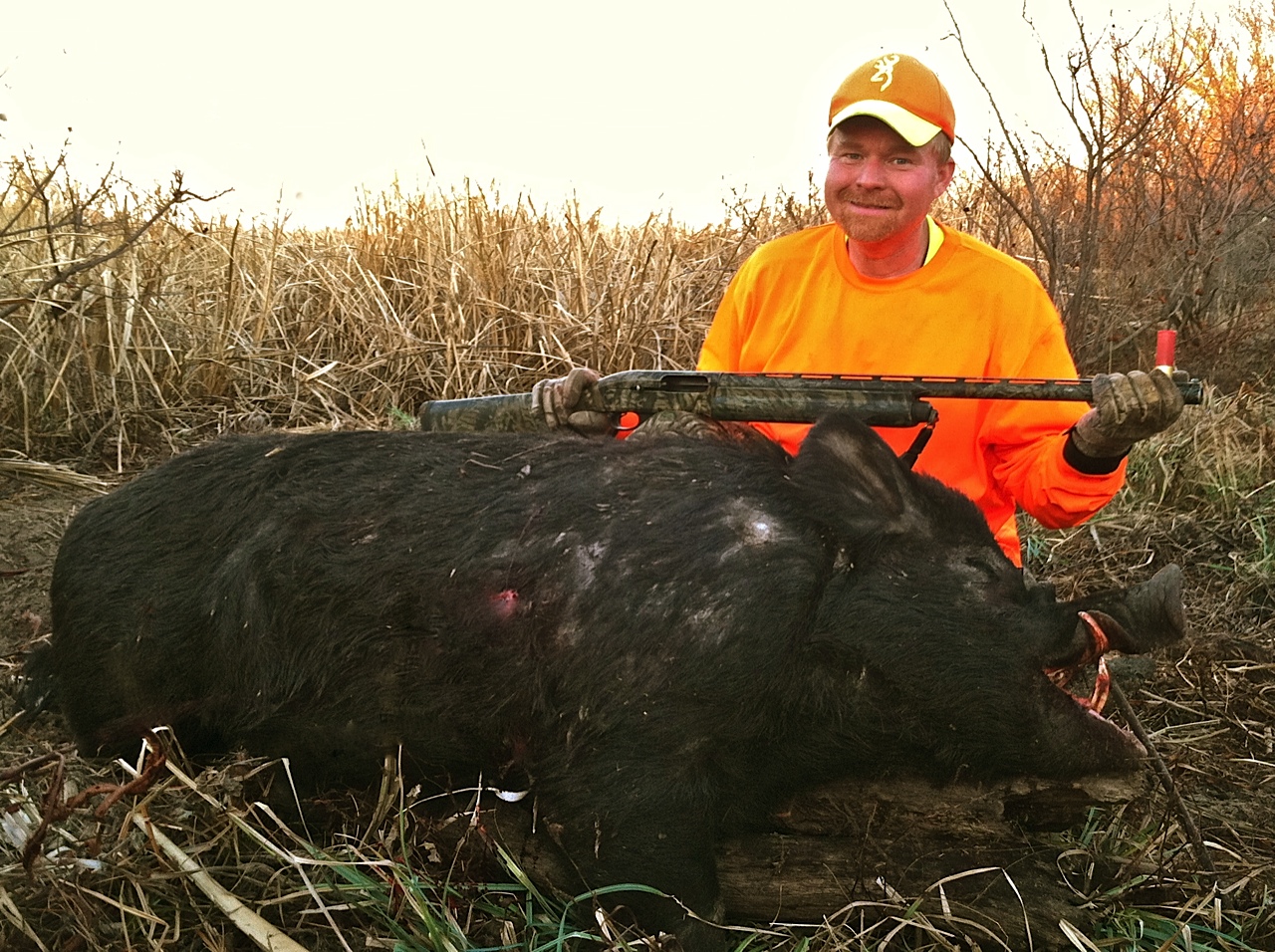

Don Yoder remembers tagging along on coon’ hunts with his dad when he was 6 or 7 years old and could barely carry a gun. In school, he fondly remembers pest hunts, and after high school he was introduced to goose hunting.
Today, his girls enjoy hunting also and 11 year old Samantha already has 3 Kansas deer to her credit. John Yoder’s brother-in-law got him interested in bow hunting his senior year of high school, and John’s wife Monica shot her first deer 2 years ago. His family routinely harvests and consumes 6 deer a year.
We were recently invited to a wild game feed put on for several years now by a group of avid Christian hunters and fishermen at Maranatha Mennonite Church outside South Hutchinson, where both Don and John Yoder and their families attend. I’m not a total newbie to wild game feeds, so I figured I could pretty well predict what would “be for dinner” when we arrived. At most wild game feeds there are typically 2 or 3 venison dishes, a couple fish recipes, maybe some wild turkey and possibly something exotic like beaver or muskrat.

I don’t mean to slight a menu like that, as that’s some good eatin.’ But what awaited us at this feast was like the Golden Corral of wild game dinners. Three eight foot tables filled with gigantic roasters, crock pots and big foil pans stretched across the floor, and that didn’t count the tables of salads, veggies’ and deserts, which I have to admit took a backseat to the meat (yes, I really just said deserts took a backseat to meat!)
In all those roasters, crock pots and big foil pans, were goose roll-ups of 3 different flavors, jalapeño, pineapple and banana pepper, wild pig fixed 3 different ways, smoked back straps, smoked hind quarter and cheese bombs which were wild pig sausage around a chunk of mozzarella cheese, a smoked venison hind quarter and venison cheese bombs, fried striper, baked rabbit, elk burgers, crock pot pheasant, wild turkey and the coup de grace, mountain lion summer sausage.
About ten years ago, Mike Warren and Henry Yoder, both avid goose hunters, decided it was time to do something tangible as a way of thanking a couple big land owners who pretty much gave them free rein to hunt on any of their property, and unbeknown to them at that time, the annual Maranatha Mennonite Church big game feed was born. The first couple feasts were held in late summer in Mike Warren’s back yard for a few friends and those land owners, and their signature dish became goose roll-ups. As word spread and they desired to invite more people from the community, the church became a more suitable venue, the game dishes became more diverse and now the dinner is held the 3rd Saturday of March each year. Besides a way to thank landlords for the use of their land, the event has become a popular community outreach, bringing neighbors together to share a meal, as well as offering an opportunity for someone searching for a place to worship or someone who needs a spiritual boost in their life to meet church members outside of a church service.

Although many hands helped make this year’s wild game feed a success, 6 men provided the “lions” share of the meat. Don and John Yoder are part of a Bible study group whose members provide much of the meat for each year’s feast. This year’s pheasant, turkey and wild hog meat were harvested by members of the group. The events signature dish, as it were, is still goose roll-ups, and Thursday night before this year’s meal, over a dozen men gathered together to begin the process. Nearly forty goose breasts were cut into pieces and put into the 3 flavors of marinade. Friday night the group convened again and nearly 1000 goose roll-ups were assembled and made ready to grill or smoke. A first this year were venison and wild boar cheese bombs, made from strips of meat wrapped around a chunk of mozzarella cheese then smoked or grilled. They get my vote as regulars every year.
Going by the number of tables and chairs they had set up, the guys figured upwards of 240 people attended this year’s meal and some of the delicacies were gone before everyone had a chance to try them. When I asked Don and John what else they wanted expressed in this story, they emphatically agreed a heartfelt thanks to all their wives was needed. So thanks girls for allowing your men to spend the time putting this feast together and for allowing them to spend the time harvesting all that meat from God’s Creation. Continue to Explore Kansas Outdoors!
Steve Gilliland, Inman, can be contacted by email at [email protected].
KFIX House Band For Mon 3/26: Queen

 Today, enjoy at least one song an hour from Queen on 96.9 KFIX
“Like” KFIX on Facebook.
State legislative testimony features FHSU Robbins Banking Institute


FHSU University Relations
Both the Kansas Senate and Kansas House financial institution committees have featured testimony from Fort Hays State University’s Robbins Banking Institute during this legislative session. Inaugural institute Director Alan Deines and Robbins Banking Institute benefactor W.R. Robbins presented on behalf of Fort Hays State.
The Senate Financial Institutions and Pensions Committee, chaired by Sen. Jeff Longbine, Emporia, and the House Financial Institutions and Pensions Committee, chaired by Rep. Jim Kelly, Independence, included the Robbins Institute on their recent agendas.
Robbins opened testimony in each committee by sharing his vision of creating an institute that would create an educated workforce meeting the needs of the banking industry in Kansas. He has had a very successful career in Kansas, growing Farmers Bank and Trust from one small bank in Albert to a network of banks in west central Kansas and Johnson County. He and his wife, Yvonne, believe both in the importance of the banking industry and in Fort Hays State’s ability to uniquely serve the State of Kansas by preparing students for quality careers in Kansas. In 2016 when Robbins committed resources to the W.R. and Yvonne Robbins College of Business and Entrepreneurship, he insisted that the college include an institute of banking.

“Therefore,” said Robbins, “the banking institute came to be.”
Deines shared the Robbins Institute’s mission to “educate and train people interested in banking as a career.” He said, “The Institute provides three options for academic credentials: a finance degree with a banking concentration, a banking minor for non-finance majors, and a banking certificate for non-finance majors such as agriculture, management and marketing. The Institute will serve traditional undergraduate students through on-campus education and place-bound students – often already working in banking – through distance education.”
Deines, explaining the compelling need for the Robbins Institute and its mission, said the Kansas banking industry has assets of $70 billion and employs approximately 15,000 people, half of whom are 55 years old or older. A large percentage will retire within the next 10 years and the Robbins Institute has been developed to address this crucial need by providing current and relevant banking coursework. The Institute, he said, involves industry leaders who provide guidance through an advisory council and through classroom presentations.
Deines has 37 years of banking experience. As a consultant, he worked with hundreds of banks, primarily in Kansas but also ranged from Wyoming to Illinois and from South Dakota to Oklahoma. He served as CEO, CLE and as a member of the Board of Directors of many of these banks. He has worked on special international projects including in Iraq.
The 14 members of the Robbins Institute’s Advisory Council include presidents and CEOs of banks ranging in size from $30 million to $3 billion in deposits. The Institute engages in various ways with industry groups including the Kansas Bankers Association, the Risk Management Association, the Kansas Department of Banking, and the Community Bankers Association of Kansas.
For example, the Institute and the Kansas Bankers Association are jointly developing an “Introduction to Banking Compliance” course to be offered through distance learning. Through contributions, Kansas banks have helped provide access to bank simulation software and several banks have funded banking scholarships.
Deines emphasized that one focus of the Robbins Banking Institute will be on connecting students and banks for paid internships to help students gain real world experience and turn theory into practice. Another focus of the Institute is research on issues important to the Kansas banking industry. Faculty from a variety of FHSU business areas, including finance, accounting and economics have shown an interest in being involved in this effort.
The Robbins Banking Institute’s first semester of existence, fall 2017, enrolled 28 students. This semester, the number has grown to 55 enrolled students.
The Robbins Banking Institute has received statewide media coverage in the Kansas Banker magazine and regional coverage from Bank News Midwest, and will be listed on the FDIC website with only 31 other universities offering significant banking programs.
Dr. Mark Bannister, dean of the Robbins College of Business and Entrepreneurship was quoted in the testimony: “The Robbins Banking Institute fits solidly within the mission of the college as it serves Kansas businesses, students, and citizens.”
In each case of testimony, members of the legislative committees have expressed praise for W.R. Robbins and Fort Hays State University for addressing an important state need through an innovative public private partnership.
SCHROCK: The cost of medical illiteracy


Americans spend almost twice as much on health care as other developed countries, but generally have poorer health outcomes, according to a study released in the Journal of the American Medical Association. The analysis of data from 2013-2016 compared the U.S. with ten high-income countries: Australia, Canada, Denmark, Germany, France, the Netherlands, Japan, Sweden, Switzerland, and the United Kingdom.
The study found that in 2016, the U.S. spent 17.8% of GDP on health care while other countries only spent 9.6% (Australia) up to 12.4% (Switzerland). All ten of the other countries essentially covered every citizen (99-100%) with health insurance. The U.S. covered 90% of citizens with health insurance and had the highest proportion with private insurance.
Americans easily had the highest rate of overweight and obese citizens (70.1%) and the highest rate of infant mortality. U.S. life expectancy is the lowest of developed countries at 78.8 years and for the first time in modern history, future Americans will live shorter lives.
However, many pet theories for this rapid escalation of American health care costs were disproved. Some had blamed Americans for going to the doctor too often, but the U.S. has roughly similar rates of utilization as the other countries. With 2.6 doctors and 11.1 nurses per 1,000, our workforce was roughly equivalent to the other ten countries. So why the higher cost?
Medical doctor salaries were much higher. U.S. general practitioners average over $218,000 per year while pay ranges from $86,607 to $154,126 in the other countries. Nurses in America are also paid more. Even more dramatic is the cost of pharmaceuticals, where Americans average spending $1443 per capita annually compared to $466 to $939 in other countries. A few procedures did emerge as perhaps over-used in America, mainly knee surgery and C-sections. We also use more MRI and CT scans.
But a really important difference was “administrative costs” that gobbled up eight percent of the U.S. health care bill compared to only one to three percent in other countries. This points the finger at our bureaucracy of private insurance companies and at the complex electronic coding and added personnel required to manage continuously-updated digital record-keeping.
However, all of these measurable factors only accounted for 60% of the added cost of American health care, leaving 40% yet to be explained.
I propose that the majority of the remaining excess cost of American health care can be attributed to the steady decline in science literacy.
What was not measured—and admittedly, it would be hard to measure—is the average citizen’s understanding of anatomy and physiology, our owner’s manual. Across the United States, only a few states train high school teachers in biology. Instead, most train one-size-teach-all science teachers who receive little or no coursework in anatomy and physiology. Even in Kansas where we do license separate biology teachers, the large research universities do not require human anatomy and physiology. As a result, you cannot teach what you do not know.
This is not the case in the other developed countries where science makes up far more of the K–12 curriculum. For instance, in Germany, an average citizen can self-refer to a medical specialist because they have studied human anatomy and physiology as well as basic microbiology and diseases. In China, a mere high school graduate has learned more science than U.S. elementary teachers learn by the time they graduate college.
The result is that we have a population that is profoundly ignorant about their health. This basic medical illiteracy in turn costs us in bad lifestyle choices and wrong health care decisions. In addition, medical illiteracy contributes to indirect costs in higher medical insurance due to ignorant jury decisions.
Until we add a year of basic anatomy, physiology and microbiology to our high school curriculum, train enough biology teachers, and start graduating knowledgeable patients, we will continue paying this stupidity tax.
John Richard Schrock is a professor at Emporia State University.
1st Amendment: Are high schools teaching students to devalue free speech?


Findings like these always lead to a lot of hand-wringing about the intolerance of today’s youth, followed by a backlash of editorials pointing out that campus protests — especially at elite colleges — are over-covered by the news media, usually topped off by internet commentators decrying liberal snowflakes and at least one columnist reminiscing about the ’60s at Berkeley. I enjoy that as much as the next person, but let’s skip it for today. Why do college students have a shaky understanding of the First Amendment and an aversion to opposing or controversial views?
The problem starts in high school. I’m not just referring to the lack of mandatory civic education in public schools. Even in schools where students do learn about the First Amendment, many school administrators don’t particularly want their students exercising their freedom of speech once they’ve learned about it.
Take the school walkouts that took place across the nation on March 14 to protest gun violence. About a week before that, my colleague Gene Policinski and I wrote a set of guidelines for students, teachers and school administrators trying to figure out how to approach the event. We advised students to weigh their options carefully, as their First Amendment rights would probably not protect them if their school decided to discipline them for taking part in the walkout. (Public schools can punish students for speech that “substantially disrupts” the learning environment, and a walkout could very well do just that.) But we also advised school administrators to think twice before defaulting to disciplinary action — “Given that we live in an age where there is much concern that young people don’t understand the Constitution or support free speech, punishing them for exercising it, even if…school administrators [have] that discretion, seems counterproductive.”
That’s why it saddened me to read that a high school in Arkansas decided to punish the three students who participated in the walkout by giving them a choice between a two-day suspension and corporal punishment. (Fun fact: corporal punishment is still legal in 22 states.) All of the students chose corporal punishment; one of them wrote a fair-minded and eloquent account of the experience for the Daily Beast:
“The punishment was not dealt with malice or cruelty, in fact, I have the utmost respect for all the adults involved. They were merely doing their job as the school board and school policy dictated…I believe that corporal punishment has no place in schools, even if it wasn’t painful to me. The idea that violence should be used against someone who was protesting violence as a means to discipline them is appalling.”
Even a two-day suspension seems disproportionate to the offense of leaving your classroom for seventeen minutes.
It was also disheartening for me to talk to the two high school journalists who published a meticulously-researched story about a fired teacher — and ended up having their story censored by the administration and their newspaper privileges revoked. As one of the journalists, Max Gordon, said, “[T]he whole point of a student newspaper is to teach the students. We want to grow and learn and experience these things, but if the administration tries to shut down any form of outside-the-box thinking…it really hampers the growth by journalists.”
And when educators emphasize obedience and conformity over the free expression, they need to think about what lessons they’re actually conveying.
Lata Nott is executive director of the First Amendment Center of the Newseum Institute. Contact her via email at [email protected], or follow her on Twitter at @LataNott.
Kansas man on parole jailed after weekend chase, crash
RENO COUNTY — A Kansas man faces serious charges after leading officers on a weekend chase and crash that injured three people.

Police had taken a report of a stolen vehicle during the day Saturday in the 500 Block of North Monroe in Hutchinson, according to Police.
Just after 7 p.m. officers spotted the vehicle and attempted to make a traffic stop that led to the chase and eventual 2-vehicle crash in the 1900 Block of North Poplar.
Police arrested the driver Ethan Marr, 28, Hutchinson. He is jailed on a $39,250 Bond on requested charges of felony flee and elude, three counts of aggravated battery, burglary, theft of a vehicle, DUI, reckless driving and driving while suspended.
On February 28, Marr was discharged by the Kansas Department of Corrections with nine convictions for theft, obstruction, drugs, burglary and criminal damage.
Marr was expected to make a first appearance in court Monday.
Cloudy, cool Monday
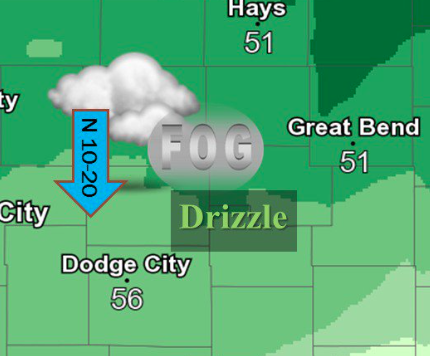
Today A 30 percent chance of showers and thunderstorms, mainly before 7am. Areas of dense fog before 10am. Otherwise, cloudy, with a high near 51. Northeast wind 9 to 11 mph becoming north northwest in the afternoon.
Tonight Mostly cloudy, with a low around 36. North wind 11 to 14 mph.
Tuesday Partly sunny, with a high near 54. North wind 9 to 14 mph.
Tuesday Night Mostly clear, with a low around 31. Northeast wind 5 to 7 mph becoming calm.
WednesdaySunny, with a high near 67.
Wednesday NightA 20 percent chance of rain after 1am. Partly cloudy, with a low around 36.
ThursdayA chance of rain before 8am, then a chance of rain and snow between 8am and 9am, then a chance of rain after 9am. Partly sunny, with a high near 53. Chance of precipitation is 50%.
Police: 17-year-old Kan. boy dead in Sunday shooting
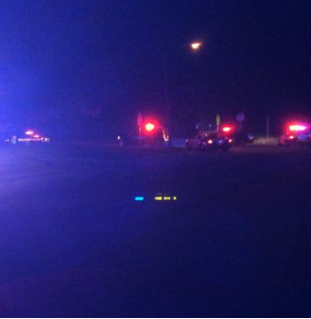
SEDGWICK COUNTY —Law enforcement authorities are investigating a homicide and searching for suspect.
Just before 1 a.m. Sunday, police were dispatched to a disturbance with a weapon and shots being fired in the 800 block of South Pershing in Wichita, according to officer Paul Cruz.
Officers located a 17-year-old male victim in the back of a residence on South Pershing. The victim was pronounced deceased by EMS.
The suspect in this homicide is unknown. Anyone with information is asked to call Crime Stoppers at 316 267-2111.
Murder trial set for Kan. man accused of shooting sleeping victim
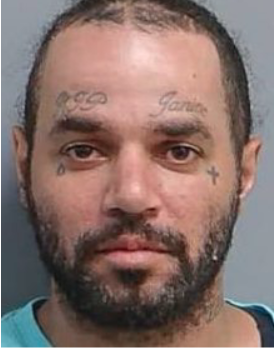
HUTCHINSON, Kan. — A Kansas man charged with first-degree murder now has a trial date.

Quinton Moore, 34, is accused of shooting 42-year-old Clarence D. Allen multiple times in his head and neck while he slept in his bed at a residence at 1701 E. 30th in Hutchinson.
During a pretrial hearing Friday, Judge Tim Chambers set a motion deadline of April 27, with the trial scheduled for May 1.
However, District Attorney Keith Schroeder told the judge he’s still waiting on some of the forensics from the Kansas Bureau of Investigation. Judge Chambers said he would schedule the trial and inform the KBI it needs to make this a priority.
Moore remains jailed on a $500,000 bond.
Suspect jailed after Kan. deputy finds blood, rifle during traffic stop
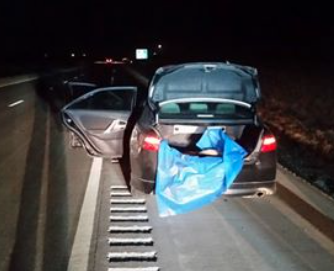
DOUGLAS COUNTY –Law enforcement authorities are investigating a suspect on alleged poaching charges. Just after 3a.m. Saturday, Kansas game wardens were dispatched to a traffic stop in Douglas County, according to a social media report from the Kansas Department of Wildlife and Parks.

The sheriff’s deputy had observed blood coming out of the trunk of the car and a .22 caliber rifle in the passenger compartment.
Further investigation by the deputy and the warden resulted in discovery of a freshly killed deer in the vehicle’s trunk. The warden booked the driver of the car into the Douglas County jail on multiple charges relating to the poaching of the deer including taking a deer in closed season. All charges are pending. Authorities did not release the suspect’s name.
Gov. signs controversial bill to lure poultry business to Kansas
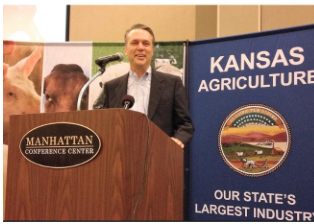
TOPEKA, Kan. (AP) — Gov. Jeff Colyer has signed into law a measure aimed at luring large-scale poultry processors to set up shop in Kansas.
Colyer signed the bill on Tuesday. It passed in the Senate last month and in the House March 12.
It greatly expands the number of chickens growers can house in confined animal feeding operations (CAFOs) before they would be required to obtain a state environmental permit.
The Kansas Department of Agriculture and other agribusiness groups strongly supported the bill, arguing it would enable Kansas farmers to produce more “value-added” meat products for consumers.
But the bill came in the wake of a recent controversy in northeast Kansas where Tyson Foods proposed building a large-scale slaughter and processing plant in Tonganoxie, sparking widespread public opposition.
Tyson would rely on large-scale CAFOs such as those provided for in the bill to supply its chicken plant. Those facilities are owned by individual growers who buy and raise chickens on contract with Tyson.
Growers using what’s known as a dry manure processing system could house up to a third of a million birds at one location before being required to obtain a permit from the Kansas Department of Health and Environment, according to the bill. Such a permit would impose several requirements, including minimum set-back distances between the barns housing the chickens and other inhabitable buildings or property lines.