WASHINGTON, D.C.- Tuesday, the Federal Motor Carrier Safety Administration (FMCSA) announced that they would place an additional 90-day delay on their Electronic Logging Device (ELD) rule for agricultural haulers.
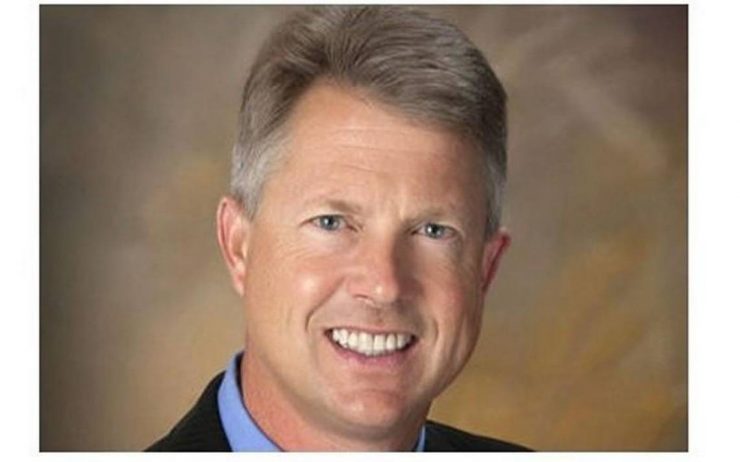
First District Congressman Roger Marshall (R-Great Bend) supports the FMCSA’s decision to postpone the ELD mandate for this industry.
Livestock haulers have expressed a great deal of concern over the electronic logging system. The agency’s ELD regulation would limit a trucker’s flexibility when transporting livestock.
“Today’s announcement is a step in the right direction and shows that the FMCSA understands that this rule is impractical in cattle country,” Rep. Marshall said. “I am encouraged by the agency’s effort to engage and have continued discussions with industry partners to find long-term solutions. In the meantime, Congress needs to act.”
Many in the industry are concerned that the FMCSA’s rules would require a hauler to leave cattle in the trailer for too long, or force drivers to unload cattle in roadside pens, which currently do not exist. Both of those scenarios create grave concerns for animal welfare and biosecurity.
“Our livestock haulers have a tremendous safety record and are responsible not just for motorist safety, but for the safety and well-being of the livestock in their trailers,” Rep Marshall said. “That’s why I led a bipartisan letter, with almost 70 signatures, to House Leadership. Our letter encourages a full year delay of the ELD mandate for the agriculture industry to be included in the upcoming omnibus bill. A year will give our industry and FMCSA the time they need to come to a long-term solution that is safe for motorists and animals.”
The ELD rule was supposed to take effect on December 18, 2017 but was delayed until March 18, 2018. Tuesday’s announcement will again extend that enforcement until June 18, 2018.
Door-to-door surveying associated with the 2018 Hays Residential Water Survey, conducted by the Department of Sociology at Fort Hays State University, concludes Friday, March 16.
The survey was designed to gather information on water use, water quality and city-sponsored water conservation programs in Hays.
Students delivered questionnaires to randomly selected residences and returned a few days later to pick them up. Participation was voluntary, and responses are completely confidential. Information received was not connected to any specific household.
“Dr. Brett Zollinger and I, along with the student field workers employed on the project, would like to extend our thanks to the randomly selected Hays residents who supported this project by completing questionnaires,” said Dr. Amanda Buday, assistant professor in the Department of Sociology. Buday is the lead investigator in the project, and Zollinger is chair of the department.
Some questionnaires remain out, however, and Buday asks anyone who still has a questionnaire to please complete it and use the postage-paid, self-addressed envelope to return it.
The survey, in addition to providing valuable information to the city of Hays, also provided the student field workers with research experience.
“Due to the civic-mindedness of Hays residents,” said Buday, “it appears this research project will yield over 300 responses, providing a valuable hands-on learning experience in fieldwork, data entry, and analysis for our students.”
Students will present findings at professional conferences, and a report of findings will be shared with the city of Hays, she said.
“We also would like to thank the city of Hays Water Resources Office, the KSU Research and Extension Office, the FHSU Motor Pool, the FHSU Print Shop, the FHSU Student Employment Office, and the FHSU Office of Scholarship and Sponsored Projects for the support they have provided in coordinating the surveying efforts,” said Buday.
For more information about the project, please contact Buday at 785-628-4174.
GRETNA, La. (AP) — The man convicted of manslaughter in the 2016 road rage shooting death of former NFL running back Joe McKnight was sentenced to 30 years in prison Thursday.
Gasser-photo Jefferson Parish Sheriff
Ronald Gasser, 56, had faced up to 40 years in prison. Defense lawyers argued that Gasser fired in self-defense when McKnight walked up to his car following a 5-mile confrontation that began on a bridge spanning the Mississippi River in New Orleans and ended with gunfire in neighboring Jefferson Parish.
McKnight’s mother testified Thursday during the sentencing hearing. Jennifer McKnight left the courtroom sobbing after angrily telling Gasser: “You didn’t have to do that.”
Witnesses at the trial said McKnight had been weaving in and out of traffic at high speed before the shooting. Prosecutors acknowledged to the jury that he was, in the words of Assistant District Attorney Seth Shute, “driving like a jerk.” But they argued that Gasser escalated the conflict, following him down an exit that he would not ordinarily have taken moments before the shooting.
Shute acknowledged that McKnight had a hand on the open, passenger side window of Gasser’s car before he was shot. But he said physical evidence proved Gasser lied during extensive police questioning when he claimed McKnight lunged at him.
Witnesses at the scene of the road rage shooting- photo courtesy WWL
McKnight had been a high school football hero at Louisiana’s John Curtis Christian School. He signed with the University of Southern California in 2006. In the NFL, he played three seasons for the New York Jets and one with the Kansas City Chiefs.
Gasser was indicted on a second-degree murder charge. The jury voted 10-2 for the lesser verdict of manslaughter.
Gasser did not leave the scene of the shooting and he was released for a time after being questioned. He is white and his release after the shooting of the black athlete sparked protests from some who said race was a factor.
Jefferson Parish Sheriff Newell Normand, who has since retired, denied that race played any role and noted that a thorough investigation led to Gasser’s arrest and indictment. Prosecutors later recounted a painstaking investigation, including an extensive search for witnesses and physical evidence that eventually led to Gasser being charged.
The case in some ways echoed another New Orleans-area road rage shooting from 2016. Former New Orleans Saints star Will Smith was gunned down in that April incident. The shooter was later convicted of manslaughter and sentenced to 25 years.
Delana “Lana” A. Neubauer, 67, of Hays, KS, passed away on Wednesday, March 14, 2018 at the Good Samaritan Society-Ellis.
A Celebration of Lana’s Life will be held on Saturday, March 17, 2018 at 11:00 AM at the Brock’s-Keithley Funeral Chapel & Crematory, 2509 Vine St., Hays, KS 67601.
Memorial contributions can be made in Lana’s loving memory to the Alzheimer’s Association Central and Western Kansas, 1820 E. Douglas Ave., Wichita, KS 67214 and/or the Good Samaritan Society-Ellis, 1101 Spruce St., Ellis, KS 67637. Contributions can be left or mailed to the funeral home.
To share a memory or to leave condolences, please visit Lana’s memorial webpage at www.keithleyfuneralchapels.com. Arrangements are by Brock’s-Keithley Funeral Chapel & Crematory, 2509 Vine St., Hays, KS 67601.
OVERLAND PARK, Kan. (AP) — More than 400 people are now U.S. citizens following a naturalization ceremony at Johnson County Community College in Overland Park.
People from 66 different countries participated in the program Wednesday. Among them was 24-year-old Gabriel Garay, a native of Bolivia. He says he cherishes the opportunity to live in the U.S. and raise a family here.
U. S. Magistrate Judge Teresa J. James presided over the ceremony and told the new citizens they bring, “diverse talents, experiences, culture and hope for the future.”
RENO COUNTY — A former Hutchinson Community College basketball player charged with distributing marijuana was bound over for trial Wednesday.
Gill -photo Reno Co.
Davon Michael Gill is charged with possession of marijuana with intent to distribute within a thousand feet of a school.
On September 11, police were called to a location on North Severance in Hutchinson after report of theft. Upon arrival, officers could smell marijuana coming from a vehicle parked along the street.
Gill was the driver of that vehicle and tried to back out and leave. Officers ordered him to stop. That led to a search warrant on the vehicle where police found 18 small individual bags of marijuana in an Old Spice bag. His vehicle was within 120 feet of Hutchinson High School.
Gill reportedly admitted that marijuana was his, but denies it was to sell. Gill told the officers that he had just purchased it for himself.
The 6-foot-7 Gill was a freshman on the 2016-17 Hutch Blue Dragon basketball team. He is a graduate of Wichita Heights High School.
Kansans should applaud the House Taxation Committee and its chair, Representative Steven Johnson of Assaria, for their political backbone in making property taxes an option in addressing the legislature’s school finance dilemma.
The Kansas Supreme Court has ruled the current structure of school finance unconstitutional and ordered state lawmakers to fix it by early April. Some estimate that will cost as much as $600 million in new revenue.
H. Edward Flentje is professor emeritus at Wichita State University.
State lawmakers enacted a uniform, statewide 32-mill levy for schools in 1992 that cut property taxes statewide by $260 million. That mill levy was reduced to its present level of 20 mills in 1997, further shrinking state-mandated property taxes for schools. A 10-mill increase would now generate roughly $320 million in new revenue, which represents a 7 percent increase in total property tax revenues statewide.
Sales or income tax options are nonstarters.
State and local sales tax rates are approaching thresholds that threaten competitiveness, particularly for the border counties of Kansas. Combined tax rates exceeding 10 percent and more are becoming common. State lawmakers have gone to the sales tax twice in the last five years, six times since 1986; and local officials are enacting and raising local sales taxes even more frequently.
Kansans are fatigued from seven years of income tax debate and want to give further discussion here a rest. Last year Johnson helped assemble a bipartisan coalition of lawmakers that ended the disastrous Brownback experiment and partially restored rates to earlier levels. As a result of that, plus the boost occurring due to federal tax reform in December, individual income tax revenues are up by $270 million over estimates for the first eight months of the fiscal year. These likely revenues could become part of the answer on school finance as well.
On property taxes business representatives lined up before the House Taxation Committee last week to denounce a bill that would raise the state mill levy for schools. Owners of business and commercial properties do bear a substantial portion of the property tax burden, currently 27 percent, but their share has declined over earlier highs. They benefited from state property tax cuts in 1992, 1997, and 1998, and voters granted them a special constitutional reduction in 1992.
Further, the Tax Foundation’s 2018 assessment of “business tax climate” ranks Kansas 19th lowest on property taxes among the 50 states, a significant improvement over Kansas’ ranking of 27th just three years ago.
Local officials cautiously but regularly tap into property taxes often with voter endorsement for a variety of local purposes–which suggests they view the property tax as well administered and fair. Apart from constitutional exemptions granted by voters, property taxes are levied based on property value, so the more one owns, the more one pays. Ninety-nine percent of all property tax revenues go to local governments and schools.
Except for the Brownback relapse, Kansas tax policy has sought balance and diversity in taxes in order to assure lower tax rates overall, reduce competition with other states, and promote tax fairness. Economic growth, bolstered by recent upticks in income and sales tax revenues, will likely maintain this balance—even with an increase in the state mill-levy for schools.
Property taxes in Kansas are fair and not out of line with other states; and a state levy has not been raised for over 20 years. If new revenue is required for school finance, property taxes should be part of the solution.
H. Edward Flentje is professor emeritus at Wichita State University and formerly served with Kansas Governors Bennett and Hayden.
Kim Tedesco, age 50, of Hays, Kansas was surrounded by loved ones at Hays Medical Center when she passed away on Wednesday, March 14, 2018, from complications related to pneumonia.
She was born February 3, 1968, in Quinter, Kansas to Robert Coberly and Terry (Rymph) Tedesco.
Kim split her time between Hays and Tucson, Arizona but was passionate about the arts everywhere she traveled. A free spirit who loved a good philosophical debate, Kim was also an avid listener of public radio, a talented chef, a dedicated painter, and an animal lover with a sense of humor. She named her cat after legendary artist Frida Kahlo and her dog after fashion icon Coco Chanel. To those who knew and loved Kim, she was “perfectly imperfect” — complicated, wonderful, human masterpiece.
Survivors include her mother, Terry Tedesco, Phoenix, AZ; her father, Robert Coberly, Hays, KS; one brother, Kurt Tedesco, Tucson, AZ; three sisters, Kristi Tedesco, Tucson, AZ; Andrea Turnbull, Lucas, KS; Bailey Nelson, Hays, KS, her grandmother, Joanne Rymph, Hays, KS; her cat, Frida and her dog, Coco.
Cremation has taken place and a private family service will be held at a later date.
In lieu of flowers, Kim’s family suggests donations be made to the Hays Arts Council or The Humane Society of the High Plains.
“Nothing is absolute. Everything changes, everything moves, everything revolves, everything flies and goes away.” ~Frida Kahlo
Services are entrusted to Cline’s-Keithley Mortuary of Hays, 1919 East 22nd Street, Hays, Kansas 67601.
Condolences can be left by guestbook at www.keithleyfuneralchapels.com or can be sent via e-mail to [email protected]
Harvey Kay “Coach” Shank, 81, of Russell, Kansas, passed away on March 10, 2018, at Salina Regional Heath Center, Salina, Kansas, after a courageous battle against AML.
He was born on August 21, 1936, in Dickinson County, Kansas, to Jacob Harvey and Mildred (Fahrbach) Shank. Kay grew up on the family farm west of Navarre, Kansas, and graduated from Dickinson County Community High School – Fighting Irish, Chapman, Kansas, in 1954. He earned a Bachelor’s degree from the Kansas State Teachers College, Emporia, Kansas, in 1959. He was invited to spend three summers at the National Science Foundation in Durant, Oklahoma, to earn his Masters in Mathematics. He continued his education with administrative classes at Fort Hays State University.
Kay took a teaching and coaching position in Lincoln, Kansas, in 1959 where he met and married his beloved wife, Jamilee (Page) on December 26, 1960. Kay and Jamilee then moved to McPherson, Kansas, to start their family. The family moved to Russell in 1969 where he taught mathematics, coached and held the position of athletic director at Russell High School USD #407 until retirement in 1994.
Many awards and recognitions include: First at state in the Javelin throw in 1954 for the Fighting Irish; Kansas 3A Basketball Coach of the Year 1976; Kansas Boys All-State Coach of the Year 1979; The highlight of his coaching career was leading the Russell High School basketball team to the 1979 4A Kansas State Championship; he shared the title of “Men of the Year” Russell County, 1979; and was inducted into the Fighting Irish Athletic Hall of Fame 1987.
Kay’s teaching career rivaled his coaching career. His years as an algebra and geometry teacher inspired many students into the education and mathematics fields. His guidance and determination to succeed influenced many students and athletes through the years.
Kay worked hard to support his family. He worked for State Farm Insurance for over 30 years as a crop hail adjuster and farm appraiser driving thousands of country miles all over Kansas. He was involved in the Russell community serving on the Russell Public Library Board for several years. He was active as a member of the First Congregational Church since 1970.
Kay’s love of sports kept him active as an avid golfer. He could be found weekly on the golf course or in the club house with his golf buddies. Kay enjoyed watching sports and supporting his grandchildren in all their sports and school activities. His enthusiasm and comments in the stands will be missed by his family.
Survivors include his wife Jamilee (Page); two daughters, Kaylee Karst (Steve Trueblood) and Susan Shank (Chris Harders), all of Russell; three grandchildren, Randilyn Karst, Kansas City, Missouri; Nash Karst and Autumn Karst of Russell; Sister Nona Boyd of Salina, Kansas; brother Pete Shank and wife Clara of Abilene, Kansas; Sister-in-law Ricci Flaherty and husband Rich of Henderson, Nevada; Brother-in-law Jay Page of Peabody, Kansas; and numerous nieces and nephews.
A celebration of Kay’s life will be held at 11:00 a.m. on Saturday, April 7, 2018, at Trinity Methodist Church in Russell. Cremation has been selected by the family and a private inurnment will be held at the Russell City Cemetery at a later date. Visitation will be 3 p.m. to 8 p.m. on Friday, April 6, 2018, at Trinity Methodist Church with family to greet guests from 6 p.m. to 8 p.m. Friday evening.
The Kay Shank Fund has been established with the Russell County Area Community Foundation and checks can be made out to RCACF. Memorials can also be made to the Rebecca A. Morrison House. All contributions and condolences may be sent in care of Ryan Mortuary, 137 North Eighth Street, Salina, Kansas 67401-2686.
Timothy A. Burris, 25, of Russell, Kansas, died on Monday, March 12, 2018, at the Russell Regional Hospital Emergency Room in Russell, Kansas.
Services will be held at 1:00 P.M. on Monday, March 19, 2018, at the V.F.W. Post #6240 in Russell, Kansas, with Pastor Dale Lane officiating. Burial will take place at a later time at Crescent Cemetery in Crescent,Oklahoma. Visitation will be from 1:00 P.M. to 8 P.M. on Sunday, March 18, 2018, at the mortuary with family greeting guests from 6:00 P.M. to 8 P.M. Suday evening. Memorials may be given to the Shriners Children’s Hospital and may be sent to the mortuary. Pohlman-Varner-Peeler Mortuary of Russell, Kansas, is in charge of the funeral service arrangements.
Gary Shipley, courtesy Kansas LotteryKansas Lottery
Gary Shipley, 67, of Hoxie is a man who stays the course. Case in point — he’s been playing the same four numbers in every 2by2 drawing for four or five years.
“My thought was that eventually they have to get hit. I might be 130 years old before that happens, but they’re going to get hit,” Shipley said with a laugh.
Turns out he was right, and he didn’t have to wait until he was 130! Using the numbers he always plays, Shipley matched all four numbers in the March 5 2by2 drawing – Red 12 and 25 and White 14 and 18 – and won himself a $22,000 top prize.
“I was very lucky,” said the big winner. Lottery officials were curious how Shipley had picked his 2by2 numbers to start with. Birthdays? Anniversaries? The number of spots on his dog? Answer: none of the above!
“Frequency charts, that’s where I got the numbers,” Shipley disclosed.
The Kansas Lottery provides “Frequency Charts” for draw games on its website and also in the Lotto News publication. The charts show how many times each number has been drawn in each game. Shipley said he studied the 2by2 Frequency Chart and then picked numbers that were among those drawn most frequently.
In addition to 2by2, Shipley plays Powerball, Mega Millions, Super Kansas Cash, Lotto America and Lucky for Life using the same numbers he picked years ago for each of those games. On March 5 when he won $22,000 playing 2by2, Shipley also won $200 on his Lucky for Life ticket.
“I feel fortunate,” he said. “I hope it happens again!” Shipley and his wife Roberta said they recently bought a house in Hoxie and will use the prize money to build a garage.
The lucky $22,000 2by2 ticket was purchased at Hoxie Stop 2 Shop, located at 1017 Oak Avenue in Hoxie.
One of the many things I love about Fort Hays State University is that our focus is not only on students. We focus on all learners. Fort Hays State is about each of us – students, administrative assistants, service workers, staff, professors and president – becoming better versions of ourselves while contributing to a better FHSU every day.
An organization that has learners at its center focuses on a culture that respects inquiry, risk-taking, and experimentation while embracing the notion that the best thinking happens in community. I love Benjamin Franklin’s quote: “If everyone is thinking alike, then no one is thinking.”
Learner-centered organizations are also focused on the creation of knowledge and on innovation – core values at FHSU. Because we expand our capacity to learn, new fields emerge and new majors are created to respond to emerging new careers. In fact, the U.S. Department of Labor indicates that 65 percent of today’s school children will eventually be employed in jobs that have not even been imagined! To prepare future students for a career that has not even been conceived is a daunting task that will require nimble, experimental universities like FHSU.
I learn every day by paying attention and listening to students, staff, and faculty. Learning is not necessarily one-directional. I know faculty will tell you that they learn from their students constantly and that students learn much from their peers, not just from professors.
Here are a couple of other examples of learning in action at FHSU:
Our Teaching Innovation and Learning Technologies unit provides the FHSU teaching community with a range of programs and services centered on effective teaching and new ways of learning. Our goal is to enhance student success and professional development by providing workshops, individual consultation, course development support and special programs.
Dr. Andreas Maheras, track and field coach, published an article in the February 2018 issue of “Techniques,” the official publication of the U.S. Track and Field Association. The article, “Biomechanical Observations in Hammer Throwing: Distinguishing the Static and the Dynamic,” analyzes the biomechanical aspects of the hammer throw event. The article challenges existing coaching practices and presents little-known characteristics of the basic phases of the hammer throw.
Undergraduate research takes many forms within departments at FHSU, but the unifying concept is collaborative faculty-student work on scholarly projects with the goal of developing generalizable, peer-reviewed work as a final product. Undergraduate research can be one of the most meaningful experiences at Fort Hays State. Students can learn through hands-on work outside the classroom, develop research skills, identify their academic and career interests, develop working relationships with faculty mentors and get a glimpse into graduate or professional school life.
As I write this, several members of our student affairs staff are learning alongside colleagues who share the responsibility for a campus-wide focus on the student experience. I know they will return to campus with expanded knowledge and the inspiration to continue to advance student success.
Our students often engage in community service projects. When those experiences are learner-centered, students enter the project with a deeper understanding of the issue the service project is designed to address. Then they follow up the activity with more profound conversations on what they learned. This process develops “engaged global citizen-leaders” – FHSU’s mission.
Fort Hays State is a magnet for learning opportunities outside of the classroom. We create makerspaces and host numerous lectures, workshops, concerts, and wellness events. We even have our very own Center for Entrepreneurship to promote interdisciplinary innovation and entrepreneurial initiatives.
As for me, I have been busy learning more about the Kansas Legislature as well as the current state of excellence at Fort Hays State. I have thoroughly enjoyed my visits to academic departments and am gaining a strong sense of our cutting-edge distinction as well as challenges and opportunities in our midst.
I have also spent a lot of time thinking about how we make decisions at the university. I have enjoyed in-depth conversations with our vice presidents, deans, presidents of the faculty and staff senates, as well as student government leaders and a myriad of others. I look forward to more conversations about how we lead together – what we do well and how we can improve both individually and collectively. Those conversations require courage and authentic communication – and through them I always learn a lot about myself and about our leadership team. Those discussions help me think differently and more deeply about leading FHSU.
John F. Kennedy once said, “Leadership and learning are indispensable to one another.” I agree, and I’m excited to rediscover that learners are the heart of Fort Hays State University.
Dr. Tisa Mason is president of Fort Hays State University.
 WASHINGTON, D.C.- Tuesday, the Federal Motor Carrier Safety Administration (FMCSA) announced that they would place an additional 90-day delay on their Electronic Logging Device (ELD) rule for agricultural haulers.