We have a brand new updated website! Click here to check it out!

FHSU Science and Mathematics Education Institute accepted into 100Kin10 network

FHSU University Relations

FHSU’s Science and Mathematics Education Institute will join a national effort to increase the national teaching pool of qualified STEM teachers.

FHSU’s SMEI is transforming the future of rural Kansas and across the country through innovation, ingenuity and radical outcomes.

The state of STEM Education at the end of 2018, 2.4 million STEM jobs were projected to go unfilled according to an article by iD Tech. Among the reasons given for the shortages include access to and qualification for STEM teacher certification, which is a problem especially for women and minorities, and beginner STEM education, which is not readily available early in a child’s life.

SMEI’s specific effort will focus on developing strategies to ensure success in recruiting and retention of STEM teachers in rural areas.

“Partnering with 100Kin10 will allow us to connect with a nationwide network of organizations to share innovative ideas and expertise, which will help build our capacity to advance STEM education and improve our work,” said Earl Legleiter, SMEI director.

“Joining also allows us to make proposals, do research, and find solutions to the national STEM teacher shortage,” he said.

“Our specific interest and contribution is with rural schools,” said Dr. Paul Adams, dean of FHSU’s College of Education. “We will take part in research on what works to recruit and retain STEM teachers in rural settings.”

Adams indicated this is an important extension of SMEI’s ongoing efforts to address the needs of STEM teachers in rural America as part of their two National Science Foundation grants already in progress.

RELATED: KU to close Center for STEM Learning and  program to attract math and science teachers.

The 100Kin10 network has already shown significant signs of growth and success.

Launched in 2011 as an answer to President Obama’s call during his 2011 State of the Union address to train 100,000 new STEM teachers in a decade, 100Kin10 is on track to exceeding the goal of training 100,000 teachers by 2021, with more than 68,000 teachers currently trained.

Existing partners and an expert panel vetted and selected the 41 new programmatic partners, including Fort Hays State University, and six funding partners that have officially joined the network base.

The new partners are joining a network of more than 280 current partners, including the nation’s top academic institutions, nonprofits, foundations, companies and government agencies. All partners register their commitments to ending the STEM teacher shortage through 100Kin10 and support one another to achieve those commitments by exchanging expertise, learning and resources.
YOUNKER: Fall cover crop options

Dale Younker is a Soil Health Specialist with the USDA Natural Resources Conservation Service in Jetmore.

With fall harvest underway in many parts of the state now is the time to think about planting a cover crop after your fall grain crop is harvested. A cover crop can provide many soil health benefits. This includes building organic matter, improving soil porosity, increasing nutrient cycling, and increasing soil water holding capacity. A cover crop can also provide excellent weed suppression and a fair amount of livestock forage through the winter and spring if planted timely.

Putting the right cover crop mix together is essential in having a successful planting. The species you use in the mix will depend on what you are trying to accomplish. If you are wanting to break up some compaction include some deep tap rooted plants like radishes, turnips, rape and other species from the brassica family. If increasing organic matter and water holding capacity is your goal plant a species with a vigorous fibrous root system. Winter cereal grains like triticale, barley, wheat and rye would be good choices.

To increase infiltration a combination of deep-rooted and fibrous rooted plants should be used. Decaying tap roots provide channels for water to directly infiltrate into the soil. Fibrous rooted plant help feed the soil microbes. These bacteria, fungi, and other microorganisms produce the organic glues that help bind the individual soil particles of sand, silt and clay into larger soil aggregates. This provides more pore space in the soil where water can infiltrate when it rains.

For grazing you will want to have a mix that is predominately a winter cereal grain, like wheat, barley, triticale or rye. Mixes that are heavy with these species are also good for weed suppression since they cover and shade the ground quickly and compete well with weeds.

It is best to get the cover crop planted as soon as possible after the cash crop is harvested. This will give the cover crop time to get established and get some growth before it gets to cold. If

the planting ends up being past the end of October, you will want to select species that have a fair amount of cold and frost tolerance. Triticale, rye and cold tolerant brassica plants work well in these situations.

Always consider the economics of planting a cover crop. There is no reason to plant a $30.00 – $40.00 mix when one that cost $15.00 will do the job. Wheat may be a good choice to use as a cover crop given its current price.

For more information about this or other soil health practices you can contact me at [email protected] or any local NRCS office.

Dale Younker is a Soil Health Specialist with the USDA Natural Resources Conservation Service in Jetmore.

Kansas deputies use drone to arrest criminal threat suspect

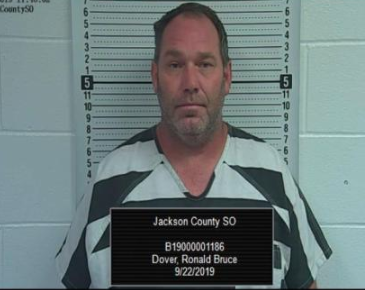
Dover photo Jackson Co.

JACKSON COUNTY — Law enforcement authorities are investigating a suspect on numerous charges after an incident at a home in Jackson County.

Just after 5p.m. Sunday, the Jackson County Sheriff’s Office received a 911 call in reference to a domestic situation in the 17000 block of 190th Road west of the City of Denison, according to Sheriff Tim Morse.

Jackson County Deputies responded to the area.  The suspect in the incident allegedly fled from the scene on foot.

The sheriff’s office deployed a drone to assist in the search for the suspect identified as Ronald Bruce Dover, 42, of Denison. He was located just southeast of the scene and arrested.

Bruce was transported to the Jackson County Jail where he faces charges of criminal threat, domestic battery, endangering a child and criminal restraint. He remains in custody on a $20,000 bond, according to online jail records.

News From the Oil Patch, Sept. 23

By JOHN P. TRETBAR

Authorities approved 34 new drilling permits across Kansas last week, 725 so far this year. There are 15 permits for drilling at new locations east of Wichita, and 19 in Western Kansas, including two in Butler County, and one each in Ellis, Russell and Stafford counties.

Independent Oil & Gas Service reports just five new well-completions across Kansas, one of those was in Ellis County. Operators have completed 998 wells across the state so far this year.

Baker Hughes reported a big drop in its weekly Rotary Rig Count Friday. Across the U.S. there are just 868 active drilling rigs, down 14 oil rigs and down five seeking natural gas. The count in Oklahoma was down ten rigs, and Texas was down seven.

There was a slight increase in the drilling rig count in Kansas. Independent Oil & Gas Service reports nine active rigs in the eastern half of the state, up one, and 28 west of Wichita, also up one.

New numbers from the Kansas Geological Survey confirm federal reports of an ongoing decline in crude-oil production in Kansas, despite a spike in national production totals. The latest state numbers show Kansas operators pumped a total of 13.77 million barrels of crude oil statewide through May of this year, down about a million barrels from a year ago. An earlier, federal report placed the total slightly higher at 13.9 million barrels through May. KGS said Barton County production was down 5% from the same figure last year, at just over 4,500 barrels per day. May production in Ellis County increased over the month before, but total production through May was down 4.7% from a year ago, at 1.04 million barrels. In Russell County operators produced more than 4,100 barrels per day, and Stafford County production topped 2,800 barrels per day through the first five months of the year.

Nationally, crude production continues at record pace. EIA reported the second-largest weekly U.S. crude-production total ever, just 77,000 barrels per day less than the record 12.5 million barrels per day produced three weeks earlier.

The government said commercial crude-oil inventories were up more than a million barrels for the week, but remained about two percent below the five-year seasonal average at 417.1 million barrels.

For the first time in over a year, U.S. oil-by-rail traffic declined last week, amid a five percent drop in all freight train traffic. The Association of American Railroads reported 11,692 train cars hauling petroleum and petroleum products during the week ended September 14. That’s a drop of more than twelve percent compared to the same week a year ago. The year-to-date cumulative total remains nearly eighteen percent over the total by this time last year. Oil-by-rail has shown growth in AAR’s weekly reports for about two years, when the spike in U.S. production outpaced our pipeline capacity.

North Dakota regulators reported record-high production of crude oil and natural gas in July. The Department of Mineral Resources reported total crude production of 44.7 million barrels, or more than 1.44 million barrels per day. DMR reported 15,943 active wells across North Dakota, which is also an all-time high.

O’Rourke campaign takes threat by Kan. soldier seriously

WASHINGTON (AP) — The Latest on an Army soldier from Fort Riley accused of sharing bomb-making instructions online and targeting left-leaning activists (all times local):

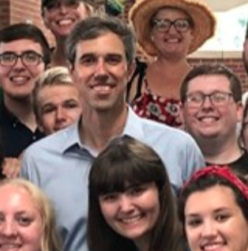
O’Rourke at a campaign event in Oklahoma last month photo courtesy O’Rourke for president campaign

The presidential campaign of former Texas Rep. Beto O’Rourke says it is in direct contact with the FBI regarding the case of an Army soldier accused of sharing bomb-making instructions online and targeting left-leaning activists.

When an FBI undercover agent asked Jarrett William Smith if there was anyone in Texas who would be a good fit for “fire, destruction and death,” Smith reportedly replied, “Outside of Beto? I don’t know enough people that would be relevant enough to cause a change if they died.”

O’Rourke spokeswoman Aleigha Cavalier said in an emailed statement that they take any threat like this very seriously. The campaign says this isn’t about any one person or one campaign, and they “won’t let this scare us or cause us to back down in fighting for what’s right.”

The 24-year-old soldier was stationed at Fort Riley in Kansas.

Trump administration revises overtime rules for U.S. workers

By CHRISTOPHER RUGABER
AP Economics Writer

WASHINGTON — The Trump administration has issued a rule that will make overtime pay available to 1.3 million additional workers, though the proposal replaces a more generous one advanced by former President Barack Obama.

The Labor Department said Tuesday that it is raising the salary level that companies will have to pay to exempt workers from overtime to $35,568 a year, up from $23,660. Americans earning less than that amount will typically be paid time and a half for any work over 40 hours a week.

The new rule will benefit retail, fast-food restaurant, and home health care workers, as well as other lower-paid workers. Many employees in those industries have been paid just above the $23,660 threshold, which has been in place since 2004, and then required to work overtime without extra pay.

Many worker rights’ group and left-of-center economists criticized the move, however, for covering far fewer workers than an earlier proposal issued by the Obama administration in 2015.

Under Obama, the Labor Department proposed raising the threshold to more than $47,000, which would have made nearly 5 million more workers eligible for overtime. That rule, however, was struck down in court after being challenged by states and business groups.

Christine Owens, executive director of the National Employment Law Project, also criticized the new rule for not including a provision to regularly increase the threshold. Obama’s proposal would have indexed the level to wage growth and adjusted it every three years.

“The Trump Labor Department’s rule says that if you make more than $35,568 a year, you’re a highly paid executive, administrator, or professional who doesn’t need overtime pay,” Owens said.

In the 1970s, more than 60% of workers were eligible for overtime pay, said Heidi Shierholz, an economist at the left-leaning Economic Policy Institute. That figure fell to just 7% in 2016. The threshold hasn’t been increased since 2004.

The U.S. Chamber of Commerce praised the rule, arguing that it provides more flexibility for employers in managing their staffs.

“The new overtime salary threshold is a balanced and responsible update to the standard that has been in place for 15 years,” said Marc Freedman, vice president of workplace policy at the Chamber.

Kansas man admits role in four armed robberies

WICHITA, KAN. – A Kansas man was sentenced to 12 years in federal prison for robberies at four Wichita stores, according to U.S. Attorney Stephen McAllister.

Kenneth W. Cade, 29, Wichita, pleaded guilty to four counts of robbery and one count of carrying a firearm during a robbery.

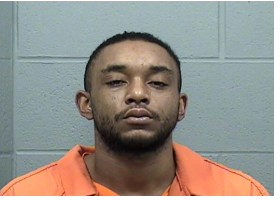
Kenneth Cade photo Harvey Co. Jail

In his plea, he admitted committing the following robberies including the Dollar General Store, 915 S. Glendale in Wichita, Nov. 22, 2017. Cade admitted pointing a gun at an employee and demanding money; C-Store, 837 S. Oliver in Wichita, Feb. 7, 2018.

Cade admitted serving as a lookout while a co-defendant pointed a gun at an employee and demanded money; Arby’s, 4308 E. Harry in Wichita, Feb. 14, 2018. Cade admitted pointing a firearm at an employee and demanding money and Circle K Store, 515 N. Seneca in Wichita, Feb. 14, 2018. Cade admitted grabbing cash from a register after a co-defendant pointed a gun at an employee and demanded money.

His Co-defendant Savannah Cole, 22, Wichita, Kan., is set for sentencing Oct. 4, 2019.

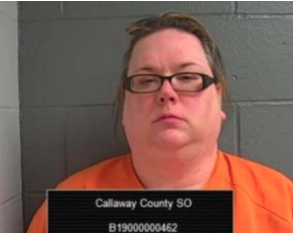
Woman charged with murder In boyfriend’s movie scene killing

FULTON, Mo. (AP) — A woman has been charged with first-degree murder after telling investigators that she fatally shot her boyfriend as they acted out a movie scene.

Peterson photo Callaway Co.

Kalesha Peterson was originally charged with second-degree murder in the March 7 killing of her 36-year-old boyfriend, David Dalton, in Fulton.

A grand jury returned an indictment of first-degree murder and armed criminal action on Friday.

A court document says the 37-year-old Peterson told Fulton police that she and Dalton were drinking and watching a movie when he suggested they act out a scene involving a firearm. She said she accidentally shot him during that scene. According to the document, she told police she was intoxicated and on several medications at the time.

Her arraignment is scheduled for Oct 15.

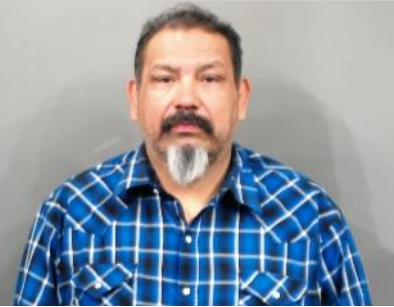
Suspect jailed for Kansas bar parking lot shooting

SEDGWICK COUNTY Law enforcement authorities are investigating a shooting and have a suspect in custody.

Barrientos photo Sedgwick Co.

Just after 2a.m. Sunday police responded to a shooting at the Bourbon Street bar in the 3800 Block of South Seneca in Wichita, according to Lt. Chad Beard.

Investigators learned that there was a disturbance between multiple people in the parking lot when shots were fired. Police located a 40-year-old victim with a gunshot wound to the foot and another 30-year-old victim a short distance from the club. The second victim remains hospitalized in critical condition with a gunshot wound to the upper torso, according to Beard.

A Sedgwick County Sheriff’s deputy conducted a traffic stop on a vehicle driven by the suspect identified as 52-year-old Felipe Barrientos.

They arrested him and he is being held on a $75,000 bond for aggravated battery, according to the Sedgwick County online jail records


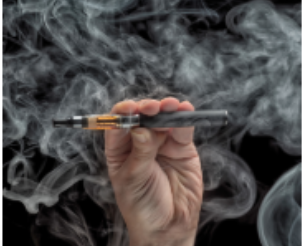
Governor Kelly: 2nd death in Kansas linked to e-cigarettes

TOPEKA —As state and federal authorities work to understand and address the recent public health crisis regarding e-cigarettes, Governor Kelly wants Kansans to know the state is committed to combating this health issue.

In a media release from the governor’s office, Kelly said, “Today, I am saddened to announce the death of a second Kansan in association with this outbreak,” Governor Kelly said. “Dr. Lee Norman and his team with the Kansas Department of Health and Environment are working tirelessly with other states and organizations to gather facts on e-cigarettes and its effects. We are coordinating a response to combat this epidemic, so that families can avoid such tragic outcomes.”

As of today, September 23, Kansas has had two confirmed deaths related to vaping. The first Kansas death related to vaping or using e-cigarettes was a female resident over the age of 50 with underlying health conditions. The second death is a male over the age of 50 who also had underlying health conditions.

Kansas currently has nine probable/confirmed vaping related cases, including the two deaths. Of the cases, five are male and four are female and range in age from 17-67 years old. All were hospitalized, five have been released from the hospital and two remain hospitalized. Regarding the types of vaping products used, there was a combination of those reporting using only nicotine, only THC, only CBD and a combination of THC and nicotine. Due to the small numbers of those affected, KDHE is not releasing locations of those affected or information about specific cases.

According to the CDC, the number of vaping-related illnesses nationally has climbed to 530, with several deaths nationwide as federal and state health officials continue to search for the cause of the outbreak. These new numbers indicate a dramatic 40 percent increase from last week, when the agency reported 380 cases in 36 states and the Virgin Islands. Half of the patients are under 25 years old. In response to the rapid pace of the outbreak, the CDC has opened its Emergency Operations Center.

The state of Kansas is working swiftly to address this epidemic and is actively reviewing policy options.

Dr. Norman has been chosen to testify before Congress concerning the effects of e-cigarettes, and will offer his testimony in front of the United States House Energy and Commerce Oversight and Investigations Subcommittee on Wednesday, Sept. 25.

“E-cigarettes are unregulated, which means that we don’t know what’s in them,” Dr. Norman, KDHE secretary, said. “And, of great concern to me, is that in the midst of all these illnesses being reported, the amount of young people using them is significant.”

E-cigarettes are the most commonly-used tobacco product among youth. Some 96 percent of youth who initiated e-cigarette use between 2016 and 2017 did so with a flavored e-cigarette product. According to preliminary findings from the 2019 National Youth Tobacco Survey (NYTS), over one quarter of U.S. high school students report using an e-cigarette product in the past 30 days, an increase from 2018 when the rate of past 30-day use was 20.8 percent.

“Most teens who vape have never smoked cigarettes,” Norman said. “Vaping is how they are initiating inhaling things into their lungs. We must work diligently and swiftly in addressing this public health crisis.”

In line with concerns on marketing, the Food and Drug Administration on Friday, September 20, issued a proposed rule that would allow e-cigarette products to be sold only after they’ve shown they may be marketed in a way that best protects public health. A federal judge ordered the FDA this summer to require all e-cigarettes to submit to federal review by May 2020.

“Until these rules and regulations go into effect, education is our best defense,” Secretary Norman said. “Talk to your kids. Talk to your grandkids. Keep talking about these issues.”

To increase education regarding e-cigarettes and what the tobacco industry has termed as “vaping,” KDHE and the Kansas Department of Education partnered to develop a Vape-Free Schools kit. Schools are urged to adopt the kit and parents and caretakers are encouraged to have conversations with their children. Tips are available from the Surgeon General here.

Governor Kelly also urges Kansans to follow the Centers for Disease Control and Prevention (CDC) advice regarding vaping: While this investigation is ongoing, people should consider not using e-cigarette products. People who do use e-cigarette products should monitor themselves for symptoms (e.g., cough, shortness of breath, chest pain, nausea, vomiting, abdominal pain, fever) and promptly seek medical attention for any health concerns. Regardless of the ongoing investigation, people who use e-cigarette products should not buy these products off the street and should not modify e-cigarette products or add any substances that are not intended by the manufacturer. E-cigarette products should never be used by youth, young adults, pregnant women or adults who do not currently use tobacco products.

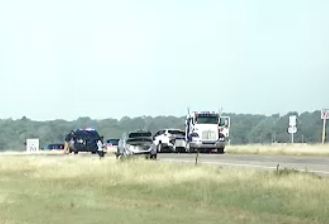
Kansas woman who died in head-on crash identified

SEDGWICK COUNTY — One person died in an accident just before 8:30a.m. Monday in Sedgwick County.

Fatal Monday crash scene photo courtesy KWCH

The Kansas Highway Patrol reported a 2004 Chevy van driven by Dustin Adam Lloyd, 36, Pretty Prairie, was eastbound on U.S. 400 just west of 343rd Street.

The driver swerved left to avoid stopped traffic, traveled through the median and struck a 2012 Ford Escape driven by Mendi Kathleen Cotter, 30, Wichita, head-on.
Cotter was pronounced dead at the scene. EMS transported Lloyd to Wesley Medical Center.

A passenger in the van Blake Kinyon, 17, Pretty Prairie, was not wearing a seat belt and refused treatment.

Copyright Eagle Radio | FCC Public Files | EEO Public File