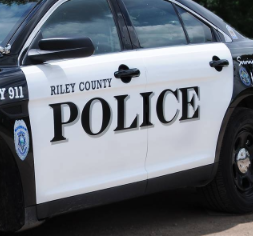
RILEY COUNTY — The driver who hit Riley County police officer with his car is facing numerous charges.
Just before 1p.m. Friday, a 2005 Dodge Stratus driven by Paul Demere, 55, Manhattan, swerved onto the right shoulder of Seth Child Road and struck a 2015 Ford Taurus and Riley County Police Officer Robert Learned. The 30-year-old officer was on a traffic stop returning to his vehicle.
Demere was booked on charges of aggravated battery, DUI; and transporting an open container, according to the Riley County Police Department arrest report. He remains in custody on a $15,000 Bond.
Learned was transported to Via Christi in Manhattan for treatment.
———–
RILEY COUNTY—A Riley County Police Officer was injured in an accident before 1p.m. Friday in Riley County.
The Kansas Highway Patrol reported Riley County Officer 30-year-old Robert Learned of Wamego was on a traffic stop returning to his vehicle on Seth Child Road just north of Farm Bureau Road.
A northbound 2005 Dodge Stratus driven by Paul Demere, 55, Manhattan, swerved onto the right shoulder, struck a 2015 Ford Taurus and Officer Learned.
Learned was transported to Via Christi in Manhattan.
🚨🚨🚔 SLOW DOWN & MOVE OVER 🚔🚨🚨
An RCPD Officer is recovering at the hospital after being struck by a vehicle while conducting a traffic stop today. Luckily the officer will be OK, but please pay attention, slow down & move over for emergency vehicles. It could save a life.
CHANGE YOUR CLOCKS, CHANGE YOUR SMOKE ALARM BATTERIES
TOPEKA — Daylight Saving Time begins Sunday, March 11, 2018, at 2 a.m., and as communities prepare to “spring forward” one hour, the Office of the Kansas State Fire Marshal (OSFM) urges residents to practice fire safety by testing their smoke alarms and changing the batteries. Alkaline batteries should be replaced at least once a year, and a good rule of thumb is to change the batteries when you change your clocks.
Kansas Fire Marshal Doug Jorgensen stresses the importance of replacing outdated smoke alarms with newer models featuring 10-year sealed lithium batteries. The manufacturer date can be found on the back of the smoke alarm.
“Ensuring you have working smoke alarms in your home is the single most important step you can take to increase your family’s safety from a home fire,” Jorgensen said. “Purchasing and installing smoke alarms with batteries that don’t need to be changed annually is one of the most affordable ways to protect your family.”
The OSFM, through its “Get Alarmed, Kansas,” program, is working with fire departments across the state to deliver and install free smoke alarms, which also include Carbon Monoxide detection. For more information on “Get Alarmed, Kansas,” visit, www.firemarshal.ks.gov.
According to the National Fire Protection Association, almost two-thirds of home fire deaths resulted from fires in properties without working smoke alarms. A working smoke alarm significantly increases your chances of surviving a deadly home fire.
To protect your home, follow these smoke alarm safety tips:
Install smoke alarms in every bedroom, outside each sleeping area and on every level of your home, including in the basement.
If the alarm chirps, warning that the battery is low, replace the entire smoke alarm right away.
For smoke alarms without the long-life lithium batteries, be sure to replace batteries at least once a year. If that alarm chirps, replace only the battery. Date each unit when they are installed and replace them after ten years – or sooner if they do not successfully pass the test by sounding the alarm when the test button is pressed.
In addition to changing smoke alarm batteries, it is a good idea to practice a family escape plan:
Plan and practice two escape routes out of every room in your house.
Designate an outside meeting place.
In case of fire, call 9-1-1 once you are safely outside your home.
Once outside, stay outside and don’t return for anything – not even a pet.
WICHITA – The American Legion Boys State of Kansas Leadership Academy is now taking applications for its 2018 session. The event, which will be in its 81st year, will be held Sunday, June 3, through Friday, June 8, at Kansas State University in Manhattan.
The ALBSKLA is for young men who will enter their senior year of high school in the fall of 2018. It provides a relevant, interactive, problem-solving experience in leadership and teamwork that develops self-identity, promotes mutual respect and instills civic responsibility. Boys State is a “learning by doing” political exercise that simulates elections, political parties and government at the state, county and local levels, providing opportunities to lead under pressure, showcasing character and working effectively within a team. It’s also an opportunity to gain pride and respect for government and the price paid by members of the military to preserve democracy.
At a minimum, applicants should be in the top half of their high school class and be involved in extracurricular activities in their school and community. Potential delegates can also be nominated to attend by their high school counselor or other influential people in their lives.
The cost to attend the Boys State of Kansas program is $325; however, in many instances, sponsors pay for the majority of the fees, with the delegate or his family paying a $50 applicant fee.
Those wishing to apply to the program should visit https://kansasboysstate.com/ to fill out an application, which are due by Monday, April 30, along with the fees to guarantee a spot in the program.
Potential sponsors, such as American Legion posts, civic organizations, businesses, clubs and interested individuals, or those with questions, should contact Troy Fowler, ALBSKLA director of operations, at [email protected].
ALBSKLA
ABOUT BOYS STATE
The American Legion Boys State of Kansas Leadership Academy is an interactive simulation that teaches high school seniors-to-be the value of democracy and civic duty. Participants form mock governments and campaign for positions at the city, county and state levels. After the elections, participants find out firsthand the difficult decisions made daily by those in government through a series of challenging simulations. Delegates, nominated to attend by their high school counselors and other influential people in their lives, are sponsored by American Legion posts and various civic organizations from across the state. All delegates demonstrate outstanding leadership qualities in student government, athletics and/or other activities.
The Boys State program was founded by Legionnaires Hayes Kennedy and Harold Card in Illinois in 1935, and was first held in Kansas two years later in Wichita. The Kansas program moved to the University of Kansas in Lawrence in 1963 and remained there until 1991. The following year, it moved to its current location at Kansas State University in Manhattan. For more information about the American Legion Boys State of Kansas Leadership Academy, visit https://kansasboysstate.com/ or https://ksbstate.org/.
Ron Wilson is director of the Huck Boyd National Institute for Rural Development at Kansas State University.By RON WILSON Huck Boyd National Institute for Rural Development
The plane is arriving. Here are the passengers. There are no hugs or handshakes for these passengers, because these air passengers are beef cattle being transported from the U.S. halfway around the globe to Abadan, Iran. The man who helped arrange this project is John M. Jackson, an international agricultural consultant based in Great Bend, Kansas.
John Jackson is the founder of Agricultural Management Group, Inc. (AMG) which specializes in agriculture and agribusiness, private enterprise development and resource management.
John grew up in Illinois and studied agriculture at Western Illinois University. There he met and married Sharon, his future business partner and wife.
One day on campus, John saw a booth for the Peace Corps. Recognizing the opportunity to experience another culture and to put their skills to good use, John and Sharon both decided to join. Six months later, they were on a plane to Iran to help a village that had been destroyed by an earthquake and had no water or electricity. John and Sharon helped the local people to rebuild. He also learned to speak Farsi, the language of Iran.
After two years in the Peace Corps, John and Sharon returned for a second two-year period. When Iran launched a major agricultural project, John was hired to join the team because of his knowledge of agriculture and Farsi. John helped develop a large-scale farm and bring in livestock.
“We brought the first beef cattle to Iran,” John said. “We brought in 450 head of Brahma and Brahma cross heifers and 15 bulls. They came in two stretch DC-8s.”
After that project, they returned to Illinois. In 1982, John joined the American Society of Agricultural Consultants (ASAC) whose members included both domestic and international consultants. Connections with ASAC led John to join a seed company for which he became district sales manager for central Kansas. He and Sharon relocated to the rural community of Great Bend, population 15,535 people. Now, that’s rural. While supporting John’s consulting projects, Sharon provided accounting services to international and local businesses, including agriculture and tribal enterprises in the western U.S.
In 1994, the seed company sent John to do market development in eastern Europe. He had responsibility for sales in Ukraine, Moldova and Romania. In 1995 when the project ended, he began consulting with other international clients and expanded AMG, with offices at the time in Moldova, Ukraine, and Great Bend.
In 1998, John was president of the American Society of Agricultural Consultants. He worked in the U.S. and overseas with such clients as Native American tribes, agribusinesses, U.S. Agency for International Development, World Bank, Food and Agriculture Organization of the United Nations, UN Development Program, and more.
John has also been involved with numerous projects involving Dr. Robert (Bob) Julian, agricultural administrator of K-State’s Food and Feed Grain Institute. One was the Cochran Fellowship Program under which agricultural specialists and administrators from emerging democracies around the world are brought to the U.S. for training. Through this program, John and his team helped bring several teams of international visitors to K-State.
“I’ve worked with people in 40-some countries and 40-some states, from Hawaii to Florida,” John said. At some periods of his career, he has been overseas for 90 percent of the year, often living in countries experiencing conflict. He remembered visiting Kiev, and reading 60 days later that 105 demonstrators were shot on the very streets where he had been walking, only a 20-minute walk from AMG’s office.
One famous advertisement states that the Peace Corps is looking for volunteers with “a good back, strong stomach, level head, and a big heart.” John fit that bill when he joined, as he does now. John has found that people around the world have much in common, especially as they become interested in technology to benefit their people.
It’s time to leave this plane which brought these cattle halfway around the globe. We commend John and Sharon Jackson, Dr. Bob Julian, and all those who are making a difference by enhancing agricultural technology around the world. I’m glad to see these enterprises take off.
RENO COUNTY — Law enforcement authorities are investigating after a Hutchinson Correction Facility Inmate was reported missing late Friday, according to a media release from the Kanas Department of Corrections.
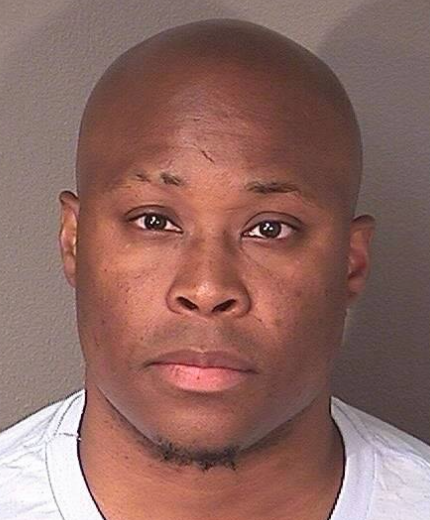
Lewis-photo KDOC
Just after 10:30p.m. Friday, authorities reported inmate identified as 38-year-old Germaine Cordell Lewis, 5 ft. 7 inches, 182 pounds, black hair and brown eyes was missing at the correctional facility.
Just after 4:30a.m. Saturday, authorities reported they located Lewis within the secure perimeter of the Hutchinson Correctional Facility Central Unit.
Lewis has convictions for aggravated battery, aggravated indecent liberties with a child, theft, burglary, criminal theft, and attempted contraband: firearm. These convictions were from counties Wyandotte and Butler. He was due to be released on September 7, 2018.
Kansas lawmakers, increasingly skeptical that tax breaks deliver economic wins, looked closely this week at economic incentive programs.
Senators on the Commerce Committee spent several days discussing bills that would add new requirements to sales tax revenue bonds, known as STAR bonds.
The home of professional soccer team Sporting KC has been a beneficiary of state tax incentives. BRENT FLANDERS / FLICKR–CC
STAR bonds allow local governments to borrow money for a building project, and tax collections created by the development are diverted to pay off the loans.
The Topeka Capital-Journal reported last year that more than $500 million in tax revenue had been used to pay back the bonds since 2001.
One bill would create a panel to study the proposals, including the state’s return on the investment, before approving the projects.
The secretary of commerce currently approves STAR bonds. Republican Sen. Julia Lynn, who heads the Senate Commerce Committee, wants more oversight.
“To make a decision on whether to use millions of dollars in taxpayer funds to go to a development project,” Lynn said, “there’s just nothing in place.”
Another bill before senators would restrict the types of projects eligible for STAR bonds. It would allow tourist attractions but put new restrictions on retail developments. Some lawmakers have said shopping centers should be financed by private developers, not state incentives.
Olathe City Manager Michael Wilkes urged lawmakers not to block retail developments.
“From a practical application, (that) really kills your project,” he said. “Those kind of things are the only things that generate enough revenue that really make the project worthwhile.”
He said large stores such as Cabela’s or Nebraska Furniture Mart in Wyandotte County can be critical to an overall development package that works.
Johnson County resident Clint Anderson is a financial advisor with experience in commercial banking and real estate. He told senators that he’s opposed to projects, including a soccer stadium and training facility in Kansas City, Kansas, being subsidized with public bonds.
He said there’s no shortage of private funding available.
“If there’s a good idea that’s operationally and economically feasible, there’s capital for it,” Anderson said. “It shouldn’t be paid for by the taxpayers.”
Trey Cocking, deputy director of the Kansas League of Municipalities, said that won’t always be the case. He used the example of a project being developed in Atchison that would include an aviation museum and updates to the city farmer’s market.
“These aren’t projects that the private market’s going to do, because there are public components to these projects,” he said. “There are public goods to these projects.”
Amanda Stanley, general counsel for the municipal league, said it’s easy to look back at successful STAR bond projects and assume they would have attracted private investment. Bu she said that’s not a guarantee.
“At what point would it have developed? How long is the state willing to wait?” she asked. “There are sometimes projects that just need that push start.”
House members also dove into the issue of state tax incentives, advancing a bill Thursday that would make more information publicly available on local and state incentives, including STAR bonds.
It would require state officials to compile and publish information about tax incentives and whether each of the incentive programs is producing a positive return on investment.
Democratic Rep. John Carmichael said the bill will help lawmakers next session as they evaluate whether incentive programs need to be modified.
“We need to know how much these tax benefits are costing the state of Kansas,” he said. “Our constituents not only need to know it, they want to know it.”
Stephen Koranda is Statehouse reporter for KPR, a partner in the Kansas News Service. Follow him on Twitter @kprkoranda.
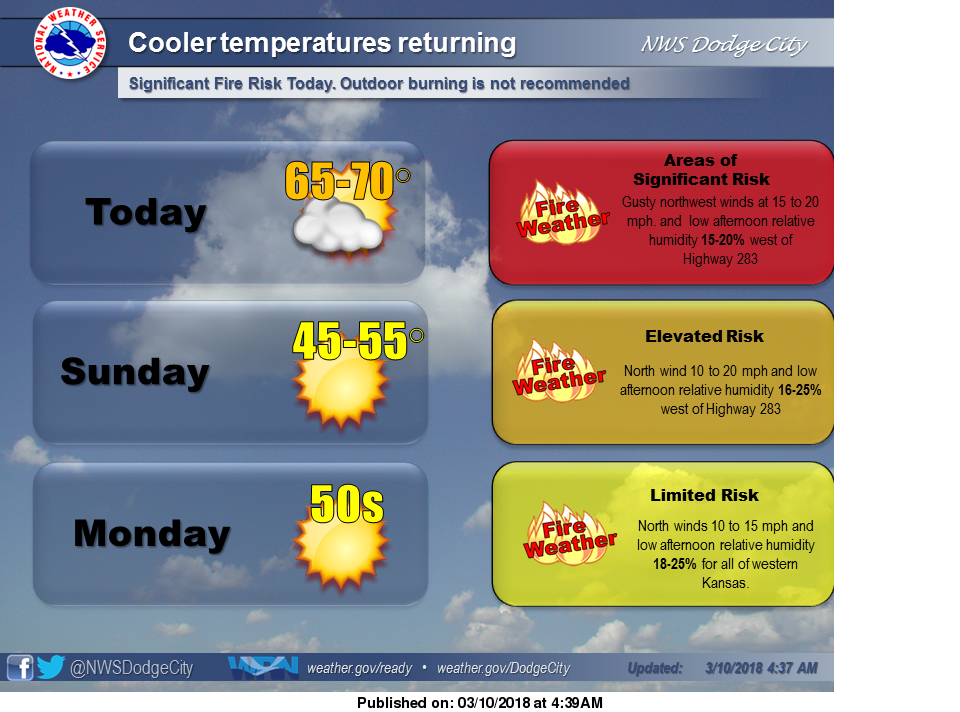
Today
A slight chance of showers between 3pm and 5pm. Partly sunny, with a high near 66. Breezy, with a west southwest wind 6 to 11 mph becoming north northwest 16 to 21 mph in the afternoon. Chance of precipitation is 20%.
Tonight
Mostly clear, with a low around 29. North northwest wind 11 to 18 mph.
Sunday
Sunny, with a high near 46. Breezy, with a north wind 15 to 20 mph.
Sunday Night
Mostly clear, with a low around 20. North wind 6 to 14 mph.
Monday
Sunny, with a high near 52. North northwest wind around 7 mph.
Kansas estimated storm losses from windstorm, tornadoes and hail are beginning to inch up in the yearly totals, according to our department numbers from previous years. While they haven’t approached the staggering figures of a few years ago, the estimated losses from 2017 show that Kansans need to be continually prepared for potential storm-related losses.
I am urging all Kansans, as we approach another Kansas spring and summer storm season, to make sure their property is inventoried properly and insured against natural elements.
It is no fun to think about preparing for the worst — but it is even less desirable to have to think about what to do when a storm loss occurs. A little forethought about insurance matters is a great way to gain some peace of mind — especially when you have to focus on your family’s immediate needs during an emergency.
Following is a useful checklist our department has compiled for 2018 storm season precautions and preparations.
Check your homeowner and vehicle policies to make sure you have proper coverage for hail and windstorm damage. Review your homeowners policy with your insurance agent to check for current coverage and adequate protection for all structures and personal property, including farm outbuildings.
Take inventory of your personal property, including model and serial numbers when available. The Kansas Insurance Department has a good Personal Home Inventory checklist for download printing at www.ksinsurance.org. Go to the “Help With….” Box on the homepage and click on “Finding a Publication.”
If possible, take photos or make a videotape of personal items to give to insurance adjusters in the event of loss. Store this information, along with receipts, in a safe deposit box or somewhere other than in your home.
Keep your house in good repair all year long. Make sure roofing shingles are secure, garage doors are reinforced and unnecessary debris is removed from the yard. In high winds, loose debris can cause significant property damage or personal injury, as well as blocking drains and sewers, which can lead to water damage.
Check your roof for leaks or damage to rain gutters.
See that trees or branches are not in dangerof falling on your home. Closely inspect your trees, and remove weak branches that could fall in high winds.
NOTE: Removal of large tree debris from your yard is usually not covered by your homeowners insurance. The expense of cleanup is your responsibility.
Take severe weather alerts and warnings seriously. Many people are injured or die unnecessarily each year because they are watching storms instead of protecting themselves.
Take part in Severe Weather Awareness Week activities and Storm Spotter meetings, which will be conducted throughout the state this month.
Have plenty of fresh batteries for radios and flashlights, as well as a supply of bottled water, dried foods and canned goods, in case of a power outage.
Listen to the latest forecasts fromtelevision or radio news. Severe weather warnings are activated to protect you and your property.
If you have time to act in a severe storm warning, move automobiles into a garage or shed.
Know how flood damage is covered. Just an inch of water can cause expensive damage to your property. Most personal and commercial policies covering property do not includeearthquake or flood protection. If you are prone to flooding or rising water in your home, you may not be protected by your homeowners policy. Check with your insurance agent. For more information, call 888-435-6637 or visit the Web site www.floodsmart.gov.
Be prepared for the Kansas storm season. If you have additional questions, contact our Consumer Assistance Hotline (for Kansas residents) at 800-432-2484, or go to our website,www.ksinsurance.org , for a live chat session with a consumer representative. You can also view storm loss estimates from previous years by clicking on the “Featured Pages” box on our homepage. The link is https://www.ksinsurance.org/autohome/ks-estimated-storm-losses.php .
I also urge you to attend a local Severe Weather Awareness seminar in your area to learn about notification and preparation techniques for the public.
Ken Selzer is the Kansas Commissioner of Insurance.
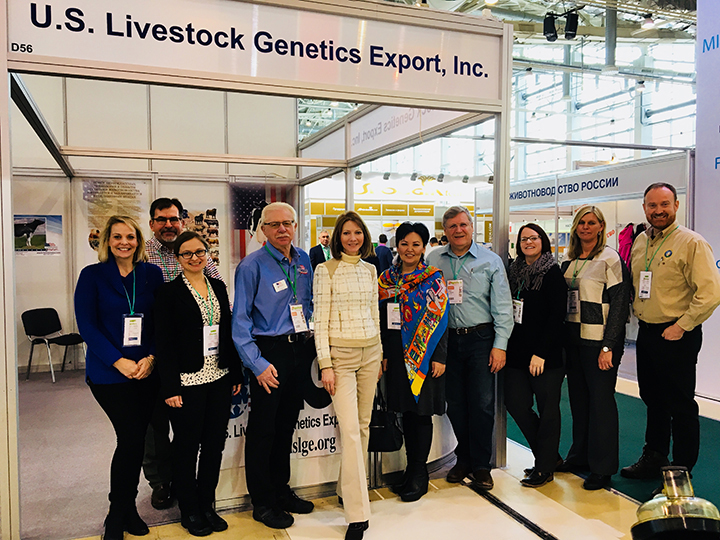
(From left) Kerry Wefald, Kansas Department of Agriculture; Thad Geiger, Geiger Cattle Inc.; Rachel Vanderberg, USDA Foreign Agricultural Service (FAS) Kazakhstan; Carl Kent, Holstein Association; Deanna Ayala, USDA FAS Moscow; Zhamal Zharmagambetova, USDA FAS Kazakhstan; Martin Sieber, U.S. Livestock Genetics Export, Inc.; Suzanne Ryan-Numrich, KDA; Shirley Acedo, KDA; and David Leishman, USDA Agricultural Trade Office Russia.
KDA
MANHATTAN — In February 2018, the Kansas Department of Agriculture hosted a trade mission to Russia, to spur trade opportunities through strategic visits throughout the agricultural sector. The trade mission was coordinated through the U.S. Department of Agriculture Agricultural Trade Office (USDA ATO) in Russia. The team representing Kansas on the trade mission included Kerry Wefald, Suzanne Ryan-Numrich and Shirley Acedo, members of KDA’s agriculture advocacy, marketing and outreach team, and Thad Geiger, Geiger Cattle Inc., Troy, Kansas.
The team attended Russia’s leading exhibition for animal husbandry and animal breeding, AgroFarm, where they interacted with breeders and genetic companies to promote the use of purebred U.S. livestock genetics. The group also met with Miratorg, the Food and Agriculture Organization of the United Nations, and the Deputy Consul General at the U.S. Consulate General in St. Petersburg, and made visits to several dairy operations and Cherkizovo’s Mosselprom poultry processing operation outside of Moscow.
“While sanctions have slowed trade with Russia considerably, we were able to identify additional market opportunities for Kansas farms, ranches and agribusinesses during this trade mission,” said Ryan-Numrich, who serves as the international trade director at KDA. “We were excited about what we saw and hope to continue to build our longstanding trade relationship with Russia.”
In 2016, Kansas exported more than $2.1 million worth of agricultural commodities to Russia and nearly $3.5 billion worth of agricultural commodities to 102 countries around the world.
“Russia’s agricultural output continues to grow and they have tremendous potential in this sector of their economy,” said Geiger. “Obviously, there are policy challenges, capital concerns and climate conditions to deal with, but potential is strong. In building trade relationships with Russia, we not only create new markets for Kansas agriculture, we also build sustainable relationships between the United States and Russia.”
The trade mission was sponsored by KDA with assistance from the USDA ATO in Moscow and with funds from U.S. Livestock Genetics Export, Inc.
KDA strives to encourage and enhance economic growth of the agriculture industry and the Kansas economy by exploring and expanding both domestic and international marketing opportunities. For information on this or other international trade missions, please contact Ryan-Numrich at [email protected] or call 785-564-6704.





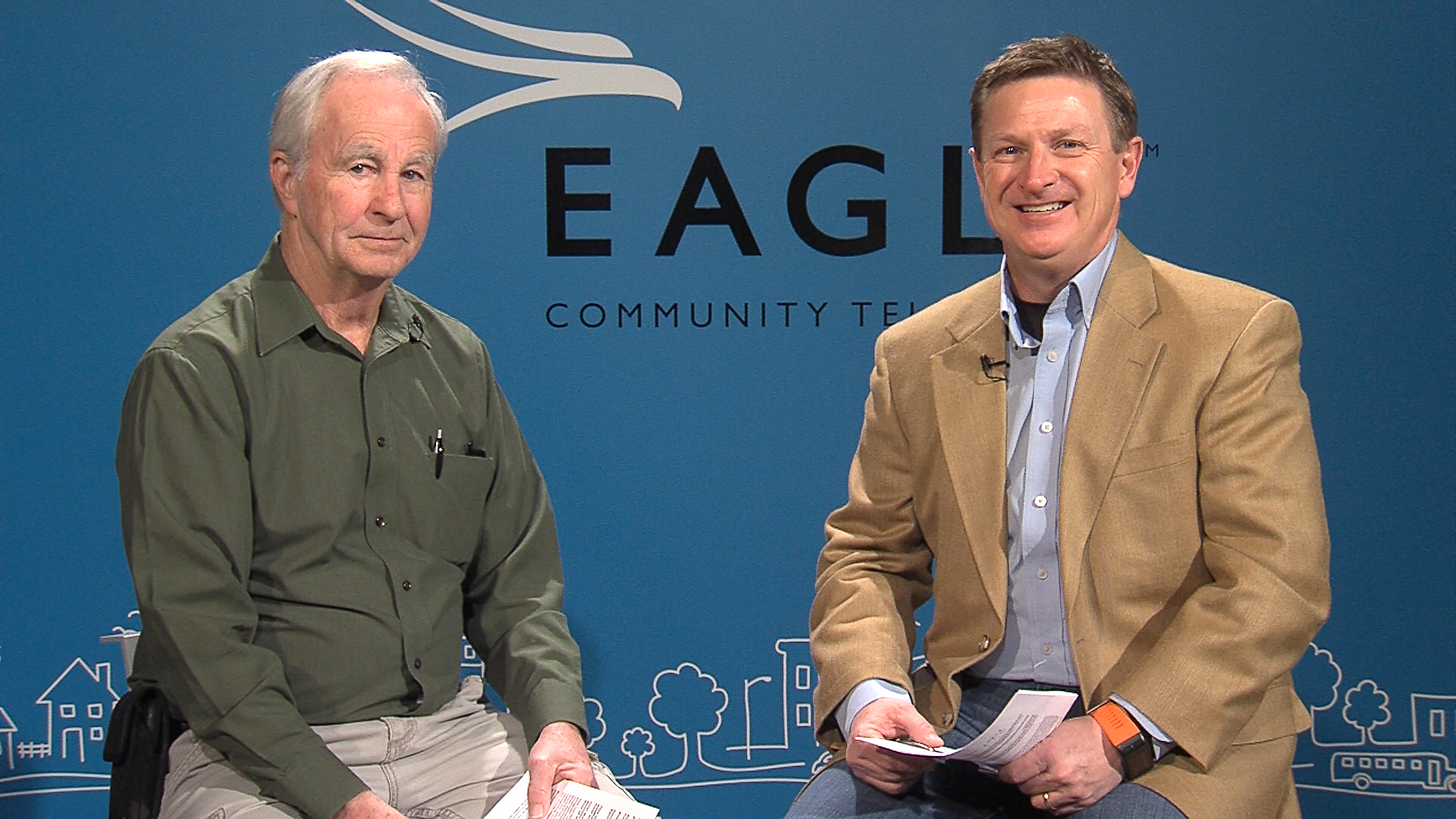
 Listen to Mike Cooper interviewing Food Services Manager at HaysMed, John Fitzthum; by clicking the link above link and then clicking the play button









 Today