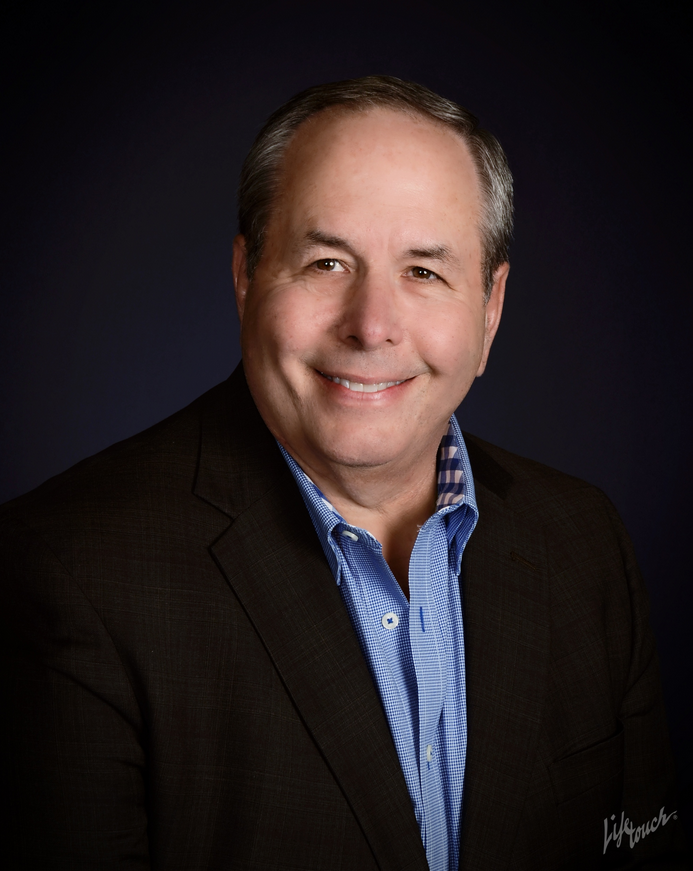
Linda BeechEvery New Year, millions of Americans resolve to become healthier (exercise more, lose weight, etc.) and wealthier (increase savings, reduce debt, etc.) Many of us are looking for a way to do BOTH– live healthy lives and also achieve financial security. Almost everyone can do something to improve their health and finances, and both can be improved by small, intentional steps.
Cottonwood Extension District FCS Agents Donna Krug and Linda Beech will team up to offer “Small Steps to Health and Wealth” in Hays and Great Bend this month. The two-part class will explore proven behavioral strategies that can help to improve health and build finances, one step at a time. Join us on these dates and locations:
• Hays- January 16 and 30, 5:30-6:30 pm, Extension meeting room, 601 Main Street.
• Great Bend- January 17 and February 1, 12:00-1:00 pm, Great Bend Recreation Activity Center, 2715 18th Street.
There is no charge for the Small Steps to Health and Wealth class, so register soon by calling the Cottonwood Extension District Hays office- 785-628-9430 or Great Bend office- 620-793-1910.
Did you make resolutions for health or wealth this year? Here are a few tips to help you be more successful as you work toward your health and wealth goals.
Make your resolutions S-M-A-R-T:
SPECIFIC: Make your resolutions very specific. For instance, saying that you’d like to save some money each month is too general. However, saying that you plan to put aside $50 from your paycheck in January, February and March is very specific.
MEASURABLE: Think in terms of numbers can be measured and tracked. Perhaps you’d like to eat healthier and get more exercise. Thinking in numbers, you might decide to eat salad for lunch three days a week and walk for 30 minute a day, five days a week.
ATTAINABLE: You can certainly make challenging resolutions, but don’t make them so difficult that they will be almost impossible to achieve. You can always break your resolution down into smaller goals. For example, it may not be possible to save $500 from one paycheck. Instead, resolve to set aside $10 a week for 50 weeks to reach your $500 savings goal. Likewise, it may not be possible to lose 25 pounds in a month. Instead, make changes in diet and exercise to lose at a more healthy rate of 1-2 pounds a week.
REALISTIC: You might decide you want to run a marathon this spring, but if you haven’t ever been a runner, this resolution may be unrealistic. Instead, plan more realistic steps, such as gradually beginning an exercise program with the goal of running a half-marathon next year.
TIMELY: People often wish for things they’d like to accomplish … someday. The word ‘someday’ is indefinite. Resolutions with no start or end date never get accomplished. Be sure all of your goals have both a deadline, and a starting date.
Join the agents of the Cottonwood Extension District as we take small steps to health and wealth in Hays and Great Bend. No step is too small to get started and you can never be too early or too late.
Linda K. Beech is Cottonwood District Extension Agent for Family and Consumer Sciences.
I met with a family in another town. They had called my office and needed to see me. They were obviously in great distress. We met in one of our satellite offices.
Dad had dementia. Mom had been trying to keep him home. The children finally intervened, letting Mom know that she could not continue, that she herself was at risk. It is a common scenario.
In our discussions with the children and Mom, I asked them about Dad. They said, “We’ve already told you about his health.” I said, “No, I want to know about him.” For the next 15 minutes they told me about him. He was an inventor. He was an entrepreneur. They all admired him. They were proud of him. They were proud to be his children and his spouse. While they had been crying when they came into the office, or at least sad, they beamed and their smiles got bigger as they told of Dad.
I took care of my grandmother as her grandson (versus as a lawyer). For six years, during that time period, she lived alone in Fort Worth, Texas. All of her other immediate family had passed away including all her siblings, her husband, all three children (including my mother, her daughter). Much of the “caregiving” that was being done was done by strangers – Meals On Wheels, Home Health, Hospice or acquaintances coming by. A lot of them did not know her at all or knew her very little.
Eventually I moved her from Fort Worth to Hays. Our hand was forced to put her into assisted living.
One of the things that became important to me was for the people looking after my grandmother to know who she was. I wanted them to know that she was a mother of three. I wanted them to know that she had an extraordinary life, both good and bad. She was married at 17. A year later, her father was murdered by a stranger and she took in her mother for the remainder of her mother’s lifetime. She had three children, two of which were hemophiliacs and died related to that disease. She nursed my grandfather back to health when he broke his neck in a train accident and was given the diagnosis that he would forever be paralyzed (he wasn’t). When my grandfather had a stroke that completely paralyzed the side of his body, she immediately took him home and nursed him back to health over a year period. She took care of my sister and I while my folks went through a rough patch.
And yet, she was the most optimistic, friendly, gentle woman that I have ever met. I never once heard her criticize any other person. The doors to her home were always open.
When I moved her to Kansas, she went to a new doctor. The new doctor called her “Mrs. Wafer”. He actually asked her about her history and she told him. I filled in a lot of the details. I wanted him to know this was a special person. And he did.
At the assisted living facility, they all knew about my grandmother. One nurse described her as a true “gentlewoman.”
It is really important that when you are overseeing someone’s care, the others who are helping you know about the person you are caring for. They are not just another number; they are not just another patient; they are not just another resident. Your loved one is an important person.
I am going to go back to my story from the beginning. This man was obviously a special person to his family. In my notes of our meeting, I wrote all of that information down. I want the members of my firm who are working with this family to know who he is and what he is about. Obviously he has dementia now and cannot share that information with us, but his family can.
We want the families that we work with to be cared for in the same way that I wanted my grandmother to be cared for.
Sometimes being a caregiver can be overwhelming. Sometimes you need to step back and think about the individual. Think about the lifetime of accomplishments and how much he or she has meant to others during that time. That person is special.
Randy Clinkscales of Clinkscales Elder Law Practice, PA, Hays, Kansas, is an elder care attorney, practicing in western Kansas. To contact him, please send an email to [email protected]. Disclaimer: The information in the column is for general information purposes and does not constitute legal advice. Each case is different and outcomes depend on the fact of each case and the then applicable law. For specific questions, you should contact a qualified attorney.
Gov. Sam Brownback, poised to leave Kansas after a generation of dominating its politics, on Tuesday called for steep infusions of money into public schools — spurring fellow Republicans to accuse him of raising hopes with a “fairy tale.”
Kansas Gov. Sam Brownback told lawmakers Tuesday night the state can solve its school funding woes without a tax hike. It was his final State of the State address. CELIA LLOPIS-JEPSEN / KANSAS NEWS SERVICE
Brownback said the state can add $600 million over the next five years — without a tax hike.
The push to spend more comes in response to a Kansas Supreme Court order. In his State of the State address to lawmakers on Tuesday, the governor called for a change to the state constitution to keep the courts out of future education politics.
“We must,” Brownback said, “stop the never-ending cycle of litigation.”
Senate Majority Leader Jim Denning called the idea of adding $600 million “personally insulting.”
He’s among staunch conservatives in the Kansas Legislature who — after a long and contentious session — ultimately parted ways with Brownback last June to hike taxes and plug a $900 million void in the state budget.
Denning said, even without more spending on schools, Kansas is on track toward a budget shortfall .
“This is reckless,” he said. “He’s given everybody a sense of false hope that he’s just solved the school issue.”
Brownback frustrated Denning and other Republicans last spring by fighting against any tax hikes. It tore at a relationship between legislative leaders and the governor that had already frayed in the years before. Ultimately, they revolted and scrounged the votes needed to override a Brownback veto.
Tuesday’s speech figures to be one of Brownback’s last high-profile moments as governor. President Donald Trump chose him as the next ambassador for religious freedom, a nomination re-entered this week and that could soon move him from Topeka.
“I have to question how this proposal is any more than a feel-good talking point on the governor’s way out the door,” said Rep. Melissa Rooker, a Republican who advocated for a five-year $750 million school funding increase last year but found no support from Brownback.
Brownback offered no hints Tuesday on where the money for his $600 million plan will come from. His administration’s budget proposal will emerge Wednesday.
Denning predicted the governor wants to divert even more money from the state’s depleted highway funding and from payments into its pension system, which already falls $8 billion short of what it will need to pay for state employee retirements.
House Speaker Ron Ryckman doubted Brownback’s tax hike-free school spending approach.
“I’m not seeing how that’s possible at this time without drastically hurting other core functions of government,” the Republican said.
Rep. Barbara Ballard, a Democrat, said Brownback’s vision for the state should have included expanding Medicaid to combat illness and poverty, shoring up the pension system and paving Kansas roads.
“We need to address the transportation issues,” she said. “Roads are not being maintained, bridges are not being maintained.”
Brownback’s eighth State of the State address found the chief executive sounding almost wistful and proud at times, extolling the state’s quail, its biking trails and its falling obesity rate.
Despite dismal popularity numbers at the close of his time in office, he described his years in Kansas politics as “a successful, long journey.”
Brownback also:
Touted lower unemployment rates and the drop in child poverty from 19 percent to 14 percent over five years.
The Brownback administration draws a link between its welfare policies, increases in people working and decreases in childhood poverty, but that connection is a point of debate with advocacy groups.
Praised the wind industry.
“I dream of a future Kansas exporting wind electricity across America,” he said.
Brownback opposed attempts in recent years by the fossil fuel industry to repeal incentives that led to a boom in wind energy production.
Rattled off business and recreational facilities completed last year, such as a milk-drying plant in Garden City — largest in the country — and the 117-mile Flint Hills Nature Trail. And boasted of lower infant mortality.
Said Kansas saw 17,000 fewer abortions in the past six years than it had in the previous six years.
“We must not go back now,” he said.
Brownback signed several anti-abortion laws during his tenure, including some of the most stringent restrictions in the country. Among them, a 2015 ban on certain second-trimester abortions.
Threw his weight behind the Kansas State Board of Education’s goals to graduate significantly higher numbers of high school students and send them to colleges and tech schools.
A fine enough aspiration, said lobbyist Mark Tallman of the Kansas Association of School Boards. But he noted that that some of the targets haven’t been reached in any state — and that $600 million might not be enough to make them happen.
Called for Kansas schools to pay teachers better than all its neighboring states. Currently pay is better than two of Kansas’ four neighbors. Educators have long called for higher pay, warning that parts of the state are experiencing teacher shortages.
Spoke wistfully of his youth and decades-long career in Kansas. He recalled a Ford pick-up truck the then-eager politician-to-be drove, its “three-on-the-tree” manual transmission that shifted gears from a lever mounted on the steering column and the advent “traveling the back roads of Kansas.”
In the years since those days in the Future Farmers of America, he went to Congress and came back. He became governor, dramatically lowered taxes, saw the state budget slip into crisis, won re-election and watched his approval ratings circle the drain.
But in what was essentially his farewell to the legislature, Brownback spoke gratefully of the people he met and the changes he engineered.
“I have,” he said, “been blessed.”
Celia Llopis-Jepsen is a reporter for the Kansas News Service, You can reach her on Twitter @Celia_LJ.
SEDGWICK COUNTY — Two members of law enforcement are facing charges in separate incidents.
Wichita Police Department (WPD) Officer Josh Price has been charged with two misdemeanors and one felony by the Sedgwick County District Attorney’s Office.
The charges stem from his October 20 arrest by the Sedgwick County Sheriff’s office for misdemeanor official misconduct and stalking, according to a media release. Price has been employed as a WPD police officer for 18 years. He was placed on administrative leave without pay Oct. 30, according to Wichita Police Chief Gordon Ramsey.
In addition to Price, Wichita Police Department Officer Jax Rutledge has been charged with one count of misdemeanor domestic battery and one count of misdemeanor criminal deprivation of property by the Sedgwick County District Attorney’s Office.
Rutledge-photo Sedgwick Co.
The charges stem from an Oct. 9 incident while Rutledge was off-duty. The Sedgwick County Sheriff’s Office made the arrest for misdemeanor domestic violence battery and theft. Rutledge has been employed as a WPD police officer for nine years. She is on administrative leave without pay.
WAKEENEY, Kan.-Kayla Vitztum scored 23 of TMP’s 33 first half points and led the Lady Monarchs to a 33-23 lead at halftime over the Trego Golden Eagles. TMP held a six point lead after the first quarter (16-10). Trego would cut the lead to four points in the second quarter and the Lady Monarchs went on a 7-0 run to take an 11 point lead at 29-18. Gracie Pfannenstiel led Trego in the first half with 9 points.
TMP came out strong in the second half and outscored the Lady Eagles 15-5 in the third quarter and took control of the contest. The Lady Monarchs finished with a 59-32 win. Vitztum finished with a game high 29 for TMP and Pfannenstiel led the Lady Eagles with 9.
Trego drops to 6-2 overall and 1-1 in the Mid Continent League and will travel to Ness City on Friday. TMP has now won eight in a row and moves to 8-1 and 4-0 in the MCL and will host Smith Center on Friday.
ROSE MCFARLAND INTERVIEW
GAME HIGHLIGHTS
Boys: TMP 57, Trego 43
WAKEENEY, Kan.-Offense was at a premium on Tuesday night in WaKeeney as Trego and TMP tangled in a Mid Continent League matchup. TMP never trailed in the first half and held their largest lead at the break at 33-19. Turnovers were the difference in the half. Trego turned the ball over 14 times and TMP had only four.
The Monarchs pushed the lead to 23 points early in the third quarter but Trego managed to chip away at the lead with the help of 9-0 midway through the third. TMP led 46-31 after three quarters and win 57-43. Keagan Shubert led Trego with 18 points and David McFarland finished top scorer for TMP with 10 points.
Trego drops to 2-6 on the year and 0-2 in the MCL and will play at Ness City Friday. TMP has now won seven straight and improve to 7-2 and 4-0 in the MCL.
Trump during Tuesday ‘s White House meeting-photo courtesy CSPAN
SAN FRANCISCO (AP) — A federal judge on Tuesday night temporarily blocked the Trump administration’s decision to end a program protecting young immigrants from deportation.
U.S. District Judge William Alsup granted a request by California and other plaintiffs to prevent President Donald Trump from ending the Deferred Action for Childhood Arrivals program while their lawsuits play out in court.
Alsup said lawyers in favor of DACA clearly demonstrated that the young immigrants “were likely to suffer serious, irreparable harm” without court action. The judge also said the lawyers have a strong chance of succeeding at trial.
DACA has protected about 800,000 people who were brought to the U.S. illegally as children or came with families who overstayed visas. The program includes hundreds of thousands of college-age students.
U.S. Attorney General Jeff Sessions announced in September that the program would be phased out, saying former President Barack Obama had exceeded his authority when he implemented it in 2012.
On Tuesday, the Department of Justice said the judge’s decision doesn’t change the fact that the program was an illegal circumvention of Congress, and it is within the agency’s power to end it.
“The Justice Department will continue to vigorously defend this position, and looks forward to vindicating its position in further litigation,” department spokesman Devin O’Malley said in a statement.
Sessions’ move to phase pout DACA sparked a flurry of lawsuits nationwide.
Alsup considered five separate lawsuits filed in Northern California, including one by the California and three other states, and another by the governing board of the University of California school system.
“DACA covers a class of immigrants whose presence, seemingly all agree, pose the least, if any, threat and allows them to sign up for honest labor on the condition of continued good behavior,” Alsup wrote in his decision. “This has become an important program for DACA recipients and their families, for the employers who hire them, for our tax treasuries, and for our economy.”
That echoed the judge’s comments from a court hearing on Dec. 20, when he grilled an attorney for the Department of Justice over the government’s justification for ending DACA, saying many people had come to rely on it and faced a “real” and “palpable” hardship from its loss.
Alsup also questioned whether the administration had conducted a thorough review before ending the program.
Brad Rosenberg, a Justice Department attorney, said the administration considered the effects of ending DACA and decided to phase it out over time instead of cutting it immediately.
DACA recipients will be allowed to stay in the U.S. for the remainder of their two-year authorizations. Any recipient whose status was due to expire within six months also got a month to apply for another two-year term.
The Justice Department said in court documents that DACA was facing the possibility of an abrupt end by court order, but Alsup was critical of that argument.
People took out loans, enrolled in school and even made decisions about whether to get married and start families on the basis of DACA and now face “horrific” consequences from the loss of the program, said Jeffrey Davidson, an attorney for the University of California governing board.
“The government considered none of this at all when they decided to rescind DACA,” he said at the hearing.
The University of California said in a statement after the decision that “UC’s DACA students represent the very best of our country and are a key part of California and our nation’s future.”
The statement says the UC system will persist in legal challenges to the end of the program and will seek permanent protection for the young immigrants.
DACA recipients are commonly referred to as “dreamers,” based on never-passed proposals in Congress called the DREAM Act that would have provided similar protections for young immigrants.
“Dreamers lives were thrown into chaos when the Trump administration tried to terminate the DACA program without obeying the law,” California Attorney General Becerra said in a statement after Tuesday’s decision. “Tonight’s ruling is a huge step in the right direction.”
—————
WASHINGTON (AP) — Seeking a bipartisan compromise to avoid a government shutdown, President Donald Trump suggested Tuesday that an immigration deal could be reached in two phases — first by addressing young immigrants and border security with what he called a “bill of love,” then by making comprehensive changes that have long eluded Congress.
Trump held a lengthy meeting with Republican and Democratic lawmakers seeking a solution for hundreds of thousands of young people who were brought to the U.S. illegally as children. Trump last year ended the Obama-era Deferred Action for Childhood Arrivals program, which shielded more than 700,000 people from deportation and gave then the right to work legally in the country. He gave Congress until March to find a fix.
The president, congressional Republicans and Democrats expressed optimism for a deal just 10 days before a government shutdown deadline. Trump expressed a willingness to be flexible in finding an agreement.
“I think my positions are going to be what the people in this room come up with,” Trump said during a Cabinet Room meeting with a bipartisan group of 20 lawmakers. A group of journalists observed the meandering meeting for an extraordinary length of time — about 55 minutes — that involved Trump seeking input from Democrats and Republicans alike in a freewheeling exchange on the contentious issue.
Trump at one point suggested bringing back “earmarks,” or money for pet projects requested by lawmakers, as a way to bring the two parties together and avoid divisions.
The president said he would insist on construction of a border security wall as part of an agreement involving young immigrants, but he said Congress could then pursue a comprehensive immigration overhaul in the second phase.
House Republicans said they planned to soon introduce legislation to address border security and the young immigrants. Trump said, “it should be a bill of love.”
SEDGWICK COUNTY — Law enforcement authorities are investigating a robbery and asking the public for help to identify suspects.
Just before 7 p.m. Monday, police responded to the east parking of J.C. Penny at Town West Square in 4600 Block of West Kellogg in Wichita, according to officer Charley Davidson.
A 52-year-old woman told police as she was opening the door of her car a suspect’s vehicle pulled up next to her. The suspect reached out the passenger window and attempted to pull the purse from her shoulder. The victim said she did struggle to keep her purse but the suspect pulled it away. The driver then fled the scene.
While the victim’s husband was on the phone with credit card companies, it was learned the card was being used at a west Wichita gas station, according to Davidson.
The first suspect was described as a 6-foot tall black male with a clean beard. He was wearing a red DuPont jacket with black sleeves a red and grey stocking cap with a fuzzy ball on top. The second suspect was also a black male, approximately 6-foot tall with short dreadlocks. He wore a red sweater with Kansas printed on the front.
Anyone with information is asked to contact Wichita police.
Police on the scene of their investigation Tuesday-photo courtesy KCTV
OVERLAND PARK— Law enforcement authorities have arrested a Kansas man after his wife’s body was found across the state line in Missouri.
Police say the man was alone when officers went to his Overland Park, Kansas, residence in the 800 Block of Perry Monday afternoon, according to a media release. Police had received calls about a domestic disturbance. The man called police hours later to return to his residence to report that his wife was missing.
Police said officers became suspicious during the interview and that the man admitted to having a role in her disappearance. Her body later was found later in nearby Raymore, Missouri, and the man was taken into custody. The name of the man and his wife weren’t immediately released.
KANSAS CITY, KAN. – A former Kansas postal worker was sentenced Tuesday to five years on federal probation for smuggling marijuana through the mail, according to U.S. Attorney Tom Beall.
Terrell Dewayne Shears, 25, Overland Park, Kan., pleaded guilty to one count of possession with intent to distribute marijuana.
In his plea, he admitted he gave addresses on his route to marijuana traffickers in Arizona. The traffickers mailed parcels containing marijuana to addresses on his route and Shears intercepted the packages. Shears dropped the packages off at an apartment building where he had been instructed to leave them and texted a recipient he knew only as “John” to pick them up.
Investigators seized more than 40 pounds of marijuana from his postal vehicle.
Mildred D. Stephens, Colby, passed away Mon., Jan. 8, 2018, at the Prairie Senior Living Complex in Colby at the age of 93.
She was born Nov. 25, 1924 in Denver. Mildred was a retired homemaker.
Her husband, Carl B. Stephens, died in 1977. Mildred is survived by two sons, Charles “Chuck” Stephens of Menlo, KS, and Kent Stephens of Colby, and by two daughters, Dee Hovda, Colby, and Marsha Zierlein, New Braunfels, Texas. She has 10 grandchildren, 8 great-grandchildren and 14 great-great grandchildren.
Funeral services are Fri., Jan. 12 at 11 a.m. at Kersenbrock Funeral Chapel, 745 S. Country Club Dr., Colby. Visitation is Thu., Jan. 11 from 2 p.m. to 6 p.m. at Kersenbrock Funeral Chapel. Burial will be at St. Martin’s Cemetery, Sequin, KS.
Memorials may be made in Mildred’s name in care of the funeral chapel to be designated at a later date.
Governor Brownback during Tuesday’s State of the State address
TOPEKA, Kan. (AP) — Kansas Gov. Sam Brownback proposed Tuesday that the state phase in a $600 million increase in spending on public schools over five years in hopes of meeting a court mandate, without telling legislators how he would pay for it.
The term-limited conservative Republican governor outlined the proposal in his eighth and final State of the State address to a joint session of the Legislature.
Senate President Susan Wagle of Wichita and Senate Majority Leader Jim Denning of Overland Park said Tuesday night that they do not think the state can sustain the spending Brownback is proposing.
Brownback tied the extra money to goals for raising teacher salaries, increasing the number of school counselors and psychologists and offering high school students courses that earn them college credit.
He also told lawmakers in his speech, “My proposal does not include a tax increase.”
Wagle called it a feel-good proposal that will force lawmakers to consider tax increases later. Denning said the plan is “insulting.”
The Kansas Supreme Court ruled in October that the state’s total aid of about $4.3 billion a year to its 286 school districts isn’t sufficient to meet a duty under the state constitution to provide a suitable education for every child. The court mandated more spending even though lawmakers last year phased in a $293 million increase over two years.
The Supreme Court didn’t set a specific spending target but hinted in its decision that spending must rise by as much as $650 million a year. It told lawmakers that a new school funding law must be in place before July 1, and it expressed a growing impatience with delays in boosting spending.
Many lawmakers, particularly Republicans, were frustrated by the court’s ruling because bipartisan majorities raised income taxes last year by roughly $600 million a year to help balance the budget while providing extra money for schools.
Top GOP leaders see no appetite for raising taxes again — or making deep cuts elsewhere in the budget to shift money to schools. Many legislators are skeptical that school funding can rise significantly without either step.
And lawmakers have been debating whether the court would accept a law that phases in an increase in school funding over several years.
Brownback was expected to outline the details of his school funding proposal in budget recommendations released to lawmakers Wednesday.
The governor said he was proposing goals along with the funding because, “the people of Kansas expect results.”
“Money by itself will not solve the problem,” he said in his prepared text.
Brownback is term-limited after winning re-election in 2014, and President Donald Trump has nominated him to serve as U.S. ambassador-at-large for international religious freedom.
He gained national attention for a first-term experiment in aggressive income tax-cutting and saw his popularity wane as the state experienced persistent budget problems. Voters in 2016 turned on his legislative allies, electing enough Democrats and GOP moderates to roll back some of his tax cuts.
In the Democratic response prepared before the speech, House Minority Leader Jim Ward, of Wichita, who is running for governor this year, said funding schools “fairly and sufficiently” is the most important issue facing lawmakers. He also praised the bipartisan majorities that raised taxes last year over Brownback’s veto.
The tax increase approved last year rolled back most of the past income tax cuts championed by Brownback in 2012 and 2013. State tax collections have exceeded expectations each of the past seven months.
“We made significant progress in restoring fiscal responsibility to our state,” Ward said.
Brownback and his aides had not expected him to be giving this year’s address after Trump nominated him for the ambassador’s job in July. They had expected the U.S. Senate to confirm Brownback’s appointment in the fall, triggering his resignation and elevating Lt. Gov. Jeff Colyer to governor.
But the Senate failed to vote on Brownback’s nomination by the end of last year, requiring Trump to renominate him. The delay has created an awkward transition.
SHAWNEE COUNTY — Law enforcement authorities are investigating a suspect on traffic and drug charges after a Tuesday morning chase.
Just after 4 a.m., a Shawnee County Sheriff’s deputy attempted a traffic stop with a White Pontiac Grand Prix near NW 46th & Rochester Road in Topeka for a traffic violation, according to Sgt. Todd Stallbaumer.
The driver of the Grand Prix identified as 42-year-old Jeremy L. Rhoads of Topeka failed to stop for the deputy and a pursuit was initiated.
The vehicle continued northbound on Rochester and turned east on NW 50th. The vehicle continued east at a high rate of speed. The pursuit continued north on Topeka boulevard before the Grand Prix turned into a neighborhood in the 5700 block of N. Topeka Boulevard.
The driver fled the vehicle and let it roll into a tree. The deputy arrested Rhoads. There were no other occupants in the vehicle.
Rhoads was transported to the Shawnee County Dept. of Corrections where he was booked for requested charges of, Speeding, possession of drug paraphernalia, possession of opiate, opium, narcotic, and certain stimulant, and additional traffic violations. Rhoads has 18 previous convictions for drugs, theft, burglary and aggravated battery, according to the Kansas Department of Corrections.