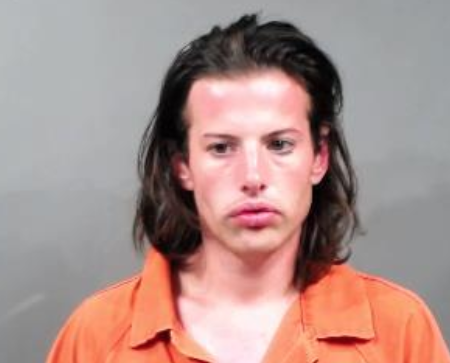
SHAWNEE COUNTY — Law enforcement authorities are investigating a stabbing and have a suspect in custody. Just after 9:30a.m. Thursday, police received report of a violent attack with a knife at a residence in the 700 Block of SE Ridgewiew Drive in Topeka, according to police spokesperson Gretchen Koenen.
Officers arrived on scene and located a victim identified as 34-year-old Michael Ortiz suffering from life-threatening injuries consistent with a stabbing. The victim was transported to a local hospital by American
Medical Response and is expected to survive.
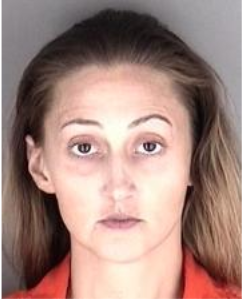
Following an investigation, police arrested 34-year-old Tiffany A. Riley. She is being held in the Shawnee County Department of Corrections on a requested charge of aggravated battery
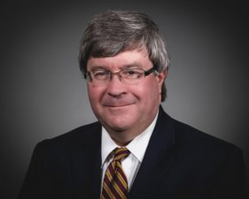
By MARK TALLMAN Kansas Association of School Boards
Rising numbers of young children with severe behavioral, emotional and mental health needs and speech and language issues are driving up school district costs and worsening an already critical shortage of qualified staff and services.
That was the assessment of education leaders at three KASB workshops on the federal Individuals with Disabilities Education Act held in Topeka, Dodge City, and Salina at the end of August.
Mark Tallman is the executive director for advocacy for the Kansas Association of School Boards.
Chip Slaven, Chief Advocacy Officers for the National School Boards Association, spoke at the workshops on NSBA’s push to update and fully fund IDEA. He said Congress is considering “reauthorizing” – a review that can lead to major changes in legislation – the IDEA for the first time since 2004.
Kansas Senator Pat Roberts, a member of the Senate Health, Education Labor and Pensions Committee, has publicly backed the goal of increasing federal funding from the current 16 percent to 40 percent of special education costs.
Special education leaders say increased funding would allow them to provide better services to students and families through better staffing and reduce the drain on other school programs.
Growing demands, especially at early ages
The number of Kansas students receiving services under IDEA, including those in private schools, is increasing rapidly, up 20.3 percent from 2001 to 2018, according to federal reports. That is four times the rate of increase in all students in Kansas public school districts. Special education leaders say the biggest reason is the growing identification of young children with special needs.
The number of three-to-five-year-olds receiving special education in Kansas increased by over 4,000, or 52.3 percent, since 2001. That helps explain the growth in total special education enrollment, because once students are identified, they usually remain in the system.
Educators agree that part of the growth is due to stronger efforts to identify students with special needs earlier. With more districts providing all-day kindergarten and preschool programs, more students are enrolled and those with special needs can be spotted. Districts are also expected to seek out high need students before they enroll in kindergarten.
The biggest challenges are growing numbers of students with aggressive behaviors, who can’t regulate themselves, can’t interact with other students and may be dangerous to themselves and others and destroy school property; and those lacking in speech and language skills.
What educators are not sure about is why those numbers are growing so fast.
One theory is that too many young parents either haven’t been taught appropriate skills to raise children or are too stretched or stressed by work or other obligations to provide such care. Related is the suggestion that children who used to be raised by parents and grandparents are now in foster care, a system with substantial, well-documented problems.
A growing concern is “screen time;” that young children are given a phone or tablet to distract, occupy or amuse them at the expense of interaction with parents or peers, making them less prepared for interaction with other adults and children and less able to pay attention to a teacher. A classroom can put stress on children not used to being in a structured setting or struggling to meet higher academic goals before learning basics like socializing with others and toileting.
The high cost and limited availability of childcare is one reason many children have no experience outside their immediate home and family when they arrive at school, and lack language and social skills. Such students lag behind their peers from the beginning and often never catch up. As one school leader said, students can quickly “internalize” that they are “failures” and don’t believe they can learn.
The dwindling support for children and families from other providers, such as mental health providers, means problems become worse until the child arrives at school, which may be the only way a family can get assistance. As one special education administrator notes: “No matter how difficult the issues might be, the public school is the one place children can always legally go to.” Other providers don’t have to provide services without funding or can limit services to those who can pay. That leaves out many of the highest need cases – until the school steps in.
Rising toll on the staff and schools
School leaders say the growing demands on special education are straining programs that have long experienced a shortage of teachers. More students require more teachers. When they can’t be found, caseloads increase, leading to teacher frustration, burn-out and turnover. Parents are frustrated by the lack of consistency, which also hurts relationships between families and the school. Schools turn to using substitutes who may not have a full license and to paraprofessionals who don’t have training as teachers. Administrators say they do the best they can to meet student needs but could do better with better-trained staff.
A study released last year by the Kansas Division of Legislative Post Audit found that school districts would need to hire an additional 700 special education teachers and 2,600 other licensed professionals like speech pathologists to meet “best practices” guidelines. If that were done, districts could cut between 1,700 and 3,900 paraprofessional positions, but would still require more funding because licensed staff earn significantly more than unlicensed paras.
In addition to better services, district leaders say they are urgently concerned about students – especially those at very young ages – who are dangers to themselves, other students and staff. This may be due to uncontrolled anger, suicide and other self-harm, or potential violence against others like school shooting, each of which can be caused by depression, emotional disturbance or other mental illness.
To address these issues, schools are trying early identification, therapeutic preschools, one-on-one support, partnering with other agencies and providers and trying to build deeper relationships with student and families – all of which are promising but require personnel, training and funding. School leaders also acknowledge that other agencies, from community mental health to foster care, also face diminished resources and staff shortages, and may be in competition for the same people.
How more funding could help
When originally passed in 1975, Congress said it intended to cover 40 percent of special education costs required by the new law. Currently, federal funding only covers about 16 percent of costs. Kansas school districts receive over $100 million in federal aid for special education.
The state of Kansas also created a state aid program for special education, which according to state law should pay 92 percent of the “excess cost” of special education (the cost of special education after subtracting the “regular” cost of educating students with disabilities and federal aid). However, state aid has also been consistently below that target, currently covering an estimated 78.2 percent. Local school districts must make up for what federal and state aid doesn’t cover.
Special education leaders say additional funding would not immediately solve the special education teacher shortage, but it would allow districts to raise teacher salaries to attract and retain new people over time. It could also help districts assist individuals in paying for college to become special education teachers, and work to provide more mental health services and more family outreach.
More special education funding would also reduce the need to shift money from regular education programs. For example, because the state special education aid program is only funded at 78 percent of excess cost, rather than 92 percent as provided in state law, districts must shift over $110 million statewide from general state aid to special education.
The percentage of excess cost is based on the statewide total of special education costs compared to total state appropriations for special education aid. However, the funding is distributed to individual districts based on transportation costs, the number of teacher and paraprofessionals, and funding for very high-cost individual students. As a result, individual districts may receive more or less than the statewide percentage.
RILEY COUNTY —Law enforcement authorities are investigating a report of shots fired Thursday in Manhattan.
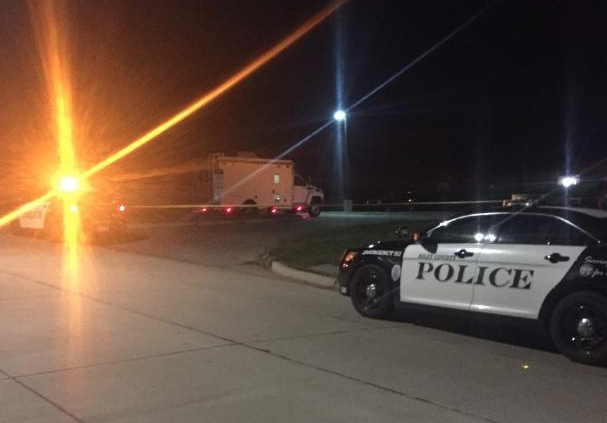
Police on the scene of the shooting investigation Thursday photo courtesy WIBW TV
Just before 7p.m., police received multiple reports of shots fired in the area of Westwood and Oak Street in Manhattan, according to Riley County Police Captain Josh Kyle.
Upon arrival officers discovered several spent shell casings in a parking lot off of Oak Street which is south of the Manhattan High School West Campus.
Information on scene indicates that two vehicles met in the parking lot. The occupants of the vehicles interacted for a while before shots were fired. Both vehicles then fled the area. A house in the 200 Block of Ridge was struck by a bullet, according to Kyle.
A witness on scene provided a tag number for one of the vehicles. Kansas Highway Patrol Troopers from the Kansas Turnpike Authority were able to locate this vehicle eastbound on I-70.
A pursuit ensued which involved at least one other agency (Contact the KHP-KTA for further information.) The vehicle was eventually stopped and four people were taken into custody (The driver was arrested by the KHP-KTA for the offenses in their presence.) The occupants were interviewed by Riley County Police detectives.
Currently the RCPD is following up on investigative leads as to the identity of the other vehicle and its occupants.
There is no indication that the individuals involved are affiliated with Manhattan High School, the parking lot happened to be a meeting location. There have been no reports of injuries.
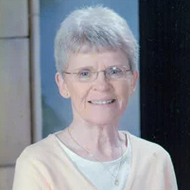
Charlene Marie Fitzmorris, 76, of McPherson, Kansas, passed away at 11:12 a.m., Wednesday, September 11th, 2019 while in the company of family members, at Cedars House.
Charlene was born in St. Charles, Missouri on February 25, 1943, a daughter of Charles Joseph and Margarette (Purdon) Moriarty.
Charlene attended elementary school at St. Mary’s Catholic School and graduated from St. Patrick’s High School, Parsons, Kansas. She then attended Parsons Junior College, Parsons, Kansas and later graduated from Fort Hays State University, Hays, Kansas with a degree in Elementary Education.
She was a member of St. Joseph’s Catholic Church in McPherson, where she was a member of the Altar Society.
Charlene was a homemaker and she took great pride in providing for her family in this manner. She was a bookkeeper for Lucas Motor Company, Lucas, Kansas, and taught for 28 years starting at Sylvan Grove Elementary School, Sylvan Grove, Kansas and retired from Washington Elementary School, McPherson, Kansas after 2 years.
Charlene was a member of KNEA and the NEA.
Charlene enjoyed raising her children, teaching, and spending time with her family, particularly her grandchildren.
Charlene Marie Moriarty was united in marriage to Larry Joe Fitzmorris on August 17, 1963 at St. Mary’s Catholic Church, Parsons, Kansas. The young couple established their first home together in Parsons for a year before moving to Lucas, Kansas where they lived for 39 years. After retirement, they moved to McPherson in 2003.
She is survived by husband Larry Fitzmorris, of McPherson, Kansas; son Douglas Fitzmorris and his wife Danica, of McPherson, Kansas; daughter Kelly Kohl and her husband Rick, of Moundridge, Kansas; son Shawn Fitzmorris and his wife Christy, of Kansas City, Missouri; son Ryan Fitzmorris and his wife LaChelle, of Hays, Kansas; brother James Moriarty and his wife Sheri, of Kansas City, Missouri. She is also survived by 10 grandchildren – Riley Fitzmorris, Trevor Kohl, Addie Fitzmorris, Rory Fitzmorris, Collin Kohl, twins Jase Fitzmorris and Josie Fitzmorris, Declan Fitzmorris, Kellan Fitzmorris, and Quinn Fitzmorris.
Charlene was preceded in death by her parents and a grandson Pierce Fitzmorris.
Visitation will be held on Sunday, September 15, 2019 from 5:00 p.m. – 7:00 p.m. at St. Joseph’s Catholic Church with Rosary at 7:30 p.m..
A Mass of Christian Burial will be celebrated on Monday, September 16 , 2019 at 10:00 a.m. at St. Joseph’s Catholic Church, McPherson, Kansas, with Fr. Ben Shockey officiating.
Burial will be at McPherson Cemetery McPherson, Kansas.
In lieu of flowers, memorial contributions may be made to St. Joseph’s Catholic School and they can be sent to Glidden-Ediger Funeral Home, 222 W. Euclid St., McPherson, Ks. 67460.
Leann Fischer, 62, passed away September 12, 2019, at Parkwood Village, Pratt. She was born November 29, 1956, at Larned to Lee Roy & Viola (Dome) Schraeder. She married Gregg K. Fischer on August 7, 1976 at Great Bend. He survives.
Leann was a current Stafford County resident coming from Salina and Great Bend. She was previously employed as a research analyst for Columbian Title Co., Salina, and currently enjoyed all aspects of the farm and ranch life. She was a 4-H leader and enjoyed fishing, sewing, antiques and cooking. She was the number one supporter and cheerleader for her daughters.
Survivors include, her husband, Gregg of the home; two daughters, Nikki Deeds and husband Zach of Pratt, and Stacey Stump and husband Jeff of St. John; mother, Viola Schraeder of Great Bend; three sisters, Kathy Butler of Dallas, TX, Becky Soukup of Wilson, and Connie Harms of Denver, CO; and three grandchildren, August Deeds, Archer Deeds, and Clara Stump. She was preceded in death by her father, Lee Roy Schraeder.
Visitation will be held from 1:00 to 9:00 p.m., Sunday, September 15, 2019, at Bryant Funeral Home, Great Bend, with family receiving friends from 5:00 to 7:00 p.m. Memorial service will be held at 1:30 p.m., Monday, September 16, 2019, at Bryant Funeral Home with Pastor Doug Enick presiding. Inurnment will be in the Fairview Park Cemetery, St. John.
Memorials are suggested to Victory in the Valley or Stafford County 4-H Council, in care of Bryant Funeral Home.
WICHITA, Kan. (AP) — A break-in at storage units in Wichita, Kansas, became a diplomatic security issue last year because two of the units belong to Secretary of State Mike Pompeo.
Mike Pompeo Secretary of State-photo Courtesy CSPAN
A Wichita police statement says the State Department sent a security officer to the East Side Mini Storage last November to discuss the case with police. A State Department official said it is standard procedure to send an agent to investigate any incidents involving the secretary.
The case has been temporarily closed without any viable leads or suspects.
A police report obtained through an open records request said the former Kansas congressman’s units contained tables, chairs and some campaign items.
Wichita police spokesman Officer Charley Davidson said it appears the theft was random and Pompeo’s units were not targeted.
JACKSON COUNTY, MO. —Law enforcement authorities are investigating an officer involved shooting.
Law enforcement authorities on the scene of the fatal officer-involved shooting photo courtesy KMBC TV
This incident began just before 7p.m. Thursday in the 9800 Block of East 25th Street in Independence as an attempted apprehension of a known suspect with numerous felony warrants, according to a media release.
This incident involved several local police officers and Jackson County Sheriff’s deputies.
During the attempted apprehension of the suspect, a Jackson County Sheriff’s deputy fatally shot the suspect.
A second subject who was with the suspect was injured during the incident. This subject was transported to an area hospital. No officers or deputies were physically injured
On Saturday, the city of Hays and the KSU Big Creek Middle Smoky Hill River Watersheds will host three separate WaterSmart events:
Mulch-Loading Event at the City Parks Department from 8 to 11 a.m.
Rain Barrel Event at the KSU Ag Research Center from 9 to 11 a.m.
WaterSmart Landscape Tour from noon to 2 p.m.
Pre-registration is required for the rain barrel event and WaterSmart Landscape Tour.
Details, as well as registration information, can be found at watersmarthays.com or by following the city of Hays Department of Water Resources on Facebook and Twitter.
SEDGWICK COUNTY —Law enforcement authorities continue the investigation of Tuesday’s office involved shooting and have a third suspect in jail.
Stanford photo Sedgwick Co
After his release from the hospital on Thursday afternoon, police booked 26-year-old James Stanford of Newton on charges of aggravated assault on a law enforcement officer, aggravated battery, flee and elude, and theft.
He was identified as the driver in a stolen white Jeep Wrangler where the driver attempted to run over a WPD officer at the McDonald’s located in the 2200 block of N. Amidon on Tuesday.
Stanford wrecked the vehicle in the 3000 block of N. Halstead and fled on foot. He was later apprehended in the area of E. 29th St. North and N. Meridian Ave.
Stanford is the last suspect to be arrested in this case. Zachary Ausdemore was released from the hospital Wednesday and remains in custody. Daphne Dawn Hays was jailed immediately following the incident on Tuesday.
————–
Daphne Dawn Hays photo Sedgwick Co.Zachary Ausdemore photo Sedgwick Co.
SEDGWICK COUNTY —Law enforcement authorities continue the investigation of Tuesday’s office involved shooting and have another suspect in jail.
After his release from the hospital Wednesday afternoon, police booked 30-year-old Zachary Ausdemore for aggravated robbery and an outstanding warrant out of Nebraska, according to officer Kevin Wheeler.
He was identified as the passenger in a stolen white Jeep Wrangler where the driver attempted to run over a WPD officer at the McDonald’s located in the 2200 block of N. Amidon.
Hand at the lower left of the image is the officer avoiding an attempt by the driver to run over him during Tuesday’s incident-photo courtesy Wichita Police
After the vehicle wrecked, Ausdemore then fled on foot and robbed an elderly couple of their Honda CR-V in the 2400 block of W. Stauffer.
He led officers on a lengthy vehicle pursuit, which ended in the area of 167th Street West and K-42.
Ausdemore was taken into custody after a brief foot pursuit.
—–
SEDGWICK COUNTY – Law enforcement authorities are investigating an officer-involved shooting.
Just before 10:30 a.m. Tuesday, police responded to the area of W. 21st Street North and N. Amidon to check for a stolen vehicle, according to officer Paul Cruz.
The owner of a 1999 white Jeep SAW called 911 to report the location of the vehicle. The owner, along with a family member, followed the vehicle to the McDonald’s located in the 2200 block of North Amidon.
Officers arrived while the vehicle was at the drive-thru window and attempted to take the three occupants into custody.
The driver then accelerated and attempted to run over an officer. The officer fired his handgun multiple times at the vehicle. The suspect vehicle drove around the building and rear-ended a white Buick Century that was occupied by a 72-year-old woman driver. She was transported to a local hospital where she was treated for minor injuries, according to Cruz.
The suspect vehicle continued north on Amidon and into a residential area where it crashed into a tree in the 3000 block of N. Halstead. At that location, police took a 30-year-old woman passenger later identified as Daphne Hays into custody while the other suspects ran.
One of the man, a 30-year-old, ran to the 2400 block of W. Stauffer where he threatened an elderly couple and demanded the keys to their green Honda CR-V. The suspect left in their vehicle. The vehicle was located by Sheriff’s Deputies at I-235 and 25th, according to Cruz.
Daphne Dawn Hays photo Sedgwick Co.
Officers attempted to stop the vehicle, but the driver refused to stop, and a vehicle pursuit ensued. The pursuit ended at 167th and K-42. The suspect was taken into custody without incident and was found to have an injury to his arm.
A 27-year-old suspect, who fled on foot at the initial crash scene on N. Halstead, was later located by officers near 29th and Meridian. The suspect was found to have a gunshot wound to his leg and was hospitalized for observation.
The two male suspects remained hospitalized Wednesday afternoon. Hays is in custody on requested charges of interference with law enforcement and a fugitive from justice, according to the Sedgwick County booking report.
The officer involved in the shooting has been with the department for almost 2-years, according to Cruz. He has been placed administrative leave per protocol.
Authorities have not released names of the two other suspects.
Extreme teacher shortages are hurting schools all across America. This alarming trend is especially acute in rural areas. Many professionals living in rural areas who already have a bachelor’s degree want to become teachers, but they can’t afford to leave home, work and family to complete the coursework required for the second bachelor’s degree that is the traditional pathway to becoming a teacher.
Fort Hays State University, a global leader in serving the non-traditional student, has a solution. The Master of Science in Education with a concentration in elementary education was approved this summer by the Kansas State Board of Education, and classes began this fall.
Anyone with a bachelor’s degree who wants to become an elementary school teacher can now do so without having to obtain a second bachelor’s degree.
“I have been contacted by a number of students who have graduated and want to come back, but they say ‘I have a family. I can’t quit my job,’ ” said Dr. Valerie Zelenka, associate professor of teacher education at Fort Hays State.
Zelenka, the program coordinator, also chaired the committee that developed and guided the program through the approval process.
“It is a cohort program because the students need to take the same courses in the same order. “Each semester builds on the previous semester’s work,” she said.
The program works this way: The students take 27 credit hours, including a semester of student teaching, over the course of two years. Program completers earn a license to teach in an elementary school. By completing an additional nine credit hours, they can go on to earn a Master of Science in Education.
The academic course work is online, and the first semester includes what is called a “clinical practicum,” in which the student is observed working with classes. This, said Zelenka, can be accomplished “with a couple of extended lunch breaks a week” over the course of the semester.
Fort Hays State University’s enrollment goal with this first cohort was 20 students.
“We have 33,” said Zelenka, “and we have another eight on the waiting list for spring.”
Speaking only a week into the semester, Zelenka said that potential students continue to contact the College of Education about the program, even though the outreach has so far been only by word of mouth. “We may double our numbers in the spring,” she said.
Like the Transition to Teaching (T2T) program for secondary school educators, the MSE-elementary education program provides a career change and/or enhancement option that allows the working professional to stay close to work and family while completing the coursework.
This is another example of Fort Hays State “reaching people where they are,” said Dr. Chris Jochum, professor of teacher education and chair of the department.
“This is a very significant development not only for FHSU but, more importantly, for the students, schools and communities that will be served,” he said.
Jochum provided statistics that illustrate the shortage of teachers. Between 2009 and 2014, 240,000 fewer students chose teacher education for their majors, a decrease of 35 percent. For the 2017-2018 school year, the K-12 teacher shortage was more than 100,000. In Kanas, in fall 2018, school started with 612 teacher positions unfilled.
The new program makes it possible for people who want to fill those positions to gain the credentials necessary to fill them effectively, and it will work across the country. Students from other states who complete the core 27 hours gain Kansas licensure, which is converted through reciprocal agreements into licensure in other states.
Jochum said the MSE is “actually more flexible than the T2T program, which requires students to (1) have a bachelor’s degree in the subject they wish to teach in high school, and (2) have secured a teaching job in a district willing to sponsor the student.”
In the MSE program, the student does not have to already be working in a school, but those who are, for instance as a para-professional, can, with the approval of their administrations, complete their observations and student teaching in that school,.
This degree also creates a new opportunity for current teachers who are not licensed for elementary education but who want to add elementary education to their existing license.
“If a high school history teacher wants to earn his or her elementary education license, then this program is a great option,” said Jochum. These people, too, will still have to complete the classroom observations and then go through a student teaching experience in a K-6 classroom.
Zelenka said she and her committee developed the proposal after talking to school district administrators, teachers and students. Members of the committee included Dr. Beth Walizer, professor of teacher education; Dr. Janet Stramel, associate professor of teacher education; and Dr. Kathleen Sanders, professor of advanced education programs.
“We have designed an exceptional program, and we’re really excited about it,” said Zelenka.
Mark your calendars now for the Hays Symphony’s season opener with new director Brian Buckstead at 7:30 p.m. on Saturday, Sept. 21, in Fort Hays State University’s Beach/Schmidt Performing Arts Center.
Three masterpieces are guaranteed to conjure rainbows, flowing rivers, colorful fandangos and/or any scenes and dreams you see with your eyes closed.
Rossini’s “William Tell Overture” (from the opera of the same name) is chock full of wonderful melodies that Rossini designed to evoke images of storms, peaceful herds of cattle, and fast-moving soldiers.
He intended this, his last opera, to be acclaimed as his greatest operatic achievement, but only the overture has ever gained popularity. Only the last few minutes are popular in the Unites States, and for reasons Rossini could never have foreseen: bound by our own culture, we react with visions of old cartoons, advertisements and, of course, the Lone Ranger.
Smetana’s “The Moldau” (in Czech “Vltava,” the river that flows through Prague) is one part of “Ma Vlast” (“My Homeland”), a six-part set of symphonic poems picturing various parts of what was then Bohemia, a state of the Austro-Hungarian Empire, now the Czech Republic.
The piece draws musical pictures of the river’s ebb and flow as well as iconic scenes along its length and is Smetana’s most popular instrumental composition. His comic opera, “The Bartered Bride,” is probably his best-known work.
“The Three Cornered Hat,” Suites 1 and 2, by Manuel de Falla, concludes the concert with a number of colorful Spanish dances that tell the story of a miller, his wife, and a lecherous magistrate who wears a three-cornered hat. The music itself began life as accompaniment to a two-part pantomime but then was commissioned by Sergei Diaghilev for the Ballet Russe. The orchestral suites are based on the ballet.
All Hays Symphony performances are free to the public, but audience members must have a ticket.
Tickets can be reserved online at www.hayssymphony.org or may be picked up at the Hays Convention and Visitors Bureau and the Downtown Hays Offices starting Monday, Sept. 16. Tickets can also be picked up in the Beach/Schmidt lobby after 7 p.m. on the evening of the concert.
Please check the Hays Symphony Facebook page for additional concert details, such as pre-concert talks and post-concert receptions.
This concert is sponsored by AutoWorld. The post-concert reception is sponsored by Werth Wealth Management.
Information will be available at the concert to join the Hays Symphony Guild.
Ruth Firestone is a supporter of music and theater in Hays.