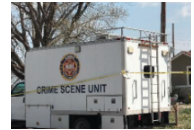
ROOKS COUNTY – The Kansas Bureau of Investigation and the Rooks County Sheriff’s Office are investigating a homicide that occurred near Plainville, according to a news release issued Tuesday afternoon.
The KBI said that the Rooks County Sheriff’s Office requested KBI assistance at approximately 10 a.m. Monday, and special agents and the Crime Scene Response Team responded.
The Rooks County Sheriff’s Office received a 911 call around 9:10 a.m. Monday morning when a family member went to 2610 19th Road in rural Rooks County and found 56-year-old Mark E. Reif deceased inside his home. Deputies arrived at the residence around 9:20 a.m. and discovered that Reif had died from gunshot wounds.
Anyone with information about this crime is asked to call the KBI at 1-800-KS-CRIME, or the Rooks County Sheriff’s Office at (785) 425-6312. Callers may remain anonymous.
Change is in the air. Children have grown over the summer and are starting the new school year a little more grown up. The promise of sunny, brisk days makes many of us excited to breakout hoodies and sweaters. Fall foliage soon will begin to show the colorful signs of a new season, and in coffee shops or local co-ops across the state the conversation has turned to football.
The theme of these conversations has been uncertainty, a mix of nerves and excitement. The legacy and family Kansas State University coach Bill Snyder spent his career building will not be lost overnight. Coach Klieman has a promising record but is unproven in big leagues. What will our team look like under new leadership?
Within my own K-State family, the start of football season had an extra layer of emotion this year. It was the first tailgate without a beloved member of our group. As we gathered in Manhattan, we had plenty of reasons to be optimistic: a fresh season of football, the joy of tailgating and great friends to share in the fun. However, there was the subtle tone of sadness that can be felt when something is missing.
That is the hard part about change; it means you are losing something. Sometimes that loss is big like a loved one or our trusted coach and other times it is smaller like missing the ease of a habit or the annoying feeling that comes from not being able to complete a task in your preferred way. This loss can make us sad, bitter, resentful, heartbroken, mad or hateful.
The other hard thing is, amidst all the negative emotions, understanding that you also gain something with every change.
I experienced my first truly life-altering experience when I was 13. My 16-year-old brother died in a car accident, and it was heartbreaking. Everything in my life changed: relationships with family and friends, appreciation for community and religion, attitude and outlook on life.
Time and maturity have allowed me the perspective to understand how my brother’s death fundamentally altered me. I now know I am strong enough to survive the grief of loss.
That might seem simple, but it is a pivotal paradigm shift. In your greatest moment of grief and fear, if you know you will survive, it totally changes your outlook and actions. You move from, “How can I go on?” to “How will I go on?”
Change always gives us something new. When we make up our minds to embrace the new, opportunities will present themselves. Maybe a new job would make you happier. Changes to a traditional community event could get more people involved. The new football coach is definitely going to bring some great changes to the program. An open and positive mindset makes it easier to get excited about changes.
I no longer fear change because I am always looking for the opportunities it presents. I often find myself asking the big, important questions: What is not working? How can this be better? Where do we go from here?
Sometimes the answers to these questions will fill you with enthusiasm and excitement. Other times they will make your heart sink because change cost you something dear. That’s OK; something good will happen that you don’t know about yet.
Change is inevitable. Change is uncomfortable. Change is good.
“Insight” is a weekly column published by Kansas Farm Bureau, the state’s largest farm organization whose mission is to strengthen agriculture and the lives of Kansans through advocacy, education and service.
The new school year has brought many new faces to NCK Tech along with the creation of new positions and reorganization of several existing positions.
President Eric Burks outlined the changes prior to school starting in August. New faculty/staff also were introduced.
“NCK Tech has always been student centered,” commented Burks, “But with several resignations and retirements, we had the opportunity to refocus positions to be even more intent on student success.”
Shane Britt has been hired as the new Dean of Student Experience. He will be located on the Beloit campus and will focus on ensuring current and prospective students have a great experience and are engaged while at NCK Tech. Britt is originally from Mankato, KS and holds an AAS from Cloud County Community College, BFA from Emporia State and a Masters in Higher Education/Student Affairs from Fort Hays State University. He has prior higher education experience at both Cloud County Community College (Concordia, KS) and Tarleton State University (TX).
The Dean of Enrollment Management is located on the Hays Campus, but oversees enrollment on both campuses. Tricia Cline has been hired for this new position. Cline has nearly twenty years of experience in higher education and enrollment services, most recently as the Director of Admissions at FHSU. Cline, from Ellis, holds a BS and MLS from Fort Hays State University.
Sandra Towns has joined the staff as an administrative assistant on the Hays campus. She is a graduate of NCK Tech with an AAS in General Business.
Several new faculty members joined NCK Tech this fall. Sam Bailey, a graduate of NCK Tech in Electrical Technology is the new instructor for the first year electrical students. Upon his graduation from NCK Tech, Bailey has accumulated over thirteen years of experience in the electrical field.
Brian Badger is the PHAC instructor for the Hays Campus. Badger is not new to NCK Tech. He previously taught on the Beloit Campus in the same program. Badger holds an AAS from Cloud County Community College and a BS from Pittsburg State University.
A 2019 graduate of NCK Tech has been hired as the PHAC instructional aid. Colter Engelbrecht holds an AAS in Building Construction Technology, which included both the Carpentry and PHAC program.
Keri Maricle has been hired in the General Education Department on the Hays campus teaching health sciences. Marical holds both a BS and MS in biology from FHSU. She previously was the biology instructor at TMP-Hays, serves adjunct faculty for Barton County Community College and instructs elementary science camps at Sternberg Museum.
Silver VanWey is the instructor for CNA/CMA, Hays Campus. VanWey received her LPN from NCK Tech and her RN from Colby Community College. She has worked in the medical field for over 15 years.
Joining the NCK Tech, Hays campus nursing staff is Brenda Orr. She has extensive experience in the field of nursing. Experience includes family practice, hospital setting as floor nurse, outpatient, ER, OR and recovery. Orr served as Director of Nursing for KVC Hospital and has experience in long-term care. Last school year she served as a part-time clinical instructor for NCK Tech before moving to a full-time teaching position this semester. Orr received her RN/ADN, BSN and is currently working on her Master’s degree in Nursing (MSN).
On the Beloit campus, Danea Buschkoetter has joined the faculty as a full-time instructor in the Welding program. Buschkoetter received her welding certificate and AAS degree in welding engineering technology from NCK Tech and finished her Bachelors in Applied Technology/Manufacturing from FHSU this past May.
Sara Arnold has joined the nursing staff on the Beloit campus as a full-time instructor. She holds a BS in Life Science from Kansas State University and a BSN from the University of Kansas.
A complete listing of faculty and staff are available on our website along with job opportunities for both campuses. To learn more about NCK Tech check out www.ncktc.edu.
ATCHISON, Kan. (AP) — Federal officials are investigating the death of an Indiana man at a northeast Kansas grain processing plant.
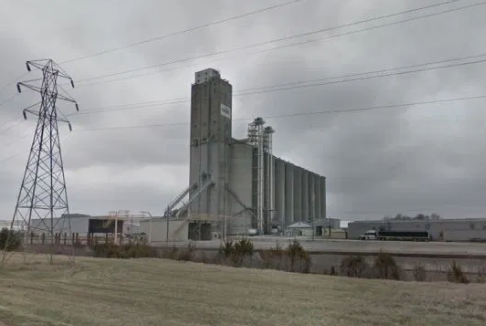
The Cargill Ag plant google image
Atchison County Sheriff Jack Laurie says 26-year-old Angel Silas-Deleon, of Logansport, Indiana, died from an electrical shock Friday at the CargillAg plant in the Cummings area.
The Occupational Safety and Health Administration has opened an investigation into the death.
Laurie said Silas-Deleon was working on a grain bin with a contractor crew from CCSGroup of Seward, Nebraska. The company said another employee is recovering from injuries suffered by the shock.
That employee’s name and condition were not released Tuesday.
Alfalfa, often considered the “Queen of Forages”, produces high yields that are highly digestible and high in protein. Alfalfa is a very important leguminous crop for dairy and other livestock operations in Kansas. Late summer and early fall are often the best times to plant alfalfa in Kansas due to less weed pressure than spring planting (Figure 1).
Figure 1. Alfalfa seedlings. Photo by Doohong Min, K-State Research and Extension.
Much of Kansas has seen above-average rainfall this summer and soil moisture within the profile is adequate, if not surplus, in many areas. Available moisture at planting is crucial for alfalfa establishment, but too much moisture can increase seedling disease incidence and reduce alfalfa nodulation and nitrogen fixation.
If soil moisture is available, growers in northwest Kansas can plant as early as mid-August. Those in southeast Kansas can plant in mid-to-late September. In other parts of Kansas, the optimal planting time is late August or early September. Producers just need to plant early enough to have three to five trifoliate leaves before the first frost.
Alfalfa is a three- to five-year, or longer, investment and therefore it is crucial to ensure proper establishment. Some producers shy away from alfalfa because of its high establishment cost and risk of stand failure. In the end, however, it is relatively inexpensive, if amortized over the life of the crop.
Under proper management and favorable weather conditions, dryland alfalfa can produce 3 to 6 dry matter tons of forage per acre per year. Irrigated fields can produce 6 to 8 dry matter tons per acre per year or more.
Stacy Campbell is Agriculture & Natural Resources Extension Agent for the Cottonwood Extension District.
When planting alfalfa, producers should keep the following in mind:
Soil test and correct soil acidity. Alfalfa grows best in well-drained soils with a pH of 6.5 to 7.5, and does not tolerate low soil pH. For areas east of the Flint Hills, if the pH drops below 6.4, add lime to raise soil pH to 6.8 before planting. For the Flint Hills and areas west, lime is recommended when the pH drops below 5.8 with a target pH of 6.0. Ensuring appropriate soil pH levels prior to planting is essential, especially as lime is relatively immobile in the soil profile and the field will not be worked for the next 3-5 years. For more information on liming alfalfa fields, see the previous eUpdate article published on July 26, 2019: “Liming prior to fall seeding of alfalfa”.
Soil test and meet fertilization needs. Apply the needed phosphorus (P) and potassium (K) amounts according to soil test recommendations. Phosphorus fertilizer will be required if soil test P levels are below 25 ppm, and potassium fertilizer will be required if soil K levels are below 130 ppm. Even soils that test higher than these thresholds may need additional fertilizer. Small amounts of N fertilizer (15 to 20 lb/acre) as a starter at planting are beneficial for alfalfa establishment.
Plant certified inoculated seed. Ensuring the correct Rhizobium inoculation is crucial for alfalfa seedlings to fix available soil nitrogen to meet the needs of growing alfalfa for optimum production.
Plant in firm, moist soil. A firm seedbed ensures good seed-soil contact; therefore, use a press wheel with the drill to firm the soil over the planted seed. No-till planting in small-grains stubble will usually provide a good seedbed.
Do not plant too deeply. Plant one-fourth to one-half inch deep on medium- and fine-textured soils and three-fourths inch deep on sandy soils. Do not plant deeper than 10 times the seed diameter.
Use the right seeding rate. Plant 8 to 12 pounds of seed per acre on dryland in western Kansas, 12 to 15 pounds per acre on irrigated medium- to fine-textured soils, 15 to 20 pounds per acre on irrigated sandy soils, and 12 to 15 pounds per acre on dryland in central and eastern Kansas. Double drilling, with the second seeding drilled 45 degrees to the first planting can help ensure a good uniform stand. If using the double drill method, each pass should be planted at 50% for the total seed rate to be 100%.
Check for herbicide carryover that could damage the new alfalfa crop – especially when planting no-till alfalfa into corn or grain sorghum stubble. In areas where row crops were drought-stressed and removed for silage, that sets up a great seedbed for alfalfa, but may still bring a risk of herbicide damage.
Choose pest-resistant varieties. Resistance to phytophthora root rot, bacterial wilt, fusarium wilt, verticillium wilt, anthracnose, the pea aphid, and the spotted alfalfa aphid is essential. Some varieties are resistant to even more diseases and insects.
Purchase alfalfa varieties with a fall dormancy rating ranging from 4 – 6 for Kansas. Fall dormancy relates to how soon an alfalfa variety will stop growing in the fall and how early it will begin growing in the spring or late winter. Simply put, it would be better not buy a variety with fall dormancy of 9-10, which can be more suitable for California and regions where alfalfa can keep growing year-round under irrigation.
Find more information about growing alfalfa in Kansas in the Alfalfa Production Handbook. This publication is available on the web at: www.ksre.ksu.edu/bookstore/pubs/c683.pdf
WILSON COUNTY — One person died in an accident just before 2p.m. Tuesday in Wilson County.
The Kansas Highway Patrol reported a 1994 Dodge pickup driven by David L. Rasmussen Jr., 46, Fredonia, was eastbound on U.S. 400 at Jade Road one mile southeast of Fredonia.
A 2011 Volvo semi driven by Scott M. Gronau, 50, Pittisburg struck the pickup as it was making a U-turn.
Rasmussen was transported to Fredonia Regional Hospital where he died. Granau was not injured. Rasmusen was not wearing a seat belt, according to the KHP.
WICHITA — A Kansas woman arrested after a violent dog attack in November has entered a guilty plea in Sedgwick County.
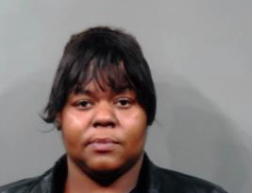
McPherson -photo Sedgwick County
On Monday, Carlett McPherson, 31, entered the plea to one count of misdemeanor cruelty to animals. After her guilty plea, she was sentenced to six months of probation by agreement of the parties involved, according to the Sedgwick County District Attorney.
On November 16, 2018, McPherson’s dog entered her neighbor’s yard where the neighbor’s grandson and the neighbor’s dog, Smokey, were located, according to the district attorney.
McPherson’s dog attacked the neighbor’s dog, Smokey. McPherson tried to break up the dog fight with a broom but was unsuccessful.
She called for help, and a man entered the yard with a tire iron.
The unknown man tried to separate the animals with the tire tool, striking Smokey. There was no evidence that McPherson ever wielded the tire iron that struck Smokey or directed the man to strike Smokey with the tire iron, according to the district attorney.
McPherson left the yard to get a phone to call 911. When she returned, two more of her dogs followed her back to the yard and again attacked Smokey.
Smokey was later euthanized after his bites became infected. McPherson was charged with one count of misdemeanor cruelty to animals for allowing her dogs to attack the neighbor’s dog, Smokey.
In addition to the probation, the court also ordered her to pay the veterinary bill. Wichita Police continue to search for the man with the tire iron.
Under Kansas law, cruelty to animals includes knowingly but not maliciously killing or injuring an animal. McPherson pled guilty to injuring Smokey. There was no evidence that she intentionally killed the victim animal, Smokey, according to the district attorney.
——–
SEDGWICK COUNTY – Law enforcement authorities are investigation a case of alleged animal cruelty.
McPherson -photo Sedgwick County
Just after 4:30p.m. Friday November 16, police responded to a suspicious character with a weapons call at a residence in the 1000 Block of North Poplar in Wichita, according to officer Charley Davidson.
A suspect later identified as 30-year-old Carlett McPherson was reported beating a dog with a tire iron and releasing other dogs to attack a victim dog.
At the scene, officers did find several dogs involved in a physical disturbance in the front yard of the residence. Officers worked to separate the animals and with the assistance of animal control officers, the aggressive dogs were captured without incident. The victim dog was transported to a local animal hospital where it died from the injuries.
On December 1, as a result of the investigation, McPherson was arrested and booked into the Sedgwick County Jail on requested charges of animal cruelty, according to Davidson. She is being held on a 25,000 Bond, according to the jail booking report.
Police will present the case to the district attorney this week.
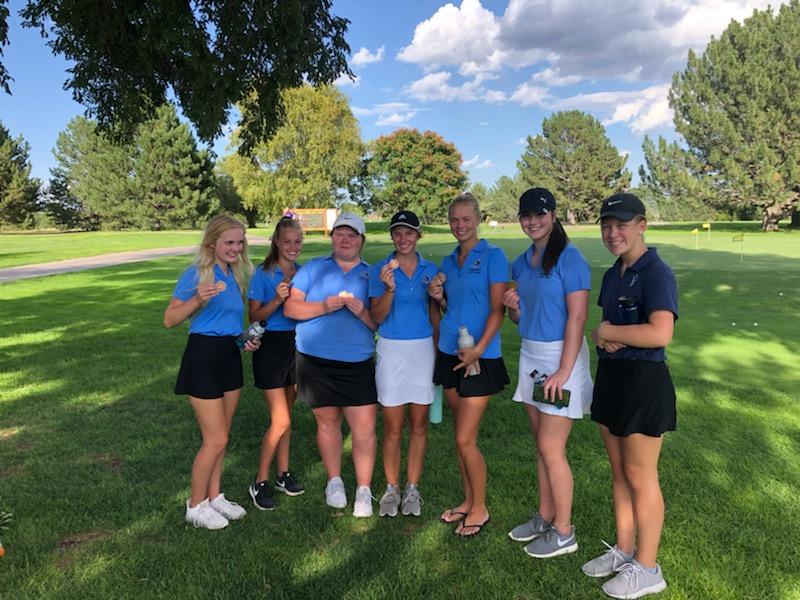
The TMP-Marian girls golf team grinded out a third place finish Tuesday on a hot day at the Goodland Invitational at the Sugar Hills Golf Course in Goodland.
Goodland won the team title with a score of 393. Colby was 30 shots back in second place and the Monarchs finished in third with a team score of 426.
TMP’s Heleigh Spray finished fifth with a 24-over 95. Jenna Romme also medaled for the Monarchs, she fired a 28-over 99 to finish eighth.
Goodland’s Kerrigan Rudolph won the individual title with an 11-over 82.
The Monarchs next action will be on Sept. 19 at the Larned Invitational.
ANDERSON, Ind. (AP) — Skeletal remains found last spring in a central Indiana park have been identified as those of a man who vanished more than a year ago.
Mandrell photo courtesy Madison Co. Sheriff
Madison County Coroner Danielle Noone says a DNA match obtained by Indiana State Police determined the skeletal remains are those of 52-year-old Ronald Mandrell, who had been an Anderson resident but was homeless when he died.
Mandrell’s cause of death and manner of death are undetermined, but Anderson police continue to investigate his death.
Mandrell vanished in July 2018. Mushroom hunters found his remains in April at Anderson’s River Bend Park.
Amy Copeland of Kansas City, Kansas, tells The Herald Bulletin she and Mandrell have a now-adult daughter. Copeland hadn’t spoken to Mandrell in years.
The weekly rig count from Independent Oil & Gas Service shows four active drilling rigs in eastern Kansas, down two from the week before, and 25 west of Wichita, up one. Drilling was underway at one lease in Barton County, one in Ellis County and one in Russell County. Baker Hughes reported 898 active drilling rigs across the U.S. Friday, down four oil rigs from a week earlier, and down two seeking natural gas. The count in Oklahoma was down five, Texas was down three, and North Dakota was up three.
Independent Oil & Gas Service reports 15 newly-completed wells across Kansas last week, 12 of them west of Wichita. Regulators approved 15 new drilling permits across state, eight of them east of Wichita, and seven in Western Kansas, including one in Barton County.
Kansas regulators report 94 new intent-to-drill notices across the state last month, down from 111 the month before and less than half the 236 intents reported in August of last year. The Kansas Corporation Commission reports seven new intents on file in Barton County, six in Ellis County and two in Stafford County. The year-to-date total is just 735 intents, compared to 1,303 intents through August of last year.
The U.S. Energy Information Administration reported domestic crude oil production dropped slightly from last week’s all-time record high. The government says U.S. producers pumped 12.354 million barrels per day for the week ending August 30, the second biggest weekly production total ever. That’s down 146,000 barrels from the record 12.5 million barrels produced the week before.
The government said U.S. commercial crude oil inventories dropped by 4.8 million barrels from the previous week to 423 million barrels, right at the five-year average for the time of year.
EIA reported a big increase in crude-oil imports, which were 976,000 barrels per day higher than last week at 6.9 million barrels per day. The four-week average is about 12.5% less than the same four-week period a year ago.
In its latest monthly crude-oil production report, the Energy Information Administration said U.S. operators produced 12.082 million barrels of crude oil in June, a slight drop from May’s total but more than 13% higher than the figure from June of last year. In Kansas, June production reached 92 million barrels, which is up two percent from the month before but down more than five percent from a year earlier.
Gasoline prices are up to a dime cheaper than last week in all but four states. AAA says two of those states saw rising prices because of Hurricane Dorian. Across Kansas, motorists are paying an average of $2.336 per gallon for regular gasoline, which is more than 12 cents cheaper than a month ago. The national average is $2.573. We spotted $2.21 a gallon at several locations in Hays and $2.17 across Great Bend. Your 15-gallon fill-up will cost nearly two dollars more than a month ago, but six dollars less than last year at this time.
Maturing debts in the Permian Basin are driving a spike in bankruptcy declarations. The Wall Street Journal reports that so far this year we’ve already nearly matched last year’s total of 28 producer bankruptcies. The Journal reports there’s still about nine billion dollars in notes set to mature through the rest of this year. According to S&P, there’s another $137 billion coming due between 2020 and 2022. Defaults are on the rise, as companies struggle to service debt, bring in new financing and refinance existing debt, according to the report.
Oil-by-rail continued to increase last month, despite a continuing decline in monthly numbers for all freight train traffic. The Association of American Railroads said that in August, eight of the 20 commodity categories they track saw increases compared with a year earlier. Leading the way was petroleum and petroleum products, which were up 7.8 percent. AAR Senior Vice President John T. Gray said total U.S. freight carloads have fallen on a year-over-year basis for seven straight months. AAR said petroleum rail traffic gained half a percent in the week ending August 31 compared to a year earlier. Oil-by-rail in Canada was up more than 12 percent.
Adams County, Colorado on Tuesday became that state’s first county to adopt new oil and gas regulations since the state passed a law that bolstered local control over fossil fuel development. Adams County Commissioners on Tuesday doubled the current setback limits, from 500 to 1,000 feet between oil and gas development and occupied buildings and homes. Operators can request exemptions, which would require a public hearing. The state’s largest oil and gas industry group calls the new county rules “unreasonable.” The Colorado Oil and Gas Association says they will hurt the more than 5,000 families who depend on oil and gas development.
The Interstate Oil and Gas Compact Commission, a group of energy-state regulators, has come out very loudly against the so-called “Green New Deal.” Chairman Wayne Christian of the Railroad Commission of Texas said Senator Bernie Sanders’ version of the environmental plan would cost $16.3 trillion and would cripple the Texas economy. Christian said “Over my dead body will I allow out-of-state forces to eliminate jobs, decrease state revenue, and increase the cost of living on the constituents I represent.” The Commission passed a resolution urging the federal government to reject the Green New Deal “…in the spirit of cooperative federalism.” They’re sending copies of the resolution to top administration and congressional officials to encourage them to oppose the Green New Deal and any substantially similar legislation.
Exxon Mobil is poised to drop out of the S&P 500 Index’s 10 biggest companies for the first time since the index’s inception some 90 years ago. According to data compiled by Bloomberg, Visa replaced Exxon as the 10th biggest member of the index Aug. 1 and two weeks later Procter & Gamble overtook the oil giant. The growth of technology giants like Facebook, Amazon and Microsoft over the past decade coincided with an energy slowdown caused by a global glut brought on by the shale revolution.
OVERLAND PARK, Kan. (AP) — A Kansas business executive with political ties to former Republican Gov. Sam Brownback has officially kicked off her campaign to challenge freshman Democratic Rep. Sharice Davids.
Amanda Adkins courtesy photo
Amanda Adkins made the announcement Monday. It was expected after she filed paperwork last week with the Federal Election Commission creating a campaign committee for a run for the GOP nomination in the Kansas City-area 3rd Congressional District.
Her move sets up a contested GOP primary for the right to challenge Davids. Former National Down Syndrome Society CEO Sarah Hart Weir opened her campaign in July.
Adkins is a vice president for the medical computer systems firm Cerner Corp.
She managed Brownback’s successful U.S. Senate re-election campaign in 2004 and was Kansas Republican Party chairwoman when Brownback was elected governor in 2010.
ROOKS COUNTY – The Kansas Bureau of Investigation and the Rooks County Sheriff’s Office are investigating a homicide that occurred near Plainville, according to a news release issued Tuesday afternoon.
The KBI said that the Rooks County Sheriff’s Office requested KBI assistance at approximately 10 a.m. Monday, and special agents and the Crime Scene Response Team responded.
The Rooks County Sheriff’s Office received a 911 call around 9:10 a.m. Monday morning when a family member went to 2610 19th Road in rural Rooks County and found 56-year-old Mark E. Reif deceased inside his home. Deputies arrived at the residence around 9:20 a.m. and discovered that Reif had died from gunshot wounds.
Anyone with information about this crime is asked to call the KBI at 1-800-KS-CRIME, or the Rooks County Sheriff’s Office at (785) 425-6312. Callers may remain anonymous.