We have a brand new updated website! Click here to check it out!

Kan. school districts double down on drug testing, targeting even middle schoolers

FORT SCOTT, Kansas — Thirteen-year-old Aura Brillhart and her 11-year-old sister, Morgan, will face a new sort of test in school this year: a drug test.

CHRIS NEAL / FOR THE KANSAS NEWS SERVICE

The middle and high schools in their community of Fort Scott, Kansas, are among the latest to require random drug testing of students who want to participate in sports, clubs, dances or any other extracurricular activities.

Fort Scott and the Bushland Independent School District near Amarillo, Texas, join the growing number of communities across America testing kids as young as 11 for illicit drug use.

Nationally, a federal government survey shows, nearly 38% of school districts had such policies in 2016, up from a quarter of districts a decade earlier.

But over that time, the number of schools employing other drug prevention strategies dropped. The latest School Health Policies and Practices Study shows that a declining number of districts require elementary schools to teach drug and alcohol prevention, have arrangements with off-site organizations to provide drug treatment and provide funding for professional development on drug prevention.

The rise in drug testing is a reaction to the still-raging opioid epidemic and liberalized marijuana laws spreading across the country, according to health experts and educators. “The biggest fear is that legalization will lead to more teen use,” said Dr. Paul Glaser, a child psychiatry professor at Washington University School of Medicine in St. Louis.

More schools are adopting drug testing even as research remains mixed on how effective it is at reducing teen drug use. Supporters say it gives kids a reason to say no to drugs and may identify students who need help with drug problems. But opponents argue it invades student privacy and diverts money from educational priorities like books.

Bushland’s program costs about $10,000 a year. Fort Scott’s costs about $4,000, which Superintendent Ted Hessong said is the costliest part of the district’s overall drug prevention strategy.

To Amber Toth, principal at Fort Scott High School, the cost-benefit ratio is clear. Stopping even one student from going down the costly path of drug abuse and addiction, she said, “is worth $4,000.”

Counteracting ‘peer pressure’

Chris Wigington, superintendent of the Bushland district in Texas, said the school board asked him to look into the idea of drug testing after he arrived less than two years ago. In his previous school systems, he said, testing helped kids resist peer pressure to take drugs.

“We all know peer pressure is very real,” he said.

The programs — allowed under a 2002 U.S. Supreme Court ruling — are similar in Bushland and Fort Scott, with random testing of a relatively small portion of the student body several times a year. Under Fort Scott’s policy, 10 middle school students and 20 high school students are randomly tested each month with a urine screening for 10 drugs.

If they test positive, they are suspended from extracurricular activities. In both Fort Scott and Bushland, results are disclosed only to students, parents and certain school staff members, such as the student’s principal. The information does not appear on academic records and isn’t shared beyond school walls.

Families in Fort Scott may opt out of testing. But if they do, their children can’t participate in activities or even park a car in the school parking lot. Toth said only a few families have opted out.

“Our policy is a little bit different than some of the policies of schools in our area,” said Toth, who wrote it. “It has a treatment component where a student can lessen their consequences.”

The school is partnering with a mental health provider offering free services to students who test positive. Hessong said the testing and treatment policies are part of a larger district drug prevention strategy that includes drug education in middle and high school health classes, a “Red Ribbon Week” awareness program in elementary schools and sweeps by drug-sniffing dogs brought in by local law enforcement in the middle and high schools. He said he’s not sure of the total cost of these efforts.

Toth said the district’s drug prevention efforts address a growing issue. A 2018 youth survey showed that pot and prescription drug abuse among middle and high school students was higher in Bourbon County, where Fort Scott is located, than the state average.

More than 8% of students in the county reported using marijuana in the previous month, for example, compared with a state average of 6.5%. And Toth said marijuana use has been rising among local students as other parts of the country have legalized it.

“They sort of view it as harmless,” she said.

Hoener, a former social worker who is now Bourbon County’s economic development director, said her eighth grader, Aura, has told her about friends caught with pot in their lockers.

Concerns linger

It’s unclear whether testing will make a difference. “It’s a mixed bag on the research,” said Washington University’s Glaser.

A 2015 report from the American Academy of Pediatrics said there’s a lack of convincing scientific data demonstrating that testing works. A previous study, directed by the National Center for Education Evaluation and Regional Assistance in 2010, examined seven school districts and compared substance use reported in high schools that tested and those that didn’t. It found that 16% of students subject to drug testing reported using drugs compared with 22% of students in schools that didn’t test. Testing didn’t change students’ reported intentions to use drugs in the future.

Glaser said some students find ways to use drugs outside of testing periods or choose ones that are not screened. Sometimes, he said, kids who are suspended from activities after testing positive may get depressed or bored, making them more likely to use drugs.

Lauren Bonds, legal director for the American Civil Liberties Union of Kansas, said the growth in such testing is concerning. “There are more effective ways to limit student drug use,” she said.

Glaser said districts would do best to have an array of drug prevention and treatment programs. One good strategy, he said, is identifying young children suffering from trauma or family problems and getting them help before they turn to drugs. He’s involved with such a program in Missouri that provides services to young children referred by schools and also gives students, teachers and families preventive information and education.

“It’s always harder to treat the brain after it’s been affected by these substances,” he said.

Aura said that even though she doesn’t use illicit drugs, she realizes she may be randomly chosen for testing at some point. “I’d be OK with it,” she said, “but it would also be weird.”

KHN senior correspondent Sarah Jane Tribble contributed to this report.

Laura Ungar: [email protected], @laura_ungar
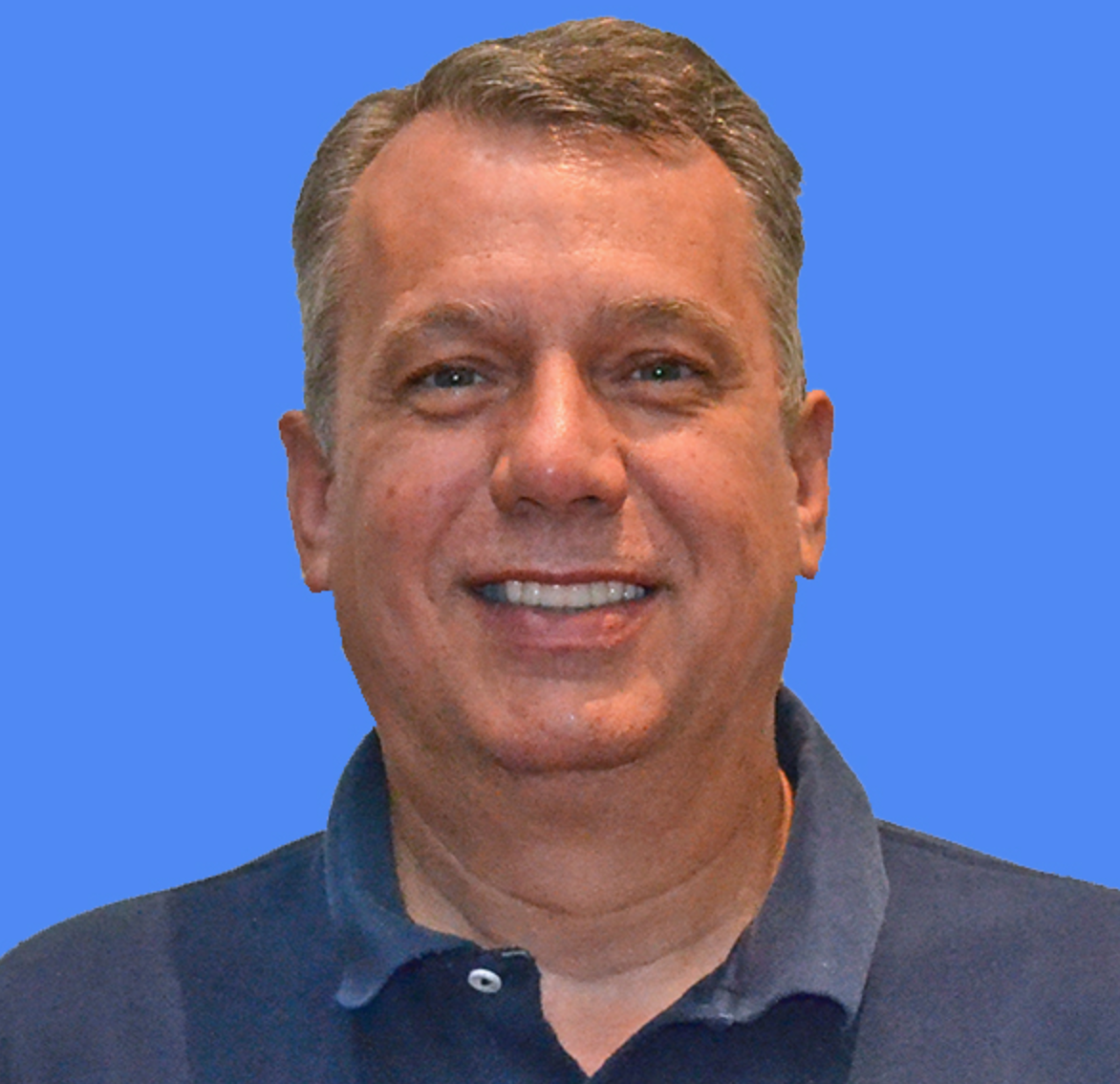
Kohlrus, VanEpps earn Toastmaster Competent Communicator credentials

Kohlrus

Travis Kohlrus and Ron VanEpps, members of Hays Toastmasters Club, have completed qualifications for the Competent Communicator level in Toastmasters International.

Kohlrus is senior vice president and general manager of Eagle Broadband, and VanEpps is network administrator for Midwest Energy.

To earn their Competent Communicator pins, each completed the 10 speeches in the Competent Toastmaster manual.

VanEpps

Hays Toastmasters, chartered in 1958, meets at noon each Wednesday at Thirsty’s Brew Pub and Grill, 2704 Vine.

For more information or to contact the club, visit www.toastmasters.org/Find-a-Club/00002609-hays-club.

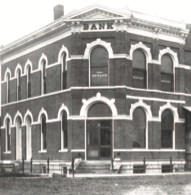
‘Midnight Marauders’: The night they tried to rob the Kirwin Bank

By KIRBY ROSS
Phillips County Review

In recognition of the Sesquicentennial celebration — the big 150th Birthday Party — which will be held in Kirwin on Saturday, Oct. 5, the Phillips County Review has been running original historical articles on the community.

It wasn’t unusual for some of us who grew up in Kirwin in the latter part of the 20th century to hear the tale of how the Kirwin Bank was robbed back in the “cowboy days.” As is common with the retelling of legends over decades of time, that story even had it that the bank was robbed by Jesse James.

And, as with many legends, there is usually a kernel of truth in there somewhere. In regard to this particular story, the kernel is that yes, somebody tried to rob the Kirwin bank, and yes, that attempt was made in the 1800s.

But it wasn’t made by Jesse James, and the attempt wasn’t a broad daylight strong-arm holdup with six-shooters and a posse–it was done in the dead of night with explosives, and was unsuccessful.

The Phillips County Review first started on the trail of this story after reading one of Fort Bissell Curator Ruby Wiehman’s great articles of her own she has been putting out in support of promoting the Kirwin Sesquicentennial celebration on Oct. 5.

In one article she ran on the pages of the Review several weeks ago, Ruby noted back in the 1890s attempts were made to rob the Kirwin Post Office and the Kirwin Bank a few months apart, and she wondered whether the two crimes might have been connected.

Maybe. After researching both, we’d have to say maybe.

With Ruby throwing clues our way, the Phillips County Review set out to track down “the rest of the story,” as Paul Harvey might have said, and here’s what we found out.

This particular tale starts out in the early morning hours of Fri., May 3, 1889, when a band of outlaws burglarized a Kirwin blacksmith shop and then proceeded to head over to the post office. Once there they forced their way through the street door and went to work on the safe.

Drilling through its double doors with the smithy’s tools they had just stolen, they then inserted an explosive and lit the fuse.

And, as if right out of a Hollywood movie produced a hundred years later, the resulting explosion blew the Kirwin Post Office’s doors off their hinges, propelling them across the room and wrecking the office interior in the process. The time of the robbery was afterwards estimated to be 3 a.m. based upon reports of “a low rumbling sound” that had been heard around town then.

The take that night was at least $100 the postmaster said was contained in the safe, plus an undetermined amount in a number of registered letters which had arrived on the 12:15 a.m. Missouri Pacific train.

The U.S. Land Office reported it was expecting a package containing $200, which was not found in the post office wreckage, making the total take at least $300 (equivalent to $8,000 in 2019 dollars).

This robbery was reported the very next day on the front page of the Topeka Daily Capital under a large-print headline, “MIDNIGHT MARAUDERS.” A subheadline noted “Robbers Force an Entrance Into the Kirwin Post Office and Secure Considerable Booty.”

Fast forward seven years to December 1896 when an attempt was made on the Kirwin State Bank by utilizing virtually the same modus operandi used on the post office.

That month had started out with a wave of burglaries in Kirwin. The clothing store of Charles W. Hull was hit, with “a quantity of cash stolen. A little later the dry goods store of A. Weaver was twice tapped,” said the Phillipsburg Herald.

Hull may have been specifically targeted. If he wasn’t, then he was just plain unlucky because two more efforts would be made against him over the next couple of weeks. Not only did he own Hull Clothing, he was also vice president of the Kirwin State Bank and owned a ranch just outside of town that straddled two miles of the Solomon River, on which he raised racing horses.

On December 11 Landes Meat Market was burglarized, and nine days later, on Sunday, December 20, the restaurant of George Doebler was ransacked, with a quantity of food and cigars being taken.

The night following the Doebler robbery was the big one though. The night after Doebler’s was the night they tried to rob the Kirwin bank.

It all came to a head that Monday, December 21, 1896. This time the bandits started out at the railyards, breaking into the section foreman’s tool chest where a large crowbar was taken. From there the plan was remarkably similar to the heist pulled at the post office several years earlier.

Using that crowbar to break into a blacksmith shop, the thieves stole smithy tools — a sledge, cold chisel, brace and drill bits.

Shortly afterwards entering the Kirwin State Bank on the east side of the square through a back window, they went to work on the its substantial walk-in vault. While the thieves may not have known it, in 1884 that safe had been described as follows, “a fire proof vault, a heavy burglar proof steel chest with time locks.”

It would prove to be formidable.

Drilling a hole through the door just above the lock, the raiders then poured a quantity of gunpowder into that hole.

As reported by the Kirwin Globe, if the criminals thought they inserted enough powder to blow the door, “in this they were disappointed, as the door is so constructed that a bushel of powd’r would fall to the floor of the vault and even if exploded, would not effect the door.”

Having failed to breach the burglar-proof door, the gang then went to work on it with the cold chisel (a tool made of tempered steel used by blacksmiths to cut unheated metal). Being unsuccessful in trying to break the lock with the chisel, they finally abandoned the bank heist altogether and went on a burglary spree around the entire Kirwin business district.

Charles Hull’s store was broken into again that night, but by this time the clothier/banker had learned his lesson and didn’t leave any money on the premises.

Deterred again and moving on, the gang also broke into the lumber yard of C.E. Bradley and found his safe. This one was much easier to crack than the one in the bank — this one wasn’t even locked. Bradley reported he never used the safe to hold money — only books and papers.

The outlaws also hit Quintard’s grocery and men’s clothing store, where they forced two money drawers open and made a score of exactly $3.00. Quintard noted, “they overlooked fifty-one cents in pennies that was in one of the drawers.”

Which would have upped their total night’s take by 20 percent if they had grabbed those pennies.

The grand sum of loot hauled in after spending hours breaking into the bank and multiple businesses? — $3 cash money, a crowbar, a sledge hammer, a chisel, and a drill.

According to the Phillipsburg Herald, the Kirwin townsmen knew who the culprits were and put out the word they would be dealt with severely if the crime wave didn’t stop.

Said the Herald — “All this burglary and robbery has been very closely traced out until it stops at the doors of three men and two boys. A vigilance committee may be organized, and a great crash in the underbrush is not among the impossibilities.”

The Herald also accused the primary newspaper in Kirwin at the time, the Independent, which was housed in the basement of the bank building, of not reporting on the “Deviltry that is going on in Kirwin.” Accusing the Independent of being too focused on writing about happy things and not wanting to report about anything negative occurring in town, the Phillipsburg newspaper suggested the people of Kirwin were being put at risk due to the suppression of information they needed to know.

According to the Herald, “the Independent has been loth to mention” what had been going on “because it was thought to be the best policy to say nothing if it could not say something good.”

Six months after the attempted bank robbery, on Thursday, June 3, 1897, the safecracking efforts came back around full circle as the Kirwin Post Office was hit once again. And, once again, the safe was blown.

This time the thieves tore off a window screen and then broke a window to gain entry to the building.

As with the original post office robbery and the later failed effort at the bank, the safe was drilled, and explosives were poured in. And with that– “The safe was blown to pieces,” reported the Kirwin Globe. This time $95 in cash belonging to the U.S. government was taken, along with $100 in stamps.

The postmistress was also storing personal items in the safe that were taken, including jewelry, a gold watch and chain, $9 in cash and private papers. She retired shortly afterwards.

“The rascals left no clew by which they can be followed,” reported the Globe.

The Phillips County Review has not been able to find reports regarding anybody being brought to justice in any of these matters, either through the courts or by vigilante committees operating in the dead of night.

We were also unable to find any reports on safecracking continuing in Kirwin, so the Golden Age of blowing up the interior of Kirwin businesses to steal a hundred dollars or so appears to have passed.

The Kirwin State Bank continued operations for another quarter century. In 1922 it took over the bank in Cedar which was going under due to nonperforming loans. A year later the Kirwin State Bank itself ran into the same problem and failed on October 25. With an infusion of cash from local investors it soon after reopened as the Exchange State Bank under new management. No depositor lost money during this shutdown and reopening.

However this iteration of the most prominent bank Kirwin ever had lasted just three years before the failure of the 1926 Phillips County wheat crop resulted in a voluntary liquidation of Exchange Bank assets and the closing of its doors for good on June 10, 1926. This time no other financial institutions or townsmen would play white knight and come to the rescue as they had for the Cedar State Bank and Kirwin State Bank just a few years earlier.

Without anybody to bail it out, and seven years away before the creation of the Federal Deposit Insurance Corporation and government bailouts of banks, Kirwin depositors were paid off just 25 cents on the dollar.

No less worse, without a tenant the building itself would sit vacant for another eight decades. Over the years the structure, an architectural marvel in its heyday, slowly deteriorated and by the early 21st century had fallen into such disrepair that it had to be razed.

No trace of the bank remains, and now its tale, and that of the unknown would-be bank robbers who tried to blow the vault and clean it out 123 years ago, have now faded into the mists of time until all has become just another chapter in the Forgotten History of Phillips County.

Ellis Co. will offer reduced fees on tire disposal

The Ellis County Landfill recently announced a tire disposal discount event.

Due to unavailability of grants for a tire amnesty, the Ellis County Commission has approved a half-price reduction on the rate of tires from 10 cents per pound to 5 cents per pound. The sale will begin Monday, Sept. 30, 2019 and last through Saturday, Oct. 12. All tires disposed of will be recycled.

To utilize this disposal opportunity, residents must comply with the following requirements:

• Waste tires that are being disposed of must be located within Ellis County.
• Hauler/owner will not accept compensation for collection of tires, such as disposal fees for collecting, storing or disposing of tires.
• Customer must sign a waste tire certification, stating source of tire location and residency of owner. Proper identification may be required.
• Ellis County residents only. No businesses.
• Tires must be delivered in a secured method to prevent losing load during transport to the landfill.
• Tires must be separated and not co-mingled with other waste material. Other waste material will be assessed the appropriate fees by waste category.

Direct any questions to the Ellis County Landfill at (785) 628-9460.

2019 Kansas Climate + Energy award winners to be honored

CEP

HUTCHINSON – The Climate + Energy Project is pleased to announce the 2019 Climate + Energy Awards, recognizing individuals and organizations who are leading the way to a clean energy future.

The awards celebrate lifetime achievement, volunteer engagement, and innovative change agents in Kansas. Join us in honoring our award winners on Monday, September 30, at the Lawrence Beer Company for Visions of a Resilient Kansas, our annual fundraiser and awards ceremony.

Mary Fund

Impact Award: A lifetime achievement award recognizing an individual whose work resulted in positive, long-term, broad impacts in climate, energy, and environmental issues across the state.

Mary Fund has dedicated her life to sustainable agriculture and rural communities. A strong presence at the Kansas Rural Center, Topeka,  for the last 40 years, Mary has worked bravely and tirelessly to raise issues of environmental concern – from clean energy to clean water, healthy soils to local foods, and so much more. Mary never shies away from bringing up the important, if controversial issues, including most recently highlighting climate change in town halls across the state. Mary is as direct in her opinions as she is curious about what others think, which makes her a valuable partner to all.

Mary has elevated rural issues to legislators while simultaneously addressing challenging issues with rural audiences. Mary’s no-nonsense, common-sense approach has been foundational to conversations about environmental issues for decades.

Kim Bellemere

Mark Richardson Sustainer Award: A volunteer-recognition award for an individual who has regularly engaged with CEP for at least five years.

Kim Bellemere has been a reliable and enthusiastic partner with the Climate + Energy Project for the last eight years, first as a steering committee member for Water + Energy Progress and most recently as a strong WEALTH partner.

In her work as the Director of Outreach at the Grassland Heritage Foundation, Shawnee Mission, Kim speaks passionately about the important role of grasslands and native plants as a climate solution. Kim’s leadership on climate change among conservationists has lit a spark for change and catalyzed partnerships to address climate issues locally. Kim’s nominator explained, “I’ve often felt overwhelmed by the climate change discussion, until I started having conversations with Kim and noticed the work that she was doing with Grassland Heritage Foundation. Small steps lead to big ones, and it’s people like Kim that take the first step so that the rest of us can follow.”

The Merc Co+op

Changemaker Award: Recognition for an organization or individual whose recent (1-3 years) work has significantly advanced climate, energy, and/or environmental issues in Kansas.

The Merc Co+op, Lawrence, has elevated solar power and electric vehicles as clean energy solutions in a high-profile location. Through a full rooftop array, two solar covered carports and a solar covered patio, the community-owned grocery store installed 688 high performance solar panels to provide 29% of their energy each year, when combined with an electric vehicle charging station and a solar covered pergola the panels will produce enough energy to power 22 homes each year.

The Merc’s highly visible location for solar panels and one of the few Electric Vehicle charging stations in Lawrence has strong potential to inspire other businesses to get on board with clean energy. The Merc Co+op is also working to ease the pressures of food deserts in Kansas by opening a grocery store in Wyandotte county. Since 2012, the co-op has reduced electricity consumption by 30% through LED lighting and preventative maintenance, in addition to reducing waste, improving access to local foods, and presenting sustainable options for the northeast Kansas community.

Metro KC Climate Action Coalition

Metro KC Climate Action Coalition
The Metro KC Climate Action Coalition has rapidly elevated the issue of climate change in northeast Kansas.

Initiated by Lindsey Constance and Mike Kelly, the MKCCAC provides a vehicle for local and state elected officials to take action on climate change. The coalition brings together diverse local elected officials to use their power to tackle climate change at the local and state level. MKCCAC has organized several events, including the upcoming Metro KC Climate Action Summit in Kansas City on September 14. They are in the process of developing a local action playbook, a climate emissions inventory, and more. This bipartisan coalition has made impressive progress convening elected officials across the state line, leading with conversations about regional climate change solutions.

Driver dies after NW Kansas semi, pickup crash

RAWLINS COUNTY — One person died in an accident just after noon Saturday in Rawlins County.

The Kansas Highway Patrol reported a 2012 Ford pickup driven by Derrick D. Bassnett, 50, Trenton, NE., was eastbound on County Road AA fourteen miles west and nine miles north of the U.S. 36 and Kansas Highway 35 Junction.

The pickup entered the intersection and was unable to see a northbound 2009 International semi driven by Joshua Joe Friemel, 29, Colby coming due to the tall corn. The semi struck the pickup on the passenger side.

Bassnett was transported to the hospital in Atwood where he died.

Friemel was not injured. Both drivers were properly restrained at the time of the accident, according to the KHP.

Kansas GOP votes to scrap 2020 presidential preference vote

COLUMBIA, S.C. (AP) — Republican leaders in Kansas and South Carolina have voted to scrap their presidential nominating contests in 2020, while party officials Nevada were deciding whether to follow suit as the GOP erects more hurdles for the long shots challenging President Donald Trump.

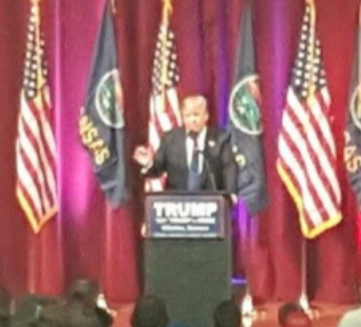
In March of 2016, Trump addressed a large crowd in Wichita. -photo courtesy Mark Cowin

Canceling primaries, caucuses and other voting is not an unusual move for the party of the White House incumbent seeking a second term, and allows Trump to try to consolidate his support as Democrats work to winnow down their large field of candidates.

A spokesman for the South Carolina Republican Party, Joe Jackson, confirmed that the party voted Saturday against holding a presidential primary next year. The Kansas GOP tweeted on Friday that it will not organize a caucus “because President Trump is an elected incumbent from the Republican Party.” Its state committee planned to approve rules Saturday for an “internal party process” for selecting convention delegates, according to Kelly Arnold, the party’s former state chairman, and Helen Van Etten, a member of the Republican National Committee from Topeka.

Officials in Nevada scheduled meetings later Saturday to determine the fate of their contests. A decision in Arizona is expected later in the month.

Challengers have emerged to Trump, including Bill Weld , a former Massachusetts governor, and Joe Walsh , a former Illinois congressman. Others may join them.

Walsh told CNN after the South Carolina vote that his campaign would “fight South Carolina and any other state that considers doing this.” He also noted that Trump complained during the 2016 election “about how the Democrats were rigging the system to get Hillary (Clinton) elected. Well, look what he’s doing now. You talk about rigging a system.”

Primary challenges to incumbents are rarely successful, and Trump’s poll numbers among Republican voters have proved resilient. Nonetheless, Trump aides are looking to prevent a repeat of the convention discord that highlighted the electoral weaknesses of Presidents George H.W. Bush and Jimmy Carter in their failed reelection campaigns

Since last year, Trump’s campaign has worked to monitor and at times control the process by which delegates to next year’s Republican National Convention in Charlotte, North Carolina, are selected. His campaign wants the convention to be a four-night “infomercial” for Trump by sidelining the president’s detractors within the party.

The effort is an acknowledgment that Trump hasn’t completely cemented his grip on the GOP and might not coast to the nomination without some opposition. To that end, the campaign has worked over the past year to scuttle any attempts at a Trump challenge by party dissidents, mindful that a serious primary opponent could weaken Trump heading into the general election.

In January, the Republican National Committee voted to express its “undivided support” for Trump and his “effective presidency.”

In years past, both Republicans and Democrats have cut state nominating contests when an incumbent president from their party ran for a second term. In 1984, South Carolina GOP leaders opted to call off their primary as President Ronald Reagan sought a second term. In 2004, the GOP again canceled the state’s primary with leaders deciding instead to endorse President George W. Bush’s reelection bid.

The South Carolina Democratic Party didn’t hold presidential primaries in 1996 or in 2012, when Presidents Bill Clinton and Barack Obama were their incumbents.

The Nevada Republican Party was expected to hold a vote on possibly changing its rules to allow a bypass of its presidential nominating caucuses in 2020 and endorse Trump outright. The move would allow the state’s central committee members to hold a vote and commit the state’s GOP delegates to the president, shielding him from a primary challenge.

15 and 18-year-old brothers charged in Kansas City killing

KANSAS CITY (AP) — An 18-year-old Kansas City man and his 15-year-old brother have been charged with killing another man in a case that prosecutors allege was motivated by revenge for an earlier shooting in which the younger brother was wounded.

Mackey is being held in Jackson County

The older brother, Taylor Mackey was charged Thursday with second-degree murder and three other felonies in the death of Isaac Louis Brown. No attorney is listed for him in online court records. The younger brother is charged as a juvenile with first-degree murder and armed criminal action.

Court records say Mackey told detectives he believed Brown was responsible for shooting his brother and wanted him to feel the same pain. He says he was thinking it was time to “Get him” before he and his brother pulled out guns and shot Brown one time each.

Applications open for KDOT’s new Cost Share Program

KDOT

TOPEKA – The Kansas Department of Transportation (KDOT) has launched a new program designed to provide state funding for transportation projects while also leveraging local and private funding. The new Cost Share Program will provide funding to local entities for transportation projects that improve safety, support job retention and growth, improve access or mobility, relieve congestion and help areas across the state improve the transportation system.

Up to $50 million will be available in the program for fiscal year 2020. The on-going program, which has at least $11 million available, requires a minimum of 15% non-state cash match.  Additional consideration will be given to project applications that commit more than the minimum required match amount. The funding above the base $11 million comes from a one-time, $50 million State General Fund transfer. A minimum 25% match is required for projects to qualify for the one-time funds.

The Cost Share Program is open to all transportation projects including roadway (on and off the state highway system), rail, airport, bicycle/pedestrian and public transit. Funds from the program can only be used for construction.

“Creating the Cost Share Program allows us to leverage both state and local dollars to help address important transportation needs across Kansas,” said Kansas Secretary Julie Lorenz. “We look forward to working with Kansas communities to build projects that improve safety and keep the Kansas economy moving.”

Funding for the program is part of the $216 million in sales tax authorized by the Legislature and Gov. Laura Kelly to remain in the state highway fund in fiscal year 2020. In addition to the Cost Share Program, those funds are being used to increase highway preservation, help complete delayed T-WORKS projects, improve safety and provide new funding opportunities for cities and counties.

Applications will be accepted on an ongoing basis beginning Sept. 3, 2019, and will be reviewed twice annually, in October and March. To be included in the first review period, applications must be submitted by Oct. 11, 2019. Selection criteria will include consideration of projects that meet program objectives, eligibility categories and requirements. Geographic distribution also will be considered during project selection.

Application and a fact sheet on the Cost Share Program can be found at www.KSDot.org or with the links below:

Application

Fact Sheet

Great Bend teen hospitalized after rollover accident

BARTON COUNTY— One person was injured in an accident just after 10:30a.m. Saturday in Barton County.

The Kansas Highway Patrol reported a 2007 Ford Focus driven by Angela Natalie Enriquez, 18, Great Bend, was northbound in the 100 Block of 20th Avenue.

The driver lost control of the vehicle. It left the roadway to the right, entered the ditch, struck a culvert and rolled into a field on the east side of the road.

EMS transported Enriquez to the hospital in Great Bend. She was properly restrained at the time of the accident, according to the KHP.

Kansas First-District congressman launches U.S. Senate campaign

TOPEKA, Kan. (AP) — Western Kansas’ congressman launched a Senate campaign on Saturday, pitching himself to fellow Republicans as a pragmatic conservative who can keep the seat in GOP hands by thwarting immigration hardliner Kris Kobach’s bid for the party’s nomination.

Two-term Rep. Roger Marshall entered the race facing some skepticism from the right despite his anti-abortion and gun-rights views and a consistent record of voting with President Donald Trump. Marshall ended June with $1.4 million in campaign funds, giving him a jump on fundraising.

Marshall kicked off his campaign at the state fair. In an AP interview beforehand, he stressed his rural ties and portrayed himself as part of a line of western Kansas congressmen who later served in the Senate, including former Senate Majority Leader and Kansas political icon Bob Dole.

Marshall and Kobach are among five GOP candidates actively campaigning to replace four-term Republican Sen. Pat Roberts, who is not seeking re-election in 2020. Kobach, a former Kansas secretary of state, built a national profile by advocating tough immigration policies, though he lost the Kansas governor’s race last year after his take-no-prisoners style alienated moderate voters.

“Nobody is more pro-life or pro-Second Amendment than I am,” Marshall said. “Am I a kinder, gentler voice? Probably. Am I going work across the aisle to solve problems? You bet.”

Many Republicans fear a repeat of last year, when Kobach narrowly won a crowded GOP primary only to lose the governor’s race to Democrat Laura Kelly. Some prominent Republicans have been nudging U.S. Secretary of State Mike Pompeo to jump in, though Marshall said Pompeo was “encouraging” about Marshall’s candidacy when they spoke a few weeks ago.

Marshall, who describes himself as a “fifth-generation farm kid,” said he is confident he can win a crowded GOP primary by building on his western Kansas political base. His 1st District covers roughly 60 percent of the state and Dole, Roberts and Kansas’ other senator, Republican Jerry Moran, all held the House seat previously.

The safe Republican district’s GOP voters tend to turn out in disproportionately high percentages in primaries, putting Marshall in “a very good spot,” said Bob Beatty, a Washburn University political scientist.

“He fits the classic Kansas U.S. Senate mold, the traditional mold,” Beatty said.

Kobach relied on a strong conservative base to win the Republican nomination for governor. He contends that he’ll benefit from the greater voter turnout in a presidential election year and a focus on issues such as immigration. He said in opening his campaign in July that Kansas doesn’t need “a quiet senator.”

Marshall said he’s determined to fight what he calls “socialist” proposals from Democrats, such as “Medicare for All” government health coverage and the sweeping Green New Deal aimed at combatting climate change.

Some Republicans question whether Marshall can win over the hard right and even described him as a moderate in the weeks before he entered the race. The conservative interest group Club for Growth gives him a 61 percent rating through 2018, which is the lowest for any Republican member of Kansas’ congressional delegation.

Marshall, a 59-year-old physician, won his House seat in 2016 by ousting tea party Rep. Tim Huelskamp in the GOP primary. Huelskamp had clashed with House leaders and was stripped of the state’s traditional seat on the Agriculture Committee, which was returned to Marshall.

“He can’t get the Huelskamp people,” said Tim Shallenburger, a former state treasurer and Kansas Republican Party chairman.

Also actively campaigning for the GOP nomination are Kansas Senate President Susan Wagle, Dave Lindstrom, a Kansas City-area businessman and former Kansas City Chiefs player, and Bryan Pruitt, a conservative gay commentator. Matt Schlapp, the American Conservative Union’s president, and Alan Cobb, president and CEO of the Kansas Chamber of Commerce, also are considering the race.

The Democrats with active campaigns are former Rep. Nancy Boyda, former federal prosecutor Barry Grissom and Usha Reddi, a city commissioner in the northeast Kansas town of Manhattan.

Marshall had the backing of the U.S. Chamber of Commerce in his 2016 race against Huelskamp. But Scott Reed, who is the group’s senior political strategist and who managed Dole’s 1996 presidential campaign, said it also has encouraged Cobb to explore the race and is waiting to see who runs and “who’s making their marks.”

“We’ll get with many of the other right-of-center groups in D.C. and in Kansas and try to make a decision all together,” he said. “This is a must win.

FHSU Foundation appoints eight new members to board of trustees

FHSU University Relations

The Fort Hays State University Foundation recently appointed eight new members to its Board of Trustees: Joe Bain, Paul Kitzke, Jamie Kuehl, Don Reif Jr., Steve Shields, Peter Werth, David Younger, and Katie Zogleman.

Joe Bain earned his undergraduate degree in political science from Fort Hays State University in 2002 and his Juris Doctorate from the University of Kansas School of Law in 2005. In 2017, he was featured in Ingram’s magazine’s “50 Kansans You Should Know” list. A former member of the Kansas Board of Regents, trial lawyer and litigator – Bain is also the new general counsel of FHSU. Bain, his wife, Shaudel, and their three children, recently moved to Hays.

Paul Kitzke is a member/attorney with Tate and Kitzke, LLC, in Hugoton. He is a 2002 FHSU political science grad and a 2005 Washburn Law School graduate. Kitzke is involved with Knights of Columbus and serves on the Stevens County Fair Board and the Equity Bank Board of Trustees. He and his wife, Sarah, and three children, reside in Hugoton.

Jamie Kuehl is a 2007 graduate of Fort Hays State University with a degree in organizational leadership. He previously served as the FHSU head men’s golf coach and now owns and operates multiple McDonald’s locations. Kuehl has several corporate and professional affiliations including Big Brothers Big Sisters and the Dodge City Chamber of Commerce. Kuehl resides with his wife, Kelsey, and two children in Dodge City.

Don Reif Jr. is the owner of Donald E. Reif Jr. Attorney at Law in Hoisington. He previously served as city attorney of Hoisington and as a municipal court Judge. Reif is a 1982 history and political science graduate from FHSU and received his Juris Doctorate from Washburn University in 1988. He is also a former FHSU student government association president. Reif has been involved with Kansas CASA, Hoisington USD 431 Board of Education, the Kansas Chamber of Commerce, and several other corporate and professional affiliations. Reif recently established a scholarship at Fort Hays State University in support of students studying political science with an emphasis in pre-law.

Steve Shields attended Fort Hays State University from 1974 to 1976 and received a degree in social work and gerontology from Kansas State University in 1994. He serves as chairman and CEO of Action Pact Holdings, Inc., and is an internationally recognized specialist in the world of senior living. Shields is a co-chair for FHSU’s $100 million Journey campaign, was a recipient of FHSU’s Distinguished Service Award, has numerous professional affiliations and honors and is a longtime supporter of FHSU.

Peter Werth is a 1959 alumnus of FHSU with degrees in chemistry and math, and was a 2013 recipient of the Alumni Achievement Award at Fort Hays State. Werth earned a master’s degree in organic chemistry from Stanford University and founded ChemWerth, Inc. in Woodbridge, Conn., to develop active pharmaceutical ingredients to produce generic drugs. Werth has received numerous awards and honors for his philanthropy and professional accomplishments. He is the namesake of FHSU’s Peter Werth College of Science, Technology and Mathematics.

David Younger received his elementary education degree from Fort Hays State in 1987. He then went on to receive his master’s in education and supervision from Wichita State University and a master in district level leadership from Friends University. Younger is a member of Rotary, the Kansas/Missouri Superintendent Leadership Forum, and the Kansas Council for Superintendents. He resides in Ulysses with his wife, Kelly, where he serves as superintendent of Ulysses USD 214.

Katie Zogleman serves as shareholder and executive committee member for Seigfreid Bingham, PC, in Kansas City, Mo. She is a 2000 psychology graduate of FHSU and a 2003 graduate from the University of Kansas School of Law. Zogleman has received the Missouri and Kansas Rising Star award in business and corporate law and is a member of the American, Missouri, Kansas and Kansas City Metropolitan Bar Associations. She and her husband, Chad, reside in Belton, Mo., with their two children.

The current Foundation board is composed of 58 alumni and friends of the university with each trustee serving a four-year term. Each trustee actively participates in a variety of activities contributing to the educational and financial success of the university and the FHSU Foundation.

Foundation trustees come from a variety of education and industry backgrounds representing all five colleges at Fort Hays State University. Current trustees reside in a variety of states including Kansas, Missouri, Texas, California, Colorado, Connecticut, Illinois and Indiana. For a full list of trustees, visit https://foundation.fhsu.edu/about/board.php.

More than 50 board members recently met for a weekend on FHSU’s campus for their annual board meeting.

“It’s such an honor to be a member of the FHSU Foundation Board of Trustees,” said Coleen Ellis, a 1987 graduate of Fort Hays State University. “Our weekend back on campus is always off-the-charts moving and inspiring for me!”

In addition to their annual business meeting, board members toured the Department of Allied Health, received a presentation from student affairs on the new Fischli-Wills Center for Student Success, were entertained by the Department of Music and Theatre, and saw the new simulation lab within the Department of Nursing.

Their day of campus tours ended with a reception among students presenting their original research formerly shown at FHSU’s John Heinrichs Scholarly and Creative Activities Day.

“Fort Hays State University is, and always has been, such an energized campus – truly my happy place,” said Ellis. “It’s the heartbeat of our students, and a reminder of why the work we do as Foundation trustees is so important.”

The Foundation is the fundraising arm of FHSU. It raises and manages all funds that are entrusted to it for the benefit of various needs in support of the university, and works closely with FHSU to support the university’s initiatives.

To learn more about the Fort Hays State Foundation, visit https://foundation.fhsu.edu or contact the office at 785-628-5620 or [email protected].

Copyright Eagle Radio | FCC Public Files | EEO Public File