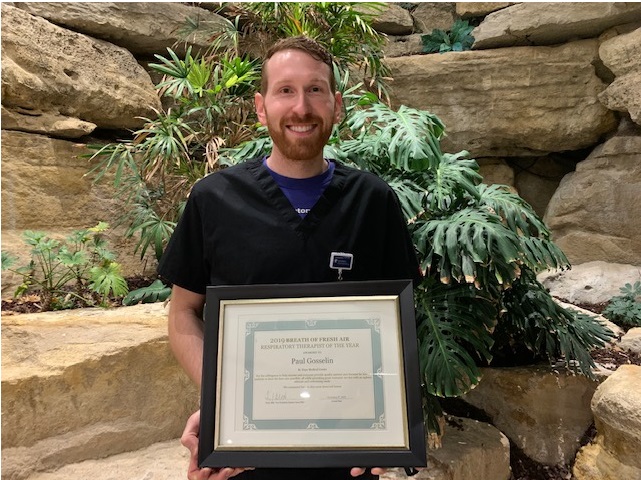
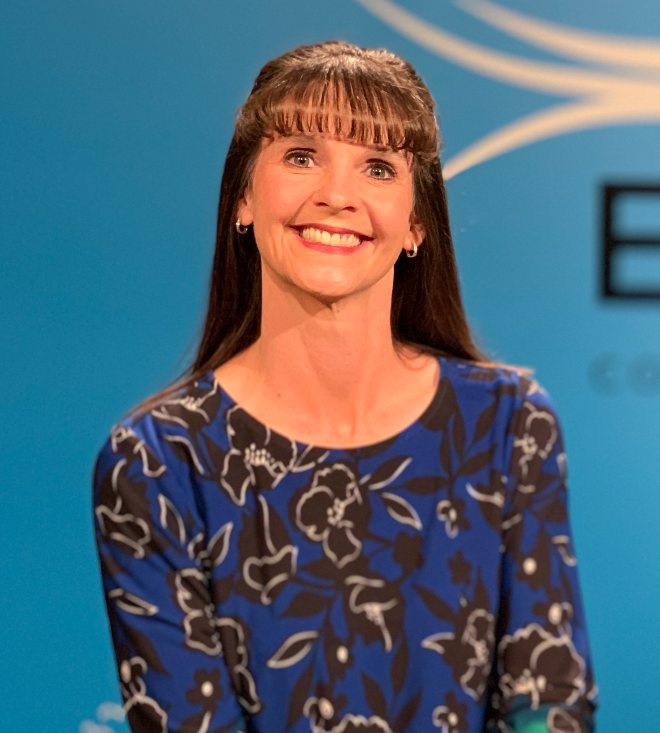
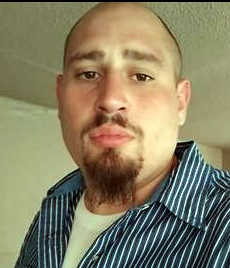
Paul Gosselin, respiratory therapist at HaysMed, part of The University of Kansas Health System, was recently named Respiratory Therapist of the Year.
Respiratory Services awards an annual Breath of Fresh Air award to recognize a respiratory therapist for their hard work and dedication.
The award winner is nominated and chosen by their peers and highlights an Associate in the respiratory therapy department who positively contributed the most teamwork and patient care during the year.
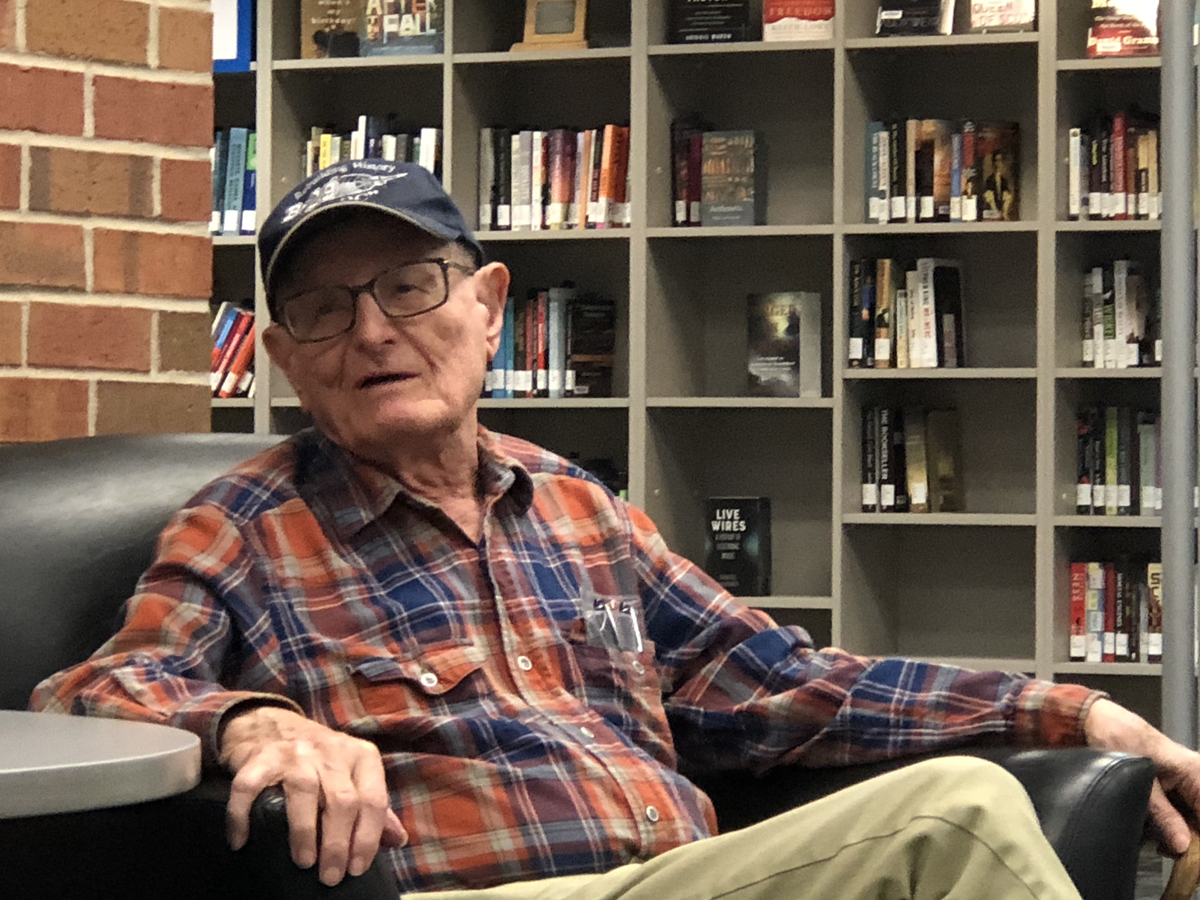
Seated at left, Richard Martin, veteran of the Army Air Corps in World War II, speaks to students of WSU 102 “Innovations of WWII” about his experiences as a B-29 bomber crew member in the skies of Japan.
By ANDREW MARTIN Wichita State University
WICHITA — Richard Martin was only 18 years old when he was drafted into the Army Air Corps. Two years later, he spent the first part of his 21st birthday in the nose of a Boeing B-29 bomber over Japan.
Now he’s 94 years old and the last living member of his squadron. He walked across campus on his own, with only the help of a wooden cane and his son next to him.
On Wednesday, Nov. 6, the students of WSU 102 “Innovations of WWII” met him in the Ablah Library C-Space.
Now he is one of increasingly few remaining veterans of World War II, and the students had a rare opportunity to ask questions and listen to his stories.
Martin cheerfully answered questions ranging from his initial training in Miami Beach, Florida, to his long career as an accountant after the war.
Martin flew many dangerous missions over the Japanese mainland at the end of World War II. “We didn’t get fire until we went to Kawasaki, a suburb of Tokyo, and that was a nightmare,” Martin said.
At Miami Beach, Martin and many other basic trainees bunked in a four-story hotel repurposed as Army barracks.
“It even had an elevator, but they wouldn’t let us use it. We had to use the stairs all the time,” Martin said.
The Army placed him in the Air Corps, where he trained to be a bombardier. He deployed in 1944 with the creation of the 485th Bombardment Squadron.
The 485th was equipped with the B-29, which was one of the most advanced airplanes in the world at the time. Martin’s task was to aim the Nordon bomb sight, which was an early mechanical computer.
It was dangerous work. On one mission the airplane was chased by a “kamikaze” suicide aircraft that threatened to destroy the bomber. They turned hard and shook it off.
“That was the tightest turn I ever took in a B-29,” Martin said.
Martin’s framed picture of his B-29B bomber, nicknamed “My Naked.” He and his crew went against the trend of naming and painting their bombers with “half-naked women,” so they had a naked bird painted on the side of their airplane.
When a student asked him how he dealt with the stress of the bombing missions, he kept smiling.
“You just did it. I don’t think you ever thought about stress. You got to be real good friends with everybody because you depended on each other for your lives,” Martin said.
During another mission, a live bomb failed to drop. It was stuck in the bomb bay.
Martin and his best friend, the B-29’s radar operator, went into the bomb bay to dislodge it. When the bomb bay doors opened, 60 mph of cold wind in the black of night struck them.
“I told him, ‘I’ll say, one, two, three, kick.’ My buddy got excited and kicked on ‘three,’” Martin said.
He kicked into thin air.
The bomb dropped safely, but Martin would never forget the moment.
The 485th was among the last squadrons in combat during World War II. Near the end of a mission on Aug. 15, 1945, his radio operator had news for the crew.
The war was over.
Martin brought several photographs of his war memories, including this image of his ten-man bomber crew. Martin stands at the top right, wearing his flight suit and cap.
The B-29s stopped dropping bombs, but the mission wasn’t over. The 485th parachuted thousands of pounds of food and supplies onto Allied POW camps.
It was a low-altitude mission, so Martin could see the POWs running toward the airplanes and the supplies with open arms.
When their supply mission ended, Martin finished his career as a bombardier. He became a mess hall supervisor on the ground.
“We had number 10 cans of peaches. I’m sure everybody got tired of peaches, but peaches were better than nothing,” Martin said.
Another student asked Martin if he still likes peaches.
He does.
Martin continued his education after the war and became an accountant. Years later, he sought out all of his crew members for reunions.
He found all of them except for his navigator. One of Martin’s family members was in the FBI, and he had them run a search on his navigator’s name.
Martin found out that his navigator lived in Sacramento, California. He gave his crew member a call.
“Why didn’t you find me sooner?” his navigator said.
“You’re lucky I found you at all,” Martin said.
Martin retired from accounting in 1983.
“I still do my own taxes, and my son’s too,” Martin said.
Martin is the last living member of the 485th, and he’s 94 years old.
Special thanks go to a number of people across WSU for this rare opportunity. Samantha Corcoran, assistant engineering educator, organized this meeting for her class. Sarah Butts, engineering, patents and trademark librarian, arranged to host us in Ablah Library. The C-Space and its wonderful staff provided a comfortable space for us to have this conversation. Most of all, many thanks go to Richard Martin and his family for their service and willingness to tell valuable stories that could easily be lost to history.
Karen Marlene Froetschner, 82, passed away November 9, 2019, at County Living of Larned.
She was born March 26, 1937, to Hugh Francis and Mary Jane “Irene” Davidson Riegel at Dodge City. A lifetime area resident, she was a farmwife.
She was a member of the First Presbyterian Church, First Presbyterian Women, Gem Gals, Sunflower Red Hats, PVCH Auxiliary, and she was a community 4-H leader.
On November 29, 1958, she married Kyrle Froetschner at Belpre, he preceded her in death on April 19, 2019.
Survivors include two sons, Kraig (Amy) Froetschner, Larned and Kerry (Donna) Froetschner, Rozel; a sister, Sharon Wheeler, Augusta; two grandchildren: Chelsea (Tyson) Steffen and Andrew (Erica) Froetschner; five great grandchildren: Addison Townsend, Paisley and Camille “Millie” Steffen; Karver and Palmer Froetschner, all of Larned. She was “Beautiful Aunt Karen” to many nieces and nephews
She was preceded in death by her parents and her husband.
Funeral service 10:30 a.m. Wednesday at Beckwith Mortuary Chapel, Larned with Pastor Bill Stapleton presiding. Visitation 9:00 a.m. to 8:00 p.m. with family present from 6:00 p.m. to 8:00 p.m. Tuesday, Beckwith Mortuary, Larned. Burial in Larned Cemetery, Larned.
In lieu of flowers, memorials may be given to the PVCH Auxiliary or the Pawnee County 4-H Foundation in care of Beckwith Mortuary, PO Box 477, Larned, KS 67550. Personal condolences may be left at www.beckwithmortuary.com.
WICHITA, Kan. (AP) — Nearly a century ago, the Atchison, Topeka and Santa Fe Railway built a large dam near Augusta to supply water for the steam locomotives that at the time were chugging across the dusty Kansas prairie.
Today the aging Santa Fe Lake Dam is considered a high-hazard dam because of its potential for the loss of life if it fails. An analysis by The Associated Press of dams across the country has found that it’s among more than two dozen potentially dangerous dams in Kansas that are in such poor shape they are vulnerable to failure.
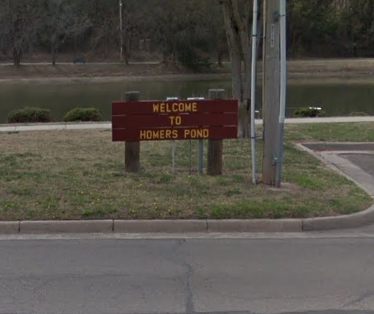
Homer’s Pond in Geary County -Google image
Augusta acquired the Santa Fe Lake Dam, located about 3 miles west of town, in 1950 as a supplemental water supply. The dam, built in 1927, is 1,110 feet long and 38 feet tall with a maximum water depth of 11 feet. Its spillway was found during an inspection last year to be in “extremely poor condition.” Inspectors noted it also has inadequate capacity that makes it vulnerable to overtopping or failure during a significant storm.
Several farmsteads, roads and a bridge are located immediately downstream, but it is unclear how many houses would be affected by a breach. The emergency action plan filed two decades ago only broadly mentions housing additions and residences along various roads that would need to be evacuated.
A two-year investigation by the AP identified at least 1,680 dams nationwide that are rated as high-hazard because of the potential for loss of life if they failed and are considered to be in poor or unsatisfactory condition.
Emergency plans obtained by the AP indicate that thousands of people across the nation are living and working downstream and could be at risk if those dams were to catastrophically fail, while separate inspection reports cite a variety of problems. Those include leaks that can indicate a dam is failing internally, unrepaired erosion, holes from burrowing animals and extensive tree growth, which can destabilize earthen dams. In some cases, inspectors also flagged spillways that are too small to handle the amount of water that could result from increasingly intense rainstorms due to a changing climate.
Kansas has 6,205 dams, including 309 classified as high-hazard, of which 26 were rated in unsatisfactory or poor condition in 2018. One of those was missing an emergency action plan in the event of a failure, and six had out-of-date inspections as of summer 2018.
“Anytime we’ve had like emergency situations, we have kind of known about it in enough time to get people notified and then nothing has happened with the structure anyway,” said Terry Medley, the state’s water structures program manager. “So, no, I don’t think there are any that keep me up at night.”
The state has had 31 reported dam incidents, including seven failures, since 1925, according to Stanford University’s National Performance of Dams Program. The most notable one occurred in 1951 when the Fall River Dam in Greenwood County failed, resulting in 11 deaths.
When the city of Augusta repaired a separate dam in 2012, it was able to partner with the state to help pay for it. But that program is no longer available for repairs on the Santa Fe Lake Dam, said Augusta City Manager Josh Shaw. A preliminary estimate pegged the cost of repairing the Santa Fe Dam’s crumbling spillway at $930,000. The city has been working with state regulators to address various concerns, he said.
As in many other states, Kansas has seen its dam safety staffing levels and budgets cut since the Great Recession. In 2009, the equivalent of 13 staff people worked on dam safety issues, according to data examined by AP. That fell to an equivalent staff of about five by 2017. In 2010, Kansas budgeted $458,986 for dam safety; by 2017, that had been cut to $308,773.
The average age of Kansas dams is slightly more than 42 years, and the state notes in its hazard mitigation plan that some are exhibiting structural problems such as deteriorating pipes and other components.
Among those where inspectors found problems is Rimrock Lake Dam, known locally as Homer’s Pond, in Junction City.
A 2014 inspection said the dam has been in violation of state regulations since it was built in 1952. The dam is considered hydrologically inadequate and a downstream embankment is in poor condition. A dam failure could potentially flood homes, a child care facility, church, school, and several businesses in Junction City, according to its 2009 emergency action plan.
It originally was designed for flood control and as a livestock water supply before being given to Junction City in 1967. Today, it’s a popular local fishing pond encircled with walking trails.
Junction City Manager Alan Dinkel pushed back on the state’s risk assessment, insisting the dam is in “great shape” and called its high-risk designation and the state’s demands to fix it “one of those overzealous regulations.” The city is now trying to obtain easements so repair work on it can begin next spring.
“We are going to spend basically a half million dollars to make changes,” Dinkel said. “They actually wanted us to take it out, but it is a pond that is at the center of our community.”
In Kansas and elsewhere, there is a growing concern that many small flood control dams built by local watershed districts with U.S. Department of Agriculture assistance are now at or near the end of their 50-year design life. Kansas has 831 flood control dams, according to its 2018 hazard mitigation plan.
Among those raising alarm with inspectors is the Samuel Rogers Detention Dam located a half mile from Manhattan. It is operated by Kansas State University and owned by the university’s real estate fund since 2015.
The dam — 33 feet high and 560 feet long — was built in 1961. Although it does not regularly hold water, the potential to do so during a significant rainstorm is a concern, according to its 2016 inspection report. Its emergency plan estimated a major flood caused by a dam failure would inundate 82 homes and 17 roads.
“The dam is in unsatisfactory condition and is in need of immediate remedial action,” inspectors wrote. “It could pose a risk to downstream residents.”
Its responsibility now falls to the university’s department of animal sciences, where officials are getting an engineering assessment to determine whether it would be better to repair or remove the dam entirely. The dam is located in the middle of a 20-acre parcel that the department wants to use as a horse pasture.
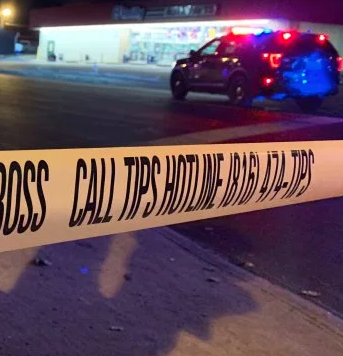
Police on the scene of the shooting investigation photo courtesy Fox4Kansas City
KANSAS CITY. (AP) — Authorities are investigating a shooting outside an adult entertainment club in northeast Kansas City that left four people injured.
The shooting outside Baccala’s strip club happened around 2:40 a.m. Sunday.
Kansas City, Missouri, police say one victim was found in front of the club. Three others were taken to hospitals. All four were in stable condition Sunday.
Officers responding to a disturbance near the club before the shooting rushed to help after shots were fired.
Fort Hays State University announced lat week that its online learning program, the FHSU Virtual College, has earned certification from the United States Distance Learning Association, a nonprofit distance learning association whose work focuses on supporting distance learning research, development, and praxis across the complete arena of education, training, and communications.
In announcing the coveted certification, the chair of the Quality Standards Certification Committee, Dr. Arletha McSwain, said, “USDLA is proud to welcome the FHSU Virtual College to an elite group of institutions that have earned national recognition for providing exemplary online degree programs and certificates.”
The USDLA’s certification report pointed to the Virtual College’s visionary quality standards program as a driver in ensuring the university’s ability to remain on a path to continuous innovation and improvement in online education.
“Since the Virtual College was established in 1997, the online learning enterprise at Fort Hays State has grown thoughtfully and steadily to the point where today it is the single largest source of enrolled students at the university,” said FHSU President Tisa Mason.
“This phenomenal growth is the direct result of our consistent focus on delivering a high-quality, affordable and distinctly FHSU online experience,” she said.
The rigorous USDLA certification recognizes the commitment that Fort Hays State has made in following best industry practices for its Virtual College. The university is one of only five certified distance education providers in the country to successfully complete the comprehensive, 120-point quality review of all levels of distance education and training.
“This certification is a testament to the dedication everyone, past and present, put forth in creating an exceptional worldwide online operation,” said Dr. Dennis King, associate vice president for enrollment management. “All of the faculty, students, staff and alumni should be very proud of what they have created.”
The USDLA team that conducted the certification review was impressed with the Virtual College.
“Fort Hays State is making online learning a priority, and it shows,” said Dr. Chuck Sengstock, a USDLA Quality Standards Certification Committee Member.
“We were impressed with the initiative and dedication of the online faculty, staff, and administrators. We were equally impressed with the collective results of the online student interviews.”
About the FHSU Virtual College Fort Hays State, founded in 1902, entered into distance education in 1911 when faculty voted to offer courses free by mail so that one-room school teachers across western Kansas could afford to pursue the continuing education required to teach. The distance education department created then evolved continuously with changing technology and culture until, in 1997, the Department of Continuing Education and Instructional Technology became the FHSU Virtual College.
TOPEKA — For the next two months, the Kansas Department of Revenue’s Division of Vehicles will intermittently close driver’s license offices across the state for regional training meetings. These will close offices for one day by region. The purpose is to improve consistency across the state in customer service and process training.
“Our goal is to ensure adequate and consistent training for an improved customer service experience at our offices across the state,” David Harper, Director of Vehicles, said.
The driver’s license offices will be closed as follows on their respective dates:
November 13 – West Region
Colby, Dodge City, Garden City, Great Bend, Hays, Liberal, Phillipsburg, Pratt, Scott City
November 18 – Central Region
Concordia, Emporia, Hutchinson, Junction City, Manhattan, McPherson, Salina, Seneca
Entrepreneurship comes with both its challenges and its rewards. As an entrepreneur, you might sometimes feel as if you’re flying solo and dream of having a co-pilot to help steer you around the many obstacles that you face during the course of your everyday business.
EshipConnect brings you an opportunity to talk to some of the leading business professionals in western Kansas; allowing you to ask the questions that matter most to you and your business. Whether you are an established entrepreneur or you’re thinking of taking that leap of faith to start your own business, our panel of resource professionals will provide you with the assistance you need. So get ready to build your network and make some connections to help develop upon your existing hard work and talents.
9:00am Introduction
9:20am Women and Minority Owned Businesses Programs: Rhonda Harris -Director, Office of Minority & Women Business Development; Kansas Department of Commerce.
9:40am Entrepreneur/Employee Learning Opportunities: Sabrina William – Director, Management Development Center, College of Business & Entrepreneurship; Fort Hays State University.
10:00am WorkforceONE: Tucky Allen – Business Services Director/Rapid Response Coordinator; Kansas WorkforceONE.
10:20am From Startup to Succession Planning: Rick Feltenberger – Regional Director; Kansas Small Business Development Center.
10:40am E-Community and Funding Opportunities, Board Certified Programs – Business programs: Sarah LaRosh – Product Manager, Rural Entrepreneurship, Western Region; NetWork Kansas. Amara Kniep – Product Manager, E-Community Programs; NetWork Kansas.
11:00am Kansas Department of Commerce – Business Assistance Programs: Dan Steffen – N.C. Kansas Regional Project Manager, Business & Community Development; Kansas Department of Commerce.
11:20am USDA Business Assistance Programs (funding): Doug Bruggeman – Loan Specialist, Rural Development; United States Department of Agriculture.
11:40am Employees and Employment: Phyllis LaShell – Workforce Response Coordinator; KANSASWORKS.
12:30pm Agribusiness/Value Added Ag in Kansas; From The Land Of Kansas Program: Kerry Wefald – Agriculture Marketing Director; Kansas Department of Agriculture and Lexi Wright – From the Land of Kansas.
12:50pm Nex-Gen Programs: Jacque Beckman – Director; Nex-Generation Round Up for Youth.
1:10pm SBA: Michael Aumack – Economic Development Specialist & Public Information Officer; SBA.
1:30pm K-State Technology Development Institute: Courtney Kuntz – Outreach Coordinator.
1:50pm NWKPDCi: Randall Hrabe – Executive Director; Northwest Kansas Planning & Development Commission/Pioneer Country Development.
2:10pm K-State R&E/Hansen Programs: Nadine Sigle – Associate, Community Vitality; K-State Research & Extension.
2:30pm NWKEICI Programs: Scott Sproul – Director; Northwest Kansas Economic Innovation Center.
2:50pm SCORE: Morris Engle – Mentor; SCORE
Ron Wilson is director of the Huck Boyd National Institute for Rural Development at Kansas State University.
By RON WILSON Huck Boyd National Institute for Rural Development
What can we grow across Kansas? Wheat? Industrial hemp? Wind turbines? How about jobs and businesses? Today we’ll meet an organization which is devoted to the growth of entrepreneurship and small businesses across our state. It’s today’s Kansas Profile.
Last week we met Steve Radley. As a personal project, he produced a film about rural Kansas. His ideas for that film sprang from his work as president and CEO of this organization known as NetWork Kansas.
In 2004, the Kansas Legislature passed the Kansas Economic Growth Act. That law, among other things, established the Kansas Center for Entrepreneurship which now does business as NetWork Kansas.
Steve Radley and his friend Erik Pederson had previously been in business together in Wichita. They experienced the ups and downs of launching and growing successful businesses.
In 2006, Steve Radley was selected as president and CEO of NetWork Kansas. Erik Pederson joined him as vice president for entrepreneurship. They and their team went to work to foster an entrepreneurial environment in Kansas by cultivating resources to start and grow small businesses. NetWork Kansas describes itself as “a statewide network of non-profit business-building resources that help entrepreneurs and small business owners start up and grow successful businesses.”
NetWork Kansas quickly recognized that resources to assist small business already existed around the state. One of the first steps was to organize a partner network so that entrepreneurs could be connected to those resources more easily and effectively. A NetWork Kansas portal to those resources can be accessed online or through a toll-free number, 877-521-8600.
That resource data base now includes more than 500 partners. To date, the NetWork Kansas partner network has assisted more than 25,000 entrepreneurs and made more than 50,000 referrals.
Steve Radley
NetWork Kansas has multiple loan programs and a venture fund to provide direct financial assistance to small rural businesses. Those programs have provided loans and investments of more than $40 million to Kansas businesses. Such funds have also been used to leverage additional capital amounting to more than $400 million.
There is a saying that all politics is local. Perhaps all entrepreneurship begins locally as well. Under Erik Pederson’s direction, NetWork Kansas launched a program to enhance locally-based support for entrepreneurs in 2007. It was called the Entrepreneurship Community Partnership. Individual communities or counties could apply to be designated as E-Communities which entitled them to funding, training, and other resources.
An E-Community is to establish a local leadership team to oversee a loan fund, engage with resources, and cultivate an entrepreneurial environment. E-Communities can be established in rural areas or in distressed urban areas. To date, the 63 E-Communities have provided more than $19.8 million dollars in matching loans and grants to more than 580 businesses.
Through the years, the E-Communities have been located from border to border and corner to corner in Kansas. They have included numerous county-wide E-Communities and even some individual rural towns as small as Alden, population 148 people. Now, that’s rural.
During 2019, the Center for Entrepreneurship and specifically its co-founder, Don Macke, joined the Network Kansas team. This new division is called e2 Entrepreneurial Ecosystems.
NetWork Kansas has always focused on for-profit businesses in the past. In 2019, the organization branched out, in partnership with the Kansas Health Foundation, to launch the Kansas Community Investment Fund which supported health-related projects of non-profit organizations and local governments.
In order to encourage the next generation of entrepreneurs, NetWork Kansas has supported local community competitions among young aspiring businesspersons with creative ideas. In 2019, the Youth Entrepreneurship Challenge Series engaged 865 students from 48 communities through 40 local competitions. The finals were held at Kansas State. For next year, a projected $75,000 in prizes will be awarded to the top youth entrepreneurs.
What can we grow across Kansas? If Steve Radley, Erik Pederson and their team has their way, we will grow successful entrepreneurs, jobs, and small businesses. We commend NetWork Kansas for making a difference by encouraging creative ideas and startup businesses. I encourage them to keep on growing.
Finch-photo courtesy Hillside Funeral HomePolice body camera images of The December 2018 fatal response to a hoax call that led to Finch’s death -courtesy Wichita Police
WICHITA, Kan. (AP) — The family of an unarmed man who was fatally shot by police while responding to a bogus emergency call is seeking $25 million in damages in a lawsuit.
Recent documents filed in the lawsuit brought by Andrew Finch’s family outline the damages they are seeking for his death and their pain and suffering. The 28-year-old Finch was fatally shot by police in December 2017.
Officials have said that officers feared Finch was reaching for a firearm when he was shot, not knowing that a hoaxer had reported a fake homicide and hostage situation at Finch’s home.
The lawsuit filed by Finch’s family is pending. The city has already spent nearly $250,000 to defend against the lawsuit.