Rainfall totals for the month of August continue to add up as the rainy month winds down.
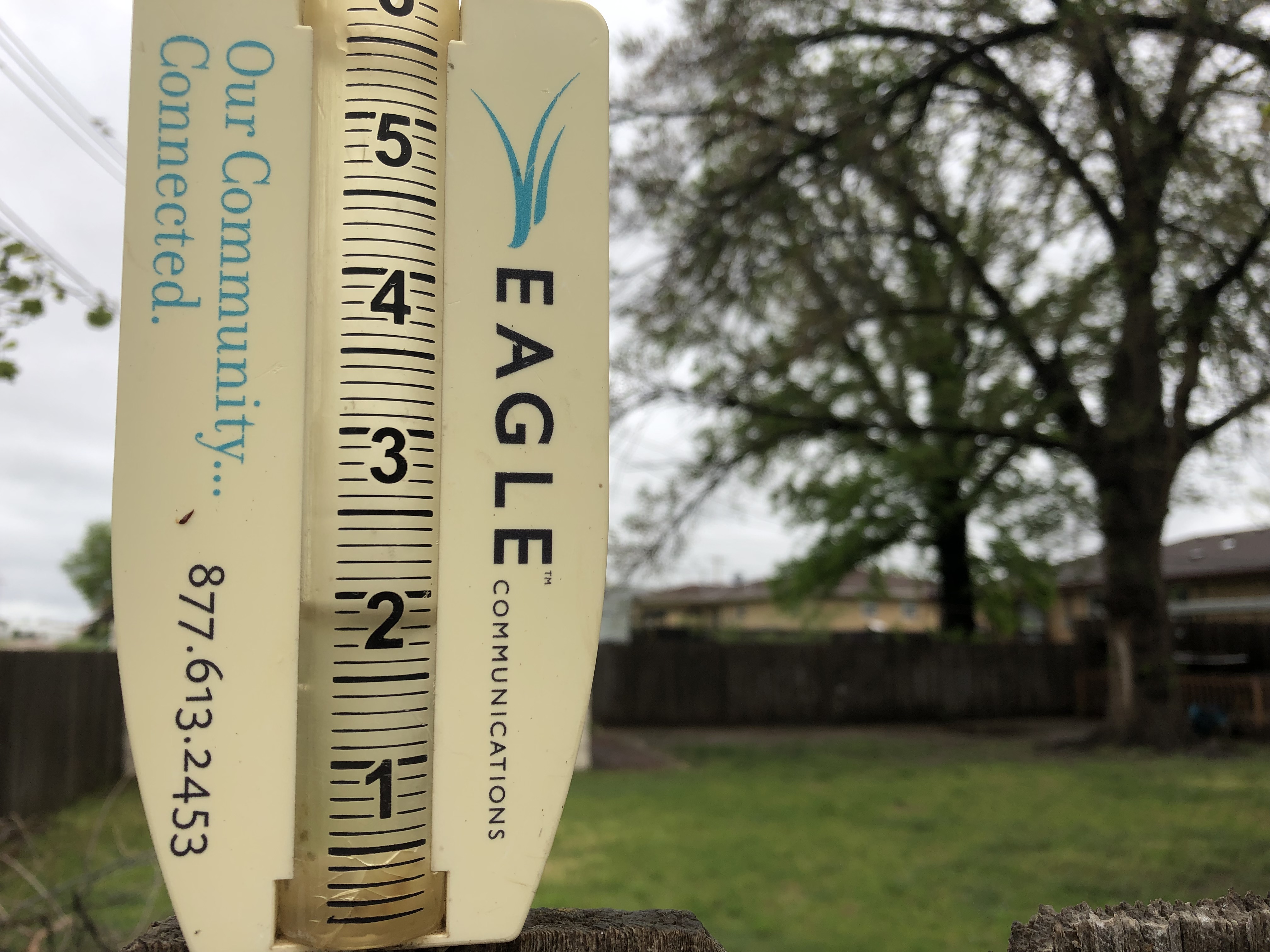
According to the K-State Ag Research Center, Hays received another 0.44 inches of rain Thursday night, bringing the official August total to 10.24 inches of precipitation.
The average August rainfall total is 2.97 inches.
For the year, the Research Center has measured 24.78 inches of rain. The average precipitation through the month of August is just more than 17.5 inches.
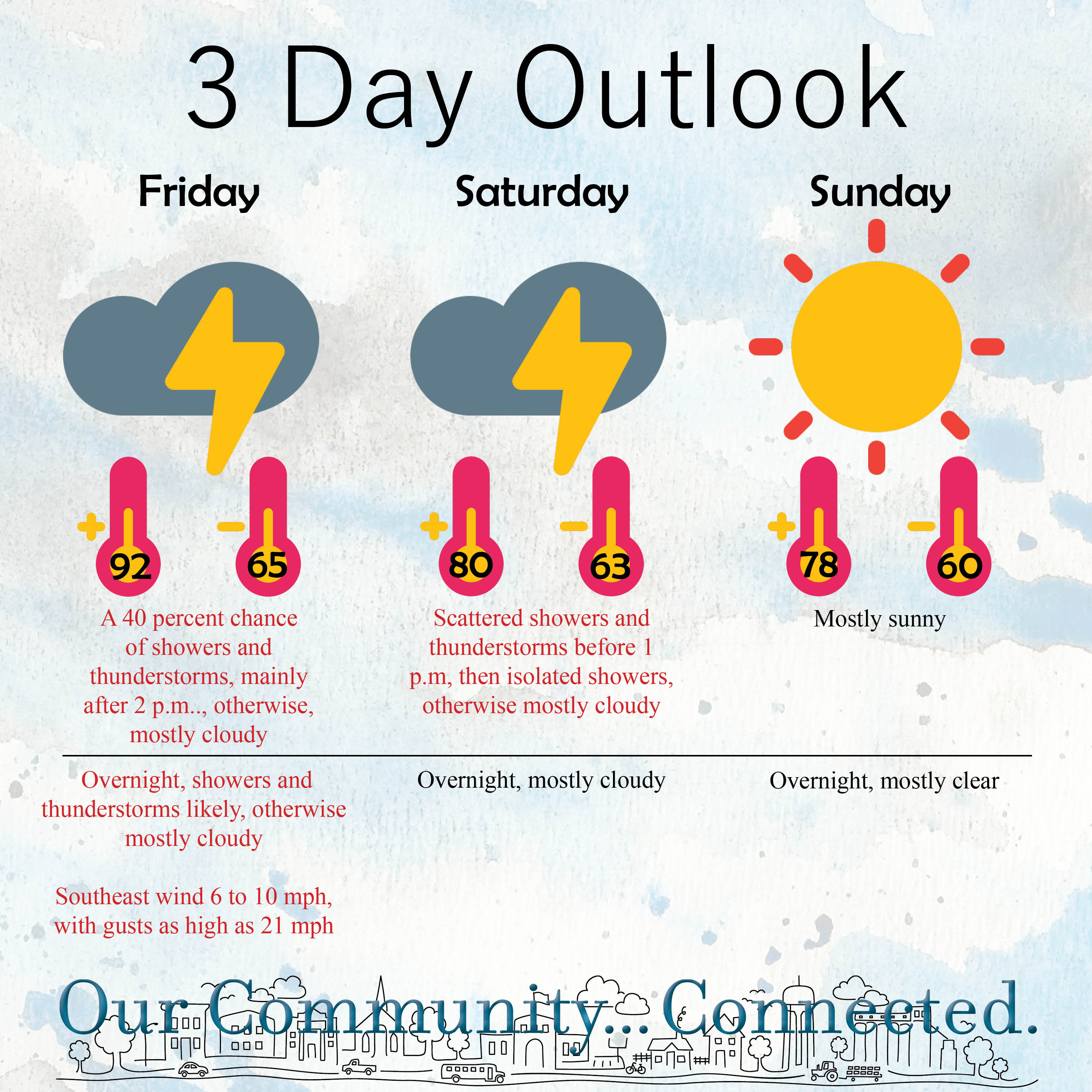
And August might not be done yet. There is a chance for additional storms or showers Friday and Saturday. Click HERE for more on upcoming weather predictions.
SEDGWICK COUNTY — Two people died in an accident just after 1:30p.m. Thursday in Sedgwick County.
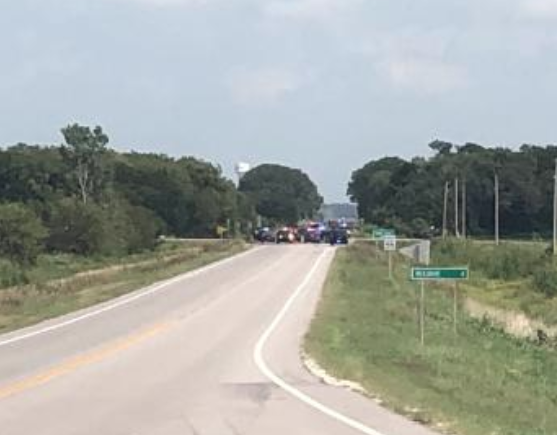
Fatal crash scene in Sedgwick County photo courtesy KWCH
A 1991 Volvo 740 driven by James D. Mortimer, 57, Harper, was southbound on Hydraulic and ran the stop sign at 119th Street South according to the Sedgwick County Sheriff’s Department.
A westbound 2009 Ford Edge driven by Vicki L. Kraft, 60, Peck, Kan. T-boned Volvo which split into two pieces and traveled into a field.
Mortimer and a passenger in Volvo Michael John Horn, 29, Wichita, were pronounced dead at the scene.
Sumner County EMS transported a passenger in the Volvo Selena M. Dennis, 49, Winfield to Wesley Medical Center. Kraft was transported to St. Francis Medical Center, according to the sheriff’s department.
———-
SEDGWICK COUNTY — Two people died in an accident just after 1:30p.m. Thursday in Sedgwick County.
A vehicle driven by James D. Mortimer was southbound on Hydraulic and ran the stop sign at 119th Street South, according to the Sedgwick County Sheriff’s Department.
A westbound vehicle driven by Vicki L. Kraft t-boned Mortimer’s vehicle which split into two pieces and traveled into a field.
Mortimer and a passenger in his vehicle Michael John Horn were pronounced dead at the scene.
Sumner County EMS transported a passenger in Mortimer’s vehicle Selena M. Dennis to Wesley Medical Center. Kraft was transported to St. Francis Medical Center, according to the sheriff’s department.
Authorities released no additional details early Friday.
————-
WICHITA, Kan. (AP) — Two people are dead and two others are injured after a crash near the Kansas Star Casino in Mulvane, approximately 17 miles south of Wichita.
The accident happened around 1:30 p.m. Thursday and involved two vehicles. Names of the victims and details about what caused the accident have not been released.
One of the injured people is in critical condition. The other person’s injuries are being called serious.
KANSAS CITY, KAN. – The former Linn County Attorney was sentenced Thursday to a year and a day in prison for stealing $75,000 worth of electronics and equipment that belonged to the county, according to U.S. Attorney Stephen McAllister.
In addition, the defendant was ordered to pay $75,000 in restitution and a fine totaling $11,000.
John Sutherland, 69, Mound City, who served as county attorney for approximately 20 years before leaving the job in January 2017, pleaded guilty to one count of mail fraud and one count of lying to federal investigators. The crimes took place from sometime prior to January 2009 until Sutherland left office.
“The defendant abused the public trust,” McAllister said. “He used his elected position as county attorney to steal more than $75,000 from the Linn County taxpayers who had placed their trust in him as the county’s top law enforcement official. According to the U.S. Census Bureau, there were approximately 9,750 people in Linn County in 2018. The median household income was $46,576. That means the defendant stole property worth far more than most Linn County residents earn in a year.”
According to the government’s sentencing memo, the defendant had the county pay for seven cellular phones that were not used to conduct county business.
In his plea, Sutherland admitted that on Feb. 6, 2019, FBI agents found 13 items stolen from Linn County when they searched Sutherland’s office at the Wyandotte County District Attorney’s Office. At the time, Sutherland was working as an Assistant District Attorney. One of the items was a stolen Apple laptop computer.
When FBI agents interviewed him, Sutherland denied any wrongdoing and made other false statements. For instance, he claimed that an Apple TV 64 GB video-streaming device the county purchased for about $220 had been destroyed. FBI agents found the device intact at Sutherland’s residence.
In his plea agreement, Sutherland agreed to surrender his license to practice law.
Joyce Dee (Hays) Richardson, daughter of Otto and Pearl (Strutt) Hays, was born on August 24, 1936, on a farm southwest of Alton, Kansas, in Mt. Ayr Township in Osborne County, Kansas. She passed away on August 28, 2019 at Solomon Valley Manor in Stockton, Kansas, at the age of 83.
Joyce received her elementary education at Pleasant Plain School, Osborne County. She attended Natoma Rural High School graduating in 1954. The summer before she was a senior she began working at the Do-Drop Inn restaurant in Stockton. She continued working there on weekends until she graduated and then began working there full time, however, she decided that wasn’t what she wanted to do with her life. She returned to the farm and began working for her uncle and aunt, Van and Marjorie Strutt. In March of 1955 she began working for the United States Department of Agriculture, in the ASCS office in Osborne. She then worked in the County Treasurer’s office, the County Agricultural Extension Office, back to the County Treasurer’s Office as Deputy County Treasurer and then became County Treasurer of Osborne County. She then began working in Stockton as the Deputy County Treasurer of Rooks County. In 1966 she began working as secretary in the Stockton school system until her retirement in 1995.
She was married to Donald L. Richardson, July 14, 1962, at the First Methodist Church in Osborne. They moved to Stockton in August of 1963 living in their mobile home at the Maddy Trailer Court. In August of 1965 they purchased their home at 211 South 12th Street. After Don passed away February 17, 2011, Joyce remained living there until June of 2014 when she moved to Stockton Estates. In October of 2017 she moved to Solomon Valley Manor.
Joyce loved genealogy and has scrapbooks for all of her family. They include parents, grandparents, aunts, uncles, siblings, nieces, and nephews.
Her greatest accomplishment of all her work about her family was becoming a member of the Daughters of the American Revolution; something she had worked on most of her adult life. Joyce also enjoyed playing her guitar, oil painting, reading, traveling (especially to the mountains), and shopping.
Joyce is survived by nieces and nephews Robert (Carol) Parker of Plainville, Mary (Robert) Miller of Stockton, Jill (Michael) Roth of Savannah, MO, Edward (Nancy) Brummer of Natoma, Connie (Tracy) Brummer of Stockton, Jennifer Brummer of Plainville, Jeanette (Jason) Miller of Hutchinson, Elizabeth “Betsy” (Jarrod) Selenke of Peyton, CO, Peggy (Benney) Wise of Stockton, Sandra Staton of Webster, Becky Shunn of Stockton, Richard Neushafer of Salina, Mark Neushafer of Enterprise, and Pamela (Rich) Sexton of Denver, CO; sister-in-law, Colleen Richardson of Webster; brothers-in-law, Edward Brummer and Ben Neushafer of Enterprise, Kansas; and many great-nieces and great- nephews.
Joyce is preceded in death by her husband Donald Richardson; parents, Otto and Pearl Hays; sisters, Loretta Parker and Bertha Brummer; and brothers-in-law Harry Parker, Junior Velgruth, and Earl Richardson; and sisters-in-law, Ann Neushafer and Viola Velgruth.
A funeral service will be held on Tuesday, September 3, at 2:00 P.M. at Plumer-Overlease Funeral Home in Stockton with burial to follow at the Stockton Cemetery. Visitation will be held on Tuesday, September 3, 2019 from 12:00 P.M. until service time at 2:00 P.M.
Memorials are suggested to Solomon Valley Manor and may be sent in care of Plumer-Overlease Funeral Home, 723 North First, Stockton, KS 67669.
When looking at hazardous occupations in the world, agriculture is consistently in the top ten. There are many factors that go into this: the large equipment, working long days and longer evenings, and the repetitive heavy labor that just wears down the body over time.
Additionally, there is an alarming statistic that is on the rise thus making agriculture even more dangerous.
According to the Center for Disease Control, professions that are ag related sadly have the highest rate of suicides in the US. In July of 2016, 84.5 out of 100,000 in Ag took their lives compared to a national average of 13.4 per 100,000. The disparity is disturbing and unfortunately the number is on the rise with the uncertainty in agriculture at this time.
Agricultural occupations are unique in the job market and many of the factors that make it unique also make them much more stressful.
The higher stressors include: engaging in dangerous activities much of the time, the lack of control on conditions such as input pricing, commodity pricing, and weather. These all play into whether a producer can pay his bills. Sustained higher levels of stress can cause depression, fatigue, anxiety, and other triggers that cause a greater propensity of attempting suicide. The negative stigma of mental health issues can also make it difficult for producers to feel that they can reach out for help.
There is help available specifically to the agriculture community, assistance from individuals who understand a producer’s lifestyle and are ready to help.
The Kansas Agriculture Mediations Services at (800) 321-3276 can help producers with several programs in place. They will gather information from you and can connect you with financial advisors, legal advice, lawyers, and can also connect people with mental health facilities close to your location. One phone call can get you in touch with many people that can help your unique situation.
Also, the National Suicide hotline is (800) 273-8255 and provides 24/7 free and confidential support.
Some people do not want to talk on the phone. You can also text 741741, or chat online at imalive.org.
Most of all, watch out for your family and friends. If you feel that something is wrong, ask.
It is also good to implement strategies that can help daily. Some practices you can implement are: Taking a walk, get a massage, try guided restful breathing practices, listen to relaxing music, or just take 10 minutes to write down your blessings. Positive thoughts and practices can go a long way to improving an outlook on life. And most of all, if you need help, seek it. Your friends and family need you.
Alicia Boor is an Agriculture and Natural Resources agent in the Cottonwood District (which includes Barton and Ellis counties) for K-State Research and Extension. You can contact her by e-mail at [email protected] or calling 620-793-1910
Ron Wilson is director of the Huck Boyd National Institute for Rural Development at Kansas State University.
By RON WILSON Huck Boyd National Institute for Rural Development
When a bank and a school both close, what is to be done with the two buildings? Today we’ll learn about a rural community which seized the opportunity to convert a former school into a library and a former bank building into a museum. These actions help preserve and promote the history of the community’s citizens.
Verl Coup is director of the Talmage Historical Museum. He grew up near Talmage and lived here his whole life, other than during his service in the Army. Verl was a long-time rural letter carrier. He started collecting artifacts of the Talmage community.
“When the older people would move to the nursing home, they knew I was interested in history so they would pass some of their things along to me,” Verl said. “Otherwise, when they pass, their money and artifacts go to the big city.”
One day in 2010, he got an important call. “A lady who used to live here said the bank was closing and they would give us the building and most of the furniture,” Verl said. Sure enough, the Talmage branch bank closed and the building was donated to the Talmage Historical Society to become a museum.
“My wife (Kathy) was happy to get all these things out of our house,” Verl said with a smile. Kathy now volunteers at the museum. A local farmer left an endowment to support the new use for the building. In December 2010, the new museum opened its doors.
“The museum highlights the stories of the people from here,” Verl said. The old bank building was organized into various displays. The teller area has places for various area families to display their family trees and photos. The bank offices have been organized into different types of rooms.
For example, there is the school room with various artifacts from school buildings and classes through the years. I had to laugh when I saw the hairstyles, eyeglasses, and short basketball shorts of yesteryear.
There is the picture room with lots of images from around the county, and a place for photos of farmers and their equipment. The vault has safety deposit boxes which are used for storage of pictures and memorabilia. There’s a veterans area, a memorial wall where people can honor someone with donations that help sustain the building, and much more.
Artifacts continue to be donated. One morning Verl found a box left anonymously on the front step. Among the contents was a homestead certificate signed by President Chester A. Arthur.
The grade school in Talmage had closed in 2000 and then served as a church for a time. It has now become the Talmage Library and Events Center. Shawni Sheets, a board member of the Talmage Historical Society, is director.
The Talmage Library and Events Center is located up the street from the museum. In addition to the library’s own collection, the Manhattan Public Library loans a rotation of books to the library every two months. As one might guess, the former school building has a kitchen and dining area. The big gym is available for recreation, and an additional game room has pool, foos ball, ping pong, and exercise equipment. The facility is for rent by donation. Shawni Sheets said that many volunteers have donated books and other resources.
In spring 2019, the Dickinson County Community Foundation conducted a Match Day where donations to various worthy projects in the area were matched and doubled. “By noon that day, we had matched our $10,000 goal,” Verl said. “The community support is there.”
It is impressive to see such remarkable, repurposed facilities in a rural community like Talmage, population 99 people. Now, that’s rural.
When a bank and a school close, what is to be done with the buildings? In Talmage, they are being re-used in creative ways. We commend Verl and Kathy Coup, Shawni Sheets, and all those involved with Talmage for making a difference by repurposing and maintaining these buildings in ways that benefit the community. They could school other communities – you can bank on it.
Thursday’s summer storm rolled out of Nebraska and brought large hail to northwest Kansas along with damaging winds and flooding rains.
Power lines down photo courtesy Prairie Land Electric
Power poles are down and many tree limbs and some trees are down as a result of the storm, according to the Norton County Sheriff’s Department.
The Graham County Sheriff’s department in Hill City reported straight line winds of near 80-miles per hour and over two inches of rain in some areas of the county.
Prairie Land had wide spread power outages in Norton, Decatur, Sheridan, Graham, and Rooks Counties.
Their crews were out overnight assessing damage and despite the difficult conditions are working to restore power.
There were tank battery fires on 390th and O Road and North of 24 and 170th, in Graham County, according to the sheriff’s Department.
The wind also did damage to trees and power lines in Barton County, according to the sheriff’s department.
BUNKER HILL – Smoky Hills Public Television is excited to announce that we will be having a Polka Party fundraising event on Saturday, Sept. 21, at the VFW Hall in Hays.
The event will be held from 1 to 5 p.m. and will feature the Wes Windholz Polka Band. There will be snacks, a cash bar, and raffle prizes.
“We can’t wait to bring you this fun event,” said Tricia Flax, Smoky Hills Public Television events coordinator. “The Wes Windholz Band is a local favorite and they do an amazing job. Don’t miss out on this great event where you can kick up your heels and have a good time!”
The ticket cost is $20 per person. For tickets, you can call 800.337.4788 or visit our website at www.shptv.org. Tickets are limited.
Dr. Sharon Hartin Iorio is Professor & Dean Emerita at Wichita State University College of Education.
Kansas Can, launched by the Kansas State Board of Education is a visionary project to create more effective PreK-12 learning. Begun in 2017 with seven schools, today Kansas Can has grown to include 66 of the 286 districts in Kansas.
Aimed at statewide, overall school redesign, the KSDE board laid out a concept for the project then engaged teachers to drive the course of action. All districts are expected to join the redesign process by 2026.
How much do we know about this ambitious undertaking to make the changes required for student success in today’s world?
Redesign emerged from conversations held in 2014 by then newly named KSDE Commissioner Randy Watson. Watson traveled the state conducting focus groups that totaled more than 2,000 people to learn their thoughts on the future of Kansas public education.
Kansans interviewed said that students needed to be better prepared upon graduation. Many said students should be learning “soft skills” including team work and responsibility.
Based on the feedback, the KSDE board established five redesign outcomes for measuring progress. Teachers in participating schools will measure steps taken for students to engage social-emotional development, kindergarten readiness and creating a plan of study focused on career interest. The outcomes also require collecting data on changing high school graduation rates and data on student participation in or completion of post-secondary learning.
At this point, the five KSDE board outcomes have been presented to school districts that volunteered to participate. No extra funding is allocated from KSDE or state education budgets. The work is school-site specific enacted by teachers in the 160 schools within the 66 currently participating districts.
For example, in Stockton, to promote social/emotional growth, the school provides for students and adult employees to meet regularly in a multi-age, small community to cultivate commitment to democratic values and participation in improving society on behalf of all people. In Wellington personalized learning through basic academic content is offered by a free online/computer-based program within a limited number of carefully selected classrooms.
Neither online learning nor school communities are required as part of current school redesign—redesign rests with how teachers in each school interpret the KSDE outcomes.
School redesign is well known by educators but not widely known by the public, except in districts where there has been criticism of the new activities, often centered around classrooms where online learning covers basic content instruction.
While many Kansans support the current, free KSDE online learning opportunities that serve individual students away from teacher-led instruction, the public opinion jury is still out on whether shifting substantial group time to online for academic study is more beneficial than regular school.
Voters in Wellington will help make that call. This fall’s local school board election will see three open board positions contested by candidates, whose platforms, in part, address online classroom learning.
Change is often needed, but change also can be stressful and occasionally not productive. The important point to remember is that online classrooms are just one way to implement one part of the much larger redesign project—not the defining element of the KSDE redesign’s critical and far-reaching mission for each Kansas student to succeed.
Kansans can make redesign, though challenging, a change for the better. After all, redesign is not nearly as challenging as sending a man to the moon.
Dr. Sharon Hartin Iorio is Professor & Dean Emerita at Wichita State University College of Education.
The Board of Directors of the United Way of Ellis County (Hays, KS), a local affiliate of the national charitable organization, is seeking an experienced and motivated
Executive Director. The Executive Director of the United Way of Ellis County is a visionary with the qualities of effective leadership and ability to lead change initiatives; has a proven track record of successful donor cultivation; is an effective relationship builder with a diverse, wide spectrum of constituencies, including corporate and community leaders and partner agencies.
Reporting to and working cooperatively with the Board of Directors, the Executive Director is directly responsible for leading and developing staff, and day-to-day operations including resource development, community investment, and maintaining/strengthening the relationship with partner agencies. This individual must be a powerful communicator in telling the United Way’s story of “lives changed” and “people mobilized” within our community.
Qualifications:
Bachelor’s Degree or equivalent experience required
Must be able to pass a background check
Must be able to obtain a bond
Demonstrate integrity andhigh energy
Business insight
Experience managing and leading an organization or business unit of comparable size.
Salary:Beginning compensation between $35,000 and $45,000 based on experience with opportunity for bonus pay based upon performance.
Qualified candidates should send an application, résumé and cover letter including your vision of how to be a successful Executive Director, three references, three year salary history and requirements via e-mail to: [email protected].Applications are available online at www.liveunited.us.Allsubmissions will be confidential, and references will not be contacted without the candidate’s approval. Priority deadline is September 6, 2019. Review of applications will begin after the deadline and continue until the position is filled.
Please visit www.liveunited.usfor more information about the United Way of Ellis County.
United Way of Ellis County is an Equal Opportunity Employer.
Stacy Campbell is Agriculture & Natural Resources Extension Agent for the Cottonwood Extension District.
In recent years, wheat producers are faced with an increasing number of varieties from which to choose. One of the reasons behind having so many available varieties is that many public and private institutions are breeding wheat varieties in the Great Plains: Colorado State University, Kansas State University, Oklahoma State University, Texas A&M University, University of Nebraska, AgriPro/Syngenta, Limagrain, and WestBred/Monsanto. Additionally, several companies license varieties from existing breeding programs, such as AGSECO, Dyna-Gro, AgriMaxx among others.
Producers can use different tools and publications to study each variety’s strengths and weaknesses, selecting varieties that best match their needs.
Making a better decision: Steps to select a wheat variety
The following information provides a step-by-step guideline, as well as relevant resources, to help producers make a better decision when selecting one or a few varieties to plant in their operation.
Select several varieties that are adapted to your region of the state.
Regardless whether you intend to plant one variety or several on your farm, it is important to start out with a list of several good candidate varieties. The final product of interest is grain yield and therefore, it is crucial to select varieties that have shown consistent performance and excellent yield record in the region. Varieties that worked well for you and your neighbors in the past should be considered, but also make sure and check yield results from nearby K-State (and other universities’) variety performance tests and demonstration plots. It is important to take into consideration the conditions experienced during the year in question. For instance, results from central Kansas during 2019 season were extremely variable due to excessive rainfall at several locations. Thus, when looking at these results it is very important that results from more than a single year, and possibly more than a single nearby location, are taken into consideration.
A few good resources to consult are:
K-State variety performance test: Start searching by year, narrow down your search by region and finally by site. Choose the site(s) nearest to you and look for varieties that are consistently toward the top. Repeat the procedure for different years to check the consistency of the variety performance. Go to our web site www.cottonwood.ksu.edu to access the K-State wheat variety performance test results.
Colorado Wheat Variety Database: This database encompasses replicated trial results from Colorado, Kansas, Oklahoma, and several other public state trials, so producers throughout the Plains can benefit. It is an excellent, easy-to-use resource that allows you to dig into data from single location, multiple locations, multiple years, and also allows for head-to-head variety comparisons. We suggest that users start by looking at “Single Location Trial Data”, selecting the location nearest to you, and repeating this step for several years of data for that location. Check for varieties that tend to be consistently toward the top. Afterwards, look at “Multiple Location Trial Data,” which will allow you to look at yields spanning a wider geographical region instead of a single location for one, two, three, or four years combined. Depending on region and number of years selected, you might be looking at more than 15 replicated trials combined. Thus, if a given variety remains a top yielding variety across all these replicated trials, it is a pretty good argument that you should at least look at that variety’s characteristics and consider it in your farming operation. Finally, after selecting a few potential candidates based on their performance, we suggest that users click on “Head-to-head comparisons”, so they can test whether those candidates performed statistically different over a wide range of environments. That web address is www.ramwheatdb.com/
Additional Resources
A few great resources to help you walk through each variety’s characteristics as far as maturity, disease ratings, drought, straw strength, winterhardiness, and other agronomic characteristics are:
K-State Wheat Variety Disease and Insect Ratings 2019: This comprehensive guide to wheat varieties will allow you to compare different varieties in their agronomic and disease resistance characteristics in detail. Many varieties are individually described, others are shown in a table format which allows for easy and fast comparison. It is available on our web site www.cottonwood.ksu.edu
Wheat Varieties for Kansas and the Great Plains by Layton Ehmke: This private-sector book is also an excellent, comprehensive source of information regarding different varieties and their characteristics. It provides detailed ranking of varieties by traits of interest, making it easy to use. It also has a good summary of several variety performance tests in the Great Plains. While not available online, producers can purchase it at https://thewheatfarmer.com/
Information provided by Romulo Lollato, Extension Wheat and Forages Specialist and Erick DeWolf, Extension Plant Pathologist.
WASHINGTON (AP) — Federal health officials issued a national warning Thursday against marijuana use by adolescents and pregnant women, as more states legalize the increasingly potent drug for medicinal and recreational use.
Marijuana FILE PHOTO / WIKIMEDIA COMMONS
Health and Human Services Secretary Alex Azar and Surgeon General Jerome Adams made the announcement, with Azar calling marijuana “a dangerous drug.” Officials said President Donald Trump has donated $100,000 — one-quarter of his annual government salary — toward a digital campaign to raise awareness of the risks. Trump has forgone his official salary since taking office.
The warning comes as legal marijuana has grown into a $10-billion industry in the U.S. with nearly two-thirds of states legalizing it, mainly for medical uses. An increasing number of states and localities are also allowing personal, recreational use.
Countering the opioid epidemic is a top issue for the White House, but marijuana had not gotten such high-level attention.
Adams said science shows that marijuana is harmful to the developing brains of teenagers and to the human fetus. The drug has also gotten stronger, with a three-fold increase in the concentration of the active ingredient THC in cultivated plants over the last 20 years.
“This ain’t your mother’s marijuana,” said Adams.
While many states have changed their marijuana laws, federal law still treats it as a controlled substance akin to opioids.
Federal officials say they fear the trend toward legalization may make it more enticing for teenagers to try marijuana. It’s a commonly used drug among youths, they said, along with alcohol and e-cigarettes. No states allow legal marijuana use by teens.
Adams said that for teens it carries a risk of affecting brain development, which continues in the 20s. Frequent marijuana use by teenagers is associated with changes in parts of the brain that are involved with attention, memory, decision-making and motivation.
Among pregnant women, marijuana is the most commonly used illicit drug, with about 7% reporting they had used it within the past month in a 2017 study. The American College of Obstetricians and Gynecologists and the American Academy of Pediatrics advise women not to use marijuana during pregnancy, and to discontinue the drug if they find out they are pregnant.
HHS Assistant Secretary for Health Brett Giroir said pregnant women taking marijuana to relieve morning sickness should stop. “If you have morning sickness, talk to your physician,” he said.