TOPEKA, Kan. (AP) — Prosecutors want a 17-year-old to face adult charges in a shooting that left an 18-year-old woman dead.
Police on the scene of the shooting investigation Saturday photo courtesy WIBW TV
The teen suspect faces a second-degree murder charge in the death of Ashley Usher. She was found Saturday afternoon inside a house in Topeka suffering from a gunshot wound and died later at a hospital.
Shawnee County District Attorney Mike Kagay says he plans to ask a court to try the teen as an adult. He also faces charges of interference with law enforcement, theft of a firearm and criminal use of a weapon.
DOUGLAS COUNTY — One person died in an accident just before 10:30p.m. Tuesday in Douglas County.
A pickup truck struck a moped driven by a 24-year-old Lawrence woman in the 2700 Block of Haskell Avenue, according to officer Patrick Compton.
Upon their arrival, officers rendered aid to the woman until paramedics arrived. Rescue attempts were unsuccessful and she was pronounced dead at the scene, according to Comptom.
The 2700 block of Haskell was closed to traffic until about 5 a.m., Wednesday.
At this time, all possible contributing factors are being actively investigated, and no further information is available.
WASHINGTON (AP) — The Trump administration is moving to end a long-standing federal court agreement that limits how long immigrant children can be kept in detention, a decision that will almost certainly lead to a new court fight over the government’s ability to hold migrant families until their cases are decided.
Department of Homeland Security (DHS) acting Secretary Kevin McAleenan during Wednesday’s news conference -image courtesy DHS
Ending the so-called Flores agreement is a top priority for the Trump administration. It requires the government to keep children in the least restrictive setting and to release them as quickly as possible, generally after 20 days in detention. Homeland Security officials say they are adopting regulations that reflect the agreement and there is no longer a need for court involvement, which was only meant to be temporary.
The move is the latest effort by the administration to restrict immigration, President Donald Trump’s signature issue, and is aimed at restricting the movement of asylum seekers in the country and deterring more migrants from crossing the border. It is bound to generate fresh outrage, following reports of dire conditions in detention facilities, and it is questionable whether courts will let the administration move forward with the policy.
Peter Schey, a lawyer for the immigrant children in the Flores case and president of the Center for Human Rights and Constitutional Law, said if the regulations don’t match the settlement, “they would be in immediate material breach, if not contempt of court.”
“I think all these things are now part of the 2020 campaign,” Schey said.
The officials said they are creating a set of higher standards to govern family detention facilities, which will be regularly audited, and the audits made public. But the rules would allow the government to hold families in detention until their immigration cases are completed, which could be much longer than 20 days.
The officials spoke to reporters on condition of anonymity to discuss regulations that had not been made public.
The regulations were expected to be formally published Friday and go into effect in 60 days absent legal challenges.
They follow moves last week to broaden the definition of a “public charge” to include immigrants on public assistance, potentially denying green cards to more immigrants. There was also a recent effort to effectively end asylum altogether at the southern border.
Flores is a constant talking point by the president and his administration, which claims it is an immigration loophole that encourages migrants to make a dangerous and potentially deadly journey to the U.S. The district judge overseeing the agreement has already refused government requests to increase the amount of time children can be detained, and advocates have already moved to block the regulations when the proposed rule was first announced last September.
Parents and children coming into the country are often released into the U.S. while their asylum requests wind their way through the courts — a practice Trump has derided as “catch-and-release.”
Homeland Security did not say how long it expects families to be kept. Asylum cases involving detained families move much more quickly than cases for families released, taking months instead of years to resolve, in part because there are none of the delays that result when immigrants set free in the U.S. fail to show up for a hearing.
The government operates three family detention centers that can hold a total of about 3,000 people, though one is being used for single adults, and the other two are at capacity. Officials hope they would not need extra bed space because the rules would serve as a deterrent.
The massive influx of Central American families to the U.S.-Mexico border has vastly strained the system, though agreements by Mexico to clamp down on migrants heading north and a new agreement with Guatemala forcing migrants to claim asylum there instead of heading north are expected to reduce the flow, though the action has been decried as inhumane.
Trump administration officials have also forced more than 30,000 people to wait out their asylum cases in Mexico while their cases progress. It’s not clear how this change would affect that policy.
Lawyers in the Flores case recently spoke out about what they said were deplorable, filthy conditions for children held at border facilities not meant to hold large groups of people for very long.
And a recent report by an independent monitor overseeing claims of government noncompliance with Flores rules detailed the extreme overcrowding and poor conditions that immigrant youths faced in detention.
For example, a Border Patrol station in in Clint, Texas, an El Paso suburb, had a capacity for 105 children. On June 1, there were 676. Lawyers who visited that facility in June described squalid conditions. Children cared for toddlers, the lawyers said, adding that they had inadequate food, water and sanitation.
At a detention center in McAllen, Texas, there were nearly 1,800 juveniles when the entire capacity for both juveniles and adults was 1,500.
The monitor in the Flores settlement visited some facilities, finding that they were as cold as 66 degrees Fahrenheit (19 degrees Celsius), and “even participants in the inspection and dressed in business clothes often found the temperature uncomfortably cool.”
A federal appeals panel found last week that detained children should get edible food, clean water, soap and toothpaste under the agreement, after a bid to limit what must be provided.
The Flores agreement has been into effect since 1997 but mostly applied to children who came to the country alone. In 2015, U.S. District Court Judge Dolly Ghee ruled the requirements were applicable to children who crossed the border with families, after the Obama administration tried to detain them together until their cases were completed.
Part of the issue was that children could not be kept in facilities that weren’t licensed, and no states license family detention centers. Homeland Security officials say by adopting the standards for education, healthy food and cleanliness used by U.S. Immigration and Customs Enforcement, which detains adult immigrants, they are satisfying requirements in lieu of state licensing requirements.
The agreement surfaced again in the spring of 2018, when the Trump administration adopted a policy of prosecuting anyone caught crossing illegally. More than 2,900 children were separated from their parents as a result.
Trump eventually backed down and stopped the separation of families. A federal judge ordered parents and children reunited; the government has said it has done so in as many cases as it could.
SHAWNEE COUNTY — Law enforcement authorities are investigating an alleged threat at a Kansas high school
Hodge photo Shawnee Co.
Just after 1p.m. Tuesday, police received a call from a vigilant citizen stating that they had information about a person who had made threats of violence to Topeka West High School, according to Lt. John Trimble.
Police notified USD 501 officials and worked seamlessly to ensure the safety of the students.
Investigators and officers then tracked down and spoke with all parties that were associated with this threat and took Isaiah K. Hodge, 19, Topeka, to the Law Enforcement Center. He was interviewed and subsequently booked into the department of corrections on a requested charge of Aggravated Criminal Threat, according to Trimble.
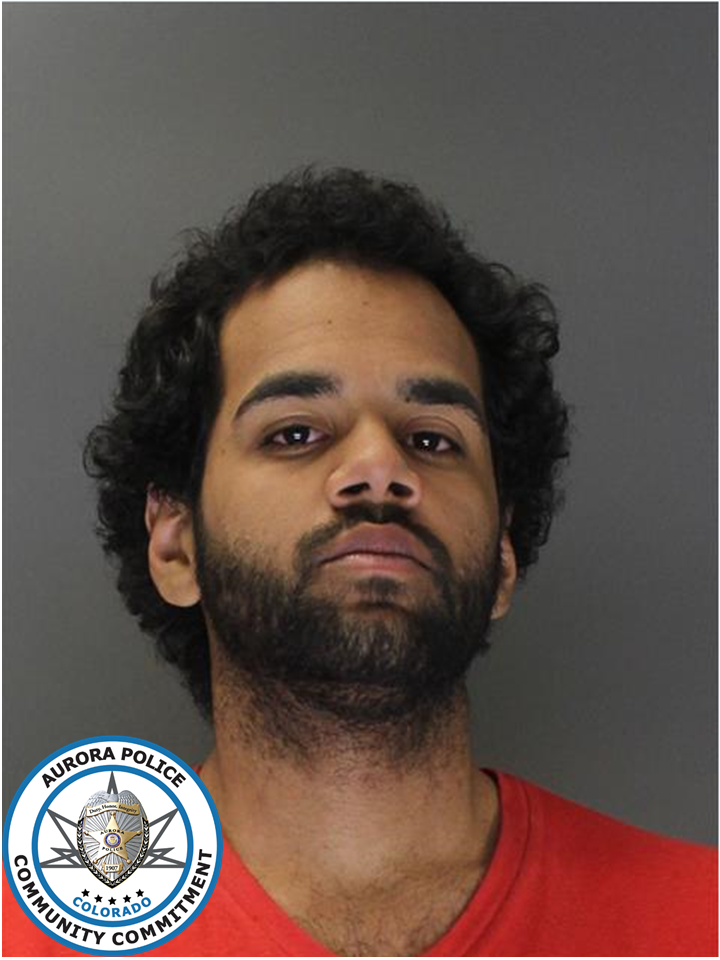
AURORA, Colo. — A man accused of assaulting multiple women in Colorado and Kansas days after he was released from prison earlier this year has pleaded not guilty to a litany of charges filed against him in four separate cases, according to the 18th Judicial District Attorney’s Office.
Tre Carrasco, 24, formally entered a not guilty plea to all 16 charges currently filed against him at an arraignment Aug. 16.
An Arapahoe County District Court judge denied a request from Carrasco’s defense attorney to delay the arraignment, according to court records.
A native of Hays, Kansas, Carrasco has been accused of assaulting three different women in three different cities days after he was released from a Kansas state prison Feb. 1, according to court documents.
Two days after he was released, police say Carrasco raped a woman at gunpoint in the passenger seat of her car in Hays. Officials issued a warrant for his arrest that day.
On Feb. 7, police believe Carrasco attempted to kidnap a woman in Aurora while stealing her car outside of a 24-hour Fitness on South Abilene Street.
Five days later, investigators believe Carrasco drove the stolen car, a silver Toyota Camry, to a Cherry Hills Village home where he raped another woman at knifepoint.
Aurora police arrested Carrasco later the same day after local SWAT officers “conducted a high risk stop” on the car the Kansas native was suspected to have stolen.
Though he had not previously been arrested in Colorado, Carrasco was named as a suspect in at least six other crimes that were sexual in nature between November 2008 and July 2011 in Hays, according to an arrest affidavit filed by Cherry Hills Village police.
Hays investigators told Cherry Hills Village police “over time, the seriousness of the history (of Carrasco’s crimes) has escalated.”
In 2008 and 2009, Carrasco was suspected of peeping into windows and tickling women’s feet and legs as they slept.
In June 2010, he was suspected of raping a woman in Hays. A year later, Carrasco was arrested after police said he chased a Hays woman walking on a street, beat her and violently sexually assaulted her.
In April 2013, Carrasco was sentenced to slightly more than eight years in prison for the July 2011 assault.
He incurred a litany of disciplinary infractions while in Kansas prisons between 2014 and 2018, including using stimulants, disobeying orders and disrespecting corrections officers, according to Kansas Department of Corrections records.
Carrasco is a registered sex offender in Kansas, according to police.
He is currently being held at the Arapahoe County Detention Center on a $1.1 million bond, according to county records.
Trial dates in Carrasco’s Aurora and Cherry Hills Village cases have not yet been set, according to county records.
It remains unclear when Carrasco could be extradited to Kansas to face additional charges there.
He’s scheduled to appear next in Arapahoe County District Court at 8:30 a.m. on Sept. 20 for a case management conference.
The KBI is assisting the Trego County Sheriff’s Office with the death investigation of 48-year-old Corina Knoll of Collyer.
At around 6:15 p.m. on Sunday, Aug. 18, the Trego County Sheriff’s Office requested KBI assistance.
At approximately 5:30 p.m. Sunday the Trego County Sheriff’s Office received a 911 call reporting a suicide at the residence at 609 Ainslie Ave., in Collyer, Kan.
When the Trego County Sheriff’s Office and the Kansas Highway Patrol arrived, they located Knoll who had been shot.
The Hays Public Library celebrated the 50th anniversary of Woodstock Saturday with the Bookstock Music Festival. The event included a free concert, featuring local musicians, and a food truck rally. The outdoor concert featured Tree Kitty, Earl Ruder, Company 11, Taylor Kline and Miles on End.
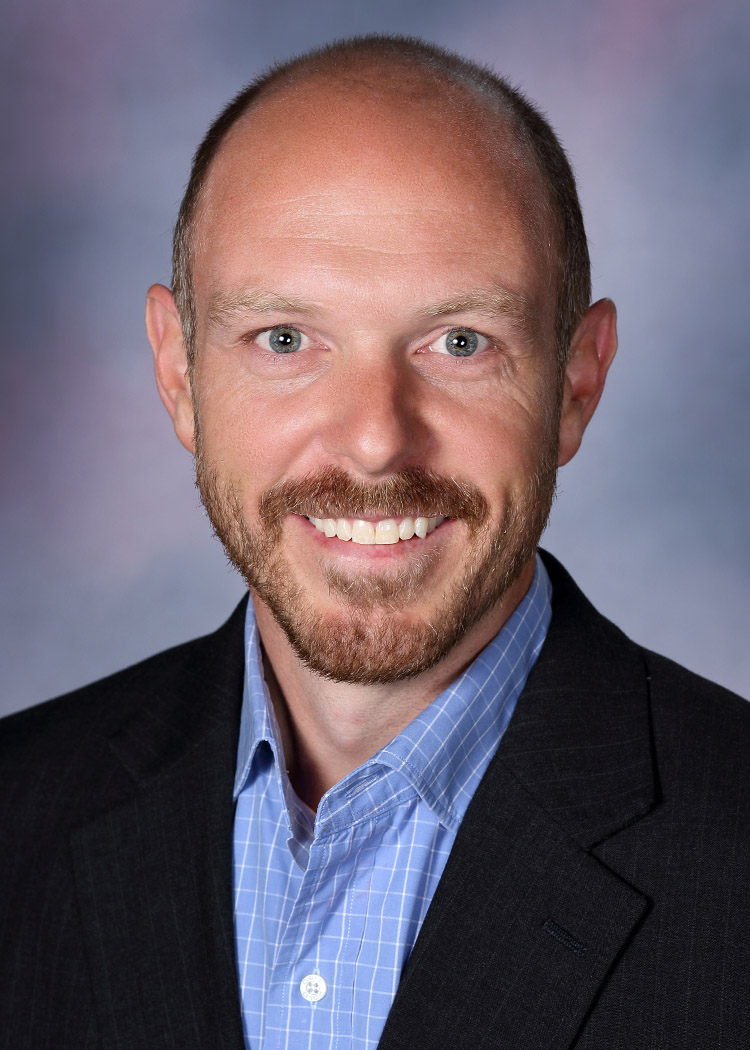
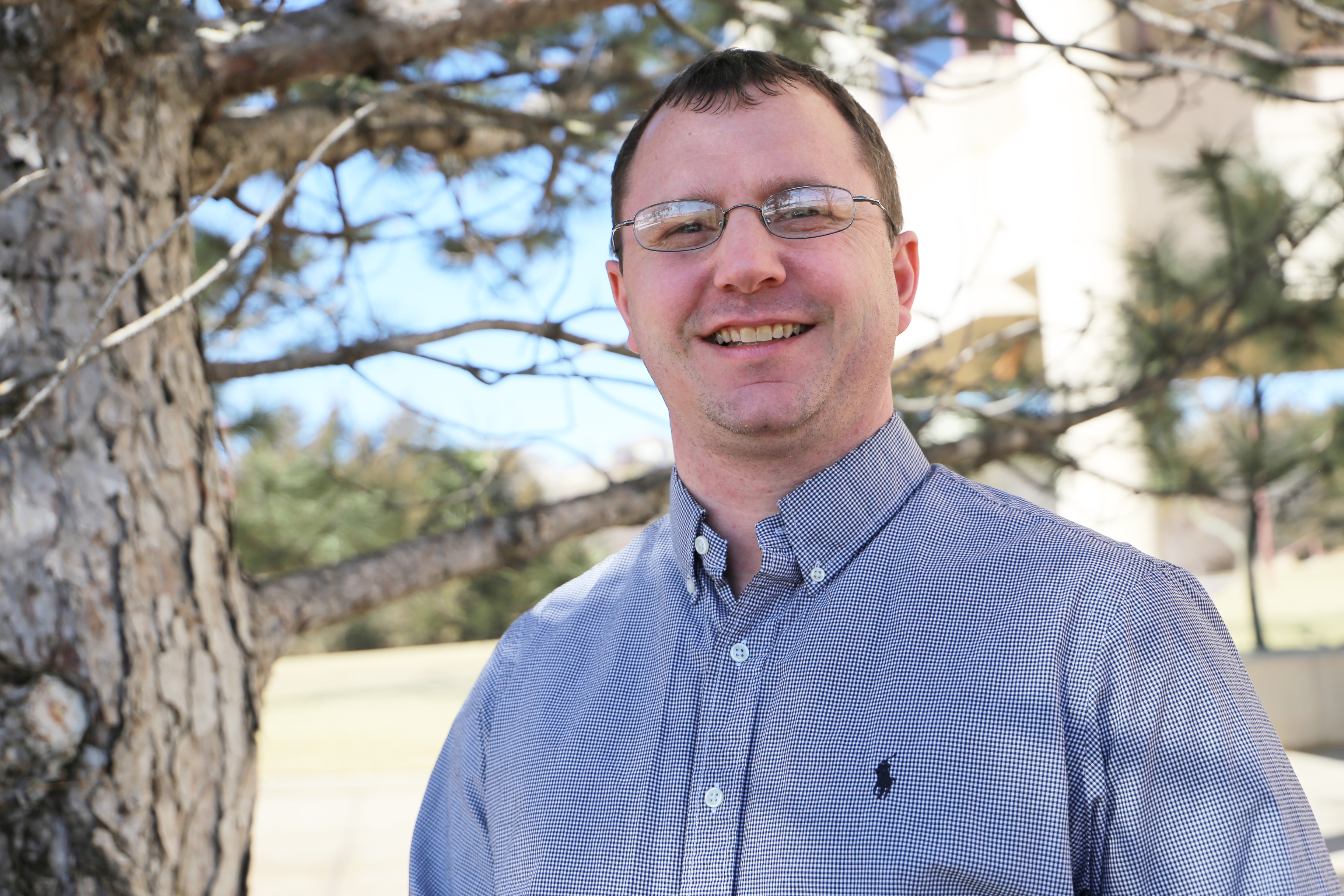
Dr. Grady Dixon, professor of geosciences and interim dean of the Peter Werth College of Science, Technology and Mathematics, was announced today as the 2019 President’s Distinguished Scholar at Fort Hays State University.
“In his five years at the university, Grady has over 40 published scholarly works. His research on weather and climate is at the forefront of his discipline,” said Dr. Jill Arensdorf, emcee of the ceremonies at the 2019 FHSU fall convocation.
“He has garnered over half a million dollars in grant monies, with the assistance of both undergraduate and graduate students,” said Arensdorf, provost and vice president for academic affairs.
“Grady, thank you for your contributions to the university and to your discipline.”
The President’s Distinguished Scholar Award was first conferred in 1989. All unclassified employees of the university are eligible for consideration and are evaluated for this honor by analysis of their performance in the categories of research and creative activities, service, and instruction. Acceptable levels of performance must be demonstrated in service and instruction, with the primary focus of this award on research and creative activities.
An evaluation committee, composed of five of the most recent award winners, reviews applications, and a recommendation is forwarded to President Tisa Mason. The provost chairs the committee and is responsible for administering the award process.
Several other awards were also presented at the convocation.
Faculty Member of the Year, Dr. Laura Wilson, associate professor of geosciences and interim chair of the department. Commerce Bank provides a $1,000 stipend for the award. The award was presented to her by Dr. Jill Arensdorf, provost and vice president of academic affairs, and Deron O’Connor, president of Commerce Bank.
The Faculty Member of the Year is selected from the past year’s recipients of faculty awards for teaching, for research and scholarly activity, and for service.
Wilson, and Dr. Nicholas Caporusso, instructor of informatics, were the winners of last year’s awards for research and scholarly activity.
The 2018-19 awards for service went to two assistant professors of advanced education programs, Dr. Kim Chappell and Dr. Elliot Isom.
Last year’s outstanding teaching awards went to Dr. C.D. Clark, associate professor of physics, and Dr. Lanee (pronounced lah-NAY) Young, associate professor of mathematics.
The Edmund Shearer Faculty Advisor of the Year Award was presented to Dr. Kim Chappell, assistant professor of advanced education programs in the College of Education.
The Shearer Award is presented to individuals who have demonstrated outstanding academic advising of students.
Shearer, a former chair of the Department of Chemistry, was known for the high value he placed on student advisement. One advisor can be recognized from each of the five academic colleges.
The recipient of this award will also be nominated for the National Academic Advising Association Award. Each FHSU winner will be presented a certificate and a monetary award. The nominees receive a stipend of $150, and the winning recipient receives $500. Commerce Bank also sponsors this award.
Besides Chappell, the nominees were Karrie Simpson Voth, professor and chair of the Department of Art and Design, representing the College of Arts, Humanities and Social Sciences; Dr. Robert Lloyd, assistant professor of management in the W.R. and Yvonne Robbins College of Business and Entrepreneurship; Anita Walters, instructor of health and human performance in the College of Health and Behavioral Sciences; and Joe Chretien, associate professor of applied technology in the Peter Werth College of Science, Technology and Mathematics.
Dr. Tamara Lynn, associate professor and interim chair of the Department of Criminal Justice, was named the John Heinrichs Outstanding Research Mentor.
This award recognizes faculty members for their commitment, time and energy in promoting undergraduate research. All current faculty and unclassified staff members at levels comparable to academic faculty are eligible. The winner’s home department is awarded $500 of budget funding to benefit the recipient. The Office of the Provost, the Undergraduate Research Environment Committee, and the Office of Scholarships and Sponsored Projects sponsors the award.
The “Closing the Loop” Departmental Award went to the Department of Advanced Education Programs. The department receives $2,000, provided by Voya Financial, in additional operating budget for the year. This award recognizes a department that implements improvements in its degree programs.
The Department of Management won the Advancing Assessment Award, receiving an additional $1,000 in operating budget funds, sponsored by the Office of the Provost and the Office for Institutional Effectiveness and Quality Improvement. This award recognizes departments that make advances in their program assessment procedures.
Jana’s Campaign announced the week the award of a $30,000 grant from the Sunflower Foundation in Topeka, KS. Resources will be used to further expand and enhance implementation of our gender and relationship violence prevention education programs across the state of Kansas. Our educational programming provides an understanding of the warning signs of unhealthy relationship behaviors to ultimately stop the violence before it starts, teaches leadership to empower those in attendance to continue to be a part of the solution and encourages a strong culture of respect.
The Sunflower Foundation provided this funding through the Social Determinants and Social Needs: Moving Beyond Midstream grant opportunity. The programs selected to receive funding aligned with the mission to advance the collective efforts of state and local nonprofits to address social determinants of health and improve health outcomes for Kansans.
“We are excited that the Sunflower Foundation has invested in us and the mission of reducing gender and relationship violence throughout Kansas,” said Kaiti Dinges, Jana’s Campaign Interim Executive Director. “The approach and focus of Jana’s Campaign is on prevention education. We believe that education is the most powerful tool to create social change. Through education, one can change and improve social attitudes, behaviors, interactions, and norms.”
The Sunflower Foundation is guided by their mission: to serve as a catalyst for improving the health of Kansans. They seek partnerships with organizations and communities that focus on similar goals. Their mission focuses on three primary approaches:
Healthy Living and Active Communities
Health Care
Advocacy and Policy
To learn more about the Sunflower Foundation and their grant opportunities, visit www.sunflowerfoundation.org.
Jana’s Campaign is a national education and violence prevention organization with the single mission of reducing gender and relationship violence. In honor of the late Jana Mackey and other victims and survivors of gender and relationship violence, Jana’s Campaign delivers educational programs that prevent domestic and dating violence, sexual violence, and stalking.
SEDGWICK COUNTY – Law enforcement authorities are investigating a fatal shooting, have identified the victim and two suspects arrested.
Marcus Lamar photo Sedgwick Co.
Just after 6p.m. Monday, police responded to report of a shooting in the 4600 Block of East Boston in Wichita, according to office Charley Davidson.
A police officer attending a meeting nearby also responded to the scene and they located the victim identified as 33-year-old Jerome Armbeck of Wichita in an open field. He had multiple gunshot wounds. Despite the efforts of police and emergency personnel, Armbeck was pronounce dead at the scene, according to Davidson.
Investigators have learned that a disturbance occurred between Armbeck and several other individuals. One suspect fired a weapon several times striking the victim, according to Davidson. This was not a random incident.
On Tuesday, police arrested 20-year-old Marcus Lamar on a charge of felony murder, aggravated robbery and an outstanding warrant and a 17-year-old boy on a charge of felony murder and aggravated robbery
Lamar has a previous theft conviction and was reported an absconder, according to the Kansas Department of Corrections
————-
SEDGWICK COUNTY – Law enforcement authorities are investigating a fatal shooting, have identified the victim and made an arrest.
Just after 6p.m. Monday, police responded to report of a shooting in the 4600 Block of East Boston in Wichita, according to office Charley Davidson.
A police officer attending a meeting nearby also responded to the scene and they located the victim identified as 33-year-old Jerome Armbeck of Wichita in an open field. He had multiple gunshot wounds. Despite the efforts of police and emergency personnel, Armbeck was pronounce dead at the scene, according to Davidson.
Investigators have learned that a disturbance occurred between Armbeck and several other individuals. One suspect fired a weapon several times striking the victim, according to Davidson. This was not a random incident.
On Tuesday morning, police took one suspect into custody in connection with the shooting. A second suspect was arrested just before noon, according to Davidson. Police have not released their names or possible charges.
If you’re like my family, you don’t have much reason or opportunity to have a regular discussion with the people responsible for growing and raising our food. We order our beef from a local meat locker every year and supplement it with occasional trips to a local butcher. Outside of that, all of our food comes from the grocery store.
I recently asked my wife, “When was the last time you talked to a farmer or rancher?” She couldn’t remember the last conversation she had with a farmer. Prior to joining Kansas Farm Bureau, I’d have a similar struggle.
My background is like my wife’s. We are both removed from farm families in rural Kansas, though we grew up on opposite ends of the state. If the two of us have trouble connecting with the people growing our food, I can only imagine the struggles others face.
While our communication might be lacking, one thing that isn’t is our access to food. I can’t think of the last time I left a grocery store without an item I wanted. In fact, I usually buy more than I need – as my waistline indicates.
I’ve heard the repeated pleas for farmers and ranchers to tell their stories. It’s good advice, but any conversation requires at least two participants. While farmers weren’t telling their stories, consumers didn’t exactly burn up the gravel roads to go knocking on farmhouse doors, either.
“When I was a kid in the ’70s and ‘80s no one was talking about telling our story to the consumer,” Greenwood County rancher Matt Perrier said. “We figured they didn’t care, or they knew it already. I think we were sorely mistaken.”
The fifth-generation stockman said as fewer and fewer people grew and raised food, it left a void between farmers and shoppers. Lacking the direct knowledge, consumers glommed onto any morsel of information they could.
“I think that it’s kind of the perfect storm between one, the small percentage of people who actually raise our food and consequently the small percentage of people who know any of us, coupled with this whole foodie movement … has made people passionate about food, and the story behind the food,” Perrier said. “These people on TV, their recipes aren’t any better than the Methodist Church ladies’ cookbook, but they tell a story to go along with it.”
Fifty or 100 years ago, people could have just asked grandma where their food came from, Perrier said. Because there are fewer farmers around, people have instead turned to social media.
“Consequently, the people who do want to tell a story about animal agriculture or agriculture in general, they are probably the loudest storytellers of all,” Perrier said. “Quite often that’s not a story that’s very representative of most of our farms and ranches in America.”
It’s a compelling one. Through a combination of technology and market efficiency, all consumers see is what appears to be an endless supply of food.
“When you don’t have to face the option of, ‘Do we have something to eat or don’t we?’ we get pretty picky,” Perrier said.
Picky or not, today’s farmers and ranchers are doing a better job of reaching consumers, Perrier said.
“We can tell it very well,” he said. “We just have to do it.”
“Insight” is a weekly column published by Kansas Farm Bureau, the state’s largest farm organization whose mission is to strengthen agriculture and the lives of Kansans through advocacy, education and service.