We have a brand new updated website! Click here to check it out!

Diddy’s ‘Making the Band’ officially coming back to TV

NEW YORK (AP) — Diddy’s “Making the Band” is officially coming back to TV.

The music mogul announced Monday that the hit series, where he discovered groups including platinum-sellers Danity Kane, would return to MTV in 2020.

“Making the Band” made its debut on ABC in 2000 when Lou Pearlman, who managed the Backstreet Boys and ’N Sync, launched the show and formed the boy band O-Town. Diddy re-vamped the show for MTV in 2002 and discovered the rap group Da Band. Diddy also launched the careers of Day 26, Donnie Klang and Danity Kane — who released two No.1 albums under his Bad Boy Records — on the show.

Diddy went viral last week when he asked his social media followers if he should bring back the series.

The global casting call for the show begins Monday across social media platforms.

W. Kansans appointed to KANSASWORKS state board

OFFICE OF GOV.

TOPEKA – Governor Laura Kelly appointed nine people to the KANSASWORKS State Board. This board was formed in accordance with the Federal Workforce Innovation and Opportunity Act.

“Our KANSASWORKS State Board provides an important workforce training program that promotes business development which in turn helps Kansans find work,” Kelly said. “I know this group will work diligently so that every worker has the tools and resources necessary to be successful.”

  1. Sheila Martinez, Lawrence, CEO of A-S-K Associates
  2. Neelima Parasker, Overland Park, CEO of snapIT Solutions
  3. Stephanie Rupp, Garden City, Human Resources Manager of Mosaic Industries
  4. Sara Koehn, Dodge City, Director of Human Resources for Western Plains Medical Complex
  5. Scott Grandon, Paola, Business Manager for Pipe Fitters Local 533
  6. Matthew Hall, Lawrence, Business Agent for Teamsters Local 696
  7. Shaun Junkins, Wichita, Avionics Technician at Beech Aircraft, and a Machinist
  8. Perry Wiggins, Chapman, serving on the Governor’s Military Council
  9. Jermaine Wilson, Leavenworth, Mayor of Leavenworth

Kelly also designated the Chair and Vice-Chair of this board from current members:

  • Chair – David Harwood, Olathe, Senior Vice President of Terracon Consultants
  • Vice Chair – Carol Perry, Topeka, Vice President of Patient Services at Stormont Vail Healthcare 

The KANSASWORKS State Board is the vehicle the Governor uses to convene state, regional, and local workforce system partners and stakeholders to: enhance efficiencies and outcomes of multiple federal and state-funded workforce programs through alignment in a single state workforce system; promote economic growth by engaging public and private partners and stakeholders in the development and implementation of strategies that address the needs of business and individual citizens; enhance the overall capacity of existing resources by connecting all services under one comprehensive workforce system.

Man banished from Kansas in plea deal seeks to return

WICHITA, Kan. (AP) — A man who was permanently banished from Kansas as a condition of his plea deal in a criminal case is seeking to return to the state with the help of an organization that says the punishment harkens back to “draconian penalties of Ancient Greece or the vigilante justice of the Old American West.”

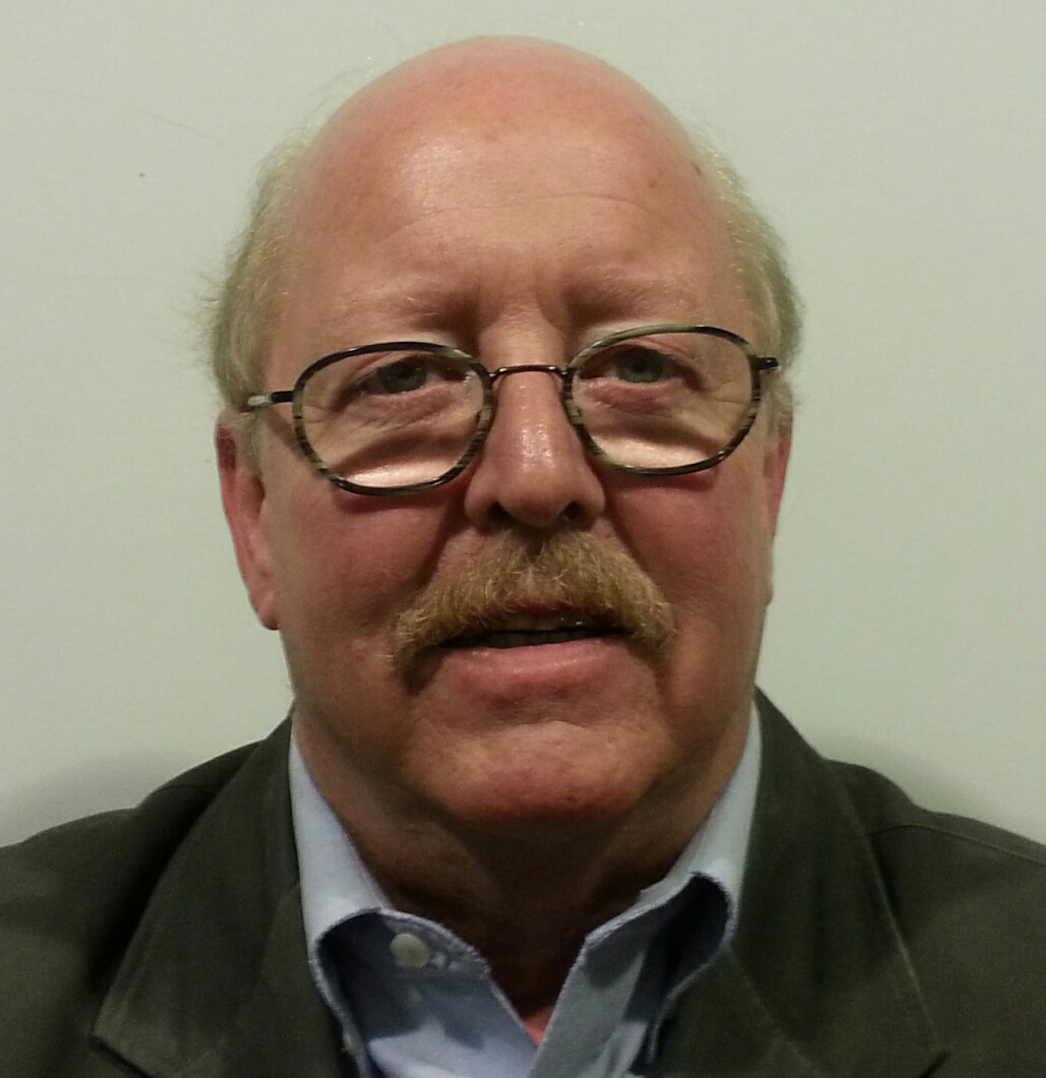
Rupert photo Montgomery Co.

A Montgomery County judge will hear oral arguments on Aug. 8 over the motion the American Civil Liberties Union of Kansas filed last week pushing for Bo Dana Rupert to be allowed to return to Kansas from Texas.

“This is one of the most bizarre and illegal sentences I’ve ever seen,” said Lauren Bonds, legal director for the ACLU of Kansas.

Court transcripts show that Rupert was sentenced to 12 months of probation after pleading no contest to three felony counts of making a criminal threat and three misdemeanor counts of filing a false report in 2017. The banishment, which was in addition to the probation, was included in the plea agreement that Rupert entered with Montgomery County Attorney Larry Markle and that the court accepted.

Markle did not immediately return a message seeking comment.

In its motion, the ACLU said the banishment was reminiscent of Ancient Greece, where such punishment was called exile and was imposed on people convicted of homicide or embarrassing military defeat. In the American West, it was called “sundown probation,” the practice of dropping convicted defendants at the state line under threat to their safety should they ever return, according to the motion.

The ACLU is asking the court to strike from Rupert’s sentence the part about banishing him from Kansas, declare that his sentence has been served in full and order the county attorney not to attempt to enforce the condition of banishment through subsequent prosecution.

The plea agreement — signed by Rupert, his defense attorney and the county attorney — explicitly states Rupert is not to return to Kansas.

“If the defendant does return to Kansas then the terms of this agreement have been violated and the County Attorney may consider filing all other charges for additional offenses not filed now,” the agreement says.

Bonds said it’s possible that Montgomery County District Judge Jeffrey Gettler wasn’t aware of the banishment provision in the plea agreement. She said the ACLU is eager to hear the judge’s take on the matter at next month’s hearing.

It is unclear from the transcripts of the initial court hearings whether the judge actually intended to banish Rupert from Kansas. During his plea hearing, the court accepted the terms of the agreement and the county attorney during sentencing asked the court to incorporate the terms of his plea deal into the sentence.

Rupert left Kansas the day after his sentencing and has never returned to Kansas, according to the ACLU, which said in its motion that he was taking the advice of his then-attorney who warned him: “Don’t still be here tomorrow when the sun comes up.” Two weeks after he was sentenced, Montgomery County issued an arrest warrant for Rupert stating he had violated the terms of his probation because he did not attend his probation meetings in Kansas.

Woman benefits from cancer funds, raised in part from the Phillipsburg rodeo

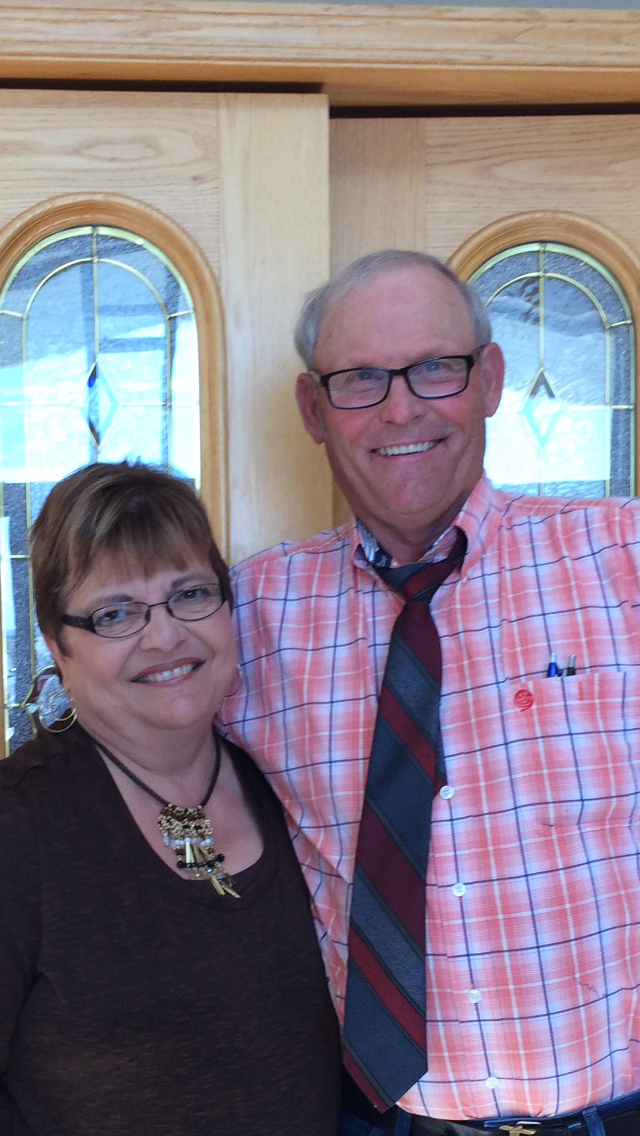
Jan and Gary Kempt pose with Jan’s son, his wife and two sons. Jan, of Phillipsburg, is undergoing cancer treatment and has received financial help through Hope in the Heartland funds.

PHILLIPSBURG — Jan Kempt and her husband Gary were planning a trip to Japan this past winter, to see their son, who lives there, but when the Phillipsburg woman found out she had cancer, they couldn’t go.

In January of this year, Kempt was diagnosed with breast cancer. The doctors caught it early; it was in stage zero.

After two lumpectomies and radiation treatment, Kempt is cancer free.

She got some help in fighting the disease.

Hope in the Heartland, an area organization that provides financial help to those undergoing cancer treatment in north central Kansas and south central Nebraska, sent a check to Kempt.

She and her husband have insurance, but there are so many other expenses that come about: travel to and from the doctors, lodging and meals if a person has to stay overnight, things that pop up when a person is putting all their energy into fighting cancer. “I didn’t realize there would be so many doctor appointments and follow-ups,” Kempt said. “There’s not just one doctor, but many, and there are follow-ups with all of them.”

Hope in the Heartland funds are raised in several ways. One of those ways is through the Phillipsburg Rodeo Association, which hosts its annual Tough Enough to Wear Pink night, always the first night of rodeo (this year, August 1). For every fan who wears pink to the rodeo, one dollar is donated by the rodeo association to the fund. Generous sponsors match the rodeo’s donation: Prairie Horizon Agri-Energy, McClain Farms LLC, Rodgers and Associates Insurance Co., and Farmers State Bank.

Jan Kempt, pictured with her husband Gary, is fighting breast cancer. She received help from Hope in the Heartland, which is partially funded through the Phillipsburg Rodeo Association.

This fall, she and her husband will travel to Japan to visit their son. It’s something that kept her going through long days of treatment, when she isn’t feeling well. She and Gary are a blended family, with six kids between them. They all worry about her, and her son calls and Facetimes regularly. “He tries to find the humor in everything,” she said. When the doctors ordered a second lumpectomy, he joked that the surgeon was doing surgery again to retrieve a ring he left in.

Kempt is grateful for the Hope in the Heartland funds. “I appreciate the funds and the blessings from it.” She is also grateful to live in Phillipsburg. “There are just great people here. There are a lot of blessings in this small community.”

Kansas Biggest Rodeo takes place August 1-3 in Phillipsburg at the rodeo grounds north of town on Highway 183. Performances start each night at 8 pm. Tickets range in price from $15 to $18 for adults and $11-$14 for children.

Tickets can be purchased at Heritage Insurance in Phillipsburg (685 Third Street) or over the phone with a credit card (785.543.2448), during office hours. They can also be purchased at the gate.

For more information, visit www.KansasBiggestRodeo.com or call Heritage Insurance at 785.543.2448.

HAWVER: Kelly, Kan. GOP spar over food stamps

With a flurry of philosophical in-fighting, Kansas has subtly turned that human malady of being “able bodied” into a character flaw that should be punished, or at least not tolerated when distributing food stamps.

You remember the issue: The Kansas Department for Children and Families (DCF), or at least a handful of its managers, decided that it would give about $110 a month in food stamps to about 5,500 single, no-dependents, able-bodied Kansans between 18 and 49 years old. Nope, not forever, just for three additional months above the three-month per 36-month period of assistance for those who are poor. Oh, and to those who haven’t found a 20-hour-a-week job or participated in state-managed employment training and job search activities.

Those three extra months—July, August and September—were incidentally falling at the end of the three-year restart of the federal food stamp eligibility program in which the federal government pays for those food stamps and pays the state half its administrative costs in distributing them.

House Majority Leader Dan Hawkins, R-Wichita, recalled that back in 2015 the Gov. Sam Brownback governorship managed to convince the more-conservative-than-now Legislature to clean up the state’s Temporary Assistance for Needy Families program to make sure that those welfare recipients weren’t scamming the federal government out of money through the state welfare qualification standards.

The concept: Those welfare recipients should be working like everyone else and supporting themselves, no spending on vacations or other frivolous activities, just survival, if they met the training and job-search and minimum employment standards.

Now, that’s a pretty good standard. People ought to work for a living if they can, maybe get a little assistance while they are in a tough spot, but basically get back to work.

Well, Hawkins pushed Attorney General Derek Schmidt into closing down the new, short-term food stamp program by threatening Gov. Laura Kelly with a lawsuit: She was disregarding the 2015 law, which she had voted against while a senator, which limited eligibility for food stamps and even outlawed asking the feds for some wriggle room in distributing food stamps.

Kelly decided that it would cost the state more money than it is worth to defend the three-month program against the state attorney general. Probably a fair call, not spending state money on lawyers to defend handing out federal money to the poor.

But, at some point, you almost have to wonder whether the response to DCF spending that federal money on poor people—and probably some are scammers, but probably others have aged out of foster care or are jobless veterans or just can’t find work they can handle—is worth the political scrap it fueled. It’s probably one of those situations where lawmakers could have looked the other way—until Oct. 1—given away food stamps and later said, “Darn.”

Everyone out there who thinks that we’re paying too much in federal taxes and aren’t getting enough back for it, well, you remain correct. The state is sending back those food stamps, so they will go to poor people in other states, where we don’t have to walk around people begging on the sidewalk or at stoplights or at exits from malls, who will spend the money at grocery stores in other states.

Syndicated by Hawver News Company LLC of Topeka; Martin Hawver is publisher of Hawver’s Capitol Report—to learn more about this nonpartisan statewide political news service, visit the website at www.hawvernews.com

Heartland Community Foundation welcomes new board officers

HCF

The Heartland Community Foundation, which serves Ellis, Rooks and Trego Counties is pleased to announce that Katie Dorzweiler and Josh Dreher have joined the foundation board.

A McLouth native, Dorzweiler moved to Hays in 2005 to pursue her Bachelor of Science degree and now considers Ellis County her home. She is currently the director of Eagle Marketing Solutions, which encompasses commercial video production, digital marketing and Hays Post advertising. Dorzweiler enjoys being active in the Hays community. She is an member of Immaculate Heart of Mary Parish, an ambassador for the Hays Chamber of Commerce and a board member for NCK Technical College School of Business. Outside of work and volunteering, she enjoys spending time with her three sons, ages four, six and nine. Dorzweiler says she is excited to be on the community foundation board to “help sustain local western communities for years to come.”

Born and raised in Hays, Dreher is currently a vice president/commercial loan officer at the Bank of Hays. He first joined the bank in 2006 as a teller, then became a full-time loan officer after graduating from Fort Hays State University in 2009 with a degree in business management. Over the last 10 years, Dreher has served on many nonprofit boards in the community, including the United Way of Ellis County, Rotary Club of Hays, Hays Larks Booster Club and the Hays Arts Council. In his free time, Dreher enjoys traveling, sports and spending time with friends and family.

Exploring Kansas Outdoors: Insect removal technicians

Steve Gilliland
As we walked up the sidewalk and across the patio at my grandson’s house the other night we had to watch our footing as the ground practically moved beneath our feet. Dozens of tiny toads the size of quarters hopped in every direction with each step. An adult toad the size of a peach, probably dad or grandpa, perched at the top of the porch. We usually have multitudes of toads at the Gilliland ranch every summer, tumbling from beneath the tomato plants or leaping from under the lilacs. This year though, oddly enough our place seems to be “toad deficient.” I miss the little blighters as they are nature’s ground crew for insect control.

Toad… the name itself conjures up visions of witches adding eyes of newts and wings of bats to a bubbling caldron of potion, or a derogatory remark about a person’s physical appearance. They’re fat and pudgy, their blotchy skin is covered with lumps and warts, their spring mating call sounds like a poor lost calf calling for its mother and they pee on anyone attempting to pick them up. You gotta’ love em’! Their saving grace comes in the form of a voracious appetite for insects.

A few years back during a pervious really wet spring like this year’s, I spoke with Wildlife Diversity Coordinator for the state of Kansas, Ken Brunson, about the myriad of tiny toads that were literally everywhere that year. Just when I thought life was as simple as a toad, was a toad, was a toad, Ken informed me that toads have names too. Ken said that 95% of the toads seen in Kansas are either Woodhouse’s Toads, or Great Plains Toads. Eastern Kansas also has some American toads and Spadefoot toads. Ken linked that year’s abundance of tiny toads to the abundance of standing water in places where there hadn’t been water for ages, and the flood waters forced many from their homes near the streams and swamps where they hatched, and sent them scrambling for higher ground (sound familiar?)

Whatever their clan, all toads begin their life as jelly covered strands of eggs laid in the shallows of swamps, streams and ponds. In about one week the eggs hatch into tadpoles. Next, hind legs begin to grow, then front legs, then lungs replace the gills, the tail is absorbed into the body, and finally, two to three weeks after hatching, the youngsters hop out onto dry land. Woodhouse and Great Plains toads both grow to be three to five inches long when fully mature.

Although not particularly athletic, toads are efficient predators and do have a ravenous appetite for insects. Research suggests that a toad is capable of eating two-thirds its body weight in insects daily. Worms of all kinds seem to be favorites as they’re probably easier to catch (and I’m sure more filling!) A study done on Great Plains toads in Oklahoma found that because of their fondness for dining on over-wintering cutworms, these toads were estimated to be worth twenty-five dollars apiece per year to the agriculture industry there. Their taste for bugs can easily be seen in their droppings. The black cigar shaped droppings found in driveways and on sidewalks this time of year are in fact toad poo. When they have acres of yards, gardens and fields to potty in, I’ll never understand why they feel the need to go on the sidewalk or in the driveway (the least they could do is cart it away when they leave.) Next time you see some, take a stick and poke it apart; you’ll see it’s comprised entirely of undigested bug parts like legs and wings.

Contrary to the old-wives tale, handling a toad does not cause warts. The warts on their skin and the glands behind their eyes do however produce a toxin capable of making you sick if accidentally ingested. You’ve witnessed this toxin at work if you have ever seen your dog frothing and foaming at the mouth after playing with a toad in the yard.

With that in mind, I guess my advice to you concerning toads would be three-fold. 1) If you suddenly find your dog foaming and frothing at the mouth, don’t shoot it, it probably just licked a toad; 2) Don’t lick a toad yourself, and 3) ALWAYS hold a toad way out in front of you with both hands or you’re liable to get your shoes wet. So whenever a fat pudgy toad surprises you in the garden or flower bed, tip your hat to them and thank them for the service they provide. Continue to Explore Kansas Outdoors!

Steve Gilliland, Inman, can be contacted by email at [email protected].

AG’s office to provide consumer protection info at Ellis County Fair

TOPEKA – The Kansas Attorney General’s Office will offer information at this week’s Ellis County Fair to help consumers protect themselves from identity theft, scams and deceptive business practices, Kansas Attorney General Derek Schmidt said Monday.

“The best way for consumers to protect themselves from scams is through education,” Schmidt said. “I hope folks will stop by our booth to learn more about how they can keep themselves and their families safe.”

The fair is held at the Ellis County Fairgrounds, 1344 Fairground Rd. in Hays. The booth will be located in the Unrein Family Building. Display hours are as follows:

Tuesday, July 16: 5 – 10 p.m.
Wednesday, July 17: 5 – 10 p.m.
Thursday, July 18: 5 – 10 p.m.
Friday, July 19: 5 – 9 p.m.

Trump abortion restrictions effective immediately

WASHINGTON (AP) — Taxpayer-funded family planning clinics must stop referring women for abortions immediately, the Trump administration said Monday, declaring it will begin enforcing a new regulation hailed by religious conservatives and denounced by medical organizations and women’s rights groups.

The head of a national umbrella group representing the clinics said the administration is following “an ideological agenda” that could disrupt basic health care for many low-income women.

Ahead of a planned conference Tuesday with the clinics, the Health and Human Services Department formally notified them that it will begin enforcing the ban on abortion referrals, along with a requirement that clinics maintain separate finances from facilities that provide abortions. Another requirement that both kinds of facilities cannot be under the same roof would take effect next year.

The rule is widely seen as a blow against Planned Parenthood, which provides taxpayer-funded family planning and basic health care to low-income women, as well as abortions that must be paid for separately. The organization is a mainstay of the federally funded family planning program and it has threatened to quit over the issue.

Planned Parenthood President Leana Wen said in a statement that “our doors are still open” as her organization and other groups seek to overturn the regulations in federal court. “We will not stop fighting for all those across the country in need of essential care,” Wen said.

HHS said no judicial orders currently prevent it from enforcing the rule while the litigation proceeds.

Clare Coleman, president of the umbrella group National Family Planning & Reproductive Health Association, said “the administration’s actions show its intent is to further an ideological agenda.”

Abortion opponents welcomed the administration’s move. “Ending the connection between abortion and family planning is a victory for common-sense health care,” Kristan Hawkins, president of Students for Life, said in a statement.

Known as Title X, the family-planning program serves about 4 million women annually through independent clinics, many operated by Planned Parenthood affiliates, which serve about 40 percent of all clients. The program provides about $260 million a year in grants to clinics.

The family planning rule is part of a series of Trump administration efforts to remake government policy on reproductive health. Other regulations tangled up in court would allow employers to opt out of offering free birth control to women workers on the basis of religious or moral objections, and grant health care professionals wider leeway to opt out of procedures that offend their religious or moral scruples.

Abortion is a legal medical procedure, but federal laws prohibit the use of taxpayer funds to pay for abortions except in cases of rape, incest, or to save the life of the woman.

Under the administration’s rule, clinic staff would still be permitted to discuss abortion with clients, along with other options. However, that would no longer be required.

The American Medical Association is among the professional groups opposed to the administration’s policy, saying it could affect low-income women’s access to basic medical care, including birth control, cancer screenings and testing and treatment for sexually transmitted diseases. By law, the family planning program does not pay for abortions.

Religious conservatives see the regulation as a means to end what they call an indirect taxpayer subsidy of abortion providers.

Although abortion remains politically divisive, the U.S. abortion rate has dropped significantly, from about 29 per 1,000 women of reproductive age in 1980 to about 15 in 2014. Better contraception, fewer unintended pregnancies and state restrictions may have played a role, according to a recent scientific report. Polls show most Americans do not want the Supreme Court to overturn Roe v. Wade, the 1973 ruling that legalized abortion.

The Trump administration’s policy echoes a Reagan-era regulation that barred clinics from even discussing abortion with women. It never went into effect as written, although the Supreme Court ruled it was appropriate.

The policy was rescinded under President Bill Clinton, and a new rule took effect requiring “nondirective” counseling to include a full range of options for women. The Trump administration is now rolling back the Clinton requirement.

Woman, child and dog rescued from river in Kansas

SEDGWICK COUNTY — Fire fighters in Wichita made a dramatic water rescue over the weekend.

Rescue operation photo courtesy Wichita Fire Deparatment

Just before 10: 30 a.m.  Sunday, crews responded to a submersion call in the river at 21st and West Street in Wichita, according Fire Marshal Stuart Bevis.

First arriving units encountered a mother and her small child in a kayak in the river, hanging onto the bridge pillar just above the dangerous low head dam.

Coordinated efforts of all crews on scene, including Special Operations, led to the rescue of the mother, child and a small dog from the river. There were no injuries, according to Bevis.

He reminded the public that activities near low head dams are very dangerous and citizens are reminded to be wary of these hazards.

Kan. woman admits she crashed car into Cabela’s to steal guns

KANSAS CITY, KAN. – A Kansas City, Kan., woman pleaded guilty in federal court today to her role in crashing a car into a Cabela’s store to steal guns, U.S. Attorney Stephen McAllister said.

Tosh -photo Wyandotte Co.

Brenda Tosh, 27, Kansas City, Kan., pleaded guilty to one count of conspiring to steal guns from a federally licensed firearms dealer. In her plea, she admitted that she and a co-defendant crashed a car into a Cabela’s store in Kansas City, Kan. They took long guns from the firearms section of the store and placed them into a shopping cart. According to court records, the guns included two 12-gauge shotguns, a .22-caliber rifle, a .308-caliber rifle and a .223-caliber rifle.

 Law enforcement officers arrived and arrested Tosh before she could leave the store. The co-defendant was arrested later, after fleeing the store and stealing a car from a nearby dealership.

 Tosh is set for sentencing Sept. 30. Both parties have agreed to recommend a sentence of a year and a day in federal prison.

Co-defendant Kyle Mendez, 29, Kansas City, Kan., is scheduled for a change of plea hearing Aug. 19.

Kansas police K-9 helps make weekend arrest for alleged drug distribution

HUTCHINSON, Kan. — A Kansas felon faces new criminal charges after his weekend arrest for alleged distribution of drugs.

Terry Gant photo KDOC

Terry Gant, 29, was arrested in the Walmart parking lot after an officer spotted him and knew he had warrants to Hutchinson Police and the Reno County Sheriff’s office.

A K-9 officer smelled the presence of drugs and a search of his vehicle led to the discovery of a backpack which contained a clear bag. Inside that bag were 15-smaller bags with a crystal substance which field tested for methamphetamine. They also allegedly found a scale, a grinder and marijuana.

Potential charges include distribution of methamphetamine, possession of marijuana, possession of drug paraphernalia with intent to distribute and for personal use.

His bond is set at $18,500 and he’ll be back in court on July 22.

Gant has previousr convictions for aggravated battery, drugs, theft and making false writings, according to the Kansas Department of Corrections.

Copyright Eagle Radio | FCC Public Files | EEO Public File