We have a brand new updated website! Click here to check it out!

Wide grins and historic handshake for Trump, Kim at DMZ

PANMUNJOM, Korea (AP) — With wide grins and a historic handshake, President Donald Trump and North Korea’s Kim Jong Un met at the heavily fortified Demilitarized Zone on Sunday and agreed to revive talks on the pariah nation’s nuclear program. Trump, pressing his bid for a legacy-defining deal, became the first sitting American leader to step into North Korea.

What was intended to be an impromptu exchange of pleasantries turned into a 50-minute meeting, another historic first in the yearlong rapprochement between the two technically warring nations. It marked a return to face-to-face contact between the leaders after talks broke down during a summit in Vietnam in February. Significant doubts remain, though, about the future of the negotiations and the North’s willingness to give up its stockpile of nuclear weapons .

The border encounter was a made-for television moment. The men strode toward one another from opposite sides of the Joint Security Area and shook hands over the raised patch of concrete at the Military Demarcation Line as cameras clicked and photographers jostled to capture the scene.

After asking if Kim wanted him to cross, Trump took 10 steps into the North with Kim at his side, then escorted Kim back to the South for talks at Freedom House, where they agreed to revive the stalled negotiations.

The spectacle marked the latest milestone in two years of roller-coaster diplomacy between the two nations. Personal taunts of “Little Rocket Man” (by Trump) and “mentally deranged U.S. dotard” (by Kim) and threats to destroy one other have given way to on-again, off-again talks, professions of love and flowery letters.

“I was proud to step over the line,” Trump told Kim as they met in on the South Korean side of the truce village of Panmunjom. “It is a great day for the world.”

Kim hailed the moment, saying of Trump, “I believe this is an expression of his willingness to eliminate all the unfortunate past and open a new future.” Kim added that he was “surprised” when Trump issued an unorthodox meeting invitation by tweet on Saturday.

Trump had predicted the two would greet one another for about “two minutes,” but they ended up spending more than an hour together. The president was joined in the Freedom House conversation with Kim by his daughter and son-in-law, Ivanka Trump and Jared Kushner, both senior White House advisers.

Substantive talks between the countries had largely broken down after the last Trump-Kim summit in Hanoi, which ended early when the leaders hit an impasse.

The North has balked at Trump’s insistence that it give up its weapons before it sees relief from crushing international sanctions. The U.S. has said the North must submit to “complete, verifiable and irreversible denuclearization” before sanctions are lifted.

As he announced the resumptions of talks, Trump told reporters “we’re not looking for speed. We’re looking to get it right.”

He added that economic sanctions on the North would remain. But he seemed to move off the administration’s previous rejection of scaling back sanctions in return for piecemeal North Korean concessions, saying, “At some point during the negotiation things can happen.”

Peering into North Korea from atop Observation Post Ouellette, Trump told reporters before he greeted Kim that there had been “tremendous” improvement since his first meeting with the North’s leader in Singapore last year.

Trump claimed the situation used to be marked by “tremendous danger” but “after our first summit, all of the danger went away.”

But the North has yet to provide an accounting of its nuclear stockpile, let alone begin the process of dismantling its arsenal.

The latest meeting, with the U.S. president coming to Kim, represented a striking acknowledgement by Trump of the authoritarian Kim’s legitimacy over a nation with an abysmal human rights record.

Trump told reporters he invited the North Korean leader to the United States, and potentially even to the White House.

“I would invite him right now,” Trump said, standing next to Kim. Speaking through a translator, Kim responded that it would be an “honor” to invite Trump to the North Korean capital of Pyongyang “at the right time.”

Trump became the first sitting U.S. president to meet with the leader of the isolated nation last year when they signed an agreement in Singapore to bring the North toward denuclearization.

In the midst of the DMZ gathering, Trump repeatedly complained that he was not receiving more praise for de-escalating tensions on the Korean Peninsula through his personal diplomacy with Kim. Critics say Trump had actually inflamed tensions with his threats to rain “fire and fury” on North Korea, before embracing a diplomatic approach.

North Korea’s nuclear threat has not been contained, according to Richard Haas, president of the New York-based Council on Foreign Relations. He tweeted Sunday that the threat of conflict has subsided only because the Trump administration has decided it can live with North Korea’s “nuclear program while it pursues the chimera of denuclearization.”

Every president since Ronald Reagan has visited the 1953 armistice line, except for George H.W. Bush, who visited when he was vice president. The show of bravado and support for South Korea, one of America’s closest military allies, has evolved over the years to include binoculars and bomber jackets.

While North Korea has not recently tested a long-range missile that could reach the U.S., last month it fired off a series of short-range missiles . Trump has brushed off the significance of those tests, even as his own national security adviser, John Bolton, has said they violated U.N. Security Council resolutions.

First Five: We know more about the First Amendment — for the wrong reasons

Gene Policinski

Americans know more about their First Amendment freedoms than in many years previously — but if we’re honest about it, it may well be because we’re now worried about keeping them.

The 2019 State of the First Amendment survey, released today by the Freedom Forum Institute, shows the highest awareness of those basic rights than at any time in the 22-year history of the national sampling.

Ok — we should always know a good deal about those core freedoms of religion, speech, press, assembly and petition. The First Amendment defines those unique qualities of what it means to be an American. But in most years of the survey, we failed miserably on even naming them … often with more than one in three adults unable to even name a single one of those five, 226-year-old freedoms that begin the Bill of Rights.

This year:

  • 71 percent named at least one freedom, up from 60 percent in 2018;
  • The number of respondents who couldn’t name even one dropped to 21 percent from 40 percent last year;
  • More of us, across the board, could name specific freedoms than in years past. Comparing 2019 to 2018, speech rose to 64 percent from 56 percent; religion rose to 29 percent from 15 percent and press rose to 22 percent from 15 percent.

Why are those figures up? Calls for more education focused on the First Amendment have been sounded for years. More likely, it’s increasing controversies: Hate speech on the web or at public rallies. Bullying via social media or on the job. Protection for religious preferences that some see as a pretense for permitting bias and prejudice. Attacks on a free press, along with disappearing local news media outlets.

You found it! Click on the Golden Egg for a chance to win FREE Wild West Festival VIP tickets!

Even familiarity with First Amendment freedoms does not guarantee automatic support: 29 percent said those freedoms go too far, compared with 23 percent last year. Still, that’s well below the all-time high of 49 percent who said we have too much freedom, reported in the 2002 survey — about nine months after the 9/11 terrorist attacks in 2001.

Chief among the factors that seem to be driving that “too far” concern: 77 percent see misinformation on the web and the spread of “fake news” as serious threats to democracy.

We do seem to be parsing misinformation concerns apart from the institutions that comprise a free press: Despite repetitive, multi-year claims by some politicians — including, most visibly, President Trump — that news operations present “fake news” and are “enemies of the people,” the 2019 survey found about the same level of support for a free press as last year: 72 percent. The all-time low of 68 percent came in 2017, perhaps an echo of the previous year’s election rhetoric led by then-presidential candidate Trump.

Even when it comes to student press — an oft-neglected or excluded part of the free press — and student speech on social media, majorities favored uncensored posts and comments. Fifty-four percent of adults said student journalists should be free to report on controversial issues without the approval of school authorities; 64 percent said students should be able to express opinions on social media without being punished later by school officials.

Let’s not get too giddy about the increase in awareness, though it’s nice to see. Majorities do favor a free press and freedom of expression, but there still are sizeable numbers that would curtail or control those freedoms in some fashion.

Nevertheless, we can take comfort in this year’s survey findings that do seem to evidence the resiliency of our core freedoms and our attitudes toward them: When our freedoms are under attack, we — the beneficiaries of those freedoms — pay attention and push back.

Gene Policinski is president and chief operating officer of the Freedom Forum Institute. He can be reached at [email protected], or follow him on Twitter at @genefac.

Now That’s Rural: Madonna of the Trail

Ron Wilson is director of the Huck Boyd National Institute for Rural Development at Kansas State University.
By RON WILSON
Huck Boyd National Institute for Rural Development

The woman stands 8 feet tall and 3 feet wide. Wow, that would be quite a basketball player. But this is no basketball player, it is a statue. Specifically, it is a monument to the pioneer women of America. It is one of only 12 such statues which are located across the nation. This one is found in rural Kansas.

This statue is located in Council Grove, county seat of Morris County. Diane Wolfe is the director of the Council Grove/Morris County Chamber of Commerce. I was referred to Diane by Kay Hutchinson, who recently retired after 22 years as executive director of the Greater Morris County Development Corporation.

Kay and Diane are strong advocates for Morris County. “There are more historic sites on a per capita basis in Morris County than Washington, D.C.,” Kay said. As a key community along the Santa Fe Trail, Council Grove is the location of the Custer Elm, Post Office Oak, and 20 or more other historic locations.

One prominent site in Council Grove is the Madonna of the Trail statue. The history of this statue goes back more than a century.

In 1911, the National Society of the Daughters of the American Revolution established a national old trails road committee to explore establishment of a national memorial highway. That led to the founding of the National Old Trails Road Association in Kansas City in 1912. This group promoted the creation of a national highway from Cumberland, Maryland to California, part of it along the route of the Santa Fe Trail. The DAR chose to place statues in the 12 states along this route.

The purpose of these statues, according to the DAR website, was to “provide a symbol of the courage and faith of the women whose strength and love aided so greatly in conquering the wilderness and establishing permanent homes.”

Sculptor August Leimbach was commissioned by the DAR to create these twelve identical statues, funded entirely by private contributions. The design was titled Madonna of the Trail.

The sculpture depicts a pioneer woman striding forward in sunbonnet and long skirt. A young boy is clutching her side. She holds a baby with one arm and a rifle barrel with the other. The head of a rattlesnake can be seen in the grass at her feet.

Each sculpture is placed on a 10-foot base. The sculpture and base together weigh five tons.

The sculptures were dedicated in 1928 and 1929. At that time, the president of the National Old Trails Association was none other than the future U.S. president, Harry S Truman.

The statues were located in the 12 states along the route, in communities where there was a DAR chapter to support it. In Council Grove, the statue is located in a pretty park at the intersection of Highways 177 and 56.

Phyllis Metzger at Council Grove is active in the DAR. The Kansas State chapter of DAR pays for upkeep on the statue.

“We are very proud of her,” Phyllis said. “What those women went through to go west in those days was absolutely phenomenal.”

All 12 statues still stand in the same communities, although some have been slightly moved due to road construction. Only one of those statues is placed so that it faces east. That one is in Bethesda, Maryland. The local joke is that the statue was placed facing east because no sensible woman would turn her back on Washington, D.C.

The twelve statues are a lasting memorial to those brave frontier women. “The statue represents how those women were so instrumental in the settling of America,” Diane Wolfe said.

It is exciting to find this statue in the rural community of Council Grove, population 2,051 people. Now, that’s rural.

The woman stands 10 feet tall and 3 feet wide. She is a larger-than-life depiction of the pioneer women who bravely made their way west. We commend Diane Wolfe, Kay Hutchinson, Phyllis Metzger, and all those who are making a difference by honoring this history. I’m glad each of these sentinels still stands, as the Madonna of the Trail.

FHSU’s Forsyth Library launches new Archives and Special Collections catalog

Obermayer

FHSU University Relations

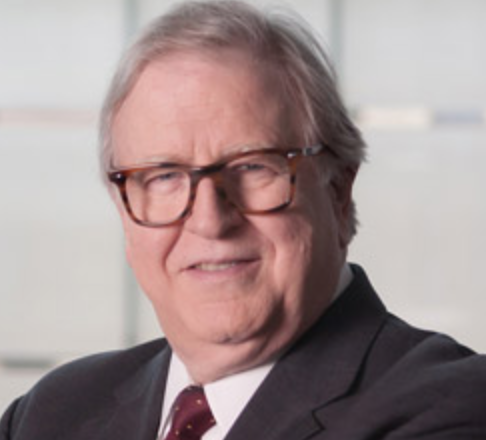
A new Archives and Special Collections Catalog will make it easier to discover the materials housed in the archives and other special collections of Fort Hays State University’s Forsyth Library.

David Obermayer, FHSU archivist, directed the launch of the new catalog.

“We are stewards of significant collections that preserve the history of the university, the history of the military and the culture and history of the region,” he said. “The items in these collections have been featured in several notable research projects by scholars, journalists and individuals in the community.”

The catalog allows the public to easily search for topics or specific materials within the physical collections of the archives and special collections, replacing the analog finding-aids that have traditionally been used.

Gribben

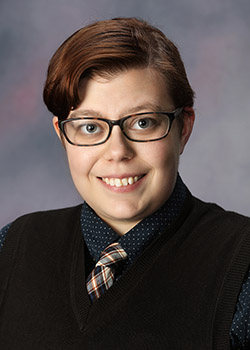
“The Archives and Special Collections Catalog integrates the finding aids into a user-friendly search platform that allows researchers to identify and locate items that best-align with their research interests before even stepping foot in the library,” said Brian Gribben, coordinator of government documents and special collections.

You found it! Click on the Golden Egg for a chance to win FREE Wild West Festival VIP tickets!

“The Archives and Special Collections Catalog is immensely useful for researchers who travel miles and miles searching for specific books and documents within these unique collections,” said Deborah Ludwig, dean of the library. “It is a major milestone for Forsyth Library and has made the items in these collections more accessible and more easily found.”

“Traditionally, accessing the finding aids would require either contacting the archivist or physically traveling to the library and requesting a finding-aid associated with a specific collection or research area,” said Gribben.

“Often, this made it a struggle to connect researchers with the rare resources in these collections,” said Gribben. But, he said, “researchers will be able to use the new catalog to explore the entire breadth of the special collections, down to identifying which sub-collections and individual items best fit their research needs.”

“Consider all of the stories hidden in these collections waiting to be told,” he said.

To view the Forsyth Library Archives and Special Collections catalog, visit https://archivesspace.fhsu.edu.

LATURNER: Kansas can help your child pay for college

The pursuit of higher education can be intimidating, not just for students, but for parents as well. It is a massive monetary investment and many can become overwhelmed by the costs. Expenses and fear often keep individuals from pursuing their dreams and education goals. The State Treasurer’s office is in the business of incentivizing parents to begin saving for their child’s educational success. One of our most unique savings incentives is a matching grant program called Kansas Investments Developing Scholars (K.I.D.S) and since my time as State Treasurer I’ve made spreading the word about this amazing program one of my top priorities.

With the growing price of tuition every year, combined with annual expenses, the dream of college is hard to make a reality.

But with the Kansas K.I.D.S. Matching Grant program individuals in specific income brackets can get an extra boost from the state to save for their children’s education. With a minimum investment of $100 a year into a Learning Quest 529 account, qualified individuals can receive a grant from the state of Kansas matching every dollar you place in your account up to $600 per year. Over the course of 18 years of eligibility a single K.I.D.S. account could potentially be funded with up to $10,800 of state grant dollars. It is a 100% return on investment designed to equip and support families to send their children to college with minimum debt.

The matching grants program has 1200 spots available annually with a budget of $720,000 to match investments.

Chelsea Sexton graduated from Kansas University with help from a K.I.D.S. account.

Cindy Sexton and her daughter Chelsea were one of many who took advantage of this amazing opportunity. Chelsea’s father passed away when she was three years old, leaving Cindy to shoulder the burden of providing for their little family and saving for Chelsea’s future. Cindy set aside $25 from each paycheck for 14 years into a Learning Quest 529 account, and also qualified three times for $600/year in grants through the K.I.D.S. Matching Grant Program. Because of this extra help, Cindy was able to send her daughter to college with minimal debt.

“Thanks to the K.I.D.S. Matching Grant Program, our dream came true,” Cindy says. “It was a no-brainer to take advantage of a program that matches money for saving for college” Cindy says, “I’m so thankful we found out about it.”

For Kansas families concerned about the affordability of higher education a K.I.D.S. account is an amazing opportunity to fund your child’s education. Certain lower-income qualifications are required, but it is important to note that more than 40% of households with children are eligible for this program. With no risk and only reward, it does not even cost a penny to open an account.

A K.I.D.S matching grant can change the course of a child’s future and that is why we are so excited and passionate about this program. Because of Cindy’s hard work, she was able to watch her daughter break the cycle in her family and a college education was a huge part of it. Not only did Chelsea’s degree earn her an amazing job, she was able to pay back her student loans almost immediately, which she only had to take out for her last year of school.

You found it! Click on the Golden Egg for a chance to win FREE Wild West Festival VIP tickets!

“It makes me emotional to see her living this fairy tale life that I always wanted for her,” says Cindy. “No one deserves it more … she’s a wonderful daughter and has my whole heart.”

For more information on how to open a Learning Quest 529 account or find out if you are eligible for the K.I.D.S. Matching Grant, please visit www.LearningQuest.com or contact our office at 785-296-3171.

Jake LaTurner is the Kansas State Treasurer.

MARSHALL: Doctor’s Note June 29

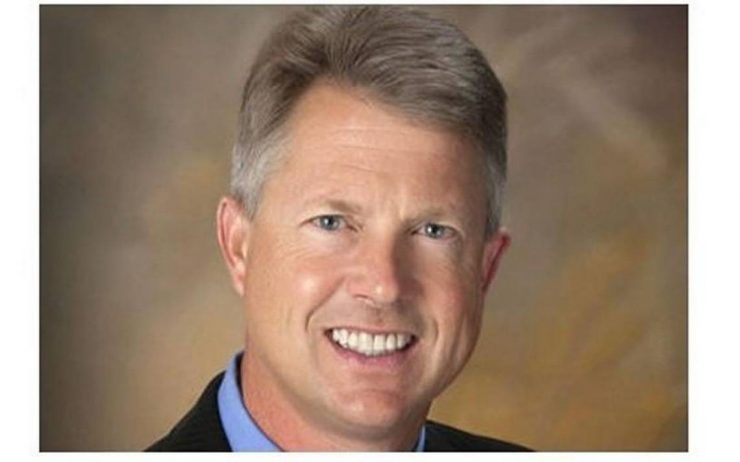
Dr. Roger Marshall, R-Great Bend, is the First District Kansas Congressman.

Friends,

After a long week in Washington, I traveled to the border with a group of other physicians  and I am glad that we were able to convince Democratic leadership to stop with their obstructionism and address the crisis late before we left.

Thursday afternoon, I joined over 300 of my colleagues in passing the Senate amended H.R. 3401 to ensure DHS and ICE officials are properly funded to take care of the ongoing immigration crisis. I have been touring border patrol stations and detention facilities so that I can reassess the situation with my own eyes.

Many of you have been calling my office voicing your concerns about what is currently happening at the border, I share these concerns.

It has been 59 days since the President called the situation at the border what it is, an emergency.

Now, with the passage of this legislation we will soon have the much needed resources going down to the border and can continue our work on finding a permanent solution to securing our nation and addressing the humanitarian situation there.

I’ll be heading back from the border and hope to see you at one of my town halls this coming week:

July 2nd 8:00 A.M. – Clark County Town Hall – Ashland Community Center

July 2nd 10:00 A.M. – Meade County Town Hall – Chuck Wagon Restaurant

July 2nd 12:00 P.M. – Gray County Town Hall – The Shepherd’s Center

July 2nd 2:00 P.M. – Hodgeman County Town Hall – Hodgeman County Health Center

July 3rd 8:00 A.M. – Greeley County Town Hall – Melven O Kuder Senior Center

July 3rd 10:30 A.M. – Wichita County Town Hall – Wichita County Business Care Center

July 3rd 12:00 P.M. – Scott County Town Hall – Bryan Conference Center

July 3rd 3:00 P.M. – Lane County Town Hall – Lane County Courthouse

July 3rd 4:30 P.M. – Ness County Town Hall – Leisure Years Center

July 5th 9:00 A.M. – Rush County Town Hall – Golden Belt Telephone

July 6th 8:00 A.M. – Pawnee County Town Hall – Larned City Hall 

Discussing Election Security

My colleagues and I discussed election security this week in the Science, Space and Technology Committee, and according to our expert panel, “we’ve made enormous progress!” Since the Help America Vote Act became law in 2002, states have received over $2 billion in grants to help with election administration, assistance in increasing accessibility, and replacing outdated voting machines. Kansas has taken advantage of these grants, receiving over $4 million last year to strengthen cybersecurity of polling machines and voter registration systems as well as to ensure that every machine across the state has a paper audit trail. These improvements both in Kansas and across the country will help improve the integrity and accuracy of our elections. I appreciate the Committee discussing ways we can continue to support state and local governments in improving these vital systems.

Secretary Perry Addresses Science Committee

Department of Energy Secretary Rick Perry met with Members of the House Science Committee on Monday evening, ahead of his testimony before the Committee on Tuesday. We discussed some of the unique challenges facing rural America, from energy storage and transmission to efficiency advancements that will benefit our farmers and ranchers back home. It was a great opportunity to highlight how our producers are becoming more efficient, but also to emphasize the fact that “one-size fits all” regulations don’t work for rural communities. I was also able to mention that wind accounts for nearly 30% of energy production across the state, and new solar farms are taking advantage of the nearly 6 peak daylight hours that southwest Kansas receives each day.

I appreciated Secretary Perry taking the time to meet with us this week, and his willingness to thoughtfully engage on these issues. I look forward to continue working with him to ensure that our farmers, ranchers, and communities have the tools and regulatory flexibility they need to succeed.

Congress Competes in America’s Pastime 

This week marked the 58th annual Congressional Baseball game where my fellow Republican colleagues and I competed with our friends on the other side of the aisle. With all proceeds going to different charities, this bipartisan tradition allows us to set aside our political differences and gives us a chance to have a little friendly competition. This is my third time playing on the team and even though we didn’t win this year I am proud of the performance of my colleagues from both dugouts. We managed to raise $1.3 million dollars for several charities including: The Washington Literacy Center, The Boys and Girls Clubs of Greater Washington, the Washington Nationals Dream Foundation, and the United States Capitol Police Memorial Fund.

Bipartisan Effort for Transparency in the Drug Industry

Earlier this month, I introduced legislation to equip lawmakers with additional insight on the role of pharmaceutical benefit managers (PBMs) in the healthcare industry. PBMs are third party administrators that were designed to negotiate and manage what medications are covered by a health plan, but there’s been increasing evidence that they have been pocketing these so-called savings for themselves at the expense of everyone else. My legislation would direct the Government Accountability Office to conduct a study on the role PBMs play in the drug supply chain under Obamacare.

For more information click here to read my press release. 

Welcoming Our Art Competition Winner 

I had the opportunity to lead another group of Kansans on a night tour of the Capitol building this week and among the group was the winner of our annual high school art competition, Ethan Beckman, and his family.
Ethan Beckman, Wheatland High School, Grainfield

The theme for the first district this year was “I Like Ike” with participants submitting art centered around our 34th President and legendary Kansan General Dwight D. Eisenhower. Ethan is a student at Wheatland High School in Grainfield, Kansas and his submission, titled “American Hero,” shows Eisenhower as a soldier standing in front of an American flag.

Every year we hold this competition and every year I am impressed by the artistic talent of the students of Kansas. Congratulations to Ethan! I was glad that I got to meet you and your family this week.

Kansas Honor Flight in Town

Last Thursday, I had the privilege of meeting with members of the Kansas Honor Flight. I feel deeply honored to have been given the opportunity to show my gratitude to these heroes who bravely served our country in various theaters. It is always a humbling experience to hear the service men and women share their stories. Thank you all for the sacrifices you have made for our great country. I look forward to the next group coming to Washington soon.

For more information on the Kansas Honor Flights Click Here.

Dr. Roger Marshall, R-Great Bend, is the First District Kansas Congressman.

Kansas man admits he sold meth to undercover investigators

TOPEKA, KAN. – A Kansas man was sentenced this week to 12 years in federal prison for trafficking in methamphetamine, according to U.S. Attorney Stephen McAllister.

Clearwater photo Shawnee Co.

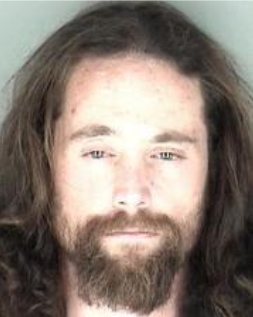
Charles Wesley Clearwater, 32, Topeka, pleaded guilty to one count of conspiracy to distribute methamphetamine. In his plea, he admitted he sold methamphetamine to investigators working undercover several times. A search warrant served at his home in the 1600 block of S.W. Western Avenue turned up eight firearms that Clearwater used in furtherance of drug trafficking.

McAllister commended the Drug Enforcement Administration and Assistant U.S. Attorney Greg Hough for their work on the case. This case was prosecuted as part of the Department of Justice’s Project Safe Neighborhoods program.


Kansas considers quarantine for invasive bluestem grass

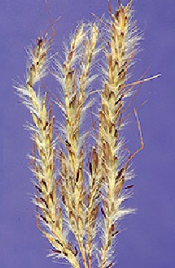
MANHATTAN, Kan. (AP) — Kansas agricultural officials are considering a quarantine to slow the spread of an invasive plant that’s threatening the state’s native grasses.

Photo USDA

The Kansas Department of Agriculture recently sought public input on a plan to quarantine invasive yellow and Caucasian bluestem grasses. The varieties have invaded all but three counties in Kansas.

Declaring the quarantine would prohibit the movement of all seeds, plants or parts of bluestem grasses within Kansas or across the border into the state.

The move could affect some ranchers who rely on the species when cutting hay to feed livestock.

Ron Klataske, executive director of environmental nonprofit Audubon of Kansas, expressed support for the proposal, saying bluestems are both difficult and expensive to eradicate.

“It has a dramatic detrimental impact,” Klataske said. “It basically destroys all native plants.”

He said bluestems are inferior to native grasses in terms of livestock forage, erosion control and wildlife habitat.

Kansas Livestock Association Attorney Aaron Popelka acknowledged that bluestem grasses pose a threat to the state’s biodiversity. But Popelka said the livestock group opposes the plan because it could economically hurt producers.

He said the quarantine would prevent hauling hay containing the invasive bluestems, affecting farmers and ranchers in areas where the grasses aren’t posing a big challenge.

Popelka said most of the bluestem grasses “came from the (state) Department of Transportation allowing it to be seeded along roadways.”

He said producers shouldn’t be forced to deal with a problem largely manufactured by the government.

Popelka instead suggested that the state blocks the sale and planting of bluestem seeds in Kansas. He also said the state could list bluestems as a noxious weed. The label would allow the plant to be managed on a county-by-county basis.

The Department of Agriculture doesn’t have a timeline to decide on the quarantine, according to officials.

Joyce Irene Langhofer

Joyce Langhofer

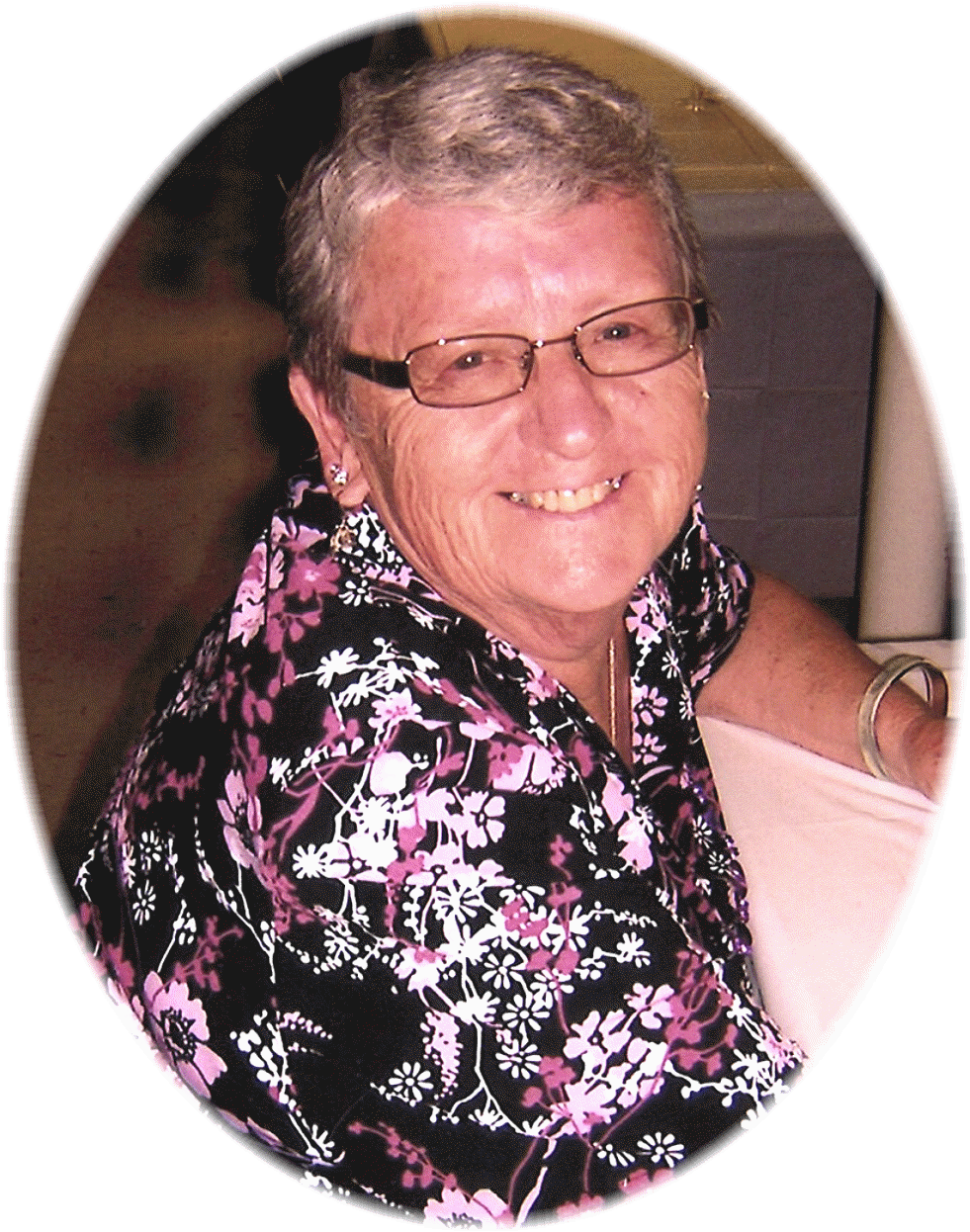
Joyce Irene Langhofer, 76, of Russell, Kansas, joined the Lord on Friday morning, June 28, 2019, at the Homestead Assisted Living Center in Russell, Kansas.

She was the daughter of Samuel and Dolores (Sprinkle) Langhofer, born on June 30, 1942, on the family farm south of Bunker Hill, Kansas. She attended school in Bunker Hill. She later relocated to Towanda, Kansas, with her parents and brothers where she spent the majority of her life. She was a caregiver to her mother for 21 years. She enjoyed mowing the lawn, riding her bicycle and working on crafts. She baked cakes and gave them to her neighbors and she also liked to walk. After her mother went to be with the Lord, she located to Camdenton, Missouri to be with her sisters. In 2016, she moved to Russell, Kansas, and resided at Parkside Manor. In 2019, she moved to the Homestead Assisted Living Center in Russell. She accepted Christ as her Savior and was baptized in Fairview Baptist Church in Towanda, Kansas, the same day her Daddy was baptized. She was a member of Bible Baptist Church in Russell. Joyce never met a stranger and was always willing to help a person in need.

She is survived by her three sisters Janice Jack of Russell, Kansas, Marilyn Bond (Graden) of Riverton, Wyoming, Carolee Robie (Donnell) of Russell, Kansas; brother Sam Langhofer (Connie) of Benton, Kansas; son Shannon W. (Shannon) Nicholas; 2 grandchildren Garrett and Liddy from Chandler, Oklahoma and many nieces, nephews and cousins. She was preceded in death by her parents and one brother Ronald whom she had a special bond with.

A celebration of Joyce’s life will be held at 11 A.M. on Tuesday, July 02, 2019, at the Bible Baptist Church in Russell, Kansas, with Pastor Dale Lane officiating. Burial will follow at the Dorrance City Cemetery in Dorrance, Kansas. Visitation will be from 9 A.M. to 8 P.M. on Monday, July 01, 2019, at the mortuary with family present to greet guests from 7 P.M. to 8 P.M. Monday evening. Memorials can be given to the Bible Baptist Church and sent in care of the mortuary.

Pohlman-Varner-Peeler Mortuary of Russell, Kansas, is in charge of the funeral service arrangements.

Kansas apartment complex evacuated for fire; 2 injured

Friday night fire photo courtesy KWCH

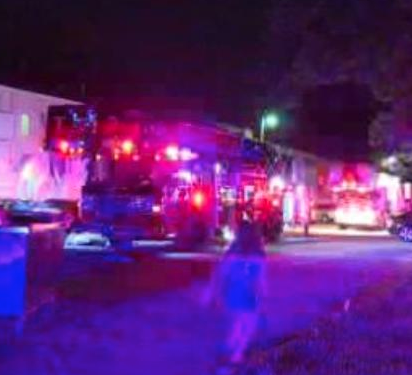
WICHITA, Kan. (AP) — Wichita fire officials say two people were injured in an apartment fire that saw the complex evacuated.

The fire was reported around 9:30 p.m. Friday in southeast Wichita near the Garvey Sports Center YMCA.

Fire officials say the blaze was quickly extinguished, and the two people injured suffered only minor injuries.

Damage was sustained to two of the buildings. Officials say residents were displaced due to smoke and fire damage.

Dispute escalates in Kansas over changes for adults to get food assistance

By JOHN HANNA

TOPEKA, Kan. (AP) — A dispute is escalating in Kansas between top Republicans and Democratic Gov. Laura Kelly’s administration over a policy change making it easier for adults who are not working to keep receiving food assistance.

The state Department for Children and Families on Friday released an internal analysis defending the legality of the change, made in May. The department has said the change will help the homeless and young adults aging out of state’s foster care system and that recipients could receive extended benefits through September.

The agency released its analysis in responding to a letterearlier this week from Republican Attorney General Derek Schmidt. He told the department’s top administrator, Secretary Laura Howard, that the change “appears to conflict” with a 2015 state law setting tougher rules for food and cash assistance.

Top Republicans in the GOP-controlled Legislature contend the change violates the 2015 law, which included a work requirement and have promised that a committee will review the issue later this year.

House Majority Leader Dan Hawkins, a Wichita Republican, said Friday that the department’s legal analysis does not change his mind. He said a lawsuit to block the change “certainly is a possibility,” though a spokesman for Schmidt said only that his office is reviewing the response.

“There’s an intent out there that they were not to skirt the work requirement in any way, and we’re going to continue to press that,” Hawkins said.

The federal government pays for food assistance and covers half of each state’s administrative costs. It generally limits able-bodied adults age 18 to 49 without dependents to three months of assistance within a three-year period if they aren’t working or enrolled in job training.

The 2015 state law specifies the same policy and says the department can’t ask the federal government for a waiver or start a program to avoid the rule. The law codified stricter policies for food and cash assistance that former Republican Gov. Sam Brownback’s administration set, making them harder to undo.

The federal government gives states some flexibility to grant exemptions to extend food assistance month by month to people who are about to lose it because they aren’t working. Spokesman Mike Deines said the agency expects to grant about 16,000 extensions through September, each good for one month for one adult, with some recipients receiving three.

The agency’s legal analysis said it is not seeking a waiver of federal rules and, “ascribing to ‘program’ its ordinary and common meaning, the one-time grant of an additional three months of benefits does not fit.”

Kelly was a state senator before becoming governor in January and strongly opposed the 2015 law. The measure gained national attention for telling families they can’t use cash assistance to attend concerts, get tattoos, see a psychic or buy lingerie, with the list of don’ts amounting to several dozen items.

Critics like Kelly contend Brownback’s welfare policies punished poor families. DCF announced this week that it is loosening a work requirement for people receiving state childcare subsidies to cover another 3,000 kids. So far, Republicans are not contesting its legality.

“This is a first step in repairing the safety net that was pulled from vulnerable Kansans during the previous eight years,” the governor said.

Hawkins said Kelly has made her opposition to work requirements clear, but taxpayers don’t want people who can work “just living off of the government.” Republicans argue that the stricter rules promote self-sufficiency.

“We want to help the people that honestly need help, but if you can work, go to work,” he said.

Man hospitalized after motorcycle tire blows

BARTON COUNTY — One person was injured in an accident just before 8:30a.m. Saturday in Barton County.

The Kansas Highway Patrol reported a 2007 Harley Davidson motorcycle driven by Grant L Ahlman, 45, Norfolk, NE., eastbound on U.S. 56 two miles east of Great Bend when the rear tire blew out. The driver lost control, the motorcycle rolled, coming to rest in the eastbound lane.

EMS transported Ahlman to the hospital in Great Bend. He was not wearing a helmet, according to the KHP.

Copyright Eagle Radio | FCC Public Files | EEO Public File