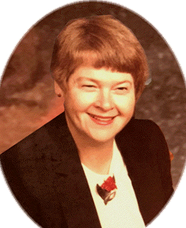
Mary Alice (Fleming) Craven, 87, of Hays, Kansas, and formerly of Russell, Kansas, passed away Sunday, June 23, 2019 at the Hays Medical Center.
Mary Alice was born March 7, 1932, in Ellsworth County, Kansas. She was one of five children born to Hazen and Edith (Bailey) Fleming. She grew up in Ellsworth and graduated from Ellsworth High School. She then attended Ft. Hays State University where she graduated with a degree in Nursing.
Mary Alice was united in marriage to Harold Dean Craven on June 10, 1956 in Ellsworth. This union was blessed with three children; David Allan, Michael Dean and Lois Lee. They made their home in Ellsworth until 1965 when they moved to Russell. Then in 1975, they moved to Hays. Harold preceded her in death on January 28, 1996.
Mary Alice was a Registered Nurse for St. Anthony’s Hospital in Hays for over 23 years before retiring. She was a member of the First United Methodist Church of Hays. In her spare time she enjoyed sewing, tending her flowers in her garden, oil painting, bird watching and going to the Hays Senior Center.
Mary’s surviving family include her two sons, David Allan Craven (Rosalyn) of Hays, Kansas and Michael Dean Craven (Darla) of Hays, Kansas; sister, Dorothy Lacey of Abilene, Kansas; five grandchildren, Chad LaRue, Dennis Craven, Jeremy LaRue, Toni Craven and Frances Lamb. Mary was preceded in death by her parents; husband, Harold; daughter, Lois; son-in-law, David LaRue; three brothers and grandchild, Shawn Asavadilokchi.
Celebration of Mary’s Life will be held at 10:30 A.M., Friday, June 28, 2019 at Pohlman-Varner-Peeler Mortuary in Russell. Burial will follow at the Russell City Cemetery. Visitation will be from 9:00 AM to 8:00 PM, Thursday, June 27, 2019 at Pohlman-Varner-Peeler Mortuary, with the family present to greet friends from 6:00 PM to 7:00 PM. Condolences may be sent to Pohlman-Varner-Peeler Mortuary, who is in charge of these arrangements.
MANHATTAN — Authorities are investigating the cause of a Wednesday morning fire in Manhattan.
photo courtesy Manhattan Fire Department
Just before 4:30 a.m., fire crews were called to a blaze in the at the Colonial Gardens Mobile Home Park in the 3000 block of Tuttle Creek Boulevard, according to a media release.
The fire in the park’s clubhouse was extinguished within 30 minutes despite limited access to fire hydrants, according to the release. Fire crews used a shuttle to bring water to fight the blaze.
NASHVILLE, Tenn. (AP) — Alabama-born drummer Jerry Carrigan, who was in the first rhythm section for FAME Studio in Muscle Shoals and later an in-demand session player in Nashville, Tennessee, died at age 75 in Chattanooga.
His cousin, Tom Carrigan, said he learned of Carrigan’s death last Thursday, but he didn’t know the exact date of his death.
Carrigan was just a teenager when he and his friends David Briggs, who played piano, and Norbert Putnam, who played bass, helped to create the Muscle Shoals sound under the guidance of producer Rick Hall. Putnam said they played on some of the earliest FAME records, including Arthur Alexander’s “You Better Move On,” whose songs caught the attention of The Beatles.
That led to Carrigan getting to play in the Muscle Shoals backup band that opened for The Beatles on their first U.S. concert in Washington D.C. in 1964, said Putnam.
Later the three Alabama musicians moved to Nashville, where they became some of the most in-demand session players in Nashville, a group which is commonly called the Nashville Cats. He became a prolific musician, playing for Elvis Presley, George Jones, Kenny Rogers, Porter Wagoner and more.
Putnam said Tuesday that the Nashville session musicians in the ’70s had to be versatile and Carrigan worked on everything from big band music to composer Henry Mancini to JJ Cale and Tony Joe White.
The Country Music Hall of Fame and Museum lists some of his credits as Bobby Bare’s “Marie Laveau,” Waylon Jennings’s “Only Daddy That’ll Walk the Line,” George Jones’ “He Stopped Loving Her Today,” Jerry Lee Lewis’ “Middle Aged Crazy,” Jerry Reed’s “When You’re Hot, You’re Hot,” Charlie Rich’s “Behind Closed Doors,” Kenny Rogers’ “The Gambler,” Ray Stevens’ “Everything Is Beautiful,” and Tony Joe White’s “Polk Salad Annie.”
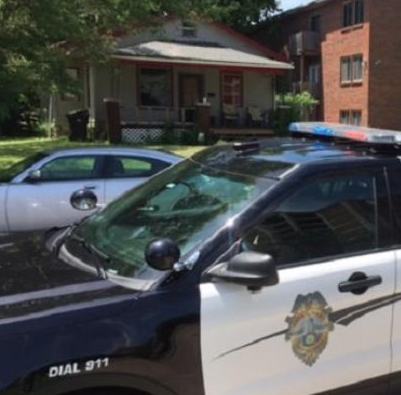
Just before 1:30p.m. Tuesday, police s with the Topeka responded to the 1300 block of SW Polk in Topeka after a reported stabbing, according to Lt. Jennifer Cross.
EMS transported one man to a local hospital with injuries that are believed to be non-life threatening.. The suspect is described as a black female, approximately 5-foo-8, weighing 315 pounds who left the scene on foot and was reportedly wearing a black t-shirt and
jeans.
Anyone with information regarding this crime is encouraged to contact the Topeka Police
There’s something about humans–we always use past events and people to give context to current experiences. Every political scandal, no matter how large or small, is compared to Watergate. Every so often the terminology changes as there become fewer people who lived through an event. When I grew up, the Great Depression was the economic event by which all others were judged. I suspect my grandchildren will come to view the Great Recession in a similar manner. Every basketball star is still judged by the standard of Michael Jordan.
While these provide a reference for people on a national scale, this past month two others have been on the top of my mind. First is the Flood of 1993, which happened before I was old enough to truly understand the devastation it wreaked on the Midwest and in Manhattan where I now live.
In July of that year, rain pounded the watershed of Tuttle Creek Lake, filling the basin to the point that the Corps of Engineers opened the emergency gates on the spillway. The release of some 60,000 cubic feet per second flooded entire neighborhoods.
The “bomb cyclone” that caused so much pain along the Missouri River this spring also contributed to the Corps holding water in Tuttle, which dumps into the Kansas then Missouri and finally the Mississippi. Then May hit and round after round of storms filled the lake to just inches from having to open the gates for a second time. Tensions rose along with the water and by Memorial Day some had evacuated their homes. Thankfully sunshine and controlled releases averted another disaster, but every rain still puts people on edge.
The other event I’ve heard repeated mentions of recently is the 1980s farm crisis. It came up at the Agricultural Relations Council’s annual meeting in Kansas City last week as part of a session on “hot topics” in ag. The ’80s farm crisis featured record production, trade problems, soaring prices for inputs and other factors present today. Panelists said a repeat of the 1980s is unlikely.
The University of Missouri’s Scott Brown noted that while some factors may be similar, farms are structured differently today, and bigger operators have more options when they get in trouble.
Kansas State University professor and agricultural economist Mykel Taylor admitted that two years ago she believed farmers were on the verge of a similar event, but she’s changed her mind. “It’s complicated, but not the same,” Taylor said. “We have our own special drama going on.”
Taylor said debt is increasing and lenders are seeing demand for loan restructuring, but government payments, like the Market Facilitation Program, helped inject cash into farmers’ hands to service their debt. “Those are floating us,” she said. Land prices also have fared better than expected with demand from investors and recreational buyers, giving owners breathing room. And interest rates have stayed low.
Taylor and Missouri Director of Agriculture Chris Chinn both said agriculture will see blue skies again, though neither offered a date. Chinn believes genetic engineering will limit the disease risk not only for crops, but livestock as well. Taylor said big data will help farmers and ranchers make better decisions.
I do know one thing that does not change throughout the ages.
No matter what problem or crisis arises, farmers and ranchers will continue finding ways to stay in the game. It’s what they were made to do.
“Insight” is a weekly column published by Kansas Farm Bureau, the state’s largest farm organization whose mission is to strengthen agriculture and the lives of Kansans through advocacy, education and service.
Hays Post once again will be offering the Virtual Golden Egg Hunt. Those finding the egg in articles published between June 30 and July 2 can enter for a chance to win two FREE VIP tickets to the 2019 Wild West Festival. Brought to you by JD’s Country Style Chicken.
Stacy Campbell is Agriculture & Natural Resources Extension Agent for the Cottonwood Extension District.
By STACY CAMPBELL Cottonwood Extension District
A new weed control publication from the Department of Agronomy and K-State Research and Extension is now available. This publication, MF3448 “Integrated Pigweed Management” aims to assist producers in developing an integrated strategy to manage pigweed in summer crops and fallow periods. Used in conjunction with local expertise, this guide can help tailor a targeted strategy for each field.
Pigweed is a summer annual broadleaf that emerges from April through October in Kansas with the majority emerging in May and June. Although there are numerous pigweed species, this publication focuses on Palmer amaranth and waterhemp. Pigweed can cause drastic yield losses and harvesting difficulties in summer crops. Controlling emerged pigweed can be challenging due to its rapid growth rate, which can easily exceed 1 inch in height per day. Pigweed is a prolific seed producer with large plants capable of producing nearly one million seeds.
What is “Integrated Pigweed Management”?
An integrated approach combines many different control tactics such as crop rotation, herbicides, tillage, and row spacing to manage pigweeds in a cropping system and has three main purposes.
Decrease the risk of selecting for resistant biotypes to an herbicide or other management practice.
Reduce pigweed seed population.
Increase long-term profitability and sustainability.
With enough selection pressure, it is possible to select for pigweed resistant to cultural or mechanical practices. For example, shifting crop planting date earlier may select for a biotype that emerges later in the season after POST herbicides are applied, or by implementing sequential tillage operations in fallow, a shift toward alternative seed dormancy mechanisms could occur. With an integrated approach, it is less likely for these types of shifts to occur because the selection pressure is shared among various tactics.
When developing an integrated pigweed management plan, consideration should first be given to cultural control tactics. It is not always possible or applicable to implement all strategies in certain systems; therefore, consideration must be given to how each tactic fits in combination with the other goals of the cropping system (Figure 1).
Figure 1. When developing an integrated pigweed management strategy, cultural practices should be considered first. Too often, it is easy to place all consideration on herbicide and neglect the potential benefits of cultural and mechanical tactics. Graphic from MF 3448, Integrated Pigweed Management, K-State Research and Extension.
Cultural practices are discussed in more detail in the full publication. They include: crop rotation, crop cultivar selection and planting date, cover crops, row spacing, field border maintenance, and seed transfer.
Building an Integrated Strategy
Combining control tactics yields the best results. When developing these recommendations, have realistic expectations and make considerations from a cropping systems point of view. It can be difficult to see direct economic profit from some cultural practices such as narrow row spacing, cover crops, or crop rotation; however, long-term gain will be realized through delaying the onset of herbicide resistance and reduced weed seed production.
Developing Herbicide Recommendation for Pigweed Management
A common pitfall when trying to justify the cost of integrated strategies is through a reduction in herbicide use. This concept is not supported with research, and all integrated strategies still must be combined with a comprehensive herbicide program. Research shows herbicide programs targeting pigweed must have three key components (Figure 2).
Figure 2. Three key components that should be found in every pigweed herbicide program.
More information about each of these three components can be found in the publication.
SALINA, Kan. (AP) — An Iowa airplane maintenance company is planning to open a facility in Salina, bringing 50 new jobs this year and up to 450 employees within three years.
Officials with 1 Vision Aviation, a Sioux City, Iowa-based company, said the company does maintenance and repairs on commercial, corporate, private planes and performs other general aviation maintenance work.
The Salina Airport Authority board on June 20 approved financing for $2.6 million in repairs and improvements to an airport hangar to house 1 Vision Aviation.
Another company, LifeSave Transport of Wichita, has rented a hangar at the airport to provide emergency medical transportation services to Salina and north-central Kansas. LifeSave will base 16 pilots, paramedics and flight nurses in Salina, and operations may begin as early as July 15.
Frances Gorman Graves (Courtesy photo)OFFICE OF GOV.
TOPEKA – Governor Laura Kelly Wednesday announced the appointment of Frances Gorman Graves to the Supreme Court Nominating Commission.
“Frances’ leadership experience and years of involvement in communications, along with her rural Kansas perspective, will be valuable as the Supreme Court Nominating Commission does its work,” Kelly said. “We appreciate her willingness to serve and be part of this important process.”
The nine-member Supreme Court Nominating Commission is responsible for recommending qualified individuals for appointment to the Kansas Supreme Court and Kansas Court of Appeals. Four of the members are non-attorneys appointed by the governor. The four appointees selected by the sitting governor each represent one congressional district in the state. Four others are attorneys selected by fellow attorneys in each of the congressional districts, with the chair of the commission an attorney elected by attorneys statewide.
Graves was appointed to a four-year term as one of the board’s four non-attorney members, and will serve starting on June 30. She’s currently the Assistant to the Director of Parsons Area Community Foundation. Previously, Graves was the Senior Media Researcher for Synoptos from 2012 to 2015, Adjunct Instructor at Labette Community College in Parsons from 2009 to 2012, Communications Coordinator at KU’s School of Business from 2008 to 2009, and Director of Strategic Communications for the Kansas Attorney General’s Office from 2007 to 2008.
She and her family are farmers and ranchers in southeast Kansas.
Graves will assume the commission seat currently held by 2nd Congressional District non-attorney member Felita Kahrs of Topeka, who was appointed by Governor Sam Brownback.
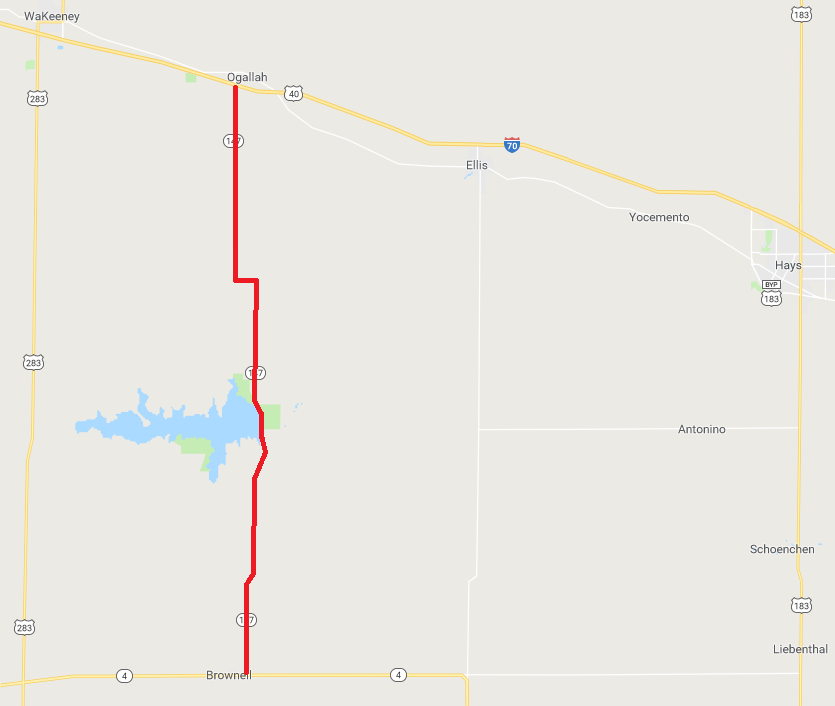
The Kansas Department of Transportation has closed K-147 in Trego County to through traffic as of Wednesday.
The closure is necessary because of public safety concerns about structural deficiencies found during a recent inspection by KDOT and its engineering consultants on the bridge spanning the Cedar Bluff Reservoir spillway. Plans are currently being developed for an emergency bridge replacement project to be completed in 2020.
The road will be closed from Ogallah to Brownell.
Traffic will be detoured using I-70, U.S. 283 and K-4. For more information on the closure, contact KDOT area engineer Kevin Zimmer at 785-625-9718.
— KDOT
Check Hays Post for more on this developing story as details become available.
The National Weather Service in Dodge City has issued a significant weather advisory for Ness, Trego, Rush and Ellis counties until 11 a.m. Wednesday.
At 9:55 a.m., radar was tracking a strong thunderstom along a line extending from near Ogallah to 8 miles north of McCracken. The storm was moving east at 15 mph.
Winds in excess of 40 mph and frequent lightning could be possible.
 Mary Alice (Fleming) Craven, 87, of Hays, Kansas, and formerly of Russell, Kansas, passed away Sunday, June 23, 2019 at the Hays Medical Center.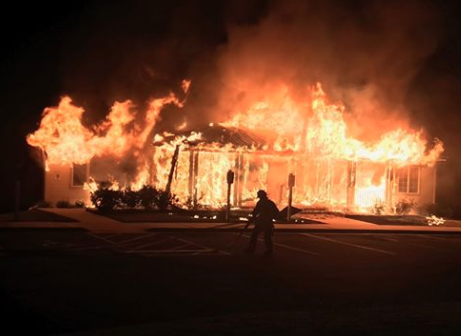









 Hays Post once again will be offering the Virtual Golden Egg Hunt. Those finding the egg in articles published between June 30 and July 2 can enter for a chance to win two FREE VIP tickets to the 2019 Wild West Festival. Brought to you by