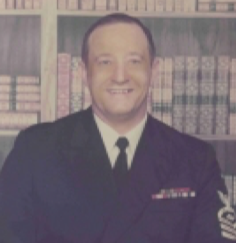
 SMITH CENTER – Paul A. Jones, age 81, passed away on Monday June 10, 2019 at the Smith Center Health and Rehab Center in Smith Center, KS.
Arrangements are pending with Simmons-Rentschler Mortuary.
SMITH CENTER – Paul A. Jones, age 81, passed away on Monday June 10, 2019 at the Smith Center Health and Rehab Center in Smith Center, KS.
Arrangements are pending with Simmons-Rentschler Mortuary.
Thursday, October 23rd, 1941 – Sunday, June 9th, 2019
An obituary is pending with Baalmann Mortuary.
Click HERE for service details.
Kyle Urban, age 31, of Ellis, Kansas passed away Saturday, June 8, 2019 in rural Trego County, Kansas.
Funeral services will be 10:30 AM Friday, June 14, 2019 at St. Mary’s Catholic Church in Ellis.
Visitation will be Thursday 6 PM – 8 PM at the church.
Arrangements in care of Keithley Funeral Chapel 400 E. 17th Ellis, KS 67637
Memorial contributions are suggested to the Kyle Urban Memorial Fund to be designated at a later date.
Condolences may be left by guest book at www.keithleyfuneralchapels.com or by email at [email protected].
A complete obituary is pending.
 Kirwin resident Monte E. Poague passed away May 4, 2019. He was born August 23, 1949 in Phillipsburg, the son of Leighton & Betty Jean (Briggs) Poague.
Survivors include his sons; Lester of North Dakota & Leighton of Arizona; his daughters; Tammy Kennedy & Priscilla Hankinson of Kansas & Regina Hall of Wyoming; his sisters, Vickie Estrada, Marcia Press & Peggy Winters; 11 grandchildren & 5 great grandchildren.
Cremation was chosen. A memorial service will be held Sat. June 15 at 10:30 a.m. in the Olliff-Boeve Memorial chapel, Phillipsburg.
Memorial contributions may be made to the Monte Poague Memorial Fund.

Phillips County Review
PHILLIPSBURG — Oversize wind turbine loads coming through the area and their related problems united virtually the entire population of Phillips County in opposition to dangerous conditions and major hassles caused by them starting around five years ago.
With around 4,000 such loads passing through the county in the past few years (so says the Kansas Department of Transportation), massive traffic tie-ups, destruction of roadway infrastructure and delayed travel times have been among the problems. On top of everyone’s list, however, have been complaints about pilot car drivers.
Those issues, which led to a local public uproar, resulted in a “solution” of bypassing the loads around Phillipsburg by detouring them down K-383 in northwest Phillips County. As it turns out this wasn’t a solution at all, it just moved the problems to different residents in a slightly different geographic area.
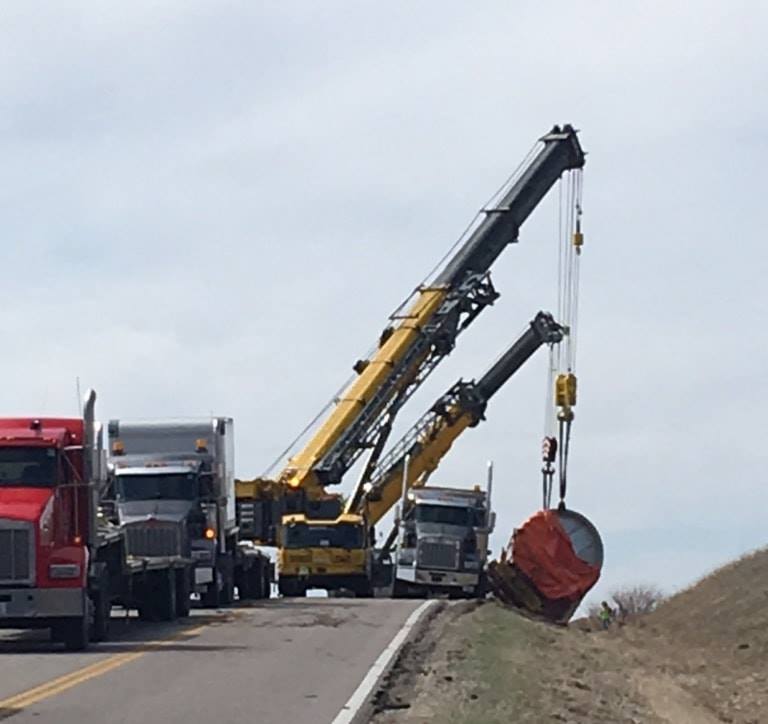
That flawed fix to the problem came to a head a few months ago when repeated oversize load accidents shut down all of K-383 multiple times the entire length of its route through Phillips County and on into Norton County.

The problem was so bad that as Phillips County Review editor Kirby Ross, who has been reporting on the oversize load controversy for several years, was sitting down drafting an editorial on the matter, yet another major K-383 oversize load accident came over the scanner.
Before long the Review received a phone call from Wanda Seyffer of Limon, Colo., who advised the newspaper that Ross’ editorial had been a “wake up call” and had gone viral inside the pilot car driver industry after it was posted on online pilot car bulletin boards nationwide.
Afterward Ross and Seyffer had a lengthy telephone conversation, during which Ross invited Seyffer to write down her thoughts on the matter.
Those thoughts are published below.
______________
Attn. Mr. Kirby Ross:
Thank you for your time today!
Oversize loads are everywhere. The movement of these loads are normally carefully planned. This involves coordinating the trucking company, pilot ar escorts, state and local county/city permits, dealing with weather and safe havens to park by sunset in most cases. Depending on the load dimensions there may be bucket trucks involved to lift traffic lights, wires and cables.
Apologies to all of Phillipsburg residents for those of you who experienced the few bad apples who crossed the center line playing “chicken” and any other antics!!!
For the most part, Pilot Car drivers are professional in warning the general public and traffic. The truck driver should give the pilots time to set up and secure an intersection without causing Starsky and Hutch moves.
The pilot should then be parking on the shoulder, getting out and stopping traffic with a stop/slow paddle and flag, then radioing the truck driver that it is clear to proceed.
When stopped it helps everyone involved to sit and be patient until the oversize load(s) pass. Abusive language and hand gestures are experienced all to often. Patience and a smile or an encouraging word helps everyone.
Amber flashing lights are what pilot cars are required to run on their light bars. When the public sees these amber lights many times they are ignored, unlike the law enforcement red and blue lights. It is always so helpful to be assisted by local law enforcement!
Public awareness of using caution, slow down, pull over or off the road and stop when directed by a pilot car keeps everyone safe. Be patient, kind and work with the oversize load elements and a smooth movement is achieved.
Respectfully submitted,
Wanda M. Seyffer
A-1 Pilot Car, LLC
Limon, Colo.

Last week’s inspection results from the Kansas Department of Agriculture:
Casey’s General Store 213 Washington, Ellis – June 6
An inspection following a complaint found two violations.
Starbucks Coffee 3126 Vine, Hays – June 6
A routine inspection found no violations.
Casey’s General Store 1301 Canterbury, Hays – June 5
A follow-up inspection from an administrative order found no violations.
The Otter Juice Company 2306 Vine, Hays – June 5
A routine inspection found one violation.
SNS Hays Public Library 1205 Main, Hays – June 5
A routine inspection found two violations.
Gutierrez/Trio Tap House 1106 E. 27th, Hays – June 3
A routine inspection found five violations.
GOVE COUNTY —Two people were injured in an accident just after 5p.m. Monday in Gove County.
The Kansas Highway Patrol reported a 2017 Nissan Altima driven by Randi Williams, 27, Oklahoma City, OK., was eastbound on Interstate 70 just east of Campus Road. The Nissan rear-ended a 2008 International Semi and then traveled into the median.
Williams and a passenger Cody Shaw, 26, Oklahoma City, were transported to the Logan County Hospital. Two children in the Nissan and the semi driver Jason Goodman, 26, Hays, were not injured. All five were properly restrained at the time of the accident, according to the KHP.

Join us for the Hays City Band!!!
Free concerts for June 2019:
June 11, 7:30 p.m. – Hays Downtown Pavilion
June 18, 7:30 p.m. – Washington Elementary School in Ellis
June 25, 7:30 p.m. – Hays Downtown Pavilion
– SUBMITTED –
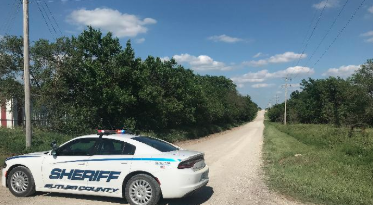
ROSE HILL, Kan. (AP) — Authorities say a 3-month-old girl has died after being left in a hot car in south-central Kansas.

Butler County Sheriff Kelly Herzet says emergency crews responded around 4 p.m. Saturday to a home near Rose Hill and pronounced the baby dead at the scene. Investigators determined that the mother took the infant with her to a baby shower that morning. Herzet says that when she came home around noon, she went inside and decided to take a nap. Several older children were in the home.
Herzet says she realized after waking up that the baby was still in the car. He says she ran outside, found the infant unresponsive and called 911. An investigation is ongoing.
Rose Hill is about 15 miles southeast of Wichita.
U.S. CENTER FOUNDATION

LEBANON — On Saturday at 1 p.m., the ambassador of the country of Lebanon, Gabriel Issa, is coming to Lebanon, Kansas for a Cedar-of-Lebanon Tree planting ceremony.
Come to the geographic center of the continental United States for the ceremony and then afterwords to Lebanon’s Community Center for a reception hosted by Lebanon’s mayor Rick Chapin.
The public is welcome to attend.
HaysMed, part of The University of Kansas Health System, has added an important new screening test that can identify serious cardiac problems early. Cardiac calcium scoring, also known as a heart scan or calcium scoring, can calculate your risk of developing coronary artery disease (CAD) by measuring the amount of calcified plaques in the coronary arteries.
Cardiac calcium scoring CT screening is a convenient, non-invasive test that evaluates whether you are at an increased risk of a heart attack. The computed tomography (CT) scans are painless, have no side effects and typically take seven minutes to complete.
This is one of five screenings that the public can request without a physician’s referral.
“Anyone can call and schedule any or all of these tests.” Said Dr. Jeffery Curtis, cardiologist and director of cardiology services. “The tests are all non-invasive and very simple to perform.”
Tests offered include screening for atrial fibrillation (A-Fib), peripheral arterial disease, stroke, aortic aneurysm and the latest for cardiac calcium scoring. The tests vary in cost from $15 to $75 or you can get all five for $150. The tests are not covered by insurance.
“The procedures we offer are similar to the traveling mobile screens that are hosted by various organizations. The beauty of our screens is that they are available every week, offer a larger choice and are performed by local hospital staff. Cardiovascular screenings are a great preventative service for patients.” Noted Dr. Curtis.
To schedule a screening any patient can call 855-429-7633 or go to https://www.haysmed.com/debakey-heart-institute/heart-health/cvscreening-hays/
— HaysMed
 SHPTV
SHPTV
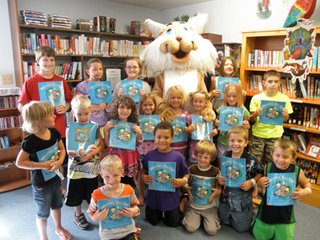
BUNKER HILL – This summer Smoky Hills Public Television is working with public libraries throughout central and western Kansas to conduct summer reading programs through the Share a Story project.
Share a Story helps children become better readers by inspiring adults to read to children every day. Research shows that activities like these do make a difference. Children who are read to every day, from birth on, do better in school, become good listeners and writers, and have better language, critical and imaginative skills.
Share a Story is a 45-60 minute program geared toward children ages 2-7.
Each program consists of viewing a short clip from a PBS children’s program, reading a related book and doing a simple activity. Each participant receives his or her own book and related materials. The programs began May 29th.
The full schedule is available at shptv.org.


Every outdoorsman I know grows a few tomato plants each year, even if they have to sneak them in with the snapdragons or hide them amongst the hibiscus. After all, nothing goes better with a freshly grilled venison burger than a juicy slice of fresh tomato. Though my thumb is only mildly green, I have become pretty successful at growing dandy tomatoes and I’m always experimenting with something new, so here are a few tips I find to work well for me most years.
Tomatoes today come in literally dozens of varieties, sizes and shapes. I find it prudent to know a little about the varieties I choose and what they are best used for, and I like to get plants that are resistant to most common tomato ailments. Tomato plants come in 2 different types, determinate and indeterminate. Determinate plants are bred to grow only about 3 feet tall, to set and ripen their fruit and then they are basically done. Indeterminate plants will keep growing and producing fruit the entire season, (so they’ll need to be well staked and supported) and as long as they are kept alive and healthy through the hot summer, they will begin setting and ripening fruit again when temperatures cool off. So if you want to take advantage of cooler fall weather to keep the tomatoes coming again in fall, you’ll need indeterminate plants.

Tomato plants will not set fruit from their blossoms when daytime temperatures exceed 90 degrees and nighttime temps exceed 75 to 80, so I plant early to get a start on production before the hot summer arrives like we know it will. I usually plant in early to mid April and surround my plants with structures called Walls of Water. They are round flexible plastic tubes with numerous small compartments that you fill with water. When erected, they form a pyramid about 18’’ tall around and over the plant, open at the top and the water absorbs heat and sunlight to basically create a tiny greenhouse for each plant. Simply remove them when temperatures stabilize.
When actually setting my plants in the ground, I go a little above-and-beyond also. I dig a hole about the width and depth of a one gallon milk jug. In the hole I put a shovel full of fresh compost or good composted manure. Then I add one-quarter cup of Epson salts, which adds magnesium, and sulfur to help grow good sturdy healthy plants. Throw in a small amount of the dirt dug from the hole and mix it up a little with your hands. Set the plant in the hole at least 6 inches deep, pruning off bottom branches if necessary to allow that. This gets the roots down deep immediately to begin feeding and helps the plant develop deep roots sooner to make for a sturdy plant. Water with Miracle Grow tomato fertilizer or sprinkle a little of the dry crystals in the hole with the Epson salt. An overabundance of nitrogen will cause the plant to grow like gangbusters, but tomato fertilizer is low in nitrogen and high in Phosphate and Potash which the plant needs to produce blossoms and to set fruit. As the season progresses, if your vines are growing well but have few blossoms, feed them with fertilizer high in both Phosphate and Potash. If the vines don’t seem to be growing, feed them a little nitrogen.
I like to water each individual tomato plant at its base which puts the water where it needs to be rather than all over the garden or all over the plants foliage. To help accomplish this, I used to get empty one gallon cans from the local nursing home kitchen, cut both ends from them and place them around each plant, pushing them a couple inches into the ground. To water, I’d simply put a couple inches of water into each can once a week. That’s fine and puts the water at the base of the plant, but on top of the ground, requiring it to soak down to the roots. This year I tried something new to get the water immediately to the plants roots. I cut old downspout into 2 foot lengths, then gingerly dig at the base of each plant just out far enough and down deep enough to find the roots. I stick the downspout into the hole at an angle and pack dirt around it. Either fill each downspout a couple times a week, or keep a little water in them all the time to put water directly onto the plants roots.
Well there you have a few tips I use to grow tomatoes each year. We eat some fresh during the season, but most of our tomatoes are frozen as we get them and used to make homemade tomato soup from a recipe my mom used. There is absolutely nothing like a hot bowl of homemade tomato soup and a grilled cheese sandwich on a cold evening. I imagine lots of you readers also have “tomato tips” you have developed over the years, and if you’d like to share them, send them to me and if I get enough I’ll make an entire column out of them. Yet another way to Explore Kansas Outdoors!
Steve Gilliland, Inman, can be contacted by email at [email protected].