Darrell Henry “Hank” Hays Jr., 66, of Alton and Natoma, Kansas, died on Tuesday, October 29, 2019, at the Wesley Medical Center in Wichita, Kansas.
A celebration of Hank’s life will be held at 11 A.M. on Monday, November 04, 2019, at the Natoma United Methodist Church in Natoma, Kansas. Burial will follow at the Natoma City Cemetery in Natoma, Kansas.
Pohlman-Varner-Peeler Mortuary of Natoma, Kansas, is in charge of the funeral service arrangements.
WASHINGTON (AP) — Democrats rammed a package of ground rules for their impeachment inquiry of President Donald Trump through a sharply divided House Thursday, the chamber’s first formal vote in a fight that could stretch into the 2020 election year.
The tally was 232-196, with all Republicans who voted opposing the resolution and just two Democratic defectors joining them: freshman Rep. Jeff Van Drew of New Jersey and 15-term veteran Rep. Collin Peterson of Minnesota, one of his party’s most conservative members. Both represent GOP-leaning districts.
The vote laid down the rules as lawmakers transition from weeks of closed-door interviews with witnesses to public hearings and ultimately to possible votes on whether to recommend Trump’s removal from office.
The action also took on more than technical meaning, with each party aware that the impeachment effort looms as a defining issue for next year’s presidential and congressional campaigns.
The vote, which occurred on Halloween, drew a familiar Twitter retort from Trump: “The greatest Witch Hunt in American History!”
White House press secretary Stephanie Grisham accused House Speaker Nancy Pelosi and the Democrats of an “unhinged obsession with this illegitimate impeachment proceeding.”
During the debate, Democrats spoke of lawmakers’ duty to defend the Constitution, while Republicans cast the process as a skewed attempt to railroad a president whom Democrats have detested since before he took office.
“What is at stake in all this is nothing less than our democracy,” said Pelosi. Underscoring her point, she addressed the House with a poster of the American flag beside her and began her remarks by reading the opening lines of the preamble to the Constitution.
House Minority Leader Kevin McCarthy, R-Calif., said Trump had done nothing impeachable and accused Democrats of trying to remove him “because they are scared they cannot defeat him at the ballot box.”
No. 3 House GOP leader Steve Scalise, R-La., accused Democrats of imposing “Soviet-style rules,” speaking in front of a bright red poster depicting St. Basil’s Cathedral on Red Square in Moscow.
Independent Rep. Justin Amash of Michigan, who left the Republican Party earlier this year after saying he was open to considering whether Trump should be impeached, also backed the measure.
Democrats said the procedures — which give them the ability to curb the president’s lawyers from calling witnesses — are similar to rules used during the impeachment proceedings of Presidents Richard Nixon and Bill Clinton. Republicans complained they were skewed against Trump.
It is likely to take weeks or more before the House decides whether to vote on actually impeaching Trump. If the House does vote for impeachment, the Senate would hold a trial to decide whether to remove the president from office.
Both parties’ leaders were rounding up votes as Thursday’s roll call approached, with each side eager to come as close to unanimity as possible.
Republicans said a solid GOP “no” vote would signal to the Senate that the Democratic push is a partisan crusade against a president they have never liked.
Democrats were also hoping to demonstrate solidarity from their most liberal elements to their most moderate members. They argued that GOP cohesion against the measure would show that Republicans are blindly defending Trump, whatever facts emerge.
“It will show the other party has become the party of Trump. It’s really not the Republican Party any longer,” said Rep. Dan Kildee, D-Mich.
Republicans said they’d use the vote to target freshman Democrats and those from districts Trump carried in 2016. They said they would contrast those Democrats’ support for the rules with campaign promises to focus on issues voters want to address, not on impeaching Trump.
The House GOP’s campaign arm sent emails to reporters all but taunting some of those Democrats including freshman Rep. Chris Pappas, D-N.H. “Pappas wants to be a one-termer,” one said.
GOP leaders called the rules “Speaker Pelosi’s sham process designed to discredit the Democratic process” in their daily impeachment email to lawmakers.
Pelosi decided to have the vote following weeks of GOP claims that the inquiry was invalid because the chamber had not voted to formally commence the work.
The rules lay out how the House Intelligence Committee — now leading the investigation by deposing diplomats and other officials behind closed doors — would transition to public hearings.
That panel would issue a report and release transcripts of the closed-door interviews it has been conducting.
The Judiciary Committee would then decide whether to recommend that the House impeach Trump.
According to the rules for hearings, Republicans could only issue subpoenas for witnesses to appear if the entire panel approved them — in effect giving Democrats veto power.
Attorneys for Trump could participate in the Judiciary Committee proceedings. But in a bid for leverage, panel Chairman Jerrold Nadler, D-N.Y., would be allowed to deny “specific requests” by Trump representatives if the White House continued refusing to provide documents or witnesses sought by Democratic investigators.
The rules also direct House committees “to continue their ongoing investigations” of Trump.
Top Democrats think that language will shield their members from weeks of Republican complaints that the inquiry has been invalid because the House had not formally voted to begin that work.
Democrats have said there’s no constitutional provision or House rule requiring such a vote.
At 5:36 a.m. Thursday, officers were dispatched to the 500 block of Mission Mount for a female gunshot victim call. The female died at the scene.
Officers are investigating the incident, and the Kansas Bureau of Investigations Crime Scene Unit has been called in to assist. Officers will be working in the area. The scene is secure, and the neighborhood is safe.
“However, we are asking the general public to avoid the area to allow the officers to work,” the HPD said in a news rleease. “Names are not being released as this is an ongoing investigation. No further information will be released at this time.”
KANSAS CITY, Mo. (AP) — The Kansas City Royals have hired Mike Matheny as manager.
The 49-year-old Matheny was manager of the cross-state St. Louis Cardinals from 2012-18, going 591-474 and becoming the first manager to reach the postseason his first four seasons. The Cardinals reached the World Series in 2013, losing to the Boston Red Sox.
Matheny was fired in July 2018 with the Cardinals 7½ games out of the NL Central race at the time. He was hired last November by the Royals as a special adviser for player development, putting him in place to succeed Royals manager Ned Yost.
Brighton, Colorado, resident and former Delta, Colorado, resident William Arthur Mock, 88, passed away on Sunday, October 27, 2019 at his home in Brighton, CO surrounded by family.
Bill was born on July 16, 1931. His Father was between work at the time and Bill was born in a small camp on a beach close to Watsonville, California (or so the story goes). He grew up on a farm outside Hotchkiss, Colorado the child of James Raymond Mock and Emily Ester (Monroe) Mock. He was the fifth of five children; Jimmy, Alice, Donnie, and Rita. His father died of a heart attack when Bill was five years old. After his Father passed away his Mother moved the children into Delta, CO. He graduated from Delta High School in 1949 and went directly to Denver where he began working for Gates Rubber Company. He retired from Gates in 1989 at the age of 58, followed by a 30-year retirement of mostly fishing and some really wonderful trips he and Nora enjoyed together.
In 1951 Bill met Nora Kathleen Rhoads at a boarding house in Denver, CO. They were married on August 9, 1952 at the Warren United Methodist Church also in Denver. To this union, two daughters, Kathleen and Debra were born. Bill and Nora began their lives together in Southeast Denver where they lived for 14 years. They then moved their family to Brighton, CO in 1966 and shared their home and lives together for 64 years until Nora’s death in January 2017. He was also preceded in death by his parents, his brothers; Jimmy and Donnie and his sisters; Alice and Rita.
He is survived by two daughters; Kathy Hellyer of Akron, Colorado and Debbie Oberhausen and her partner Toni Bellucci of Brighton, Colorado. Three granddaughters; Hallie Thomas of Gunter, TX, Kara Smith & her husband Jeff of Akron, CO and Samantha Oberhausen currently studying in Salem, OR, three Great granddaughters Chloe and Eleanor Thomas, and baby Smith to arrive in November. Sisters-in-law Patty Mock of Mt. Vernon, Washington, Doris Venden of Loveland, CO and Iva Lee Stephens of Goodland, KS. He is also survived by many nieces, nephews and extended family.
Funeral services for Bill will be held on Saturday, Nov 2, 2019 at 2:00 PM MT at the Koons-Russell Funeral Home in Goodland with Pastor Doug Amend officiating. Burial will follow in the Goodland Cemetery.
Memorial contributions may be designated to the William Mock Memorial Fund and may be left at the services or mailed to Koons-Russell Funeral Home, 211 N. Main Ave., Goodland, KS 67735.
Online condolences may be left for the family at www.koonsrussellfuneralhome.com.
Funeral service arrangements were entrusted to Koons-Russell Funeral Home in Goodland.
TOPEKA, Kan. – Law enforcement authorities are investigating a shooting that may be connected to a car burglary.
Just after 10:30 p.m., Tuesday, police were dispatched to Walgreen at 3900 SW 29th in Topeka for report that a subject walked in the store and told the staff he had been shot, according to Lt. Manuel Munoz.
At the scene, officers located a man who was suffering from a non-life-threatening gunshot
wound. He was transported to a local hospital for treatment.
While the officers were traveling to the call at Walgreens, dispatch received a call in the 4200
block of 29th Terrace on a report of a burglary to a vehicle. Dispatch advised that the victim saw someone burglarizing his vehicle and the victim went out to confront the suspect. The victim
fired one shot towards the burglary suspect.
The suspect was last seen running in the direction of Walgreens. Officers responded to that scene and detectives are working to determine if the two incidents are related. Police have not reported an arrest.
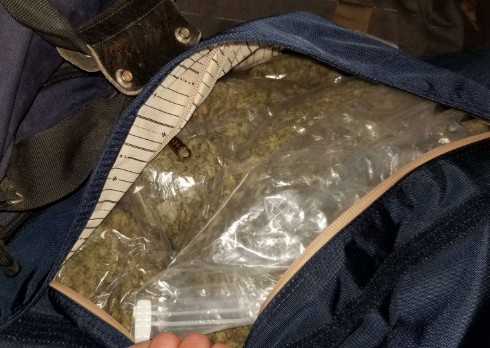
LINCOLN COUNTY, NE —Troopers with the Nebraska State Patrol have arrested three men and seized 91 pounds of marijuana following a traffic stop on Interstate 80 near Maxwell.
At approximately 8:25 p.m. Tuesday, a trooper observed a Chevrolet Tahoe failing to maintain its lane while traveling eastbound near mile marker 187 on I-80. The vehicle also had an obscured license plate. During the traffic stop, an NSP K9 detected the presence of a controlled substance inside the vehicle.
Photo Nebraska State Patrol
A search of the vehicle revealed 91 pounds of high-grade marijuana concealed in bags in the cargo area.
The driver, Erik Altamirano Gomez, 36, and passengers Gregory McKee, 61, both of Kansas City and passenger Vicente Bustos Camacho, 34, of Mexico, were arrested for possession of marijuana – more than one pound, possession with intent to deliver, and no drug tax stamp. All three were lodged in Lincoln County Jail
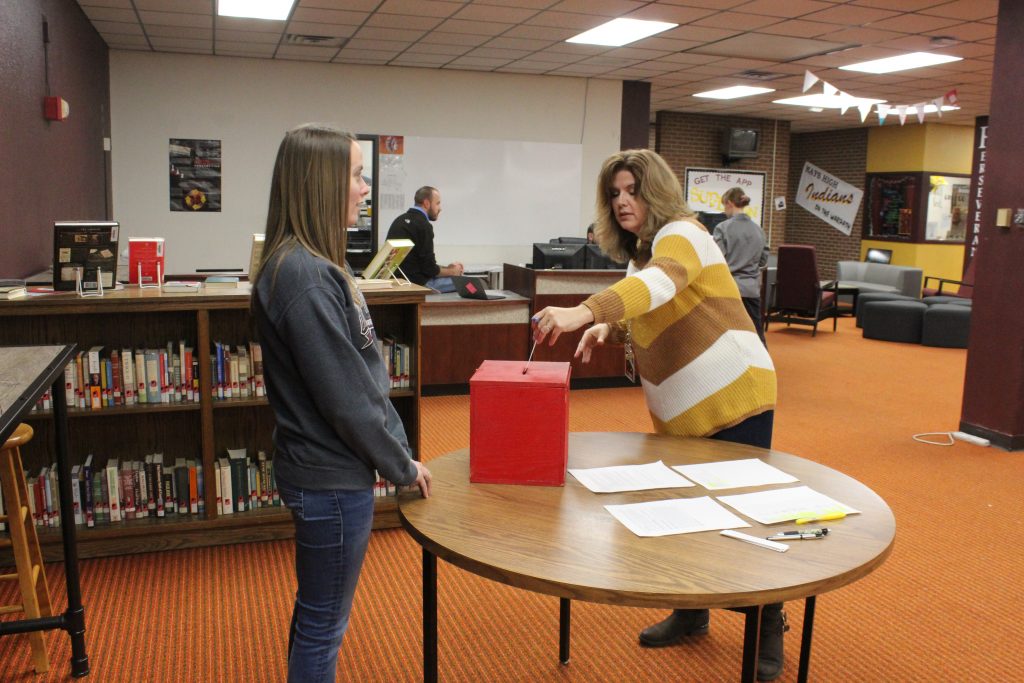
A Hays teacher votes on her contract last year. This is the second year in a row the USD 489 school board and teachers have come to impasse in negotiations. Last year, negotiations were resolved through mediation. This year, the two groups have moved on to fact-finding. Hays Post file photo
By CRISTINA JANNEY Hays Post
After failing to come to a contract agreement during federal mediation, the Hays USD 489 school board and Hays NEA have moved on to a fact-finding process.
The compensation package, specifically health insurance is the stumbling block in the negotiations.
“The compensation package is the difficult issue,” Mike Walker, board president, said. “The board had proposed a compensation package addressing both a salary increase and an adjustment to the health benefits package. Hays NEA has stated that they would like to consider each item separately.”
Walker said the board wants to provide a total compensation package to teachers and staff that increases base salaries and addressed the benefit package.
“We hope to reach agreement on the total compensation package soon so that employees will have time review their salary increases and any adjustments to the health benefits package before open-enrollment the following year,” he said.
The district had proposed setting a specific amount it pays toward family plans instead of a percentage. It currently pays about 83 percent. The district proposed continuing to pay 100 percent for single plans.
The district proposed capping the amount the district pays for dependent plans at $1,000. Having a set amount the district pays for dependent insurance rather than a percentage would help the district in setting its annual budget, the board contends. The district proposed the change in the insurance take affect next year.
Kim Schneweis, Hays NEA board president, said Tuesday night via email the major issues keeping teachers from an agreement are health insurance and salary.
“Less than two years ago, the school board left the state employee’s Blue Cross & Blue Shield insurance plan and chose Aetna,” she said. “The school board said they would find a plan that was the same or better than our Blue Cross plan, but the new plans are worse. The school board wants to cap how much they pay toward health insurance, starting in the 2020-2021 school year.”
She continued, “The teachers have serious concerns about the new insurance plan, especially the $3,500 deductible. Our previous deductible was $1,000, so that was a 250 percent increase. Teachers are paying more out-of-pocket for their health care due to the large deductible.
“Some are neglecting health care because they cannot afford the $3,500 deductible up front. We hesitate to agree to a cap on the premium when we already had a recent and dramatic increase in deductible. We also see no reason to rush this decision because health insurance premiums for the district did not increase this year.”
On the issue of salary, Schneweis said the district has received $1.3 million in new money this year from Topeka.
“The governor and legislators passed this finance bill with the expressed intent to increase teacher salaries and classroom funding,” she said. “Kansas teacher salaries lag behind in our nation, ranking around No. 40. The salary proposals from our school board this year are not proportionate with the new money sent from Topeka.
“The school board won’t agree to salary increases for the 2019-2020 school year unless we agree to reducing our insurance benefit for 2020-2021. In a year the legislators moved a mountain to increase teacher salaries, we feel frustrated our school board isn’t willing to pass on our intended share.”
Schneweis said the teachers have offered numerous times to work with the school board to explore options for health insurance. She said the teachers support using a committee of all stakeholders to find the best option.
“Our last big insurance change was rushed and resulted in employees struggling with large increases in health care costs,” she said. “If we are going to consider changes to our insurance benefit, we do not want to rush the decision. We also do not want to negotiate insurance for the 2020-2021 school year, while we still have no contract for 2019-2020.”
Schneweis said she did not know how long the fact-finding process could take, but it could be lengthy. She added the delay in reaching a contract agreement is creating a hardship for teachers.
“Currently, 11 weeks into the school year, teachers still do not have a contract for this year, and do not know their salary for certain,” she said. “When the new finance bill was finally passed, teachers were optimistic things would improve, so we are disappointed that the school board wants to further reduce benefits. We certainly have teachers who spent money on college hours with the expectation they would move on the pay scale.”
Schneweis said she thought the district needs to improve pay and benefits to retain and attract quality teachers.
“It is a hardship for our current teachers, but the long-term effects on our district are hard to determine,” she said. “It’s hard to measure the effect of a promising new teacher choosing to go to another district or different career, or a seasoned professional retiring early due to stagnant pay.
“When we create hardships for our teachers, we create hardships for our students, because their working conditions are the student’s learning conditions. We want the best for our students. Teachers would rather be preparing for their students than rushing off to a second or third job. Students are at the center of everything we do, and they deserve well-rested teachers who feel appreciated and supported.”
This is the second year in the row the school board and teachers union have come to an impasse during negotiations.
Further attempts were made during mediation to end the impasse, but as that was not a public session, Walker said he did not wish to disclose that information at this time.
“The board hopes to end the impasse and the board and Hays NEA will agree on a total compensation package,” he said.
Walker also said he did not know how long the fact-finding process might make.
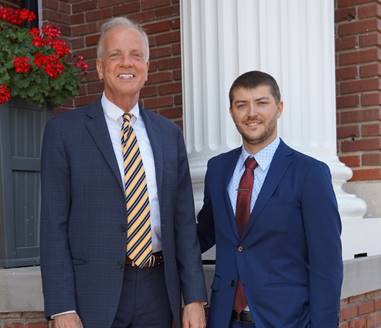
WASHINGTON – U.S. Sen. Jerry Moran., R-Kan., recently announced the addition of Sharon Springs native and Fort Hays State University alum James Robben to his staff to serve as a district representative based in the Hays office. Robben – one of Sen. Moran’s three First Congressional District representatives – will serve as a liaison with community leaders, local government officials and businesses and provide assistance for Kansans seeking help with federal agencies.
“James has a strong understanding of northwest Kansas, a vast background in agriculture and a deep commitment to his community,” Moran said. “As our district representative in Hays, James will ensure northwest and central Kansans who request assistance with federal agencies are provided guidance and helped in a timely fashion. I have no doubt that James will be an asset to my staff as we continue working to serve the great people of Kansas.”
Robben graduated from Wallace County High School and earned a bachelor’s degree in agricultural business from Fort Hays State University in 2015. Following graduation, he worked at Carrico in Hays.
Robben is a member of St. Nicholas of Myra Catholic Church in Hays, Hays Rotary Club and serves as chair of the Hays Area Young Professionals Advisory Council. James and his wife Kaitlin (Fabrizius) live in Hays, where Kaitlin is a registered nurse at Hays Medical Center.
The American Red Cross is partnering with the Russell Rotary Civic Organization and the Russell Fire Department, to install free smoke alarms to those who register.
“I can’t think of a better way for a community like Russell to come together and host a Home Fire Campaign to install free smoke alarms for the families of their town,” said Deb Tucker, Disaster Program Manager for the Red Cross.
Dustin Smith, Community Bank President of UMB Bank and Rotary Club member, said he learned about the “Sound the Alarm” event through the partnership Rotary Rescue has with the Red Cross. The Rotary Rescue is a group of volunteers within the Russell Rotary Club. They serve as first responders in the event of a fire or natural disaster to provide Red Cross services to the families and first responders. The group has seen first-hand the devastation fires cause and wants to do what it can to prevent the unthinkable from happening in the Russell community. Dustin states this will be the first “Sound the Alarm” event and wants to schedule more in the future. The Russell Fire Department does install “one off” alarm requests as needed through their partnership with the Red Cross.
“As Rotary Rescue volunteers, we have provided comfort to dozens of families over the years at a time when they were at their worst,” Smith said. “The toughest part of any response is when there are children living in the home. Thankfully the Red Cross provides comfort packs including a stuffed Mickey Mouse for children. Through all the devastation and heartache I have witnessed and families endure, the one thing that always sticks with me is the smile on a child’s face when we give them a stuffed Mickey Mouse.”
Smith said the Russell Rotary Club is vry appreciative of the support it has received from the Red Cross and the Russell Fire Department to bring the event to Russell.
“The partnership between the Red Cross and both Russell Rotary Club and the Russell Fire Department has been phenomenal over the last couple of years,” Tucker said. “With this partnership, we are now able to install free smoke alarms on Nov. 3, which will help people prevent and respond to home fires which will ultimately save lives. That is what this campaign is all about — saving lives.”
There are still alarms available for the Nov. 3 event. Russell residents can call 211 or visit Getasmokealarm.org to register.
TOPEKA, Kansas — When it comes to medical marijuana, Kansas may end up looking more like Ohio than Missouri — with edibles and topicals only, no smoking.
Ohio, which bans smoking marijuana for medical purposes, could serve as a model for eventual regulations in Kansas. NOMIN UJIYEDIIN / KANSAS NEWS SERVICE
The Special Committee on Federal and State Affairs recommended potential regulations on Wednesday for the 2020 legislative session, which starts in January. It’s far from the first time the legislature would consider medical marijuana: The Kansas Health Institute says 18 bills have been introduced since 2006.
Among the suggestions for certain legislative committees to consider: banning smoking medical marijuana and only allowing edible and topical products, similar to 2017 regulations passed in Ohio.
“This topic we have addressed for several years now, and every time we run into the same problems,” Republican Sen. Bud Estes of Dodge City said. “The Ohio bill … comes the closest to doing what we feel like we should be doing here in Kansas.”
The Ohio legislation requires medical marijuana users to register for an ID card and forbids them from growing the plant at home. Ohio also allows patients to vape.
Members of the Kansas committee also expressed interest in creating an affirmative defense for out-of-state residents who carry their legally obtained medical marijuana while traveling through Kansas. Under it, proof of a patient’s legal marijuana prescription or registration would be enough to keep them from being arrested or prosecuted by the state.
“I’m trying to respect Missouri and Oklahoma residents for following the law in their state,” said Rep. John Barker, who chairs the committee. “Law enforcement … should not intervene or arrest or detain or cite that individual.”
Barker said he also supported using Ohio regulations as a model, but opposed vaping, citing possible health risks.
“I don’t think that’s the right message we should send to young people,” he said.
Sedgwick County Sheriff Jeff Easter, who testified against loosening regulations around the drug last week, said the committee’s recommendations don’t address one of law enforcement officers’ main concerns — the lack of federal regulation of medical marijuana. He plans to return to the state Capitol to testify against legalization measures next year.
“Let’s get the FDA involved,” he said. “Let’s get this stuff tested.”
Plus, banning smoking and vaping, Easter said, won’t eliminate the complications of enforcing Kansas’s borders with states where some form of the drug is legal, like Colorado, Oklahoma and, soon, Missouri.
“It’s still problematic for law enforcement,” he said.
Numerous Kansas law enforcement organizations have been vocally opposed to legalizing both medical and recreational cannabis. Officers frequently cite concerns about impaired driving, violence and children’s access to the drug.
“Proponents of this, they want to get high,” Easter said. “That’s my opinion of it, and that’s the opinion of law enforcement.”
Medical marijuana proponent Jim Ricketts said he was also unhappy with the committee’s recommendations.
The 69-year-old Holton resident testified in favor of allowing medical cannabis use last week, and said smoking the drug is the only thing that relieves the pain and stress of old injuries sustained in a car crash more than 40 years ago.
“I will smoke it until I die,” he said. “They can put me in jail. I don’t care.”
By continuing to ban the smoking of marijuana, Ricketts said, the committee isn’t doing enough to address the needs of users like him. And he’s concerned that allowing edible or processed forms will benefit the bottom line of for-profit companies rather than the health of patients.
“This stuff needs to be taken care of now,” he said. “Marijuana has been around for years and years and they haven’t been able to control it.”
Nomin Ujiyediin reports on criminal justice and social welfare for the Kansas News Service. Follow her on Twitter @NominUJ or email nomin (at) kcur (dot) org.
—————
TOPEKA, Kan. (AP) — A Kansas legislative special committee has approved two early steps toward advancing a medical marijuana bill.
-photo O’DEA / WIKIMEDIA COMMONS
The committee on Federal and State Affairs on Wednesday recommended that Kansas lawmakers consider allowing residents from other states where medical marijuana is legal to use the product in Kansas if they have permission from their home states.
The committee also suggested Kansas study Ohio’s approach to medical marijuana use. Ohio limits patients to 90-day supplies and prohibits smoking medical marijuana. Edibles, patches and oils are allowed.
Supporters said the use and acceptance of medical marijuana is growing across the country, and in states adjoining Kansas.
The committees vote is non-binding. And any legislation supporting medical marijuana will face continued opposition from law enforcement and some medical organizations.c
Trade is a cornerstone of the American economy and plays an important role in the Kansas economy.
The United States needs trade deals that work for us and work in the best interests of American companies. The new U.S., Mexico, Canada Agreement is one such trade pact that will work in the best interests of American companies and Kansas. President Trump negotiated this important trade pact and now we wait for Nancy Pelosi to allow for Congress to vote to approve the deal.
In 2017, Kansas exported $2.5 billion in goods to Canada and $1.9 billion to Mexico, for a total of $4.4 billion. This figure includes $1.4 billion in transportation products, $739.6 million in agriculture, $722 million in processed foods and $404.5 million in manufacturing equipment. These numbers showcase how North American trade plays an important role in the Kansas economy and why we need the USMCA in place.
Among the provisions of the USMCA is new and innovative rules of origin which will help our manufacturing industry. These provisions include new rules that require 75 percent of auto content to be made in North America. This will grow the U.S. automotive economy, including the GM Fairfax Plant in Kansas City. The U.S. automotive industry has long been the envy of the world and we need rules in place to make sure that this industry grows. The dream that Henry Ford put forward with the Model T is one of not just access to ease of movement, but the growth of a strong manufacturing industry, in communities across the United States.
The USMCA will stop the drain of manufacturing jobs out of the United States and allow for new jobs to be created in the U.S. This will grow communities and stop economic decline. It will allow people to stay in their hometowns and keep Main Streets nationwide thriving.
The USMCA also fosters the growth of the innovation economy with new pro-growth rules for intellectual property and digital trade, along with cutting red tape for small businesses to engage in trade. This is a huge win for the Kansas economy.
Here in Kansas we have a thriving innovation economy. In Wichita, aviation companies are continuing to innovate in order to keep our country flying. The Silicon Prairie corridor in Kansas City and Johnson County is growing countless small businesses and bringing jobs to our state. The unmanned aerial systems research triangle brings together several of our universities in producing cutting edge research into UAS and allowing Kansas to become a national leader in this growing industry.
For our farmers, the USMCA has new provisions to help American dairy and poultry farmers export more to Canada. This includes new tariff rate quotas for U.S. dairy farmers, which will increase dairy exports. Dairy is an important part of the American agricultural industry, with dairy farms dotting the landscape across Kansas. The USMCA also includes new rate quotas from Canada for poultry and egg farmers.
Right now, though one thing stands in the way of the USMCA becoming reality, House Speaker Nancy Pelosi. Nancy Pelosi will not allow the USMCA come up for a vote in Congress, blocking this economic growth. Mexico has ratified the agreement and Canada has said that they will move to ratify once Nancy Pelosi allows for a congressional approval. Nancy Pelosi needs to allow this important trade agreement to come up for a vote so that all Americans and all Kansans can begin to reap the benefits.
Wink Hartman is the CEO of the Hartman Group of Companies in Wichita and was the 2018 Republican nominee for lieutenant governor.