MANHATTAN, Kan. — The harsh conditions in Kansas this past winter have prompted one of the state’s leading weather agencies to develop a tool that will help cattle producers in the future.
Officials with the Kansas Mesonet, a Kansas State University-based network of weather monitoring stations across the state, has announced the release of the Cattle Comfort Index, a tool that they say will help cattle producers better monitor the needs of their herds during normal and extreme weather conditions.
“We’ve already had a lot of negative impacts on the cattle industry because of the cold temperatures this winter,” said Mary Knapp, the assistant state climatologist with Kansas Mesonet. “This tool will also look at extreme high temperatures.”
The Cattle Comfort Index compiles such climatological factors as weather, humidity, solar radiation, wind speed and more to help producers determine the level of stress their animals may be experiencing at any given time.
“The index is driven by our five-minute data that is available from Kansas Mesonet,” Knapp said. “It will be calculated real-time and updated on a regular basis so that producers can see how that will change during the day.”
The climate information is gathered from each of the Mesonet’s 61 reporting stations in Kansas. For each, the system reports the perceived comfort level of cattle in that area, from no stress, to mild, moderate and severe.
Knapp said, “the actual animal response to temperature stress will be dependent on a number of factors not accounted for in the index,” including age, hair coat, health, body condition, micro-environment, and acclimatization.
“The index shown may start off at a reasonable comfort level in the morning, but as you get into the afternoon when that heat starts developing and the humidity hasn’t abated, that’s when you can get some of the heaviest stress on the livestock,” she said. “A chart will show the level over time, but historical data is limited to the week, ending with the current day.”
The tool was developed from research conducted at the University of Nebraska. The Kansas Mesonet website includes a map that shows conditions across the state and how that might play into risk for cattle.
For more information, interested persons may visit the Kansas Mesonet website, or call 785-532-7019.
Have you ever wondered how to make a meal faster? Have you ever wished you were a master of Excel? If you have said yes to one or both of these questions, the next Women on the Farm program is for you!
Women on the Farm of Barton, Pawnee, and Rush counties invites all people that are interested in either learning more about electric pressure cookers and/or Excel or our next program. This program will take place on Tuesday, May 21, at the Haas Building in Larned. Registration will begin at 10:30 and there is a small fee to cover the cost of lunch. The morning will be spent learning to cook different items in an electric pressure cooker. While you don’t have to bring a cooker, please feel free to do so!
If you are just wanting to attend the Mastering Excel portion of the day, there is no cost and it will start at 1:00 p.m. You are welcome to bring your own computer to work on, but there will be computers available for use.
You are welcome to attend one or both programs, but we you will need to RSVP so that we have enough materials available. Please RSVP to the Pawnee County Extension office by 5:00 on May 17th by calling 620-285-6901.
Alicia Boor is an Agriculture and Natural Resources agent in the Cottonwood District (which includes Barton and Ellis counties) for K-State Research and Extension. You can contact her by e-mail at [email protected] or calling 620-793-1910.
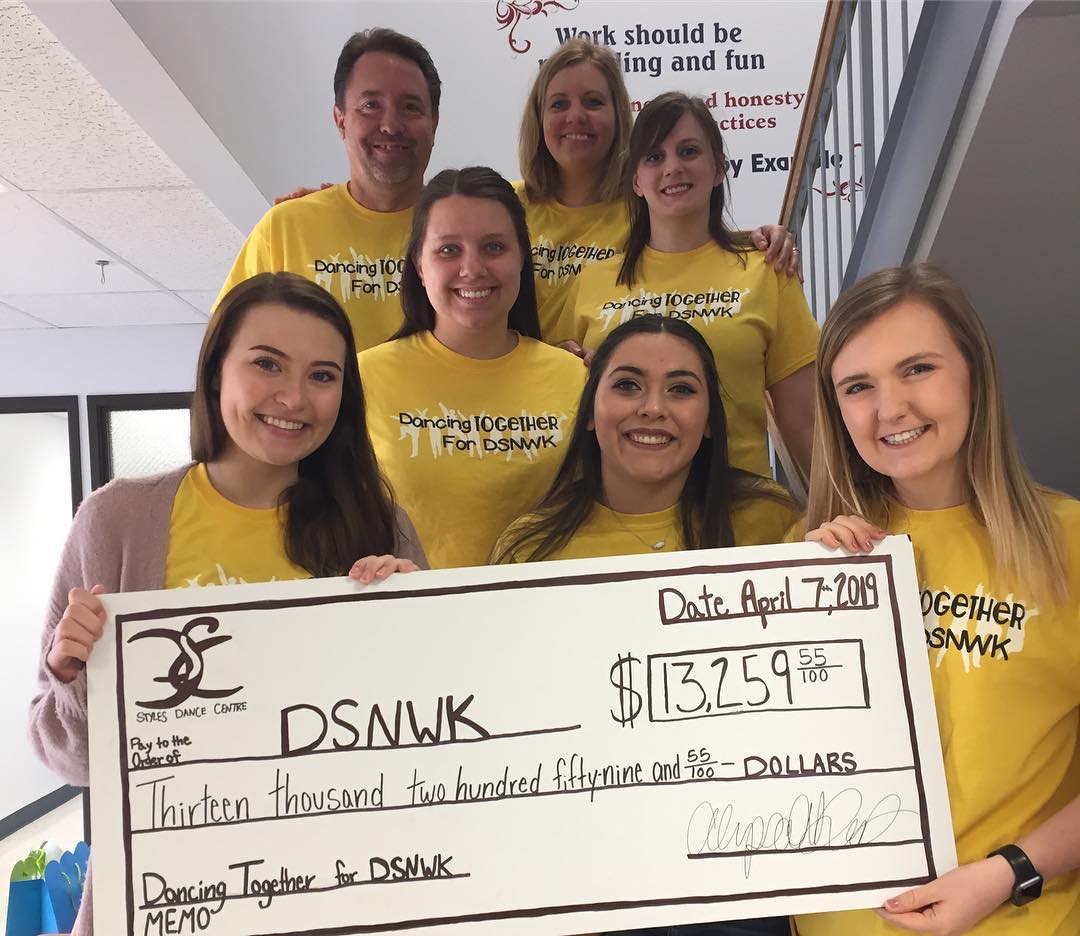
Members of Fort Hays State University’s Leadership 310 team that raised a record $13,000-plus for the “Dancing Together with DWNSK” fundraiser are, front row, left to right, Brenna Erdman, Claudia Castro and Tyra Hayden. Middle row is Macey Pfeifer, instructor, Styles Dance Center. Back row: Steve Keil and Sara Biggs, DSNWK, and Styles owner Alyssa Dechant.By DIANE GASPER-O’BRIEN FHSU University Relations and Marketing
Caden Frank came to Fort Hays State University planning to focus on pre-engineering coursework.
After one class in the Department of Leadership Studies, Frank changed his mind.
“I got involved with the leadership certificate program,” Frank said, “and I realized this is something I felt passionate about, not just as a hobby but as a career.”
Frank and the other three members of his team are part of a record-breaking group in LDRS 310: Fieldwork in Leadership Studies.
The two sections of this spring’s 310 class – as it is commonly referred to – raised a staggering $35,000 for the Hays community through their social change projects. That’s the largest amount raised in one semester since the start of the 310 class more than 15 years ago.
Ironically, Frank’s team project took more of a human relationships route than that of a fundraiser.
Nonetheless, “Breathe Out” and others like it were still impactful, said Dr. Seth Kastle, assistant professor of leadership studies.
Take for example, the “Hansen Entrepreneur Marketing Consultants.” The five-student team helped fill the Dane Hansen Scholarship Hall with an entrepreneurship mindset for fall 2019. It will be the first time that all 32 residents will be involved in entrepreneurship activities. The residence hall was built in 2016 targeted for entrepreneur-minded students.
“This service learning class is about executing a social change project, so it’s teaching people to take ownership in the communities they live in, no matter what that might be,” Kastle said. “We educate these students how to do this now, so when they move on from Fort Hays State, when they see a need, they can address it.”
“Breathe Out” took a couch from Breathe Coffee House to several locations in town and just visited with people, “having intentional conversations with people about how to get involved in their community,” a team spokesman said.
“We want people to be radically changed by their community and to radically change something in their community,” Frank said during his team’s demonstration. He said he has already been radically changed by Fort Hays State and the city of Hays, whose population of 25,000 is considerably smaller than his hometown.
“This town is amazing,” said Frank, who grew up in Omaha, Neb. (population 466,000). “It’s obviously smaller than Omaha but large enough that no matter what your skill set is, it will align with something in town.”
From his initial plan of attending FHSU for three years as a physics major, then transferring to an engineering school in Nebraska, Frank now has his sights set on graduating from FHSU with an organizational leadership degree and working with a nonprofit.
Community partners visit the 310 class early in the semester, and the students then choose a project, write strategic plans and then execute those plans.
Students learn a variety of lessons in the 310 class: planning, organization, teamwork and collaboration, creating awareness, sustainability and even reflecting on what they might have done differently during the project.
“Hindsight is 20-20,” Kastle said. “That purposeful reflection is how the learning takes place. It’s about reflecting about what might have gone wrong and what they might have done different.
For Kensington junior Tayler Petersen, it was tackling a tough project. She and her team, “In Defiance of Cancer,” partnered with the Cancer Council of Ellis County and raised about $3,000. While sponsorship made up most of that total, Petersen said she learned that the smaller amounts (from T-shirt sales and a raffle) added up, too.
“Paula told us not to choose something easy but to do something that would be a challenge and it would mean more, and that really stuck with us,” Petersen said of Paula Flesher, executive director of the local cancer council. “As college students, we kind of just do our thing – do our homework and go to class – and don’t think so much about the community at-large. This has definitely changed my perspective on the impact we can all have on a community.”
Petersen is a criminal justice major who currently works as a corrections officer in Norton and hopes to become a counselor someday. She said she realized early on in her college career that leadership would be a complementary minor to her major.
Like Frank, Petersen was hooked on leadership after one class.
“I just loved it,” she said, “and I knew then what I wanted to minor in.”
The “ARC Park” team raised nearly $10,000, and the top team – another record breaker – was $13,259.55.
That was turned in by “Dancing Together for DSNWK,” which sponsored a fundraiser that featured dancers from Styles Dance Centre in Hays and clients from DSNWK in a public dance recital.
The fundraiser was originally created two years ago by Macey Pfeifer, a Styles instructor who was part of a 310 class at the time. The project was continued by a 310 team last year and this year as well.
“There’s a balance there because the idea is that 310 is going to support the community projects,” Kastle said. “Part of their assignment is to figure out sustainability. This one definitely displays sustainability. Others blaze new trails and take some bumps and bruises along the way. But what a great way to learn.”
During these projects, Keil said, students get the chance to give back to the community that supports Fort Hays State in so many ways.
Ditto for the community partners, said Steve Keil, director of development for DSNWK.
“Being a non-profit, we’re always looking for the community to help and support our activities,” he said. “Fort Hays State has always stepped up to the table, and we appreciate everything FHSU has done for us.”
Keil has been witness to partnerships between the Hays community and Fort Hays State since the 1980s. He graduated from FHSU with a bachelor’s degree in communication in 1986 and earned his master’s in organizational leadership in 2005.
“We get a lot of support from Fort Hays State in a variety of different ways,” he said. “We are all very lucky to have this university in Hays.”
Did you know that an average male Kansan lives to 75 years of age, and the average woman lives to 80?Why is that? Is it because we men are more prone to violent deaths early by going to war, riding motorcycles or driving cars faster? Nah! This accounts for only a small part of the difference.
I think more likely it is because men, who are genetically built larger and more muscular (likely in order to be the defender or hunter for the family) no longer need to use those muscles in this modern world.
Just look at most 22-year-old men, they come built almost automatically ready to fight or lift or throw or build. But instead, in this society, you find them driving a car, sitting at a desk or laying on the couch rolling through the channels looking for videos of people playing games and being physically active.
Even our young boys are often living through the pretend movements of action figures or computer-generated warriors, rather than actually running through fields in some sort of sport, or chase, or hunt. As men age, their activity drastically reduces while their caloric intake continues excessively on. All the while their bellies grow. I truly believe this combination of excessive calories and reduced activity accounts for the sleep apnea, diabetes, vascular disease and, overall, increased death rate of men over women.
But there is one more factor, which should be added here. Men are also built to deny and do what they can to avoid going to the doctor to have a check-up. Let’s face it, denial has something to do with being a man. It goes with the testosterone, guns, action toys, and channel changers. You would think a man would rather face a charging lion than the yearly physical exam.
Men, please don’t just think about it, find a way to stay active, participate, don’t just watch. Prevent or lose the belly by eating smaller amounts (fewer calories) and by being more active. Also, go see your doctor every once-in-a-while. You just might live longer and feel better too.
For free and easy access to the entire Prairie Doc® library, visit www.prairiedoc.org and follow The Prairie Doc® on Facebook, Instagram and Twitter featuring On Call with the Prairie Doc® a medical Q&A show streaming live on Facebook most Thursdays at 7 p.m. central.
The nurse practitioner landed in the state’s rural southwest — where she saw patients in Garden City, Dodge City and Liberal — through a federal program aimed at stubborn health care shortages in urban and rural America.
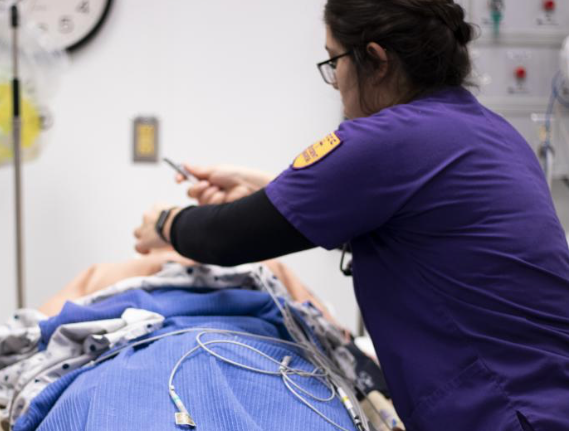
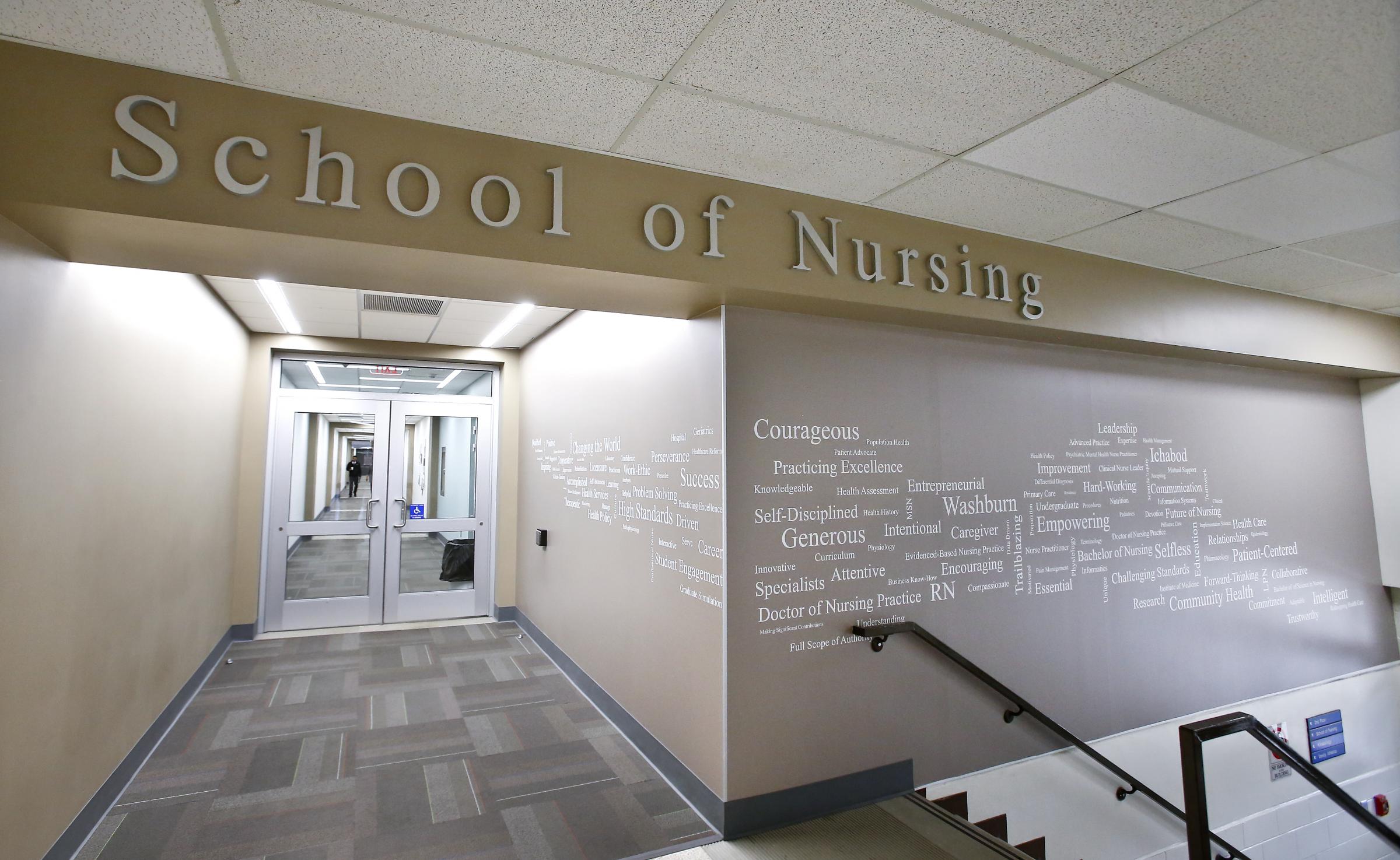
Nursing school. Many nurses eventually work on master’s or doctorate degrees to become nurse practitioners. BETHANY WOOD / FOR THE KANSAS NEWS SERVICE
But why stay? Adams has her eyes on Nevada, a state that lets its most educated nurses roll up their sleeves and work without permanently needing, as they do in Kansas, permission from a physician.
“I want to practice in a state that recognizes our qualities and our academic experience,” she said.
Kansas makes advanced practice nurses ink deals with doctors that physicians say protect patients by ensuring those nurses will collaborate with their more educated colleagues.
Nurses disagree. They insist the contracts do little more than limit patient options, allow doctors to fend off unwanted competition, and, in some cases, give them a cut of nurses’ earnings for little to no work.
Nationally, one state after another has come around to that way of thinking — dropping contract requirements like those in Kansas. Physicians trying to stop the trend fight back with less and less success.
That’s like the days back in the 1950s, when a physician would go to medical school and then do a rotating internship. – Dr. John Eplee, state lawmaker
“This has kind of been painted like it’s a turf war,” said Rep. John Eplee, an Atchison family physician and state lawmaker opposed to lifting Kansas’ restrictions on nurse practitioners. “What this boils down to is, we just want patients to have access to safe care.”
If Kansas scraps the contracts, he argues, why would physicians stick around in a state where nurse practitioners can take a shortcut through less schooling?
“That’s like the days back in the 1950s,” he said, “when a physician would go to medical school and then do a rotating internship and then go out and practice. No one does that anymore because society requires more training and higher standards.”
That’s not how the National Academy of Medicine, the Federal Trade Commission, and many public health and health workforce researchers see it. To them, physicians in holdout states don’t have the goods to back their alarmism.
“No studies suggest that (advanced practice nurses) are less able than physicians to deliver care that is safe, effective, and efficient,” the National Academy of Medicine says, “or that care is better in states with more restrictive scope of practice regulations. …
“In fact, evidence shows that nurses provide quality care to patients, including preventing medication errors, reducing or eliminating infections, and easing the transition patients make from hospital to home.”
Welcome to the NP ‘revolution’
Walk into your local medical clinic and you’re increasingly likely to be seen by a nurse practitioner instead of a physician. In the span of about a decade, the number graduating from nursing schools has more than tripled.
Ed Salsberg calls that “phenomenal.”
The founder of the National Center for Health Workforce Analysis at the U.S. Department of Health and Human Services and of the Center for Workforce Studies at the Association of American Medical Colleges suspects nurse practitioner graduates will rocket past the nation’s supply of new physicians within a few years.
“It really has been sort of a revolution,” says Salsberg, now a faculty researcher at the George Washington University School of Nursing.
He originally raised red flags, worried the nation was charging toward a surplus of NPs unable to put all that graduate education to use.
But so far, he says, the U.S. has “soaked them up.”
More than two-thirds work in primary care, something that nurses, physicians and policymakers alike see as a blessing. Studies show those NPs can offer much of the routine health care that doctors provide, then refer cases beyond their training to the physicians.
But many doctors want to retain oversight or other control of that burgeoning cadre, including by requiring NPs to enter contracts that Kansas calls “collaborative practice agreements.”
About half of states have dropped such contracts for all NPs or all those with more than a couple years of experience, a trend that began decades ago.
In states that haven’t, the same legislative wrestling match between advanced practice nurses and physicians plays out one year after the next. Emboldened by research validating their safety and by health care shortages affecting millions of Americans, nurses refuse to back down.
The U.S. doesn’t have enough doctors — or at least, parts of it don’t. Its population is growing and, since the 2010 Affordable Care Act, more of those people are insured.
Exacerbating that: The giant Baby Boomer generation is reaching an age that requires more health care. The generation’s doctors are retiring. One in threeKansas physicians is over 60 years old, at a time when 1 million Kansans already live in areas with primary care shortages.
Researchers say states that roll back restrictions on NPs have more of them, with notable benefits for underserved communities. Skeptics argue that government could plot a different course instead, with targeted dollars for medical residencies and other incentives to reinforce physician ranks in the right places.
“The reality is, it’s probably a little of all of it,” says Candice Chen, former director of the medical and dentistry division at the federal Bureau of Health Workforce and an expert on graduate medical education at GWU’s School of Public Health.
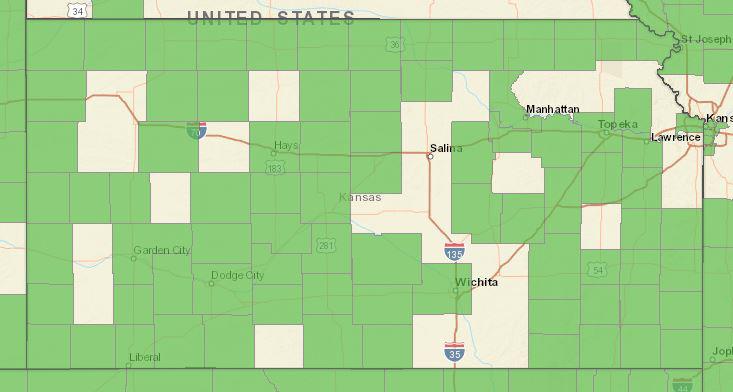
A map showing Kansas counties, in green, with shortages of primary care providers, generated by data.hrsa.gov.
The National Center for Health Workforce Analysis, she notes, predicts a shortage of more than 20,000 primary care doctors by 2025. NPs can help fill the gap.
Where doctors tend not to go
Sofia Navarro was a pediatric nurse at Children’s Mercy Hospital when she headed back to school to become a nurse practitioner.
She envisioned going into private practice, in a shiny new office with all the nicest gadgets and equipment that a health care pro could want.
That changed when a professor suggested Navarro wrap up her gynecological studies working public health in one of the state’s poorest places, Wyandotte County.
“I ended up falling in love with public health,” she said.
More than a decade later, she’s still there, screening women for cervical and breast cancer and explaining puberty to teens. About half her patients, she estimates, have no insurance or policies that don’t pay for much.
Peter Buerhaus is chairman of the National Healthcare Workforce Commission, a body created by the Affordable Care Act to puzzle out health care access.
He and others have plowed ahead with research for the commission on their own, mining Medicare and other data. Their findings?
NPs are more likely than doctors to serve people on Medicaid or without insurance, and people of color. The same goes for another of Kansas’ sore points — rural areas.
“There’s a strong body of evidence now,” said Buerhaus, a professor at Montana State’s School of Nursing. “Nurse practitioners are more likely to work in rural areas than physicians.”
Medicare data also suggests their care costs less, Buerhaus says, and not just because Medicare pays them less. NPs appear to order fewer tests and procedures and pick cheaper options when they do.
Goal No. 1: Protecting patients
LaDona Schmidt knows what it’s like to be a nurse practitioner. And a physician. The Lawrence doctor has been both.
What she learned from that transition opened her eyes. She went from knowing the basics of prescription drugs, she says, to understanding their workings at the cellular level.
Medical school, she testified to Kansas lawmakers, helped her save the life of a 4-year-old whom an NP had diagnosed with stomach flu.
“She recommended Tylenol, fluid, and ‘time,’” wrote Schmidt, the Kansas Medical Society’s president-elect. The mother sought care again the next day. Schmidt noticed the child’s enlarged liver, ordered tests and put him in the hospital.
“He continued to progress to liver failure,” she said, “and fortunately was able to receive a liver transplant two weeks later.”
Schmidt declined an interview. She and other Kansas physicians opposed to ditching collaborative practice agreements point to training. Family doctors slog through four years of medical school and three years of residency. Many specialty residencies last even longer.
NPs typically attend a two-year master’s program, though universities in Kansas and elsewhere are shifting to doctorates.
Stories like Schmidt’s frustrate Monica Scheibmeir, dean of Washburn University’s School of Nursing in Topeka.
“Whenever my well-respected physician colleagues make comments about errors, they should remember they live in a glass house,” she said. “And that never gets brought up.”
Other researchers with medical and nursing backgrounds agreed. Absent data, physicians’ anecdotes remain just that — anecdotes.
“There are horror stories about physician providers like that too, right?” said Chen at GWU, a trained pediatrician. “We have to figure out how to prevent those horror stories.”
That means training providers of all stripes to know their boundaries, she said, and when to involve doctors or nurses with expertise different from their own to address a patient’s care.
The FTC is unconvinced that restricting NPs is needed to achieve that. Collaboration is “‘the norm” even in states that don’t make NPs secure physician contracts, it says. NPs still refer their patients to physicians and hospitals.
The FTC warns of a one-way street that positions doctors as market gatekeepers. That can stifle competition and stick consumers with higher bills.
There are horror stories about physician providers like that too, right? We have to figure out how to prevent those horror stories. – Dr. Candice Chen, George Washington University
Though some states, such as Kansas, call their contracts “collaborative agreements” and dodge words like “supervision,” the power dynamic is clear:
Doctors don’t need the deals, nurse practitioners do.
A V.A. treasure trove
In 2014, a research team at the Department of Veterans Affairs that included physicians dug into past studies in search of the impact of NPs on patient health, quality of life and hospitalizations.
They found no negative impacts, but noted that recent, rigorous research was thin — and weaker than advertised by some proponents of unfettered NPs. Still, they said the lack of fresh studies wasn’t surprising.
“Well-publicized, well-conducted randomized trials conducted in the 1970s proved the concept” that independent advanced practice nurses “can deliver care comparable to that provided by a primary physician.”
The team suggested the VA could dig further by mining its own extensive quality and error data.
In 2016, the VA dropped collaborative contract requirements for NPs — including those working in states such as Kansas. A spokeswoman said the VA expects to complete a fresh study next year on the effects of independent practice.
Kansas NPs point to the VA’s 2016 decision to try to win over state lawmakers. They’ll try again next year after this year’s bill died in a legislative maneuver to expand Medicaid. Their new version offers to make new NPs work a few years before dropping their contracts with doctors.
Kansas physicians say they’re open to compromise of a different sort. They remain skeptical of granting NPs independent practice and distrust the Board of Nursing’s ability to oversee NPs if they get it.
So keep the contracts, they suggest. Just improve them. Make sure doctors don’t abuse them for financial gain and slack off on giving NPs meaningful help.
“We work side by side with these folks every day,” says Jeremy Presley, a private practice doctor in Dodge City and president of the Kansas Academy of Family Physicians. “We value the care they provide.”
Presley teaches nurse practitioners, works with them daily and sits on the advisory board for one of Kansas’ doctoral nurse practitioner programs.
Kansas lets doctors ink deals with as many NPs as they want, and charge as they see fit. Some may work in the same building as the NPs. Others, across town. Still others, 100 miles away.
NPs offer anecdotes of physicians overseeing and charging half a dozen NPs in scattered locations without consulting regularly or at all.
“I feel bad for those folks,” Presley said. “Frustrated for them, that those agreements aren’t in a better — you know, aren’t set up in a better way.”
But it’s unclear how common such situations might be because neither the nurses nor the doctors report contract details to the state.
Nor is it clear how much income Kansas physicians collect this way.
A new national study found advanced practice nurses face contract fees more often if they work in rural areas or at nurse-operated clinics. In those cases, contract prices charged to the nurses or their clinics often topped $6,000 and ranged up to $50,000 annually.
In a small and not necessarily representative survey conducted by the Kansas Advanced Practice Nurses Association, half of 180 respondents said their collaborating physician got monetary compensation.
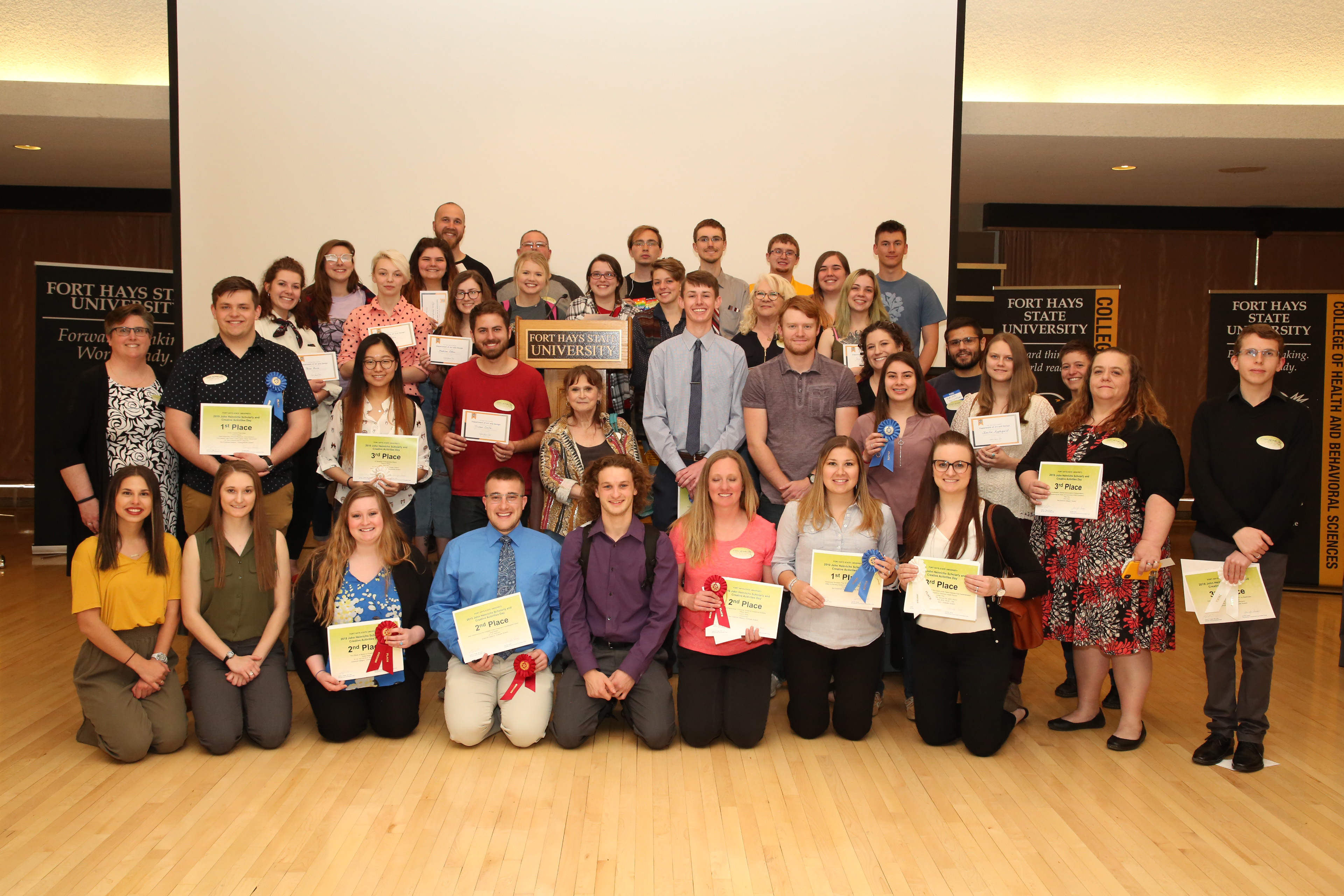
Over 100 posters were exhibited and over 840 students, faculty and community members participated as presenters or attendees at Fort Hays State University’s annual John Heinrichs Scholarly and Creative Activities Day on Wednesday, April 24.
An exhibit of 150 creative works was also available for viewing. Twenty oral presentations were given by faculty and students and special lectures, receptions and exhibits also took place on campus.
FHSU annual John Heinrichs Scholarly and Creative Activities Day, 2019
The John Heinrichs Scholarly and Creative Activities Day celebrates the research, scholarly and creative work conducted by varied disciplines within the university. Departments across campus sponsored special activities, including seminars and research presentations.
The main event was a poster and creative works exhibition in the FHSU Memorial Union Ballrooms featuring student and faculty work from College of Arts, Humanities and Social Sciences, the W.R. and Yvonne Robbins College of Business and Entrepreneurship, the College of Education, the College of Health and Behavioral Sciences and the Peter Werth College of Science, Technology and Mathematics.
Awards were given for poster presentations to Undergraduate, Graduate, and Faculty/Staff for Empirical and Non-empirical research and scholarly work. A “People’s Choice Award” was also given.
The following awards are listed by category.
Empirical research involves examining a research question that is clearly defined and answerable by using standardized statistical methods on collected data. This may include either quantitatively or qualitatively collected data.
Non-empirical research is a comprehensive and careful consolidation of available information within a domain or a reinterpretation of that information within a new framework or context. Non-empirical research does not use standardized statistical methods on collected data.
Undergraduate Students – Empirical
1st – Jacob Lutgen, Basehor senior majoring in biology, presented “RNA Interference of X-Box Binding Protein 1 in Acyrthrosiphon pisum.” Co-investigators were Dr. James Balthazor, assistant professor of chemistry, and Jared Ridder, Buhler graduate student majoring in biology.
2nd – Rylee Staab, Holcomb junior majoring in criminal justice, presented “The Effects of Stress on Prospective Memory.” Co-investigators were Dr. Gordon Carlson, associate professor of communication studies, and Dr. Trey Hill, chair of the Department of Psychology.
3rd – Skylar Markham, Maple Hill senior majoring in chemistry, presented “Synthesis of 2,2’-Bipyridine Via a Phosphorus Extrusion Reaction.” Co-investigators were Dr. Bruce Atwater, assistant professor of chemistry, Kaitlyn Hillery, Winona sophomore majoring in chemistry, Sierra Smith, Larned freshman majoring in chemistry, and Dr. Benjamin Wicker of Southeastern Louisiana University. Undergraduate Students – Non-Empirical
1st – David Oakley, Lyndon junior majoring in political science, presented “FHSU Student Price Index.” Co-investigators were Dan Fisher, Paola senior majoring in human resource management, Zetta Hamersley, Butler sophomore majoring in political science, Ciara Helstrom, Sedgwick sophomore majoring in management, Cory Hiebert, Halstead junior majoring in international business, Dr. Yang Jiao, assistant professor of economics, finance, and accounting, Hannah Magathan, Meriden senior majoring in finance, Dr. Sam Schreyer, associate professor of economics, finance, and accounting, Brady Stephenson, Little River sophomore majoring in finance, and Cristal Ugarte, Kansas City graduate student majoring in business administration.
2nd – Kylee Poague, Salina senior majoring in nursing, presented “Effect of Physical Activity on Blood Glucose Control.” Dr. Christine Hober, professor of nursing, and Darby Hirsch, Topeka senior majoring in nursing.
3rd – Seoyun Jeong, Indianapolis KAMS student, presented “3D Modeling of Phospholipid Bilayer.” Co-investigators were Dr. Krisztina Bencze, assistant professor of chemistry, Sujin Kim, South Korea KAMS student, and Carlson.
Graduate Students – Empirical
1st – Blake Chapman, Montgomery, Texas, geosciences major, presented “Predicting the Distribution of the Extinct Sea Bird Hesperornis.” Dr. Laura Wilson, associate professor of geosciences was the co-investigator.
1st – Steven Bolin, Olathe psychology major, presented “Evaluating the Effect of Mental Illness Stigma on Voting Behaviors.” Brooke Mann, instructor of psychology, was the co-investigator.
2nd – Jared Ridder presented “RNA Interference of the Unfolded Protein Response in Acyrthosiphon pisum.” Balthazor was the co-investigator.
3rd – Jonathan Clayton, Mullinville political management major, presented “What Makes a State Swing?” Graduate Students – Non-Empirical 1st – Christina Lawver, Plainville nursing major, presented “Performing Simulation Prior To Operating Room Clinicals And Its Effect On Nursing Student’s Perception And Overall Experience.”
1st – Peng Zhang, China, general studies major, presented “The Next Dimension 3.0.” Co-investigators were Dr. Nicholas Caporusso, assistant professor of informatics, Conner Chessmore, North Platte, Neb., information networking and telecommunications major, Yangyang Cui, China, web development major, Meng Ding, China, web development major, and Monica Michaud, Hays computer science major, and Carlson.
2nd – Tiffany Tipton, Holcomb special education major, presented “Parent Partnerships: Promoting Growth of Exceptional Students.” Co-investigators were Jerrie Brooks, advanced education programs instructor, and Dayne Fletke, Middleville, Mich., graduate student.
3rd – Tipton presented “Effects of Audiobooks and Group Discussion in Inclusive Special Education.” Dr. Brooke Moore, interim chair of the Department of Advanced Education Programs, was the co-investigator.
3rd – Helber Fernandes Ribeiro, Brazil music performance major, presented “Creating a performance of the Sonata op. 111 by Beethoven.” Dr. Eduardo Henrique Soares Monteiro was the co-investigator.
3rd – Petz presented “Nursing Student Perception of Time Spent at the Patient Bedside Post Implementation of a Replica Academic Electronic Health Record.” Co-investigators were Alicia Arias, assistant professor of nursing, Hober, and Shauna Keil, assistant professor of nursing.
3rd – Scout Harrison, Brooklyn, Wisc., biology major, presented “Plant-Soil Microbiome Feedback Impacts on Native and Non-native Grasses Throughout Kansas.” Dr. Mitchell Greer, assistant professor of biological sciences, was the co-investigator.
Faculty – Empirical
1st – Caporusso presented “User Discrimination of Content Produced by Generative Adversarial Networks.” Co-investigators were Daniel Jachetta, Brighton, Colo., senior majoring in management information systems, Devon Patchin, Mound Valley freshman majoring in information networking and telecommunication, Spencer Romeiser, Otis information assurance management major, Noah Vaughn, Hays freshman majoring in information networking and telecommunications, Dr. Angela Walters, interim chair of the Department of Informatics, Kelei Zhang, instructor of informatics and Carlson.
2nd – Dr. Amanda Buday, assistant professor of sociology, presented “Impact Geographies of Wind Energy Development in Kansas.” Co-investigators were Dr. Keith Bremer, assistant professor of geosciences, Ashten Clark, Fowler senior majoring in geosciences, Connor Mountford, Colby senior majoring in political science, Connor Phelan, Holyrood geosciences major, and Criquet Smith, Berryton junior majoring in geosciences.
3rd – Dr. April Terry, assistant professor of criminal justice, presented “The gravel pathway to the revolving door: Criminal justice involvement for girls from rural coercive sexual environments.” Autaum Poley, Concordia senior majoring in criminal justice, was the co-investigator. Faculty – Non-Empirical
1st – Dr. Amanda Adams, instructor of biological sciences, presented “Bats’ use of natural areas in an urban landscape.” Co-investigators were Natalie Allison, Lawrence freshman, Sandra Ruelas-Aranda, Rolla freshman majoring in nursing, Clayton Sargent, Canton junior majoring in biology, Jacob Schumacher, Garden Plain freshman majoring in agriculture, Matthew Tanis, Cawker City freshman, Curtis Schmidt, museum collections manager, and Greer.
2nd – Dr. Jackie Lubin, assistant professor of advanced education programs, presented “Teaching College Students with Autism Spectrum Disorder (ASD).”
3rd – Kelly Cole, assistant professor of nursing, presented “Incentivization Towards Advancement in Professionalism – Underlining the Impact and Importance of BSN Completion.” Arias was the co-investigator.
Terry and Poley won the People’s Choice Award for their poster.
The following art exhibition awards are listed by category.
Ceramics
Kaitlyn Scriven, Wichita freshman majoring in art, with “Baeshara Galanodel.” This piece also won the People’s Choice Award for art.
Haley Gottschalk, Westminster, Colo., junior majoring in art, with “Nest Basket.”
Clayton Barnett, Wichita sophomore majoring in art, with “Brick Box.” Sculpture
Braden Bartlett, Cheney senior majoring in art, with “Up in Smoke.”
Emily Kohls, Hutchinson senior majoring in art, with “Birth of Venus.” Ben Cornwell, Bison senior majoring in art, with “Ring #2.” Drawing
Kohls with Self-Portrait in “Blue.”
Tristan Smith, Larned senior majoring in art, with “Self-Portrait.” David Younger, Victoria junior, with “Wiggly Field.” Painting
Noah Wellbrock-Talley, Salina senior majoring in art education, with “Self-Portrait.” Sam Brown, Hoxie senior majoring in art, with “Wonderland.”
Kohls with “REM.” Printmaking
Alexis Karabinas, Salina junior majoring in art, with “Oof.” Chandler Reich, Russell junior majoring in art, with “Monoprint and Self 1.”
Molli Banks, Great Bend sophomore majoring in art, with “Unconditional.” Photography
Laura Kelly with “Noir #2.”
Jennifer Applequist, Larned junior majoring in accounting, with “Morning Market.”
Liz Mayne, Avendale, Ariz., senior majoring in art, with “Tropical.” Design
Madison Otter, Great Bend junior majoring in graphic design, with “Rupert Dominos.”
Kylie Thomas, Garden Plain junior majoring in graphic design, with “Milieu Collages.”
Tessa Kriss, Emporia senior majoring in graphic design, with “Ace and Co.” Graduate Art
Libby Reimer, Hesston graphic design major, with “Wise One.”
Kathy Robb, Kansas City art major, with “Contemplation.” Zane Mahanna, Hoxie art major, with “Atomic Scarecrow.” Jordan Brown, Hays senior majoring in art, was awarded the Senior Recognition.
Jee Hwang, assistant professor of art and design, received the Faculty Recognition. Diana Unrein, Hays, was given the Special Student Recognition.
“This is the 14th year for this prestigious event,” said Leslie Paige, office of scholarship and sponsored projects, “It not only showcases the significant work being conducted by faculty and staff, but also exemplifies the opportunities that FHSU students have to conduct research, engage in scholarship and to produce creative works, with guidance from their faculty mentors.”
Scholarly and creative activity encourages critical thinking, innovation, collaboration, and leadership. Participation provides the opportunity to clarify academic and professional goals while promoting advancement in a particular field of study. Fort Hays State University supports developing new areas of excellence in all disciplines as part of its mission to advance knowledge and further the economic growth of the state.
Dr. John Heinrichs
Named after the late Dr. John Heinrichs, who championed research at FHSU, Scholarly and Creative Activities Day is sponsored by the Fort Hays State University Scholarship Environment Committee, with support from the Office of the Provost, the Deans, the Kansas Academy of Mathematics and Science, the Graduate School, the Office of Scholarship and Sponsored Projects, Forsyth Library and other FHSU colleges and departments.
Door prizes donated by area businesses include: Auto World, Billy Sims BBQ, Gella’s, Indigo, Nex-Tech Wireless, Pools Plus, Regeena’s Flowers and Events, and Salon 1007/Rock Haven.
The 15th annual John Heinrichs Scholarly and Creative Activities Day has been scheduled for April 22, 2020. The public is invited to attend.
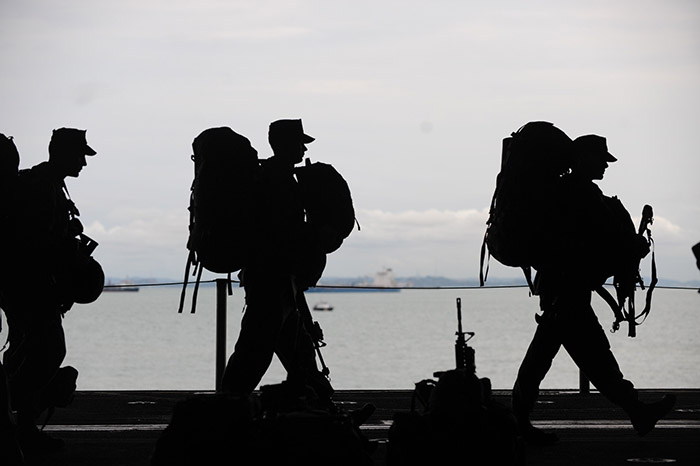
LAWRENCE — When one thinks of the military, images of elite, highly fit soldiers often come to mind. Conversely, talk of eating disorders generally steers toward undernourished individuals, often young women. However, data has shown that the prevalence of eating disorders in the military is roughly the same as in general society, and two University of Kansas researchers have secured a grant from the Department of Defense to develop a screening to detect eating disorders among the nation’s soldiers and identify organizational barriers to identifying and treating them.
Kelsie Forbush, associate professor of psychology, and Alesha Doan, associate professor of women, gender & sexuality studies and faculty member in the School of Public Affairs & Administration, have secured a three-year, $1.7 million grant to study eating disorders in the military, adapt a previously successful screening tool and determine organizational challenges to detecting and treating eating disorders in both active-duty soldiers and veterans. The grant is administered by KU’s Life Span Institute.
Active military face a wide range of dangers on the battlefield, and the risks of post-traumatic stress are well-documented. However, the constant pressure to meet fitness standards, physical requirements to enlist and expectation for leaders to maintain fitness levels as role models all can lead to eating disorders.
Kelsie Forbush
“Many people are not aware that the military has rigorous standards that require military personnel to meet specific body mass and other physical fitness standards,” Forbush said. “In addition to physical fitness and body mass standards, in deployment situations, soldiers can experience additional pressures that can lead to disordered eating. The availability of calorie-dense ‘meals, ready to eat’ and high-calorie cafeteria-style comfort food served in chow halls can cause weight gain. Active-duty service members are also exposed to stress and trauma, which may lead to unhealthy eating behaviors in an attempt to cope with traumatic experiences and temporarily ‘escape’ from negative emotions.”
Recent studies show that eating disorders occur in about 13 to 15 percent of young women and 3 percent of young men in the general population, and those statistics are approximately the same among members of the military. That number could actually underestimate the total in the military as there is not currently a servicewide screening to detect eating disorders, and those most often used in general populations rely on highly gendered questions most applicable to young women, Forbush said.
Failure to maintain body mass index and fitness standards can lead to referral to weight-loss programs and, potentially, discharge from service. Further, eating disorders have the highest mortality rate among all mental health disorders. Yet, despite the severity, no screening is in place for recruits and active-duty military or within the Veterans Health Administration system. Forbush’s research group has developed a screening known as the Eating Pathology Symptoms Inventory, shown to comprehensively measure disordered eating in both men and women.
The researchers will work to adapt the screening to identify veterans who may have eating, mood, anxiety or trauma disorder. A nationally representative sample of 1,000 men and women discharged from the military within one year will take the screening at four time points. The reliability and validity will be tested, and a shorter form will be developed and tested with a second sample of 400 veterans to determine if the screening can accurately identify cases of eating, mood, anxiety or trauma disorder.
The screening will be designed to detect disordered eating and other potentially dangerous behaviors such as muscle building, excessive exercise, purging and restricting.
Alesha Doan
Doan will lead research into organizational barriers by conducting interviews with a subset of 100 veterans on their perceptions of institutional and cultural issues that may prevent identification and treatment of eating disorders.
“We’ll be looking at organizational practices and policies that may factor into eating disorders and perhaps impede treatment,” Doan said. “We want to better understand how the environment may be creating formal barriers that contribute to the problem. For example, eating disorders are often viewed as a health issue that affects women. Understanding this issue as a gendered problem may heighten stigma for men seeking treatment in the organization.”
By developing effective screening, the researchers hope the military can implement measures to detect enlistees at risk of eating disorders when they enter, identify current soldiers also at risk or currently displaying disordered eating behaviors and to serve veterans who suffer from eating disorders. Potential recruits often feel pressure to lose weight rapidly in order to qualify, active-duty military face high levels of stress, and veterans often deal with post-traumatic stress, all of which can contribute to disordered eating. To complicate matters, obesity is a problem throughout society. Early detection and treatment could greatly enhance military readiness, the researchers said, as well as lead to improved health following treatment.
In addition to the Department of Defense funding, Forbush has received $330,000 in Research Excellence Initiative funding from KU’s College of Liberal Arts & Sciences. The funding will support two years of research via an Academic Accelerator Award in the College, which will allow Forbush to complete a longitudinal research project designed to improve the ability to predict who will recover or relapse from an eating disorder and to provide treatment to KU students experiencing eating disorders.
The military project is also among the first to examine eating disorders and related mental health conditions among veterans on a national level. Thus, Forbush and Doan said they hope the results will not only contribute to the understanding of the scope and effects of eating disorders in post-9/11 veterans but demonstrate the need for a national VA program to address them.
SEDGWICK COUNTY — Law enforcement authorities are investigating a burglary and have two teen suspects in custody.
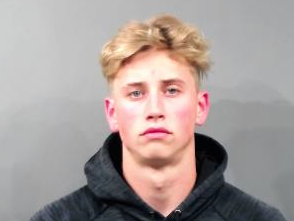
Dylan Dominick-photo Sedgwick Co.Nick Dominick-photo Sedgwick COunty
At approximately 12 a.m. Friday, officers responded to a burglary-in-progress call at the Central Plaza building, 111 W. Douglas in Wichita, according to office Charley Davidson. The reporting party stated unknown suspects were inside the building damaging property.
Upon arrival, officers observed Nick Dominick and Dylan Dominick exit the building and they were arrested without incident. Officers also located several windows damaged throughout the building
The teens are being held on requested charges of burglary and destruction to property, according to Davidson.
The investigators will present the case to the Sedgwick County District Attorney’s Office.
RENO COUNTY— Law enforcement authorities are investigating a robbery and have a suspect in custody.
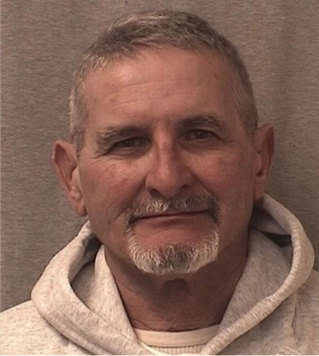
Crenshaw -photo KDOC
Just after 6:30p.m. Friday, police were dispatched to the Anima Bella Salon, 16 South Main in Hutchison reference a robbery where currency was taken, according to a media release.
With help from the Reno County Sheriff’s office the suspect was later identified.
Just after 10:30a.m. Saturday, police located and arrested Jackie D. Crenshaw, 66, Hutchinson, for the robbery. He is confined at the Reno County jail with a bond of $10,000, according to the release. The case will be presented to the Reno County District Attorney’s office.
Crenshaw has over two dozen convictions that include forgery, theft, burglary and for drugs, a according to the the Kansas Department of Corrections.
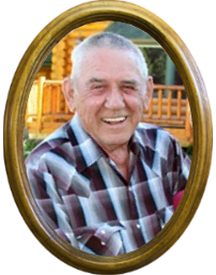
Jacob “Jake” Kelling, 85, passed away Thursday, May, 9, 2019 at Smith Center Heath & Rehab, Smith Center, KS.
Jake was born March 3, 1934 in Cedar, KS, the son of Allen S. and Lena M. (Genthe) Kelling. On February 12, 1954 he married Donna Gayle Miller in Kensington, KS, to this union they were blessed with three children, Theresa, Mike and Dawn. Donna and Jake were able to celebrate 62 years of marriage together before her passing on October 9, 2016.
He was preceded in death by his parents, wife Donna, two sisters, Ruby Tomlinson and husband Jack, and Fern Balsam and husband Jim, and a son-in-law Gunnar Hall.
Jake is survived by one son, Mike Kelling & wife Mable of Amarillo, TX; two daughters, Theresa Hall of Atwood and Dawn Schmalzried & husband Rory of Castle Rock, CO; one sister, Mavis Parnell and husband Chuck of Solomon, KS; six grandchildren, Katrenia Sankovich, Jake Kelling, Heath Schmalzried, Tyler Schmalzried, Jack Schmalzried & wife Ashley, Hope Payne & husband Norris and six great-grandchildren, Creighton and Addie Sankovich, Rhys and Tate Schmalzried, Owen and Lucas Schmalzried and many nieces and nephews.
A celebration of Jake’s life will be held at 10:00 a.m., Tuesday, May 14, 2019 at All Faiths Funeral Chapel, Smith Center, KS. Visitation will be held on Monday, May 13, 2019 from 1:00 p.m. to 8:00 p.m. with family present to greet friends from 5:00 p.m. to 7:00 p.m. at the funeral chapel. Memorials may be given to Smith Center Library and can be sent in care of the funeral chapel.
Sharon B. Price, 79, of Larned, Kansas, was welcomed into the arms of her Lord and Savior Jesus Christ on May 10, 2019 at Country Living of Larned.
She was born September 22, 1939 in Rozel, Kansas, the daughter of Alfred and Mildred Bruntzel. Growing up in Rozel, she met and married her high school sweetheart, Larry Price on January 14, 1956. They celebrated 47 years together before Larry preceded her to heaven on May 30, 2003. Together they had two children, a son Gene Price (Sharon) of Larned, Kansas and daughter Tonya Burton (Rusty) of Medicine Lodge, Kansas. She has five grandchildren, Anna Connell (Matt), David Price, Joseph Price, Michael Price, Jennifer Burton, and three great grandchildren, Aubrey Burton, Ethan Connell, and Zoey Connell, as well as, Many nieces and nephews and great nieces and nephews. She was preceded in death by her brother, Eldred Bruntzel and sister JoAnne (Simmons) Selzer. To her family and friends, she was faithful and never wavered in her belief in our Lord Jesus. She had many accolades, of which, she cherished being a wife, mother, grandmother and great grandmother most.
Funeral services are to be held at Beckwith Mortuary, Saturday, May 18th at 10:00 a.m., with Pastor Roger and Elaine Alford presiding. Following the service, dinner for family and friends will be provided at the First Christian Church fellowship hall, the corner of E. 8th Street and Topeka. Visitation is to be Friday, May 17th from 9 a.m. to 8 p.m. with family present from 6 p.m. to 8 p.m. at the mortuary. Burial will be in the Larned Cemetery, Larned.
Memorials may be given to the American Cancer Society or the Roger Alford Ministry in care of Beckwith Mortuary, Box 477 Larned, KS 67550.











 Today
Today