In order to attempt to preserve a bit of history often overlooked, the Ellis High School Alumni Association Cookbook Committee is working on a special project.
The Committee is now accepting recipes from a variety of community sectors, including past and present teachers, school cooks, administrative members of the school district, graduates or EHS Class of 2019.
Recipes are being collected now and includes those who attended/taught at the old country schools, St. Mary’s School, Washington Grade School, Ellis Junior High and Ellis High School facilities. You may submit “in memory of” any EHS Alum.
To submit recipes (a limit of 4 recipes per family), you can email to: [email protected], or download a form off of our Facebook page: Ellis High School Alumni (KS), or pick up a form locally from the Ellis Review, Ellis Alliance, Trio Home Center, Ellis Golf Club, USD 388 District Office, Ellis Credit Union, Salon 816, Golden Belt Bank and Equity Bank.
Recipes can be returned to the above mentioned email address or to PO Box 212, Ellis, KS 67637. Recipes are due by May 31 in order to be put in the cookbook. Publication target date is this fall.
A fresh push by school districts to get Kansas to pony up more money for public education met with skepticism Thursday from the Kansas Supreme Court.
Justices had pointed questions for both sides in the lawsuit that began in 2010 and has already gone through multiple rounds of oral arguments and rulings.
The justices, who so far have consistently ruled in favor of the districts, may be ready for it to be over.
Justice Eric Rosen called it frustrating that the funding goal that school districts argue for seems to be a moving target.
“Is there ever ‘crossing the finish line’ in these types of cases?” Rosen asked the districts’ attorney, Alan Rupe. “Or are you going to be back here three or four years down the road, making the same argument you just made?”
Rupe responded that all the court has to do is tell lawmakers to redo the inflation adjustment and districts would be satisfied.
“I think we’re getting real close,” Rupe said.
The question at hand in Gannon v. Kansas is whether the state has done enough to finally end a nearly decade-long lawsuit over school spending.
Last June, the justices ordered the state to increase funding to account for inflation. Lawmakers did so this spring.
So the attorney representing the state, Toby Crouse, argued it should be “case dismissed.”
But the question is whether lawmakers added enough.
Rupe, who’s been fighting the state for more education funding for three decades, questioned the state’s inflation calculations and asked the justices to make lawmakers recalculate when they return for the 2020 legislative session.
How much is enough?
Lawmakers took a major step last year, by promising to phase in a half billion dollars for schools.
That got close to ending the lawsuit, except for the inflation problem that justices identified.
Crouse said the plan to add $90 million per year for four years should end the litigation.
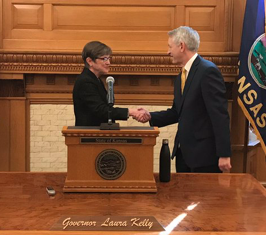
He argued that approval this year from a bipartisan group of lawmakers and Democratic Gov. Laura Kelly give credence to the state’s solution.
“Everyone agrees that this is what satisfies not only the constitution,” Crouse said, “but also the best interests of the children.”
Rupe said the state continues to fall short because its new solution only calculated inflation for part of the funding increase to schools, not overall spending.
“You don’t figure the inflation on a loaf of bread by taking one slice and figuring the inflation on that slice,” Rupe said. “It’s on the whole loaf of bread.”
School districts contend spending ultimately has to reach levels consistent with a court ruling from the mid-2000s that dramatically increased school funding and ended a previous lawsuit, Montoy v. Kansas.
Hitting that target based on the Montoy agreement would take $3.7 billion in total annual funding by 2023, the districts argue. And it would shield the Legislature from litigation. But hitting that target would take another $270 million in annual funding by 2023 over what the state has promised.
Rupe says that’s an important difference, because $270 million could pay for 5,400 teachers.
Justice Dan Biles was skeptical the state needs to spend that much to meet constitutional requirements.
“That safe harbor number,” Biles said, “doesn’t necessarily mean that’s the minimum level necessary to comply with the constitution.”
Should the court trust the Legislature to keep its promises?
Even if they sign off on lawmakers’ latest fix, justices questioned the state’s request to dismiss the lawsuit.
Biles said the state would not be in full compliance with the court until it had paid out all the money in the school spending deal, which will take several years.
“I’ve got to tell you, I don’t have a lot of sympathy for the idea of dismissing this lawsuit,” Biles said.
There’s fear the governor and the Legislature might go back on their promises for more robust funding. They’ve done it before.
School districts filed the current suit, Gannon v. Kansas, in 2010, after governors Kathleen Sebelius and Mark Parkinson slashed school funding amid the global financial crisis and recession. The districts argued those cuts violated commitments the state made to end the Montoy lawsuit.
The district court and Kansas Supreme Court agreed. In ruling after ruling, they’ve pushed the state to restore hundreds of millions of dollars to its school funding formula. That included restoring targeted money meant to put poorer areas of the state on more equal footing with wealthier ones in terms of resources for education.
What if, Biles wondered, the court drops the case and the Legislature goes back to block grants or other funding schemes that have been found unconstitutional? Plaintiffs would have to start over at district court.
“When what the Legislature did is something we’ve already said they can’t do,” he said. “So that’s my problem.”
Stephen Koranda and Celia Llopis-Jepsen are reporters for the Kansas News Service. Follow Stephen on Twitter @kprkorandaand Celia @Celia_LJ.
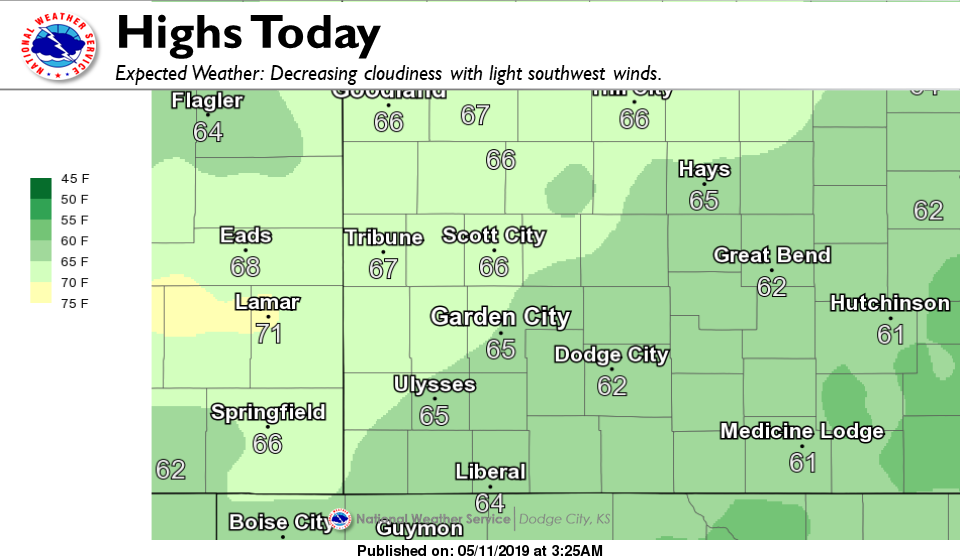
Mostly cloudy, then gradually becoming sunny, with a high near 66. Southwest wind 5 to 9 mph.
Tonight
A 30 percent chance of showers and thunderstorms, mainly before 11pm. Mostly cloudy, with a low around 42. South wind 7 to 10 mph becoming north northwest in the evening.
Sunday
Sunny, with a high near 68. Northwest wind 8 to 17 mph.
Sunday Night
Clear, with a low around 43. North wind 5 to 9 mph becoming light and variable after midnight.
Monday
Sunny, with a high near 77. South southeast wind 5 to 9 mph.
Monday Night
Mostly clear, with a low around 53.
Tuesday
Sunny, with a high near 82.
Tuesday Night
Partly cloudy, with a low around 55.
Wednesday
A 20 percent chance of showers and thunderstorms after 1pm. Sunny, with a high near 78.
RENO COUNTY. – Law enforcement authorities are investigating an attempted robbery and have four suspects in custody.
Just after 4:30 p.m. Friday Hutchinson Police Officers were dispatched to the Kansas State Fairgrounds reference to a shooting at the RV park, according to a media release.
Armando Castillo Jr, of Mineral Wells, Texas reported being confronted by four individuals while inside his 5th wheel camper. He was battered but was able to grab a firearm he had hidden in the camper. Castillo fired several shots to try and get the neighbors to call 911.
Everyone involved was still on scene when officers arrived. No injuries were reported due to gunfire. During the investigation, it was discovered that the suspects came to Castillo’s camper to get cash.
Police arrested four suspects identified as 22-year-old Kaleb Schyler Beard, 23-year-old Kerrah Schulze, 20-year-old Richard Fenters and 22-year-old Blaine White all of Wichita. They are being being held on requested charges of attempted aggravated robbery
TOPEKA – When we stop at our favorite travel destinations in Kansas we may not think about how our visit supports our state. Our attractions, restaurants, hotels and historical sites are the backbone of Kansas and an important part of the state’s economy. They help define our state, provide our families with jobs and have given us and 35.5 million visitors a lifetime of memories. It’s so important to keep welcoming visitors to Kansas that Governor Laura Kelly has proclaimed May 5-11 National Travel and Tourism Week in Kansas.
Travelers in Kansas have a wide-reaching impact. Travel supports over 96,000 jobs in Kansas and it has an impact that we do not always see: travel can strengthen families, foster hometown pride, and build bridges that connect us with one another. Travel is a powerful economic driver and Kansas is no exception. In 2017, the total economic impact of travel on our state was $11 billion. Traveler spending generated $616 million in state and local government revenues. Without these travel-generated tax revenues, each household in Kansas would pay an additional $545 every year to maintain the same level of services.
Take time this week to plan your summer and fall travels in the Sunflower State. There’s no better place to start than by going online to TravelKS.com where you’ll discover a treasure trove of ideas and information to chart your journeys. In addition –
Get social and engage with the #NTTW19 and #NoPlaceLikeKS hashtags on Twitter, Facebook, and Instagram.
Share with friends and family how travel matters in your community.
Contact your legislator and member of Congress and tell them why travel is important to Kansas.
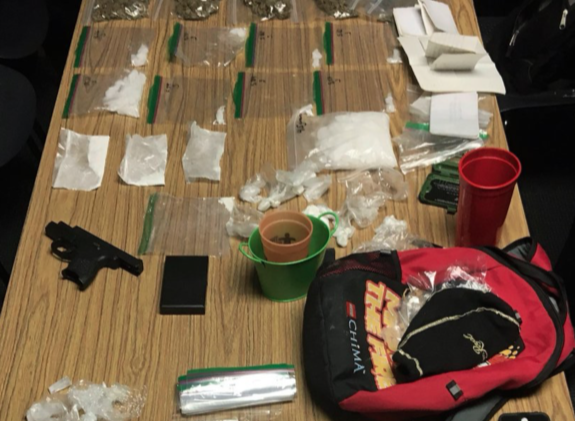
DOUGLAS COUNTY —Law enforcement authorities are investigating two suspects on drug and weapons charges.
Photo courtesy Douglas County Sheriff
Just after 2 a.m. Friday, deputies responded to reports of shots being fired into the air from a vehicle near the intersection of U.S. 24-59 and U.S. 24-40 intersection, according to Sgt. Kristen Channel. Deputies were unable to locate the suspects.
A short time later, Lawrence Police officers spotted a suspect vehicle in the 900 block of Pennsylvania Street and questioned the two occupants and discovered a large amount of methamphetamine, cocaine, and marijuana as well as a stolen handgun and more than $11,000 in cash.
They arrested 31-year-old Antonio Brown and 28-year-old Bounsouay Khanya on requested charges of possession with the intent to distribute narcotics/methamphetamine/marijuana and possession of drug paraphernalia. Brown also faces counts of felon in possession of a firearm and criminal discharge of a firearm.
TOPEKA, Kan. (AP) — A Kansas Supreme Court decision will force the state Senate into voting to reject a judicial nominee over political tweets that lawmakers found offensive.
Kelly nominated Jeffrey Jack March 15-photo office of Kansas Governor
The Supreme Court ruled unanimously that Democratic Gov. Laura Kelly did not have the authority under a 2013 state law to withdraw her nomination of Labette County District Judge Jeffry Jack for the Kansas Court of Appeals, the state’s second-highest court. And, under the law, if the Senate fails take a vote by next week, Jack would be considered confirmed.
Kelly’s withdrawal of Jack’s nomination in March touched off an unprecedented and bizarre legal dispute with Senate President Susan Wagle over whether the governor could name a second nominee — as Kelly eventually did. The Supreme Court’s decision means that Kelly will get that chance if the Senate, as expected, rejects Jack’s nomination.
“I encourage the Senate to act swiftly to vote down the Jack appointment next week,” Kelly said in a statement after the Supreme Court’s ruling.
The nomination was doomed after political tweets from Jack in 2017 came to light. They included vulgar language and criticism of President Donald Trump and other Republicans, with one post calling the president “Fruit Loops.”
Wagle, a Wichita Republican, has called Jack “absolutely unacceptable.” Senate Minority Leader Anthony Hensley, a Topeka Democrat, predicted no senator would vote for him.
Wagle and other Senate leaders already anticipated the possibility of such a Supreme Court ruling, and the Senate is scheduled to convene Tuesday. Lawmakers wrapped up most of their business for the year early Sunday.
The Senate president contends Kelly failed to properly vet Jack and said Friday that the legal dispute resulted from a “display of her incompetence.”
“Sadly, this avoidable situation by the Kelly administration has turned into a waste of taxpayer dollars,” Wagle said in a statement.
The Supreme Court ruled only a day after hearing arguments from attorneys. It was also less than three weeks after Attorney General Derek Schmidt, a Republican, filed a lawsuit against Kelly, Kansas Supreme Court Chief Justice Lawton Nuss and the Senate to resolve the dispute.
The Supreme Court appointed a substitute for Nuss, who removed himself. His attorneys told his colleagues that he had no position on how the case should be resolved.
The vacancy on the Court of Appeals was created by the retirement of longtime Judge Patrick McAnany on the day that Kelly took office in January.
The 2013 law says that if governor fails to make an appeals-court nomination within 60 days of a vacancy, Nuss makes the appointment. The deadline was March 15, the day Jack was nominated, and Wagle argued that Jack’s withdrawal meant Kelly failed to make a proper nomination in time.
Under the law, the Senate has 60 days to act on a nominee if the Legislature is in session, as it was when Kelly named Jack, or the nomination is deemed confirmed. The law says that if the Senate rejects a nominee, the governor appoints another.
Kelly cited that section of the law in arguing that she could name a new nominee, and she chose Sarah Warner, a 39-year-old Kansas City-area attorney.
It’s time to move forward and fill this vacancy,” Kelly said in her statement.
The 2013 law applies only to Court of Appeals appointments and doesn’t specifically say what happens if a nomination is withdrawn. A broader law applying to other appointments allows nominations to be withdrawn.
Justice Dan Biles wrote in the Supreme Court’s opinion that the Court of Appeals is “the obvious outlier” and the justices would be “adding words” to the 2013 law if they concluded that it allows an appeals court nomination to be withdrawn.
“We conclude the Governor is powerless to withdraw a Court of Appeals nominee once it is made,” Biles wrote.
If a nominee withdraws, Biles wrote, the only “practical purpose” is “clearing the path” for a quick vote against his or her confirmation. The court also concluded that Kelly’s nomination of Warner must be treated “as if it never happened.”
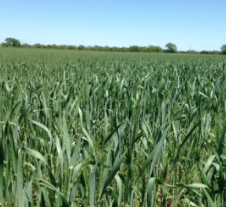
WICHITA, Kan. (AP) — A government report forecasts a bountiful Kansas winter wheat harvest.
The National Agricultural Statistics Service reported Friday that this year’s wheat crop is expected to be up 17 percent from a year ago. It predicted Kansas growers would bring in 323 million bushels.
The agency forecast the state’s average yield at 49 bushels per acre, up 11 bushels from last year.
It also anticipated that grain would be harvested from 6.6 million acres in Kansas, down 700,000 acres from a year ago.
The government’s estimate is a bit more optimistic than the one put out by participants in last week’s winter wheat tour who estimated the size of the Kansas crop at 306.5 million bushels.
Run for the Wall support will be Sunday the 19th of May. We will be at the Commerce Parkway I-70 overpass. We will be there at 12:45 p.m. and set up flags. The Hays American Legion Riders Chpt. 173 will be holding the big flags and if there are any more big flags they will be given out on a first come first serve basis.
This event is open to public to show support for this great mission.
TOPEKA, Kan. (AP) — A state report says that safety doors in a Sumatran tiger’s enclosure at a Kansas zoo were left unlocked before the animal attacked and injured a veteran zookeeper.
Kristyn Hayden-Ortega-photo courtesy Topeka zooSanjiv photo Topeka Zoo
The report released Friday by the Kansas Department of Labor agreed with the Topeka Zoo’s assessment that no equipment failure or other problem with the enclosure led to the April 20 attack.
Zookeeper Kristyn Hayden-Ortega was hospitalized after suffering puncture wounds and lacerations to her head, neck and back.
Hayden-Ortega had gone into the outdoor area of the tiger’s enclosure to clean it. The animal was supposed to be in an indoor area, behind two doors. The report says the doors “had been locked in the open position.”
The report said the zoo is now requiring that two employees check the doors.
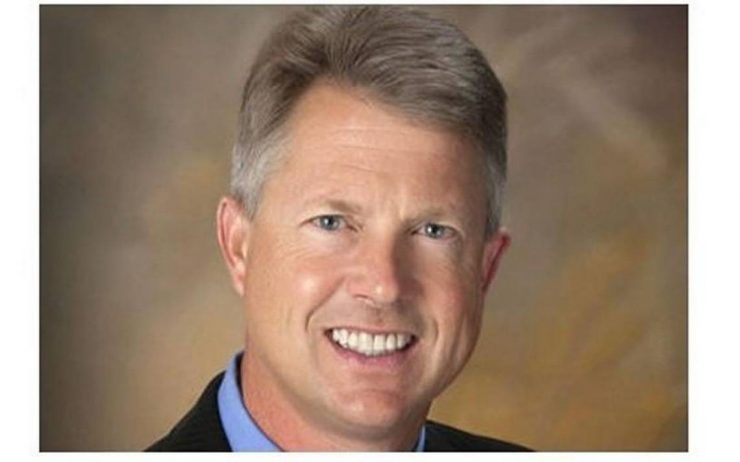
Dr. Roger Marshall, R-Great Bend, is the First District Kansas Congressman.
Friends,
As many of you are aware, the negotiations with China have soured recently. Last weekend, we saw the trade talks get complicated when the Chinese began to waffle on previously-agreed-to terms, walking back their commitments on a new agreement. In response, the trade war escalated with President Donald Trump announcing today raising tariffs on China from 10 percent to 25 percent on $200 billion worth of Chinese goods.
I have been assured that this does not mean that discussions for a trade deal have broken down completely. To the contrary, negotiations are continuing, and the President is making his stance clear. I am hopeful that a great deal will be result of this back and forth with China.
We need a deal; our farmers cannot withstand another round of tariffs.
Talking Trade With Ambassador Doud
Earlier this week I had the opportunity to visit with U.S. Trade Ambassador, Gregg Doud, a native of the Big First from Mankato, Kansas and KSU graduate. As the Country’s Chief Agricultural Negotiator, Ambassador Doud is well positioned to help advance trade agreements and policies that directly benefit our farmers and ranchers back home in Kansas. We discussed the work that is being done by the administration to secure agreements on the pending trade deals with China, Japan, Mexico and Canada, as well as ways Members of Congress from ag districts can help educate our colleagues about the benefits of finding new export markets around the world. Gregg is a true patriot and I am proud to call him a friend. EMAW!
Kansas Aviation Manufacturers- Flying in!
I had a wonderful meeting with the General Aviation Manufacturers Association (GAMA) this week. In our meeting, we discussed the important role that the aviation industry plays and the ways it impacts our economy. It was great to meet with some of the manufacturers from Kansas.
We also had the opportunity to talk about the funding concerns for the Federal Aviation Administration (FAA). The FAA’s mission focuses on making sure that air travel is as safe and efficient as possible. America is a global leader in airline manufacturing, and we need to do what we can to keep it that way!
Ending Sticker Shock at the Doctor’s Office
The GOP Doctors Caucus held a special round-table discussion this week, inviting their medical colleagues from across the aisle to discuss the importance of addressing surprise medical bills. Surprise medical bills occur when you receive a bill from an out-of-network provider during an in-network hospital visit. This has rightly received a lot of attention and is a priority issue for many Americans facing sky-rocketing medical bills.
To address this, we went straight to the source at the state level to a see what can be done at the federal level. Some proposals brought to us included ‘baseball arbitration’ where the provider and insurer would submit a proposed amount to an independent arbitrator that would the set the final amount. This would eliminate patients from being stuck in the middle. We also discussed limiting patient cost-sharing to the amount they would owe to an in-network provider and setting a payment standard regarding what insurers owe providers in these situations.
This remains a complicated issue, and one that my colleagues and I will continue to work on.
Looking Out For Our Local Pharmacies
Yesterday, my colleagues and I joined together for a Special Order on the House floor in support of pharmacists and seniors across America. The Centers for Medicare and Medicaid Services have proposed a rule that would reform the use of pharmacy direct and indirect remuneration (DIR) fees, or pharmacy price concessions, in the Medicare Part D program.
DIR fees by plan sponsors and their pharmacy benefit managers (PBMs) have increased by more than 45,000 percent over the past seven years. The increase of DIR fees over the last several years has raised out-of-pocket costs for our seniors and put our local pharmacies at financial risk, often operating in negative margins. Far too regularly PBMs collect DIR fees from pharmacies months and months after the claim. It’s completely unpredictable and unfair… while the benefit all goes to the pocket of the PBM. The proposed rule would end this issue by requiring that all DIR Fees are done at the point of sale.
Earlier this year I led a letter from proposing to have this rule finalized and implemented by 2020. There are 506 chain drug stores and 253 independent community pharmacies across Kansas and we need to make sure that they are being treated fairly!
Video of my speech can be found here!
Celebrating Kansas Small Businesses!
This week is national Small Business Week! We honor the millions of people across the country that take risks, invest in their communities and create jobs!
In Kansas, more than 80% of all businesses are considered to be small businesses, in industries ranging from manufacturing to retail, construction to health care. Each year, small businesses bring more than 15,000 new jobs to the state, according to the Small Business Administration, boosting both the rural and overall state economy.
Over the past two years I’ve had the privilege of touring many small businesses across my district, companies like Vortex in Salina, which designs and manufactures components for handling and processing dry bulk solids, such as cement, grain, or rubber. Sugar Creek Country Store in St. Mary’s is a family owned specialty grocery store and deli that was also awarded the 2018 Emerging Business of the Year by Kansas Small Business Development Centers. In Atwood, Carlson Choke Tubes has been manufacturing a variety of chokes for a wide range of shotgun models, and was recently named a top pick for turkey gear by Outdoor Life Magazine.
Of course, these are only a handful of the amazing small businesses found in the Big First, working to grow our local economies and bring jobs to rural America. I have loved getting to know many of the wonderful and creative entrepreneurs across the district, and it’s been a priority of mine to ensure that we continue to roll back regulatory burdens, increase access to capital, and provide training and support to small businesses so that these startups can continue to grow and contribute to the vibrant business landscape found in Kansas.
Kansas is home to hundreds of small, innovative agribusinesses, retailers, restaurants and more that play an integral part in keeping our Kansas economy strong.
US Army War College: “Congress Must Work Together”
A group from the United States Army War College (USAWC) stopped by my office this week. The USAWC was founded in 1901 and for well over 100 years now has educated and produced leaders invaluable to the United States military. They were on the Hill to discuss a wide range of issues important to our armed forces.
Diplomacy plays a huge role in our national defense and the team from USAWC stressed the importance of strengthening our alliances around the world. These partnerships allow the United States to promote our values and share information as we work with foreign leaders and military personal to keep our nation safe and prosperous.
We also touched on how important it is that Congress bridge the partisan divide. We must move past polarizing politics and get to working for the American people; this is particularly true when it comes to our national defense and our military. I am ready to work across the aisle and make sure that the brave souls responsible for protecting America have all of the support their government can offer. I want to thank those from the Army War College for coming to the office and assure you all that our troops have my full support.
Discussing the Road to Recovery For Substance Use Disorder
This week I met with the leadership team at Valley Hope, an organization that helps Kansans with substance use disorder (SUD). I had toured their facility in Atchison a few weeks ago and was so happy to have the opportunity to follow up with them to learn more about their what they do and the issues they face.
Last year, the Republican led 115th Congress passed the Consolidated Appropriations Act of 2018 and the Bipartisan Budget Act of 2018, together appropriating nearly $10 billion to help the help against substance use disorder and mental health issues – the largest investment to date. This funding goes to enhancing state grants, public prevention programs, and law enforcement activities related to SUD and mental health programs.
I was happy to share with them available funding opportunities through the Substance Abuse and Mental Health Services Administration that would help provide additional grant funding for medication assisted treatment. I look forward to working with Valley Hope or any organization in the district that seeks to help patients suffering from substance use disorder get on the road to recovery.
Railroads – Vital to Our Ag Producers
The American Short Line and Regional Railroad Association (ASLRRA) and the Association of American Railroads (AAR) were in Washington for their “Railroad Day on Capitol Hill”.
I am fully aware of how important short line railroads are to the agricultural industries in Kansas. The farmers and ranchers of Kansas work incredibly hard, and it is vital that they have the infrastructure necessary to get those commodities, such as wheat, corn, sorghum, and beef to market. I appreciated these operators coming to D.C. to share their thoughts with me about the upcoming infrastructure package, as well as the importance of things like trade and workforce development.
Dr. Roger Marshall, R-Great Bend, is the First District Kansas Congressman.
KANSAS CITY (AP) — The Missouri River is causing new problems in a flood-battered part of northwest Missouri where the river broke through levees in March.
The rain-swollen waterway has again inundated the tiny village of Big Lake in Holt County, where some of its approximately 160 residents were beginning to clean up after the last deluge.
Water levels haven’t dropped enough to fix the failed earthen levees intended to protect the area, Holt County emergency management director Tom Bullock said Friday. That means even moderate rises in river levels can cause problems. He calls it “a continuous mess.”
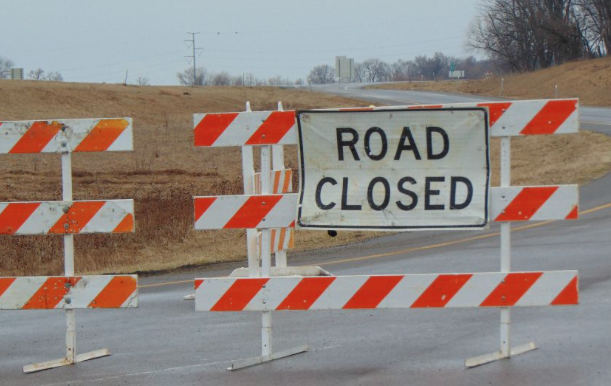
Several roads in the region are closed again, including a portion of U.S. 59, a key transportation artery between northeast Kansas and northwest Missouri.
In eastern Missouri, water levels are falling along the Mississippi River after some levees were busted.
Northwestern Missouri’s new troubles come just as some areas were showing signs of improvement. A stretch of the Kansas Turnpike near the Oklahoma border has reopened, as has the Iowa Highway 2 approach to a Missouri River bridge that links southwest Iowa to southeast Nebraska.
The Kansas Turnpike section near Wellington, which is about 30 miles (48 kilometers) south of Wichita, flooded Wednesday when up to 10 inches (254 millimeters) of rain fell across parts of the state in just 24 hours. Flooding also forced evacuations and school closures.
The National Weather Service says the rain is expected to move across the Deep South this weekend, putting millions of people in the path of potentially dangerous weather. The Storm Prediction Center says there’s a marginal risk of severe storms from eastern Texas — where parts of Houston have already seen flooding this week — to South Carolina and western North Carolina.
Forecasters say wind damage and hail could be seen in Louisiana, Mississippi, Alabama, Georgia and South Carolina on Saturday. On Sunday, there’s a chance of storms across central Georgia, South Carolina and North Carolina.
In Louisiana, the U.S. Army Corps of Engineers planned to open a major spillway Friday, four days earlier than expected due to torrential rains that saw the Mississippi River rise 6 inches (15.24 centimeters) in the past 24 hours. Officials said opening the Bonnet Carré (BAH-nee KEHR-ee) Spillway relieves stress on New Orleans levees.
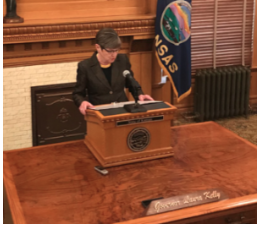
TOPEKA, Kan. (AP) — Gov. Laura Kelly says she hopes that extra state funding for the Kansas higher education system will lead to lower tuition for students and their families.
Kelly on Friday touted the additional $33 million included for higher education in a proposed $18.4 billion state budget for the fiscal year beginning in July.
She said during a Statehouse news conference that legislators included the extra money hoping that the Kansas Board of Regents could keep university tuition flat.
Kelly said she would like the regents to go further and reduce tuition. She said she’s worried that students are being priced out of higher education.
The regents have complained in the past that tight state funding has forced them to increase tuition to pay for vital programs on the campuses.

 In order to attempt to preserve a bit of history often overlooked, the Ellis High School Alumni Association Cookbook Committee is working on a special project.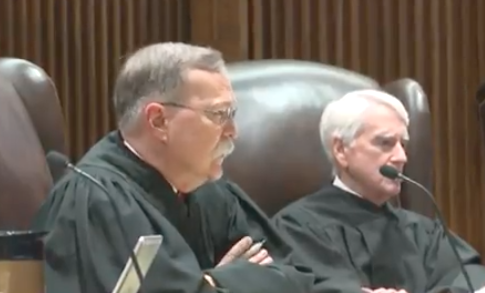
 Today
Today