We have a brand new updated website! Click here to check it out!

National Weather Service warns of freezing threat overnight

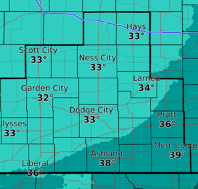
The National Weather Service has issued both a freeze warning and a freeze watch across the area between 1 and 10 a.m. Central.

Low temperatures at or below freezing are expected across the freeze warning area. Low temperatures hovering around freezing are expected across the freeze watch area.

Efforts should be made to protect sensitive vegetation and animals.

Officials unsure when flooded Kansas Turnpike will reopen

WICHITA, Kan. (AP) — Officials aren’t sure when the Kansas Turnpike will reopen near the Oklahoma border after a surging creek sent floodwaters pouring over the asphalt.

Image courtesy Sumner County Sheriff

Issues arose early Wednesday when a tributary of the Arkansas River called Slate Creek overflowed. No one was hurt, but the toll road is closed south of the exit in Wellington, which is about 30 miles (48 kilometers) south of Wichita.

Rachel Bell, of the Kansas Turnpike Authority, says crews have to “get in and assess the condition of the pavement, of the actual asphalt, after the water recedes.”

The best detour around the closed highway is also unclear. The Turnpike was planned and mostly completed before the interstate highway designation in Kansas, and federal planners chose not to build parallel routes.

12 Fort Hays State students to receive Noyce Scholarship

FHSU University Relations

Twelve science and math students at Fort Hays State University have been awarded the National Science Foundation’s Noyce Scholarship for the upcoming school year.

This scholarship is designed to help support high-achieving math and science students who want to become secondary or middle level teachers after graduation.

The scholarship is a “cost-of-attendance” scholarship worth over $13,000 per year and a stipend to attend state or regional conferences.

Students also enroll in a seminar class to discuss teaching in rural schools, attend a week-long field experience trip at a school in southwest Kansas, and are all members of the STEM-Ed Club here at FHSU.
FHSU is awarding six new students this scholarship, as well as six second-year students. Overall, FHSU will have awarded Noyce Scholarships to 38 students over the past seven years.

“Our program so far has been very successful at identifying and nurturing promising young teachers to not only begin in the STEM teaching field, but also to stick with it through those first few tough years,” said Dr. Bill Weber, assistant professor of mathematics.

The following students are listed in alphabetical order and are receiving the Noyce Scholarship for the first time:

Seth Boxberger, Russell sophomore majoring in mathematics and secondary education.

Kole Clarke, Lyons junior majoring in biology and secondary education.

Nicholas Schmidt, Hays senior majoring in mathematics and secondary education.

Ethan Shippy, Hays junior majoring in biology and secondary education.

Cayla Steinert, Olmitz junior majoring in biology and secondary education.

Judson Tillotson, Fort Scott sophomore majoring in mathematics and secondary education.

The following students are listed in alphabetical order and are receiving the Noyce Scholarship for the second time:

Alexis Meinert, Garden City senior majoring in mathematics and secondary education.

Diana Sabados, Brighton, Colo., senior majoring in mathematics and secondary education.

Chantal Solorzano, Dodge City junior majoring in biology and secondary education.

Joshua Stark, Hays junior majoring in chemistry and secondary education.

Kathryn Westerhaus, Junction City senior majoring in biology and secondary education.

Lauren Zerr, Russell Springs senior majoring in mathematics and secondary education.

A reception will be held at 4 on Thursday, May 9, in the Memorial Union’s Trails Room to celebrate these scholars.

Kan. home healthcare worker sentenced for stealing from elderly clients

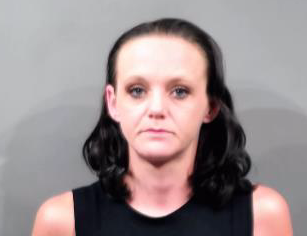
WICHITA, KAN. – A home healthcare worker who was convicted of stealing from her elderly clients was sentenced Tuesday for two counts of mistreatment of an elderly person, two felony thefts, and other financial crimes, according to the Sedgwick County District Attorney’s office.

Becker photo Sedgwick Co.

Dawn Becker, 33, who now resides in Reno County, committed the crimes while working for three different home health companies in Wichita from August of 2017 to April of 2018. In all, she was convicted of six felonies involving a total of four victims.

Becker, who had no prior felonies on her record, was placed on five years of probation. As a condition of her plea, she was ordered to pay $89,000 in restitution to the victims.Judge Kevin O’Connor told Becker that she would serve 98 months in the Kansas prison system if she violated her probation or failed to make regular payments on restitution.

The charges alleged that Becker stole property, including jewelry, and financial cards from the homes of patients she was assisting. Becker stated during the sentencing hearing that she was having financial difficulties and pawned the stolen items or usedher clients’ financial cards to get money.

Becker’s probation may be extended up to five years to ensure that she pays restitution. O’Connor also ordered Becker not to work as a home healthcare worker inany private residence or nursing facility.

KDHE warns: Avoid lakes and waterways due to recent heavy rains

Kansas Department of Health and Environment

TOPEKA — The Kansas Department of Health and Environment is cautioning residents to stay
out of Kansas waterways because of the recent flooding and associated unsafe water quality conditions.

In addition to the physical dangers associated with entering swift moving flood waters, the potential for high levels of pathogens in those waters exist. KDHE anticipates elevated levels of pathogens in rivers and streams across the state because of runoff. Additionally, over the past several days, numerous wastewater systems have experienced bypasses of sewage that enter local streams.

Individuals are advised to avoid contact with waterways and to restrict pets and livestock from entering
streams and allow flood waters time to recede.

KDHE personnel are in contact with wastewater utilities in Kansas and are evaluating the extent of any
bypassing.

Individuals should contact their local public works departments for questions related to their immediate
area.

Fort Hays State University announces commencement schedule

FHSU University Relations

For the third year in a row, more than 4,000 graduates will cross the stage during Fort Hays State University ‘s spring commencement ceremonies. To accommodate this large volume of graduates and their families, the university will continue holding two ceremonies.

The practice of two ceremonies will continue, but instead of being split between an evening and a morning ceremony, both events – Friday, May 17, and Saturday, May 18 – will begin at 9 a.m. in Gross Memorial Coliseum.

Graduates from two colleges, the College of Arts, Humanities and Social Sciences and the College of Health and Behavioral Sciences, will march on Friday.

Saturday’s ceremony is for graduates from three colleges: the College of Education; the Peter Werth College of Science, Technology, and Mathematics; and the W.R. and Yvonne Robbins College of Business and Entrepreneurship.

The schedule leading up the start time is the same both days: Doors to the coliseum and Cunningham Hall will open at 7 a.m.; graduates can pick up name cards, caps, gowns and tassels from 7 a.m. until 8:45 a.m.; line up begins at 8:15 a.m.

This year’s Commencement exercises encompass 4,078 graduates from the summer and fall 2018 and from spring 2019. The totals are 93 associate degrees; 3,115 bachelor’s degrees; 868 master’s and Education Specialist degrees; and two Doctor of Nursing Practice degrees.

Graduates and faculty will be seated on the main floor of Gross Coliseum.

Seating arrangements for the disabled are available on the main floor on either side in front of the stage. Drivers will find Gates 2 and 3, at the northwest and southwest corners, most convenient for dropping off passengers with disabilities. There are no reservations for this area. One person, if necessary, will be allowed to accompany an individual in this seating area.

An interpreter for people who are hearing impaired will be near Section C.

Both ceremonies are free and open to families of graduates and to all friends of the university. No tickets are required. All seats in Gross Memorial Coliseum are first-come, first-served and are normally filled one hour before the start of the ceremony.

Traffic in the Gross Coliseum area is extremely heavy for Commencement. Parking lots adjacent to Gross Coliseum typically fill up quickly, but ample parking is available on the main campus. In the event of rain, unpaved lots near Gross Coliseum will be closed, making it necessary to park on the main campus.

For the a full Commencement schedule, go to:
https://www.fhsu.edu/commencement/schedule/index
For a schedule of events leading up to Commencement, go to:
https://www.fhsu.edu/commencement/Activities/index

Shuttle bus service will be provided both Friday and Saturday between the campus and Gross Coliseum. The shuttle buses will stop in parking lots and wherever drivers see people walking to or from Gross Coliseum.

Persons other than degree candidates attending Commencement are asked to enter through the four coliseum gates and not through Cunningham Hall.

Commencement will also be broadcast live at https://fhsu.edu/commencement/watch-live.

Maps, directions, and general information, including links to accommodations in Hays, are available from www.fhsu.edu/commencement/. The direct link to a rehearsal video is www.fhsu.edu/commencement/rehearsal/.

INSIGHT KANSAS: On abortion politics, most Kansans more complex than simplistic stereotypes

The Kansas Supreme Court ruled recently that the state constitution protects a woman’s right to an abortion. Conservative politicians in Topeka may back putting a constitutional amendment on the 2020 ballot to counter that ruling. If a lengthy abortion campaign is looming, then let’s start with facts about how average Kansans feel about abortion. That means avoiding convenient or self-reassuring stereotypes, and realizing that most Kansans are mixed on abortion and may care little about the issue.

Patrick R. Miller is an Assistant Professor of Political Science at the University of Kansas.

Kansas isn’t polled frequently, so data are unfortunately infrequent. The last Kansas poll that I can find that asked about “pro-choice” or “pro-life” was 2005. SurveyUSA showed that 50 percent of Kansans called themselves pro-choice and 45 percent pro-life. Old data here are fine because choice versus life is oversimplified. Most people who call themselves pro-life in surveys support abortion rights under some circumstances, and most pro-choice people oppose abortion in some cases.

More recently, the 2018 FOX News/AP Voter Analysis survey gave Kansans these options on abortion: 14 percent said “illegal in all cases,” 32 percent “illegal in most cases,” 35 percent “legal in most cases,” and 19 percent “legal in all cases.” Thus, you can correctly say from FOX/AP that 54 percent of Kansans support abortion rights in all or most cases, 86 percent support abortion rights to some degree, and 81 percent favor restricting abortion to some degree.

The 2017 Kansas Speaks survey sheds light on Kansans in the middle. In that, 26 percent of Kansans opposed abortion “in all situations” and 29 percent said “abortion should be permitted for any woman who choses it.” Among the remaining 45 percent who were mixed on abortion, 96 percent supported allowing abortions “when the mother’s life is in danger,” 86 percent “in instances of incest,” 86 percent “in instances of rape,” 65 percent “when there is evidence that the fetus will have serious future health problems,” but just 14 “when the mother cannot afford to have a baby.”

Surprised? Speaking of stereotypes, just 43 percent of Kansas Republicans in the Kansas Speaks survey totally opposed abortion in all cases. Only 55 percent of Kansas Democrats said that abortion should always be permitted. Likewise, many stereotypes about how religion, race, and gender shape abortion attitudes aren’t that accurate, either.

Recent national polls include some useful questions that we haven’t seen in Kansas. Often only 40-50 percent of Americans say that abortion is an important issue, about 40 percent say that abortion is not a moral issue, and most people who say that abortion is “morally wrong” support abortion rights under certain circumstances. Low knowledge is also common. Up to 70 percent of Americans admit to being unfamiliar with basic national and state abortion laws and often half are unfamiliar with Roe v. Wade.

Yes, Kansas is famed for anti-abortion protests and abortion gets significant legislative attention here, but that doesn’t reflect average Kansans or likely their priorities. Absolutely, in surveys people who oppose abortion rights often care more about abortion than people who support those rights. Those intense activists become the stereotype of Kansas and are the main audience for anti-abortion politics in Topeka.

But ultimately, the Kansans in the middle who will decide the fate of any constitutional amendment support abortion access with limitations, may not personally view abortion as a strong moral question and might not respond to moralized hyperbole from left or right, and truly may not care much about abortion. If abortion is on the ballot, though, they will vote on it. And the side that can momentarily capture those fundamentally conflicted to indifferent voters may well prevail.

Patrick R. Miller is an Assistant Professor of Political Science at the University of Kansas.

Esther Schmidt

Esther Schmidt, age 70, of Hays, Kansas passed away Tuesday, May 7, 2019 in Hays. She was born September 10, 1948 in Hays, Kansas to Lester and Esther (Degenhardt) Burgardt. On June 8, 1968 she married Timothy Schmidt at St. Joseph Catholic Church in Hays.

Esther was the store manager at Hallmark for several years. She was a member of St. Joseph Catholic Church and she enjoyed arts and crafts as well as being involved with her grandchildren and all their activities.

She is survived by her husband, Tim of Hays; a son Curtis Schmidt (Amanda) of Hays; a daughter, Leslie Karlin (David) of Hays; two brothers, twin Lester Burgardt (Carol) of WaKeeney, Kansas and Dennis Burgardt (Jan) of Salina, Kansas; two sisters, Linda Schmidt (Kevin) of Bradenton, Florida and Lee Ann Zielinski of Port St. Lucie, Florida; and four grandchildren, Cameron Karlin, Madison Karlin, Avery Schmidt and Jonathan VanCampen.

She was preceded in death by her parents; infant daughter, Tammie Schmidt and a brother-in-law, David Zielinski.

Funeral services will be 11:00 AM Monday, May 13, 2019 at St. Joseph Catholic Church in Hays. Private family inurnment will be at a later date.

Memorial visitation will be Sunday 7 PM – 9 PM with a combined parish vigil and rosary service at 7:30 PM all at Brock’s-Keithley Funeral Chapel and Crematory 2509 Vine Hays, KS 67601.

Memorial contributions are suggested to Hospice at HaysMed or TMP-Marian.

Condolences may be sent by guest book at www.keithleyfuneralchapels.com or by email at [email protected]

New Vatican law: Priests, nuns must report sex abuse, cover-up

VATICAN CITY (AP) — Pope Francis issued a groundbreaking law Thursday requiring all Catholic priests and nuns around the world to report clergy sexual abuse and cover-up by their superiors to church authorities, in a new effort to hold the Catholic hierarchy accountable for failing to protect their flocks.The new church law provides whistle-blower protections for anyone making a report and requires all dioceses around the world to have a system in place to receive the claims confidentially. And it outlines procedures for conducting preliminary investigations when the accused is a bishop, cardinal or religious superior.

It’s the latest effort by Francis to respond to the global eruption of the sex abuse and cover-up scandal that has devastated the credibility of the Catholic hierarchy and his own papacy. And it provides a new legal framework for U.S. bishops to use as they prepare to adopt accountability measures next month to respond to the scandal there.

“People must know that bishops are at the service of the people,” said Archbishop Charles Scicluna, the Vatican’s longtime sex crimes prosecutor. “They are not above the law, and if they do wrong, they must be reported.”

The law makes the world’s 415,000 Catholic priests and 660,000 religious sisters mandated reporters. That means they are required to inform church authorities when they learn or have “well-founded motives to believe” that a cleric or sister has engaged in sexual abuse of a minor, sexual misconduct with an adult, possession of child pornography — or that a superior has covered up any of those crimes.

The law doesn’t require them to report to police, as victims have demanded. The Vatican has long argued that different legal systems in different countries make a universal reporting law impossible, and that imposing one could endanger the church in places where Catholics are a persecuted minority. But the procedures do for the first time put into universal church law that clergy must obey civil reporting requirements where they live, and that their obligation to report to the church in no way interferes with that.

If it is implemented fully, the Vatican could well see an avalanche of abuse and cover-up reports in the coming years. Since the law is procedural and not criminal in nature, it can be applied retroactively, meaning priests and nuns are now required to report even old cases of sexual wrongdoing and cover-ups — and enjoy whistleblower protections for doing so.

Previously such reporting was left up to the conscience of individual priests and nuns. Now it is church law. There are no punitive measures foreseen if they fail to report, and similarly there are no sanctions foreseen if dioceses, for example, fail to comply. But bishops and religious superiors could be accused of cover-up or negligence if they fail to implement the provisions, or retaliate against priests and nuns who make reports against them.

The law defines the crimes that must be reported as: performing sexual acts with a minor or vulnerable person; forcing an adult “by violence or threat or through abuse of authority, to perform or submit to sexual acts,” and the production, possession or distribution of child pornography. Cover-up is defined as “actions or omissions intended to interfere with or avoid” civil or canonical investigations.

Cardinal Marc Ouellet, head of the Vatican’s bishops office, said the inclusion of sex crimes involving adults was a clear reference to cases of sexual abuse of nuns and seminarians by their superiors — a scandal that has exploded in recent months following reports, including by The Associated Press and the Vatican’s own women’s magazine, of sisters being sexually assaulted by priests.

But Scicluna said it obviously covered lay people as well.

In another legal first for the Vatican, the pope mandated that victims reporting abuse must be welcomed, listened to and supported by the hierarchy, as well as offered spiritual, medical and psychological assistance.

The law says victims can’t be forced to keep quiet, even though the investigation itself is still conducted under pontifical secret. And in a novelty, the law requires that if victims request it, they must be informed of the outcome of the investigation — again a response to longstanding complaints that victims are kept in the dark about how their claims were handled.

But the key point of the law is to decree that the church’s own priests and nuns are mandated reporters and require every diocese around the world create an accessible, confidential reporting system to receive claims of sexual abuse and cover-up. The other key element outlines the preliminary investigation procedures to be used when the accused predator is a member of the church hierarchy.

Victims and their advocates have long complained that bishops and religious superiors have escaped justice for having engaged in sexual misconduct themselves, or failed to protect their flocks from predator priests. Bishops and religious superiors are accountable only to the pope, and only a handful have ever been sanctioned or removed for sex abuse or cover-up, and usually only after particularly egregious misbehavior became public.

Last summer, the scandal over ex-Cardinal Theodore McCarrick epitomized the trend: McCarrick rose to the heights of the Catholic hierarchy even though he had credible allegations of sexual misconduct against him that the Vatican had received. Francis ultimately defrocked McCarrick earlier this year after a U.S. church investigation determined he sexually abused minors as well as adult seminarians.

The new procedures call for any claim of sexual misconduct or cover-up against a bishop, religious superior or eastern rite patriarch to be reported to the Holy See and the metropolitan bishop, who is a regular diocesan bishop also responsible for a broader geographic area than his dioceses alone.

Unless the metropolitan bishop finds the claim “manifestly unfounded,” he must immediately ask permission from the Vatican to open a preliminary investigation and must hear back from Rome within 30 days — a remarkably fast turnaround for the lethargic Holy See. The metropolitan then has an initial 90 days to conduct the investigation, though extensions are possible.

The law makes clear he can use lay experts to help, a key provision that is already used in many dioceses to give bishops expert advice on handling cases from people with law enforcement or medical backgrounds. And it recommends that a special fund be set up to pay for the investigations, particularly in poorer parts of the world.

Once the investigation is completed, the metropolitan sends the results to the Vatican for a decision on how to proceed. The new law effectively stops there; existing procedures are in place for further investigation and possible sanction of bishops, though legal experts have said those 2016 procedures too require an overhaul since they are far from clear or efficient.

The new law does, however, require Vatican offices to share information throughout the process, since an untold number of cases have fallen through the cracks thanks to the silo-like nature of the Holy See bureaucracy, where each congregation zealously guards its own turf and files.

The use of the metropolitan bishop to conduct the preliminary investigation was first publicly proposed by Chicago Cardinal Blase Cupich at a meeting of the U.S. Conference of Catholic Bishops in November. Cupich elaborated on it when he addressed Francis’ February sex abuse summit, which the pope convened to demand a global response to the problem.

The procedures published Thursday are likely thus to form a key legal framework for U.S. bishops when they meet in Baltimore June 11-13 to adopt new accountability procedures.

The U.S. hierarchy has been under immense public pressure to hold one another accountable for sexual misconduct and cover-up stemming from both the McCarrick scandal and the release of the Pennsylvania grand jury report. It was apparently an open secret that McCarrick slept with seminarians, and yet his brother bishops allowed him to become their spokesman when they first adopted measures to combat child sex abuse in 2002.

The law goes into effect June 1 for an initial three years. Dioceses must establish the reporting system and confirm it is in place to the local Vatican embassy by June 1, 2020.
Fire hydrant inspections Thursday

HFD

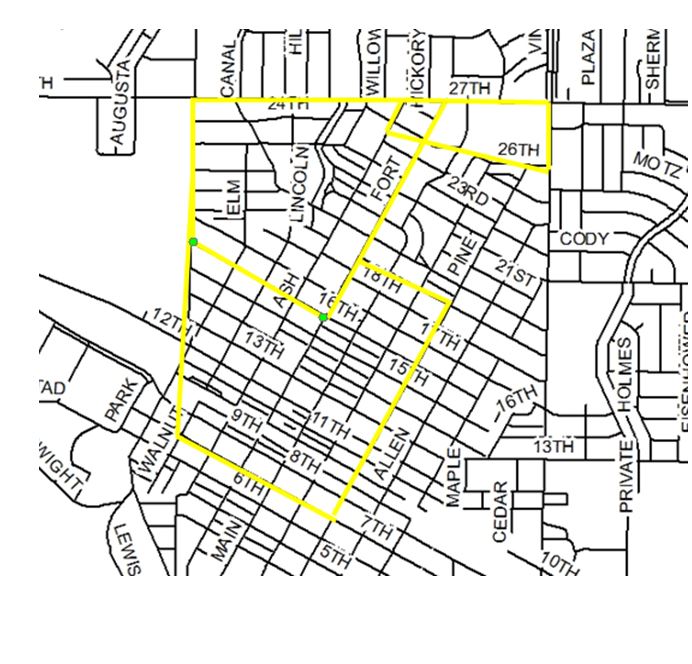
The Hays Fire Department will be inspecting and flow testing fire hydrants on Thu., May 9, 2019 in the area of Vine St. to Ash St. between 27th St. and Pine St., the area of Hall St. to Pine St. between 18th St. and 7th St., and the area of Hall St. to Fort St. between 27th St. and 15th St.

This is part of a coordinated effort by the city of Hays to inspect all fire hydrants in the city and flush all water mains annually.

Researchers in Hays uncover benefits of modified stocking for cow-calf producers

Grazing system that has benefitted steers can boost cow-calf operations too 

Researchers at the Kansas State University Agricultural Research Center in Hays have found that a grazing system shown to be beneficial for the performance of steers also has great potential for cow-calf producers.

For several years, beef producers have capitalized on modified intensive early stocking, a grazing strategy that focuses on double-stocking steers in pastures for the first half of the summer and pulling the heavier steers off the grass later in the grazing season.

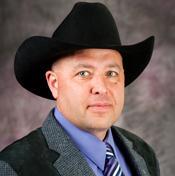
John Jaeger, a beef cattle scientist in Hays, said much of the research points to the fact that when steers were managed this way, producers reported a 26 percent increase in pounds of beef produced per acre, and their net returns increased by nearly 19 percent.

John Jaeger

So Jaeger, range scientist Keith Harmoney and their research team set out to see if modified, intensive early stocking could similarly benefit cow-calf pairs.

“We’ve just completed our fourth year of data collection,” said Jaeger, noting that the project focused on weaning calves from the cow at an average of 150 days of age (the traditional time is 200 days), and increasing the early-summer stocking rate of cow-calf pairs to 1.45, compared to the normal 1.00 rate.

The results were astounding.

“The first and most obvious thing is that we continue to see those early-weaned cows being about a half body-condition score better in October compared to conventionally weaned cows,” Jaeger said.

And, he adds, “the really good news from all this is that they are carrying that added body condition through the winter and they still have an advantage at calving. The following May, when they are being turned back out, they are still three-tenths of a body-condition score better than the cows that were conventionally weaned in October.”

The bottom line, he notes, is that the research is showing an economic advantage for cow-calf producers who are willing to adjust their stocking rates early in the summer, much like what has been shown for many years with steers.

Jaeger notes that early-weaned calves in the modified early intensive stocking system “had about a 10 pound, 205-day adjusted weight advantage compared to the season-long stocked calves. And we are getting 1.45 times more calves off the same amount of pasture compared to season-long stocked animals.”

Keith Harmoney

The researchers also noted a benefit in pregnancy rates; cows in this system had a 10 percent greater first service conception rate and a 5 percent greater rate of conception compared to conventionally weaned cows.

“Perhaps one of the largest benefits of utilizing this system is that there was almost no incidence of bovine respiratory disease in calves weaned in late July and early August, compared to calves weaned at the more traditional time in October,” Jaeger said.

He added that the researchers believe that warm, dry days and more consistent temperatures in late July and early August play a significant role in helping avoid the higher rates of bovine respiratory disease normally observed during fall weaning.

The results are “something that can be beneficial if a producer is retaining ownership on those calves,” Jaeger said. “Early-weaned calves that get a higher energy diet early in life tend to grade better, so if the cow-calf producer is retaining ownership, they should see those benefits in their grid payouts.

“In addition, by weaning late July or early August, if a producer is not retaining ownership, they have the potential of selling those calves before we see the traditional dip in the market when the majority of calves are being weaned.”

Many factors are involved, including weather and the availability of forage, but Jaeger said the research points to an economic opportunity for beef producers.

He encouraged cow-calf producers to contact their local extension agent to learn more on how to incorporate this into their operation, or the benefits of adjusting their stocking rates for cow-calf pairs.

FHSU English professor, students present at national conference

FHSU University Relations

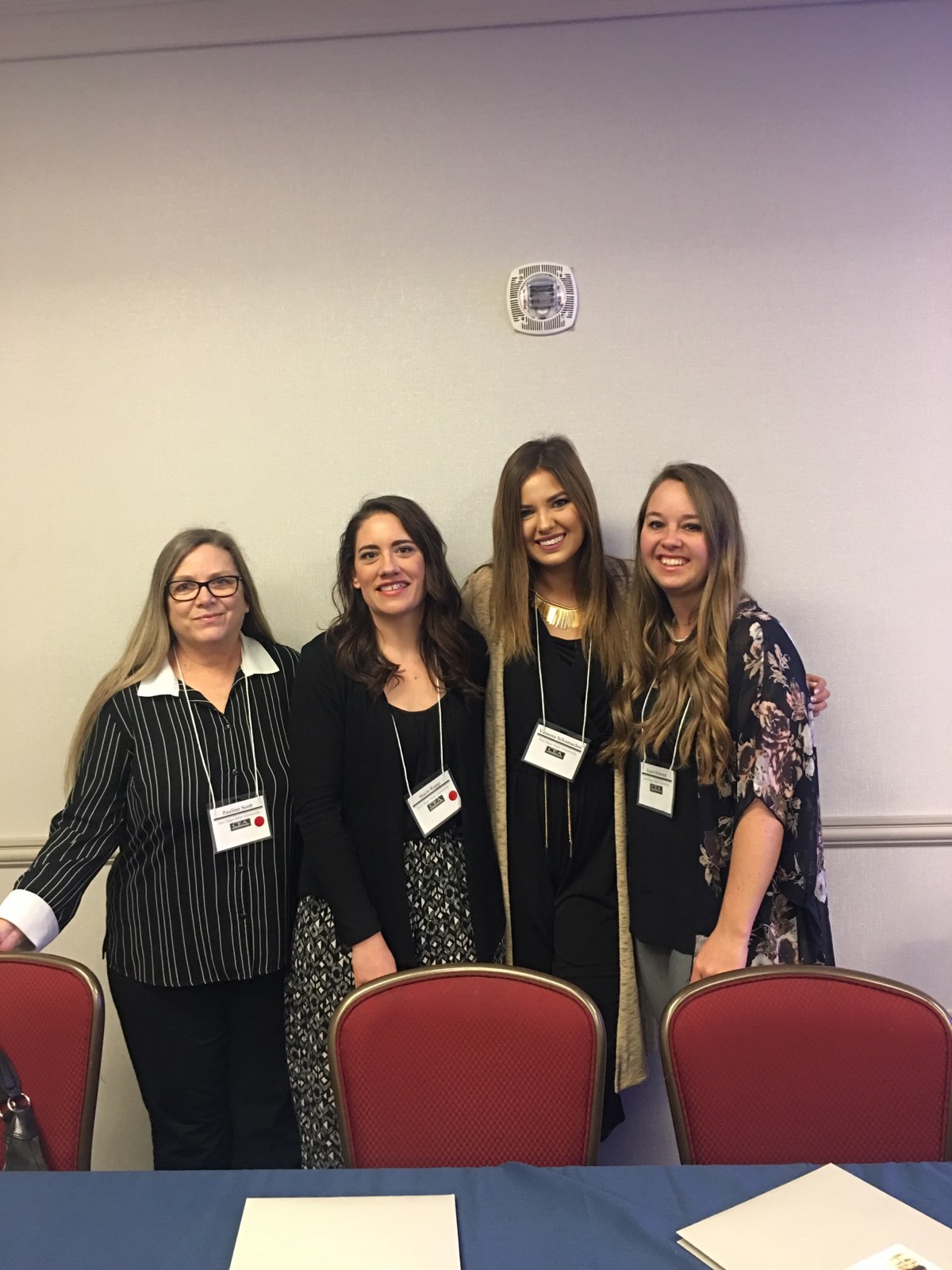
Fort Hays State University’s Dr. Pauline Scott, professor of English, and graduate students Stacie Rupp, Vanessa Schumacher and Karel Webster presented their research at the College English Association 2019 national conference in New Orleans.

Scott’s paper, “ ‘Stars, hide your fires’: Hallucinations and Hidden Things in the Shakespeare/Nesbo Macbeths,” compares Shakespeare’s classic play with a modern work of noir fiction by Norwegian crime writer Jo Nesbo.

The 16th/17th-century playwright, she says, produced work intended to honor a new king and at the same time warn him about the “corruptive potential of great power.” Nesbo’s work, though a “depiction of the hidden machinations of power within a polluted, economically bleak urban landscape,” yet makes Shakespeare’s work “more relevant than ever.”

Rupp’s presentation, “Operating in the Dark: Blinding Consequences in Mary Shelley’s ‘Frankenstein,’ ” is a study of Mary Shelley’s “Frankenstein.” She finds in the novel another story of the corruption of power.

Victor Frankenstein, having found a way to create life, is blind to the monstrous nature of his creature and thus “is rendered powerless.” The monster, however, realizing its own power, “begins taking life rather than conceiving it.”

Schumacher’s “Operating in the Dark: Literal and Figurative Blind Spots in Shakespeare’s ‘King Lear’ ” focuses on themes of blindness, especially the physical blindness in the case of Gloucester and a failure of perception in Lear. Each, operating out of his own infirmity, makes tragic errors of trust and are led to doom.

Webster’s study of F. Scott Fitzgerald’s classic American novel “The Great Gatsby,” “‘Start Him? I Made Him!’: Blindness of the Mentoring Tradition in The Great Gatsby,” analyzes the dynamics of mentoring as depicted in the feelings of love, family and sexuality in the relationship between Jay Gatsby and his mentors and then between Gatsby and his guidance for the novel’s narrator, Nick Carraway.

KRUG: Recent rains prompt mold questions

Donna Krug
It didn’t take long for the recent rains to bring a number of mold and mildew related questions to the Extension office. The saying “Water always wins” is so true.

Whether it is a crack in the foundation, a leaky roof, or the water table raising so that water enters a basement or crawl space, water damage can take a toll on the health and well-being of family members.
Molds are usually not a problem during dry weather. However, when mold spores land on a wet or damp spot and begin growing, it doesn’t take long for a problem to develop.

Molds have the potential to cause health problems. Molds produce allergens, irritants, and in some cases, potentially toxic substances. Inhaling or touching mold or mold spores may cause allergic reactions in sensitive individuals. Molds can also cause asthma attacks in people with asthma who are allergic to mold. In addition, mold exposure can irritate the eyes, skin, nose, throat, and lungs of both mold-allergic and non-allergic people.

Mold needs food in order to grow. Organic compounds like the back side of dry wall, wallpaper or paneling, the top side of ceiling tiles, or the underside of carpets and pads can feed mold. If wet or damp materials or areas are dried 24-48 hours after a leak or spill happens, in most cases mold will not grow. So you must act quickly when water damage happens.

During a flood cleanup, the indoor air quality in your home or office may appear to be the least of your problems. However, failure to remove contaminated materials and to reduce moisture and humidity can present serious long-term health risks. Standing water and wet materials are a breeding ground for microorganisms, such as viruses, bacteria, and mold. They can cause disease, trigger allergic reactions, and continue to damage materials long after the flood.

The best course of action if you detect mold growth is to clean and repair water damage immediately. Make sure the ground slopes away from the building foundation so that water does not enter or collect around the foundation. Keep indoor humidity below 60 percent (ideally between 30 and 50 percent) and increase ventilation with the use of fans.

People are constantly asking me “How do I test for mold?” The answer I share is from Curtis Reddington, an environmental specialist from Wichita, who shared a program about mold a few years ago. “If you see it or smell it, you have it.” Since no EPA or other federal limits have been set for mold or mold spores, sampling cannot be used to check a building’s compliance with federal mold standards.

There is an excellent EPA bulletin available on-line titled, “A Brief Guide to Controlling Mold, Moisture, and Your Home.” It has information on identifying and cleaning up moldy areas. Just google the publication title and you will see the link.

Donna Krug is the Family and Consumer Science Agent with K-State Research and Extension – Barton County. You may reach her at (620)793-1910 or [email protected]

Copyright Eagle Radio | FCC Public Files | EEO Public File