We have a brand new updated website! Click here to check it out!

Profs: Kan. college students will lose broad knowledge with fewer gen-ed rules

Celia Llopis-Jepsen / Kansas News Service file photo

By STEPHAN BISHA
Kansas News Service

For decades, a university education meant students had to load up on math, history and English courses. Now, Kansas universities are slashing those general education requirements so more students can graduate on time and have more room for classes in their major.

This week, Wichita State University became the latest school to reduce how many gen ed classes their undergraduates need to take.

By cutting back on gen ed credits or ditching philosophy and history requirements in favor of specific goals, schools are hoping students can learn skills like ethical reasoning from an engineering course. But liberal arts professors warn the change will take away a core aspect of what a university education provides — a broad knowledge of the world that goes beyond what’s taught in their major.

“Our students will be less competitive, less prepared for the world that they enter when they leave here,” Wichita State University associate sociology professor Chase Billingham said at the faculty vote.

Cutting class

The main driver of Wichita State’s general education cuts is a requirement by the Kansas Board of Regents to reduce credit hours.

In 2017, the board made it their goal to cap most bachelor’s degree program requirements at 120 credits, the minimum needed for a degree. The majority of students fail to earn their degree in four years, forcing them to pay for an extra semester or more of school, so the regents think fewer classes will make it easier for students to graduate on time.

But an across-the-board general education wasn’t the target of the regents’ cap.

Fine arts and engineering faculty at Wichita State complained they already cut as many classes as they could and were still coming in above the credit limit. That’s why they believed general ed cuts should make up the rest.

“We have already cut to the bone our core course,” Wichita State voice professor Pina Mozzani said during the faculty vote. “Our students are going out impoverished in their own area.”

The regents have exempted engineering programs at state universities from requiring more classes, though engineering professors want gen ed cuts so they can put back in more of the major’s core classes.

Faculty pushing for the cuts also argued that Wichita State required 14 gen ed classes, which is more than other competing schools. But some liberal arts professors said their classes shouldn’t be viewed as a burden. Instead, they said, the classes should be celebrated as better preparing students for the post-college world by developing wide-ranging skills.

“I don’t want to get engaged in a race to the bottom,” said John Dreifort, a history professor at Wichita State. “We should still maintain that there are courses in a university that are important for an educated person to have access to.”

Some professors also expressed concern that fewer gen ed requirements would mean fewer students taking their classes. But they also worried that without general education, you end up with state vocational schools.

“This is Wichita State University,” associate history professor George Dehner said. “It’s not Wichita State Tech.”

Ultimately, many liberal arts professors at Wichita State supported the gen ed reduction, swayed by the argument that losing two classes was better than a proposal for four classes.

Professors also went into the vote expecting this to be the last time gen ed was touched for years, though some suggested this was just a patch job and a hard look at reshaping general education was still needed in the years ahead.

“It’s just a Band-Aid on what is a much bigger question about what general education should be in 2019 for our students,” said Aleksander Sternfeld-Dunn, the director of Wichita State’s school of music.

Rethinking requirements

One possibility for WSU’s future is taking a page from Kansas State: ditch the classic university model in which students take specific subjects offered by specialized departments, and instead have them focus on concepts.

In 2012, K-State overhauled its gen ed program (and the University of Kansas made a similar change in 2013). Students in Manhattan still have to take some liberal arts classes. But now a taxation class offered by the accounting department can count toward social science requirements. An animal behavior class from the agriculture department satisfies the empirical and quantitative reasoning goal.

K-State is still evaluating how effective the change has been, but the university said it has seen positive early results.

“It’s not impinging upon any one or two departments to teach all these classes,” said Brian Kovar, a member of the university’s general education council. “It really allows a lot of people to be involved in this.”

Elsewhere, Fort Hays State University is considering allowing some major classes to count toward gen ed, though its main focus is cutting down credits. Pittsburg State University cut gen ed credit this year, while Emporia State University is also looking to do the same.

Stephan Bisaha reports on education and young adult life for the Kansas News Service. You can follow him on Twitter @SteveBisaha or email him at bisaha@kmuw. org. The Kansas News Service is a collaboration of KCUR, Kansas Public Radio, KMUW and High Plains Public Radio focused on the health and well-being of Kansans, their communities and civic life.

‘Young at Art: A Selection of Caldecott Book Illustrations’ coming to HPL

HPL

Through picture books, readers embark on visual journeys that engage all of the senses and encourage curious, imaginative, and thoughtful interactions with the world around them. Since 1938, the Association for Library Service to Children, a division of the American Library Association, has recognized the significant impact of art on early reading experiences, awarding the Caldecott Medal for excellence in this area. Named in honor of nineteenth-century English illustrator Randolph Caldecott, the prestigious and highly coveted medal is awarded annually to the illustrator of the most distinguished American picture book for children.

The exhibition Young at Art: A Selection of Caldecott Book Illustrations includes original illustrations from Caldecott Medal recipients and from “runner-up” Honor books, as well as other illustrations by award-winning artists. It opens at the Hays Public Library on Dec. 14 and will be on display through Jan. 19.

This exhibition of works from Wichita Falls Museum of Art’s permanent collection celebrates the vision and talent of twenty-eight award-winning artists, including the first Caldecott Award recipient Dorothy P. Lathrop (1938), two-time winner Chris Van Allsburg (1982, 1986), and Maurice Sendak (1964), whose work Where the Wild Things Are, like Van Allsburg’s Jumanji and The Polar Express, was adapted for the big screen. Curated by Danny Bills, curator of collections and exhibitions at Wichita Falls Museum of Art and organized by Wichita Falls Museum of Art at Midwestern State University, Young at Art is part of ExhibitsUSA, a program of Mid-America Arts Alliance.

In connection with the exhibit, the Hays Public Library will sponsor a Young Illustrator Contest for 3rd, 4th, and 5th graders in Hays area schools. Chosen entries will be displayed in the Youth Services Department during the Winter Art Walk on December 6, and winners will receive prizes for their classrooms.

About ExhibitsUSA

This exhibition is toured by ExhibitsUSA, a national program of Mid-America Arts Alliance. ExhibitsUSA sends more than twenty-five exhibitions on tour to over 100 small- and mid-sized communities every year. These exhibitions create access to an array of arts and humanities experiences, nurture the understanding of diverse cultures and art forms, and encourage the expanding depth and breadth of cultural life in local communities. For more about ExhibitsUSA, email [email protected] or visit www.eusa.org.

About Mid-America Arts Alliance

Mid-America Arts Alliance (M-AAA) strengthens and supports artists, cultural organizations, and communities throughout our region and beyond. We achieve this primarily through our national traveling exhibition programs, innovative leadership development, and strategic grant making. We are especially committed to enriching the cultural life of historically underserved communities by providing high quality, meaningful, and accessible arts and culture programs and services. We believe in more art for more people. Additional information about M-AAA is available at www.maaa.org.

FHSU taking applications for new master of social work program

A social work student participates in a counseling simulation. Courtesy photo

11/12/19 td/kb local, Western Kansas

HAYS, Kan. – Applications opened this fall for the new Master of Social Work program at Fort Hays State University, the latest initiative by the university to serve rural Kansas.

Fort Hays State’s program will carry a specialty in clinical social work.

Dr. Tim Davis, a professor in and chair of the Department of Social Work, said the FHSU Master of Social Work program takes advantage of the flexibility and outreach aspects of online education while maintaining a strong, hands-on clinical training emphasis. He said the department will accept up to 45 students this first year.

“The MSW program at FHSU will provide high quality and affordable solution to the demand for clinical social workers in Kansas, and improve access to health and mental health care for residents in the underserved rural areas of the state,” said Davis.

Three aspects of FHSU’s program are innovations designed to create opportunity in rural areas:
• Hands-on clinical skills training will be provided near where students live, thanks to creative use of online technology, the completion of face to face clinical intensives, and partnerships with agency field instructors.
• In addition to the standard requirement of 16 to 24 hours a week of clinical practicums, students will complete several short clinical rotations at health clinics, mental health clinics or other clinical sites at the start of the clinical practicum period.
• After graduation, the department will provide the program’s alumni with ongoing help in finding and providing the clinical supervision and training during the two-and-a-half to three-year residency-type training required to gain licensure as independent clinical social workers.

“This is particularly important for Western Kansas as FHSU is the only university located in the western half of the state,” he said. “There is an acute, unmet need for social workers at the master’s level and higher across Kansas, and particularly in the FHSU service area.”

As the program continues to grow, the department will expand its long-standing partnerships with communities and agencies in order to provide students with a broad foundation of knowledge through clinical experience in health and behavioral health as well as classroom training. Davis said clinical training partnerships will extend into post-MSW partnerships to provide the credentials that MSW alumni will need to gain independent licensure.

This is particularly important in the supervised clinical training required for independent licensure. Agencies in rural areas often do not have the personnel with the required credentials to supervise the post-graduate clinical training for licensure. Department faculty, who have the appropriate credentials, will use HIPAA compliant video conferencing systems to provide group supervision to the graduates at work in the clinical settings. In addition, the department will work with agencies to ensure robust ongoing training through the clinical training plan.

“We understand the challenges and rewards of living and working in rural Kansas,” said Davis. “We are committed, through education, scholarship and service, to training exceptional clinical social workers as well as supporting the agencies and communities in which they serve.”

The program offers two pathways to an MSW degree. The Regular MSW Program consists of academic coursework for four standard semesters, one summer term, and field practicum experiences across four regular semesters.

The Advanced Standing MSW Program is only available to students with a bachelor’s degree in social work from a Council of Social Work Education accredited social work program. This program can be completed in one calendar year of academic coursework and two semesters of field practicum experience.

Both degree paths will provide students the clinical training and educational requirements necessary to obtain licensure as a clinical social worker. Both began accepting applications in October. The advanced program will start in June 2020 and the regular program will start in August 2020.

Similar to the FHSU Bachelors of Social Work Program, FHSU will seek and secure CSWE accreditation for the MSW Program. As is the case with all new programs, said Davis, the MSW Program will launch in candidacy status and become eligible for full CSWE accreditation after two years.

Students who graduate from the program while it is in candidacy will retain a fully accredited degree upon the program’s approval of accreditation following the two-year candidacy period. The MSW Program’s candidacy status will neither delay nor prevent graduates from obtaining licensure, he said.

FHSU’s Bachelor of Social Work program is CSWE accredited.

As a primarily online program, all knowledge and theory components of the courses, as well as some practice skill development, will be delivered through online technology, while the hands-on clinical skills training will be completed in face-to-face clinical intensives, clinical rotations, and clinical field placements, said Davis.

Clinical intensive requirements in the advanced clinical year involve attendance at one session per semester, which consists of two and a half days of hands-on clinical training. To make the program more accessible to students, these sessions will be organized around the regions where the MSW students are concentrated. Clinical rotations and clinical practicums can be set up near where individual students reside.

Tuition and fee information for both programs, and comparisons with other MSW programs in the region are available on the departmental Facebook and Instagram pages and on the department’s webpage, www.fhsu.edu/socialwork. For more information, contact Dr. Tim Davis by email, [email protected], or by phone, 785-628-5395.

Hays woman named to governor’s council on early childhood development

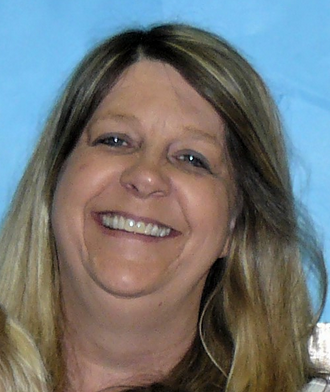
Bowles

Gov. Laura Kelly on Wednesday appointed Glenda Susan Bowles, Laura Smith-Everett, Melissa Rooker and Liz Long to the Coordinating Council on Early Childhood Development Services.

The mission of the council is to solicit information and opinions from concerned agencies, groups and individuals on proposed policies and recommendations for the delivery of health, education and social services to families of young children—from birth through age five—who have or are at risk of having disabling conditions.

“Early childhood development is a major focus of our administration,” Kelly said. “The four Kansans appointed all have strong backgrounds in caring for our children, and I know they will be effective participants on this council.”

Bowles, Hays, is the former executive director of the Hays Area Children’s Center for USD 489. She completed her undergraduate degree at Kansas State University and graduate degree at Fort Hays State University. Bowles works as a speech pathologist and as an educational administrator.

Smith-Everett, Shawnee, is an ELL teacher for the Shawnee Mission School District and the parent of a special-needs child. She received her undergraduate degree from William Jewell College and attended the University of Kansas for graduate school.

Rooker, Fairway, is the executive director of the Kansas Children’s Cabinet. She was appointed as a designee of the governor on the Kansas Interagency Coordinating Council.

Long, Mayetta, is the MCO reporting manager at KDHE Division of Healthcare Finance and has relevant Medicaid program experience.

The governor’s appointments are not subject to confirmation by the Kansas Senate.

— Office of the Governor

K-State professor co-author of national report on challenges of rural schools

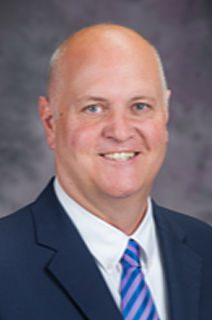
Johnson

MANHATTAN — A report detailing a 50-state comparison of rural schools reveals that many rural students face numerous inequities, and Kansas, like many other states, has both areas to celebrate and preserve as well as serious issues to address.

“Why Rural Matters 2018-19: The Time is Now” was published by the Rural School Community Trust in Washington, D.C. Jerry Johnson, chair of the educational leadership department and Lydia E. Skeen endowed professor in education at the Kansas State University College of Education, is one of the report’s authors. The full report can be viewed at https://www.ruraledu.org/.

Nearly one-quarter — 111,000 — of Kansas’ half-million K-12 students are in rural schools, and 46 percent of the school districts in the state are deemed rural by the U.S. Census Bureau. Nearly two-thirds of these districts — 66% — are considered small rural districts with enrollments below the national median for rural school districts. Nationally, there are 50.8 million students in public schools and about 20 percent are in rural schools.

“It should not be necessary to state the importance of the schools serving 1 in 5 U.S. public school students and argue that these schools and their communities matter — but it is,” Johnson said. “Meeting the needs of 9 million children is a challenge and a responsibility that deserves the attention of the nation, and this report points to key issues of policy and practice with the potential to make things better or make things worse.”

Overall, Kansas ranked in the top third in the nation and was in the top five of the percent of rural students enrolled in dual credit courses. However, the report revealed several areas for policymakers and education leaders to address.

Kansas — even when adjusted for comparable local wages — ranked last in rural teacher salaries and had the 11th highest rate of rural students with individualized education programs. In other metrics, Kansas had the nation’s fourth-lowest rate of rural students passing an AP exam, and slightly less than half of Kansas’ high school juniors and seniors — 47.8 percent — took the ACT or SAT.

J. Spencer Clark, associate professor of curriculum and instruction and director of the Rural Education Center at Kansas State University, said the report provides clarity.

“The Rural Education Center is strategically positioned to address many of the needs outlined in this report with our rural partners,” Clark said. “We’re heartened by the fact that we’re already focusing on college and career readiness for our rural Kansas students and are looking forward to meaningful discussions on ways to better prepare our students in light of the report.”

Rural schools are so vital to the success of their communities, the College of Education hosted the inaugural Rural Summit in 2019. Response was so favorable, Clark said the summit will be expanded to a regional event in 2020. Details will be forthcoming.

Police: Kan. gunshot wound victim accidentally shot himself

SHAWNEE COUNTY — Law enforcement authorities are investigating what was initially believed to be an aggravated battery.

Just after 7 p.m. Saturday, officers responded to a residence in the 300 block of SW Harrison in Topeka on the report of an aggravated battery, according to Lt. John Trimble.

Upon arrival, officers located one victim who suffered what appears to be a non-life threatening gunshot wound.

The victim was taken by ambulance to a local hospital for treatment. Late Saturday, investigators determine the shooting was an accidental, self-inflicted discharge of a firearm by the victim, according to Major Scott Gilchrist with Topeka Police. Name of the victim has not been released.

Driver hospitalized after trailer comes unhooked from pickup on I-70

SHERMAN COUNTY— One person was injured in an accident just after 9p.m. Sunday in Sherman County.

The Kansas Highway Patrol reported a 2019 Chevy Silverado driven by Nancy Ann Wilson, 60, Aurora, Co., was eastbound on Interstate 70 pulling a homemade trailer near the Goodland exit.

For unknown reasons, the trailer came unhooked from the Silverado and rear-ended the pickup causing it to roll unknown amount of times. Both vehicles came to rest in the south ditch.

EMS transported Wilson to the hospital in Goodland. She was properly restrained at the time of the accident, according to the KHP.

Kansas man killed argumentative robbery victim

KANSAS CITY (AP) — A Kansas man who fatally shot an argumentative robbery victim has been sentenced to 20 years in prison.

Reese photo Jackson Co.

Twenty-seven-year-old Danzel Reese of Kansas City was sentenced Thursday for involuntary manslaughter and first-degree robbery in the 2010 fatal shooting of Lance Rutter.

One witness told police the original plan was to rob a drug dealer. But when the dealer didn’t show up, the witness returned to a vehicle, where he got a call from Reese saying he was “just gonna rob anybody.”

The witness says he then saw Reese point a handgun at two people on a porch and fire once.

The surviving victim told police that he handed his wallet to one suspect, who then took off running. The man said Rutter was shot when he argued with the other suspect.

Police: Kan. truck crash may have been suicide attempt

SEDGWICK COUNTY— Law enforcement authorities are investigating a weekend vehicle crash that may have been a suicide attempt.

Just after 11:15 a.m., police responded to a rollover accident at Kellogg and Edwards in Wichita, according to officer Charley Davidson.

A 2010 white Ford F250 was westbound on Kellogg in the center lane being driven by a 19-year-old woman and occupied by a 15-year-old male passenger.

Without warning or reason, the truck veered hard to the right and crashed into the concrete barrier over Edwards, causing the truck to flip on its side and slide to a stop. EMS transported both occupants to an area hospital for treatment of non-life-threatening injuries.

When medical crews contacted the occupants, the woman was unconscious, and the boy made comments of wanting to harm himself. Through further investigation, it was learned the boy and woman grabbed the steering wheel of the truck together and turned it abruptly, in an apparent suicide attempt.

Crews fight second weekend grass fire in Reno Co.

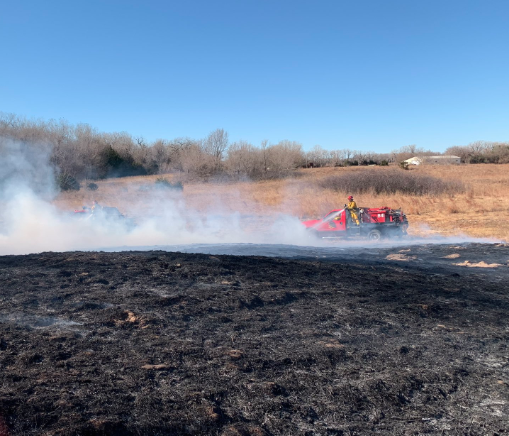
Sunday grass fire in Reno County-photo courtesy Hutchinson Fire Dept

RENO COUNTY — For the second day in a row, the Hutchinson Fire Department was on the scene of a grass fire.

On Sunday, crews responded to the 3300 block of 95th for a grass fire. According to HFD, all units were on the scene and battling strong northerly winds.

There is no word yet on any damage or evacuations.

On Saturday firefighters battled a large fire that started in the 5200 block of East 4th Avenue. The fire spread quickly and passed 17th Avenue before being brought under control. Crews worked to save several homes in the East 17th Avenue area, but an out building was lost in the fire.

Officials did not report any injuries. More than 30 fire units were called to help fight the fire.

Private prison firm preps for 2020 ‘worst case scenario’

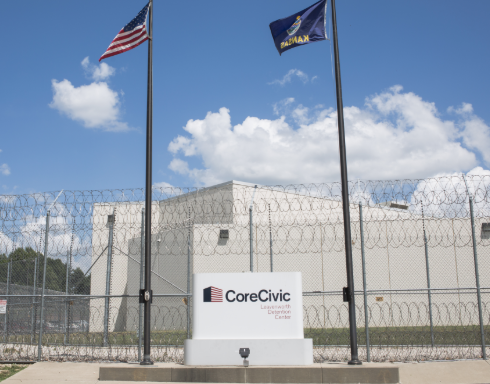
Leavenworth Detention Center is owned and operated by CoreCivic, the biggest private operator of prisons and detention centers in the United States.
CREDIT REBEKAH HANGE / Kansas News Service

NASHVILLE, Tenn. (AP) — The head of a giant private prison company says his firm is prepared for the “worst case scenario” should a Democratic presidential candidate win the 2020 election and attempt to abolish private involvement in the prison sector.

CoreCivic CEO Damon Hininger addressed such a potential scenario in the company’s latest earnings conference call last week when asked about the number of top Democratic presidential candidates who favor ending federal private prisons. He said Tennessee-based CoreCivic remains upbeat that the company would continue to earn money in such a scenario and noted the federal government currently does not have the infrastructure to house inmates without relying on private facilities.

“In worst case scenario, knowing half our business is with the states, nothing is going to change,” Hininger later said in a Friday phone interview with The Associated Press, echoing comments he made on the earnings call.

On the call, he said CoreCivic had reported $509 million in earnings for the third quarter.

He said that CoreCivic would still earn money should the federal government ever end its contract, saying his company would be able to sell or lease its real estate if that were to occur — stressing that such an effort would likely take years to phase-out and approval from Congress on appropriating enough funding to build new facilities and resources.

The company operates 51 correctional and detention facilities including the Leavenworth Detention Center in northeast Kansas. They own 44 with a total capacity of roughly 73,000 beds. This has resulted in the company becoming the largest private owner of real estate used by U.S. government agencies.

“We think that an option could be if there is a big push not only at federal but at state level to eliminate use of the private sector to provide real estate and services,” Hininger said. “That maybe the option that they ask us to consider is to either buy our existing assets or capacity or lease our facilities.”

Top private prison firms across the country have been closely watching the growing backlash from the top Democratic presidential contenders — ranging from former Vice President Joe Biden, Massachusetts Sen. Elizabeth Warren and Vermont Sen. Bernie Sanders — who strongly favor ending federal private prisons.

These companies recently formed an advocacy group known as the Day 1 Alliance to rebut the criticism. Meanwhile, unease in the industry continues to linger about negative public opinion on private prisons.

For example, in a recent SEC filing, Florida-based GEO Group noted that resistance to private prisons “could result in our inability to obtain new contracts or the loss of existing contracts, impact our ability to obtain or refinance debt financing or enter into commercial arrangements.”

Hininger also added on the call that the U.S. Immigration and Customs Enforcement and the U.S. Marshals do not own or operate any detention centers, making them reliant on private companies like CoreCivic to house detainees. But even if the federal government became opposed to privatization, Hininerg said state governments are increasingly showing more interest in the area.

“In the last two years, we’ve had contracts with Ohio, Vermont, Wyoming, South Carolina, Kansas and Kentucky. These are states with both Democratic and Republican governors, both ends of the spectrum,” Hininerg told AP on Friday. “They’ve engaged us with solutions and I don’t see that changing.”

CoreCivic’s involvement with ICE, however, has come under fire from the left as one of two private companies that operate migrant detention centers for ICE. According to CoreCivic’s financial statements, ICE detention accounted for 25 percent of the company’s $1.8 billion in total revenue in 2018.

CoreCivic has defended contracting with ICE by countering that it doesn’t run facilities for immigrant children separated from parents, but it does have ones that detain adult immigrants, as well as one center that houses migrant mothers and their children together.

In 2016, then President Barack Obama’s administration announced the Federal Bureau of Prisons would no longer use private prisons and unveiled a plan to phase-out of the contracts. That decision was quickly overturned after President Donald Trump took office.

Jack Holmes

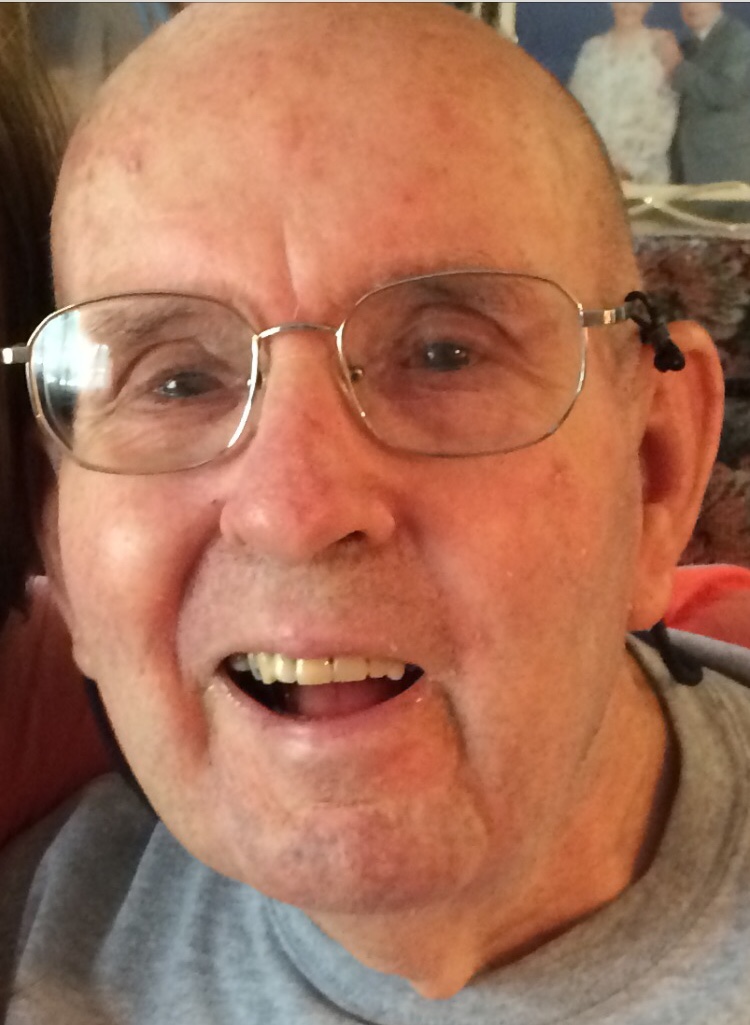
Jack Holmes, 87, of Russell, Kansas passed away on Friday, November 15, 2019, at the Russell Regional Hospital in Russell.

Jack was born October 26, 1932, in Wichita, Kansas. He was the only child of Earl and Anna (Singer) Holmes. At the age of 6, Jack and his parents moved to Russell. He graduated from Russell High School 1950.

Jack was united in marriage to Elaine Covington November 1, 1953, in Phillips, Texas. This union was blessed with three children; Tami, Julie and Tim. They made their home in Sterling, Colorado; Cambridge, Nebraska; Farmington, New Mexico; Pratt, Kansas; and returned to Russell in 1974.

Jack was an Oil Pumper for Getty Oil for over 35 years. After Chevron Texaco purchased the company, he remained working for three more years before retiring in 1987. He was an active member of the Calvary Chapel, Assembly of God Church.

Surviving family include his beloved wife of 66 years, Elaine of the home, Tami (David) Hoffman of Golden, Colorado and Son, Tim Holmes of Wichita, Kansas; four grandchildren Julie King, Denver, Colorado, Jenny (Joel) Maxwell, Arvada, Colorado, Justin (Maggie) Hoffman, Arvada, Colorado, Lauren (Alex) Lievestro, San Diego, California; five great-grandchildren Elise and Ava King, Sherman Oaks, California and Zadie, Zyla and Zaxton Maxwell, Arvada, Colorado.

Jack was proceded in death by his parents Earl and Anna Holmes and their daughter Julia Elaine Holmes.

A Memorial Service will be held at 11:00 A.M., Tuesday, November 19, 2019 at Pohlman-Varner-Peeler Mortuary in Russell. A private burial of ashes will follow at a later date.
A Memorial has been established with Hoffman Family Foundation benefiting Rays of Grace Primary School in Kirugu, Uganda Africa. Contributions and condolences may be sent to Pohlman-Varner-Peeler Mortuary, 610 N. Maple, Russell, Kansas 67665 who is facilitating these arrangements.

Copyright Eagle Radio | FCC Public Files | EEO Public File