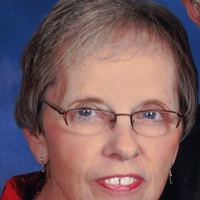
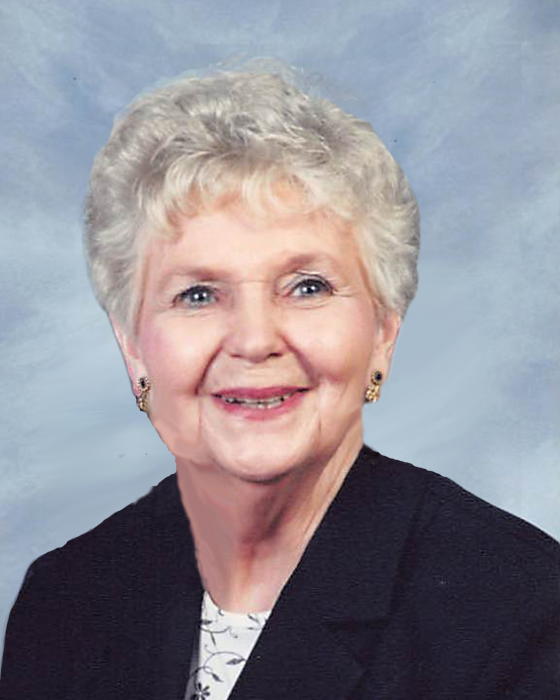
Theresa Marie (Dinkel) Giebler, age 86 of Hays, Kansas passed on April 25, 2019 at Hays Medical Center. She was born July 24, 1932 in Emmeram,KS the oldest of ten children, to Anthony and Alvina (Stecklein) Dinkel. She graduated from Girls Catholic High School in 1950. She married James E. Giebler on September 4, 1951.
As a young woman she worked at Saint Anthony Hospital as a CNA for 13 years, in charge of the Polio Ward and on the Pediatric Ward. She worked for 31 years in dentistry with Dr. Edmund, Dr. Glover and Dr. Hallagin as an assistant and receptionist, then becoming the office manager until retirement. Much of her retirement years were dedicated to caring for her husband.
Her Catholic faith was very important to her along with the devotion to the Rosary. She was a lifetime member of Immaculate Heart of Mary Parish. She was on the baking committee contributing her baked goods for funerals and dinners.
Her most joy in life was her family, immediate and extended. Each year, each child, relative and friend received a birthday card. Holidays and any other occasion to gather were cherished by her, to enjoy conversation and a meal. Her hobbies include embroidery along with watching KU basketball and KC Royals baseball.
She was preceded in death by her husband James E. Giebler, her parents, four brothers, infant Anthony Jr., Harold, Norman, and John Dinkel, four sisters, Elizabeth Hatfield, Rita Sander, Barbara Schoenberger and Charlene Rupp.
She is survived by eight children, Sheila Neuburger, Lawrence, KS; Pam Diehl and husband Steve, Wichita, KS; Greg Giebler and wife Laura, Esterville, Iowa; Steve Giebler and wife Debbie, Great Bend,KS; Rebecca Deatherage and husband David, Russell,KS; Deborah Fall and husband Scott, Hays, KS; Carma Chrisler and husband Chris, Hays, KS; James A. Giebler and wife Stacy, Westerville, Ohio; Her cherished 21 Grandchildren, 24 Great-grandchildren, 2 Great-great grandchildren, 4 Step-Grandchildren, 2 Step-Great-grandchildren and 1 Step Great-great grandchild and her sister Rosie Mermis, Olathe, KS
Funeral Services will be 10:00 AM Tuesday, April 30, 2019 at Immaculate Heart of Mary Church 1805 Vine Street in Hays. Burial will follow in St. Joseph’s Cemetery, Hays.
Visitation will be Monday 5 PM – 8 PM and Tuesday 9 AM – 9:30 AM all at Brock’s-Keithley Funeral Chapel and Crematory 2509 Vine Hays, KS 67601.
A combined parish vigil service and rosary will be 7 PM Monday at the funeral chapel.
Memorial contributions are suggested to Immaculate Heart of Mary Church.
Condolences may be left by guest book at www.keithleyfuneralchapels.com or by email at [email protected]
Ron Wilson is director of the Huck Boyd National Institute for Rural Development at Kansas State University.
BY RON WILSON Huck Boyd National Institute for Rural Development
Sometimes it takes a spark to get something started. Today we’ll learn about a spark which is indeed starting something, but this spark is spelled SPARC with a C. The SPARC program was launched by an innovative community foundation to encourage and support vital economic development projects in the region.
Angie Muller is executive director of the Russell County Area Community Foundation, an affiliate of the Greater Salina Community Foundation. She told me about the SPARC grant program.
Angie is a native of Russell. She earned a degree in economics from Kansas State University and a master’s degree in defense studies from the University of Reading in England. She went on to work with federal agencies and then non-profit organizations in the Washington, D.C. area, but she had fond memories of home.
“I lived in exile (from rural Kansas) for about 18 years,” Angie said with a smile. In 2010, she and her husband decided to move back to Kansas to raise their family.
In doing so, they joined a surprising but growing trend of an increase in young people in rural Kansas. In general, demographic data have demonstrated long term population loss in the rural regions of the state. However, according to K-State sociology professor Matt Sanderson, data show that the population of those in the 20-30 age category and the 30-40 age category grew by about 4% in rural Kansas from 2010 to 2017. Angie is pleased to be part of that rural re-migration.
Angela Muller, Russell County Area Community Foundation
“Our kids are very happy, they live next door to their grandparents,” Angie said. “I love it.” When she moved back, she became executive director of the Russell County Area Community Foundation.
The foundation was formed in 2001 to create a permanent source of philanthropy to address current and future needs in the region through grant making and partnerships. “The foundation exists to preserve our rural way of life,” Angie said.
Today, the Russell County Area Community Foundation has more than $15 million in assets and 76 charitable funds created by various donors. The Kansas Health Foundation and the Dane G. Hansen Foundation of Logan have been key donors and partners in helping this foundation grow.
“Our board of directors got together and talked about how we could do even more,” Angie said. “We were giving out lots of smaller grants, but we wanted to think big and do something really meaningful.”
That led to the creation of a new grant initiative called SPARC: Strategic Partnership for the Advancement of Russell County. SPARC offered grants up to $175,000. “We had three goals: Significant economic development, community collaboration, and long term measured impact,” Angie said.
After proposals were submitted, two finalists emerged. In the end, the Russell County Area Community Foundation board decided to support both, at different levels and stages. The foundation awarded $175,000 to Russell Development Inc. to develop 20 acres of commercial real estate along Interstate 70. Russell County includes about 30 miles of I-70, from the rural town of Gorham, population 348, to Dorrance, population 185 people. Now, that’s rural.
The second project was not as far along and involved the development of a new tourism coalition for the Post Rock region of Kansas. The foundation decided to support that project with a $25,000 grant.
“Our goal is to make this a vibrant community for years to come,” Angie said. She is passionate about rural Kansas. “People are friendly, we have beautiful scenery and great schools. It’s a fantastic place to raise a family and it’s worth preserving,” she said.
For more information about the foundation, go to www.rcacf.net/
Sometimes it takes a spark to get something started. In this case, it was a program named SPARC which is stimulating economic development in the Russell region. We commend Angie Muller and all those involved with the Russell County Area Community Foundation for making a difference with creativity and philanthropy. I’m thankful for their creative spark.
And there’s more. As mentioned, one of the SPARC grants is supporting a new regional tourism initiative. We’ll learn about that next week.
WAKEENEY – There is much to love about the great state of Kansas—the art and architecture, local cuisine, fun events, and the awe-inspiring landscape that tells the story of the past, present, and future of our state. The Kansas Sampler Foundation has designed a program that encourages Kansans to get out and explore the hidden gems found in the Sunflower State. It’s called the Big Kansas Road Trip, and it’s bringing people from across Kansas right through Trego County to visit three of our northwest Kansas neighbors.
The Land and Sky Scenic Byway
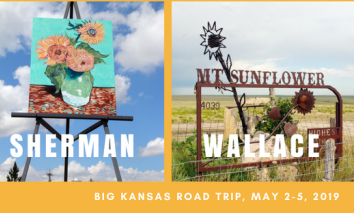
The Big Kansas Road Trip (BKRT) is an annual event that puts a spotlight on a three neighboring counties. The 2019 event is focusing on the Land and Sky Byway, taking travelers through the communities and rural areas of Cheyenne, Sherman, and Wallace counties on May 2nd to 5th.
What You’ll See on the Big Kansas Road Trip
The four-day adventure explores the historical sites, shops, attractions, and scenic roads of Northwest Kansas at your own pace. The red carpet is awaiting you at the many lodging options and restaurants you’ll find along the way, and the BKRT Program Guide will make sure you don’t miss a thing!
Goodland, Sherman County
Sherman County (Goodland, Kanorado, Edison) is famous for its celebration of our state flower with its giant Van Gogh painting, but did you know it’s also the home of America’s first patented helicopter? You’ll find it at the Goodland’s High Plains Museum.
When you get hungry make a stop at Crazy R’s Bar & Grill for their delicious burgers and steaks or King’s Cafe, which is a great place for home cooking and pastries.
Cheyenne County (St. Francis, Bird City, Wheeler) offers visitors a chance to experience the amazing beauty of the Western Kansas prairie. Travel to the Arikaree Breaks to see a pint-sized Kansas version of the Grand Canyon, or stand tall at “Three Corners,” where Colorado, Nebraska, and Kansas meet. At Cherry Creek Encampment and the Ancient Indian Traders Trail take a moment to reflect on our difficult history with the original people who claimed this prairie their own.
Wallace County (Sharon Springs, Weskan, Wallace) is home to Mt. Sunflower, the highest point in Kansas at 4,039-feet. The mechanically-minded people will enjoy visiting the Radiel Wrench Museum, where they’ll find a collection of 10,000 wrenches, and hobbyists of domestic crafts should visit the General Store for bulk food, fabric and sewing supplies, and gifts.
Take a peek into Kansas’s prehistoric story at the Fort Wallace Museum—home to a 40-foot long replica of a plesiosaur fossil discovered in 1867 by the fort’s surgeon. The museum also contains Old West memorabilia and art work that will take you back to the days when legendary Western men, like General Custer, Wild Bill Hickock, and Buffalo Bill Cody, called the fort “The Fightin’est Fort in the West.” And, don’t miss touring the Kansas Pacific Railway’s Superintendent’s Residence. Built in 1879, it is considered to be the finest example of its kind in the West.
Much, Much More!
There are many more fascinating things you’ll find along the 2019 BKRT route, like Erin’s Food Truck that will be featuring a special menu for the tour. Special events, such as a concert series by Michael Martin Murphey that will occur on May 2nd, 3rd, and 4th. Check out the Big Kansas Road Trip website for more information.
NOTE: Sherman and Wallace counties observe Mountain Time. Once you’ve entered these counties you are in a time warp, reversing time one hour!
Marci Penner
The “Stump”
You can find out more about the BKRT from program organizers Marci Penner and WenDee Rowe at one of the Kansas Sampler Festival’s “Stump “ events. During the 15-minute question/answer games they will provide more insight into the many things to see and do in the three featured counties. The Stump events are scheduled in seven different communities located in the featured counties and the winner will receive a prize from a Stump sponsor!
Don’t Forget to Stop by Trego County on Your Trip West!
The Smoky Valley Scenic Byway has its own adventure waiting for you! Take a break during your adventure at the many great restaurants, shops, and attractions located in Trego County.
Almost half the people locked up in Kansas prisons admit they have a history of domestic violence — getting the cops called after an argument with a partner, having a restraining order against them or serving time for beating or threatening a family member or partner.
Almost half of the people attending batterer intervention programs in 2018 didn’t finish. Program coordinators say cost, transportation and waiting lists are among the barriers to completion. B. JAMIE / PUBLIC DOMAIN
Some of those people end up in batterer intervention programs — sometimes while they’re behind bars, other times during probation or parole. The weekly workshops stretch over months, aiming to pinpoint what drives someone to violence, and searching for ways to break those cycles.
But waiting lists, program costs and other barriers mean that roughly half of people in those programs never finish. The state attorney general’s office reports that last year 1,134 people completed state-certified batterer intervention programs in Kansas, out of a total 2,404 participants. That includes programs run by nonprofit organizations and by the Kansas Department of Corrections.
The completion rate for the state’s program is lower than the overall rate. Out of 487 participants in 2018, 20 people completed the program while incarcerated at the Lansing Correctional Facility and 47 finished it while on parole.
Those statistics reflect the difficulty of leaving prison, the stringent requirements of parole or probation and the emotional stress of confronting one’s own history of violence, say the people who run the programs.
“People come here afraid. They don’t want to be here,” said Steve Halley, the director of Family Peace Initiative, an organization that provides batterer intervention services in the Shawnee County area and helped develop a curriculum used statewide. “They don’t want to be vulnerable. And changing and ending cruelty is a very vulnerable process.”
Halley’s program requires at least 25 weekly sessions of learning about trauma, gender roles and personal responsibility in groups of about eight to 12. Men and women are placed in separate groups. About half of the people drop out in the first five to eight weeks.
Of those who complete the program, about 22% committed domestic violence again. Of those who left early, 44% committed another act of domestic violence, according to the Shawnee County District Attorney’s Office.
Each session costs $35, with additional costs for assessment and orientation sessions. The program offers a sliding scale for people who are unemployed, but even that cost can be a burden for participants, about 80 percent of whom have been mandated to attend by a court, Halley said.
“By far we’re serving, basically, the poor,” he said. “Their life is so chaotic that to be able to make it, to attend a class once a week for six months, is a huge request.”
Rural batterer intervention programs face similar challenges.
But a program based in Hays, in northwestern Kansas, sees completion rates of about 90%, well above the statewide average. Its attendees come from a range of socioeconomic backgrounds and nearly 20 counties in a sparsely populated part of the state, said Dian Organ and Nance Munderloh, who run the program.
They said court orders mandating the program contribute to the high completion rate.
“Our people,” Organ said, “want to get off of supervision.”
Many of their attendees have to carpool because they don’t have driver’s licenses or access to public transportation. Some have to drive for almost two hours. That commute can complicate the typical barriers to attending several months of classes: the cost, low-paying jobs, struggles with addiction and unstable housing.
“It’s quite the stress,” Organ said, “on some of them.”
Those challenges can be magnified on parole, said Danielle Thompson, who supervises the batterer intervention program at the Kansas Department of Corrections.
The state runs a program specifically for people on parole because they find it particularly difficult to attend every session while looking for housing, finding work, staying away from drugs and meeting other conditions of parole, Thompson said. Unlike community programs, the state’s batterer intervention program doesn’t have any fees.
“Parole offenders really struggled with paying those fees because of the jobs they were able to get and all the other fees they had to pay for,” she said. “Being able to offer it at the parole office was an attempt to make it a little bit more attainable.”
The state-run program also serves people held at the Lansing Correctional Facility in northeastern Kansas. Forty-two percent of respondents to a Department of Corrections survey said they have a history of domestic violence, but Thompson estimates that a more accurate proportion might be closer to 50% or 60%.
“We know the immense trauma that offenders in our custody and who we are supervising have experienced,” she said. “We know that unresolved trauma can result in perpetrating violence onto others.”
One reason for the state program’s low completion rates, Thompson said, is the waiting list. People might not make it into the program until a few months into their parole term. Often, a parole term can end before the batterer intervention program is complete.
Thompson said the state program doesn’t accept people with less than five months left on parole who can’t commit to at least four months of batterer intervention. It can take eight to 10 weeks for attendees to build rapport, learn empathy and start applying new skills to their relationships. Before that point, they’re often hostile, defensive and emotionally vulnerable, which puts them at risk of committing further violence.
“If they don’t have that minimum amount of time, we don’t put them in the group because it would be counterproductive to safety,” she said. “It can actually increase the risk and make them more dangerous.”
More staff, Thompson said, would increase the program’s capacity. It’s easy for the batterer intervention program to keep on dedicated employees, but it’s harder to hire enough people with both the skills and the willingness to work on an emotionally difficult subject. Kansas also requires people to obtain a special license in order to conduct assessments for people nominated for batterer intervention.
“We serve the highest-risk people,” she said. “It takes a certain set of skills to be able to do this work.”
In 2016 and 2017, 19% of people who completed the Department of Corrections batterer intervention program were convicted of another domestic violence crime. Seven percent had a restraining order issued against them due to abuse of a partner or household member.
Progress is often slow, Thompson said, but she finds the work rewarding.
“Sometimes success is, instead of calling her ‘my baby Mama,’ it’s ‘her name is Rachel.’ It’s moving from objectifying them to identifying them as a human,” she said. “Instead of strangling her, it’s pushing her. There’s still violence, but the violence has decreased.”
Nomin Ujiyediin is a reporter for the Kansas News Service. You can send her an email at nomin at kcur dot org, or reach her on Twitter @NominUJ.
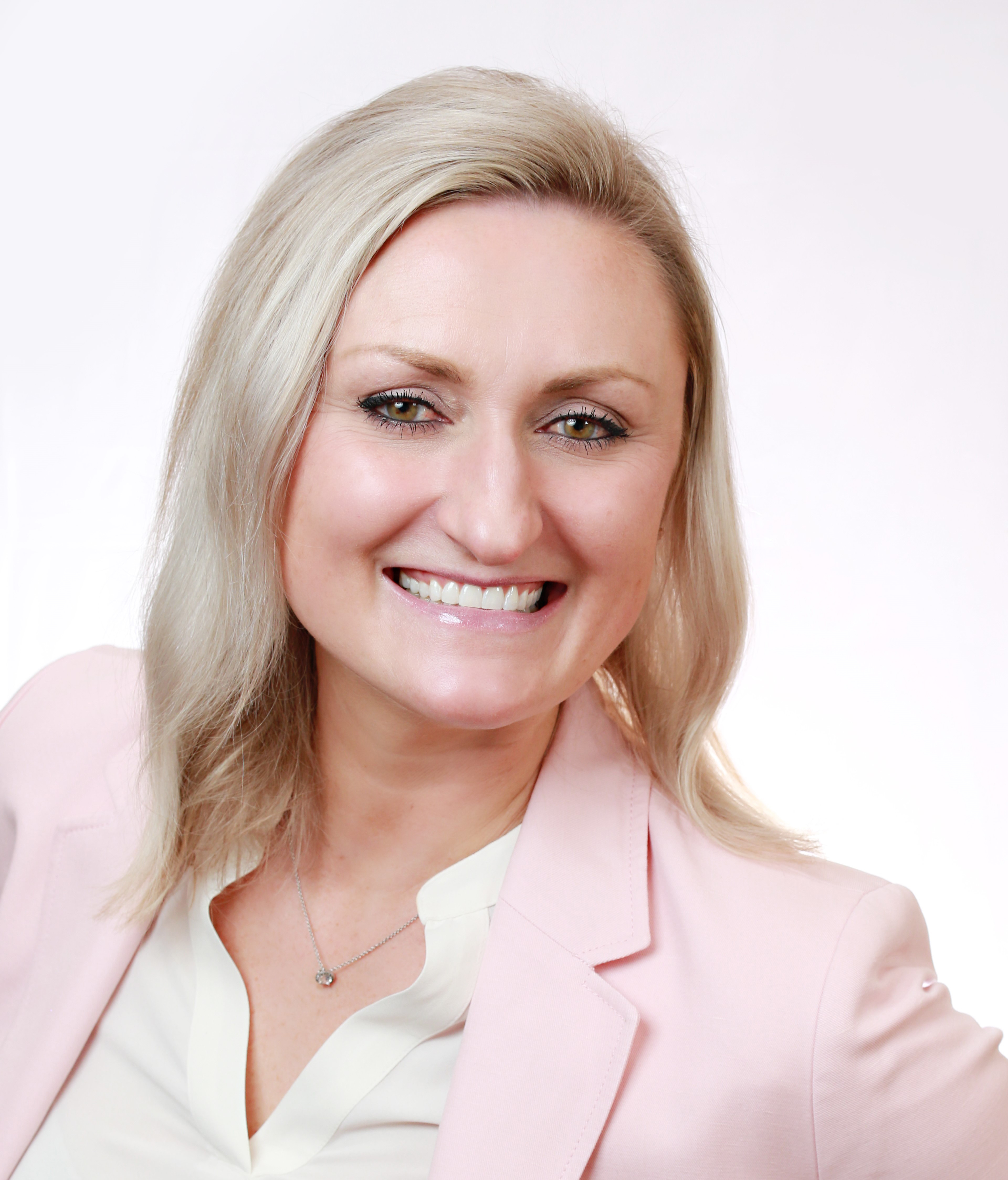
LEAWOOD – Susan G. Komen Kansas & Western Missouri Board of Directors announced that they have selected proven development executive and cancer advocate Erica Terry as CEO and Executive Director. Terry begins her role on April 29, 2019.
Terry joins Komen from The Nelson-Atkins Museum of Art where she served as Director, Membership & Corporate Partnerships. Prior to that, she built her career at cancer-related organizations including Saint Luke’s Foundation, LIVESTRONG, and The University of Kansas Cancer Center.
The search for a new permanent CEO began in November of 2018 when Susan G. Komen Greater Kansas City and Susan G. Komen Kansas affiliates merged to become Susan G. Komen Kansas & Western Missouri. Komen affiliates have invested more than $27.5 million in breast health programs in the 112-county Kansas and Missouri service area to date.
Terry will be the newly merged affiliate’s first permanent leader, focusing on the effort to continue increasing impact in existing service areas and to begin implementing expansion of efforts to underserved areas throughout the state.
Kristin Cargin, Board President, led the search with the executive committee, recruitment firm Fenaroli and Associates and the support of the full board.
“We conducted a comprehensive regional search and it led us to a native Kansan who brings experience working in the Greater Kansas City area and throughout the State of Kansas,” said Cargin. “Her Midwestern roots, combined with the work she has done with mission-driven organizations, her proven success in development and her passion for the fight against cancer perfectly positions her to help us save more lives and ultimately end breast cancer forever.”
As part of her personal mission to end cancer, Terry founded and served as president of Tour de BBQ, an annual fundraising bike ride to support young adults with cancer. Other board positions have included Gilda’s Club Kansas City, Leukemia & Lymphoma Society – Kansas City Chapter and Kansas City Cancer Partnership.
“I couldn’t be more humbled, honored and thankful for the opportunity to lead this important organization as we expand our impact, save lives, and achieve Komen’s Bold Goal to reduce breast cancer deaths by 50% in 2026. Achieving this will not happen if we wait for someone else to do it. We can meet this goal with thoughtful planning, strategic partnerships across the region, and collaborative work to ensure nobody has to suffer from this devastating disease,” said Erica Terry.
Dr. Roy A. Jensen, director of The University of Kansas Cancer Center, said that he is absolutely delighted that Terry has been selected for this position. “Erica combines extensive experience in the non-profit world with a longstanding and deeply felt passion for cancer advocacy. I can’t think of anyone who would be better suited to lead this great organization,” commented Dr. Jensen.
Terry holds a Bachelor of Arts and Master of Arts in Political Science from the University of Kansas. She has served as a political activist, partnering with former Kansas State Senator Barbara Allen on the breast cancer license plate and Fred Logan on the Johnson County Education Research Triangle.
About Susan G. Komen®
Susan G. Komen is the world’s largest breast cancer organization, funding more breast cancer research than any other nonprofit outside of the federal government while providing real-time help to those facing the disease. Komen has set a Bold Goal to reduce the current number of breast cancer deaths by 50% in the U.S. by 2026. Since its founding in 1982, Komen has funded more than $988 million in research and provided more than $2.2 billion in funding to screening, education, treatment and psychosocial support programs serving millions of people in more than 60 countries worldwide. Komen was founded by Nancy G. Brinker, who promised her sister, Susan G. Komen, that she would end the disease that claimed Suzy’s life. That promise has become Komen’s promise to all people facing breast cancer. Visit komen.org or call 1-877 GO KOMEN. Connect with us on social at ww5.komen.org/social.
About Susan G. Komen® Kansas & Western Missouri
Komen Kansas & Western Missouri is working to better the lives of those facing breast cancer in their local communities. Through signature events like the More Than Pink Walk and BigWigs, Komen Kansas & Western Missouri has invested more than $27.5 million in breast health programs in their 112-county Kansas and Missouri service area and has helped contribute to the more than $988 million invested globally in research. For more information, call 816.842.0410, visit komenkswmo.org or behindtheribbon.org. Connect with us on social media: Facebook, Twitter or Instagram.
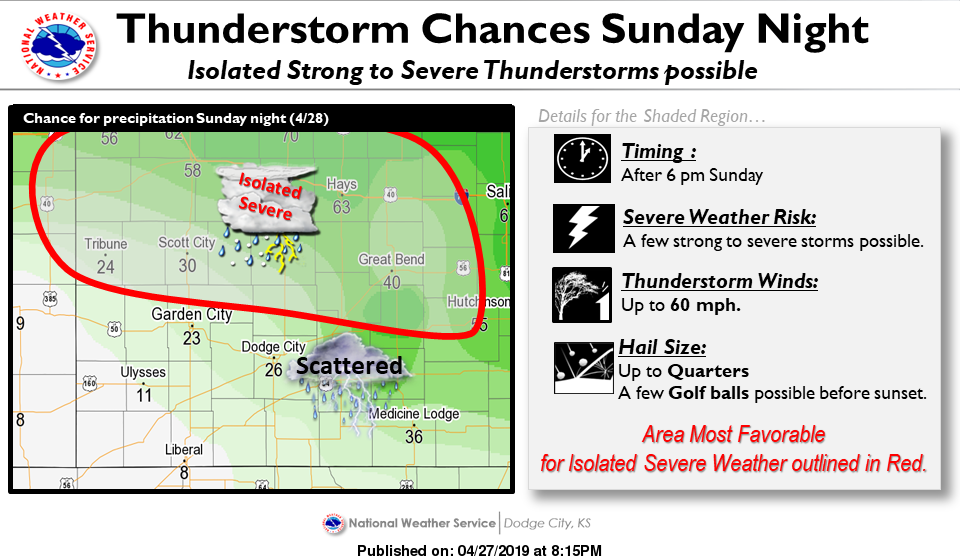
Partly sunny, with a high near 70. Breezy, with a south southeast wind 10 to 15 mph increasing to 17 to 22 mph in the afternoon.
Tonight
Showers and thunderstorms likely, mainly before 3am. Mostly cloudy, with a low around 46. Breezy, with a south southeast wind 15 to 20 mph becoming east 9 to 14 mph. Chance of precipitation is 60%. New rainfall amounts between a quarter and half of an inch possible.
Monday
Mostly cloudy, with a high near 59. Breezy, with a north wind 15 to 23 mph.
Monday Night
A slight chance of showers and thunderstorms before 1am, then showers likely and possibly a thunderstorm between 1am and 4am, then showers likely after 4am. Mostly cloudy, with a low around 41. Northeast wind 10 to 16 mph. Chance of precipitation is 60%. New rainfall amounts between a tenth and quarter of an inch, except higher amounts possible in thunderstorms.
Tuesday
Showers likely before 10am, then showers likely and possibly a thunderstorm between 10am and 1pm, then a chance of showers after 1pm. Cloudy, with a high near 55. Northeast wind 9 to 13 mph. Chance of precipitation is 60%. New rainfall amounts between a tenth and quarter of an inch, except higher amounts possible in thunderstorms.
Tuesday Night
A 30 percent chance of showers, mainly before 1am. Mostly cloudy, with a low around 40.
Wednesday
Mostly cloudy, with a high near 62.
Wednesday Night
A 50 percent chance of showers. Mostly cloudy, with a low around 41.
Audrey L. Prescott, 81, passed away April 26, 2019 at Country Living Memory Care of Larned.
She was born November 27, 1937 in Larned to Otto Henry and Helen S. Salmans Vratil.
A lifetime area resident, she was the USD 495 office manager, Larned.
She was a member of the United Methodist Church, United Methodist Women, Trustee’s, Gem Gals, Red Hat Society, and Garden Club, all of Larned.
In addition to managing the USD 495 office, she also worked at Prescott Auto and Tri County Special Services, Larned.
On June 15, 1958 she married Donald E. Prescott at Larned, he survives.
Other survivors include; a son, Brad (Chris Ann) Prescott, Lawrenceville, Georgia; two daughters, Jan Beaty, Larned, Nona (Chris) Golledge, Lawrence; seven grandchildren.
She was preceded in death by her parents.
Funeral service will be held 10:00 a.m. Tuesday at United Methodist Church, Larned, with Reverend Bethann Black presiding. Visitation will be 9:00 a.m. to 8:00 p.m., with family present from 6-8 p.m., Monday at Beckwith Mortuary, Larned. Interment will be in Larned Cemetery.
Memorials may be given to United Methodist Church in care of Beckwith Mortuary, PO Box 477, Larned, KS 67550. Personal condolences may be left at www.beckwithmortuary.com.
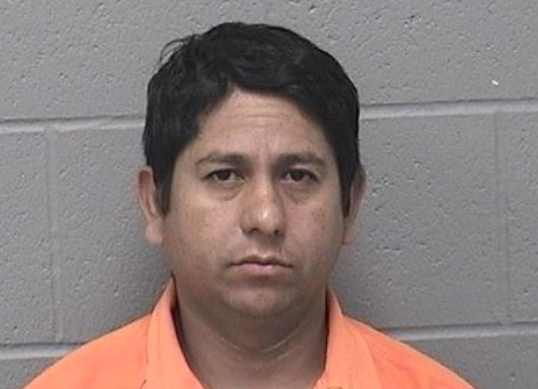
Crawford County Attorney Michael Gayoso says 38-year-old Francsico Eduardo Noches-Padilla was found guilty Thursday of 13 counts of rape of a child, four counts of aggravated indecent liberties with a child and one count of aggravated criminal sodomy.
On 15 of the 18 charges, he faces life without the possibility of parole for 25 years.
Prosecutors say the crimes involve several acts committed on one child between 2012 and 2017.
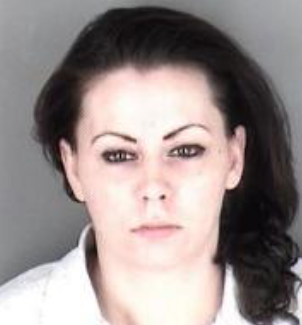
SHAWNEE COUNTY — Law enforcement authorities are investigating a Kansas woman arrested after a Friday evening standoff.
Kristie Price photo Shawnee Co.
Just before 5p.m.. police attempted to stop blue Dodge Durango in the 700 Block of SW Lincoln in Topeka, according to Lt. Aaron Jones. Police had suspicions the SUV was reported stolen.
The driver later identified as Kristie Price, 30, Topeka, pulled into a driveway in the 900 Block of Lincoln, stopped the SUV and then produced a firearm.
She held the gun to her head. Officers immediately took cover began negotiations with Price but, she refused to put her gun down.
The TPD Crisis Negotiation Team, Response Team and other patrol officers responded.
The area was secured and negotiators began speaking with Price. After several hours of dialog with her, Negotiators and the Response team were able to get her to exit the SUV without harming herself or anyone else.
At 9:45 pm, officers took Price into custody. She was examined by AMR and then booked into the Shawnee County Department of Corrections on an outstanding felony warrant, according to Lt. Jones.
Price has previous convictions for theft, aggravated burglary, criminal use of a financial card, aggravated escape from custody and drug use, according to the Kansas Department of Corrections.
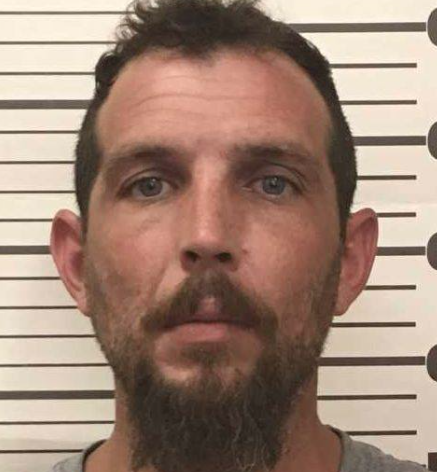
ROOKS COUNTY — Law enforcement authorities are requesting the public’s assistance in locating 40-year-old Joseph “Joey” Plante, according to a social media report from the Rooks County Sheriff’s Office.
Plante -photo Rooks Co. Sheriff
Plante is on probation for Felony Conviction of Distribution of Marijuana since June of 2018.
On March 22, a Felony Warrant was issued for Plante for Failure to Comply with his probation. Plante has absconded his probation for the last two months. Numerous attempts to contact Plante have been made by law enforcement and Plante has failed to turn himself in.
Plante lives at an address in Stockton, Kansas and has family in Plainville, Kansas and south of Plainville. He is also known to hang out in the Hays and Great Bend areas.
Simliar vehicle to the one. Plante is driving
Plante is currently driving a 2007 Pontiac Grand Prix, in which the vehicle is registered to Plante. Pictured below is a similar vehicle of Plante’s. Plante is currently working for an Oilfield Service out of Plainville named Skytop and also another Oilfield Service named Discover Drilling.
If anyone see’s Plante, please contact law enforcement immediately. You are welcomed to remain anonymous for any tips we receive. The Rooks County Sheriff’s Office has had success with sharing information with the public in catching wanted fugitives. We appreciate the public’s assistance and we desire to keep the public informed.
 Theresa Marie (Dinkel) Giebler, age 86 of Hays, Kansas passed on April 25, 2019 at Hays Medical Center. She was born July 24, 1932 in Emmeram,KS the oldest of ten children, to Anthony and Alvina (Stecklein) Dinkel. She graduated from Girls Catholic High School in 1950. She married James E. Giebler on September 4, 1951.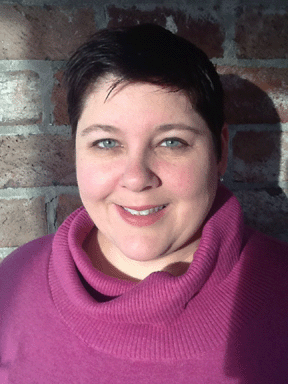









 Today
Today