We have a brand new updated website! Click here to check it out!

MARSHALL: Doctor’s Note April 13

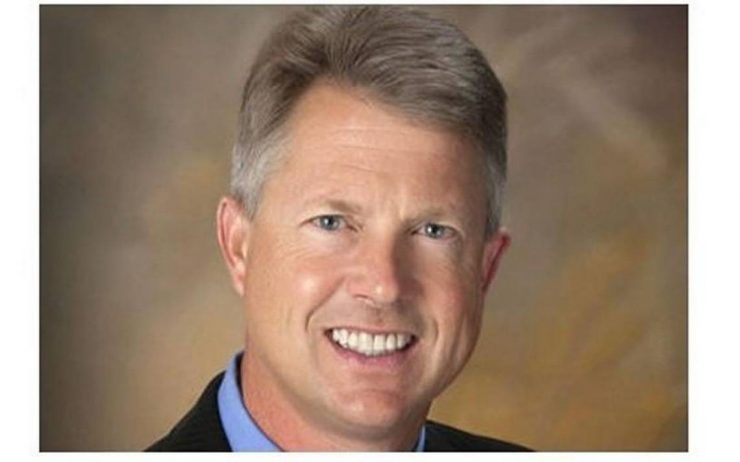
Dr. Roger Marshall, R-Great Bend, is the First District Kansas Congressman.

Friends,

I have long said, in order to fix our broken health care system, we must focus on solutions that prioritize transparency, innovation, and consumerism.

This week I introduced H.R. 2183, The State Flexibility and Patient Choice Act of 2019, this legislation aims to give more power to states so that they have the freedom to develop programs and policies that will focus on cost and patient choice.

As a physician who helped run a hospital for many years, I saw first-hand the hassle that people went through to get the care they needed and the added stress that hospitals and doctors were under doing hours of paperwork for a single patient.

I believe that each state has unique needs and demands and shouldn’t be forced to fit a one-size-fits-all model. This bill lets Kansans make health care decisions for Kansans by eliminating arbitrary guard rails but still mandates that each state possess a plan that will not increase the federal deficit and provide coverage to the same number of citizens in order to get a waiver. This bill also Continues to protect those with pre-existing conditions.

My goal is to help get more people covered and drive down the cost for patients in the process.

ENOUGH!
So far this year I’ve done nearly 20 town halls. At every stop Kansans have told me, ENOUGH of this. Kansans have had it with the Mueller Investigation. I hear you message loud and clear- people are sick of the Russia-mania, Trump tax return pursuit, and all of the Mueller back and forth. I stand with you, I have had enough of it too.

We could accomplish way more if members would focus on actual solutions and solving real problems rather the fantasies. I am embarrassed at how little this Congress has achieved. This week I addressed the House floor to say -ENOUGH- to my colleagues, some I believe need a reminder that we are here to fix problems not create them.

Minister Xu

Talking Trade with China
On Wednesday, I had a productive meeting with Minister Xu of the Chinese embassy. We discussed the US-China relationship and recent progress made by the Trump Administration towards securing a trade deal.

Over the past two years I’ve supported the Trump administration’s efforts to solidify a free and reciprocal trade agreement with China. My conversation with Minister Xu was centered around the high quality beef, grain, and other agriculture exports that hard working Kansans produce every day. Minister Xu expressed her belief that our trade agreement can be a win-win deal for both countries, and to this I absolutely agree.

Looking ahead, I’m hopeful and optimistic that any long-term deal reached with China will include an increase in agriculture purchases. Free trade and access to foreign export markets are vital to our Kansas producers and manufacturers.

It has been made very clear to China that the days of the United States ignoring issues within our trade agreements are over. Congress and this Administration are working around the clock to address the shortcomings in our trade agreements and create better and more efficient deals so that our farmers and ranchers no longer get the short end of the stick.

Susan Schlichting and Jacob Schmeidler, Hays, (at left) pose with Congressman Marshall outside his capitol office. (Photo courtesy Susan Schlichting)

4-H Helping Our Young Leaders Since 1903
I had the great pleasure to sit down with Jacob Schmeidler from Hays, Erin Rose May from Oberlin, Rachel Yenni from Lindsborg, Adelaide Easter from Salina, and Camden Bull from Wichita. We were also joined by Susan Schlichting from Hays, Kansas, who volunteered to chaperone their trip to D.C. for the National 4-H Conference this week.

In our meeting, we talked about the 4-H program and the great work that 4-H does for our young men and women. 4-H was started in 1903 and now has nearly 75,000 members across the state of Kansas. Following our discussion, the 4-Hers joined our team for a night tour of the Capitol.

I was impressed; each of them shared with me their current studies, their goals, and how 4-H has helped them develop life skills and become influential leaders. From examining mental health to promoting entrepreneurship, and ways to end bullying each student presented forward-thinking solutions to improve their communities. This program does an incredible job of developing students leadership and professional skills.
I am excited to see you all succeed and follow your success, and thank you, Susan, for supporting our future leaders!

NASA Selects WSU Professor
In case you missed it, the first ever image of a black hole’s event horizon was released earlier this week. In the wake of this monumental achievement I want to take a moment to congratulate those who accomplished this achievement, and also talk about some of the great space-related work being done in Kansas.

As many of you know I am a member of the House Science, Space and Technology Committee, which has oversight of the National Aeronautics and Space Administration (NASA). Recently, NASA selected Nickolas Solomey of Wichita State University to receive funding for his project to develop a solar neutrino spacecraft detector. The project seeks to build a device that will be able to detect neutrinos in our Sun’s orbit, and eventually this technology will be included on a spaceflight probe. It’s a great opportunity for Wichita State, and this sort of innovation keeps America at the forefront of air and space technology. You can read more about his project here.

Kansas Beer Wholesalers Association

Ice Cold Delicious Beer
The Kansas Beer Wholesalers Association came through the office on Tuesday to give us an update on the work they’re doing not only in my district but across the state. With Congress moving closer toward an infrastructure package, we talked about the importance of road and bridge maintenance not only in their line of work, but also as we work to get other Kansas commodities to market. Our Kansas beer distributors help ensure that products make it from the manufacturer to the retailer, and ultimately (ice cold) into the hands of Royals or Chiefs fans across Kansas for enjoyment during a big game!

Updates from Kansas Housing Authority
Last fall I visited the Salina Housing Authority, there I met with Executive Director Tina Bartlett. Tina and I discussed challenges facing the housing authority and gave me a tour of a couple of their housing properties. It was great to get out and see how the housing authority operates and see firsthand some of the challenges they’re working to address.

Following up on our last visit they dropped by the office this week to give us an update. We had a great conversation about public housing, housing choice vouchers, and community development. Housing is an important part of community and economic development, especially in Kansas. Whether it’s thinking through how to attract new businesses or ways that small towns across my district can maintain safe, reliable and affordable housing is a key part of those conversations. I appreciate the hard work these various housing authorities and others like them are doing across the Big First.

Pharmacists Support Trump’s Plan to Eliminate Unfair Kickbacks
Kansans Pharmacists flew in this past week to discuss the Prescription Drug Price Transparency Act and the Trump Administration’s proposal to get rid of unfair kickbacks to PBMs that harm Medicare beneficiaries, the Medicare Trust, and pharmacists!

Across Kansas, there are 506 chain drug stores and 253 independent community pharmacists and 99 of those local pharmacies are across the Big First. The increase of DIR fees over the last several years has raised out-of-pocket costs for our seniors and put our pharmacies at financial risk, often operating in negative margins. Far too regularly pharmacy benefit managers or PBMs collect DIR fees from pharmacies months and months after the claim. It’s completely unpredictable and unfair… while the benefit all goes to the pocket of the PBM.

The National Community Pharmacist Association and Kansas Pharmacists Association are completely supportive of the Trump’s Administration proposal to stop this from happening. The Trump Administration plan guarantees predictability by standardizing the process and end the disparity between pharmacists, patients and PBMs. It is estimated the beneficiaries could save anywhere from $7 to $9 billion over the span of ten years. Additionally, the government could save $17 billion.

ALSO A HUGE SHOUT OUT TO fellow Kansan Brian Caswell, R.Ph., of Baxter Springs was elected to be the next President of the National Community Pharmacists Association!

Honoring a Fierce Nutrition Advocate and Friend
This week, The Global Child Nutrition Foundation awarded U.S. Congressman Jim McGovern the 2019 Gene White Lifetime Achievement Award for Child Nutrition. This award recognized Rep. McGovern extraordinary contributions in helping to end hunger and improve nutrition around the globe.

Congressman Jim McGovern

In particular, the foundation highlighted his work with Senator Bob Dole on the McGovern-Dole International Food for Education and Child Nutrition Program. The McGovern-Dole, introduced in 2002, supports education, child development and nutritious meals in low-income, food-deficit countries around the world.

Almost 20 years ago, McGovern and Dole called upon our farmers to help improve conditions in more than 20 low-income countries. Today farmers continue to answer their call to help children far and wide receive nutritious meals.

The program provides U.S. agricultural commodities and financial assistance to support, feed, and educate millions of children across the world. As a Physician and now a leader of the Food is Medicine Caucus in Congress, I have always been impressed by the great bipartisan forward-thinking solutions that McGovern has proposed to address hunger.

I was glad to attend the award ceremony this week, honoring my friend, Jim McGovern.

Dr. Roger Marshall, R-Great Bend, is the Kansas First District Congressman. 
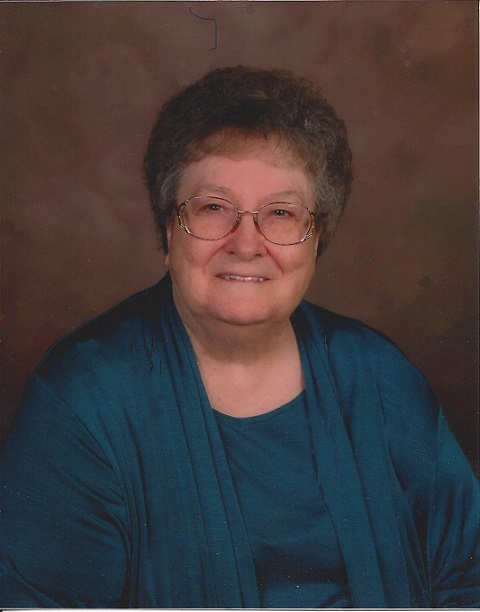
Demma Jean (Ingram) Diekman-Sammons

Demma Jean (Ingram) Diekman-Sammons, age 91, died April 4, 2019, at her home in Hays, Kansas.

She was born January 6, 1928, in Goodland, Kansas to Harvey Wootson and Gertie Mabel (Sexson) Ingram. She married Richard Herbert Diekman on December 7, 1952, at Goodland, Kansas. They later separated and he preceded her in death on October 4, 1995. She married Theodore H. “Ted” Sammons on April 20, 1984. He preceded her in death on April 24, 2004.

Demma grew up in Goodland and was a 1946 graduate of Sherman Community High School. In 1949 she received her Associate’s Degree in Education from Graceland College in Lamoni, Iowa. She taught in the rural one-room schoolhouses in Sherman and Logan Counties for a number of years.

She lived in Burlington, Colorado until 1979, then moved to Raytown, Missouri. While living in Burlington, Colorado she was the bookkeeper at the Ben Franklin store and was the primary church organist at the First St. Paul Lutheran Church. She attended the Community Church of Christ in Goodland and Kansas City, Missouri. Demma has lived in Hays since 1984 and was a member of The New Life Center Church. She enjoyed playing the organ, working on jigsaw puzzles, crossword puzzles and many handicrafts.

Survivors include, one son, Rodney Diekman and wife, Debbie, Burlington, CO; four daughters, Susan McFarland and Linda Mayer, both of Hays, KS; Connie Bernath and husband, Paul, Crawford, NE; Reta Diekman and husband, Greg Andrew, San Rafael, CA; nine grandchildren; five great grandchildren and one great great grandchild.

She was preceded in death by her parents; her husbands; three brothers, Howard W., Kenneth P.; W. Keith Ingram; her twin brother and sister,(W. Harley Ingram and Hallie Elizabeth Alford); four sisters, including her twin sisters, (Esther M. Middleton and Eva G. Birt); Dorthea M. H. Graybill and Marian P. Phillips.

A Celebration of Life Memorial Service will at 10:30 A.M. Saturday, April 20, 2019, at the New Life Center Church, 1701 East 22nd Street, Hays, Kansas. A private family inurnment will be at the Goodland Cemetery at a later date.

The family will receive friends from 10:00 to 10:30 A.M. Saturday, at the New life Center Church.
The family suggests memorials to the New Life Center Church and the Humane Society of the High Plains.
Services are entrusted to Cline’s-Keithley Mortuary of Hays, 1919 East 22nd Street, Hays, Kansas 67601.
Condolences can be left by guestbook at www.keithleyfuneralchapels.com or can be sent via e-mail to [email protected]

Wildlife experts, snorkeler free owl trapped in fishing line

SPRINGFIELD, Mo. (AP) — A barred owl caught a lucky break when a snorkeler banded with wildlife officials to rescue the bird from a fishing line tangled in trees above the James River.

Bill Hulsebus was visiting the Springfield Conservation Nature Center last week when he came across the injured owl. Hulsebus tells the Springfield News-Leader that firefighters attempted to release the owl’s wing from the line, but their equipment couldn’t reach.

He says conservation officials had fastened a tree trimmer to a long pole when a snorkeler nearby realized he could help. The man waded into the cold river and used the pole to cut the line, freeing the owl.

Volunteers took the owl to a rehabilitation center, where it was given a feather transplant to repair its damaged wing.

How slow internet hurts rural areas, starting with cattle sales

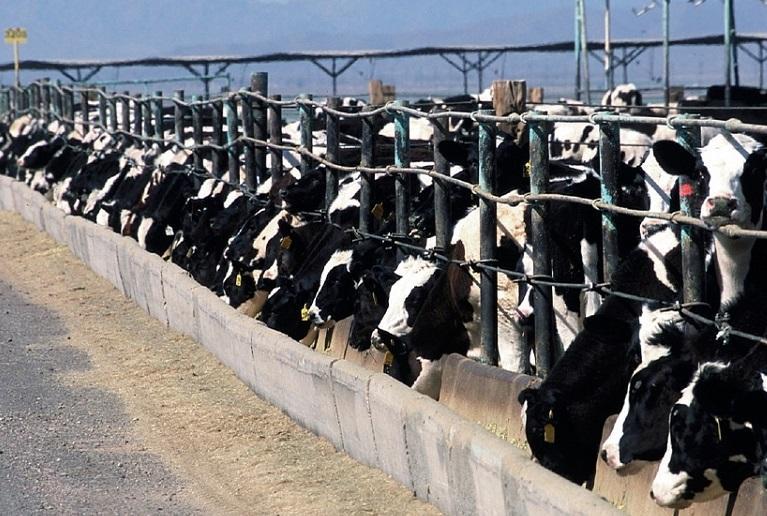
Many Kansas cattle breeders sell cattle online. (Photo by PIXABAY)


Kansas News Service

In this 21st century, bucolic means slow-moving bits. The put-put of rural internet in a streaming, downloading, real-time, zoom-zoom era is leaving businesses in remote parts of the state at a decided disadvantage.

Cattle sales offer a troubling example. Ranchers trying to offload their livestock online from parts of western Kansas report that auctions just don’t work when you can’t easily upload pictures and videos and the bidding get lost in buffers.

Crawling internet speeds in rural Kansas make trying to sell cattle online exasperating.

Instead of uploading photos and videos of cattle for sale from home, farmer and cattleman Jay Young drives to his parents’ house or into the town of Tribune in far west Kansas where internet speeds are faster.

Young has a broadband connection and says he’s able to create a cattle listing from home, but the slow internet brings on additional work.

“I just can’t post the videos to that listing,” he said. “So, what I’ll do is I’ll email them or I’ll go into town and, and put the photos on there.”

In Kansas, rural internet speeds and spotty mobile phone service generate barriers for business owners like Young, hamstringing their efforts to make a living in an increasingly online world.

A recent study by Amazon and the U.S. Chamber of Commerce analyzed how faster internet and better mobile phone reception could help small rural businesses across the country. In Kansas, slow internet and mobile phone services negatively impacts 66% of rural small businesses.

In April, the Kansas governor’s office released a preliminary broadband map showing the availability of fiber-optic networks, cable and DSL connections in the state. Faster internet speeds are concentrated around the bigger towns and cities, while smaller towns between more populated cities appear to have little or no broadband available.

Sometimes workarounds, like driving to a public Wi-Fi connection, offer an option for taking care of business online. But that can take time and, in some cases, cost business owners money.

Susan Ness and her husband recently went online in their west-central Kansas town of Jetmore to enter some water usage reports required by the state.

“It took us two nights,” she told the Statewide Broadband Expansion Planning Task Force, “to put in all the information.”

The alternative to filling out the information online, Ness said, was submitting a paper form that costs $250.

As online Kansas cattle sales attract more out-of-state buyers, pokey internet connections at auctions can affect how quickly bids are captured and delay the most updated bidding prices.

Steve Stratford is a cattle breeder at Stratford Angus in Pratt in southwest Kansas. He said that during his company’s annual production sale, when a few hundred cattle are on the block, people can bid in person or online.

But Stratford said the internet connection has been an issue the last three out of five years that online bidding has been an option.

“The (internet) capability at the sale barn couldn’t handle it,” he said. “The internet provider went down during a sale.”

Depending on the year, Stratford said he sells between 10 and 20 percent of his cattle online.

Jay Young and his father, Jerry Young, own and operate Young Red Angus. They raise cattle and sell around 100 head every year. Young said says most of his advertising is done online.

“I try to market them online to widen and broaden my buyers,” Jay Young said

Young also bids for cattle online, but he has to consider what his bidding options are ahead of time.

“If I know that there’s a sale going on, that I know I want to be able to bid online for, I will not be at my house,” he said. “I will make sure I go somewhere with better connections.”

If Young can’t attend a sale and can’t bid online, he’ll ask someone he knows at the sale to place a bid for him.

Depending on where he is, Young’s mobile phone connectivity can do what his internet connection can’t. But there are days that mobile phone signal is weak.

In Edgerton, a town just out outside of Kansas City, Melanie Gieringer has unreliable mobile phone reception.

Geiringer and her husband, Frank, own Gieringer’s Orchard, and have seasonal hours when visitors can pick and buy berries and peaches. Two years ago, they upgraded their dial-up internet to satellite, and now they have broadband. But Geringer says it could be faster.

“They work for a little bit and then you get dropped calls all the time,” she said.

That spotty mobile service prevented the Gieringers from using their phones as mobile checkout devices. Because of the faster internet connection, they can use iPads for the job.

Although a fiber optic connection eventually became an option for Gieringer, that isn’t the case for Young, who lives in Greeley County. With a little over 1,200, people, it’s the state’s least populated county.

Young said says because he lives about 20 miles outside of the nearest town, faster broadband is not available.

“It’s just the power of the signal that they have there at that point north and just can’t continue to go that far out,” he said.

Through our Kansas Matters initiative, one reader asked a question that relates to this story: “What is being done to bring better, faster internet service to rural areas? Even in Douglas County, my internet is extremely slow. I own a business and I’d like to work from home, but I can’t do that.”

Corinne Boyer is a reporter based in Garden City for High Plains Public Radio and the Kansas News Service, a collaboration of KCUR, Kansas Public Radio, KMUW and HPPR covering health, education and politics. Follow her @Corinne_Boyer.

Police: 22-year-old arrested for fatal Kansas shooting

SEDGWICK COUNTY — Law enforcement authorities are investigating a fatal shooting and have arrested a suspect.

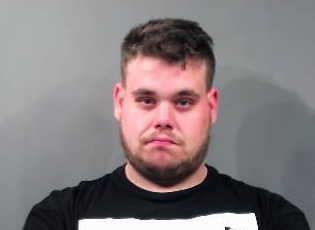
Brandon Craig -photo Sedgwick Co.

Just after 8:30 a.m. Friday, police responded to a shooting call at a home in the 800 block of south Emporia in Wichita, according to officer Charley Davidson.

Upon arrival, officers located 21-year-old Justin Lane of Grain Valley, Missouri, deceased with a single gunshot wound to the head. Lane was pronounced dead at the scene.

The investigation revealed Lane and 22-year-old Brandon Craig of Independence, Missouri, were visiting a friend who lived at the home.

During the visit, a disturbance occurred between Craig and Lane. Craig fired one shot from a handgun striking Lane in the head, according to Davidson. Police arrested Craig on a requested charge of first-degree murder.

Investigators will present the case to the Sedgwick County District Attorney’s Office.

Student charged in Kansas City over protest at anti-transgender speech

KANSAS CITY (AP) — A University of Missouri-Kansas City student is facing charges after he sprayed a substance toward conservative political commentator Michael Knowles during an anti-transgender speech.

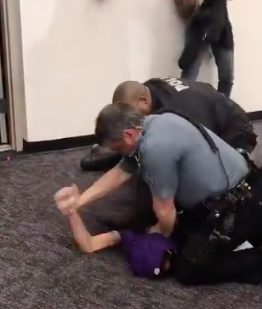
Police arrest protester image courtesy UMKC News

Knowles was giving a speech titled “Men are Not Women” on the Missouri-Kansas City campus Thursday when protesters disrupted the event. Authorities said that during the disruption, student Gerard Dabu used a water gun to spray a substance at Knowles, who was not injured. Police tackled and subdued Dabu with a stun gun near the stage.

Chancellor Mauli Agrawal said in a letter to the campus Friday that police reacted that way because they didn’t know if the substance was dangerous. Tests later determined it was lavender oil and other non-toxic household liquids.

Dabu was charged Friday in municipal court in Kansas City with assault and other violations.

Knowles is a conservative contributor to The Daily Wire and published a book titled “Reasons to Vote For Democrats” with blank pages.

Cut melon sold in Kansas linked to US salmonella outbreak recalled

INDIANAPOLIS (AP) — An Indianapolis-based company has issued a recall for melon products sold in 16 states after being linked to a salmonella outbreak.

CDC Image

The U.S. Food and Drug Administration said Friday that the recall includes cut watermelon, honeydew and cantaloupe produced by Caito Foods LLC. The fruit has been sold under various brands or labels at Kroger, Walmart, Trader Joe’s, Target and Whole Foods.

The affected states are Illinois, Indiana, Iowa, Kansas, Kentucky, Michigan, Minnesota, Missouri, Nebraska, New York, North Carolina, Ohio, Pennsylvania, Tennessee, West Virginia and Wisconsin.

Health officials advise consumers to check packaging to determine if the melon was distributed by Caito Foods, and, if so, not to eat it. They advise stores to pull the products from shelves.

Authorities say 93 people have been sickened, 23 of whom were hospitalized. No deaths have been reported.

Salmonella Carrau is described as rare. Symptoms include diarrhea, fever and abdominal cramps.

NCK TECH offers Career Success Scholarship

NCK TECH

Working to fill industry needs, NCK Tech is offering a scholarship program to help meet these demands. Currently there is space available in a limited number of programs on both the Beloit and Hays Campus.

The Career Success Scholarship is established to encourage students to apply early and ensure a spot in these programs, meanwhile helping meet the need of business and industry.

Offered only during the month of April, certain qualifications will be required. Students must complete a campus tour and the admissions process between April 1 and April 30, 2019.

This scholarship opportunity is only for new students applying during this time.

To qualify, applicants must participate in a campus tour and be accepted into one of the identified programs (listed below) for Fall 2019.

Programs include:

       Beloit Campus

  • Auto Collision Technology
  • Automated Controls Technology
  • Business Management
  • Digital Marketing
  • Electrical Technology
  • Heavy Equipment Operations
  • Practical Nursing

      Hays Campus

  • Culinary Arts
  • Pharmacy Technician


FHSU’s Encore Series to present JigJam: Live from Ireland

FHSU University Relations

JigJam, a multi-award winning quartet from the heart of the midlands in Ireland, will be the final performance of the 2018-2019 Encore Series season at Fort Hays State University.

The performance will be at 7:30 p.m. on Tuesday, April 16 in the university’s Beach/Schmidt Performing Arts Center in Sheridan Hall.

Blending the best of traditional Irish music with bluegrass and Americana in a new genre, JigJam’s energy and musical ability has captivated audiences throughout the world.

“Here’s an Irish band that’s going to impact the world as hard as Clancy Brothers or U2 if they get only half a chance,” said Midwest Records.

Performers Jamie McKeogh, Cathal Guinan and Daithi Melia all hail from Tullamore, County Offaly, with County Tipperary-born Gavin Strappe completing the quartet. All four members grew up with Irish traditional music and culture, which is reflected by the band collectively achieving over twenty All-Ireland titles at Fleadh Cheoil na hÉireann competitions.

They have now developed their own unique style of music influenced by American folk whilst staying true to their Irish roots.

All multi-instrumentalists, JigJam’s members change between banjos, guitars, fiddles, mandolins and double bass onstage, which creates an experience which is pleasing to both the eye and the ear.

JigJam has recorded two studio albums to critical acclaim and have been compared to the Punch Brothers by the European Bluegrass Music Association. They have made a huge impact on the Irish American circuit performing at all major festivals, including the world-renowned Milwaukee Irish Fest as well as touring various parts of the United Kingdom and Europe.

Tickets are available at the Memorial Union Student Service Center, by calling 785-628-5306 or by visiting www.fhsu.edu/encore.

Tickets for the general public are $32 reserved and $28 unreserved; for seniors and children ages 5-17, tickets are $30 reserved and $26 unreserved; and for FHSU students, tickets are $23 reserved and $19 unreserved with a Tiger Card.

Modern Mrs. FCE to celebrate 50 years with Ellis celebration

Submitted

ELLIS — Milestones are meant to be celebrated and an Ellis-based organization, Modern Mrs. FCE, will be commemorating its 50th anniversary with a celebration and reception from 2 to 4 p.m. Sunday at the Ellis Public Library Community Room, 907 Washington.

Memorabilia from the group’s rich history will be on display, as well as video highlights from the variety and talent shows that were held in the 1990s. The community, past members, and especially those who generously helped with the group’s many community projects are cordially invited to attend the celebration.

Cooperative extension units were established in 1914 by a group of rural women. Their mission was to strengthen individuals, families, and communities through education, leadership, and action.

Several determined groups of rural women traveled to Washington D.C. in 1936 when the group was renamed the National Association for Family and Community Education (NAFCE). The_ NAFCE instrumental in backing school lunch programs, immunizations, and bookmobiles to improve home and community life and protect the American family. Through time, the name was changed to Home Demonstration Units (HDU). Now, the current name is Family and Community Education (FCE).

Local groups are formed as outreach programs in association with Kansas State University Extension Service. Berny Unruh is the Cottonwood Extension Family Community Wellness agent that advises the Ellis Modern Mrs. FCE unit that was chartered in the late 1960s.

How could the determined rural women who gathered in our nation’s capital have guessed that today, FCE is the largest, most successful, informal educational organization in the world? Extension programs are funded and guided by a partnership of federal, state, and county governments and are administered at Kansas State University, which is recognized as a land grant university. The educational programs are supported and expanded by thousands of volunteer teachers and community leaders.

Throughout the past 50 years, Modern Mrs. FCE has been a vital link of support to our community. The public is invited to help celebrate their many accomplishments and future endeavors.

WSU Report Rating Major Airlines: Air Travel Is Improving … Really

It’s easy to complain about air travel, but the latest Airline Quality Rating study shows, overall, it’s getting better for passengers.

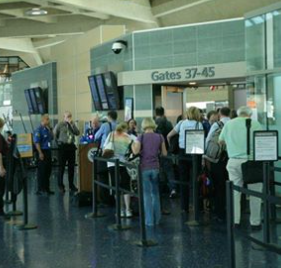
Passengers wait in line at KCI photo courtesy Kansas City International Airport

The 29th annual Airline Quality Rating produced by researchers at Wichita State University and Embry-Riddle Aeronautical University tracks key airline metrics such as on-time arrivals and departures, baggage handling and customer complaints.

The report also shows that airlines bumped passengers less frequently than in any year since the study started. That’s likely due to the backlash from the highly publicized bumping of a man who had to be physically dragged off a United Airlines flight in 2017.

“If the public says something, the airlines just might do something,” said Dean Headley, emeritus professor at Wichita State and co-author of the study. “Which they did in this case, and that made a big difference in this year’s numbers.”

With almost 25,000 flights a day in the United States, Headley said it’s amazing that airlines have an on-time rate of 80%, don’t lose many bags and involuntarily bumped virtually no one in 2018.

It’s a much better performance now than it was a little more than 10 years ago.

As for individual airline performance, Delta came out on top. It accomplished that by having the fewest number of involuntary removals, finishing second for on-time arrivals and third in both baggage service and customer satisfaction.

The complete rankings are:

  1. Delta Airlines
  2. JetBlue
  3. Southwest Airlines
  4. Alaska Airlines
  5. Hawaiian Airlines
  6. United Airlines
  7. Spirit Airlines
  8. American Airlines
  9. Frontier Airlines

Brian Grimmett reports on the environment, energy and natural resources for the Kansas News Service.  Follow him on Twitter @briangrimmett.


Managing workplace conflicts, marketing design workshops offered by FHSU

FHSU University Relations

Two workshops, one on managing conflict and one on design, will be offered by the Management Development Center at Fort Hays State University in May.

The first, Managing Conflict in the Workplace, will begin at 1 p.m. Monday, May 6, in Hansen Hall on the Fort Hays State campus.

This three-and-a-half-hour training will discuss the common roots of workplace conflict and strategies for managing the conflict. Participants will learn about the common causes of workplace conflict, how to assess personal conflict styles, best practices for offering critical feedback, and more. Conflict, properly managed, can contribute to organizational innovation and stronger relationships.

Each person who completes this workshop will receive a completion certificate and earn 3.0 Continuing Education Units. Registration closes on April 29. The cost is $119.

The MDC’s brand-new workshop, Design for Non-Designers, addresses the fact that a person does not have to be wildly creative to make effective designs, which are critical to successful marketing efforts. Design creates meaningful first impressions, differentiates an organization from its competitors, boosts awareness. It is also a great way to connect with customers.

This day-long workshop runs from 9 a.m. to 4 p.m. Thursday, May 9, in the Stouffer Lounge of FHSU’s Memorial Union.

The workshop will explore the elements and principles of design and how can it be used to make a company and its products more appealing to potential customers. Participants will learn why design is important for effective marketing, review great (and bad) logos, and much more.
Topics include using color effectively, communicating with type, tips on designing common marketing pieces, and when to hire a professional or design on your own.

Each person who completes this workshop will receive a completion certificate and earn 7.0 CEUs. Registration closes on May 2. The cost for registration is $219.

A 15-percent discount applies for all Hays Area Chamber of Commerce Members on a single session cost.

Registration is available online through the Registration link in the sidebar on the MDC homepage at www.fhsu.edu/mdc.

To learn more about this workshop or additional upcoming trainings, contact Hannah Hilker by phone at 785-628-4121 or by email at [email protected].


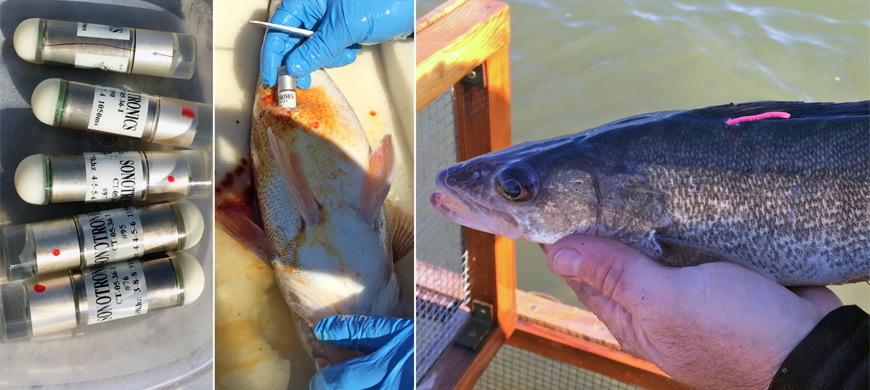
Glen Elder walleye carrying transmitters

Three-year walleye study at Glen Elder Reservoir

KDWPT

CAWKER CITY – The Kansas Department of Wildlife, Parks and Tourism (KDWPT) has embarked on a three-year walleye study at Glen Elder Reservoir, and biologists want anglers to be aware of the project.

Data collected during the study will give anglers and biologists a better understanding of what makes walleye tick in this lake. Throughout the study, KDWPT district fisheries biologist Scott Waters will follow the movements of adult walleye using telemetry to evaluate mortality patterns, movement, home range, and habitat selection.

Ultrasonic transmitters were implanted in 27 walleye last fall and another 33 will receive transmitters in April. An equal number of males and females will be targeted, and not all study fish will be longer than the 18-inch minimum length limit.

The fish are collected using trap nets and gill nets and brought to shore. Each fish is placed in an anesthetic bath for several minutes before surgery. A 1.5-inch incision is made in the abdominal wall, and after the sex is determined, a 22-gram ultrasonic transmitter is placed in the abdominal cavity. Three sutures and glue are used to close the incision and an antibiotic is given to prevent infection. Once the fish regains equilibrium and resumes normal behavior, it is released.

Each fish is also tagged with a pink, 3-inch Floy tag in the dorsal fin to alert anglers who catch them. The tag contains the fish’s identification number, the KDWPT contact number, and a message about the $100 reward given for the return of the transmitter if the fish is kept. Not all tagged fish are of legal size, and short fish should be returned to the water with the tag intact. Anglers are encouraged to carefully measure the fish and report the length and location of catch to the park office. Anglers who harvest legal fish are encouraged to call or stop by the office to return the internal transmitter for the $100 reward. The angler may keep the fish and Floy tag.

Manual tracking will be conducted at least two times each month with more frequent tracking conducted during certain periods of the year. Once a fish is located, water depth and temperature, GPS location, and the identification number will be recorded. Angling mortality will be determined by tag returns, natural mortality will be determined when the transmitter shows no movement over time, and fish emigration will be detected using a stationary receiver. Daily movement patterns will also be studied by following a subsample of fish over a 24-hour period.

KDWPT biologists need anglers’ help with this study, which is unique for the state of Kansas and will provide answers about walleye life history that will help biologists better manage this important sport fish. Updates will be provided throughout the study to help anglers learn more about daily and seasonal walleye movement patterns and habitat preferences.

Copyright Eagle Radio | FCC Public Files | EEO Public File