

Author: Hays Post
More than half of Kansas at risk for flooding this spring
By BRIAN GRIMMETT
Kansas News Service
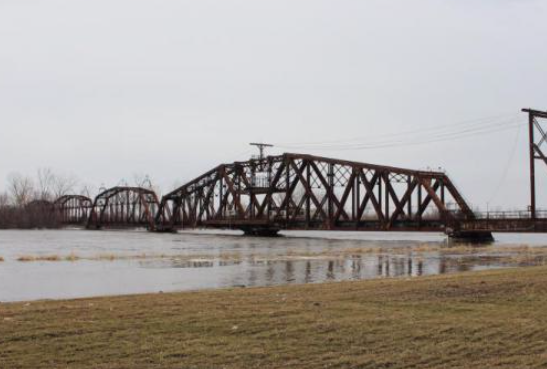
Major flooding on stretches of the Missouri River from Nebraska and Iowa through Kansas and Missouri resulted in several breached levees and significant damage to cities, towns, and farmland in March. Forecasters at the National Oceanic and Atmospheric Administration say the threat of even more flooding isn’t over yet.

photo by ANDREA TUDHOPE
According to NOAA’s spring flood outlook, flood risks will remain significantly high for the duration of spring. And not just in the Missouri River basin.
Here’s what the report has to say about three of Kansas’ major waterways.
Missouri River Basin: Major Flood Risk
Flooding in the upper Missouri River basin, which includes parts of northeast Kansas, has already broken records this year.
Meteorologists at NOAA say a number of unusual circumstances added up to a major problem.
It started with a large amount of late spring snow in the Dakotas and Minnesota. Then rapid snowmelt and a bomb cyclone dropped even more water on already saturated or still frozen ground.
“It was like falling on a paved street,” said meteorologist Bob Holmes. “It had nowhere to infiltrate, there was no natural infiltration, and so every bit of that ran off.”
Additional spring rain and melting snow will prolong or expand the flooding that is already happening.
The outlook predicts that the Missouri River from Kansas City to the Kansas-Nebraska border has greater than a 50 percent chance of major flooding this spring. “Major” meaning flooding that causes extensive inundation of buildings and roads and prompts large scale evacuations.

Kansas River Basin: Moderate Flood Risk
The areas that feed into the Kansas River basin do not have nearly as much extra snowpack as the feeders of the Missouri River basin. The greatest risk in the Kansas River basin instead lies with the chance of greater than normal rainfall falling on saturated ground.
That’s one of the reasons why NOAA’s spring flood outlook only puts the Kansas River basin at risk for moderate flooding — flooding with some inundation of buildings and roads, but less cause for evacuations.
The Kansas River basin also includes several reservoirs used for flood control, such as Milford Lake which receives water from the Republican River, and Tuttle Creek Lake which receives water from the Big Blue River.
Because the Kansas River ultimately flows into the Missouri, which is already at record highs, the reservoirs have been set to release only the minimum amount. So the lakes are at higher than normal levels.
“We have folks on the upper end of Tuttle Creek who have bottom ground, farm ground, coming into Tuttle Creek that is underwater right now,” Earl Lewis, Acting Director of the Kansas Water Office, said.
Tuttle Creek is 35 feet above normal, and at 40 percent of its capacity for flood storage. Some of the campgrounds around the lake have delayed their opening until the end of April because of the high water.
Arkansas River Basin: Minor Flood Risk
Unlike the other two rivers on this list, the Arkansas isn’t as likely to burst its banks this year. However, the NOAA forcast does predict a risk for minor flooding that would lead to minimal property damage, but could pose some public threat such as the flooding of roads and low lying areas.
The greatest risk to the Arkansas will come from spring thunderstorms that drop a large amount of water in a short amount of time. Couple that with ground that’s saturated and you have a recipe for flooded streets and small creeks overflowing.
The oft’ repeated advice from experts in situations like those: “Turn around, don’t drown.”
Brian Grimmett reports on the environment, energy and natural resources for the Kansas News Service. Follow him on Twitter @briangrimmett.
2019 Hays Area Job Fair will be Thursday
Grow Hays
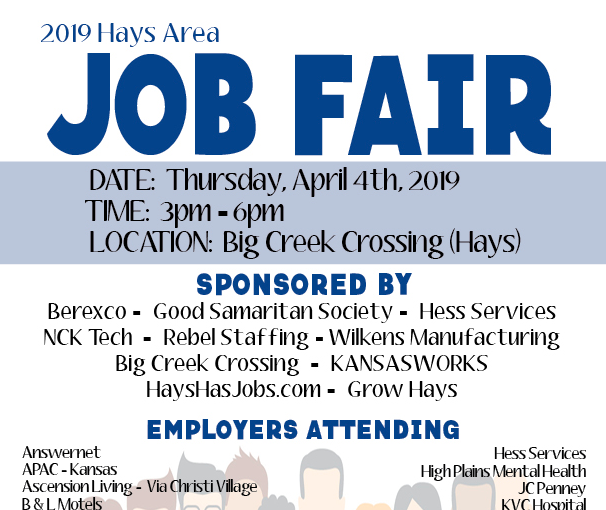
The 2019 Hays Area Job Fair will be held from 3 to 6 p.m. Thursday just off center court in Big Creek Crossing, 2918 Vine.
Job seekers are reminded to dress professionally and bring copies of their resume.
Sponsors of this years job fair are Berexco, Good Samaritan Society Hays, Hess Services, NCK Tech, Rebel Staffing, Wilkens Manufacturing, Big Creek Crossing, KANSASWORKS, HaysHasJobs.com and Grow Hays.
A complete list of employers attending and their open positions can be found at www.HaysHasJobs.com/jobfair.

Resurfacing work starting on K-9 in Phillips, Smith counties
The Kansas Department of Transportation expects to begin work on a resurfacing project along K-9 in Phillips and Smith counties on Thursday, April 4. The construction area covers an 18.5-mile stretch beginning near Kirwin and ending at the U.S. 281 junction.
Project work includes a 3-inch mill and inlay followed by application of a 1.5-inch hot mix asphalt overlay. Traffic will be reduced to one lane through the work zone and controlled by flaggers and a pilot car during daylight hours. Minor delays not exceeding 15 minutes should be expected.
Venture Corporation is the primary contractor for the project with a total contract cost of $4.2 million. Work is expected to be completed by the end of May, weather permitting.
— KDOT
Police identify Kansas man who died after drive-by shooting
SEDGWICK COUNTY— Law enforcement authorities continue their investigation of a homicide and have identified the victim.
Just after 8:30 p.m. Monday, police responded to a drive-by shooting call in the 1200 Block of North Minnesota in Wichita, according to Captain Brent Allred. A citizen called 911 after hearing gunshots in the neighborhood. At the scene, police found Marquez Hutton, 23, Wichita outside a residence with a gunshot wound. He was pronounced dead at the scene, according to Allred. “The shooting was not a random incident,” he said.
Police have received a description of possible suspect vehicles and have located one of them. They are looking for a second vehicle but have not released additional details, according to Allred.
Police believe one of the individuals involved is a gang member. They have not reported an arrest.
Anyone with information on the crime is asked to call police.
Karen Sue (Roeder) Cecil

 Karen Sue (Roeder) Cecil, age 61, former Goodland, Kansas resident died Friday, March 29, 2019 at her daughter’s home in Hays, Kansas.
She was born November 29, 1957, in Goodland, Kansas to Ronald Paul and Dorothy Pauline (Nondorf) Roeder Sr. She married Mike Cecil on April 28, 1990.
She was a loan officer and program technician for 29 years at the USDA, Farmers Home Administration office in Goodland, Kansas. Karen began her education in Colorado Springs, Colorado and several other states. She also spent 2 ½ years in Germany and was a 1975 graduate of Ferndale High School in Ferndale, Michigan.
She moved to Goodland in 1975 and became a certified nurse and worked at the Goodland Hospital until starting with the USDA in 1977. In 2009 she moved to Medford, Oklahoma and was diagnosed with the Swine Flue and shortly after developed COPD.
Karen moved in 2018 to her daughter’s home in Hays, she enjoyed playing cards, gardening, camping and her only grand cat, “Squirt”.
Survivors include her daughter, Natashia Cecil, Hays, Ks; her former husband, Mike Cecil, Goodland, KS; two brothers, Ron Roeder Jr, and wife, Tina, Goodland, KS; Curtis Roeder and wife, Donna, Hominy, OK; two sisters, Phyllis Ailey, Goodland, KS; Rita Gattshall and husband, Todd, Thornton, CO; six nephews and nieces; and 5 great nephews and great nieces.
She was preceded in death by her parents and grandparents.
A celebration of her life memorial service is at 10:00 A.M. (Mountain Time) Saturday, April 13, 2019, at the Emmanuel Lutheran Church, 222 West 13th Street, Goodland, Kansas. Inurnment will be at the Goodland Cemetery in Goodland, Kansas.
The family suggests memorials to the Humane Society of the High Plains, 2050 Hwy 40, Hays, Kansas 67601.
Services are entrusted to Cline’s-Keithley Mortuary of Hays, 1919East 22nd Street, Hays, Kansas 67601.
Condolences can be left by guestbook at www.keithleyfuneralchapels.com or can be sent via e-mail to [email protected]
Treva Venus Fite

 Treva Venus Fite, 97, of Colby, died Monday, April 1, 2019, at Citizens Medical Center, Colby. She was born May 21, 1921, on a farm in Thomas County, KS, to Charles F. and Nellie A. (Kieffer) Laurant. Treva married John Alvin Fite on Nov 17, 1944. They both worked at Albert and Helen Frahm’s farm, where he was the foreman of farm operations and she cooked. After that Treva cooked in several restaurants and then waitressed at the Pyramid Restaurant. She eventually started her own business where she did housekeeping and ironing. Treva enjoyed sewing, crocheting, gardening and doing needle work. She was a member of the V.F.W. Auxiliary.
Treva was preceded in death by her parents; husband John Alvin Fite; sisters, Cleo Frances Mastin; brothers, Lawrence Leon Laurent and Jerold Victor Laurant; infant sister Ruth Laurent; son-in-law David Hilton, Sr. and great-granddaughter Hayley Diane Phillips.
She is survived by her children, Corinia Hilton, Sheila (Bob) Wise and Carol Fite; 6 grandchildren and numerous great grandchildren.
A Memorial Service will take place at 2:00 p.m. Friday, April 5, 2019, at Baalmann Mortuary, Colby with inurnment in Beulah Cemetery. Memorials are suggested to the V.F.W. Auxiliary, in care of Baalmann Mortuary, PO Box 391, Colby, KS 67701. For information or condolences visit www.baalmannmortuary.com
Henderson named new Russell High School principal
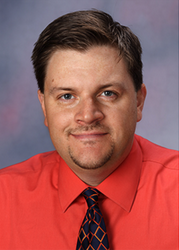

RUSSELL — Shawn Henderson has been named principal of Russell High School for 2019-20, USD 407 announced Tuesday.
Henderson comes to the district after spending four years at Fort Hays State University as director of field experiences in the College of Education. In this role, he oversaw and led the placement of all students observing and student teaching in PreK-12 placements in Kansas, the U.S. and abroad. During his time, Shawn also served as the lead instructor for classroom management, which he innovatively redesigned to better reflect the needs of new teachers entering the profession.
Henderson brings his experienced background of nine years as K-12 music educator, four years as a 7-12 principal, and the FHSU work to USD 407.
“I am very excited to see Mr. Henderson’s energy, professionalism, vision and personality impact our students, staff and community in Russell,” said USD 407 Superintendent Shelly Swayne.
“While I enjoyed my time serving the COE at FHSU and am grateful for the incredible opportunity, it further underscored my desire to return to the public schools where I could serve, interact and impact students, faculty, staff and community members on a daily basis,” Henderson said.
Henderson will begin work on July 1. Shawn and his wife, Marie, have two children who will attend schools at Ruppenthal Middle School and Russell High School.
The district also announced Jordan Perez has been named principal of Simpson Elementary School for 2019-20.

Perez joins USD 407 from the Manhattan/Ogden USD 383, where he has spent his eight-year career as a second grade, fourth grade, and Title specialist in the classroom.
“Jordan brings a level of understanding to the primary grades that will give us the focus we are looking for and the leadership needed at SES. It will be excellent to have both elementary buildings with leadership of the caliber we have for the future,” Swayne said.
“I could not be more excited and ready to get to Russell with my family and begin the work,” Perez said.
Perez will join the leadership team on July 1 as he and his family move to Russell in the early summer.
Henderson and Perez will be at USD 407’s regular April 15 board meeting beginning at 5:00 PM. The community is invited to meet both of the community’s new educational leaders beginning at 4:15 PM in the USD 407 Board Room.
— USD 407
Kansas Farm Bureau Insight: The majestic plural
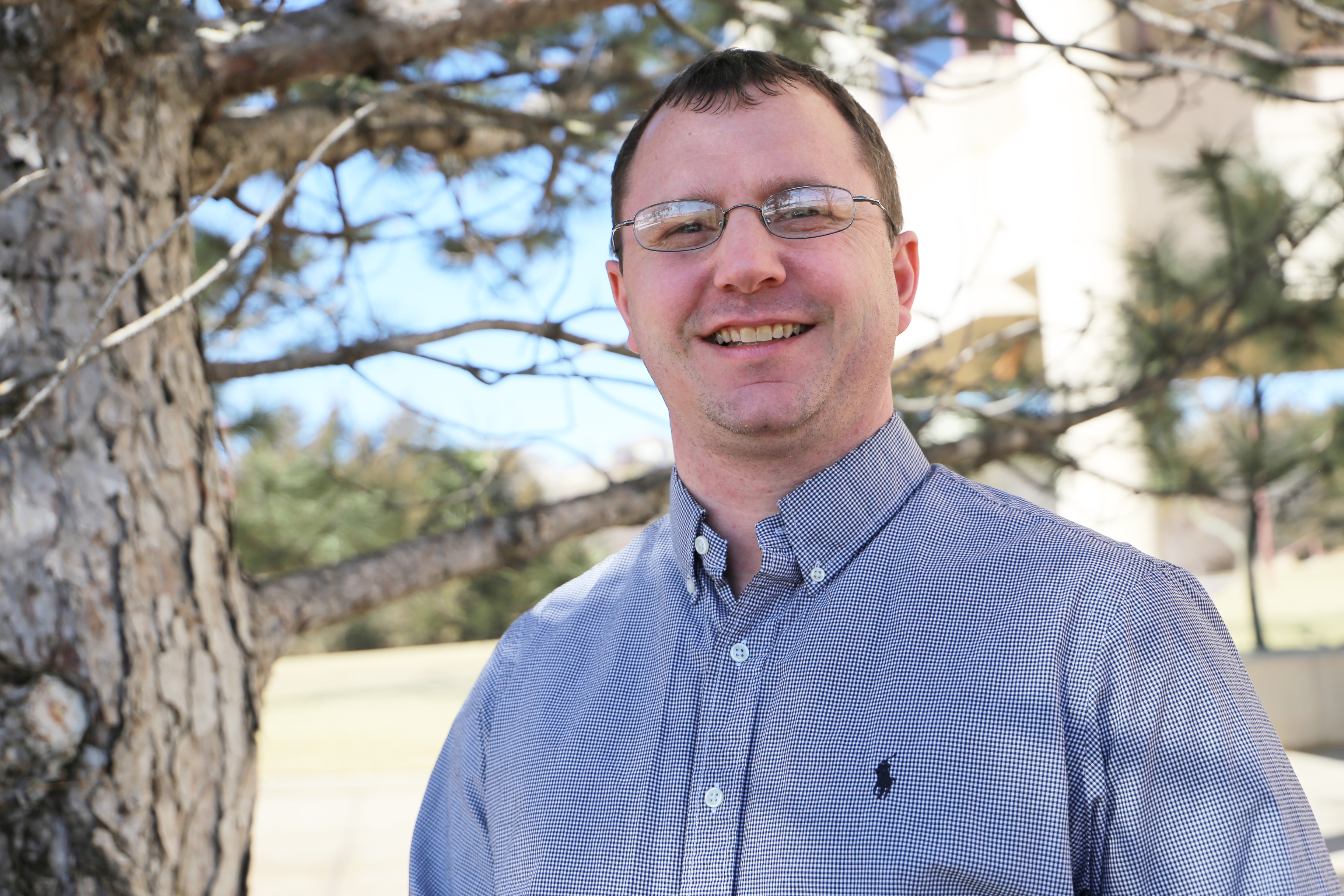

By GREG DOERING
Kansas Farm Bureau
As far as first jobs go, opening gates on my grandparents’ ranch was the best I could ever imagine. I don’t remember how old I was when I started helping. I do know it led to my first experience with the majestic plural.
“We’ll get this gate,” my grandfather would say with a chuckle as we approached the pasture. “We” of course meant me. The worse the weather, the harder he’d laugh. Being the gate-getter led to many other “we” jobs. Post-hole digger, wire stretcher and thistle cutter were some. The list of less than glamorous tasks stretches to the horizon.
My favorite job was mowing hay because I could sit in the comfort of an air-conditioned cab, provided I didn’t break a section on the sickle bar. The same was true for running the baler, but fixing a twisted belt took more time and was far itchier than swapping out a broken section.
One assignment that really made my heart thump was hauling hay out of a bottomland meadow. The trip to involved getting the truck, trailer and its 12,000-pound load up a steep hill with a blind curve.
The first trip was the most daunting, but my grandfather did offer some advice: “You want to go fast enough you make it to the top, but not so fast you lose control of the load. Do that and we’ll be fine.”
He stayed in the field and watched as I gripped the wheel with white knuckles and motored down the road. I made it to the top with momentum to spare and the load intact.
That was the summer after my freshman year at Kansas State University, my last on the ranch. After that I was a city dweller. I got a degree in journalism, fell in love with the Flint Hills and bounced around various newspapers in the area for a little over a decade.
When my title changed from reporter to editor, I began using the royal “we” with reporters. I couldn’t utter it without thinking of my grandfather and the ranch.
I’m sure I’ve romanticized much of the work. Some was tedious, most was hard. Harder than sitting in an office looking at a computer screen. But I’d often thought about getting closer to my rural heritage. Then the opportunity at Kansas Farm Bureau came up, and now they’re stuck with me. Don’t worry, we’ll be OK.
And my grandfather wasn’t above using the majestic plural to help me avoid embarrassment. The best example is when he helped avert a catastrophe of my own making.
I was probably 5 or 6 when it happened. I had followed him out to the shed to see a baby calf. While he was busy with the calf, I rolled the gate that separated the tack room from the pen off its track. I could tell something was wrong, but I didn’t know how to right the gate. Just as I started to panic that I’d done serious damage, my grandfather came to my rescue.
“We’ll fix this,” he said as he hoisted the gate into place.
“Insight” is a weekly column published by Kansas Farm Bureau, the state’s largest farm organization whose mission is to strengthen agriculture and the lives of Kansans through advocacy, education and service.
KHP tracks motorcycle by air to help deputies arrest Kansas man
JACKSON COUNTY — Law enforcement authorities are investigating a suspect on drug and numerous additional charges after a long-distance pursuit.

Just before 2:30p.m. Tuesday, a deputy sheriff attempted to stop a 2007 Yamaha motorcycle that was allegedly driving erratically and speeding near 102nd and U.S. Highway 75 in southern Jackson County, according to sheriff Tim Morse.
The motorcyclist continued south into Shawnee County and led law enforcement on a pursuit into north Topeka. A KHP air unit pursued the motorcyclist by air.
The motorcycle was followed to the 1700 block of NW Taylor in Topeka where the rider allegedly hid the motorcycle and left on foot.
KHP Troopers, Shawnee County Deputies and the Topeka Police Department assisted with the apprehension of the rider identified as Austin L. Terry, 35, Topeka, according to Morse.
He was arrested by Jackson County deputies and transported to the Jackson County Jail in Holton where he is facing charges of Flee and eluding law enforcement, reckless driving, possession of methamphetamine, possession of drug paraphernalia, driving while suspended, no proof of insurance and no registration.
Ellis Co. Commission hears bridge inspection report

By JONATHAN ZWEYGARDT
Hays Post
While the more than 200 bridges in Ellis County continue to age, they are in pretty good shape in comparison with neighboring entities.
That was the message Monday to the county commission as members were presented the results of November’s bridge inspection by Penco Engineering.
The county conducts bridge inspections every two years, and Jordan Dettmer of the Plainville firm led the effort this past fall.
Dettmer told the commission that under the new federal guidelines there are only seven bridges considered “structurally deficient.” That accounts to just 7% of bridges in the county.
The government defines structurally deficient bridges are ones the receive a rating of four or less. The condition of the deck, superstructure, substructure and culvert all determine the rating according to the American Road & Transportation Builders Association.
A bridge’s age and the way it was built is also considered.
Bridges that are considered “structurally deficient” needs repairs but are not unsafe.
According to ARTBA’s 2019 Kansas Bridge Profile 1,288 of the 24,906 bridges in Kansas are classified as structurally deficient.
Public Works Director Bill Ring said report shows they need to continue upkeep on the bridges throughout the county.
“There was nothing major that came out,” said Ring. “I wasn’t like we need to worry about closing a bridge tomorrow.”
“But it does point out that continued maintenance is extremely important,” Ring said.
Dettmer said there are two bridge decks that are “pretty bad” and that they Palco Blacktop Bridge deck was considered the worst deck in the county. Ring said the deck may need to be completely replaced.
The older structures with masonry abutments or arches suffered damage over the last couple of years because of the moisture the area have received.
He said those structures make up most of the seven that are considered in poor condition.
Dettmer also added that changes by the federal government will require a lot of the bridges in the county that don’t have a posted weight limit will, in the future require the county to post a weight limit.
He said that they some of the heavier emergency vehicles, like fire trucks and special haul vehicles may require posting.
According to the Kansas Department of Transportation post loading restrictions are placed on bridges that can no longer carry the legal load. KDOT said approximately a quarter of the bridges in Kansas are load posted.
In other business, the commission
• Approved a proclamation declaring April as National County Government Month. The proclamation is an effort to spread awareness of the services provided by local county governments. This year’s theme is “Connecting the Unconnected.”
• Approved Mason Ruder as the Interim Administrator of the Environmental Office for one month. Ruder replaces Environmental Sanitarian Karen Purvis who retired on Friday while they look for a permanent replacement.
• Accepted $1,000 for a one-acre track of land owned by the county.
• Met in an executive session to discuss potential litigation. No action was taken.
Phillips County officials meet to address oversize truck mess

K-383 dangers force tough choices
By KIRBY ROSS
Phillips County Review
PHILLIPSBURG — A “perfect storm” of long-standing problems converged in far northwest Phillips County last week, resulting in multiple accidents on K-383 highway, all of which will shortly have a spillover effect on into the city of Phillipsburg.
That perfect storm of problems includes years of legislative underfunding of needed upgrades to K-383; flooding in Nebraska; and huge overweight wind turbines traveling local highways.
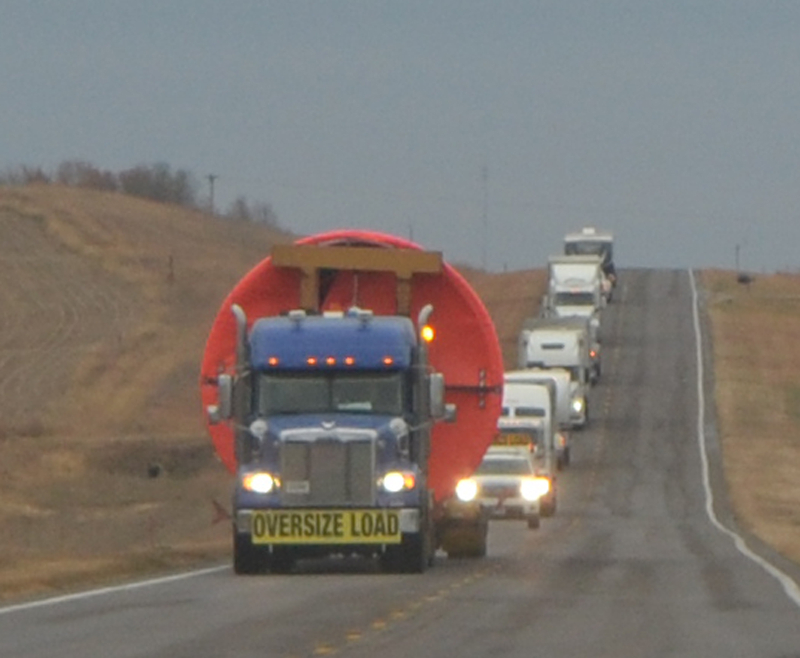
While thousands of oversize, overweight loads have been passing through Phillips County for the past five years — at least 5000 in four years, according to KDOT — that number was increased recently as additional loads have been funneled here as a result of other highways being closed off due to flooding in Nebraska.
As that increase arrived in Phillips County, it was routed through Long Island and Almena along K-383, which is only 23 feet wide and has no shoulders. And all that precipitation that caused the flooding in Nebraska was also falling on Phillips County, resulting in dirt shoulders turning into mud quagmires.
With K-383 being just 23 feet wide, oversize loads of up to 16 feet wide have been permitted to travel down that highway’s 25 mile length.
So between mud, narrow roads, wide loads and increased volume of loads came that perfect storm of factors last week, resulting in one grain semi, and two semis carrying wind turbine tubes becoming casualties of K-383.
Adding to the concern, a photo of a school bus being forced off the road by an oversize load along K-383 went viral locally last week.
So far, there have been no injuries. With the knowledge that this situation is extremely dangerous and won’t be getting any better until the legislature starts funding fixes along K-383 around a half decade from now, local officials got together at the Phillips County Courthouse on Monday morning, and made some tough decisions that will reduce this dangerous situation.
Present at the meeting were the three Phillips County commissioners, two officials from the Kansas Department of Transportation, the Phillipsburg mayor, two Phillipsburg city council members, the Phillipsburg supervisor of public works, and the Phillips County Review.
 How We Got To This Point
The problem originally arose around 2014. At that time a dozen or more trucks carrying oversize wind turbine components were passing through the county every day. Sometimes four or five an hour would come through.
Along with them came the pilot car drivers who seemed to have been recruited from Hollywood stunt driver schools.
And stunts they would perform. Driving on sidewalks, driving in reverse past traffic on highways, driving down ditches, driving on the wrong side of the road, swerving and forcing surprised oncoming motorists into ditches, coming to screeching-sideways-brake-slamming-tire-rubber-smoking stops to block traffic in multiple lanes — these guys were likened locally to drivers from “Fast and Furious” or “Smokey and the Bandit.”
And those were the complaints just in Phillipsburg. Since the loads were detoured to K-383, the bad behavior of the pilot car drivers has continued. Last week, a photo of a school bus being forced off the road outside Long Island went viral, and included a comment by a local resident, Tamme Johnson, regarding wide loads and pilot driver behavior on K-383 — “I know of people who have been run into the ditch. I have held my breath when road conditions were horrible, but they were out anyway. Anyone who travels this highway has stories, and they seem to have no end. This community is my home and I never want to respond to another oversized load related accident on this stretch.”
As for the oversize semis, they don’t have the maneuverability that the pilot car operators do, but in Phillipsburg they have made up for it by driving on sidewalks, plowing over road signs, and ignoring simple rules of geometry and the basic laws of physics. At least twice, they got stuck at the bank intersection in Phillipsburg because the wind turbine blades were too long to make the corner without taking out buildings.
Public complaints made directly to the motor carriers were sometimes met with responses that their permits from the Kansas Department of Transportation allowed them to ignore traffic regulations. There were also at least two comments from carrier drivers that hollering at them would result in a visit from FBI agents for interfering with interstate commerce.

With public outrage slowly building in 2015, a large number of complaints were directed to the Phillips County Sheriff’s Department, the Kansas Highway Patrol, and the Kansas Department of Transportation.
The reaction from KDOT was initially somewhat slow. In response to direct contact from the Phillips County Review at one point KDOT did state they were aware of the local problem; that the special permits that oversize/overweight load carriers receive do not allow them to break any traffic laws whatsoever; and that complaining to motor carrier drivers about their lack of observance of traffic laws would not result in FBI investigations.
A lukewarm response to citizen’s complaints by the Phillips County Sheriff’s Department was seen by some local political observers as playing a very large part in the 2016 election, and in Phillips County’s new sheriff, Charlie Radabaugh, winning the August 2016 primary (he ran uncontested in the November 2016 general election). During his campaign Radabaugh ran on a law-and-order platform, and is widely seen by the local populace as keeping his promise, including holding traffic law breaking heavy load drivers to account throughout 2017, 2018, and into 2019.
During the earlier 2015 and 2016 time period the Kansas Highway Patrol did step into the void quite aggressively. As they began pulling over and ticketing oversize load scofflaws, the freewheeling Wild West atmosphere began easing a bit towards the end of 2016.
But while the over-the-top driving tactics did settle down by late 2016 as a result of the Highway Patrol’s efforts, there were still problems with the massive 200 foot-plus blades coming through the county.
Platooning in three-truck convoys, it was impossible for vehicles to get by them, resulting in mile long traffic jams.
In addition, as those blades, some of which are over 230 feet long, would come south down U.S. 183 they eventually ran into those nasty problems of physics and geometry.
U.S. 183 southbound out of Nebraska reaches a t-intersection at U.S. 36 a block west of the stoplight in downtown Phillipsburg.

So these convoys of exta-long loads would have to make a 90 degree turn there. And as those wind turbine blades are making that 90 degree turn, the 200 foot-plus blades swing outwards, out of the lane of traffic, over the curbs, over the grassy right-of-way, over the city sidewalk, and on toward the First National Bank and Trust building on the west side of U.S. 183.
So some semi drivers would back up, get out of their cabs, and go to work physically tearing down road signs on the opposite side of the road so they could cut the corner and reduce their 90 degree turn to maybe a more manageable 70 or 80 degree turn.
And, in doing so, after tearing up the street signs they would have to drive across curbs, and sidewalks, and city rights-of-way next to the other First National Bank building on the east side of U.S. 183.
Then, as they were continuing that turn, they would have to drive up on the sidewalk on the south side of U.S. 36, requiring anybody parked there to move their vehicles and causing the denizens of Shelly Ann’s Cafe to wonder if the trucks might come through the front window and ruin their meal.
Twice in 2016 — once in February and once in July — the blade loads just could not readily make the turn, no matter how much maneuvering they did. And once committed to the turn, they couldn’t back up. During those two times, all four lanes of U.S. 36 and both lanes of U.S. 183 were completely blocked for 45 minutes. Back and forth, inches at a time, finally broke the impasse.
The time that happened in July 2016 was the final straw — KDOT finally cracked down, at which point the oversize overweight loads were detoured around Phillipsburg.
That detour necessitated the loads cutting off of U.S. 183 and onto K-383 just south of the Nebraska state line 20 miles north of Phillipsburg.
So this particular KDOT solution eased the pressure in P-burg, but created a whole new set of issues for drivers in northwest Phillips County and northeast Norton County.
Primary among those new problems is the fact that K-383 is only 23 feet wide, compared to the almost-30-foot wide U.S. 183.
And while around six-feet of that extra length on 183 is road shoulder–383 has no shoulders at all.
But for almost three years along that narrower 383 roadway — a roadway that KDOT and the Kansas Legislature both recognize as being extremely hazardous — there were no major incidents other than some close calls, additional run-ins with hot dog pilot car drivers, and major traffic backups behind slow-moving heavy loads.

That all changed for the worse when in early 2019 constant snowfall and constant rainfall turned the Midwest into a quagmire. While that precipitation resulted in flooding around our region, it also had a serious effect along the sides of no-shoulder K-383. That effect was deep mud.
So driving down K-383, there was no room for error for heavy load drivers. Deviate 6 inches over the white line at the edge of the road on U.S. 183, and you still have close to three feet of shoulder. Deviate six inches over the white line at the edge of the road on K-383 and the entire right side of a heavy oversize wide load semi gets sucked into an unforgiving bog.
And that is exactly what happened near Long Island in northwest Phillips County on Monday, March 25.
In that incident, once the truck tires hit that mud shoulder the vehicle quickly overturned.
The semi tractor and trailer were able to be recovered using regular heavy duty wreckers. The giant wind turbine tube was another matter. Special cranes had to be hauled in, and the entire 25 mile length of K-383 had to be shutdown for hours on March 27.
One estimate put the cost of the recovery of the tube at $100,000. In addition, at least 70 motorists wanting to drive K-383 during this period were turned away by law enforcement at the eastern terminus of the route.
With the tube being recovered and loaded on the afternoon of March 27, Phillips County Sheriff Charlie Radabaugh gave the all-clear at 3:50 p.m. K-383 was open for business again.
Less than 15 hours later, disaster struck again. Another oversize semi carrying a wind turbine tube was traveling down K-383 less than two miles from the site of the other accident.
Perhaps cautious of the mud shoulder that caused the previous accident, that semi came upon an oncoming grain semi, and the two trucks side-swiped each other.
Once again K-383 was shut down for hours.
To top it off, during that same time frame last week a school bus was forced off the highway by an oversize wind turbine load. A concerned resident in a vehicle behind the bus snapped a photo, which then went viral throughout Phillips County.
These incidents had a more widespread effect than just causing local concern or shutting down the highway however, — the shockwaves quickly reverberated all the way to the state capital.

As this all was blowing up, the Phillips County Sheriff’s Office made the following post on social media — “Sheriff Radabaugh was interviewed by KFRM 550 AM Radio this morning in regards to Highway 383 issues….Another interview was completed with the Phillips County Review….Numerous other phone calls have been received from concerned citizens and Sheriff Radabaugh wants everyone to know that the issue is being addressed in Topeka.”
The next four days resulted in a flurry of contact between the Sheriff’s Office, the Phillips County Commissioners, the Phillipsburg mayor, the Phillipsburg City Council, and the Kansas Department of Transportation.
At this point, it was generally recognized by all parties that there were not going to be any easy solutions. While earlier this year a legislative task force recognized poorly-designed K-383 as being hazardous, budget cuts and underfunding of highways for the past seven years has put any fixes off into the future. Under current planning, K-383 is not slated to begin undergoing upgrades until 2022. Maybe then, maybe longer.
And that’s just a tentative beginning date for a project that will then take years.
So it is now widely recognized by those involved that K-383 is too dangerous to continue to run these oversize loads down the highway.
With that knowledge, on Monday morning. April 1, the decision-making parties got together at the County Courthouse during the regularly scheduled meeting of the Phillips County Commissioners.
The result of that meeting? With controls in place, loads will soon be coming back through the City of Phillipsburg again.
The Temporary Solution
During the April 1 meeting, KDOT informed those present that 110 heavy loads are permitted to come down U.S. 183 in the next 30 days.
KDOT engineer Jeff Stewart noted, “Highway 183 is the preferred rout out of Nebraska due to the Nebraska flooding.”
It was also pointed out that a number of these heavy wind turbine and wind blade loads are heading to a new wind field near Colby, while others are heading on south to Garden City to be stockpiled on a 700 acre site.
Regarding getting them there, Stewart stated that other alternative routes, K-283 and K-8, “are even worse than 383.”
There was a consensus among those present at the meeting that while the wide loads that had come through Phillipsburg from 2014-2016 had been somewhat of a problem, the major issue back then lay primarily with the drivers of the pilot cars.
“While there’s a problem with the size of the loads, the real problem is that some of the pilot car drivers are a bunch of idiots,” said Phillipsburg Councilman Mike James.
Not only was there no disagreement, this comment resulted in a discussion of examples of actions of the pilot drivers, which were said to be “a disaster.” Specifically discussed was the practice of some pilot cars in driving the wrong way down roadways and suddenly swerving into oncoming traffic.
Sheriff Radabaugh told the group that he would make sure his people did their part.
“Any pilot car driver who gets out of line, I’ll see to it that it is brought to his attention,” said Sheriff Radabaugh. Explaining further, Radabaugh said “that attention will be expensive for them,” pointing out that his department will be diligent in ticketing violations of traffic laws.
Ultimately and without exception, those at the meeting acknowledged that the cold hard fact of the matter was that the situation along K-383 was “a serious safety issue,” was unacceptable, and that sooner or later somebody was going to get hurt or killed along K-383 if a change wasn’t made.
As a result, loads will soon be coming back through Phillipsburg — an increase will probably be noticeable within the next 30 days. KDOT’s Stewart stated at the meeting that they will limit lengths on the blades to 200 feet, which may help avoid situations of motor carriers getting stuck making turns at the bank intersection.
Stewart also said that when permitting the loads to come through Phillipsburg they will include a requirement that motor carriers call ahead to the Sheriff’s Department.
It was stated it was hoped that law enforcement assistance provided coming through town would make the situation easier for all involved. With that Radabaugh commented he’ll provide whatever help he can, noting that it would be on the motor carriers to make sure the phone calls for assistance were made.
Brandon Lee Barbo

 Brandon Lee Barbo, age 19, of Ulysses, Kansas, died Sunday, March 31, 2019, in rural Kearny County, Kansas. He was born January 18, 2000, in Ulysses, Kansas, the son of Benjamin and Jessica (Randolph) Barbo.
Brandon grew up in Ulysses and graduated from Ulysses High School in 2018, and was currently a student at Garden City Community College in Garden City, Kansas. He was active in theatre, music and tennis. Brandon’s life-long dream and greatest passion was to be a member of the US Army, Air Borne Division. He had joined the Grant County Fire Department and had plans to study fire science in college. Brandon enjoyed racing sprint cars, he had an unmatched sense of humor, loved his family and giving hugs. He had an inquisitive mind and was very knowledgeable about all wars. Brandon was a computer wiz and a master of video games. He had a natural talent playing the guitar.
Brandon is survived by his parents, Ben and Jessica Barbo of Ulysses; sister, LynDen Barbo of Ulysses; girlfriend, Skylynn Lane of Ulysses; grandparents, Tracy and James Byers of Balko, Oklahoma, Jeff and Nancy Randolph of Garden City, Kevin and Debra Barbo of Ulysses, Robin and Keith Dugan of Falcon, Colorado, Mike and Laurie Reid of Colorado Springs, Colorado; great-grandparents, Vic and Millie Barbo and Chuck and Mary Griffith; many aunts, uncles, and cousins.
Brandon is preceded in death by his great-grandparents Cliff and Joyce Randolph, Peggy Dailing, and Lee Crawford.
Memorial service will be Friday, April 5, 2019, at 10:00 AM at the Oasis Church in Ulysses with Pastor Garrett Gretz officiating. Memorial contributions may be given to National Epilepsy Foundation in care of Garnand Funeral Home, 405 W. Grant Ave, Ulysses, KS 67880.