Eagle Communications is collecting monetary donations at its Kansas radio stations for victims of the recent catastrophic flooding in Nebraska.
A GoFundMe account is now available for online donations.
Hays-area residents wishing to make a contribution may bring cash or checks to the Eagle Media Center, 2300 Hall Street, Hays. Checks should be made out to the Nebraska Red Cross.
Donations will be collected through Thu., April 4.
The Hays contributions will be combined with those collected by our Eagle Radio stations in Great Bend, Salina, Hutchinson, Manhattan and Junction City. The final amount will then be matched by the Schmidt Family Foundation and will be distributed to the Nebraska Red Cross.
For more information, contact the Hays Eagle Media Center at 785-301-2211.
Disclosure: Eagle Communications is the parent company of Hays Post.
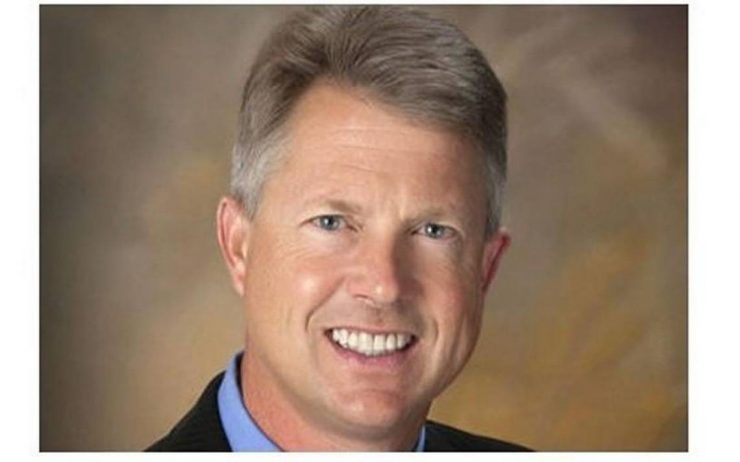
Dr. Roger Marshall, R-Great Bend, is the First District Kansas Congressman.
Friends,
It has certainly been a busy week! The Mueller report has finally put to bed this costly 2-year witch hunt, confirming what we all already knew, no collusion by our president or his team. This week we also passed legislation in the House honoring Senator Bob Dole, and we now have health care back in the headlines.
Our team has been working around the clock for years meeting with Republicans and Democrats to discuss and try to find solutions to fix our health care system, I am glad its back in the press, pushing more and more people to the table to make sure that we can solve this problem- that is, the cost of health care. Fixing our health care system is long overdue, and we need to focus in on a solution that allows patients and families to make their own choices!
Senator Bob Dole Legislation Passes!
Senator Roberts, Senator Moran and I have been working hard alongside the U.S. Army to push through legislation that would give Senator Dole an honorary military promotion. I am happy to announce that this week, the House unanimously passed this legislation!
I was so proud to see the House quickly recognize and pass this bill honoring our legendary Kansas Senator, Bob Dole. There is absolutely no one I can think of more deserving of this honorary promotion than our true Kansas hero, Senator Dole.
I was also thankful to have the opportunity to meet with Senator Dole and deliver the great news. Now with the legislation through both the House and the Senate, it will head to the president’s desk for final signage..
‘Nothing Burger’ Mueller Report
The witch hunt is finally over my friends. After two years and a price tag of $50,000 per day to the U.S. taxpayer, the Mueller Special Counsel has adjourned, reporting what we have been saying for years- no collusion! I am glad that we can now move past this embarrassing chapter of American politics.
This week I addressed the House Floor with one question for my fellow members, the national media, and nation- Can we please move on and work with our President rather than against him and focus on policy rather than fantasy?
Patient Choice V. Medicare For All
Behind the scenes, we are taking steps to address things that Obamacare did not—the cost of health care. I recently sat down with the President to discuss this very issue.
The narrative that health care has been forgotten up here is just not true.
Addressing the Needs of Our Vets
This week the Doctor’s Caucus met with the Veterans Affairs Secretary Robert Wilkie to discuss ongoing improvements being made within the VA.
Secretary Wilkie explained to us the changes in protocol that they’ve made at their VA facilities across the country to improve customer satisfaction. I’m proud of the work being done in the VA under this Administration, they truly are trying to make the complicated, simple for our nation’s veterans.
We also chatted at length about some of the ongoing problems many of our veterans are facing. While this Administration, with support from Congress, has made great strides towards improving VA care, I am fully aware that there is still a lot of work to be done. We discussed the horrible reality of suicide rates among our veterans and how, along with homelessness and opioid addiction, it is one of the biggest continuing concerns. Regarding these top concerns, the Secretary discussed some solutions they are focused on like expanding the VA’s mental health staff so that anyone that walks into their clinics will have same-day access, and a 24 hour follow up call after discharging those at high risk.
I was glad to see the Secretary listening to our concerns and outlining their response to the top issues facing our nation’s veterans. I will continue to monitor and work with the VA to make sure that we are finding solutions to our service men and women’s concerns, and will continue to focus our efforts on working with the VA to find solutions.
Kansas Stands with Israel, Joining AIPAC Convention
This week, President Trump and Secretary Pompeo took the bold step to affirm Israel’s sovereignty over the Golan Heights region. I support this Administration and our longtime friend and ally, Israel in this fight to protect their homeland.
I had a great time meeting with all of the delegates who were in DC for the annual American Israel Public Affairs Committee Convention this week! The AIPAC convention was an excellent opportunity to meet with Kansans who share these beliefs and to discuss ways to strengthen the already great bond between our two nations. We discussed Trump’s recognition of the Golan Heights, the rise of anti-Semitism in the U.S. and around the world, Iranian aggression in the Middle East, and our shared opposition to the Boycott, Divest, Sanction (BDS) movement.
Israel is a vital strategic partner of the United States; for centuries they have been America’s eyes and ears in the Middle East. I thank the President and Secretary Pompeo for their bold action and will continue to assure them that Kansans stand with them.
Update on the ‘Green New Mess’
I know a bad deal when I see one, and from the beginning, I knew that the Green New Deal would be an absolute disaster. It was clear this week that Senate Democrats know how awful this deal would be for our country, considering they voted ‘present’ on the measure earlier this week rather than casting a yes or no vote.
As an avid outdoors man, I know the importance of leaving this world better than we found it, but this just is not the solution. It would hurt our farms, ranchers, and crush our economy completely.
Internet of Things Cybersecurity Act
Earlier this month, I joined a handful of colleagues in introducing H.R. 1668, the Internet of Things Cybersecurity Improvement Act of 2019. As we dive deeper into the digital age, we are increasingly using devices such as fitness trackers, smartwatches and thermostats that connect to various networks, however many of these devices lack adequate cybersecurity protections. The number of cyber attacks is increasing, and with that comes the need to create more secure and resilient products and services, particularly when it comes to the use of “internet of things” devices by the federal government. This bill aims to address risks posed by these devices by establishing light-touch, minimum security requirements for procurement of internet-connected devices by the government.
Economic Development in Western Kansas
On Monday, our office hosted delegations from Garden City, Liberal, Great Bend, and Dodge City as part of their annual fly-in to Washington. I really enjoy when folks from back home come visit our team in D.C., and these communities in particular represent such a unique part of my district.
We had great conversations about economic development in Western Kansas, and how things like access to an affordable broadband connection as well as improving infrastructure in rural America can help these communities not only to grow, but thrive!
Looking forward to getting back out west today, because there really is no place like home!
Dr. Roger Marshall, R-Great Bend, is the Kansas First District Congressman.
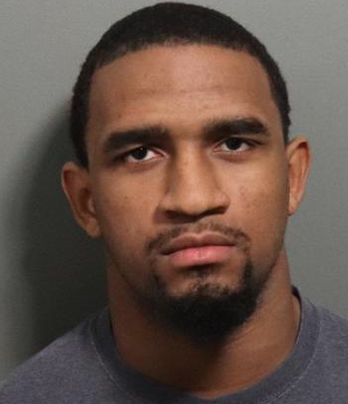
LAWRENCE, Kan. (AP) — Kansas running back Pooka Williams has agreed to diversion terms for a misdemeanor domestic battery charge.
Williams -photo Douglas Co.
Court records filed Thursday show the agreement requires him to complete 40 hours of community service by Nov. 30. He also must submit to domestic violence offender assessment. If that assessment doesn’t result in any recommendations, Williams must take an anger management course.
If he successfully completes the diversion, the allegation would be dropped from his record.
Williams was charged in December after an 18-year-old Kansas student he was dating accused him of punching her in the stomach and grabbing her throat.
He was suspended by the football program Dec. 7.
Williams was the Big 12 offensive freshman of the year and a first-team all-Big 12 selection as running back and kick returner last season.
David Kwiatkowski, a traveling medical technician accused of causing a hepatitis C outbreak at over 18 hospitals across the country including Hays
CONCORD, N.H. (AP) — New Hampshire prosecutors say a traveling medical technician convicted of infecting patients with hepatitis C waited too long to ask a judge to vacate his sentence.
David Kwiatkowski, who worked at the Hays Medical Center catheterization lab between May and September 2010, was sentenced in 2013 to 39 years in prison for stealing painkillers and replacing them with saline-filled syringes tainted with his blood.
In January, he asked to be released, saying his lawyer was ineffective. But the U.S. attorney’s office said Friday such claims must be made within a year of conviction.
Despite being fired numerous times over drug allegations, Kwiatkowski worked in 18 hospitals in seven states before being hired by Exeter Hospital in 2011. After his arrest, 46 people in four states were diagnosed with the same strain of the hepatitis C virus he carries, including one who died in Kansas.
WASHINGTON (AP) — The number of migrant families and children entering the U.S. from Mexico is so high that Border Patrol is immediately releasing them instead of transferring them to the agency responsible for their release, forcing local governments to help coordinate their housing, meals and travel.
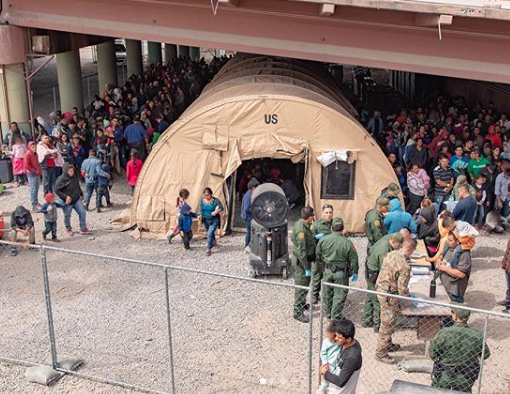
U.S. Customs and Border Patrol continues to apprehend large groups of 100 or more migrants arriving at our borders. There have been 95 large groups of 100 or more individuals totaling 16,042 apprehensions in FY19TD. Comparatively, Border Patrol encountered 13 large groups in FY18 and only 2 in FY17. This photos show USBP and BORSTAR agents processing individuals this week in El Paso, TX – image courtesy Department of Homeland Security, U.S. Border Patrol
“We need to work toward a clean sweep,” Border Patrol Deputy Chief of Operations Richard Hudson said in a letter obtained by The Associated Press sent to sector chiefs Thursday. “This should be our daily battle rhythm.”
Agents are still doing medical screenings and criminal checks, but the decision means thousands of families will be released without first going through U.S. Customs and Immigration Enforcement, which manages their deportation cases.
The Del Rio and Rio Grande Valley sectors in Texas and the Yuma, Arizona, sector earlier announced that agents would begin to release families on their own recognizance. A Border Patrol official not authorized to speak on the matter said Wednesday that El Paso and San Diego planned on doing the same. Some sectors were not part of the change, including Tucson, Arizona and El Centro, California.
Families are typically released with notices to appear in immigration court due to legal restrictions on detaining them and lack of holding space. Until now, Customs and Border Protection has detained them briefly before turning them over to Immigration and Customs Enforcement, generally within 72 hours, to be released pending the outcome of their immigration cases.
The move came as Homeland Security Secretary Kirstjen Nielsen wrote to Congress asking for emergency funding for humanitarian and operational needs, and the ability to detain families together as long as necessary to deport people faster.
“The volume of ‘vulnerable populations’ is unsustainable. Our system has been able to cope with high numbers in the past, but the composition of today’s flows makes them virtually unmanageable,” she wrote.
Arrests all along the southern border have skyrocketed in recent months. Border agents are on track to make 100,000 arrests and denials of entry at the southern border this month, over half of which are families with children. To manage the crush, U.S. Customs and Border Protection is reassigning 750 border inspectors from their usual duties at the ports of entry to help Border Patrol keep pace with arrivals in between ports of entry. The head of the agency held a press conference in El Paso on Wednesday to say the breaking point had arrived.
But federal lawmakers have fought over whether there is a “crisis” at the border, particularly amid President Donald Trump’s push for a border wall that he claimed will solve all the immigration problems. Wisconsin Republican Sen. Ron Johnson, Chairman of the Senate Homeland Security Committee, said Thursday the evidence shows the immigration system is cracking under the strain.
“The sad reality is that we now have a virtual open border for any migrant who crosses with a minor, and our border security enforcement has been reduced to a mere speed bump for migrants on their path to long-term occupancy in the United States,” he said, adding border officers are being asked to perform an impossible task with no help from Congress.
And along the border, officials were working to manage the families that had been suddenly released. Yuma Mayor Douglas Nicholls said was city is working with various non-governmental organizations to make sure families released by the Border Patrol have temporary housing, food, medical care and help with traveling to their intended destinations.
Most immigrant families coming to the U.S. don’t plan on staying in the border towns they cross through, but rather to meet up with family throughout the country.
“Focusing on the humanitarian effort is the most important focus for the city, Nicholls.
The Yuma Sector has over the last two years seen an extraordinary spike in the number of immigrant families who turn themselves in. Yuma Deputy Chief Patrol Agent Carl E. Landrum said Thursday that agents have arrested 30,000 people in the relatively small sector since October 1.
The facility in Yuma has the capacity to temporarily hold 410 people. Until Thursday, ICE had been picking all of these families up and taking them to Phoenix and Tucson to be processed. But the numbers have swelled so much now that ICE doesn’t have enough resources to pick everybody up, so Border Patrol agents themselves are releasing families in Yuma.
“It is overwhelming us locally, as well as overwhelming the system nationally,” Landrum said.
“The sheer volume of family units crossing the border has overwhelmed ICE’s limited transportation resources; combined with a requirement to detain these individuals for no more than 20 days, the agency has no option but to expeditiously arrange for their release,” ICE spokeswoman Sarah Rodriguez said in a statement.
The agency makes “every attempt to coordinate the release of these individuals with NGOs that provide assistance with basic needs, but the heavy influx in recent months has inundated these organizations as well,” Rodriguez said.
SEDGWICK COUNTY — One person died in an accident just after 9:30a.m. Thursday in Sedgwick County.
A 33-year-old Kansas man died in Thursday’s crash -photo courtesy KWCH
A 28-year-old woman was driving a GMC Denali merging from Interstate135 to eastbound Kellogg, according to officer Kevin Wheeler.
The vehicle stalled out partially in the merging lane. The driver called 911 to report that her vehicle was stalled. A Honda Accord driven by Quinton Bonham, 33, Wichita, rear-ended the SUV.
EMS transported him to a local hospital where he died, according to Wheeler.
The driver and two children in the SUV were not injured according to Wheeler.
TREGO COUNTY — One person was injured in an accident just after 7a.m. Friday in Trego County.
The Kansas Highway Patrol reported a 2011 Mazda passenger vehicle driven by Julie Covey, 57, Colorado Springs, Co., was eastbound on Interstate 70 at the WaKeeney exit. The driver swerved south to avoid impacting a semi slowing to exit at the same location.
The Mazda struck the guard rail several times, vaulted over the guard rail, slid down the embankment and struck the KDOT fence.
EMS transported Covey to the hospital in WaKeeney. She was not wearing a seat belt, according to the KHP.
SALINA — On Aug. 14, 2018, the Pennsylvania Grand Jury Report was released. The report exposed a great scandal within the Church and incited Catholics, lay and clergy alike, to demand greater transparency and accountability from the leaders of the Catholic faith. On Sept. 18, 2018, the Diocese of Salina informed the Attorney General’s office that newly appointed Bishop Gerald Vincke would be retaining the independent outside counsel of Cottonwood Law LLC. of Hillsboro to conduct a thorough review of clergy personnel files and identify any potential cases of clergy misconduct with minors. Bishop Vincke had been serving in his new role as the Bishop of Salina for less than a month when he opened the investigation of the clergy files.
From September 2018 to January 2019, Courtney Boehm from Cottonwood Law conducted an audit of the diocesan clergy files. Boehm was selected for her expertise in criminal law and her independence from the Salina Diocese. At the time of the audit, Boehm was the Marion County Attorney and has since been appointed a district court judge in the 8th Judicial District which consists of Dickinson, Geary, Marion and Morris counties. Boehm reviewed 109 clergy files, ranging from clergy serving in the late 1800s to present day. The files reviewed consisted of any member of the clergy with allegations of misconduct against them. Upon the completion of the review, Cottonwood Law submitted a comprehensive report to Bishop Vincke. The report summarized the contents of each clergy misconduct file and the allegations that were made against each priest. The entirety of this comprehensive report was immediately turned over to the Attorney General’s office, who then forwarded it to the Kansas Bureau of Investigation (KBI).
Within the report, the auditor recommended which cases needed to be reviewed by the Lay Review Board. The Lay Review Board, formed in February 2000, is a group that reviews any allegation made against a member of the clergy and includes mental and medical health professionals, social service providers, civil and canon law professionals, law enforcement officials and two priests. In order to be as thorough and transparent as possible, Bishop Vincke asked that files recommended by Boehm be reviewed, including those that were previously reviewed. During the month of February 2019, the Lay Review Board met and discussed the cases recommended by Cottonwood Law. Upon the completion of the Lay Review Board’s review of the Cottonwood Law report, 14 cases of diocesan clergy abuse of a minor were found to be substantiated.
The Diocese of Concordia was founded in 1887. The Diocese of Concordia then became the Diocese of Salina in 1944. During a span of 132 years, with approximately 300 diocesan priests having served in the Diocese of Salina, 14 diocesan priests were identified to have substantiated allegations of abuse of a minor. A substantiated allegation is one that has been corroborated with witness statements, documents, emails, photos, texts, or by another source, such as law enforcement. None of the 14 priests are in active ministry today. Of the 14 priests, 12 are deceased and the remaining two are laicized. At this time, the Diocese of Salina is only releasing the names of clerics with substantiated allegations of abuse of a minor. Any cleric with an allegation of abuse of a minor that is unsubstantiated has been excluded from the list. If new information is provided that leads to the substantiation of a case, the Diocese of Salina will update the list of clergy abuse of minors accordingly.
Just as the Salina Diocese conducted an internal audit, so did the Order of Franciscan Minors Capuchin Province of St. Conrad, headquartered in Denver. The Capuchins are a religious order who have had a strong presence within the Salina Diocese, particularly in the Hays and Victoria area. Father Christopher Popravak, Provincial of the Denver Province of Capuchins, shared the results of the Capuchin internal audit with the Salina Diocese. Of the approximate 300 Capuchins who have served in the Salina Diocese, 13 priests/brothers were found to have credible allegations of abuse of a minor. The names of these priests/brothers have been included within this edition of The Register, along with additional information provided to the Diocese of Salina by the Capuchins for release.
“This is a difficult time for the Church,” said Bishop Vincke in a letter entitled Why I Said Yes, released to the public in September 2018, “This purification of the Church by God is painful, but much needed. We need the eyes of faith as we suffer through this. ‘Faith is not a light which scatters all our darkness, but a lamp which guides our steps in the night and suffices for the journey (Lumen Fidei #57).’ Jesus is with us as light in the midst of darkness.”
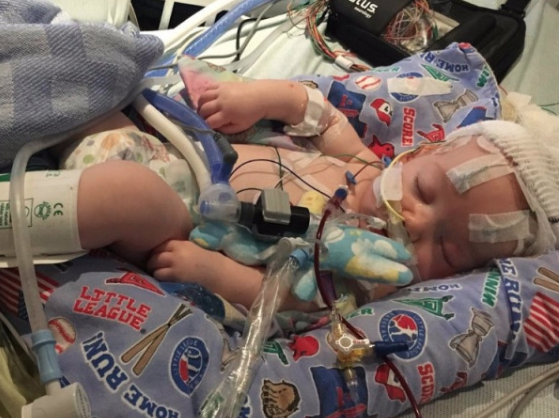
OLATHE, Kan. (AP) — A Kansas woman was sentenced to more than seven years in prison after a child in her home day care was injured so badly he was left blind and with brain damage.
Paige Hatfield-photo Johnson Co.photo courtesy GoFundMe
Paige Hatfield, 27, Olathe, was sentenced Thursday for aggravated battery and operating an unlicensed day care.
Hatfield was found guilty in January of injuring 4-month-old Kingston Gilbert in January 2017.
Doctors at Children’s Mercy Hospital diagnosed the infant with abusive head trauma. Court records said a doctor told police the type of injuries are caused only by “violent non-accidental physical trauma.”
Hatfield testified at her trial that she did not hurt the child.
BUNKER HILL – Smoky Hills Public Television’s local program, The Kansas Legislature, will be hosted by Michael Walker, director of the Fort Hays State University Docking Institute.
Our guests will be State Representatives Ken Rahjes of the 110th District (R-Agra) and Tory Marie Arnberger (R-Great Bend) of the 112th District.
Tune in Friday, March 29 at 7 p.m., and call in with your legislative questions.
The show airs during the legislative session, which gives the legislators and viewers the opportunity to discuss up-to-date issues. During the program, viewers can call 800.337.4788 with their legislative questions.
The Kansas Legislature will air on Fridays at 7 p.m. To find a list of legislators that might be on the show each week, go to www.shptv.org where you will find the 2019 season schedule.
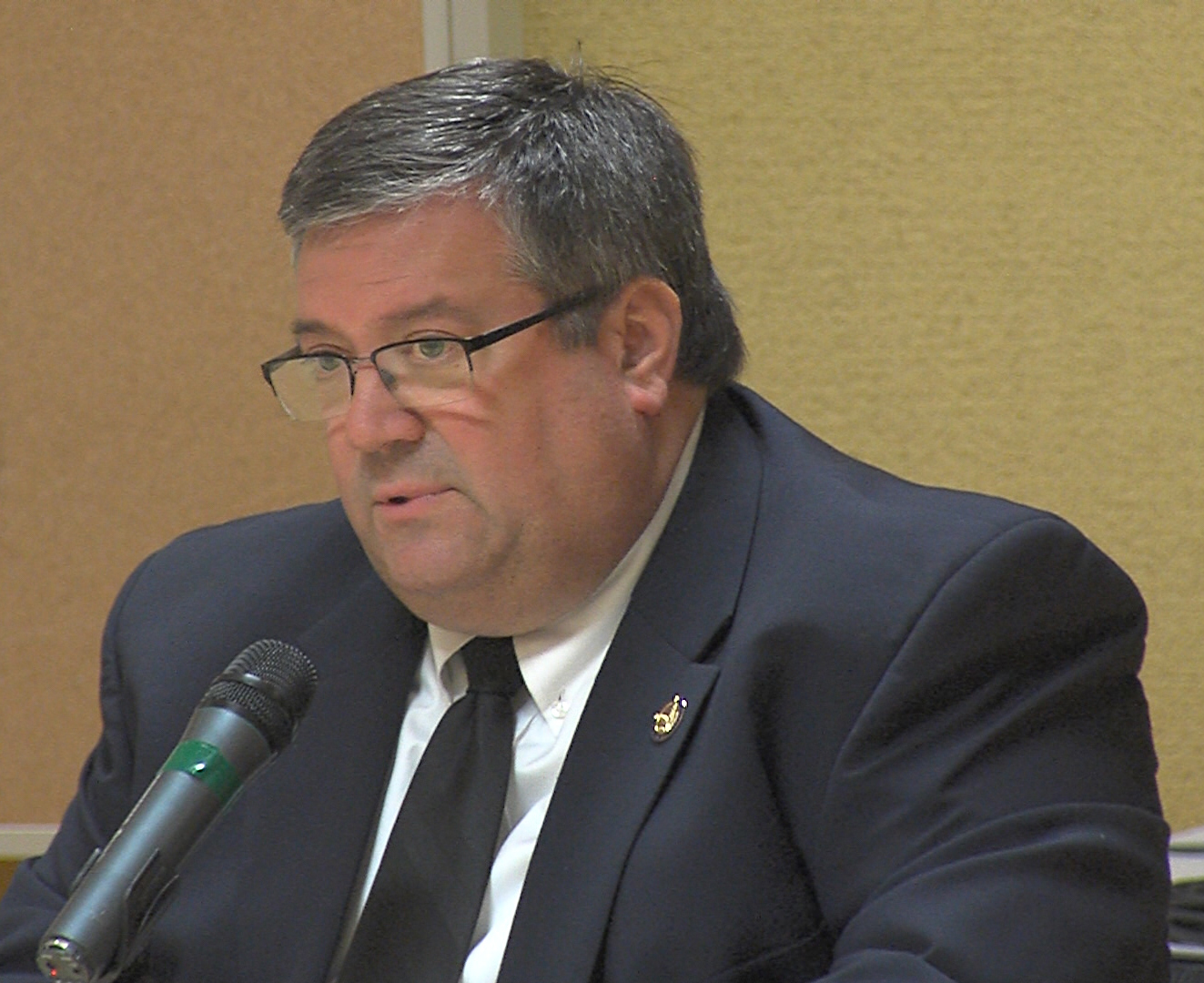
Last week, a coalition of Democrats and centrist Republicans steamrolled House Majority Leader Dan Hawkins, the Kansas Legislature’s chief obstructionist to extending health care coverage to 130,000 low-income Kansans.
H. Edward Flentje is professor emeritus at Wichita State University.
For the first 43 days of the current legislative session Hawkins, along with House Speaker Ryckman, Senate President Wagle, and Senate Majority Leader Denning, had blocked debate and hearings on Governor Laura Kelly’s proposal to extend Medicaid coverage to uninsured Kansans. However, through crafty floor maneuvers, a bipartisan majority adopted the governor’s proposal and moved consideration of the issue over to the Kansas Senate.
The time has arrived for Republicans to stop obstructing majority will and negotiate a path forward on extending health care to uninsured Kansans. Their partisan blocking tactics have become a losing proposition, in terms of both public policy and politics.
Reputable surveys of Kansans consistently show strong support for extending health care access. They do so in part because more than nine in every ten Kansans already have access to health care, mostly
through their employers. Seniors, disabled, and the poorest Kansans have access through Medicare and Medicaid. Active military and veterans have access through Tricare. Others qualify for Obamacare.
Most Kansans with health care do support extending access to those without, particularly when federal grants—financed by tax dollars sent to the U.S. Treasury by Kansans—will cover 90 percent of the cost. The Kansas Hospital Association reports that Kansas has forfeited over $3.2 billion by not extending Medicaid when it became available five years ago. This loss of federal dollars has forced a number of rural communities to increase local sales and property taxes to maintain their local hospitals. Others have closed or face the threat of closure.
To do the right thing will require political courage. Resistant Republicans need to break loose from the shackles placed on them by organizations such as the Kansas State Chamber of Commerce and Americans for Prosperity. These organizations despise safety nets for vulnerable Kansans, and any legislator voting to extend access to health care will become a target for retaliation through disingenuous postcard attacks in upcoming elections.
Reluctant Republican legislators should remember, however, that Kelly convincingly won the governorship last fall by campaigning on two issues, education and health care. She won in many legislative districts now held by Republicans. Further, both Sam Brownback and Khris Kobach vigorously opposed expanding access to health care. And where are they now? Brownback left his governorship early with record-high disapproval. Kobach lost to Kelly with less than 43 percent of the vote.
Thirty-six states have either expanded health care through Medicaid or are in the process of doing so. Voters in three red states, including neighboring Nebraskans, enacted referenda on expansion last November. A Florida initiative for expansion is now underway.
Health care also became a significant national issue in mid-term elections last fall, and congressional Republicans are now reassessing their negative posture on the issue after losing 40 seats, including one in Kansas, and control of the U.S. House of Representatives.
According to the Kansas Health Institute, 243,305 Kansans remain uninsured for health care. Extending access through Medicaid would cut that number by more than half. An additional 90,000 adults and 40,000 children would be covered, according to the Institute. If the governor’s proposal is adopted, 96 of every 100 Kansans would have access to health care.
Expanding health access through Medicaid is coming. If not this year, next year. Legislators should stop playing political games on health care and do the work they were elected to do, that is, legislating.
H. Edward Flentje is professor emeritus at Wichita State University and served with former Kansas Governors Bennett and Hayden.
TOPEKA, Kan. (AP) — The Kansas House has rejected a move to repeal part of a state law allowing concealed carry of firearms on college campuses.
Lawrence Democratic Rep. Barbara Ballard on Thursday offered an amendment to an unrelated gun bill that would have added college campuses to a list of places exempt from the state’s concealed carry law. The law requires that most government-owned buildings allow people to carry concealed firearms unless there is adequate security to prevent anyone from bringing in a weapon.
Lawrence is home to the University of Kansas, and Ballard told lawmakers that some parents have decided to send their children to out-of-state or private institutions that do not permit concealed carry of firearms.
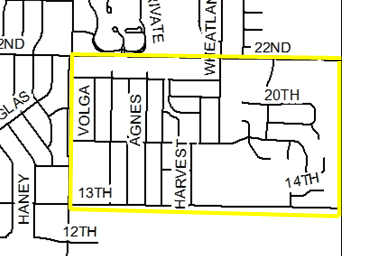
The Hays Fire Department will be inspecting and flow testing fire hydrants on Fri., March 29, 2019 in the area of Canterbury Dr. to Commerce Parkway between 22nd St. and 13th St. This is part of a coordinated effort by the city of Hays to inspect all fire hydrants in the city and flush all water mains annually.

 Hays-area residents wishing to make a contribution may bring cash or checks to the Eagle Media Center, 2300 Hall Street, Hays. Checks should be made out to the Nebraska Red Cross.