We have a brand new updated website! Click here to check it out!

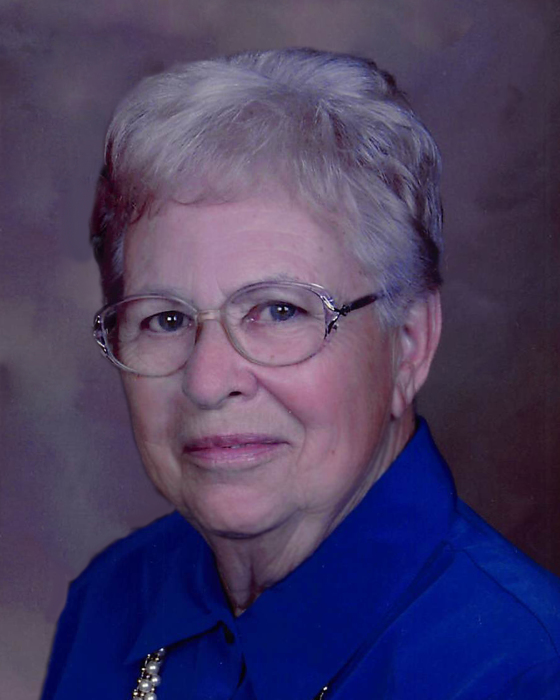
Grace Marguerite (Lesher) Glassman

Grace Marguerite (Lesher) Glassman, Hays, died peacefully Sunday, March 24, 2019 at the age of 97.

Funeral services will be 10 AM Thursday, March 28th at St. Joseph’s catholic Church in Hays. Burial will follow in Mt. Allen Cemetery, Hays.

Visitation will be Wednesday 4 PM – 8 PM and Thursday 9 AM – 9:30 AM at Brock’s-Keithley Funeral Chapel and Crematory 2509 Vine Hays, KS 67601.

A parish vigil service will be at 6:15 PM on Wednesday followed by a rosary service.

Contributions are suggested to TMP-Marian, Holy Family or Catholic Charities.

Condolences may be left by guest book at www.keithleyfuneralchapel.com or by email at [email protected]

News From the Oil Patch, March 25

By JOHN P. TRETBAR

The drilling rig counts in Kansas are up while the national numbers are down. Independent Oil & Gas Service reported an increase in the number of active drilling rigs in Kansas. There are four active rigs in the eastern half of the state, up two, and 26 west of Wichita, up four. Nationwide, Baker Hughes reports a big drop in its weekly rotary rig count, which was down nine oil rigs and down one gas rig for a total of 1,016 active rigs. Texas was down four rigs, Oklahoma and New Mexico were each down two. Louisiana was down three.

Regulators approved 13 permits for drilling at new locations across the state last week, five in eastern Kansas and eight west of Wichita, with one new permit in Russell County and one in Stafford County.

Independent Oil & Gas Association reports 30 newly-completed wells for the week, bringing the total so far this year to 401. There were four new completions east of Wichita and 26 in Western Kansas including one in Barton County, one in Ellis County, two in Russell County and one in Stafford County.

Kansas Gov. Laura Kelly appointed a former executive director of the Kansas Corporation Commission to a vacant seat on the commission. Topeka Metropolitan Transit Authority general manager Susan Duffy will replace former Senator Jay Emler on the commission. Duffy previously served as KCC executive director from 2003 to 2011. She also served in the Kansas Legislative Fiscal Research Department, the Kansas State Historical Society, the Kansas Department of Revenue and the Division of the Budget.

The KCC regulates several key sectors of the state’s economy, including oil and natural gas exploration and production, as well as investor-owned utilities, and commercial trucking. The commission consists of three members appointed by the governor and confirmed by the Senate for overlapping four-year terms.
The Trump administration finalized changes to sweeping federal land use plans for the West. Officials say the new guidelines will ease restrictions on energy companies but still protect the habitats of the sage grouse, a ground-dwelling bird that ranges across parts of 11 western states, including Kansas. Opponents are expected to challenge the changes in court.

U.S. refiners aren’t just buying crude to turn into gasoline and diesel — they’re competing with producers and traders to export it. According to Bloomberg, two of the three biggest U.S. Independent fuel makers, Marathon Petroleum and Phillips 66, are making inroads in Asian markets to sell U.S. crude. Both are part owners of existing and new pipelines connecting the Permian Basin to the Gulf Coast.

U.S. crude oil production gained 104-thousand barrels per day last week to 12.084 million barrels per day. According to government reports, we were producing just over 10.4 million barrels per day last year at this time.

The U.S. Energy Information Administration reports imports were up 186,000 barrels per day on the week. EIA said the four-week average is about 11.2% less than a year ago.

The government reports crude oil inventories dropped 9.6 million barrels last week to 439.5 million barrels. That’s about two percent below the five-year seasonal average.

The House of Representatives in Oregon voted to approve a ban on hydraulic fracturing, even thought there are no current fracking operations in the state. The ten-year ban now goes to the Oregon Senate. Developers say there’s potential for coal bed methane extraction in the Willamette Valley, which this bill would also block.

A U.S. judge has blocked oil and gas drilling across a large area of Wyoming, saying the government must consider the impacts of climate change more broadly in leasing public lands for exploration. Prior rulings focused on individual lease sales and permits, but the new ruling orders officials to consider emissions from past, present and foreseeable future oil and gas leases nationwide.

Senators in North Dakota have killed a measure that would have used earnings from a voter-approved oil tax savings account to offset income taxes. The GOP-led Senate defeated the bill 41-4 after it had passed the House by a wide margin. The measure would have used half of any earnings over $300 million from the state’s Legacy Fund to reduce individual and corporate income taxes.

The U.S. continues to ship more oil and petroleum products by rail, as pipeline capacity fails to keep up with increasing output. According to the Association of American Railroads, the total for the week ending March 16 was 12,124 rail cars. an increase of more than 21% over the same week last year. Canadian rail traffic increase by more than 12% to nearly nine thousand rail cars.

U.S. sanctions on Venezuela have resulted in some surprising winners and losers. The sanctions have hamstrung refineries in the United States, where facilities need the heavier Venezuelan oil to produce high-margin refined products like diesel and jet fuel. Reuters reports that refiners in need of substitutes are settling on immediate replacements from BP and Royal Dutch Shell. Trading volumes in these grades of oil have surged to their highest levels in months, and prices reached five-year peaks after sanctions were imposed. Heavy crude accounts for nearly two-thirds of U.S. oil imports. Last year ten percent of that came from Venezuela. Offshore Gulf oil prices have hit five-year highs, and sales are up sharply, according to company executives, market participants and data reviewed by Reuters.

Kan. teen in stolen car hospitalized, arrested for DUI crash

SEDGWICK COUNTY — Law enforcement authorities are investigating a Kansas teen following an injury crash in a reported stolen vehicle.
Just before 7:30 p.m. Sunday, a deputy advised that he was following a stolen vehicle south on Interstate 235 near Seneca in Wichita, according to Lt. Tim Myers.

Sunday night accident scene photo courtesy KAKE

The vehicle was a silver 2008 Ford Focus reported stolen by Andover police. The deputy advised that he would follow the vehicle until other deputies arrived. The Focus was following all traffic laws at that time.

The Focus exited the Interstate at MacArthur and turned east. The deputy continued following the vehicle until it pulled into the gas station on the southwest corner of MacArthur and Broadway. The deputy activated his emergency equipment as the suspect vehicle pulled up to the gas pumps and stopped. The suspect vehicle sat stationary for 4-5 seconds until the deputy exited his vehicle and told the driver to exit her car. The suspect vehicle then fled from the stop and went south on Broadway.

The deputy was not pursuing the vehicle but watching it as he travelled south on Broadway. A short time later he advised that the vehicle was involved in a crash at 47th Street South and Broadway where it had run the red light and struck a 2014 Lincoln MKZ.

The driver of the Focus attempted to flee and was taken into custody by another deputy. She was identified as 17-year-old white female. She was transported by a deputy to a local hospital and later booked into Juvenile Detention for Aggravated Battery-Reckless, Felony Flee & Elude, Possession of Stolen Property, DUI and No Driver’s License, according to Myers.

The driver of the Lincoln Beverly Joann Bair, 87, and a passenger Melissa J. Heinzman, 45, were transported by ambulance Via Christi, according to Myers.

Lila Rule

Lila Rule, 91, passed away on March 25, 2019 at Decatur County Hospital. She was the daughter of Leonard and Mary Jane (Whetstone) Johnson, one of 12 children, she was born on April 26, 1927 in Norton County.

She was a graduate of Norton High School. Lila then married John E. Rule on March 2, 1945 in Clayton, KS where they spent most of their lives after a few years in Oregon while he was in the Navy.

To this union were four children: John (Loraine) Rule of Starke, FL, Peggy (John) Mast of Emporia, KS, Jerold Rule of Osage City, KS, and Carol (Stan) Miller of Norcatur, KS.

Lila worked as a postal clerk in Clayton, KS and at Rule Grain Company during busy harvest times. John passed on February 1, 2009. Lila then moved to Whispering Pines in Norton then to Good Samaritan Society in Oberlin in August 2018.

Survivors include her children; sister, Helen Rohr of Goodland, KS and a special nephew, Don Strevey of Omaha, NE; grandchildren: Amy Siple, Doug Rule, Jason Rule, Michael Long, Melissa DeDonder, and Justine Tuttle; 17 great-grandchildren; 2 step great-grandchildren; 3 sister-in-laws. She was preceded in death by her parents; husband; brothers: Ed, Kenneth, Harold, Calvin, Lloyd, Dwight, and Herbert; sisters: Kathryn Bowman, Maxine Gruse, and Betty Johnson; 3 grandchildren: Joel Miller, John Blake Petracek, and Jeannie Marie Petracek and great -grandson, Andrew Bryan Rule.

Private burial will be in Clayton Cemetery, officiated by Pastor Gordon Pettibone. Arrangements by: Pauls Funeral Home, Oberlin. Condolences may be left at www.paulsfh.com

Joseph Alois Koerner

Joseph Alois Koerner of St. Louis collapsed at home on March 14, 2019, and died after being transported to Barnes Jewish Hospital.

He leaves his wife, Maria Allen-Koerner, together 30 years; his daughter, Vanessa Enloe and her husband Paul Enloe who are parents of his two grandchildren, Neve and Brendan Enloe all of Dallas, TX; his youngest daughter, Kendra Bockius and husband Jeff Bockius of St. Louis; Brothers Tom Koerner and Randy Koerner of Hays, KS; and many close friends.

Born on January 28, 1939, and raised in Hays, he was the son of Joseph Koerner, Sr. and Bertha (Miller) Koerner, and was the oldest of four brothers. He was preceded in death by his parents and his youngest brother, Myron “Skip” Koerner. Proud of his family heritage, he learned to speak German. He held a paper route as a youth and attended high school at St. Joseph’s Military Academy, as did his father and three brothers. He graduated in 1957 and was that year’s Battalion Commander, the highest-ranking cadet. Later employment in Hays included Central Kansas Power and Gilmore Construction.

After a year a Fort Hays State, he entered the Jesuit Seminary in Florissant in 1958 and earned his BA at St. Louis University (SLU). He taught a year at SLU High in the subject of Latin and was the director of the Glee Club and a theater play production. In 1967, post seminary days, he graduated from SLU with a master’s in philosophy. He remained a regular member of SLU St. Francis Xavier College Church and a faithful friend of his Jesuit buddies.

His early career included teaching Latin at St. Mary’s University in Leavenworth but the majority of his work focused on marketing research consulting for Maritz, as owner of The Qualis Company, and for the Salvation Army. The last several years he spent teaching Latin at Webster University and SLU, bringing his career full circle and fulfilling his life’s passion, which is teaching and his love of language and philosophy. In his words, “I’ve always had a great reverence for and interest in ancient times.”

Joe was talented musically and was known for singing and playing his guitar with friends and family, and for nursing home residents. He also performed in several community theater productions where he is most fondly remembered as “Daddy Warbucks”. A highlight was being a member of the St. Louis Symphony Chorus and the Cathedral Basilica of St. Louis Choir, during which time he was able to perform in Rome and Austria.

Joe was a life-long learner of the sciences, the classics, and continued to be intrigued by philosophy and theology. He had frequently contributed his thoughts and perspectives on issues in letters to the editor printed in St. Louis Post Dispatch. Having a most recognizable and happy laugh, he was well known and loved by his community and he generously gave back to society. Such an outgoing human being, he would meet and engage with all groups of people. One friend said, “If I were like Joe and was sitting in any coffee shop, I would know all of those people sitting over there!” Per his wishes, his body was donated to science.

Family was precious to Joe as he was the most caring, supportive, and proud father and grandfather “Poppa Joe”, and likewise, was their hero. His final day was spent with his love, Maria, doing the things enjoyed: coffee club, exercising, volunteering in the local food pantry, completing the NYT crossword puzzle, and reading the newspaper – most importantly, the comics (AKA the philosophy page).

His memorial service will be held at SLU St. Francis Xavier College on May 20th at 10 a.m.

If you care to make a memorial donation, Joe was active in the following organizations:


Microfinancing Partners in Africa

949 Columbia Ave.

St. Louis, Mo. 63139

Trinity Episcopal Food Pantry

600 N. Euclid Ave.

St. Louis, Mo. 63108

St. Louis Cremation is handling arrangements.

Kelly’s statement on veto of Kansas GOP tax bill

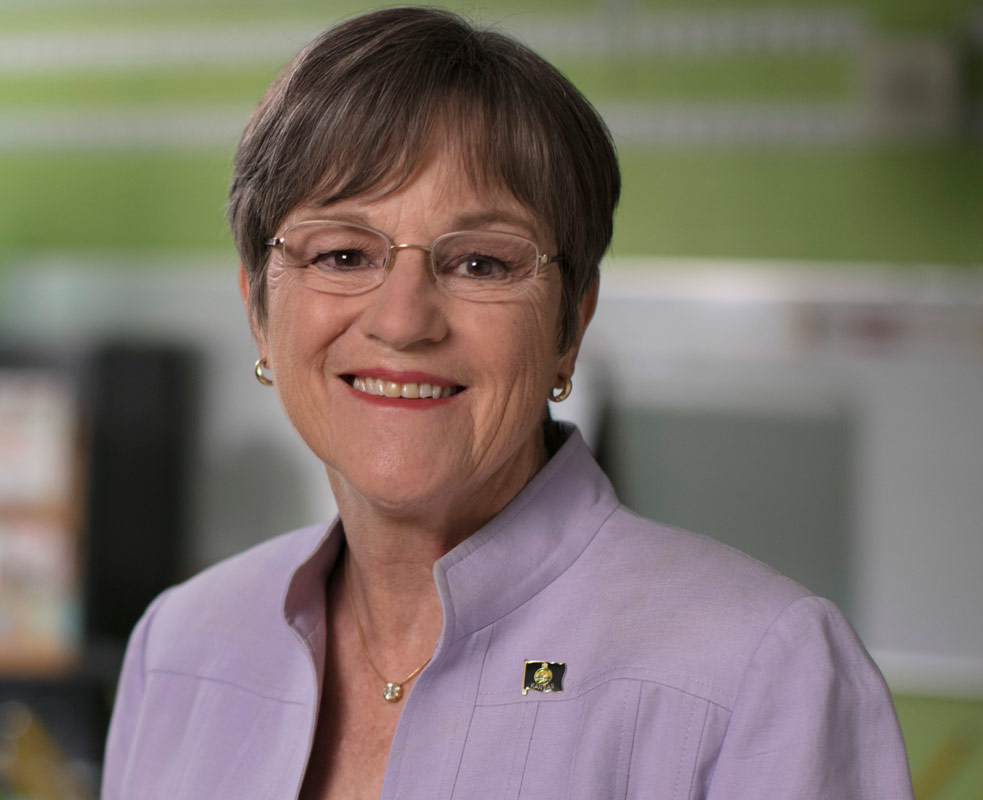
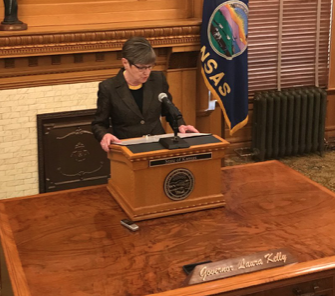
Kansas Governor Laura Kelly (D)
The following message is from Governor Laura Kelly regarding the veto of Senate Bill 22:

Just two short years ago, the State of Kansas found itself on the brink of financial disaster. Even after depleting state savings and enduring multiple rounds of devastating budget cuts, unsustainable tax policy continued to perpetuate fiscal crisis. We saw schools close and class sizes grow. We saw an overwhelmed child welfare system let children fall through the cracks. And despite promises of immediate prosperity, Kansas routinely ranked among the nation’s worst in multiple economic indicators.

As the budget hole continued to grow, the legislature passed two sales tax increases, swept more than $2 billion from the state highway fund, delayed numerous payments to the state pension system, accumulated historic levels of debt, and raided every critical investment from early childhood education to public safety. But in the end, none of these short-term band aids could stem the bleeding caused by reckless tax policy. In November of 2016, Kansans called for change.

The very next year, the state hit “reset” in a historic act of bipartisanship with the passage of comprehensive tax reform. Our credit score improved within a week. The number of Kansans participating in the labor force increased for the first time since 2014. And we’ve finally begun to heal from the unprecedented devastation found in state agencies and state programs.

However, we have only just started the rebuilding process. Our recovery is tenuous; our budget is fragile. The State of Kansas cannot afford to make a U-turn.

Unfortunately, Senate Bill 22 would absolutely dismantle all the progress we’ve made. It would throw our state once again into a self-inflicted budget crisis, diminishing all the investments we’ve worked so hard to rebuild and restore. It would put our future at risk once again in order to give significant tax breaks to entities who need them the least, while continuing to leave working families behind.

Additionally, as noted by the Senate President during the floor debate, Senate Bill 22 will put Kansas out of compliance with the Streamlined Sales and Use Tax Agreement. This would potentially cost Kansas up to $18 million in lost revenue — on top of the bill’s already unaffordable $200 million price tag in the next fiscal year.

I look forward to working with the Kansas Legislature in the future to achieve our common goal of a reduced food sales tax. However, as I explained repeatedly — both as a candidate for governor and after I took office – we cannot responsibly enact a food sales tax cut until our state’s fiscal health stabilizes. This is not the time.

I share Kansas lawmakers’ desire to keep the state tax burden as low as possible and that will continue to be my priority. In January, I presented a structurally balanced budget to the Kansas Legislature that funded our schools and roads, reduced state debt, left Kansas with the largest ending balance in 20 years, and did so all without a tax increase.

The people of Kansas elected me to rebuild our state. They elected me to bring fiscally conservative and responsible principles back to our government. We must be patient, thoughtful, and prudent as we evaluate tax policy. And, when we move forward with commonsense tax relief, we must ensure that it benefits the Kansans who need it the most.

Therefore, under Article 2, Section 14(a) of the Constitution, I hereby veto Senate Bill 22.

Kansas governor vetoes GOP tax relief bill

Gov. Laura Kelly signaled for weeks that she would reject Republican leaders’ top priority this year, a measure aimed at preventing individuals and businesses from paying more in state income taxes because of changes in federal tax laws at the end of 2017. Kelly’s top priorities are boosting funding for public schools and expanding the state’s Medicaid health coverage for the needy.

“We cannot fix our state if we repeat the mistakes of the past,” Kelly said Monday.

Read Kelly’s entire statement HERE.

A clash was inevitable. Allowing the tax relief to become law would have undermined the state’s ability to sustain Kelly’s proposals for education funding and Medicaid expansion. Republican leaders have yet to muster the two-thirds majorities necessary to override a veto and enact the tax bill, so Kelly is likely to prevail.

Republicans argued that failing to enact tax relief would allow an unlegislated tax increase. They said the issue was akin to deciding whether to return a lost wallet full of cashafter finding it on the sidewalk with the owner’s ID inside.

The governor and fellow Democrats noted the persistent budget woes that Kansas experienced after Republican legislators jumped into cutting income taxes in 2012 and 2013 at the urging of then-GOP Gov. Sam Brownback. Voters came to view the experiment as a failure, and bipartisan majorities reversed most of the tax cuts in 2017.

Kelly’s administration projected that under the bill, taxpayers would save $209 million during the state budget year beginning in July.

Like other states, Kansas faced the issue of revising its income tax code because it is tied to the federal tax code. While changes in federal tax laws championed by President Donald Trump lowered rates, they also included provisions that raised money for Kansas, in party by discouraging individual filers from claiming itemized deductions.

The bill vetoed by Kelly would have provided relief to taxpayers who have itemized on their state returns. It would have allowed them to keep itemizing even if they don’t on their federal returns, something previously prohibited.

Republican legislators also attached a provision to lower the state’s sales tax on groceries to 5.5 percent to 6.5 percent to make the bill harder for Kelly to veto. Kelly herself promised during her campaign last year to work to lower the tax.

But much of the relief in the bill would have gone to large businesses that faced paying state income taxes on income generated by operations outside the U.S. because of the federal changes.

___

William ‘Bill’ Basil Wood

May 6, 1923 – March 23, 2019

Born – Stephens County, Oklahoma, May 6, 1923, and Passed – March 23, 2019, in Bryan, Texas.

Bill graduated from High School in Velma, Oklahoma. Following graduation he entered the 8th Army Air Force and served from 1943 to 1945 with the 453rd Bombardment Group, 2nd Airborne Division. He was involved in the North France Campaign, the Ardennes Campaign, the Rhineland Campaign, and the Central Europe Campaign, completing 35 missions in a B-24.

Bill was employed by Halliburton Services for 37 years, retiring in 1984 in Pampa, TX. He was a member of the Masonic Lodge #177 in Russell, KS, a member of the V.F.W. Post #1657 in Pampa, TX, and the Pampa Senior Citizens.

Bill was preceded in death by his parents, William Blake Wood and Willie V. Wood, as well as by two brothers, V.B. Wood and F.B. Wood, all from Duncan, OK.

Survivors include: wife, Fern A. Wood; daughter, Barbara Dale and husband Owen; son, Randy Wood and wife Juanell, all living in Texas. Additionally he had, 5 grandchildren, 8 great grandchildren, and 4 great-great grandchildren.

Graveside services will be 1:00 p.m., Saturday, March 30, 2019, at the Claflin Cemetery, Claflin, KS, with Pastor Diane Webster presiding. Friends may call 9 a.m. to 5 p.m. Friday at the funeral home. Military honors will be conducted by the McConnell Air Force Base Honor Guard.

Memorials may be made to the Leukemia & Lymphoma Society at donate.lls.org or in care of Nicholson-Ricke Funeral Home, PO Box 146, Hoisington, KS 67544.

Stephen ‘Wayne’ Bump

Stephen “Wayne” Bump was born October 7, 1934 to Stephen C. and Alice L. (Abbott) Bump in Ainsworth, Nebraska. He passed away March 15, 2019 in the Graham County Hospital at the age of 84.

The family moved frequently due to work with trucking, farming and construction. Some of the places they lived were Ellinwood, Healy, and Ness City, Kansas before moving to Hill City in 1952.

Wayne graduated from Hill City High School in 1953. After graduation Wayne and three buddies went to Idaho where they joined the forestry service and fought fires during the summer of 1953. When the season was over they traveled to California where one of the group had family before returning to Hill City in January of 1954.

Wayne went to work for his father in construction. He started dating Janette Jackson and they were married August 2, 1954. They resided in Hill City for a short while before moving to Hoxie. They were living in Hoxie when the first two of their children were born; Stephen Lee in 1955 and Gail Diane in 1956. They moved to Elkhart, Kansas for a short while before returning to Hill City. Their youngest son, Lance Melvin, was born in WaKeeney in 1959.

Wayne began working for the United States Post Office in 1960 and worked there for 30 years. After retiring from the Post Office he worked for HUD housing in maintenance for 13 years.

Wayne was an avid golfer and enjoyed many rounds with fellow golfers.

His greatest love and passion was his love for Jesus. He spent many hours studying for Sunday school classes. When he stopped teaching he studied just for the love of it.

He was very active in community activities including Elks (where he was Exalted Ruler for the local chapter and District Deputy for Northwest Kansas), Mason and Shrine. He regularly took a turn at delivering Meals On Wheels and other church projects. He was an active member of the Graham County Easter Cantata and loved to sing, especially songs that glorified God. He was a member of the Hill City Christian Church.

Wayne was very proud of his children and their accomplishments. He was able to spend many enjoyable hours of golf with them as they all followed him in his passion for golf. His family was very important to him and he loved each one very much.

He loved animals and always had a dog as a companion (even taking them golfing with him). He leaves a very much loved Jack Russell Terrier, Jackie to mourn his passing.

He was preceded in death by his parents, Steve and Alice Bump and a son Lance.

He leaves to mourn his passing his wife Janette of 64 years; son Stephen Lee (Trish) of Richland, Washington; daughter Gail Longstaff of Shawnee, Kansas; daughter-in-law Caryl Bump of Madison, Ohio; nine grandchildren; seven great grandchildren; brothers: Jerry (Nola) of Hays and Bill (Marcy) of Lawrence; sister Jean (Bill) Richardson of Junction City and many nieces and nephews.

Wayne donated his body to science so there will be a Celebration of Life at a later date.

Alvin S. Johnson

February 2, 1936 – March 21, 2019

Alvin S. Johnson was born on February 2nd, 1936 on the family homestead in Kanona, Kansas. He passed away March 21, 2019 at his home, surrounded by his family.

He attended school in Kanona and Decatur Community High School. He furthered his education at Kansas State University and Fort Hays State University. He farmed on his family farm raising wheat and cattle until he was 75, when he retired and focused on his family. He enjoyed being a steward of the land and teaching his kids the same love of family and passing that love onto his grandchildren and great-grandchildren.

While in Hays, Kansas, he met his wife, Sharon A. Wickham, and they were married in 1960. They spent their lives as stewards of the land.

He is survived by his wife, Sharon, his sister Elizabeth Dean, and Cindy Johnson. Their three children, Douglas and Terri Johnson (Colorado); Jeannie and Roger Lavers (Kansas); and Dallas and Becky Johnson (Missouri). His grandchildren are Travis Johnson; Kirsten Lavers; Meghan Tracy, Caitlyn Acuff, AJ, Gage and Quincy Johnson. Great-grandchildren are Kyler and Kohen Johnson and Case Tracy.

He was proceeded in death by his parents, Alvin and Frances Johnson, siblings Christine Hayes and Eldon Johnson and granddaughter Tiffany Johnson.

A private memorial will be held at a later date.

Memorial donations to Decatur County Hospital in his name in lieu of flowers. Condolences may be left at www.paulsfh.com

KRUG: New Extension agent joins the Cottonwood team

Donna Krug

Several transitions will occur in the Cottonwood Extension District in the weeks ahead. The first change is that Berny Unruh, who has directed the 4-H and Youth program in Barton County the past 15 years, will switch her program area to cover the Family and Community Wellness programming in the Hays office.

Her first day in Hays was Monday. We have a welcome event planned from 4-5:30 p.m.Monday at our office located at 601 Main in Hays. If you’re able to stop by on Monday, we’d love to see you. A farewell reception hosted by Barton County 4-H’ers is set for March 31st, from 3-5 p.m. at the Great Bend Recreation Center – Burnside Room.

We’ll be having interviews soon to fill the 4-H and Youth position in the Great Bend office. Another position that is currently open on the KSRE website is our Cottonwood District Horticulture Agent. Applications are due by April 3rd and interviews will be held later in the month. If anyone who is reading this knows of someone who has a Horticulture or related degree, please direct them to the K-State Research & Extension website, where the application process is posted.

Click to expand

Besides the full time agent positions we are in the process of filling, we have a summer intern position open in both the Hays and Great Bend offices. We are looking for an energetic college student who has an interest in learning more about Extension work. It’s nice to have some extra help in our offices when we are preparing for County Fair events and other summer 4-H and Youth activities.

Cottonwood District Agents are busy with spring programming. In my program area I’m happy to report we have nearly 40 Walk KS teams in the district. It’s so nice to have some warmer temperatures as Walk KS participants keep track of the number of minutes they are exercising each week.

If you are on our e-mail list, watch for our quarterly District newsletter, which should be posted during the 1st week of April. If we don’t have your e-mail address and you would like to receive it, give either of our offices a call to share your contact information.

Thank you all for supporting the educational programs in the Cottonwood Extension District.

Donna Krug is the District Director and Family & Consumer Science Agent for the Cottonwood Extension District. You may reach her at: (620)793-1910 or [email protected]

Federal bump stock ban begins Tuesday. What will owners do?

BOISE, Idaho (AP) — David Lunsford is an avid gun owner with a firing range on his Texas spread. With bump stocks about to be banned by the U.S. government, he grudgingly decided to sell off his and let someone else figure out what to do with them.

“If I get caught with one, I’m a felon, and it seems like to me that’s entrapment in the biggest way. I bought that thing legally with my hard-earned money,” said the 60-year-old Lunsford, who has at one time owned six AR-15 rifles that he built from kits, as well as a World War II German submachine gun.

The bump stock — the attachment used by the killer during the 2017 Las Vegas massacre to make his weapons fire rapidly like machine guns — will become illegal on Tuesday in the only major gun restriction imposed by the federal government in the past few years, a period that has seen massacres in places like Las Vegas; Thousand Oaks, California; Sutherland Springs, Texas; and Orlando and Parkland, Florida.

Unlike with the decade-long assault weapons ban, the government isn’t allowing existing owners to keep their bump stocks. They must be destroyed or turned over to authorities. And the government isn’t offering any compensation for the devices, which can cost hundreds of dollars. Violators can face up to 10 years in prison and thousands of dollars in fines.

Lunsford bought three bump stocks over the years and wanted to recoup at least some of the money he shelled out, but it bothers him that he and others have been put in this position.

“I’ve never committed a crime with it, and just because of that one killer up in Las Vegas that used one that killed a bunch of people, they’re going to make people pay for it,” he said.

But Shannon Watts, the founder of Moms Demand Action, said: “It was because of bump stocks that the gunman in Las Vegas was able to kill 58 people from a hotel window. … It just goes to show the incredible lethality and dangers of these accessories.”

The prohibition goes into effect less than two weeks after the mosque shootings in New Zealand that left 50 people dead. New Zealand’s prime minister reacted swiftly to the bloodshed by announcing on Thursday a ban on military-style semi-automatic firearms and high-capacity magazines.

The U.S. Bureau of Alcohol, Tobacco, Firearms and Explosives first ruled that bump stocks were legal in 2010, and since then, the government estimates more than 500,000 have been sold.

They were originally created to make it easier for people with disabilities to fire a gun. The device essentially replaces the gun’s stock and pistol grip and causes the weapon to buck back and forth, repeatedly “bumping” the trigger against the shooter’s finger.

Technically, that means the finger is pulling the trigger with each round fired, a distinction that led the ATF to allow the devices.

They were considered by most gun owners to be a novelty and weren’t widely known until a gunman attached bump stocks to several of the AR-type rifles he used to rain bullets on concertgoers outside his high-rise Las Vegas hotel room.

The attachments were swiftly condemned by even ardent gun supporters, including President Donald Trump, who directed the Justice Department to rewrite the regulations to ban them. The impending ban was announced in mid-December.

Owners are being advised to either destroy them by crushing, melting or cutting them up or set up an appointment with the ATF to hand the devices over.

A week before the ban was set to take effect, bump stocks were being sold on websites and by at least one company that took over the inventory of Slide Fire, the Texas manufacturer that was the leading maker and has since shut down.

Ryan Liskey, of Virginia’s Shenandoah Valley, said he isn’t sure what to do with his bump stock. He said he got the device as a lark after trying it on the range with some friends.

“Do they have authority to do this? No. Is it a machine gun? No,” the 30-year-old Liskey said. “So do I follow an unconstitutional edict from the Department of Justice or do we stand our ground?”

ATF spokeswoman April Langwell said “a number of people” have already turned in their devices to ATF offices across the U.S., but she wouldn’t say how many. Starting next week, a person in possession of a bump stock can face federal charges of illegally possessing a machine gun.

“We’re going to enforce the law and those in possession will be subject to prosecution,” Langwell said.

The rule was met almost immediately with resistance from gun rights advocates. A federal judge in Utah refused to block it last week, and in February, a judge in Washington said the Trump administration can move forward with it, saying it was reasonable for the ATF to determine a bump stock performs the same function as a machine gun. An appeals court is set to hear augments in the case on Friday.

Gun Owners of America, a gun-rights group, is among those challenging the ban. GOA’s executive director, Erich Pratt, said the measure is an abuse of power and an end run around Congress.

“We think it’s really dangerous for a regulatory agency to be able to just turn on a dime. For 10 years they said that bump stocks fit within the law, they were perfectly legal. And then they reversed themselves and said, ‘Oh, this piece of plastic is a machine gun,'” Pratt said. “If they can do that and wave the magic wand, they can say anything is a machine gun. It’s like banning smoking by declaring cigarettes are sticks of dynamite.”

Gun-rights advocates and gun-safety activists agree on one thing: The ban would have been seen as more acceptable had Congress tackled the issue and enacted a law, rather than relying on a federal agency to do it administratively.
Copyright Eagle Radio | FCC Public Files | EEO Public File