We have a brand new updated website! Click here to check it out!

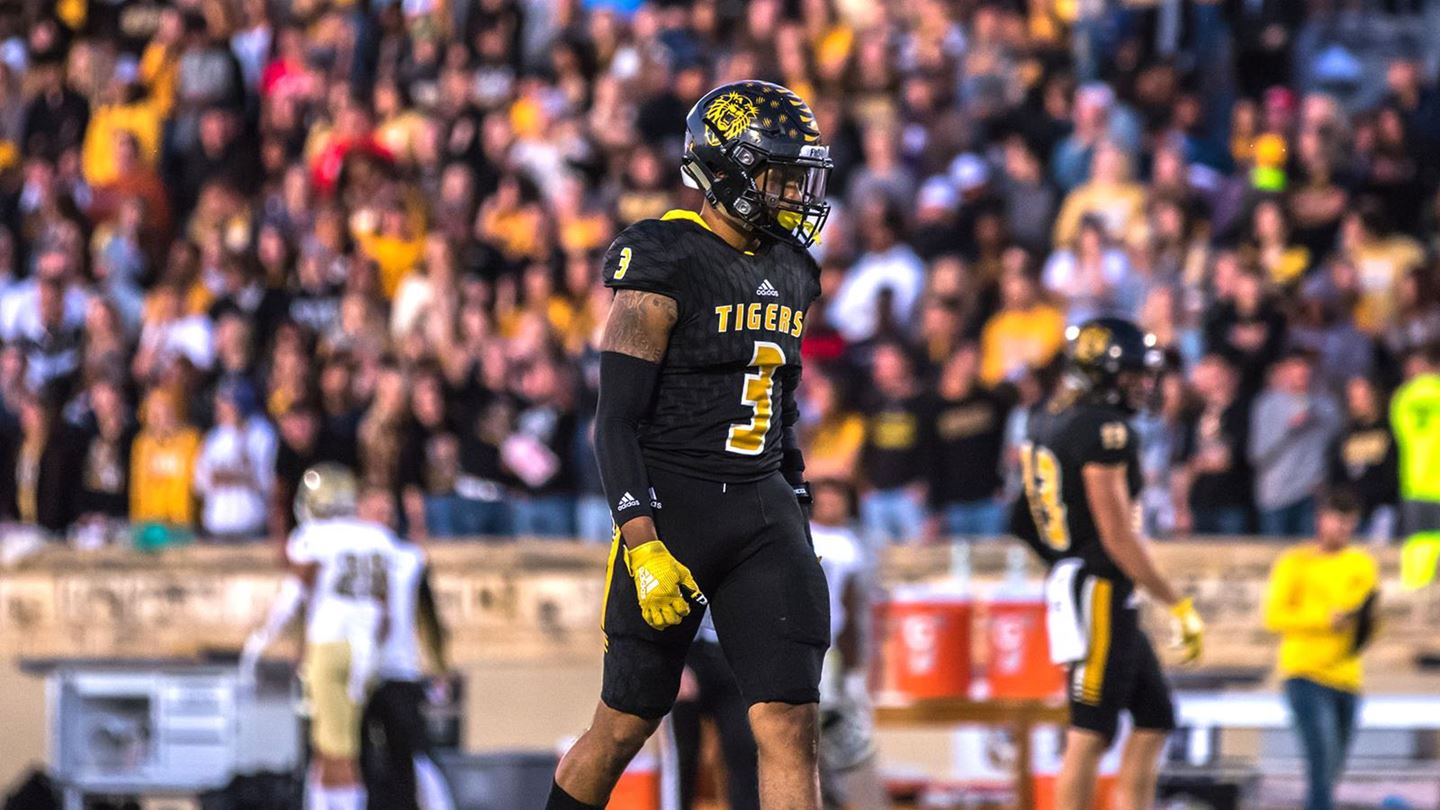
Tigers host Lopers in key MIAA matchup of 5-2 teams

Courtesy FHSU Athletics / Allie Schweizer photo

Fort Hays State (5-2, 5-2 MIAA) vs.
Nebraska-Kearney (5-2, 5-2 MIAA)
Saturday, October 26, 2019 – 2 pm
Lewis Field Stadium – Hays, Kan.
LISTEN LIVE

Fort Hays State Football hosts Nebraska-Kearney in a matchup of 5-2 teams in Hays on Saturday. The Tigers and Lopers sit in a tie for third place in the MIAA entering this contest. Kickoff is set for 2 pm at Lewis Field Stadium in the annual Tiger Sports Hall of Fame Game.

Game Sponsor: Ozone Roofing
Game Promotions: Ozone Roofing with have a tent with free giveaways near the east entrance of Lewis Field Stadium. There will also be a chance to win a 40″ television.

Fort Hays State enters on a five-game winning streak after an 0-2 start to the season. The Tigers knocked off a then No. 19 ranked Pittsburg State squad last week in Pittsburg by a score of 42-41. That win pulled Pittsburg State back into a tie in the MIAA standings with Fort Hays State, Nebraska-Kearney, and Missouri Western. Northwest Missouri State is second in the conference at 6-1, while Central Missouri leads the MIAA at 7-0.

Fort Hays State has won seven straight games against Nebraska-Kearney, dating back to the 2012 season. The last time the Lopers defeated the Tigers was in 2005 when UNK won 54-20 in Hays. Both teams were members of the Rocky Mountain Athletic Conference at that time.

The meeting between the teams in Kearney last year was a nail biter with FHSU winning 29-26 in two overtimes. FHSU took a three-point lead on a field goal with less than a minute left in regulation, but UNK marched into field goal territory quickly and tied the game as time expired. Both teams hit field goals in the first overtime before UNK missed in the second overtime. Dante Brown capped a 5-for-5 day kicking field goals by winning the game for FHSU on a 26-yard attempt.

Fort Hays State enters the game ranked 15th nationally in passing offense, averaging 297 yards per game. Nebraska-Kearney’s strength offensively is its run game, averaging 321.7 yards on the ground per game, which ranks third in the nation. Nebraska-Kearney currently owns the top scoring defense in the MIAA, allowing 20 points per game. FHSU is right behind allowing 22 per game. FHSU is the only team in the MIAA this year to hold opponents to seven points or less more than one time, accomplishing the feat three times so far.

Chance Fuller continues to rank high nationally in several passing categories. He is ninth in the nation in passing yards (2,017), third in passing touchdowns (22), and sixth in completions per game (22.6). Harley Hazlett has been Fuller’s top target, who averages 6.9 receptions per game to rank 11th in the nation. Hazlett has 158 career receptions, just 10 shy of the FHSU all-time record of 168 held by Eric Busenbark. Hazlett (592), Layne Bieberle (462), and Manny Ramsey (427) all have over 400 yards receiving this year. Charles Tigner ran for over 100 yards each of the last two weeks and leads the team in rushing yards with 601.

Defensively, Drew Harvey leads the Tigers with 62 tackles, followed by Tanner Hoekman and Jordan Starks each with 56. The three combined have six of Fort Hays State’s 10 interceptions on the season. Sheldon Schmidt leads the team in sacks with three.
Welding torch triggered Kan. meatpacking plant fire, price spike followed


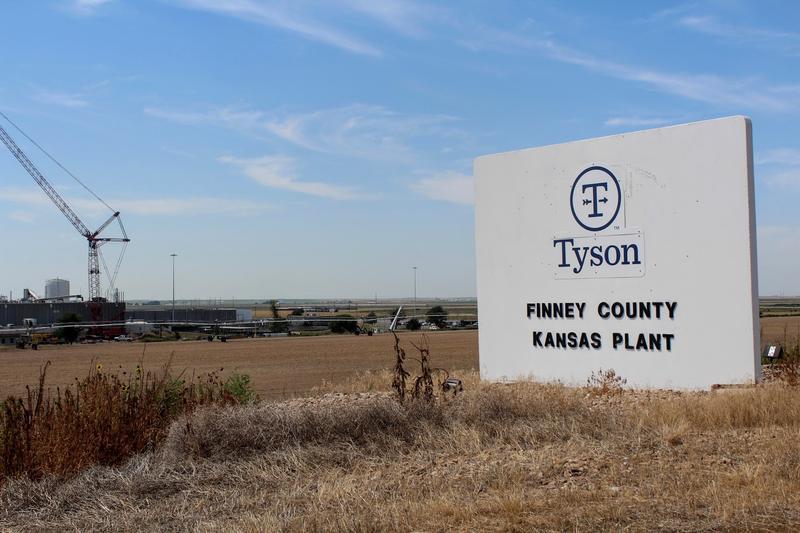
The Tyson plant in Holcomb, Kansas, is running at limited capacity after the Aug. 9 fire. Corinne Boyer / Kansas News Service file photo

By CORRINE BOYER
Kansas News Service

GARDEN CITY —

A welding torch caused August’s fire at a Tyson meatpacking plant in western Kansas.

The Garden City Fire Department investigated the fire at the Holcomb plant and completed a report on Oct. 13, saying the fire was unintentional and likely started because a welding torch produced a “spark, ember or flame.”

Tyson spokeswoman Liz Croston said the company “will not be releasing an update on the cause of the fire.”

The Garden City Fire Department investigated the cause of the fire. Garden City Communications Manager Jamie Stewart said the city won’t release any further updates about the fire.

The Kansas State Fire Marshal’s Office does not investigate fires unless requested by local fire departments, according to spokeswoman Jill Bronaugh. And because no injuries were reported, the federal Occupational Safety and Health Administration didn’t investigate.

The plant stopped production after the fire, though it returned to limited production a few weeks later. The Tyson plant processed around 5% of beef in the U.S., and beef prices spiked after the fire. It prompted the U.S. Department of Agriculture to investigate pricing margins. The USDA did not immediately respond to a request for an update on that investigation.

Holcomb Fire Chief Bill Knight remembers seeing black smoke inside the Tyson building on the night of the fire, which he said kept firefighters at the plant from 8:30 p.m. Aug. 9 to about 10 p.m. the next day.

Knight said he could smell burning cattle carcasses, which had been slaughtered prior to the fire.

“Now, you’ve got a hundred and some head of livestock hanging there upside down, and when they catch fire they melt and all that fat, grease … turns to a flammable liquid,” Knight said.

Knight said Tyson’s safety crew helped the firefighters find the electrical switches and valves on the scene. He also noted that some tanks of anhydrous ammonia had minor leaks during the fire, but said it was “nothing big.”

“And, like I say, the Tyson people were on top of that,” Knight said.

Corinne Boyer covers western Kansas for High Plains Public Radio and the Kansas News Service. You can follow her on Twitter @corinne_boyer or or email [email protected]. The Kansas News Service is a collaboration of KCUR, Kansas Public Radio, KMUW and High Plains Public Radio focused on the health and well-being of Kansans, their communities and civic life.

Ellis Co. 4-H shotgun team takes fourth at state competition

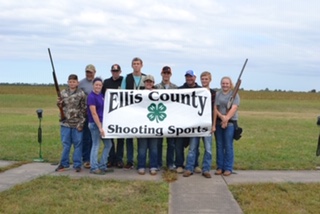
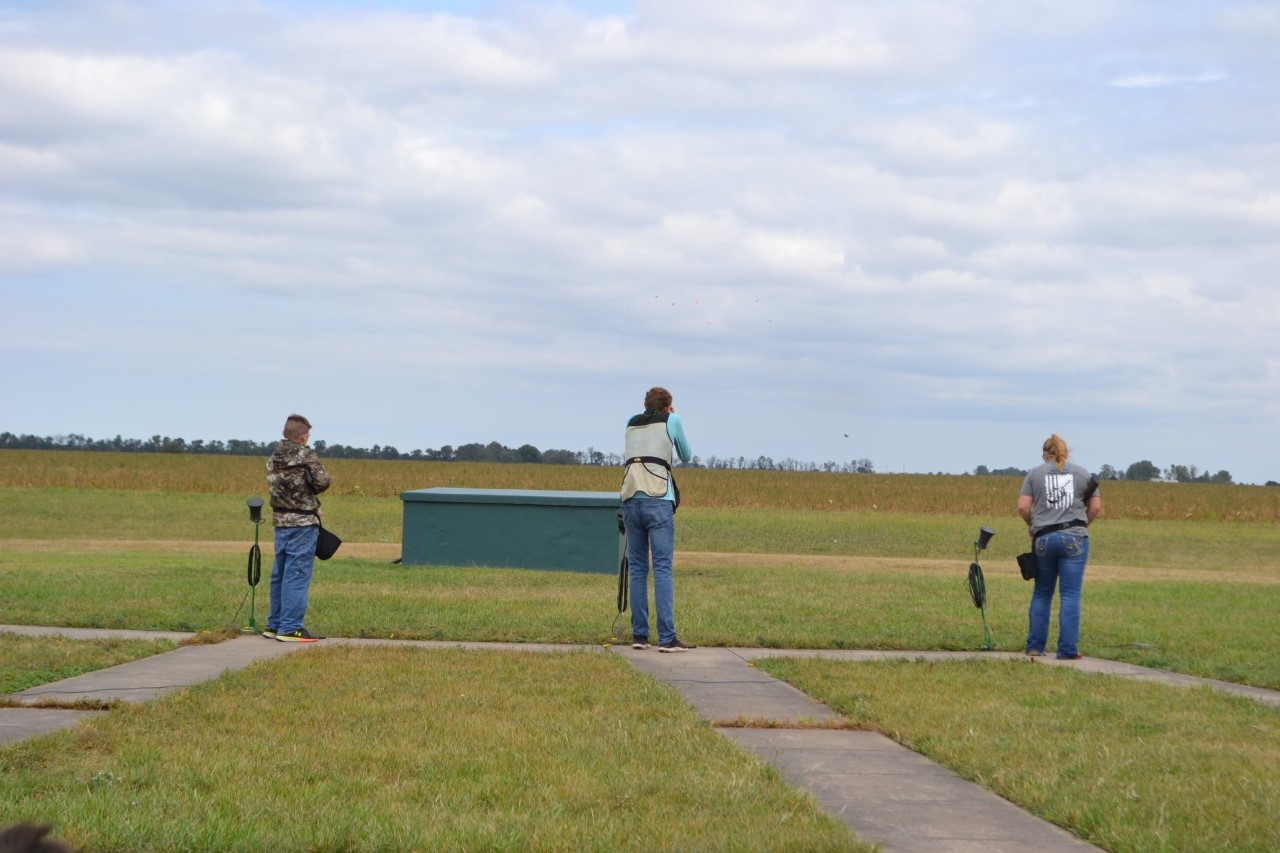
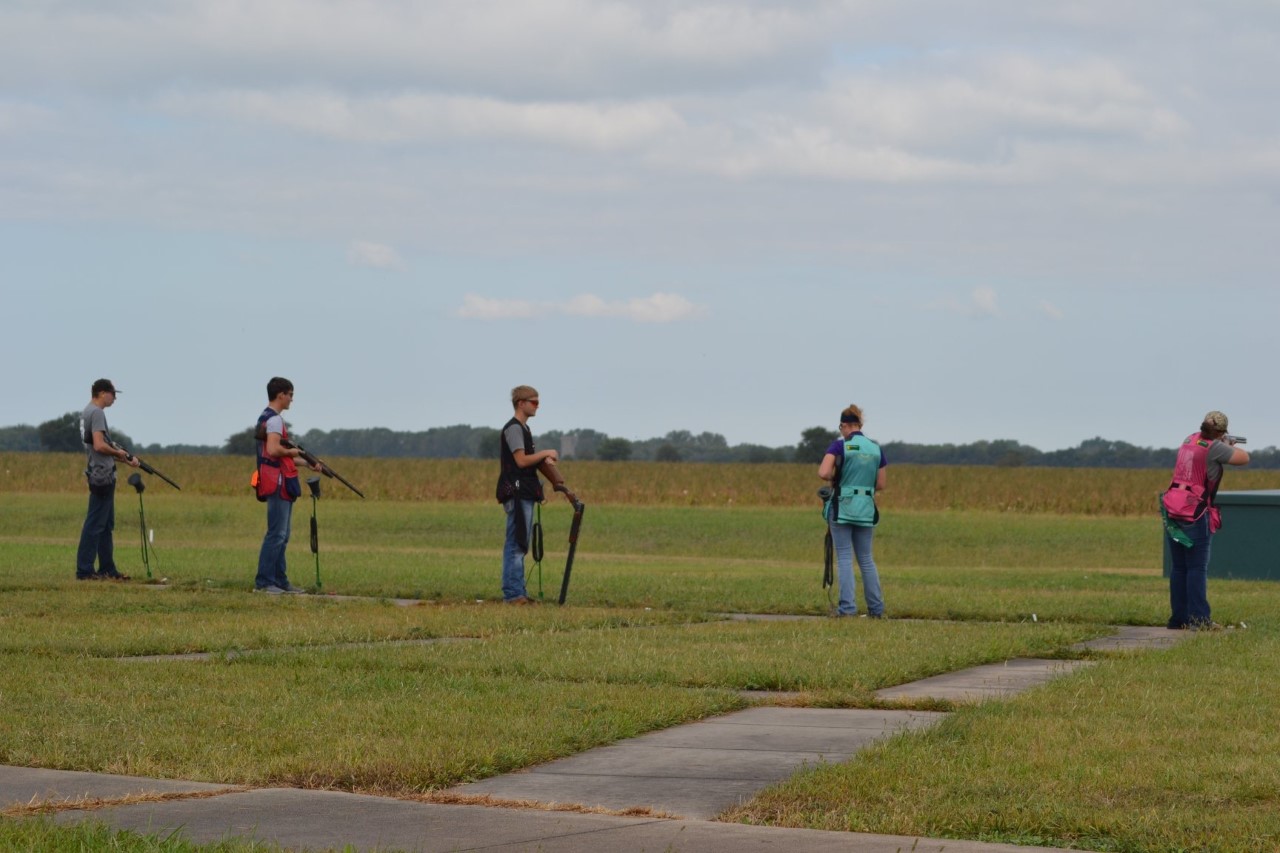
Eight members of the Ellis County 4-H shotgun team competed in the state 4-H competition October 5 and 6 in Sedgwick County.

The five-person team of  Jordan Hunsicker, Monique William, Trey Bitter, Cooper Shubert, and Madalyn William brought home a 4th place team award by hitting 569 targets over the two days of shooting.

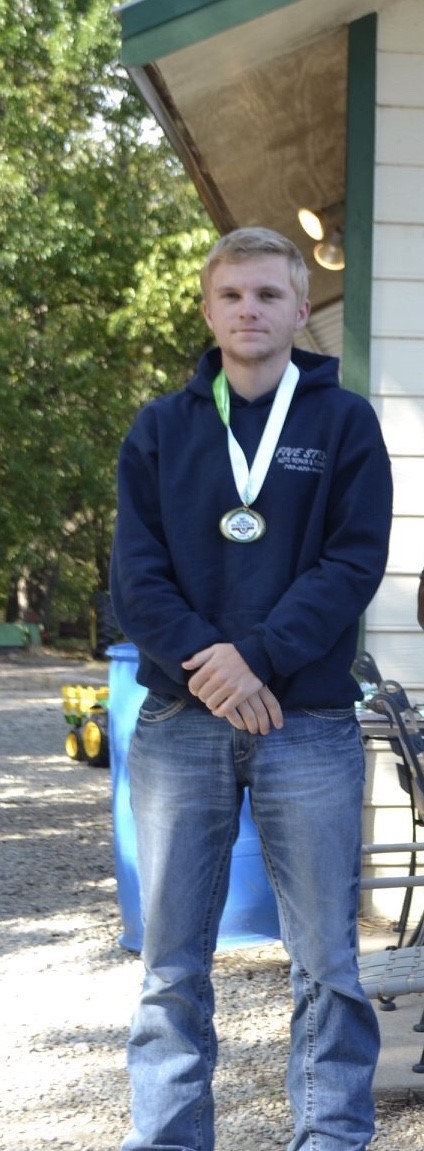
Jordan Hunsicker also took home the Top Shot overall individual award for the second year in a row by breaking 141 out of 150 targets.

Hunter Shubert was the only junior member from the club who competed at the state competition and did very well by placing 9th overall in his division.

This year was also a first state competition for shooters Nolan Klaus and Kylie Dreiling, who did very well shooting trap.

– SUBMITTED –

KU announces summer 2019 graduates from NW Kansas

LAWRENCE — The names of 725 graduates from the University of Kansas this summer — representing 46 Kansas counties, 36 other states and 27 other countries — have been announced by the University Registrar.

Some graduates already have participated in KU recognition events, while others will choose to participate in KU’s 2020 Commencement ceremony. More Commencement information is available online.

Graduates are listed below by county, city and degree:

Ellis
Morgan James Mathews, Hays, Bachelor of Science in Geology
Taylor Mark Pfeifer, Hays, Doctor of Physical Therapy
Tina Tinkel, Hays, Doctor of Nursing Practice

Norton
Cassandra Russ, Lenora, Bachelor of General Studies in Liberal Arts & Sciences.

Russell County retailers invited to participate in Plaid on the Plains

RUSSELL — Select Russell County retailers will kick off the holiday shopping season with Plaid on the Plains, Nov. 29 through Dec. 1. Russell area shoppers will be encouraged to “put their money where their heart is”, by supporting local businesses. Plaid on the Plains promotes the many social and economic benefits of spending time and dollars with local small businesses during the holiday shopping season.

Plaid on the Plains kicks off on Nov. 29 with Plaid Friday, the small business alternative to Black Friday. Small Business Saturday, the American Express initiative, follows the next day. The three-day event wraps up with Sunday Funday.

Russell County retailers are encouraged to participate in Plaid on the Plains. There is no cost associated with the promotion, other than whatever discounts, sales or giveaways the retailer chooses to provide. Retailers are asked to complete a simple registration form no later than Friday, Nov. 15. This information will be compiled into the 2019 Shop Sheet which will be printed by Office Products, Incorporated (Russell) and distributed by Encore Antiques & Collectables/Veez Unlimited starting at 10 a.m. Friday, Nov. 29. Registration forms are available at Encore and Russell County Convention and Visitors Bureau.

This promotion is a partnership between Encore Antiques & Collectables/Veez Unlimited, Russell County Convention and Visitors Bureau, KRSL Russell Radio, and Office Products, Incorporated – Russell. For additional information, contact Encore Antiques & Collectables at 785-445-8480 or stop by 590 S. Fossil in Russell.

— Submitted

KHP identifies 21-year-old Kansas man who died in crash

LEAVENWORTH COUNTY — The Kansas Highway Patrol has identified the victim in an accident that occurred just after 3p.m. Thursday in Leavenworth County.

According to the KHP,  a 2001 Ford F250 driven by Hunter Ford, 22, Tonganoxie, was eastbound at 25687 U.S. 24 Highway in Tonganoxie.

The pickup crossed the center line and struck a 2018 Kia Soul driven by Jawuan Smoot, 21, Lawrence, and rolled. The Kia overturned and left the road to the right. 

Smoot was pronounced dead at the scene. Despite not wearing a seat belt, Ford had minor injuries and was not transported for treatment, according to the KHP.

—————

LEAVENWORTH COUNTY —The Kansas Highway Patrol is investigating a fatal Thursday afternoon crash in Leavenworth County.

Just after 3p.m. Thursday, a vehicle eastbound on U.S. 24 Highway in Tonganoxie crossed the center line, struck a westbound vehicle rolled and exited the roadway to the left.

Authorities had not released details or names of the victims early Friday.

KS Livestock Association celebrates 125 years

KLA

TOPEKA – The Kansas Livestock Association (KLA), founded in 1894, is celebrating its 125th birthday in 2019. Association members will celebrate this milestone in conjunction with its 107th annual KLA Convention and 48th Trade Show, December 4-6 in Wichita.

A group of more than 100 Flint Hills ranchers who met in Emporia to discuss cattle theft and unreasonable railroad freight rates started the organization. Today, KLA has 5,600 members in all 105 Kansas counties and 40 states. Cattle theft continues to be a challenge, and today’s issues in the transportation arena are electronic logging and limited hours of service for truckers, which put livestock being hauled at risk.

“KLA has been advocating for its members at the Kansas Statehouse and on Capitol Hill since its earliest days,” said KLA Chief Executive Officer Matt Teagarden.

Key issues addressed include a state indemnity for ranchers who lost animals due to foot-and-mouth disease in 1915, alleged market manipulation by packers in 1916, the Texas Fever lawsuit against the federal government in 1926 and a beef boycott by Boston restaurant owners in 1928. KLA officers traveled to Washington, D.C., to obtain an exemption for farm labor from the military draft in 1917.

KLA has worked hard to secure a better business atmosphere for ranchers, feeders and other agricultural producers. In 1975, KLA pushed a bill through the Kansas Legislature calling for prompt payment on fed cattle by packers. The organization led the charge for similar federal legislation the following year despite opposition from the packing industry. KLA fought regulation of the trucking industry in 1978 because the changes would have been unrealistic for hauling livestock. In 1986, Kansas voters approved a constitutional amendment crafted by KLA and other farm groups calling for use-value appraisal on ag land and exempting farm machinery and livestock from the property tax rolls.

“This helped keep the state’s business climate on a level playing field with other states and is considered to be the biggest tax victory in KLA’s history,” said Teagarden.

Since celebrating its centennial in 1994, KLA has continued to seek ways to serve its members and keep the livestock industry vibrant, both in Kansas and across the nation. The past 25 years have seen an expansion of services available to KLA members, including Ranchland Trust of Kansas, KLA Environmental Services and rapid growth of KLA Risk Management Services (the association’s self-funded workers’ compensation pool), which was started in 1993.

Perhaps one of KLA’s brightest moments came in the wake of “the cow that stole Christmas.” Following discovery of BSE December 23, 2003, all the contingency planning by the National Cattlemen’s Beef Association, KLA and the entire U.S. beef industry paid off, as a successful public relations campaign helped maintain consumer confidence in beef and prevent a catastrophe for the beef and cattle industry.

In the springs of 2016 and 2017, wildfires burned hundreds of thousands of acres of grassland and tens of thousands of miles of fence in Kansas. In the wake of these disasters, the Kansas Livestock Foundation, the charitable arm of KLA, collected and paid out more than $3 million to fire victims. In addition, KLA helped coordinate delivery of hay, feed, fencing materials and other supplies to those affected by the fires.

KLA’s founding fathers were predominately cow-calf producers and also grazed many yearling cattle in the Flint Hills. When the cattle feeding industry sprang up in western Kansas in the mid-20th century, KLA’s membership embraced this new segment and welcomed feeders into the fold. In 2008, after large dairy operations began to locate in Kansas, the association once again expanded its tent to make room for another major segment of Kansas agriculture. Representing all segments of the diverse agricultural industry in Kansas has made KLA a strong, well-rounded organization that is well-respected in the legislative and regulatory arenas.

Over the years, the association continually has striven to fulfill its mission to advance its members’ common business interests and enhance their ability to meet consumer demand.

KLA is a 5,600-member trade organization representing the state’s livestock business on legislative, regulatory and industry issues at both the state and federal levels. The association’s work is funded through voluntary dues dollars paid by its members.

Area Game of the Week: Ness City @ Hodgeman County

Week 8 means the end of the regular season for Kansas high school football. Many districts have already been decided and some playoff seeds set. However, District 6 in 8-man DI had a lot left to be determined, namely a champion. That is what was on the line when the 7-0 Ness City Eagles visited the 6-1 Hodgeman County Longhorns in this week’s instalment of the high school area game of the week.

Ness City received the ball first and drove deep into Longhorn territory before being stopped on 4th and goal. Hodgeman County then took the ball on a long, methodical drive that ended in an Eli Salmans touchdown run. That made the score 8-0 in favor of the Longhorns.

Ness City wasted no time in moving the ball down the field on their second possession and they were able to cash-in on a 25 yard touchdown pass from sophomore Jose Guzman to senior Hector Rodriguez. The ensuing conversion failed, but the Longhorn lead had been cut to two.

Both teams continued to battle through the half. Hodgeman County led 22-12 with just a few seconds left in the half, but the Eagles were driving and found themselves on the Longhorn 19. Guzman threw a Hail Mary to the end zone that bounced off two Longhorns and one Eagle before ending up in the hands of Hector Rodriguez for a miracle touchdown. That cut the Hodgeman County lead to 22-18 going into the half.

The Longhorns received the second-half kickoff and drove  to the Ness City 10 before they fumbled the ball away. The Eagles took it to the  Hodgeman County 15 before they gave the ball back on an interception by Issac Salmans of Hodgeman County. The Longhorns turned that miscue into points, making it 28-18.

The teams exchanged a series of punts before the Longhorns made another deep drive into Ness City territory. However, the Ness City defense stiffened, holding the Longhorns to a 4th and 13 from the Eagle 15. The Longhorns drew up a remarkable passing play as quarterback Issac Salmans hit junior receiver Efren Chavez in the end zone for the score.  The two point conversion was good and the longhorns led 36-18.

It was all Hodgeman County from that point on, as they rolled the rest of the way to a 52-26 victory. Senior running back Eli Salmans had a monster night, finishing with 27 carries for 251 yards and 5 touchdowns. Ness City was paced by their senior back, Hector Rodriguez, who rushed 16 times for 140 yards. He also had 5 receptions for 84 yards and 2 touchdowns.

The Hodgeman County Longhorns finish the season 7-1. Their victory gave them the 8-man DI District 6 title. They’ll host a bracket game in Week 9, likely against Moundridge.

The Ness City Eagles also finish 7-1. They are the District 6 runner-up and will also host a Week 9 bracket game, likely against Macksville.

High School Football Scoreboard Week 8


5A West:

Salina Central(4-3) 35 Hays(3-4) 3

Liberal(2-5) 6 Dodge City(7-0) 45

Great Bend(3-4) 27 Dodge City(7-0) 7


3A District 7

Larned(4-3) 3  Kingman(1-6) 16


3A District 8

Goodland(1-6) 7 Colby(7-0) 56

Beloit(4-3) 47 Russell(1-6) 0


2A District 7

Ellinwood(1-6) 0 Cimarron(7-0) 60

Lyons(1-6) 14 Lakin(6-1) 42


2A District 8

TMP(1-6) 31  Ellsworth(5-2) 20

Phillipsburg(2-5) 0 Mineneapolis(3-4) 28

Hoisington(7-0) 38 Norton(5-2) 7


1A District 5

Ell Saline(6-1) 0 Smith Center(7-0) 34


1A District 6

Oakley(3-4) 14 Plainville(6-1) 59

Ellis(3-4) 32 Lacross(5-1) 14


8 Man D1 District 5

Macksville(3-4) 68 Central Plains(2-5) 22


8 Man D1 District 6

Ness City(7-0) 26 Hodgeman Co.(6-1) 52

Kinsley(1-6 0 Kiowa Co.(3-4) 52


8 man D1 District 7

Victoria(5-2) 68 Stockton(2-5) 16

Washington Co.(4-3) 12 Hill City(4-3) 62


8 Man D1 District 8

Hoxie(4-3) 20 Trego(4-3) 44


8 Man D2 District 5

Osborne(7-0) 40 Thunder Ridge(7-0) 34


8 Man D2 District 6

Dighton(1-6) Forfeit Grinnell Wheatland(6-1) Def.

Quinter(3-5)  1  Greely Co.(0-8) Forfeit


8 Man D2 District 8

Ingalls(4-3) 6 Otis Bison(4-3) 44


6Man North

Western Plains(0-6)  Golden Plains(4-3)

Natoma(4-3) 73 Cunningham(1-6) 28


Former SW Kan. police officer enters plea to child sex crimes

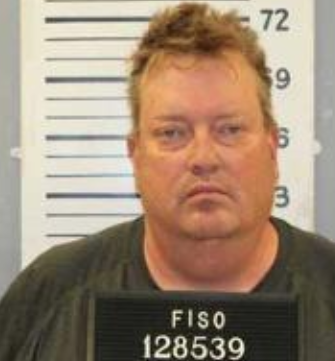
GARDEN CITY –  A former police officer in Garden City has been convicted of two child sex crime-related charges, according to Kansas Attorney General Derek Schmidt.

Doug Heit photo Finney Co.

Douglas Heit, 50, Garden City, pleaded no contest in Finney County District Court Thursday to two counts of aggravated indecent liberties with a child.

Judge Michael Quint accepted the plea and scheduled sentencing for December 19 at 1 p.m. The charges fall under Jessica’s Law because the victim was under 14 years of age.

The crimes were committed in August 2018. The charges stemmed from an investigation by the Kansas Bureau of Investigation with assistance from the Garden City Police Department.

Heit began work as a police officer in Garden City in 2003 and left the department in 2018.

Moran: Quivira-area irrigators won’t see water usage drastically restricted for a year

By LESLIE EIKLEBERRY
Salina Post

Junior water rights holders in the area of the Quivira National Wildlife Refuge will not have their water usage drastically restricted in Fiscal Year 2020.

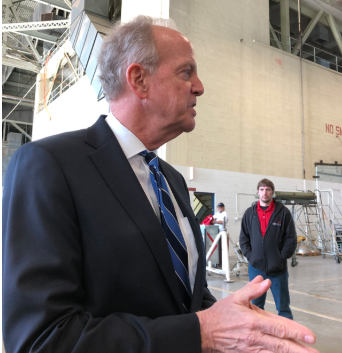
U.S. Senator Jerry Moran speaks with the media during a stop in Salina Friday afternoon.

That’s the word from U.S. Senator Jerry Moran, who spoke about the agreement during a stop in Salina Friday afternoon.

According to Moran, Quivira National Wildlife Refuge, managed by the U.S. Fish and Wildlife Service, has senior water rights to many irrigators in central Kansas.

“The demands for that water are significant, and there’s always more demand than there is water. It’s been a circumstance on and off throughout Kansas’ history,” Moran said.

“We’ve had conversations within the last week with the U.S. Fish and Wildlife leadership. We have gotten an agreement from the U.S. Fish and Wildlife Service. They will make no demands for water for Quivira for the next year. And in the meantime they will work with irrigators — farmers and ranchers in central Kansas — to come up with a solution to the needs for water in the future,” he said.

The wetter than normal weather in the area over the past year played a favorable role in getting the agreement in place, Moran said.

While the agreement is a direct benefit to the irrigators, it also benefits the area economy, he added.

“In the absence of this agreement, in the absence of the pause for a year, the junior rights water holders would have generally had their allocation reduced dramatically, so that would mean a lot less farming, a lot less economic activity, and certainly damage to the economy of the communities Great Bend, Pratt, St. John, Stafford, Kinsley, that part of Kansas,” Moran explained.

The one-year pause gives irrigators time to negotiate an agreement for future water use, he said.

“From my perspective, this really is a state issue. It is the Division of Water Resources within the Kansas Department of Agriculture that manages those water rights, but they have said that as long as the U.S. Fish and Wildlife Service doesn’t make the demand for water, they will not then force those farmers to reduce their use of water and give those farmers a time to negotiate a deal,” he said.

According to Moran, central Kansas irrigators will need to work hard to develop a plan for the future, as there is more demand for water than there is water.

“And so this doesn’t mean that the problems are solved, it means that there is an opportunity to try to solve them,” Moran said.

GM workers ratify contract, 40-day strike to end

ROMULUS, Mich. (AP) — Striking General Motors factory workers will put down their picket signs after approving a new contract that will end a 40-day strike that paralyzed the company’s U.S. production.

Workers on the picket line in Kansas photo courtesy UAW local 131

The United Auto Workers union said in a statement Friday that workers had approved the new four-year deal. But no vote totals were given. The union says it will announce shortly whether it will bargain next with Ford or Fiat Chrysler.

Picket lines were to come down immediately, and skilled trades workers will begin restarting factories that were shuttered when 49,000 workers walked out on Sept. 16. Some production workers could return as early as Friday night.

The deal includes a mix of wage increases and lump-sum payments and an $11,000 signing bonus. But GM will close three U.S. factories that make slow-selling cars and transmissions. Analysts estimate the strike cost GM more than $2 billion.

The five-week walkout was big enough to help push down September U.S. durable goods orders by 1.1%, the largest drop in four months.

Trades workers such as machinists and electricians likely will enter the plants quickly, restarting boilers and preparing paint shops, robots and other equipment to restart production.

On the picket line at a transmission plant in Romulus, Michigan, worker Tricia Pruitt said the wage gains were worth staying off the job for more than five weeks, but she’s ready to return to work.

Pruitt, a 15-year GM employee, was happy that the contract brings workers hired after 2007 up to the same wage as older workers in four years.

She’ll be glad not to be on the picket line if the strike ends. “Look at us now. We’re in coats,” she said on a gray, chilly Friday afternoon near Detroit. “We’d have been out here in the rain.”

Although GM dealers had stocked up on vehicles before the strike and many still have decent supplies, analysts say GM won’t be able to make up for the lost production. Had the strike been shorter, GM could have increased assembly line speeds and worked the plants on overtime to catch up and refill its stock. But many of the plants that make popular SUVs and pickup trucks already were working around the clock to keep up with demand before the strike began.

Also, companies that supply parts to the factories and halted production during the strike will need time to restart, although GM has some parts in stock.

Jeff Schuster, senior vice president of the consulting firm LMC Automotive, estimates that GM has lost production of 300,000 vehicles, and he said maybe only a quarter of it can be made up.

“You can’t add days to the week and you can’t add hours to the day,” he said.

Some production losses will help thin inventory, especially of cars, Schuster said. But in late October and early November, GM will likely run short of colors and models of trucks and SUVs that are in high demand until stocks are replenished, he said. Although truck and SUV buyers generally are loyal to a brand, customers in a hurry for a new vehicle could go elsewhere, Schuster said.

“There are definitely going to be some limitations on choice, and that is a risk,” Schuster said. “Consumers can opt to wait, or they can go down the street to their competitor.”

Now the union will move on to bargain with either Ford or Fiat Chrysler, using the GM deal as a template. A decision on which company is next could come Friday. It’s not clear yet if there will be another strike, but neither Ford nor FCA will be happy about being stuck with the GM terms.

GM traded the ability to close the three factories in Lordstown, Ohio; Warren, Michigan; and near Baltimore for higher labor costs, David Kudla, chief investment strategist for Mainstay Capital Management of Grand Blanc, Michigan, wrote in a note to investors. The contract maintains worker health benefits with low premiums, something that both Ford and FCA wanted to change when negotiations began.

“Ford and FCA didn’t have three factories that they wanted to close, but will have to work around this new framework for higher wages and unchanged health care that the UAW and GM have set,” wrote Kudla, whose firm manages investments for many auto industry workers.

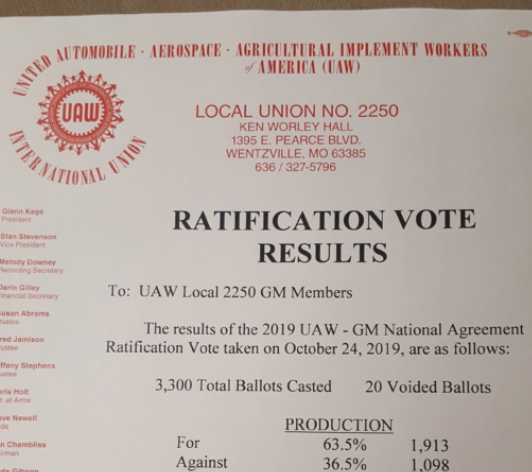
Workers at factories that GM will close have been transferred to plants across the nation, and they campaigned against the deal, which was reached Oct. 16. Workers in Lordstown, for instance, voted 412-61 against it, with 88% of production workers voting “no.”

In the end, economic gains and a $7.7 billion GM investment pledge for U.S. factories were too much to turn down.

Copyright Eagle Radio | FCC Public Files | EEO Public File