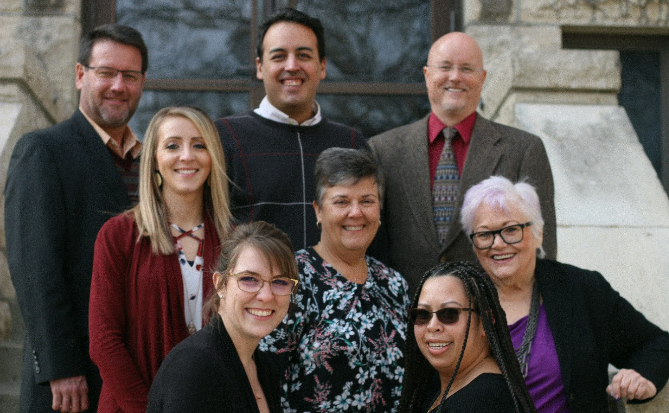
Michael Walker, director of the Docking Institute at Fort Hays State University, and Dr. April Terry, assistant professor of criminal justice, will present a collaborative research project at the 22nd Annual Crime Victims’ Rights Conference in April.
The collaborative team is comprised of Walker, Terry, and members from Kansas State University.
The presentation is titled “Our Town, Our Kids: Blurred Boundaries and Working With Youth in Non-Metro Communities.”
BROWN COUNTY — The Kansas Bureau of Investigation has cancelled an endangered person for a missing Brown County girl. According to a media release, Gianna Hazelton, 11, Horton, was found safe and is on her way home. Authorities release no additional details.
—————
BROWN COUNTY – The Horton Police Department has requested that the Kansas Bureau of Investigation (KBI) issue an endangered person advisory for a missing Kansas girl.
photo courtesy KBI
The whereabouts of Gianna Hazelton, 11, Horton, are unknown, according to a KBI media release.
Hazelton is a white female, 4 ½ ft. tall and approximately 125-135 pounds.
She has black hair and brown eyes. Hazelton was last seen Saturday night between 7 p.m. and 9 p.m. at 1640 Euclid Ave in Horton, Kan. Hazelton is believed to be accompanied by the non-custodial parent, Casey Hazelton.
The Horton Police Department asks anyone who comes in contact with Hazelton, or has any other information known about this case, including past sightings, to immediately call 911 or Horton Police Department at 785-486-2694.
A new $12 million waterpark. A shiny new craft brewery — not far from the new whiskey distillery. And, yes, that trendy new downtown cafe.
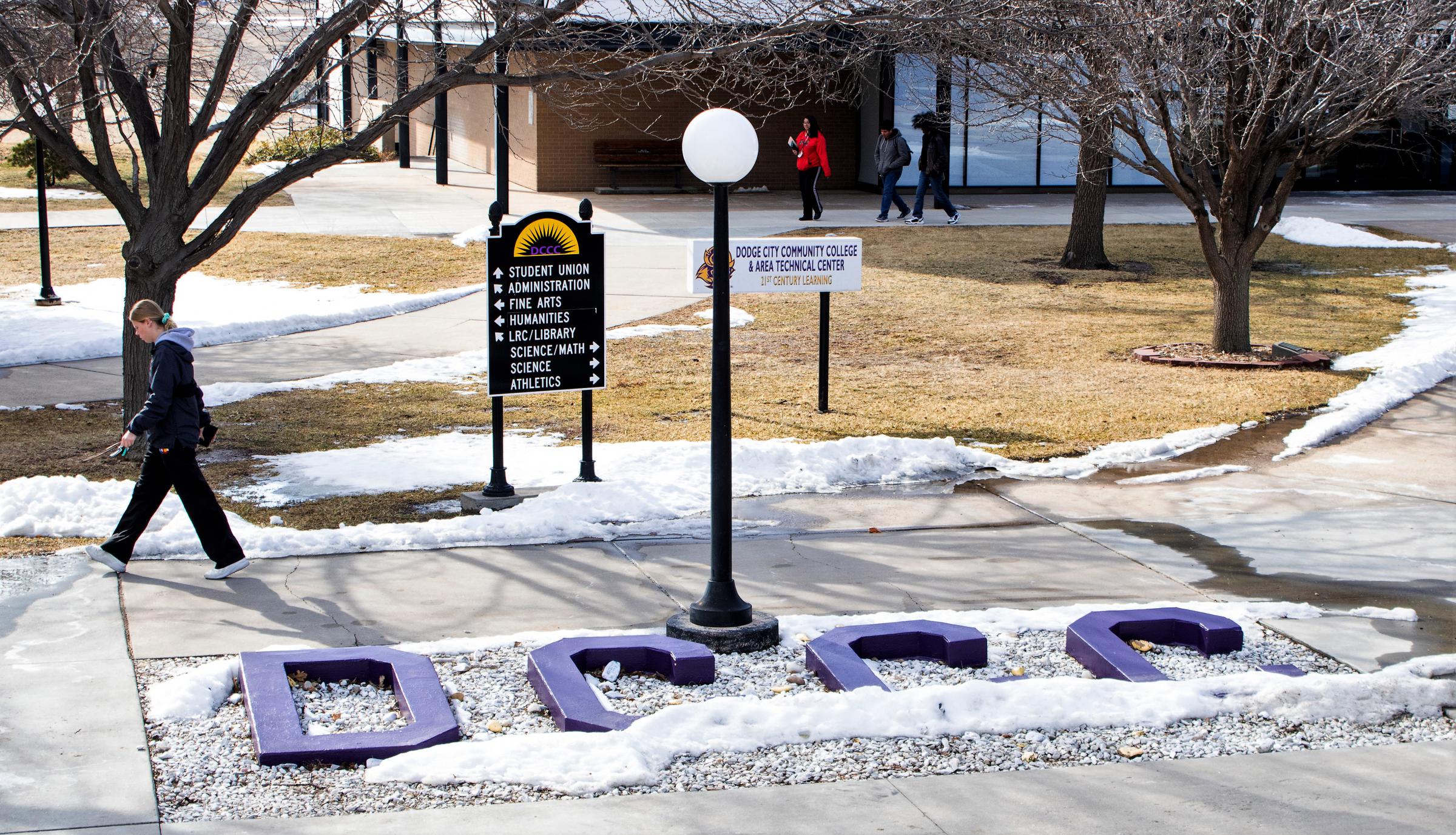
Dodge City officials want students at the local community college, such as these nursing students, to have more options for pursuing bachelor’s degrees without leaving town. BETHANY WOOD / FOR THE KANSAS NEWS SERVICE
A nearly $6 million addition to Boot Hill Museum just kicked off last fall. That’s about when Dodge City wrapped up $86 million in renovations and expansions to its schools.
Much of rural Kansas is withering. Not Dodge City. It offers a growing anchor in the state’s southwest, grounded in the meat industry and energized by the thousands of people who work at its slaughterhouses.
But the town’s success story risks hitting a 21st century ceiling. It lacks a four-year college.
That complicates upward mobility for blue-collar workers, costs the town services it sorely needs and hinders efforts to diversify the local economy.
Some residents leave the region to chase the schooling that leads to higher-paying jobs. Others can’t afford to. Meanwhile, plenty of middle-class jobs in the region go unfilled, such as teaching positions and better-paying health care work.
That’s why community leaders dream of bringing four-year college to this icon of the Old West.
“It’s the only way,” said Joann Knight, head of economic development, “to really address our health care issues and the lack of education out here.”
Dodge City has become west Kansas’ biggest city, at the heart of a 28-county region that lacks any state university.
Give southwest Kansas a satellite campus, they propose, where universities based elsewhere offer bachelor’s degrees that build on the region’s community college programs. Make four-year degrees a realistic option for more students. Keep down costs of the project by reviving classrooms at a local Catholic college that closed decades ago.
“If we drop the ball,” Knight said, “I’d hate to see what our health care access is going to be in 10 years.”
In many southwest counties, you can’t get a tooth filled or help for a child’s anxiety attacks. There’s no dentist or mental health provider in sight.
Even in bustling Dodge City, residents express frustration with difficulty making appointments and with turnover.
“I’ve gone to the doctor quite a few times,” Dodge City High senior Jacquelyn Martinez said, “And I swear, like every time I go, it’s always a different person.”
Martinez wants to be a physician’s assistant — just one of the many kinds of health workers that nurse practitioner Jacque Kemmerer says the region urgently needs.
Patients requiring more specialized care have it the worst, says the founder of a women’s health clinic in Dodge City that’s now part of Pratt Regional Medical Center. Thyroid problems? Seizures? Diabetes? All those can mean long car trips.
“If the diabetes becomes uncontrolled,” she said, “they have to go two-and-a-half hours to Wichita to see an endocrinologist.”
A Wichita State University report prepared for Dodge City scrutinized health outcomes in southwest Kansas and surveyed hundreds of health experts and community leaders.
People die younger in southwest Kansas than the rest of the state and nationwide, researchers found. They’re hospitalized more often with conditions like diabetes and asthma that regular primary care can help keep in check.
The survey’s respondents said population decline across west Kansas has worsened the care shortage — but so has the surging cost of college and the absence of a close-to-home campus.
In the region’s three biggest counties, where Dodge City, Liberal and Garden City lie, around 10 percent of adults work in health care. Elsewhere in Kansas 14 percent do.
An education desert, too
Dodge City High School senior Leslie Rodela doesn’t know yet whether she should aim to become a nurse practitioner or a family physician, but she knows either path will take her away from here for several years at least.
“I like this town,” she said. “I’m kind of sad that I would have to move away.”
Southwest Kansas parents with college-bound kids pack them off and hope some, at least, will bring those coveted bachelor’s and graduate degrees back — as Rodela hopes to do.
“Unfortunately,” said Bud Estes, a state senator from Dodge City, “much of the time they do not.”
Three of his four children didn’t return. Estes the parent doesn’t begrudge anyone that. Estes the senator needs a solution to fill his district’s demand for degrees.
Nationally, most freshmen enroll in college within 50 miles of home. People who live farther away are less likely to go. Dodge City sits 105 miles from Fort Hays State, the closest state university. Wichita State lies 160 miles away.
Kansas has seven public universities. None of them has a campus in the state’s 28 southwestern counties — Kansas’ only quadrant without that. Barclay College, a Christian school of about 250 students and the region’s only four-year campus, lies 60 miles east of Dodge City in tiny Haviland.
Neither that nor the community colleges in Dodge City, Liberal or Garden City provide the broad access to four-year degrees that University of Wisconsin-Madison professor Nick Hillman says open a critical level of economic opportunity.
“That’s where the big jumps are going to happen,” he said, “with that four-year credential.”
On average, Kansas adults add about $4,500 to their annual earnings if they study beyond high school and get a year or two of college under their belts. A four-year degree is a nearly $20,000 jump.
Many educators hope the age of online learning can fill the void. But Hillman says studies suggest distance learning isn’t producing widespread success. For viable, broader access, he thinks states need to find other ways to fit into the lives of the students they hope to serve.
That could mean testing a mix of in-person and web-based instruction, or rethinking the mission of community colleges to help students earn four-year degrees.
Otherwise, many people eyeing bachelor’s degrees will continue either to leave the area or simply miss out. Comparatively few will go wholly online.
Xiomara Garcia enrolled in Dodge City Community College to earn an associate’s degree in nursing. Ultimately, she wants bachelor’s and graduate degrees, and to become a nurse practitioner.
She has doubts about online options for those higher credentials.
Dodge City Community College and other community colleges in the region offer two-year degrees that city officials see as the starting point for rolling out bachelor’s programs.
CREDIT BETHANY WOOD / FOR THE KANSAS NEWS SERVICE
“When you’re together with your professor, they teach you more,” she said. “Their doors are open. You’re more than welcome to ask questions after class.”
So Garcia has thought about moving instead, but she says if state universities offered a satellite campus in her region, that option would suit her well.
“This is where I’m from,” she said. “I have my family here, all the resources I need are here. The only thing missing is the actual education.”
‘University centers’
Some states eager to expand access let community colleges offer bachelor’s programs. Others have created collaborative, multi-college satellite campuses — sometimes called “university centers.”
Educators and civic leaders in Dodge City, Liberal and Garden City want a university center — a partnership among local community colleges and state universities that could start with a focus on health care and expand from there.
Only in Garden City do students go on to college at rates akin to the rest of Kansas, tallies from the state education department indicate. Fewer than one-third of teens in Liberal and Dodge City graduate and continue to college within a few years.
“There’s the financial barrier,” said Annie Martinez, who teaches anatomy and other sciences at Dodge City High School. “But also, just — we have a lot of kids who are very connected with their families.”
A university center could let her students earn an associate’s degree in nursing at Dodge City Community College, for example, and top it off with a bachelor’s without leaving town.
Professor Mechele Hailey directs the community college’s nursing program and encourages all her graduates to keep studying.
Hospitals, clinics and nursing homes crave those higher degrees. Research shows links to healthier patients, and graduate-level nursing degrees can help doctor’s offices serve more people.
“The more education we can get,” Hailey said, “the better nursing is in general.”
‘The more education we can get, the better nursing is in general.’
Students say a university center could let them live at home during their studies, sparing them thousands of dollars in dorm fees on the way to earning a bachelor’s degree.
“I would have my family to help me throughout the entire process,” said Alexandra Garcia, a Dodge City high school senior who wants a bachelor’s and, eventually, a physician’s assistant master’s degree from Wichita State. “That would help a lot.”
Gauging demand
Over the past decade, the Kansas Regents set urgent annual targets to get thousands more students earning two or four-year degrees.
Without those degrees, they worry, businesses will struggle to hire and grow. Kansans will struggle to reach or stay in the middle class.
But the state hasn’t come close to hitting its goal. Doing so would require enrolling many more of the students who often face greater hurdles to higher education. Black and Hispanic students, and those from low-income families or families with no college history, remain less likely to study beyond high school.
Thousands of students from those groups live in Dodge City, Liberal and Garden City.
Their schools bring together a mix of stunningly diverse heritages — the product of the region’s many agricultural jobs. Dozens of languages from around the world are spoken in southwest Kansas homes, ranging from Spanish and Congolese French to Guatemalan K’iche’, Somali and Burmese.
Think of the social and economic implications of failing to open doors to college, says Terri Mujica-McLain. She’s a Kansas City consultant who hails from southwest Kansas and is helping with the push for a university center.
“If you’re not educating your minority population,” she said, “you’ve totally missed the bus.”
Think big, start small?
Posters hanging at the library of Dodge City High School. CREDIT CELIA LLOPIS-JEPSEN / KANSAS NEWS SERVICE
Yet Southwest Kansas faces a bit of a chicken-and-egg situation.
Calculating the costs of a satellite campus depends on how many students would enroll. Pinning down demand is difficult for programs that don’t yet exist.
But Dodge City leaders pursue the concept doggedly, with help from federal and foundation grants, and are gaining momentum. At least three universities have visited to gauge the prospects. Fort Hays State will soon finish a feasibility study on rolling out a few bachelor’s programs as early as next fall.
“It needs to be a win-win for the institution, for the local community and obviously for the student,” said Shane Bangerter, a Dodge Citian and vice chair of the Kansas Board of Regents. “What I would like to see happen is to get some of these programs started and then we can better judge.”
Wichita State economists think west Kansas will keep losing residents in the coming decades. But they predict two of the west’s four main population centers will continue to grow: Hays (which already has a university) and Dodge City.
At around 35,000 people today, Dodge and surrounding Ford County may reach nearly 50,000 by the mid-2060s.
Liberal and Seward County, researchers predict, will hold steady. Garden City and Finney County could shrink as much as a third.
Dodge City officials suggest a satellite campus there could serve Liberal and Garden City, too, with courses potentially offered at all three locations.
The project could keep costs down by teaming up with the community colleges in all three towns — and using the ample space at Hennessy Hall.
A hulking yet elegant structure built in the 1950s, Hennessy once housed St. Mary of the Plains College. Today, Dodge City puts it to a wide range of uses. A Catholic college in Wichita — Newman University — already offers a small program for aspiring teachers there. Dodge City officials see that as one piece already in place for its satellite campus vision.
St. Mary closed in 1992. A press release from that year pins blame for the Catholic college’s demise largely on a “disastrous” deal-gone-awry with an out-of-state trucking school that sunk it into deep trouble with the U.S. Department of Education.
Until then, 160 faculty and staff served more than 800 students a year, churning out young professionals.
Business, education and nursing ranked among the most popular majors, says Tim Wenzl, archivist for the Catholic Diocese of Dodge City. Many of the graduates stayed.
R.C. Trotter co-owns a five-physician family medical practice in Dodge City with mental health counseling and a nurse practitioner.
“Everyone in my office grew up out here,” he said.
“Come to the product,” he urged Kansas universities. “Come to where the kids are if you really want to make a difference in education down the road.”
Celia Llopis-Jepsen is a reporter for the Kansas News Service. You can reach her on Twitter @Celia_LJ.
BUNKER HILL – Smoky Hills Public Television’s Traveling Kansas will highlight Bird City on Thursday, March 21 at 7:00 p.m.
On this episode of Traveling Kansas, we celebrate rural heritage with a visit to Bird City. From their July 4th Celebration to the 65th Annual Tri-State Antique Engine & Threshers Show, we also take a look at the Bird City Dairy and learn why Bird City is a great place to live and work.
“We are excited to roll out another great production of Traveling Kansas,” said Les Kinderknecht, Smoky Hills Public Television Senior Producer and Director. “I want to thank the Bird City Century II Development Foundation and the community of Bird City for their support and allowing us to come and capture the beauty of their community. I also want to thank KS Department of Wildlife, Parks & Tourism for their continued support. Without them, we would not be able to continue bringing these Traveling Kansas shows.”
The Smoky Hills Public Television YouTube Channel will premiere this episode on March 22nd at 7 p.m., where you can stream this Traveling Kansas episode on any device. (https://www.youtube.com/user/SmokyHillsPBS)
Traveling Kansas is a Smoky Hills Public Television production that highlights Kansas communities, events and natural wonders. Previous episodes can be viewed at shptv.org. Smoky Hills Public Television is the Kansas Association of Broadcasters Non-Metro Station of the Year.
MANHATTAN — The Kansas Department of Agriculture is accepting applications for the 2019 Specialty Crop Block Grant Program. Funds for the program are awarded to the agency by the U.S. Department of Agriculture’s Agricultural Marketing Service. The funds are in turn granted to projects and organizations that promote the competitiveness of specialty crops.
The purpose of the Specialty Crop Block Grant Program is to enhance the competitiveness of specialty crops. Specialty crops are defined by the USDA as “fruits, vegetables, tree nuts, dried fruits, horticulture, and nursery crops, including floriculture.”
Each state that submits an application that is reviewed and approved by the Agricultural Marketing Service is to receive an estimated base amount of $201,973.63 plus an amount based on the average of the most recent available value of specialty crop cash receipts and the acreage of specialty crop production in the state. In 2018, Kansas received $348,848.12 for the grant program. In 2019, it is expected that Kansas will receive approximately $373,500.
Applications will be evaluated by a team of external reviewers. The team will rate proposals on their ability to successfully promote specialty crops in Kansas and make a positive impact on the Kansas economy. Those recommendations will be submitted to the Kansas Secretary of Agriculture, who will make the final awards.
Applications are due to KDA no later than 5:00 p.m. on April 19, 2019. For more information about the Specialty Crop Block Grant program or to complete the 2019 application, go to the KDA website at agriculture.ks.gov/SpecialtyCrop or contact Peter Oppelt, KDA economist, at 785-564-6726 or [email protected].
WICHITA, KAN. – A man was sentenced this week to 9-years in federal prison for trafficking more than 20 pounds of methamphetamine, according to U.S. Attorney Stephen McAllister.
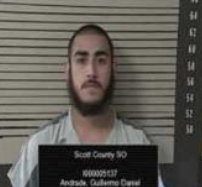
Andrade photo Scott Co.
Guillermo D. Andrade, 23, Oklahoma City, Okla., pleaded guilty to one count of possession with intent to distribute methamphetamine.
In his plea, he admitted he drove from California to Kansas accompanying another car that was carrying methamphetamine.
When the Kansas Highway Patrol stopped the other car and searched it, troopers found more than 20 pounds of methamphetamine. Andrade admitted he arranged to transport the methamphetamine from California to Oklahoma, where he planned to sell it.
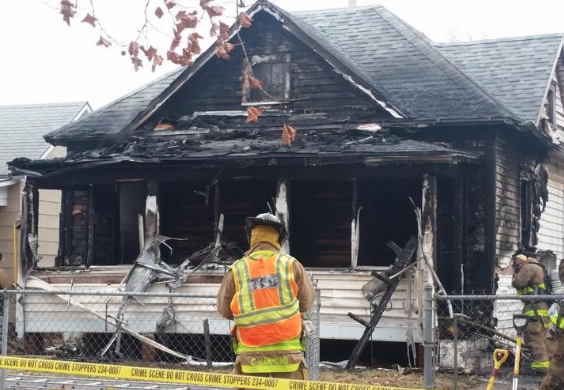
Just after 10a.m. on December 28, fire crews responded to a reported structure fire located at 412 SE Lime Street in Topeka. Upon arrival, fire crews found the single story wooden frame residential structure with heavy smoke and flames coming from a bedroom in the front of the structure, according to Fire Chief Michael Martin.
Firefighters performed a primary and secondary search of the structure. An adult female victim, Patty Lou Ceballos, 70, was rescued and transported to a local hospital with life threatening injuries, according to Martin. Her son 49-year-old Ryan John Ceballos was found deceased within the structure.
On Friday, Martin reported Patty Ceballos was still recovering at a local facility.
Preliminary investigation indicates the fire cause to be accidental, more likely than not associated with the improper disposal of smoking material.
The origin of the fire was in the front bedroom.
Estimated structural dollar loss – $30,000.00 and estimated content dollar loss is $5,000.00.
No working smoke detectors were located within the residence, according to Martin.
Rodney L. Walters, age 60, Hays, KS, passed away on Monday, March 11, 2019 at the Good Samaritan Society-Hays.
He was born on November 9, 1958 in Stafford, KS to Lester Walters and Colleen Kay (Madden) Robinson. On March 17, 2000, Rodney was united in marriage to Janet L. Hollis in Hays, KS. She preceded in him in death on April 21, 2018.
Rodney is survived by his loving family.
Cremation has taken place. A private family service will be held at a later date.
To share a memory or to leave condolences, please visit www.keithleyfuneralchapels.com or can be made via email at [email protected]. Arrangements are made with Brock’s-Keithley Funeral Chapel & Crematory, 2509 Vine St., Hays, KS 67601.
Catherine M. “Katie” Pfannenstiel, age 89, of Hays, Kansas passed away Friday, March 15, 2019 at Hays Medical Center. She was born August 25, 1929 in Walker, Kansas to Henry and Clementine (Dreher) VonLintel. She graduated from Victoria High School in 1947. On October 2, 1947 she married Justin Pfannenstiel in Victoria. He preceded her in death on March 12, 1999.
Catherine was a member of St. Joseph’s Catholic Church and a 30 plus year member of the Daughters of Isabella. She enjoyed playing cards, socializing with her friends and her grandchildren.
She is survived by a son, Steven Pfannenstiel and wife Wanda of Hays; three daughters, Bonnie Ruder and husband Terry of Kansas City, Kansas, Jackie Creamer and husband Duane of Hays and Chris Minshew and husband George of Houston, Texas; a sister, Joan Murta of St. Charles, Missouri; nine grandchildren and nineteen great grandchildren.
She was preceded in death by her parents; four brothers, Lawrence, Norbert, Gilbert and Otto VonLintel and a sister Venita Wolf.
Funeral services will be 10 AM Tuesday, March 19, 2019 at St. Joseph’s Church in Hays with burial to follow in St. Joseph’s Cemetery.
Visitation will be Monday 5 PM -7 PM and Tuesday 9 AM – 9:30 AM all at Brock’s-Keithley Funeral Chapel and Crematory 2509 Vine Hays, KS 67601.
A Daughters of Isabella rosary service will be Monday at 6:30 PM followed by a parish vigil at 7 PM all at the funeral chapel.
Memorials are suggested to St. Joseph’s Church.
Condolences may be left by guest book at www.keithleyfuneralchapels.com or by email at [email protected]
Just after 9:20 a.m., police executed a narcotics search warrant at 215 Fruit Street in Great Bend, according to a media release.
Police located methamphetamine, marijuana, and items of drug paraphernalia during the search of this residence. Three individuals were located on scene.
Martha A. Comfort, age 58; Peter Zamarripa, age 50; and Julian Huitron, age 58 were arrested and transported to the Barton County Detention Center on requested charges of possession of methamphetamine, possession of marijuana, and possession of drug paraphernalia.
Huitron-photo Barton Co.
Comfort has a previous drug conviction in Scott County.Zamarripa has previous convictions for drugs, driving while habitual offender and criminal possession of a weapon, according to the Kansas Department of Corrections.
OMAHA, Neb. (AP) — Authorities were using boats and large vehicles on Saturday to rescue and evacuate residents in parts of the Midwest where a recent deluge of rainwater and snowmelt was sent pouring over frozen ground, overwhelming creeks and rivers, and killing at least one person.
Authorities reported a levee break near Corning, Missori, just north of Kansas state line.
In addition, rescue efforts in eastern Nebraska were hampered by reports of levee breaches and washouts of bridges and roads, including part of Nebraska Highway 92, leading in and out of southwest Omaha. Authorities confirmed that a bridge on that highway that crosses the Elkhorn River had been washed out Saturday. And in Freemont, west of Omaha, the Dodge County Sheriff’s Office issued a mandatory evacuation for some residents after floodwaters broke through a levee along the Platte River.
The flooding followed days of snow and rain — record-setting, in some places — that swept through the West and Midwest. The deluge pushed some waterways to record levels in Nebraska, South Dakota, Iowa and Minnesota. The flooding was the worst in nearly a decade in places.
The family of farmer James Wilke, 50, of Columbus, Nebraska, said he was killed Thursday when a bridge collapsed as he was using his tractor to try to reach stranded motorists on Thursday. His body was found downstream, his cousin Paul Wilke told the Columbus Telegram. Gass Haney Funeral Home confirmed James Wilke’s death.
At least two other people were missing in floodwaters in Nebraska. Officials said a Norfolk man was seen on top of his flooded car late Thursday before being swept away in the water and another man was swept away by waters when a dam collapsed on the Niobrara River.
Officials in Sarpy County, south of Omaha, said Saturday that power may be shut off to communities along the Missouri, Platte and Elkhorn rivers for safety reasons. They warned those who choose to ignore calls to evacuate that rescues would be attempted only during daylight hours. Some cities and towns, such as North Bend on the banks of the Platte River, were submerged. Others, such as Waterloo and Freemont, were surrounded by floodwaters, stranding residents in virtual islands with no access in or out.
Farther east, the Mississippi River saw moderate flooding in Illinois from Rock Island south to Gladstone. Meteorologist Brian Pierce with the National Weather Service’s Quad Cities office in Davenport, Iowa, said flooding on the Mississippi could get worse a few weeks as more snow melts in Minnesota and Wisconsin.
“What we’re having now is the dress rehearsal for the main event that’s going to happen in early April,” he said of the flooding on the Mississippi.
Rising waters along the Pecatonica and Rock rivers flooded some homes in the northern Illinois cities of Freeport, Rockford and Machesney Park. The National Weather Service said record crests were possible along the rivers, with water levels forecast to continue to rise over the next several days and remain above flood stage through most of the weekend.
 FHSU University Relations








 Today
Today