The Salvation Army, in conjunction with a Fort Hays State University community leadership team, has three events in the coming weeks to help raise funds.
Oct.26: The Salvation Army will be at the FHSU home football game asking for donations and promoting social media Halloween campaign (individuals that like the Salvation Army Facebook page will be entered into a raffle to win a pumpkin full of candy on Halloween).
Oct. 29: Pizza Hut will be sponsoring the Salvation Army in a dine out day. 10% of all purchases from 5pm-8pm will be donated to the Salvation Army. Individuals must bring in flyer, (physical or electronic), or Salvation Army slip for donation to be accepted.
Nov. 6: IHOP will be sponsoring the Salvation Army in a dine out day. 10% of sales will be donated to the Salvation Army.
Beginnings of a campus: From right, the first Rarick Hall, the first Power Plant and its smokestack, Martin Allen Hall and Picken Hall, with both wings completed. At far left is the old Fort Hays Hospital building after it had been moved to campus.Dr. Tisa Mason, FHSU president
With the approach of Halloween, I find myself thinking of a friend who wrote about the ghost buildings on her campus – buildings that once were a vibrant part of the life of the university community but are no longer there. Intrigued by the idea, I turned to FHSU librarians David Obermayer and Patty Nicholas to get these “ghost” stories for our own campus.
They did not disappoint. I received a lot of great information complete with photos.
The first ghostly building is the Old Fort Hospital Building (1867-1915), which became the first academic building for the Western Branch of the Kansas Normal School. Beginning in 1902, it was used as the primary academic building and housed all of the classrooms, the library, and the principal’s office.
Early Picken Hall & Old Fort Hospital: Picken Hall in the foreground and the old Fort Hays hospital building in its campus location.
The school and the hospital were originally on the site previously occupied by the military fort. The old guardhouse was used as a gymnasium while the officer’s quarters were the home of Principal Picken and his family. In 1904, the college moved to the current site of the university when the middle section of Picken Hall opened. The hospital was the only building moved onto campus from the original fort site.
Once on campus, the hospital housed the school’s first dining hall along with a woodworking and blacksmithing shop. Both the manual arts training program and the band were originally started in this building, which earned it the nickname of the “incubator” because so many new activities and were born there. More proof that our innovative roots run deep!
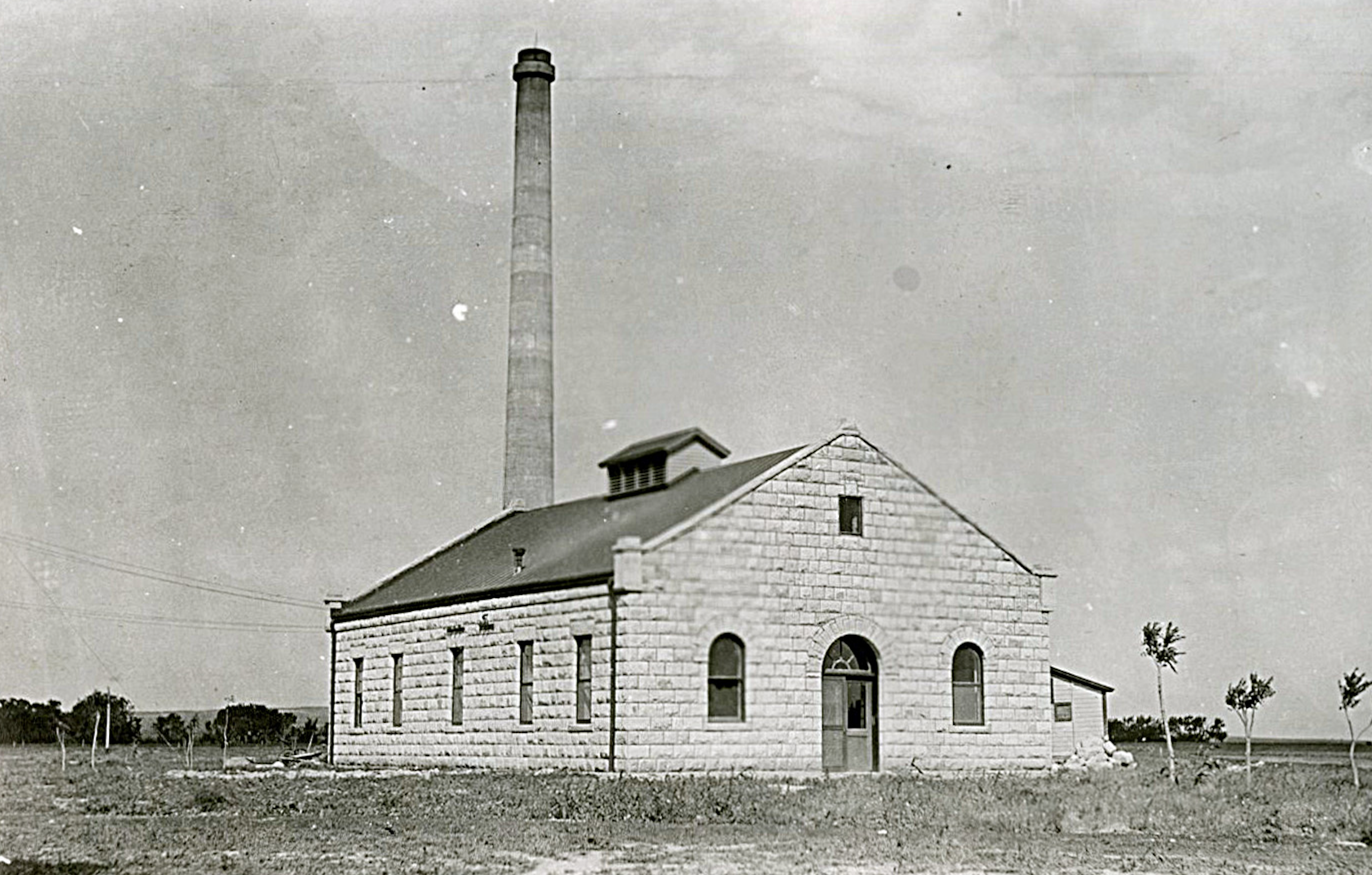
The first power plant (1911-1930) was located right behind Martin Allen Hall. Funded by a legislative appropriation, it provided the first campus buildings (Picken and Martin Allen halls as well as the Old Hospital) with heat, light and running water.
Lewis Field Barracks: The Lewis Field Barracks looking northwest toward Sheridan Hall.
Over the next few decades, the campus grew to include Rarick Hall in 1912, Sheridan in 1917, Custer in 1921, Forsyth Library (now McCartney Hall) in 1926, and Albertson in 1928. The Old Power Plant became dangerously overburdened. President Lewis requested funds to build a new power plant in the fall of 1930 but was denied.
Months later the power plant caught fire and burned to the ground. President Lewis requested money from the Kansas Legislature again and this time received $51,200. The new and larger plant, completed in 1932, is now home to the Moss-Thorns Art Gallery.
The art annex (1936-1967), located out by Highway 40, originally served as a campus maintenance shop. By the early 1960s, the campus faced a lack of studio and exhibit space for the fine arts and studio art programs, both of which were expanding quickly. In 1963, studio arts moved into the Art Annex using the space as studios, faculty offices, and classrooms.
In the early morning of March 5, 1967, a fire was reported by a graduate student who had been working late in the studio. Despite the best efforts of first responders, aided by students and faculty, the building was destroyed. The exact cause of the fire was unknown. Among the art lost was an entire collection of paintings by Professor Joel Moss. The Art Department’s studios were temporarily moved to one of the old barracks and then into a temporary metal building. The department remained scattered across campus until the construction of the new Rarick Hall in 1981 and now resides in our fabulous new Center for Art and Design.
Rarick Hall (1912-1978) was built with appropriations from the Kansas Legislature. Its identity has shifted throughout the years. Originally named the Agricultural Building, it was later the Industrial Building and now is home to the College of Education and the College of Arts, Humanities, and Social Sciences. It was the first building on campus to be equipped with modern labs and even had its own dining hall in the basement.
Original Power Plant: Built in 1911, this building provided the campus with heat and light until it burned in 1930.
In 1978 the original Rarick was razed, and a new Rarick Hall was built, opening in 1981. Today’s Rarick will soon undergo a major transformation.
Other ghostly academic buildings that once were vibrant centers of student learning include Davis Hall (1952-2017) and Heather Hall (1982-2014). Originally called the Applied Arts Building, the design and building process for Davis was slow, and inflation after the end of the Second World War meant that President Cunningham had to request additional funds from the legislature in 1951 to finish the project.
Once completed, the Applied Arts Building housed the Industrial Arts Department as well as the Home Economics and Fine Arts departments. In 2017, Davis was razed to make way for the new art and design building.
Heather Hall (1982-2014) was built as a TV and radio station with state-of-the-art studios and classrooms. The building sat between Forsyth Library and Malloy Hall. By 1983, Heather Hall also had a satellite dish and amplifier to help with programming. These renovations allowed KFHS Channel 12 to massively expand its reach and to begin broadcasting sports games live over Hays Cable TV.
Student housing has also seen its share of repurposing, demolishing and building in response to increasing demand. In 1943, a set of horse barns near Lewis Field were repurposed as barracks (1943-1968) and a mess hall for the U.S. Army’s aviation students.
By 1945, the aviation program had ended and at least part of the barracks buildings became men’s dormitories for civilian students. Two years later, another barracks building was moved from Walker Army Air Field to Lewis Field to serve as additional housing. By 1949, the college was again in need of housing, this time for married students, and all of the barracks were converted and expanded into housing for students and faculty with families.
Throughout the 1950s and 1960s, married student housing continued to be an issue. The Elm and Hackberry Trailer Courts were created for married couples who wanted to live in mobile homes, and Wooster Place was built for students with families.
Motel 6 is not a ghost building, but I will long remember when it temporarily became a men’s residence hall when we were once again short on student housing in 2011!
Another residence hall in the ghostly category is McGrath Hall (1942-2000). Originally, the building housed military personnel and cadets. After the Second World War, it became a residence hall for non-military male students. A south wing was added in 1952 and another section was added in 1955. In 2000 the building was demolished and new student housing, Stadium Place Apartments, was built on the site.
As the college grew, space was also needed for a women’s residence hall. Agnew Hall (1957-2010) was named after Dean Emeritus Elizabeth J. Agnew, a faculty member in the Domestic Economy Department and first dean of women. The first building on campus to be named after a woman faculty member, it had a dining room, three lounges, a recreation room, a laundry room, and a residence with a kitchen. It was completely renovated in the early 1990s, but by 2010 the building itself was just too old. It was replaced by two new student residential halls with repurposed names: the new Agnew and Heather.
Our last ghostly building is Wiest Hall (1961-2012/2017). Wiest Hall was built as a four-story men’s dormitory when our growing campus was again in desperate need of updated student housing in 1961. In 1971, a seven-story tower was added and called the Wiest Hall Annex.
In 1972 the college started hosting the Youth Conservation Corps camp during the summer, drawing students from all over Western Kansas and housing these students in Wiest Hall. In 1977 the Psychology Department moved to Wiest Hall and shortly after the Psychological Service Center, predecessor of the Kelly Center, was located in the annex.
These ghostly buildings are friendly reminders of our broad and deep innovative spirit, moments of tragedy and resilience, enduring growth, and the always appreciated helping hand from the Kansas Legislature. Though gone, they’re an important part of our history and are strongly connected to the success we enjoy today. For some readers, perhaps, the razed buildings evoke not ghost stories but powerful memories of friendship, learning, and love.
Habitat for Humanity of Ellis County’s third annual Vine & Dine is scheduled for noon to 2:30 p.m. Sunday at Big Creek Crossing, 2918 Vine.
There will be samples from top Hays restaurants, music and raffle prizes. Tickets are $20 per adult, $10 for ages 4 to 12 and free for children younger than 3.
Proceeds help Habitat for Humanity create more affordable housing in Ellis County. Click HERE for more information.
Many of us have been talking about that very subject recently, from NBA stars and league executives to Chinese government officials, from President Trump to journalists and members of Congress.
Some ground rules for our conversation: The First Amendment protects us from government attempts to control what we say, or from punishment simply for having said it. Freedom of speech — one of five freedoms in the amendment — offers no protection from private companies or individuals who don’t like what we say or hold other views.
The First Amendment only applies in the United States. Other nations may have rules or laws that in some fashion say they protect or really do protect freedom of speech, but none has quite the same strong constitutional protection that we have in the U.S.
And even after 220-plus years, we’re still working out how First Amendment freedoms apply here to everyday situations. Let’s continue the conversation with some real-life examples.
The National Basketball Association has been working for several decades to build its audience in China, where it’s reported more people watch NBA games on TV than do people in this country. A carefully crafted combination of sports and marketing took a real hit in a matter of days recently, after a Houston Rockets executive tweeted an innocuous message of support for protesters in Hong Kong — who it’s worth noting, were protesting in part any attempt by Chinese officials to limit their free speech. The tweet: “Fight for freedom. Stand with Hong Kong.”
Chinese state television stopped broadcasting and streaming the Rockets’ games. Pre-season game broadcasts of several other NBA teams were dropped.
Government-controlled Chinese companies dropped their NBA-related sponsorships. Banners touting NBA stars and events were torn down from buildings. And state-owned news media called on NBA players and executives to be more “respectful” of that nation’s internal policies and to consider how “rioters” in Hong Kong pose a threat to life and property there.
China makes no pretense of protecting free speech when it involves the government’s policies there — so yet another lesson: While our freedom of speech is protected from our government, it affords no such defense against other governments.
President Trump this week threatened this week to sue CNN, following release of “undercover” video by the self-styled conservative media criticism operation called “Project Veritas,” which purports to demonstrate bias against him by CNN.
One hurdle such a lawsuit will face is that the First Amendment’s provision for free speech and free press don’t have a “fairness” requirement. While our laws do allow challenges to speech that is immediately threatening, or is libelous, there’s no such provision for requiring anyone — from a cable network to any one of us — to be nice or “fair” when speaking about a politician. The First Amendment does provide that Trump or any other political officeholder can use his or her own free speech rights — in his case, a Twitter account with a massive following — to counter such alleged bias.
Moving from the courtroom to Congress, there are suggestions of future laws to prevent hateful speech, speech that glorifies violence, to ban so-called “deep fake” videos (which use new technology to falsify video images and scenes) or to filter out what someone would determine are false and misleading statements about political candidates. Most, if not all, of those efforts start with good intentions: to make our society a more civil, honorable place.
But on the pragmatic level, each runs up against a free-speech concept strongly held in place so far by the U.S. Supreme Court: That such social issues and values involving free expression should be settled by public debate and discussion, not by court or legislative decision.
Yes, such debates and discussions may well have a price or penalty for participation — starting with no guarantee of civility or fair play. NBA superstar LeBron James — despite a reputation for speaking out in defense of those challenging authority — nonetheless faced a Twitter firestorm for comments he made that many saw as critical of the original Hong Kong tweet, though he denies that intent. The exchanges between Trump and his critics carry a special vitriol, which damages his reputation with some and damages his critics’ standings with others.
In the end, we all may need to see, hear or read ideas that offend, anger or even sicken us — across the widest possible spectrum of views if only, as one Supreme Court justice once wrote, to be better prepared to argue against them.
To speak frankly, that’s how free speech works.
Gene Policinski is president and chief operating officer of the Freedom Forum Institute. He can be reached at[email protected], or follow him on Twitter at@genefac.
( Some might find the details in the story graphic and disturbing)
KANSAS CITY (AP) — A man accused of mutilating a cat in a fast-food restaurant restroom is facing animal abuse and property damage charges.
Maggard photo Jackson Co.
Court documents show 19-year-old Tanner Maggard had worked at an Arby’s in the Kansas City suburb of Lee’s Summit but was fired in June. Police say Maggard entered the restaurant Saturday, placed an order and went into the men’s restroom. They say that when Maggard came out, he said to the manager, “Oh, I see you remodeled the bathroom.”
Police say the manager found the remains of a cat that had been mutilated and decapitated on a changing table for infants.
Maggard does not have an attorney listed who could comment on his behalf.
WICHITA, KAN. – A Wichita-area pharmacist was sentenced Wednesday to 150 months in federal prison for unlawfully dispensing opioid prescription drugs, according to U.S. Attorney Stephen McAllister.
Ebube Otuonye photo Butler County
Ebube Otuonye, 47, Bel Aire, Kan., was convicted on charges of conspiracy to unlawfully distribute prescription drugs, unlawfully distributing prescription drugs and health care fraud.
The crimes occurred while Otuonye owned and operated Neighborhood Pharmacy at 2810 E. 21st in Wichita, where he filled prescriptions for patients of Dr. Steven R. Henson. In October 2018, Henson was convicted of unlawfully distributing prescription drugs outside the usual course of professional medical practice and without a legitimate medical purpose. In March 2019, Henson was sentenced to life in federal prison.
During trial in July, prosecutors presented evidence that Henson’s patients had difficulty filling Henson’s prescriptions at pharmacies other than Neighborhood Pharmacy. Otuonye’s pharmacy charged more than other pharmacies and he set up a system requiring Henson’s patients to fill three non-narcotic prescriptions when filling a narcotic prescription.
A sign in the pharmacy said: “You may use another pharmacy if all you want to fill is (a) narcotic prescription.”
Evidence at trial showed Henson’s patients took their prescriptions to Otuonye himself because another pharmacist at Neighborhood Pharmacy refused to fill them. Prosecutors argued that Otuonye failed to perform his professional responsibilities by continuing to fill prescriptions for Henson’s patients despite warning signs including: Large numbers of prescriptions for highly addictive drugs, customers paying cash, multiple patients coming in at once with Henson’s prescriptions and patients from the same family presenting identical prescriptions.
Otuonye filled prescriptions for more than 21,600 tablets of oxycodone, more than 48,600 tablets of methadone, more than 18,000 tablets of hydromorphone and more than7,800 tablets of alprazolam.
Prosecutors also presented evidence that Otuonye submitted claims to Medicare and Medicaid for filling Henson’s prescriptions.
BARTON COUNTY — Law enforcement authorities are investigating three suspects on drug charges after a traffic stop.
Just after 5:30 p.m. Tuesday, a Great Bend Police Department detective stopped a 2006 Dodge Grand Caravan in the 900 block of 2nd Street in Great Bend for a traffic violation, according to a media release.
During the course of the traffic stop, the Great Bend Police Department K-9 Menta was deployed to do an exterior sniff of the vehicle. Upon completion of the sniff, it was determined a search of the vehicle would be completed.
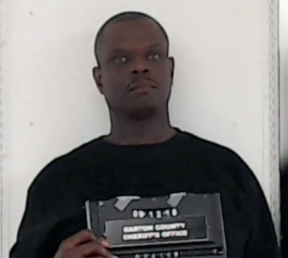
Glenn photo Barton Co.
During the search of the vehicle, authorities found methamphetamine and drug paraphernalia.
They arrested Cheslea Purcell, 23, for a requested narcotics violation, obstruction and multiple warrants. She is being held without bond, according to police.
Police also arrested Gwen Finnigan, 37, and Lacy Glenn, 28, on a requested charges that include a narcotics violation and both were booked on a $10,000 bond.
Purcell has previous convictions for drugs and battery, according to the Kansas Department of Corrections. She was listed as an absconder, according to the KDOC.
KANSAS CITY, Mo. (AP) — The Latest on charges filed against a Missouri farmer in the killing of two brothers from Wisconsin (all times local):
5p.m.
Search poster Caldwell Co. Sheriff
An employee of two slain Wisconsin brothers says he believes a Missouri cattleman promised to give the men money to lure them to his farm so he could kill them.
Twenty-five-year-old Garland Nelson, of Braymer, was charged Wednesday with two counts of first-degree murder in the deaths of 35-year-old Nick Diemel and 24-year-old Justin Diemel, of Shawano County, Wisconsin.
Rob Chubb managed the feeder cattle side of the business operated by the brothers.
Chubb says he is angry, but that he knew from the day the brothers went missing that Nelson was involved. He says the brothers had done business with Nelson in January, and that Nelson owed them money.
Court documents indicate Nelson owed the Diemel family $250,000. Authorities haven’t said the brothers were lured to the property.
Chubb says he “just can’t believe somebody is so selfish, so cruel.”
12:05 p.m.
Court documents say a Missouri cattle farmer fatally shot two Wisconsin brothers who drove to his business to collect a $250,000 check, then burned their bodies.
Twenty-five-year-old Garland Nelson, of Braymer, was charged Wednesday with two counts of first-degree murder in the deaths of Nick and Justin Diemel of Shawano County, Wisconsin. Their father reported them missing July 21 after they didn’t board a homebound flight.
The probable cause statement says Nelson abandoned a pickup truck the brothers had rented. He then used a skid loader bucket to move the large metal barrels containing the brothers’ bodies to a pasture, where he burned them. He said he dumped what was left of the remains on a manure pile and used the skid loader to crush the barrels.
___
11:10 a.m.
A Missouri sheriff says the investigation into the disappearance of two slain Wisconsin brothers was very challenging.
Caldwell County Sheriff Jerry Galloway spoke briefly with reporters Wednesday after 25-year-old Garland Nelson, of Braymer, was charged with two counts of first-degree murder. Nelson is accused in the deaths of Nick and Justin Diemel of Shawano County, Wisconsin, who were reported missing July 21.
The charges carry a possible sentence of life imprisonment or the death penalty. Garland is jailed without bond.
Galloway says multiple law enforcement agencies were involved in the months-long investigation, including the FBI and the U.S. Postal Service.
The brothers were involved in cattle business with Nelson and had been visiting his northwestern Missouri farm when they were reported missing. Human remains were found at the property but have not been publicly identified as the Diemel brothers.
___
KANSAS CITY (AP) — A northwest Missouri cattle farmer was charged Wednesday with two counts of first-degree murder in the deaths of two missing brothers from Wisconsin.
Garland Nelson photo Caldwell Co.
Garland Nelson, 25, of Braymer is also charged with two counts of abandonment of a corpse, two counts of tampering with physical evidence in felony prosecution, two counts of armed criminal action, tampering with a motor vehicle and unlawful possession of a firearm, according to documents filed in Caldwell County.
Brothers Nick Diemel, 35, and Justin Diemel, 24, of Shawano County, Wisconsin, were reported missing July 21 . They had been visiting Nelson’s farm in northwestern Missouri while on a trip related to their cattle business.
Human remains were found on the farm, about 70 miles (110 kilometers) northeast of Kansas City, Missouri, but have not been publicly identified.
Nelson was charged in July with tampering with a vehicle rented by the brothers. Authorities said he drove the brothers’ rented truck from his farm to a commuter parking lot, where it was found abandoned.
Nelson was involved in a business arrangement with another farmer that included calves owned by the brothers, people involved with the deal told the Kansas City Star in August.
Kansas dairy farmer David Foster told the newspaper that he purchased 131 calves from Nelson in November. Nelson was to raise the calves and the farmers would split the cost after the animals were sold. Foster said 100 of the calves belonged to the Diemel brothers.
Nelson’s mother, Tomme Feil, said the calves became ill shortly after arriving at the farm. She blamed the illnesses on a bad winter and weakened immune systems. She said many died even though they followed the advice of veterinarians and gave the cattle medications and feed.
Feil said her son returned the remaining calves when Foster’s bank claimed them as collateral.
Foster said only 35 calves were returned to him and that Nelson owed him more than $151,000, though Feil disputed the amount. She said several people owe her son money and that he planned to pay Foster back when others paid their debts to him.
Nelson was sentenced in 2016 to two years in prison for selling more than 600 head of cattle that did not belong to him. Nelson pleaded guilty to cattle fraud that caused more than $262,000 in losses. He was released from prison in March 2018. He also pleaded guilty in August 2015 to two misdemeanor counts of passing bad checks.
Nelson also faces charges in Kansas of endangering the food supply. Prosecutors there said Nelson didn’t have proper health papers in May when he took 35 calves from his family’s farm to a farm in Fort Scott, Kansas.
————
KINGSTON, Mo. (AP) — A Northwest Missouri prosecutor and sheriff will give an update Wednesday into the disappearance of two Wisconsin brothers missing since July north of Kansas City and presumed dead.
Caldwell County Maj. Mitch Allen told said that new charges will be filed against Garland Nelson, the Missouri man already charged with tampering with a vehicle rented by Justin and Nick Diemel of Shawano County, Wisconsin. Officials with the sheriff’s and prosecutor’s offices would say only that a news conference is planned at the courthouse.
The brothers were reported missing July 21. They had been visiting Nelson’s farm while on a trip related to their cattle business.
Human remains were found on the farm but had not been identified.
A message left Tuesday with Nelson’s attorney was not immediately returned.
SEDGWICK COUNTY — Law enforcement authorities are investigating an aggravated robbery that sent a teen to the hospital.
Rico Brown photo Sedgwick Co.
Just after 7p.m. Tuesday, police responded to report of a shooting in the parking lot of Dillons in the 1900 Block of West 21st Street North, according to officer Charley Davidson.
At the scene police located shell casings and damage to a vehicle. A short time later Rico Brown, 20, Wichita, and a 16-year-old boy arrived at a local hospital. The teen had been wounded and treated at the hospital for non-life-threatening injuries, according to Davidson.
Investigators learned that the16-year-old, Brown and an 18-year-old boy met a group of others in the parking lot over an alleged drug deal. During the meeting several shots were fired and wounded the teenager, according to Davidson.
Police arrested Brown on requested charges that include aggravated battery and felon in possession of a firearm for an October 14 shooting at Schweiter Park, 900 S. Chautauqua in Wichita, according to Davidson. He is being held without bond, according to online jail records.
The Kansas Supreme Court this week will hear the appeal of a former Ellsworth Correctional Facility employee seeking to avoid being tried for murder.
Freddie Alec Thomas claimed immunity on the basis of self-defense in the 2015 Barton County shooting death of Jeremy Alan Saldana, 36. That claim was overruled by the Kansas Court of Appeals in 2017.
Thomas filed a petition for a review by the Kansas Supreme Court.
Issues on review are whether: 1) the district court correctly applied the law on self-defense immunity from prosecution; and 2) the Court of Appeals erred by reversing and remanding by finding the district court’s failure to make specific findings of fact precluded appellate review.
Thomas, a former Ellsworth Correctional Facility officer, was dating Saldana’s ex-girlfriend at the time of the 2015 shooting. It happened after Thomas went to visit the woman’s daughter and her husband, not knowing that Saldana was living with the couple. An unarmed Saldana was shot during a pushing match.
Thomas told a detective he’d heard Saldana was known to carry a weapon and could be violent.
The hearing is set for 9 a.m. Wednesday, Oct. 30, in Topeka.
— The Associated Press contributed to this report.