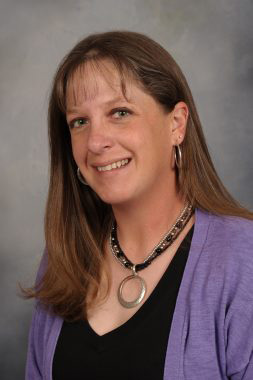
Alicia BoorGardeners are eager to get out and do something in the landscape this time of year. One chore that can be taken care of now is pruning certain shrubs.
Often, gardeners approach pruning with trepidation, but it is not as difficult as it may seem. Remember, not all shrubs need to be pruned (i.e., witch hazel), and certain shrubs, which will be identified later, should not be pruned this time of year. Shrubs are pruned to maintain or reduce size, rejuvenate growth, or to remove diseased, dead or damaged branches. Deciduous shrubs are those that lose their leaves each winter. Evergreen shrubs maintain foliage all year and include yews and junipers.
Deciduous shrubs are placed into three groups:
• Those that flower in the spring on wood produced last year
• Those that flower later in the year on current seasons’ growth
• Those that may produce flowers, but those flowers are of little ornamental value.
Shrubs that flower in the spring should not be pruned until immediately after flowering. Though pruning earlier will not harm the health of the plant, the flowering display will be reduced. Examples of these types of plants include forsythia, lilac and mock orange. Shrubs that bloom on current seasons’ growth or that do not produce ornamental flowers are best pruned in late winter to early spring. Examples include Rose-of-Sharon, pyracantha, Bumald spirea and Japanese spirea.
Pruning during the spring allows wounds to heal quickly without threat from insects or disease. There is no need to treat pruning cuts with paints or sealers. In fact, some of these products may retard healing. There are three basic methods used in pruning shrubs: thinning, heading back and rejuvenating. Thinning is used to thin out branches from a shrub that is too dense. It is accomplished by removing most of the inward growing twigs by cutting them back to a larger branch. On multi-stemmed shrubs, the oldest canes may be completely removed.
Heading back is done by removing the end of a branch by cutting it back to a bud and is used for either reducing height or keeping a shrub compact. Branches are not cut back to a uniform height because this results in a “witches-broom” effect.
Rejuvenation is the most severe type of pruning and may be used on multi-stem shrubs that have become too large, with too many old branches to justify saving the younger canes. All stems are cut back to 3- to 5-inch stubs. This is not recommended for all shrubs but does work well for spirea, forsythia, pyracantha, ninebark, Russian almond, little leaf mock orange, shrub roses and flowering quince.
Alicia Boor is an Agriculture and Natural Resources agent in the Cottonwood District (which includes Barton and Ellis counties) for K-State Research and Extension. You can contact her by e-mail at [email protected] or calling 620-793-1910
LIBERAL — Hefty college debt won’t saddle Bryan Medina.
He’s on a fast track to an energy career that he hopes will pave the road to family dreams: Buying his own cattle and going in on the purchase of 300 acres of land with his dad.
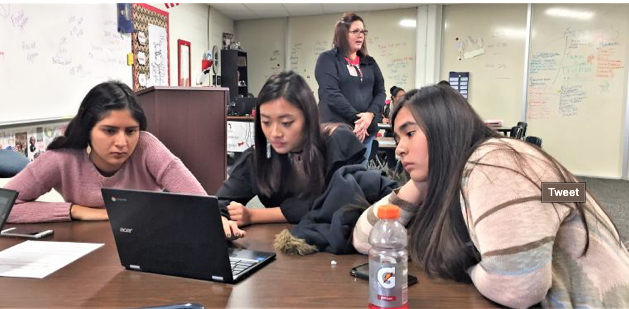
Students take a U.S. history class that also counts toward college credit at Liberal High School. CELIA LLOPIS-JEPSEN / KCUR/KANSAS NEWS SERVICE
“We could grow and eventually own our own feedyard,” said Medina, who finished high school last May in the small southwest Kansas town of Sublette. “If things go great, if we put all the work into it, we’ll definitely get there.”
Medina had just one semester left of his natural gas studies at Seward County Community College in Liberal. Kansas footed much of the bill for him, meaning Medina can start banking paychecks faster toward those livestock purchases instead of pouring them into college loans.
“I left Wyoming Tech owing $17,000,” said David Ratzlaff, one of Medina’s instructors. “It took me about 10 years to pay that off.”
Savvy teens eyeing tech careers can get a leg up in life under a Kansas program that made college free for them while still in high school. Stories like Medina’s have generated buzz, and now some education officials and lawmakers are mulling how to help students shooting for non-technical careers, too.
Cost and logistics could prove hurdles. The potential expenses of such a program remain unclear, as does legislative support amid the state’s gradual recovery from years of fiscal trouble.
New research on the dual credit boom in Texas also raises questions about how much money it really saves families. And it suggests dual credit mostly helps white students and those with more money, instead of the low-income and minority students policymakers want to put on a level playing field.
But if Kansas can smooth out the wrinkles, high school students see a way to build competitive college applications and get ahead, all while easing into more rigorous coursework. Many already enroll in dual credit at their own expense.
“It’s not as intimidating” starting college this way, said Nevaeh Bess, a Liberal High senior earning such credits at her own, familiar school. Her teachers explain class assignments and expectations clearly.
“That helps out a lot — knowing what your teacher is grading,” the aspiring anesthesiologist said. “I spoke to someone that is in college now, and she was like, ‘Well, sometimes I just don’t know what they’re looking for.’”
High stakes
For students plotting a direct course from high school to four-year colleges, taking dual credit may seem like an easy choice.
Students in Liberal pay around $300 per class. That’s less than a third of the price they’d pay as freshmen at the University of Kansas and many times cheaper than out-of-state tuition.
Liberal High senior Mica Watson-Huskey has her sights trained on a major in civil or aerospace engineering at the University of Texas at Austin because of the school’s research opportunities.
Last year, she took college algebra and trigonometry, but she lost some of the credits when she couldn’t pay in full. High school students don’t qualify for financial aid that can take some of the sting out of tuition bills.
If the state paid for even a few dual credit courses, Watson-Huskey said, that would lift ambitions at a school where many families struggle to make ends meet.
“They would have the motivation to do a college class,” she said. “They wouldn’t be limited because of the amount of money.”
One thousand of the 1,300 students at Liberal High come from low-income families.
The school lies in a corner of the state where meat drives the economy. The thousands of slaughterhouse jobs in the region pay $14 an hour on average, an annual salary of just under $30,000 a year.
Many of the students here would be the first in their family to attend college. Most learn English as a second language and four out of five are Hispanic.
Nationally, Hispanics and people whose first language isn’t English are less likely to go to college than other Americans.
The vast majority of students at Liberal High graduate. But of those only a third quickly head to college or work on an industry certificate. Across Kansas more than half of high school graduates do.
Yet missing out on higher education shuts doors. Decent jobs still exist for people with no more than a high school diploma, but not to the extent they once did.
Economist Nicole Smith says those jobs continue to dwindle. Today, just three in 10 teens who stop their educations at high school can hope to find jobs that will pay at least $35,000 from their mid-20s through their early 40s and at least $45,000 after middle age.
What of the other seven?
“They’re going to be experiencing significant amounts of hardship,” Smith said. “Even to get a job, and far less to keep that job and to earn a living wage with it.”
Smith — chief economist at Georgetown University’s Center on Education and the Workforce — co-authored studies on the changing job landscape. Those spurred Kansas and other states to ratchet up efforts to get more students to college.
Chart: The Kansas News Service Source: US Census Bureau Created with Datawrapper
Survival mode
That urgency has Kansas education officials hunting for ways to bridge the college gap — not just for go-getting teens planning careers in anesthesiology and engineering.
They hope free dual credit would plant the idea of higher education in more students’ minds, making it seem less scary, distant or unattainable.
“There are a lot of students that are college ready and college material,” said Jean Redeker, vice president for academic affairs at the Kansas Board of Regents. “But they don’t know it.”
Free tech classes have already built one bridge, college administrators say. They attract high school students whose families otherwise might not feel comfortable setting foot on a college campus — even just to ask questions.
Janeth Vazquez advises families at Seward County Community College. CREDIT BETHANY WOOD / FOR THE KANSAS NEWS SERVICE
In Liberal, many may not know about federal financial aid and generous local tuition grants. That leaves families feeling Seward County Community College “is only for people with money,” said Janeth Vazquez, who advises students there. “A goal that’s just too out of their hand.”
Vazquez gets it. Many are in survival mode. When she was a teen, her father was deported and she worked long hours after school helping to pay the mortgage, utility bills and other family needs.
“That was my story,” she said. “That was my life.”
Last year, the Kansas Senate passed a bill that would have kicked off free general education dual credit in a test program — paying for English composition for high schoolers.
It’s Kansas’ most popular non-tech dual credit class. Free access to algebra, psychology, public speaking and U.S. history would possibly have come in the following years.
The idea never got a vote in the House. It fell to the wayside amid the broader school finance battle in the Legislature — yearslong wrangling over court rulings that demand Kansas increase funding to local schools.
Recommendations for the dual credit legislation came from the Regents and Kansas State Department of Education. To qualify, they suggested students would generally need:
A 3.0 GPA and a college-ready ACT score in math or English to take algebra or composition. Nationally, most ACT-takers hit the mark in English but not math.
A 3.0 GPA and a 20 or higher composite ACT score to take any of the other three free classes. That’s a little below the national average composite score.
Logistical hurdles
Pinning down the potential cost to taxpayers has proved complicated.
Just how many of the state’s 70,000 high school upperclassmen would jump at an offer for free college English, algebra and more remains unclear. After the state rolled out free tech college classes in 2012, student enrollment in those more than doubled.
About 15,000 Kansas high school students took college dual credit at their high schools last school year. They took, on average, two classes each.
Then there’s the matter of calculating cost per student. The Board of Regents finished a study in December, but the state’s two dozen two-year colleges reported huge variations in cost per credit hour. English composition ranged from more than $900 per credit hour to $1.
Some variation is inevitable. In addition to regional cost differences, colleges deliver dual credit through a variety of models. Some high school students travel to campus for class, or connect through remote video links and online tools. In other cases, colleges send professors to high schools or rely on high school teachers to run courses themselves.
Colleges and high schools would have to figure out how to ramp up capacity if English and other classes became free. The pilot proposal aims for a soft start that would buy time to identify and deal with hurdles.
Having high school teachers teach college classes only works when those instructors hold advanced degrees with significant relevant coursework. On the other hand, placing students in on-campus classes comes with potential transportation costs and difficulty aligning schedules, among other issues.
Administrators talk eagerly about the possibilities — enthusiasm tempered by the knowledge that logistics take time to solve. They worry, too, that they might build dual credit programs only to see the money disappear in a few years amid funding battles in the Legislature.
Even funding for the state’s free tech college program — popular with lawmakers across party lines — fell millions of dollars behind in recent years. That unsettles Seward County Community College president Ken Trzaska. A quarter of the students at his school now attend through that initiative.
“That program is a great program,” he said. At the same time, it’s a vulnerability. “If, suddenly, the funding goes away or that population of students go away, then that’s a huge hit.”
Good and bad news
Uneasy faculty at the University of Texas took the following question about dual credit to university brass: Might it inadvertently hurt freshmen? Some professors reported that students arriving with college basics out of the way struggled in next-level classes.
UT’s study and a separate one conducted by the American Institutes for Research both came out last summer, among the most ambitious dual credit studies to date.
They offer good and bad news from a state ripe for analysis. Texas has vigorously promoted early college credit for years. From 2000 to 2016, the number of high school students in dual-credit classes rose more than tenfold, topping 200,000 per year.
The bad news first:
Dual credit didn’t save students much money. UT students saw a negligible impact on debt unless they showed up at college with a full two years of credit. Savings may elude many people because their credits don’t align with their degrees or they opt against graduating early.
Past research oversold dual credit. Dual credit appeared to help students likely to succeed in college anyway. After factoring for that, college enrollment only ticked up by about 2 percentage points and graduation rates by an “insignificant” 1 percentage point. Many past studies touting robust benefits from dual credit fell short of standards for rigorous research.
Dual credit doesn’t solve achievement gaps — it mostly helps white, more affluent students. Poor students who took it became less likely to go to or finish college. Black students became more likely to attend two-year colleges, but not to graduate. Hispanic students became more likely to finish a two-year, but not a four-year, degree.
Now, the good:
Even if the benefits were less than previously touted, they were still statistically meaningful. Grade analyses and course comparisons also didn’t bear out faculty concerns that high school teachers might be watering down dual credit classes for their students.
Even with evidence of less significant benefit, the cost of dual credit paid off many times over. Better college outcomes mean higher eventual incomes for dual credit students, who earn more money and consequently pay more tax revenue to the state.
Dual credit does improve college prospects for some people. Though dual credit didn’t help poorer students as a whole, it did help the academic high-flyers among them to make it to college and graduate.
Kansas state Sen. Molly Baumgardner says some of the Texas findings point to problems unrelated to dual credit. Minorities enrolling but not graduating in larger numbers suggests colleges need to recognize that students need better support.
“They have a changing role,” she said.
Baumgardner, chair of the Senate’s education committee, spearheaded work on last year’s bill. In her combined 16 years of teaching high school and community college, she saw students grow when opportunity allows.
“Kids don’t really know their limits,” she said. “But they become limited if they’re told they can’t do something.”
This is Part Four in our series on college and careers. Don’t miss Part Oneon the advent of the “college economy,” Part Two on planning life after high school and Part Three on Kansas’ tech college boom.
Department of Communication Sciences and Disorders at Fort Hays State University
FHSU University Relations
Three undergraduate students in the Department of Communication Sciences and Disorders at Fort Hays State University recently attended Legislative Day at the Capitol building in Topeka.
Madisson Jesse, Burlington senior, Ashley Luna, Victoria junior, and Alexis Schaben, Hays senior, attended. Jacque Jacobs, Herndon Clinic coordinator and professor in the CSD Department, Tara Marshall, clinical educator, and Stephanie Tiernan, clinical educator in the department also attended.
“It’s easy to get consumed with your day-to-day activities and providing services to your clients,” said Marshall. “Legislative day is an opportunity to connect with politicians about issues that affect our profession and, therefore, our clients.”
This was Marshall’s second Legislative Day.
“Advocacy is part of our scope of practice, a part that we need to invest time in as well,” she said. “By involving CSD students in Legislative Day, we’re instilling in them the value of advocacy at an early stage in their careers in hopes that they will continue to get involved when they are practicing clinicians.”
KSHA members have been active at the Capitol since the inception of the organization in 1959. Through activities such as participating in bills, serving on task forces and regulatory boards, and voting in local and state elections, members have made a lasting impact on the professions and those with communication disorders.
“Legislative Day plays an important role in the life of a professional association and in the lives of our members,” said Susie Ternes, executive director of KSHA. “When members of an organization come together at the Capitol, they show policymakers that they are paying attention and that they want to maintain an open line of communication with them.”
“Legislators are expected to be knowledgeable about many different topics and many know very little about the work of a speech-language pathologist or audiologist,” said Ternes. “Bringing awareness to our profession and to the clients we serve is a critical component to our Legislative Day activities.”
Legislative Day provides participants the opportunity to learn about current legislative priorities and learn about ways to become involved in the legislative process. It also provides an opportunity for members to meet with their legislators and begin to form relationships with those who represent the members at the State level.
“We are called to be advocates for our clients, and advocating for change at the state level has a tremendous impact on our mission. Through effective communication, all individuals will realize their potential,” said Ternes.
“Going to Topeka and hearing from legislators was a valuable experience,” said Jesse. “Our group discussed two important topics for the field of speech-language pathology, Medicaid expansion and more funding for education.”
Jesse and Schaben were able to meet with State Rep. Eric Smith, Burlington, to discuss CSD matters and learn more about advocacy.
“Having Madisson and Alexis here and listening to their ideas and observations helped me to take a big breath of relief because I know that there are young people out there who truly care about our country and our state,” said Smith.
“They showed a genuine compassion and interest for the direction our state is going and that kind of attitude is going to be key to future success of Kansas,” he said.
“This experience showed me that it’s important for any young adult to be educated on these and other topics, as they can enter the polls at any given time,” said Jesse.
RILEY COUNTY — Law enforcement authorities are investigating a shooting that sent two people to the hospital.
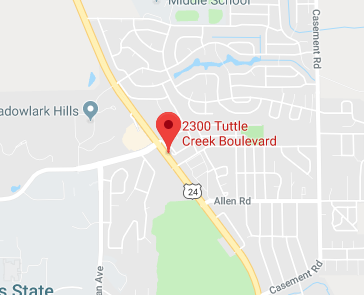
Google map
Just before 2:20 a.m. Saturday, the Riley County Police Department Dispatch Center received a report of shots fired in the 2300 block of Tuttle Creek Blvd in Manhattan.
Two individuals were life-flighted to Stormont-Vail Topeka Hospital for injuries. Investigators were still on the scene and authorities asked the public to avoid the area.
Anyone with information on this crime, is encouraged to contact the Riley County Police Department at (785) 537-2112 or Crime Stoppers at www.p3tips/353 or (785) 539-7777. Using the Crime Stoppers service allows you to remain anonymous and could qualify you for a cash reward of up to $1,000.00.
The new lab-on-a-chip’s key innovation is a 3D nanoengineering method that mixes and senses biological elements based on a herringbone pattern commonly found in nature, pushing exosomes into contact with the chip’s sensing surface much more efficiently in a process called “mass transfer.” (Credit: Yong Zeng)
KU NEWS SERVICE
LAWRENCE — A new ultrasensitive diagnostic device invented by researchers at the University of Kansas, The University of Kansas Cancer Center and KU Medical Center could allow doctors to detect cancer quickly from a droplet of blood or plasma, leading to timelier interventions and better outcomes for patients.
The “lab-on-a-chip” for “liquid biopsy” analysis, reported today in Nature Biomedical Engineering, detects exosomes — tiny parcels of biological information produced by tumor cells to stimulate tumor growth or metastasize.
“Historically, people thought exosomes were like ‘trash bags’ that cells could use to dump unwanted cellular contents,” said lead author Yong Zeng, Docking Family Scholar and associate professor of chemistry at KU. “But in the past decade, scientists realized they were quite useful for sending messages to recipient cells and communicating molecular information important in many biological functions. Basically, tumors send out exosomes packaging active molecules that mirror the biological features of the parental cells. While all cells produce exosomes, tumor cells are really active compared to normal cells.”
The new lab-on-a-chip’s key innovation is a 3D nanoengineering method that mixes and senses biological elements based on a herringbone pattern commonly found in nature, pushing exosomes into contact with the chip’s sensing surface much more efficiently in a process called “mass transfer.”
“People have developed smart ideas to improve mass transfer in microscale channels, but when particles are moving closer to the sensor surface, they’re separated by a small gap of liquid that creates increasing hydrodynamic resistance,” Zeng said. “Here, we developed a 3D nanoporous herringbone structure that can drain the liquid in that gap to bring the particles in hard contact with the surface where probes can recognize and capture them.”
Zeng compared the chip’s nanopores to a million little kitchen sinks: “If you have a sink filled with water and many balls floating on the surface, how do you get all the balls in contact with the bottom of the sink where sensors could analyze them? The easiest way is to drain the water.”
To develop and test the pioneering microfluidic device, Zeng teamed with a tumor-biomarker expert and KU Cancer Center Deputy Director Andrew Godwin at the KU Medical Center’s Department of Pathology & Laboratory Medicine, as well as graduate student Ashley Tetlow in Godwin’s Biomarker Discovery Lab. The collaborators tested the chip’s design using clinical samples from ovarian cancer patients, finding the chip could detect the presence of cancer in a minuscule amount of plasma.
“Our collaborative studies continue to bear fruit and advance an area crucial in cancer research and patient care — namely, innovative tools for early detection,” said Godwin, who serves as Chancellor’s Distinguished Chair and Endowed Professor in Biomedical Sciences and professor and director of molecular oncology, pathology and laboratory medicine at KU Medical Center. “This area of study is especially important for cancers such as ovarian, given the vast majority of women are diagnosed at an advanced stage when, sadly, the disease is for the most part incurable.”
What’s more, the new microfluidic chips developed at KU would be cheaper and easier to make than comparable designs, allowing for wider and less-costly testing for patients.
“What we created here is a 3D nanopatterning method without the need for any fancy nanofabrication equipment — an undergraduate or even a high school student can do it in my lab,” Zeng said. “This is so simple and low-cost it has great potential to translate into clinical settings. We’ve been collaborating with Dr. Godwin and other research labs at The KU Cancer Center and the molecular biosciences department to further explore the translational applications of the technology.”
According to Zeng, with the microfluidic chip’s design now proven using ovarian cancer as a model, the chip could be useful in detecting a host of other diseases.
“Now, we’re looking at cell-culture models, animal models, and also clinical patient samples, so we are truly doing some translational research to move the device from the lab setting to more clinical applications,” he said. “Almost all mammalian cells release exosomes, so the application is not just limited to ovarian cancer or any one type of cancer. We’re working with people to look at neurodegenerative diseases, breast and colorectal cancers, for example.”
On KU’s Lawrence campus, Zeng worked with a team including postdoctoral fellow Peng Zhang, graduate student Xin Zhou in the Department of Chemistry, as well as Mei He, KU assistant professor of chemistry and chemical engineering.
This research was supported by grants from National Institutes of Health, including a joint R21 (CA1806846) and a R33 (CA214333) grant between Zeng and Godwin and the KU Cancer Center’s Biospecimen Repository Core Facility, funded in part by a National Cancer Institute Cancer Center Support Grant (P30 CA168524).
HOISINGTON – Ryan Karlin scored a career-high 28 points and the Monarchs made a season-high eight three pointers as they earned a 66-54 win over Hoisington Friday to advance to Saturday’s sub-state championship game.
Hoisington took a three-point lead a couple of time in the first quarter before the Monarchs tied the game at eight at the end of the first quarter.
In the second Hoisington used a three-point lead to take an 11-10 lead with 5:37 to play in the first-half, but that would be the last time they would have a lead in the game.
Down one, Ryan Karlin connected on his second of six three’s in the game to put TMP up 13-11 and they would never trail again.
After another Karlin three the Monarchs led 21-16 in the final second of the first-half when Bryce Seib stole the ball at mid-court and banked in a three-pointers to beat the buzzer that game TMP a 24-16 lead.
In the second-half Hoisington closed the game to four with 5:30 to play in the quarter when Karlin drained another three to put an end to the Cardinals run and put TMP up 30-23.
The Karlin three sparked a 17- 7 run that put TMP up 14 at the end of the third quarter at 44-30.
Karlin added his sixth three-pointer of the game to open the fourth quarter giving TMP a 17-point lead at 47-30.
Hoisington closed the game within 10 two times in the final minutes of the game but the Monarchs were able to hold on for the 66-54 win.
Karlin finished with a career-high 28 points and fellow senior Jared Mayers added 10 points.
Hoisington’s Mason Haxton led two in double-figures with 16 points.
The Monarchs improve to 12-11 and will take on Smoky Valley in Saturday afternoon’s sub-state championship game in Hoisington.
Smoky Valley, the five-seed, defeated the top-seed Phillipsburg 49-43 Friday.
Saturday’s championship games have been moved to 2 p.m. for the girls game and 3:30 p.m. for the boys because of the chance for winter weather impacting the region.
Boys
1A sub-state semifinals
At Pratt
St. John-Hudson 66 Minneola 27
Attica 44 Hodgeman Co. 38
At Dodge City
South Gray 67 Little River 58
Macksville 68 South Central 53
At WaKeeney
Central Plains 73 Stockton 25
Wallace County 63 St. Francis 40
At Great Bend
Osborne 48 Quinter 66Northern Valley 63 Sylvan-Lucas 39
At Clay Center
Centralia 49 Burlingame 52
At Alma
St. John's/Tipton 50 Blue Valley 68
3A sub-state semifinals
At Hoisington
Phillipsburg 43 Smoky Valley 39
TMP 66 Hoisington 52
At Kismet-Southwestern Heights
Larned 62 Colby 37
Hugoton 70 Scott Community 60
Girls
2A sub-state semifinals
At Leoti
Trego Community 48 Oberlin 22
Hoxie 43 Plainville 50
At Meade
Meade 36 Sublette 51
5A Sub-State Finals
Sub-State #1 at Maize South
Salina-Central 44 Maize South 61
Sub-State #2 at Goddard
Hays 33 Goddard 38
Sub-State #3 at McPherson
Bishop Carroll 32 McPherson 53
Sub-State #4 at Wichita-Heights
Maize 44 Wichita-Heights 45
WICHITA, Kan. (AP) — The fraud case of former Kansas legislator and current Sedgwick County Commissioner Michael O’Donnell is now in the hands of jurors.
Michael O’Donnell-photo Sedgwick Co.
The judge gave jurors an hour to get organized and begin deliberations before he dismisses them for weekend. O’Donnell faces 23 counts of wire fraud and three counts of money laundering related to his state and county campaigns.
Prosecutors allege he put $10,500 in campaign funds into his personal checking account and gave some to friends.
O’Donnell testified the payments were legitimate campaign expenses.
The Wichita Republican was elected to the Kansas State Senate in 2012 for a term that ended in January 2017. He did not run for re-election and instead ran for and won a term on the Sedgwick County Commission that began in 2017 and is set to expire in 2020.
RENO COUNTY – A 34-year-old man arrested in Hays Thursday for the shooting death of another man also has a case pending in Reno County.
Ryan Thompson is charged with criminal possession of a firearm by a felon for reportedly having been found with a Beretta Tomcat 32 automatic on Feb. 24, according to police.
The state also claims the weapon was stolen, leading to a second charge of possession of stolen property.
He was scheduled to be in Reno County District Court on Friday morning for the reading of the two charges, but Magistrate Judge Daniel Gilligan was told that he was being held in Ellis County on suspicion of the fatal shooting.
Hays Police responding to a domestic disturbance call on Indian Trail on Wednesday night found a 26-year-old man dead from a gunshot wound. Thompson fled the scene but was apprehended with the help of officers in Ellis.
Thompson has previous convictions for burglary, aggravated endangerment of a child and drug charges.
On Friday, Gilligan issued a bench warrant with a $10,000 bond to bring Thompson back to Reno County.
The Hays American Association of Retired Persons (AARP) will meet on Wed., March 6th at the Rose Garden on Highway 40 at 11:30 a.m. Lunch will be served followed by a short business meeting and a program of interest.
AARP Chapter Board members will have a board meeting at 11:00 am at the Rose Garden.
Guests may attend. Callers will contact members by phone for reservations which must be made by Monday at noon on the 4th. Guests wishing to attend contact 785-623-7412.
FAIRWAY, Kan. (AP) — Authorities say a man has been shot and wounded after exchanging gunfire with police across the street from an elementary school in suburban Kansas City.
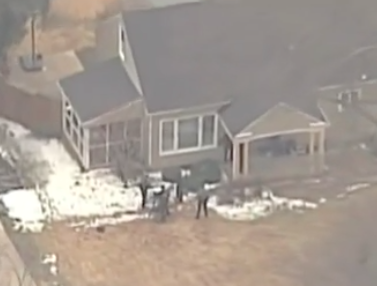
Law enforcement on the scene across from Highlands Elementary School image courtesy KCTV
The shooting happened around 3:10 p.m. Friday at a Fairway, Kansas, house that is located directly across the street from Highlands Elementary School in the Shawnee Mission School District. Video shows a man exiting the home and firing shots before officers shot him.
The school was on lockdown for what the Johnson County Sheriff’s Office described as a “firearms complaint” when gunfire erupted. Police weren’t returning phone messages about the man’s condition.
Rosemary Emma Herrmann, 91, passed away February 28, 2019 in Overland Park Kansas.
Rosemary was born February 13, 1928 in Kinsley, Kansas to Hugh and Ruth Peters Miller.
A longtime area resident, Rosemary was a realtor and farmwife. She was a member of St. Nicholas Catholic Church and the altar society, Kinsley; volunteered for CASA, Great Bend; and was a member of PEO.
On January 29, 1948 she married Joseph Henry Herrmann in Kinsley, he preceded her in death on January 3, 1990.
Survivors include two sons; Stephen Herrmann, Stow, MA and Joseph (Julie) Herrmann, Overland Park; six grandchildren and three great grandchildren.
She is preceded in death by two sons, Terrance Herrmann and Jerome Herrmann; and a daughter, Judith Cross; two brothers, Quentin Miller and Jack Miller; a sister Ruth Hirsh.
Funeral Mass will be held 10:00 a.m. Monday, March 4, 2019 at St. Nicholas Catholic Church, Kinsley with Father John Forkuoh presiding. Rosary will be Sunday, March 3, 2019 at 7:00 p.m. at St. Nicholas Catholic Church, Kinsley. Visitation will be Sunday from 1:00 p.m. to 5:00 p.m. at Beckwith Mortuary, Larned. Burial will be in St. Nicholas Cemetery, Kinsley.
Memorials may be given to CASA or St. Nicholas Catholic Church in care of Beckwith Mortuary, PO Box 477, Larned, KS 67550.