

Author: Hays Post
Hays Aquatic Park taking applications for lifeguards

 YES, THERE IS 10 INCHES OF SNOW IN THE POOL,
BUT SOON IT WILL BE FULL OF NICE WARM WATER WE PROMISE!
The Hays Recreation Commission is currently taking applications for the 2019 season for the Hays Aquatic Park!
If you are a certified lifeguard or at least 15 and want to be a lifeguard, apply by April 3rd and attend the interview listed on the application! Those hired that are needing certification will be trained!
We are also taking applications for Admissions and Concessions at the Aquatic Park!
Applications are available in the HRC Office Front lobby or online at online at https://goo.gl/LkhgW5
Join the Hays Aquatic Park for a summer of fun, help keep everyone safe and make money doing it! Apply today!
Kanopolis Lake level drawn down for construction work


USACE
MARQUETTE – Due to construction work at Kanopolis Lake in Ellsworth County, the lake will be drawn down an additional foot to elevation 1461.0 feet. Dive work associated with the construction work requires releases to be shut off for safety purposes.
The lake will be drawn down before the dive work starts then releases will be shut off while dive operations are active. Nightly releases will likely be made to slow the rise of the lake during this period. The current plan is to release up to 500 cubic feet per second each night. Once the lake reaches the top of the multipurpose pool elevation 1463.0 feet, dive work will stop until the lake can be drawn back down. Additional rain in the basin may impact construction and release schedules.
With changing lake elevations and river levels, the public is encouraged to exercise safety on and near the water. Lake level and release information can be obtained at the Northwest Kansas U.S. Army Corps of Engineers (USACE) website at https://www.nwk.usace.army.mil/Locations/Water-Management/ and,
https://www.nwk.usace.army.mil/Locations/District-Lakes/Kanopolis-Lake/Daily-Lake-Info-2/.
For additional information, contact the Kanopolis Project Office at 785-546-2294.
BOWERS: Senate Scene Week 6
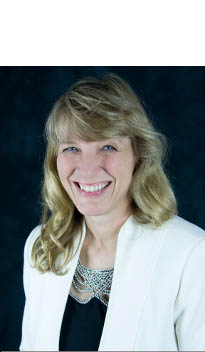

SENATE HIGHLIGHTS
Last week marked the sixth week of session with the first half of the legislative session almost behind us. As we approach “turn-around” the Senate held floor debate on Tuesday and Wednesday and worked bills which were sent out of committees to the full Senate. The bills voted on by the full Senate now cross over to the House of Representatives where the process starts over. Conference committees will meet to iron out the differences between the Senate and House versions before the 2019 session ends in May.
FLOOR ACTION
EXPIRATION DATE OF RISK-BASED CAPITAL INSTRUCTIONS – SB 28 will change the date specified in the Insurance Code for risk-based capital (RBC) instructions.
EXEMPTING CERTAIN DOMESTIC INSURERS FROM FILING ENTERPRISE RISK REPORTS –SB 66 will modify registration requirements in the Insurance Holding Company Act related to filing exemptions for enterprise risk reports.
M DRIVER’S LICENSES OPERATING UNDER TEMPORARY PERMIT – SB 17 will remove an exception for motorcycles operated with a temporary registration permit from requirement for each operator of a motor vehicle in Kansas to hold a license classified for the operation of the motor vehicle.
CLAIMS AGAINST THE STATE – SB 25 will authorize expenditures of $82,886 in FY 2019 to pay claims against the State of Kansas.
APPROACH OF AN EMERGENCY VEHICLE – SB 40 will remove language requiring a law enforcement officer to issue a warning citation from, and after, the effective date of the act, and prior to July 1, 2001. This is for provisions requiring a driver to move into a nonadjacent lane or, if changing lanes is not possible or unsafe, proceed with due caution upon approaching an authorized emergency vehicle or police vehicle using flashing or hazard warning lights.
SEAT BELT USE IN TRAFFIC INFRACTION – SB 41 will amend the Uniform Act Regulating Traffic to specify the violation of law that requires seat belt use by occupants ages 14 and older in passenger cars or autocycles. This will now be considered a traffic infraction.
KANSAS FARM BUREAU MEMBER HEALTH CARE BENEFITS – SB 32 will allow the Kansas Farm Bureau to establish a health care benefit that offers coverage specifically for Farm Bureau members in Kansas. Senate Bill 32 aims to reduce the number of uninsured Kansans by creating competition and free-market options for health care. Senate Bill 32 is the Farm Bureau’s solution to addressing the critical need for KFB members to find affordable health care coverage. A recent study pointed out that 65 percent of agriculture producers view health care as the number one threat to the future of their operation.
KANSAS REAL ID LICENSE
Passed by Congress in 2005, the REAL ID Act enacted the 9/11 Commission’s recommendation that the Federal Government “set standards for the issuance of sources of identification, such as driver’s licenses.” Starting October 1, 2020, every state and territory resident will need to present a REAL ID compliant license/ID, or another acceptable form of identification, for accessing Federal facilities, entering nuclear power plants, and boarding commercial aircraft. This is called “card-based” enforcement. The card, itself, must be REAL ID compliant unless the resident is using an alternative acceptable document such as a passport. The card that is Real ID compliant will feature a gold circle with a star cut out symbol printed in the top third of the card on the front right side. Real IDs are optional and Kansas residents can choose between either Real ID card or a Nonreal ID card and there are no changes to fees for Kansas cards. In order to receive a Real ID card, a proof of lawful presence is required such as a birth certificate, unexpired US passport or naturalization certificate. Also required is a social security card, current W-2 or 1099 or current pay stub showing full social security number. Proof of Kansas residency is required by several means including a rent or lease agreement, renewal postcard, vehicle registration, utility bill or financial institution documents such as a bank statement, deed or mortgage. More information can be found at https://www.ksrevenue.org/dovrealid.html. You can order certified vital records like birth certificates at https://www.kdheks.gov/vital/birth.html.
TOUR THE STATE CAPITOL FROM HOME
Take an online tour of the magnificent Kansas State Capitol, floor by floor at https://www.kshs.org/p/kansas-state-capitol-online-tour/15843. The classically inspired building is an impressive public monument as well as the working offices for the governor and legislators. The building holds a dramatic array of art, architecture, and colorful Kansas history. The building hours are 8 a.m. – 5 p.m. Monday – Friday, and now open 10 a.m. – 4 p.m. on Saturdays.
FROM THE STATE LIBRARY
Research for Kids
The State Library has online interactive eBooks, storybooks, and puzzles for children. These resources encourage new and reluctant readers to develop a love for reading. BookFLIX (PreK to third grade) pairs children’s video storybooks with related nonfiction titles. TumbleBooks offers animated talking picture books and read-along chapter books that improve sight word recognition. Britannica E-Stax (PreK to 5th grade) features nonfiction that can be downloaded to any Internet enabled device. https://kslib.info/kids. If the page above asks for a Kansas Library eCard number, you may get one at any library in Kansas. Most people will be automatically recognized as inside Kansas and will not need this step. Questions: [email protected] or 785-296-3296.
VISITORS FROM SENATE DISTRICT #36
The sixth week of session was another busy week with visitors to the Kansas legislature. Three hundred plus 4-Hers from across Kansas held their mock Legislative session in the House Chamber on Sunday evening and then met us for lunch on Monday in the Capitol. Mental Health Centers, Kansas Association of Conservation Districts and students and staff of the Kansas After School program were in the Capitol for their annual visit and receptions.
I always encourage you to stay informed of the issues under consideration by the Kansas Legislature. Committee schedules, bills, and other helpful information can be easily accessed through the legislature’s website at www.kslegislature.org. You are also able to ‘listen in live’ at this website. The House meets at 11:00AM and the Senate at 2:30PM. Please do not hesitate to contact me with your thoughts, concerns, and suggestions. An email is the best at this point in the session.
Thank you for the honor of serving you!
Senator Elaine Bowers
Kansas State Capitol Building
Room 223-E
300 SW 10th St.
Topeka, KS 66612
[email protected]
785-296-7389
www.kslegislature.org
Elaine Bowers, R-Concordia, is the 36th Dist. state senator and serves as the Senate Majority Whip. The 36th Senate District includes Cloud, Jewell, Lincoln, Mitchell, Osborne, Ottawa, Republic, Rooks, Russell, Smith and Washington counties and portions of Marshall and Phillips counties.
REMINDER: City switches to new notification system Friday
 CITY OF HAYS
The city of Hays has implemented a new website!
Please visit haysusa.com to browse and explore all of the new content including an expanded home page with current news and project information.
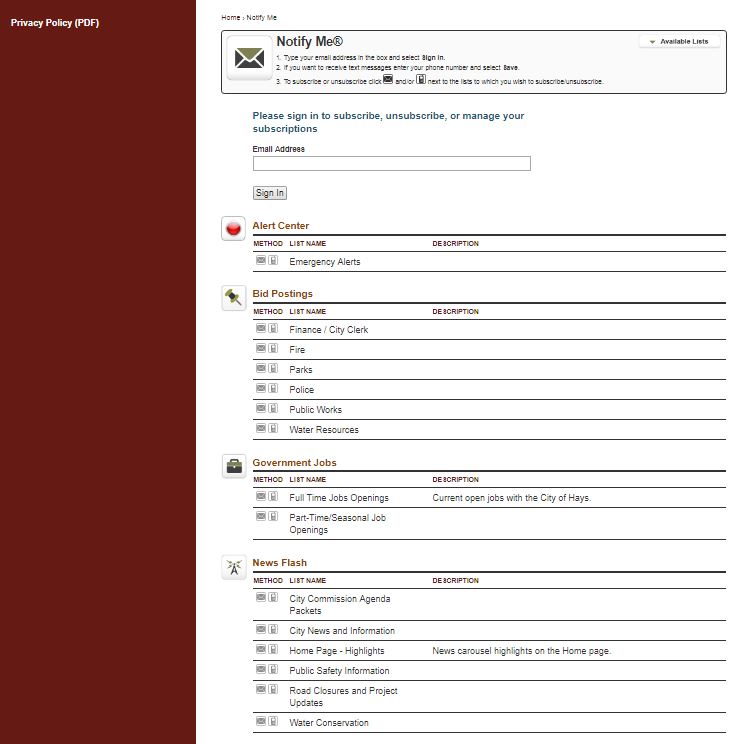
The new website also has a “Notify Me” feature that will soon replace these Nixle notifications. The Notify Me sign-up page can be found on our home page under “How Do I” and then “Sign Up For”, “Notifications / Notify Me”. From there you can sign up for email or text messages to notify you on topics of your choice.
The current Nixle notifications will no longer be used starting March 1st, so we invite you to sign up for Notify Me soon!
Kan. House committee proposal designed to curb bullying in schools
By Paige Henderson
KU Statehouse Wire Service
TOPEKA — The House Committee on Education recently discussed a bill that aims to prevent and prohibit bullying in schools through policies and procedures in accordance with state law.

House Bill No. 2330 would create three new sections of law and amend the current bullying statute in place. The amendment redefines bullying, harassment and cyberbullying and includes the requirement of the adoption of a policy to prohibit these forms of bullying. It contains detailed provisions for how investigations of reports are to be handled and lists appropriate responses to bullying behavior. The bill also requires any student or staff member who witnesses or has reliable information regarding bullying, harassment or cyberbullying to make an initial report within 24 hours.
W. Thomas Gilman, a lawyer from Wichita, gave a testimony about his friend’s daughter who committed suicide after being continuously bullied and the lack of action from her school. From spitting on her to putting gum on her hair, Gilman described the substantial impact it had on the family, as well as the missed opportunities the school could have taken to prevent it all.
“I’m here after promising her parents that I will not give up,” Gilman said last Wednesday. “Please do not let this continue. This is a time to say ‘alright, let’s have our students protected.’”
Opposition to the bill was argued through the ambiguous definition of bullying and that it is a people problem, not a policy problem.
“We’re not going to solve all of the problems in the world, but this policy is a step forward,” Rep. Adam Thomas (R-Olathe), the sponsor of the bill, said in response.
Mark Dessetti, a lobbyist for the Kansas National Education Association, suggested legislature create a task force to take on the bullying epidemic, similar to the Alzheimer’s and dyslexia task force. Rep. Brenda Dietrich supported the suggestion as well.
“You’re not destined to succeed the way you want unless the whole community is involved,” Dessetti said.
Chairman Steve Huebert delayed any decisions, proposing to adjust the bill in future legislature meetings as well as consider forming a task force.
“I don’t want this to be just a conversation. Let’s get something done for our kids,” said Rep. Mark Samsel (R-Wellsville).
Paige Henderson is a University of Kansas senior from Lenexa majoring in journalism.
Police: Kansas man tricked out of cash in Twitter scam

SALINE COUNTY — Law enforcement authorities are investigating after a man lost money in an online scam.
The 38-year-old man had used Twitter to communicate with someone he believed was a woman named “Kira,” according to Salina Police Detective Sergeant David Villanueva.
“Kira” used the social media app to tell the victim she wanted to visit him. She needed him to buy and send her agent a pair of $100 Amazon gift cards, $400 in ITunes gift cards and an additional $600 in iTunes gift cards to assist her with travel from New York to Salina.
On Monday, the victim told police he decided the incident was a scam when he discovered that a $2,050 deposit into his bank account was fraudulent, according to Villanueva.
Kan. congressman criticizes Dems who blocked bill on infants surviving abortions
WASHINGTON (AP) — Senate Democrats on Monday blocked a Republican bill that would have threatened prison for doctors who don’t try saving the life of infants born alive during abortions. The measure seemed doomed from the start but offered the GOP a chance to appeal to conservative voters.
The vote was the latest instance in which Republicans have tried to go on offense on the issue and put Democratic abortion-rights lawmakers in an uncomfortable position. Supporters said the measure presented lawmakers with a simple, moral choice.
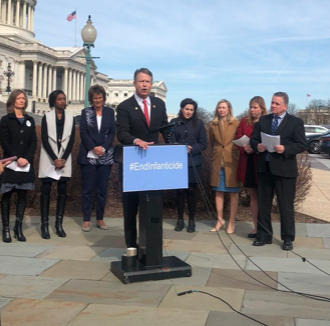
On Tuesday morning, Kansas First District congressman Roger Marshall spoke at the Born Alive Act press conference and is critical of the outcome of the vote by those in the U.S. Senate.
.@RogerMarshallMD speaks at the #BornAliveAct press conference. pic.twitter.com/i2t8dzoKmo
— Heritage Action (@Heritage_Action) February 26, 2019
“I want to ask each and every one of my colleagues whether or not we’re OK with infanticide,” said the measure’s chief sponsor, Sen. Ben Sasse, R-Neb.
Opponents, noting the rarity of such births and citing laws already making it a crime to kill newborn babies, said the bill was unnecessary. They said it is part of a push by abortion opponents to curb access to the procedure and intimidate doctors who perform it, and said late-term abortions generally occur when the infant is considered incapable of surviving after birth.
Sen. Patty Murray, D-Wash., a leading Democrat on health issues, said the measure would force women to accept “care that may directly conflict with your wishes at a deeply personal, often incredibly painful moment in your life — because politicians in Washington decided their beliefs mattered more than yours.”
Senators voted 53-44 for Sasse’s bill — seven votes short of the 60 needed to end Democratic delaying tactics aimed at derailing the measure.
Democratic Sens. Bob Casey of Pennsylvania, Doug Jones of Alabama and Joe Manchin from West Virginia were the only lawmakers to cross party lines as Democrats demonstrated anew that even in the minority, they can derail abortion-related bills.
Several dozen House Republicans, led by Minority Leader Kevin McCarthy, R-Calif., stood on the Senate floor during the vote, just as a contingent of House Democrats did last month during a crucial vote on ending the government shutdown. Republicans control the Senate by 53-47.
President Donald Trump reacted to the vote while en route to his summit in Vietnam with North Korean leader Kim Jong Un, tweeting: “This will be remembered as one of the most shocking votes in the history of Congress. If there is one thing we should all agree on, it’s protecting the lives of innocent babies.”
Only 1 percent of all abortions occur after 21 weeks of pregnancy, according to the Guttmacher Institute, which supports abortion rights. Abortions during the final weeks are rarer still.
Doctors’ and abortion-rights groups say it is extremely unusual for live infants to be born during attempted late-term abortions, which they say usually occur when the baby is extremely deformed or deemed unable to survive after birth. In such cases, families sometimes decide they want to induce labor so they can spend time with the infant before it dies.
“It only happens in instances in which we know that the baby will not ultimately survive, and a choice has been pre-made to provide just comfort care” to the baby so the parents can be with it, said Dr. Colleen McNicholas, a fellow with the American College of Obstetricians and Gynecologists.
If an infant is born alive during an abortion, Sasse’s bill would require doctors to render “the same degree” of care used for any birth. The baby would have to be immediately sent to a hospital.
Doctors who violate those requirements and other medical staffers who don’t report violations could face fines and up to five years in prison. Doctors who intentionally kill a child born alive after an abortion would face prosecution under federal murder statutes — potentially a death penalty or life in prison.
Republicans in the Democratic-run House plan to try forcing a vote on a similar measure this spring. They will employ a seldom-used tactic, a petition requiring signatures from most House members to succeed. The GOP is expected to fall well short of the 20 Democratic supporters they’d need.
Republicans, eager to put congressional Democrats from swing states in an uneasy political spot, have been pouncing on the issue since it arose earlier this year in Virginia and New York.
Democratic Virginia Gov. Ralph Northam, a pediatric neurologist, spoke favorably in January about state legislation to ease restrictions on late-term abortions. He said “a discussion would ensue” between doctors and the family over what to do if an infant is born who is badly deformed or incapable of living. Northam has since faced pressure to resign over a racist photo that appeared in his 1984 medical school yearbook.
Trump has criticized a new abortion law in New York that permits abortions of a viable fetus after 24 weeks of pregnancy if the mother’s life is in danger — codifying conditions specified by U.S. Supreme Court rulings.
Most CWD deer tested in Kansas are in northwest area

 KDWP
KDWP
PRATT – In a continuing effort to monitor the prevalence and spread of chronic wasting disease (CWD) in Kansas deer, the Kansas Department of Wildlife, Parks and Tourism (KDWPT) has collected and tested samples from 360 deer so far this year. Thirty-seven of those samples were confirmed positive. The targeted region for sampling deer taken by hunters this year was southwestern Kansas. However, sick or suspect deer observed in other parts of the state were also tested, and KDWPT recommends that hunters who take deer in counties where CWD is known to occur have their deer tested, as well.
The 37 confirmed positives came from deer taken in Cheyenne, Rawlins, Decatur, Norton, Phillips, Smith, Thomas, Sheridan, Gove, Rooks, Osborne, Scott, Lane, Hamilton, Haskell, Hodgeman, Ford, Edwards, Stafford, Reno, and Pratt counties. While most positives are still coming from northwest Kansas, new counties were added to the list this year, including several that show the disease’s spread to the south and east – Haskell, Edwards, Pratt, Osborne, and Reno.
Testing History
CWD infects members of the deer family, including whitetail and mule deer, elk and moose. CWD testing in Kansas began in 1996 to help track the occurrence of the disease in the state’s wild deer, and more than 28,000 tissue samples have undergone lab analysis since. The first CWD occurrence documented in a wild Kansas deer was a whitetail doe killed by a hunter in 2005 in Cheyenne County. To date, 216 deer have tested positive, and most have occurred in a region that includes Decatur, Rawlins, Sheridan and Norton counties.
Current Research
Although research about the disease is ongoing, currently there is no cure, vaccine or other biological method of preventing CWD. And while recent news has reported a potential vaccine based on research that indicated the disease may be caused by spiroplasma bacteria, attempts to duplicate that research have been unsuccessful, and many CWD researchers remain skeptical of the findings. Currently, the only tool to prevent the spread of CWD is to restrict the transport of deer and deer carcasses, especially from areas where it is known to occur. Once the infective particle (a mis-folded protein called a prion) is deposited into the environment – either through an infected carcass or from a live animal – it may exist for decades or more, capable of infecting a healthy deer.
While CWD is always fatal to infected deer and elk, humans have never been known to contract the disease. CWD is a member of the group of diseases called transmissible spongiform encephalopathies (TSEs). Other diseases in this group include scrapie in sheep and goats, bovine spongiform encephalopathy (BSE or mad cow disease) in cattle, and Creutzfeldt-Jakob disease in humans.
The Disease
CWD is a progressive, fatal disease that results in small holes developing in the brain, giving it a sponge-like appearance under the microscope. While deer may carry the disease for up to two years without showing any outward signs, in latter stages a deer may exhibit decreased brain function and display a droopy head, staggering, loss of appetite, and a lack of response to people. It is advised that hunters who take deer from areas where CWD has been found have their deer tested whether or not they exhibited any symptoms. KDWPT staff ask that any sick deer or elk observed with symptoms listed above be reported to the nearest KDWPT office or the KDWPT Emporia Research and Survey Office, 620-342-0658.
Hunters can help protect the health of the Kansas deer herd and slow CWD’s spread by properly disposing of deer carcass waste. The best way is to bone the deer out in the field, taking only the meat, antlers with skullcap and hide. Online electronic check-in is available to allow hunters to transport boned out deer taken with whitetail antlerless permits. If this is not possible, dispose of carcass waste by double-bagging it and taking it to a landfill. Landowners can also bury carcass waste on their own property.
The Chronic Wasting Disease Alliance, www.cwd.info.org, maintains an online clearinghouse of information about the disease. More information is also available at www.ksoutdoors.com.
FBI watched courier deliver Mexican Meth to buyer in Kansas
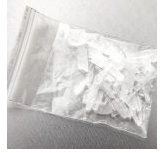
KANSAS CITY, KAN. – A Kansas man was sentenced Monday to 80 months in federal prison for acting as a courier to deliver more than three pounds of methamphetamine, according to U.S. Attorney Stephen McAllister.
Demetrius Summerson, 28, Kansas City, Kan., pleaded guilty to one count of distributing methamphetamine. In his plea, he admitted that FBI agents had him under surveillance when he delivered more than 3.6 pounds of methamphetamine to a buyer in Lenexa, Kan. The buyer paid Summerson $10,000.
Summerson was working as a distributor for a drug trafficking organization operating in Johnson and Wyandotte counties that was obtaining methamphetamine from a provider in Michoacan, Mexico.
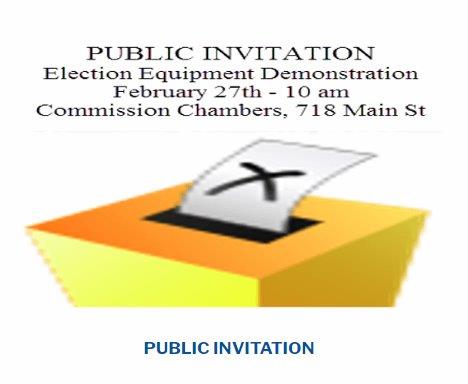
Public invited to Ellis Co. voting system demo Wed.

Kansas lawmakers add cut in tax on food to income tax bill

By JOHN HANNA
TOPEKA, Kan. (AP) — Republican lawmakers in Kansas have wedded a popular proposal to cut taxes on groceries to a GOP income tax relief bill in hopes of winning over skeptical colleagues and making Democratic Gov. Laura Kelly think harder about vetoing it.
Kelly has urged legislators to wait until at least next year to pursue changes in tax laws, but she also said repeatedly during her campaign for governor last year that she wanted to lower the state’s 6.5 percent sales tax on groceries to help poor and middle-class families. The idea also has strong bipartisan support.
“That had been a hot button across the state,” said House committee Chairman Steven Johnson, an Assaria Republican. “That is one that has broad appeal.”
Kelly and her staff have called the GOP income tax relief proposals irresponsible, and Democrats have criticized the package as a corporate give-away. She hasn’t said explicitly that she would veto them, but her comments and those of her aides have lawmakers in both parties expecting her to do so.
“While the governor strongly supports reducing the sales tax on food, she knows it is critical that we first stabilize the state’s budget before we make changes to the tax code,” Kelly spokeswoman Ashley All said after the committee’s vote.
Rep. Jim Gartner, of Topeka, the Taxation Committee’s top Democrat, said Republicans are trying to box Kelly in by adding the provision to cut the sales tax on groceries to 5.5 percent, starting in October. Kansas is among only a handful of states imposing its full sales tax on groceries.
“I don’t think it’s going to make it any more palatable because of the mix,” Gartner told reporters after the committee’s vote.
The federal tax overhaul in 2017, championed by President Donald Trump and Republicans in Congress, cut federal income taxes for individuals and businesses but included provisions expected to raise revenues in some states and lower it in others. Kansas’ tax code is tied to the federal tax code.
This year’s bill in Kansas would save its taxpayers $208 million during the state budget year that begins in July.
The cut in the sales tax on groceries would save consumers about $44 million during the state’s next budget year, but the committee also added a provision to help Kansas collect more sales taxes on internet sales.
A key part of the bill would prevent thousands of individuals from losing itemized deductions on their state forms. State law now prevents people from itemizing on their state returns if they do not on their federal returns, and the federal changes discouraged itemization. The change would save individuals about $50 million during the next budget year.
Even with the cut in the sales tax on groceries, most of the tax relief still would go to corporations during the next budget year — $137 million, or 66 percent of the total. The federal tax changes included provisions preventing corporations from sheltering income and assets outside the U.S. that would otherwise lead to Kansas and other states taxing foreign income.
___
Fraud trial: Jurors hear why former Kan. lawmaker wrote checks for friends
WICHITA, Kan. (AP) — Opening remarks Monday in the trial of a former Kansas legislator offered jurors contrasting portrayals of his handling of campaign funds.

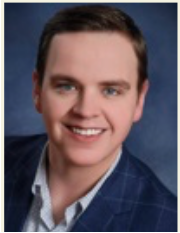
Sedgwick County Commissioner Michael O’Donnell is accused of fraudulently taking $10,500 from campaign fundsfor his personal use. He faces 23 federal counts of wire fraud and three counts of money laundering related to his state and county campaign funds.
Jury selection took up most of the first day of the proceedings. The trial before U.S. District Judge Eric Melgren is expected to last five days.
The prosecution’s opening statement outlined O’Donnell’s extraordinary access to resources through his elected position and his access to campaign donations through his state and county campaigns. Prosecutors say he was a great fundraiser.
The defense in its remarks focused on explaining the legitimacy of the campaign funds, saying nothing illegal occurred and the checks were for legitimate work done on behalf of his campaign.
The indictment alleges O’Donnell wrote a series of checks in 2015 and 2016 from his “Michael for Kansas” and “Michael for Sedgwick County” campaigns to various people who would cash the checks. Prosecutors alleged some of the money went into his personal checking account and some to friends.
O’Donnell, a Wichita Republican, was elected to the Kansas State Senate in 2012 for a term that ended in January 2017. He did not run for re-election and instead ran for and won a seat on the Sedgwick County Commission. His term began in 2017 and is set to expire in 2020.
He remains free on bond and continues to serve as county commissioner.
___
WICHITA, Kan. (AP) — A former Kansas legislator accused of fraudulently taking $10,500 from campaign funds for his personal use goes to trial Monday in federal court in Wichita.
Sedgwick County Commissioner Michael O’Donnell has pleaded not guilty to 23 counts of wire fraud and three counts of money laundering related to his state and county campaign funds.
Defense attorney Mark Shoenhofer said that his client was innocent of the allegations when the charges were initially unsealed in May. O’Donnell and his attorneys did not immediately return messages left this week seeking comment.
The trial before U.S. District Judge Eric Melgren is expected to last five days.
O’Donnell, a Wichita Republican, was elected to the Kansas State Senate in 2012 for a term that ended in January 2017. He did not run for re-election and instead ran for and won a term on the Sedgwick County Commission that began in 2017 and is set to expire in 2020.
The indictment outlines a scheme whereby O’Donnell allegedly wrote a series of checks in 2015 and 2016 from his “Michael for Kansas” and “Michael for Sedgwick County” campaigns to various people who would cash the checks. Prosecutors alleged some of the money went into his personal checking account and some to friends. The indictment identifies the people who cashed the checks only by their initials.
Defense attorneys tried unsuccessfully last year to get charges dismissed, saying “overzealous prosecution” sometimes occurs when prosecutors throw a wide net on criminal corruption. His attorneys argued O’Donnell came to law enforcement’s attention during an investigation of other people in Wichita suspected of illegal gambling. Prosecutors subsequently indicted several local residents, including law enforcement officials, stemming from that gambling probe.
Several people, including then-Gov. Sam Brownback and other state officials, received notification letters in 2017 from the U.S. Justice Department telling them that the federal government intercepted phone calls between them and O’Donnell’s phone number. O’Donnell, a conservative known in part for championing tougher rules for welfare recipients, was a political ally of Brownback who won his legislative seat in the 2012 purge of Senate moderates.
He remains free on bond and continues to serve as county commissioner.
Attorney Austin Parker held a news conference in November during which he claimed three commissioners tried to fire then-County Manager Michael Scholes after he cooperated in the FBI investigation of O’Donnell. Parker, who represents then-County Counselor Eric Yost, told reporters there is an FBI investigation into that effort and that Yost had been interviewed twice by FBI agents on that subject.
It is unclear whether that investigation is ongoing, but no charges related to Yost’s allegations have been filed. Kate Flavin, the county’s spokeswoman, said there have been no further developments.
Scholes and Yost left their county positions after reaching termination settlements with the commission.
Commission Chairman David Dennis said in a statement released through Flavin it was not appropriate to comment on O’Donnell’s case because the charges are not related to the county.