KANSAS CITY, Mo. — Tony Berg is out as publisher of The Kansas City Star and Mike Fannin, its editor since 2008, has been named president of the newspaper.
Berg was named publisher and president of The Star in January 2016, after his predecessor, Mi-Ai Parrish, left to become publisher of The Arizona Republic.
The Wichita Eagle, in a brief, three-sentence item Friday afternoon, said that Berg will step in as publisher of that newspaper and of Kansas.com, The Eagle’s website. It also said that its general manager Dale Seiwert, is leaving after 40 years.
Berg previously had been regional publisher for McClatchy’s Central Division, which included The Star, The Eagle, Fort Worth Star-Telegram and Belleville (Illinois) News-Democrat.
Berg’s LinkedIn site on Friday listed him as publisher of The Eagle only and as president and publisher of the Central Region until this month.
Berg, who headed The Star’s advertising department and The Eagle’s advertising department before becoming publisher of The Star, could not be reached for comment. Fannin declined to comment.
The moves may be part of a larger corporate reshuffling, which includes the resignation of Mark Zieman, vice president-operations, of The McClatchy Co., the parent company of The Star and The Eagle.
In a regulatory filing on Friday, McClatchy said that Zieman, a former editor and publisher of The Star himself, informed McClatchy on Monday that he will leave the company at the end of the year. McClatchy said his role will not be filled.
The filing also said that R. Elaine Lintecum, McClatchy’s chief financial officer, told the company she plans to retire in June 2020.
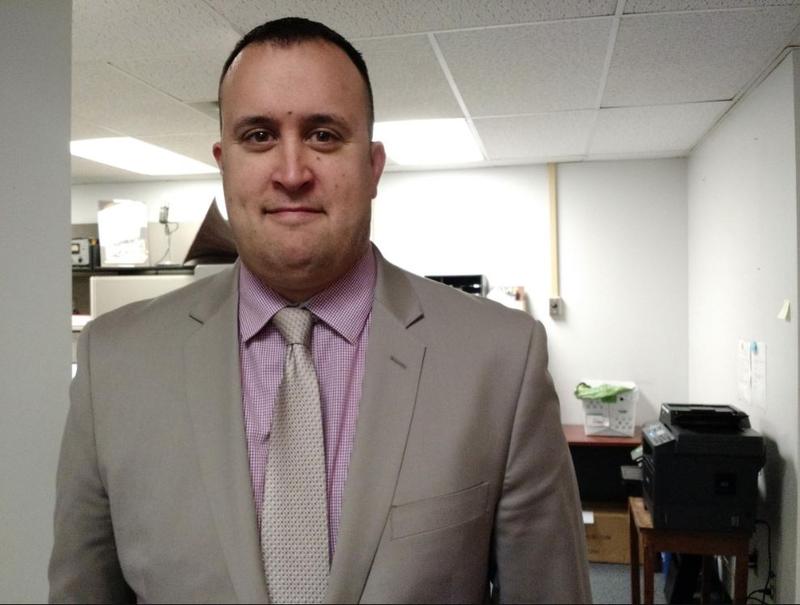
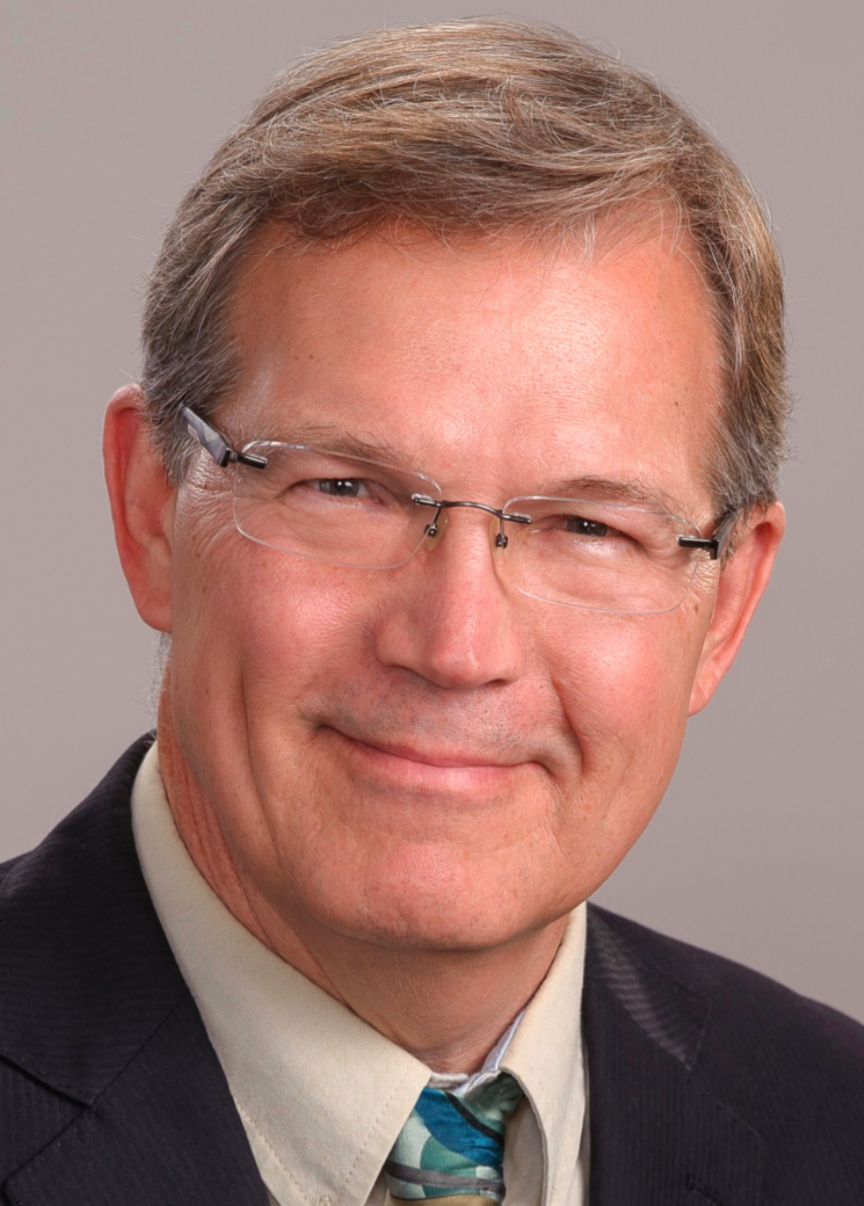
Mike Fannin is now president of The Kansas City Star. Credit Elle Moxley / KCUR 89.3
Fannin will continue as editor of The Star. A story posted on The Star’s website mid-Friday afternoon said he would lead the newspaper’s overall operations while continuing to oversee the newsroom.
The story quoted the president and CEO of McClatchy, Craig Forman, as saying, “Mike Fannin is among the most talented editors in America today, and he leads one of the country’s greatest newsrooms. I’m delighted that he’s now able to expand his influence both at The Star and also with the community that he loves.”
In addition to his duties at The Star, Fannin has news oversight responsibilities at six other McClatchy newspapers, including those in Fort Worth, Texas, and Lexington, Kentucky.
Berg, a native Kansan, is married and has three children. His wife has family in Wichita, and Berg reportedly moved to Wichita sometime in the last few months.
The moves at The Star and McClatchy come after McClatchy reported a second-quarter net loss of $17.5 million, compared with a $20.4 million loss a year earlier.
Last month, McClatchy, which is based in Sacramento, California, and is the third largest newspaper chain in the country, disclosed that it had been warned it could be delisted from the New York Stock Exchange unless it can boost its market capitalization to $75 million within 18 months. At the time, its market cap was about $52.4 million.
The company said it plans to submit a plan to the exchange detailing how it intends to comply with the exchange’s demand.
McClatchy’s stock closed Friday at $2.79, down 10 percent.
Dan Margolies is a senior reporter and editor at KCUR. You can reach him on Twitter @DanMargolies.
The JFK in Hays, Kansas committee and the Ellis County Democratic Party are pleased to announce the keynote speaker for a banquet honoring John F. Kennedy’s campaign visit to Hays in November 1959.
Pulitzer Prize-winning journalist Thomas Oliphant, who co-authored a best-selling book about Kennedy’s 1960 campaign for the presidency, will share his insights at a 7 p.m. banquet on Nov. 20 at Kennedy Middle School, known as Jefferson West in 1959. Oliphant and Curtis Wilkie wrote “The Road to Camelot: Inside JFK’s Five-Year Campaign,” in which they detailed Kennedy’s unconventional path to the presidency.
General admission tickets are now on sale at $50 each. In 1959, tickets were $10, which today would cost $88. VIP seating includes assigned seats near the main table and is available at $100 per ticket. Event sponsors will meet Mr. Oliphant at a private reception before the banquet. Sponsorship levels are $2,500, which includes eight tickets and priority seating near main table; $1,000, four tickets and priority seating; $500, two tickets and priority seating. Sponsors also will have their name or company name on the banquet program. Those interested in becoming a sponsor can either email [email protected], call 785-628-6162 or stop by 1500 Vine. Copies of Mr. Oliphant’s book will be available for purchase at the banquet, and signed copies will be part of a raffle for prizes. Tickets are available at 1500 Vine, Hays, Kansas or online HERE or go to eventbrite.com and search for JFK in Hays, Kansas.
In addition to the banquet honoring the 60th anniversary of Kennedy’s visit, Mr. Oliphant will hold a 3:30 p.m. news conference that afternoon in the Memorial Union.
The evening before the banquet, at 7 p.m. on Nov. 19, there will be a panel discussion at the Fort Hays Ballroom on the FHSU campus focusing on Kennedy’s trip to Kansas in 1959 and Norbert Dreiling’s role. The panel discussion is free and open to the public.
In addition, Randy Gonzales — who graduated from Fort Hays State University in May 2019 with a master’s degree in history, and who wrote his thesis on Kennedy’s trip to Kansas — will discuss his thesis at 3 p.m. Nov. 7 at Forsyth Library on the FHSU campus, at the opening of an exhibit focusing on Kennedy and Dreiling.
Presidential hopeful John F. Kennedy toured five cities in a Kansas tour November 19-20 of 1959. Prior to arriving in Hays, Kennedy stopped in Kansas City, Wichita, Dodge City and Salina. Instead of relying on party leaders to choose a candidate at the national convention, Kennedy ushered in a new era, traveling from state to state to win delegates. While in Hays, Kennedy gave an interview to the local television station, held a press conference in the Memorial Union on the campus of Fort Hays Kansas State College (now Fort Hays State University), rode in a parade down Main Street, and was the keynote speaker at the banquet. There was an overflow crowd at the fundraiser in the school’s gym, with 645 in attendance.
For updates on the banquet and other planned events, visit the committee’s Facebook page, JFK in Hays, Kansas.
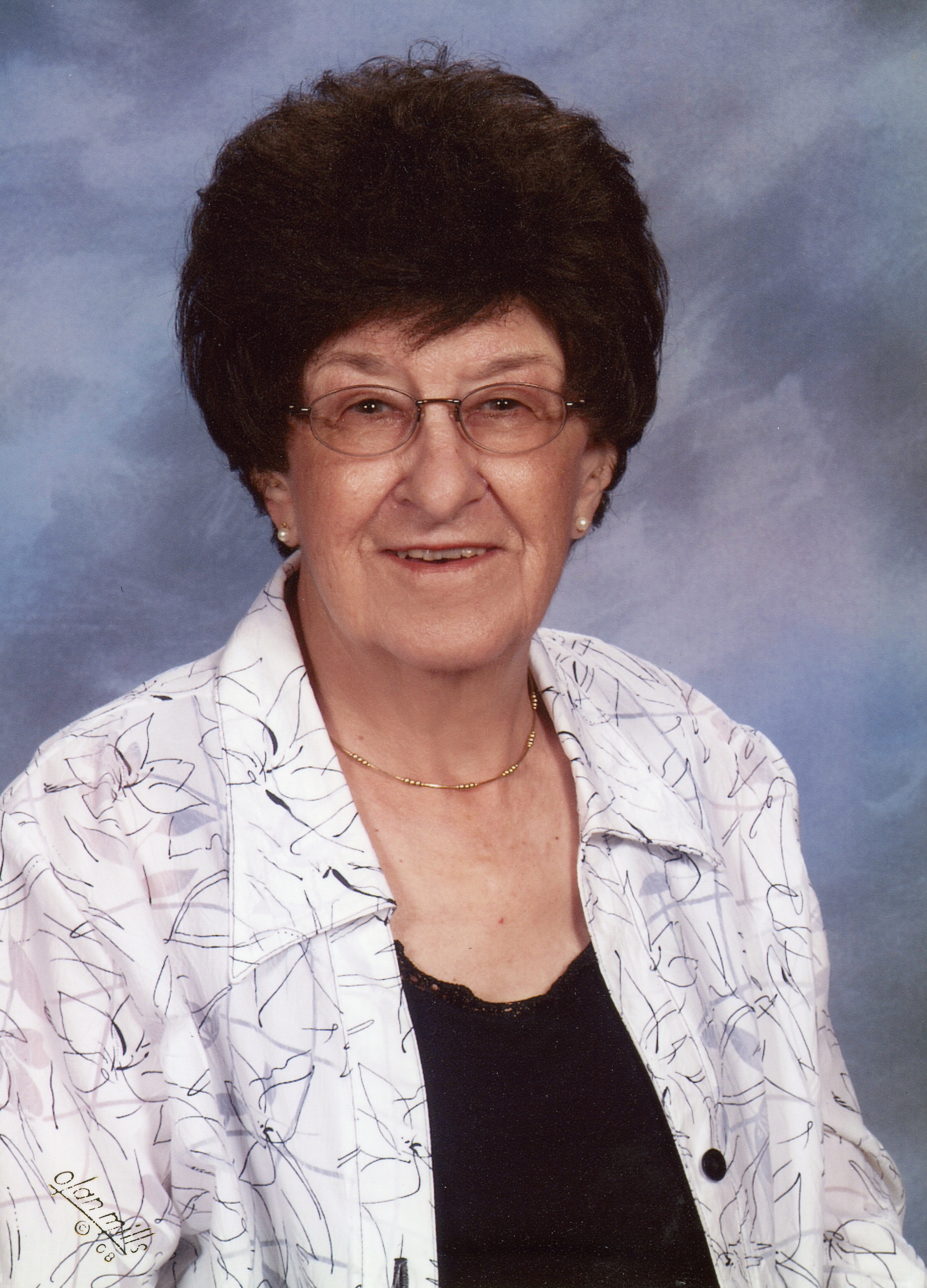
Viola Heronemus, age 96, of WaKeeney, passed away Saturday, October 19, 2019, at Trego County Lemke Memorial Hospital, Long Term Care, WaKeeney.Mary “Viola” was born in Trego County on January 24, 1923, to Jacob and Mollie (Wolf) Stenzel.
Viola attended Trego County Rural School.She was baptized and later confirmed in the Zion Lutheran Church, rural WaKeeney.Viola loved music, but did not read a note.She self-taught herself to play the piano, guitar, and the mandolin.She and her sister, Martha, played and sang on the radio in Dodge City, KS., until their father needed them more on the farm to help with all of the chores.Many times at family gatherings, when everyone would start singing, Mom would sit down at the piano and “tickle the ivories” to any tune we sang.Our Mom had a multitude of talents…baking, cooking delicious meals, crocheting, embroidery work, sewing quilt tops, and the endless hours of time spent at her sewing machine.
On January 5, 1947, Viola was united in marriage with Ray Heronemus in the Zion Lutheran Church, rural WaKeeney.To this union four children were born.They celebrated 50 years of marriage.Ray passed away December 18, 1997.
While her home and family were her priority, Viola also worked in the kitchen at the WaKeeney Grade School, and later working at the Trego Lemke Memorial Hospital in both the housekeeping department and later the laundry department.
Viola was a lifetime member of Bethlehem Lutheran Church and the Ladies Auxiliary, both of WaKeeney.
Viola thoroughly enjoyed her Grandchildren and Great Grandchildren.She attended many ball games, school activities, picking them up from school, and countless hours of babysitting.
Survivors include Mary Lee Dennis (Lee), of Parker, CO, Sherry Papes (Dean), of Woodland Park, CO, Leana Garrett (Kent) and Gary Heronemus (DeeDee), all of WaKeeney; grandchildren, Adrian Murphy (Neng) of Hilo, HI, Cory Garrett (Ashley) and Cody Garrett (Lisa), all of WaKeeney, Kelsey Gabrielson (Matt) of Hutchinson, Will and Cade Papes of Salina, Kayla Heronemus (Jordon) of Abilene and Kylie Heronemus of San Antonio, TX; great-grandchildren, Rose Lewis (David), Mira, Zaida, Ryker Murphy and Kye Brittel, Gage & Maddux Garrett and Layla Gabrielson.
Viola is the last child of the Jacob Stenzel family.She was preceded in death by her parents, an infant brother, 3 brothers and 2 sisters.
Viola will be lovingly remembered by her family and friends forever and always.
Funeral service will be 3:00 p.m., Thursday, October 24, 2019, at Bethlehem Lutheran Church, WaKeeney. Burial will take place in the WaKeeney City Cemetery.
Visitation will be Wednesday evening, from 5 to 7 p.m. at the funeral home in WaKeeney.
In lieu of flowers, memorial contributions are suggested to Bethlehem Lutheran Church. Donations to the church may be sent to Schmitt Funeral Home, 336 N 12th, WaKeeney, KS 67672.
Condolences may be left for the family at www.schmittfuneral.com.
PATTONSBURG, Mo. (AP) — Court documents say a woman who was convicted of a deadly 2002 drunken driving crash in Kansas was high on meth when she was caught driving on the wrong side of a Missouri highway with two children in her vehicle.
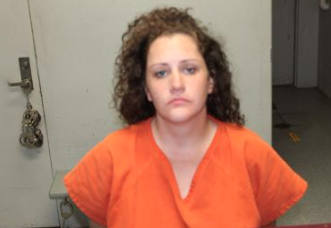
Klitzing photo Daviess-Dekalb Co.
Thirty-six-year-old Ginny Klitzing is jailed without bond on four felony and two misdemeanor charges, including driving while intoxicated as a persistent offender and child endangerment. She has pleaded not guilty.
Charging documents say she was under the influence with a 12- and 15-year-old in her car when she was stopped last month in northwest Missouri’ Daviess County. Court records say officers also found drugs in her vehicle.
Klitzing has a previous conviction for involuntary manslaughter while driving under the influence in Sedgwick County, Kansas.
BY GLENN BRUNKOW Pottawatomie County farmer and rancher
What are your plans for Dec. 1-3? Don’t tell me it is too early to plan that far out. Hobby Lobby has its Christmas decorations on sale, and pumpkin spice is everywhere. Let’s be honest. That isn’t very far away given that we are in the middle of harvest and moving cows home for the winter. I am sure the next six weeks will slip by fast.
So why are the first three days in December so important? It is the Kansas Farm Bureau Annual Meeting in Manhattan, and we will be celebrating more than 100 years of Kansas Farm Bureau. More importantly we will be looking at the next 100 years. Annual meetings are always a big event, but this year’s promises to be one of the biggest and best. You are not going to want to miss it, and that’s why we are making plans six weeks out.
If you have never attended a KFB Annual Meeting you really need to. If it has been even a couple of years since you last attended, you have missed out. Full days are planned with awards and recognition for the good work all our counties do on behalf of agriculture. You will be briefed on the latest from Topeka and Washington.
Sunday, we kick off with a townhall meeting featuring our elected officials and a banquet where we are recognizing some of our best farm families. On Monday, workshops will be offered that will appeal to all interests – I promise. General sessions will include timely topics and outstanding speakers. Tuesday is the business meeting where members finalize the policy book to guide the organization for the upcoming year. It is probably the most important day of the year in our organization. Kansas Farm Bureau packs a lot into three days.
I must be honest; the best part of annual meetings is outside of the meeting rooms and banquet halls. It’s a time for networking and seeing old friends. Often in agriculture we work long days where we don’t have much time to talk to anyone outside of family members, the guys at the parts counter or the vet. Annual meeting gives us a chance to talk to fellow farmers and ranchers from every corner of the state. It is a time to remember that we aren’t in this alone. It’s a chance to share ideas and more importantly stories with others who understand our rural lifestyle.
I hope you will take the time to make plans to attend annual meeting. I promise you won’t be disappointed. Take a minute, flip the calendar up to December and pencil in those three days. They will be here before you can say “pumpkin spice latte.” It is our time to take an active role in the life of our organization; one that has been the bedrock of agriculture for the past century and an organization poised to be the leader for the next 100 years.
“Insight” is a weekly column published by Kansas Farm Bureau, the state’s largest farm organization whose mission is to strengthen agriculture and the lives of Kansans through advocacy, education and service.
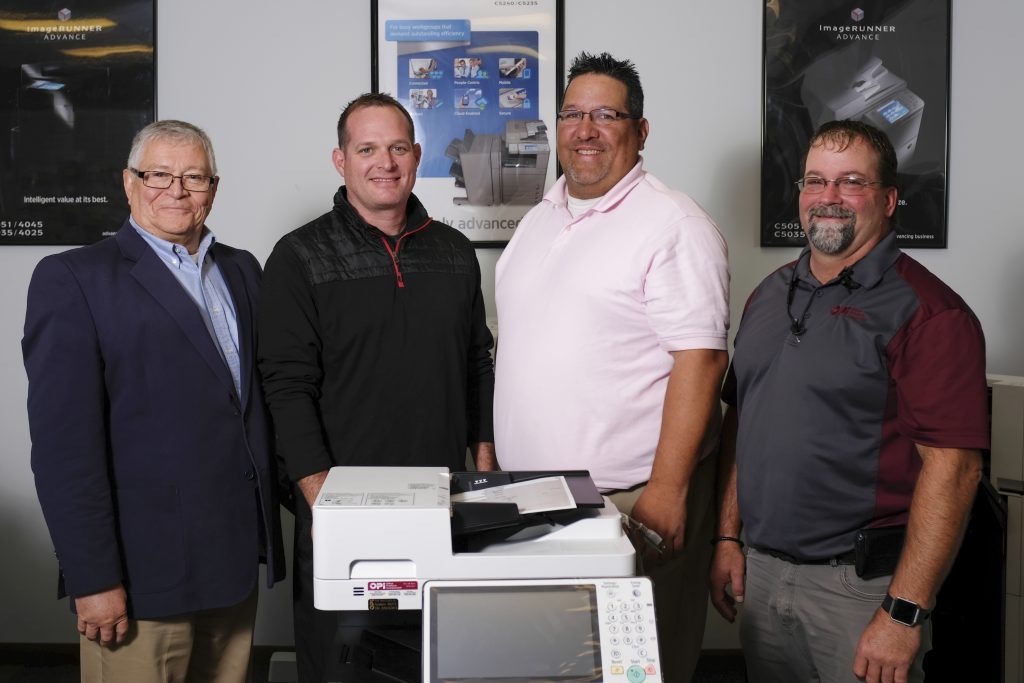
Employees for Office Products Inc Hays location, Jim Grabbe, Ty Berry, Chad Mayfield, and Jeff Thummel pose for a picture at Office Products Inc in Hays, Kansas on October 21, 2019. (Photo: Joey Bahr, www.joeybahr.com)
The newest member of the Office Products Inc. family will open its doors in Hays at 1218 E. 27th on Nov. 1, extending the reach of the Great Bend-based, family-owned business.
OPI has been in business for six decades in Great Bend and also has stores in Larned and Russell.
Kenny and Terry Vink, who are brothers, co-own the new location; they collaborated on the venture with their brother, Craig.
“We always look for ways to grow our business,” said Kenny Vink. “Our family has served central Kansans for more than 60 years and we have a strong core business. But if a business doesn’t grow it stagnates.”
The new store in Hays will offer many of the same products and services as the locations in Great Bend and other communities. These include: sales and service for Canon, HP and Brother copiers and printers; office furniture; custom office design; and a wide variety of office supplies.
“Customers in the Hays area also will have easy access to our specialty services in Great Bend,” Vink noted. “For example, our Copy Center, printing service, computer sales and service, and a range of promotional products will be at customers’ fingertips.
“Most of these services can be handled by our in-house staff in Hays, as well as by phone and email.”
“This involves extensive continuing education, especially for our experts in computer and networking services,” he noted. “We will continue this legacy and grow for
our employees and the communities we serve. This has worked for many years and now Hays area residents can reap the benefits too.”
Vink noted that he and his brother have considered a brick-and-mortar Hays location for quite a while. They recently decided now is the time.
“In today’s market, we knew we needed growth,” Vink said. “And we will help neighboring northwest Kansas businesses prosper too because we buy locally. We know how important this is to the overall economic health of any community.
“Customers of the new store can expect the same prompt and professional service that OPI is known for,” he added.
Opening the new store is not OPI’s first venture into the Hays area; two employees have been available there for sales and service for a few years. They will serve customers in the new store, along with Ty Berry who will fill the manager position.
Berry said he is “looking forward to bringing an OPI store to Hays. I am excited be part of OPI’s growth in northwest Kansas.”
OPI employees in Hays will call on current and new customers within a 60-mile radius; the Great Bend store also reaches a 60-mile radius. The OPI website and online
catalog are always available for shopping and ordering.
OPI is located at 1204 Main in Great Bend; 516 Broadway in Larned; 724 N. Main in Russell; and soon 1218 E. 27th in Hays.
The Hays Public Library will hold a launch party on November 9 to kick off a new program to encourage parents and caregivers to read with children. The 1,000 Books Before Kindergarten initiative is a free reading challenge aimed at growing children’s literacy skills.
“Many children experience difficulty learning how to read. Those who are not proficient readers will have difficulty during their school years and beyond,” said Early Literacy Librarian Sara Schoenthaler. “The ability to read is THE gateway skill to learning and accessing the world. Those children who are read to and exposed to books consistently and from a young age are better prepared to read and succeed.
Parents and caregivers are the first and best teachers of their 0-5 year olds.”
Studies have shown that reading with a child provides a great opportunity for bonding. Reading together is fun and will create life-long memories for both the child and parent. Experts agree that children who learn the necessary skills early do better in school and later in life.
Participating in 1000 Books Before Kindergarten can help put children on the right track.
The Hays Public Library will provide logs to track the number of books read. Each time 100 books are read, a child gets a sticker from the children’s service desk. After completing 500 and 1000 books, a child will get to choose a free book to keep. As much fun as it is to read new stories, families are encouraged to count every time they reread a favorite book. The goal is not to read 1,000 NEW books but to read with their child 1,000 times, no matter if it is the same book over and over again.
Each November the library will host a “graduation” party for anyone that completed the program in the previous 12 months.
A launch party will be held at the library November 9 at 11:30 a.m. This event also will serve as the kickoff of Kansas Reads to Preschoolers Week.
You can find out more about this and other library programs at hayslibrary.org or by calling 785-625-9014.
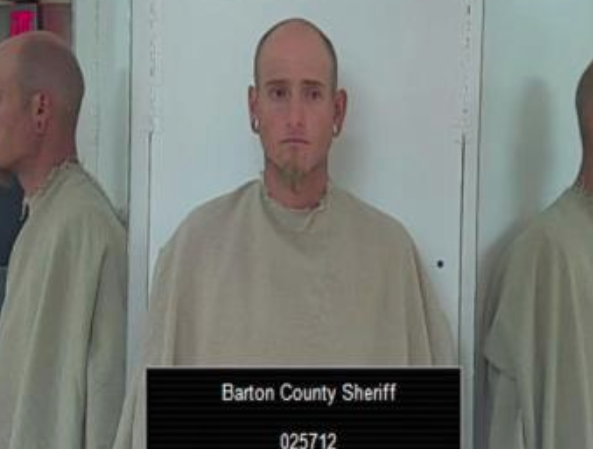
BARTON COUNTY — Law enforcement authorities are investigating a Kansas felon on new charges after a traffic stop.
Phillips photo Barton Co.
Just after 11p.m. Monday, a police officer conducted a traffic stop in the 4300 block of 10th Street in Great Bend for an equipment violation.
Officers contacted the driver and only occupant of the vehicle identified as 32-year-old Alan D. Phillips.
While checking Phillips’ driver’s license, Barton County Sheriff’s Office K9 Maxx arrived on scene. After preforming a sniff of the outside of the vehicle, K9 Maxx indicated to the presence of illegal narcotics. A search of the vehicle was conducted and methamphetamine and paraphernalia were located.
Police arrested Phillips and booked at the Barton County Jail on requested charges of possession of methamphetamine, possession of paraphernalia, driving while suspended and no proof of insurance.
He has two previous drug convictions, according to the Kansas Department of Corrrections.
P-burg plant, two others in Canada, slated to lead North American production within year
By KIRBY ROSS Phillips County Review
PHILLIPSBURG — In Canada, the legal term for it is cannabis. In Kansas, hemp. And with Canadian corporate support and Australian financing, as well as Swedish technical know-how, in Phillips County it’s now called “local industry.”
Exactly one year ago on Thursday of last week, the possession, use, and sale of dry leaf form cannabis became legal in Canada, both for recreational purposes and medicinal.
Then on that one year anniversary other forms of Canadian cannabis — edibles — also became legal there, including cannabis cookies, pizza and soda pop, along with baking products, such cannabis flour, cooking oil, and butter.
Dovetailing into those developments in Canada, in April of last year Kansas Governor Jeff Colyer signed into law the “Alternative Crop Research Act” which allows the Kansas Department of Agriculture to oversee the cultivation of hemp for purposes of research.
Bruce Dawson-Scully, CEO Embark Health
A month later Gov. Colyer signed a related bill into law referred to as the “Updating Substances of the Uniform Controlled Substances Act.” That bill exempted cannabinoidiol, aka CBD oil, from the definition of marijuana, effectively legalizing it. CBD oil had earlier begun being used in food and beverage products in the United States in 2017.
And, according to the Kansas Department of Agriculture, in 2018 the U.S. Farm Bill–
“…removed federal restrictions on the establishment of commercial hemp programs and allows individual states to develop a plan to license the commercial production of hemp and further directs the U.S. Department of Agriculture to develop a plan for states that do not do so.
“In order to establish a program for the commercial production of industrial hemp, Kansas must develop a plan through KDA, in consultation with the Governor and Attorney General. Any such plan must be submitted to USDA for approval.”
The Kansas Department of Agriculture further notes–
“The opportunity to grow a new specialty oilseed crop in Kansas offers potential for diversification for Kansas farmers looking for an alternative crop, or for new farming enterprises interested in cultivating industrial hemp.
“The Kansas agriculture industry has developed a statewide strategic growth plan in recent years, and is committed to pursuing new and innovative opportunities to grow agriculture.
“The research generated by participants of this new industrial hemp program will be valuable data in identifying the growth potential offered in this sector.”
Enter Phillips County into the story. On the one year anniversary of widespread legalization in Canada, and on the occasion of the expansion of legalized byproducts of cannabis/hemp in Canada and Kansas, MMJ Group Holdings Ltd of Nedlands, Australia, revealed it has partnered with Canada-based Embark Health Inc. in expanding its multi-million dollar cannabis extraction plant right here in rural Phillipsburg, Kansas.
In support of the project, Embark, headquartered in Toronto, Canada, has received a $10 million infusion of new capital from investors, including $3.6 million from MMJ.
With Canada legalizing the adult use of cannabis, Embark, a privately held company helmed by Bruce Dawson-Scully, of Delta, British Columbia, has been taking a leading worldwide role in providing cannabis and derivative products utilizing cannabis extracts for the marketplace.
Toward the purpose of manufacturing those extracts, Embark has been doing business in Phillips County since April 29, 2019, with, according to sources, the support of Canadian and Swedish nationals.
MMJ Group’s newest investment with Embark, to be finalized no later than October 31, 2019, will raise MMJ’s 12 percent holdings in Embark up to a total of $9.8 million, almost triple its book value.
MMJ’s infusion of funding in the project is part of the $10 million capital mobilization conducted by Embark to finance the build-out of its cannabis extraction facility south of Phillipsburg, as well as two Canadian sister-facilities in Delta, British Columbia, and Woodstock, Ontario.
Regarding MMJ’s investment in the Phillips County and Canadian extraction plants, MMJ Chairman Peter Wall says, “This is another example of MMJ’s strong market and financial discipline identifying opportunities and bottlenecks in the cannabis value-chain in markets and acting quickly.”
The company further notes that when the Phillipsburg cannabis production facility and the two others are operational, “Embark Health will be a significant cannabis extraction producer servicing the Canadian and global medical and recreational markets.”
Regarding the processing of cannabis, Chairman Wall foresees Phillipsburg, Woodstock and Delta as playing a dominant role across the entire continent within a year.
Says Wall, “Embark Health has executed its business plan and is well positioned to become one of the largest cannabis extraction businesses in North America within twelve months. The investment demonstrates MMJ’s expertise to secure a private negotiated investment in listed and unlisted cannabis businesses.”
Embark Chief Executive Officer Bruce Dawson-Scully is founder of WeedMD of Aylmer, Ontario, Canada, which he notes is a “pharma-grade medical cannabis production facility.” Dawson-Scully has also served as a healthcare consultant to the Chinese government.
In a public statement MMJ states it believes there to be “A much larger market for cannabis products as consumption methods like vapes, edibles, and drinkables will drive most of the adoption and consumption in the mainstream.” Currently the most common method of cannabis consumption is through rolling papers and water pipes.
MMJ states “Embark intends to have two state-of-the-art THC, CBD, and CBG extraction facilities to service Canada’s medical and recreational markets in Delta, British Columbia and Woodstock, Ontario, in addition to optimising a C1-D1 hempseed extraction facility in Phillipsburg, Kansas.”
According to MMJ, in Phillipsburg, “This facility, to be operational in late 2020, will extract hemp seeds and produce hemp protein isolates and cooking oil in addition to CBD isolate. This facility will process 5,000 pounds of biomass per day.”
In order to process that amount per day by this time next year, the cannabis to be used will soon be in full production.
Embark’s website, which has a dedicated page on its Phillipsburg operations (seen at the right), lists the nature of the hemp protein isolates the facility will be creating–
“Delicious, nutritious and nutty in flavour, our hemp seed isolate powder and baking flour are both naturally white and will not change the colour of your baked goods. Paced with 21g of protein per serving, it is vegan, non-gmo, gluten-free, soy-free, lactose-free, kosher, keto and paleo.”
Regarding the hemp seed cooking oil, Embark says it is “Unlike any hemp seed oil available today, Embark’s golden oil has a high cooking point — you can cook with this nutritious oil up to a flash point of 400 degrees.”
Stockopedia provides a business profile of the multi-million dollar investor in Phillips County business operations, MMJ Group Holdings–
“MMJ Group Holdings Limited, formerly MMJ PhytoTech Limited, focuses on developing and commercializing medical cannabis (MC) and MC-based therapeutics.
“Its principal activities include production and distribution of cannabinoid-based food supplements across the Europe, and Pharmaceutical research and development of delivery technologies for administration of cannabinoids.
“Its segments include Cultivation; Processing and Distribution; and Clinical Research.
“The Cultivation segment’s activities include the various applications for cultivation and distribution licenses under the marijuana for medical purposes regulations (MMPR) by Health Canada.
“The Processing and Distribution segment’s activities include processing, manufacturing and distribution of cannabis-based, pharmaceutical, nutraceutical and cosmetics product across the European market.
“The Clinical Research segment’s activities include clinical research of delivery systems and devices.”
“The company’s portfolio includes Harvest One, PhytoTech Therapeutics, WeedMe, Fire and Flower, Bien, BevCanna, and others.”
Article reprinted from the Phillips County Review, with permission. The Phillips County Review has been named by the Kansas Press Association as being the state’s top newspaper in its circulation class for 2019, beating out over 180 other publications.
Editor and writer Kirby Ross, has also personally won over 20 Kansas Press Association Awards of Excellence for his newspaper work over the past three years, including first place recognition for news reporting, news and writing excellence, feature writing, political and government reporting, investigative reporting, editorial writing and news photography. He can be reached at [email protected].
DIGHTON, Kansas — A billboard along Interstate 70 boasting about the productivity of Kansas farmers may say more about what’s happening in agriculture than those who put it there realize.
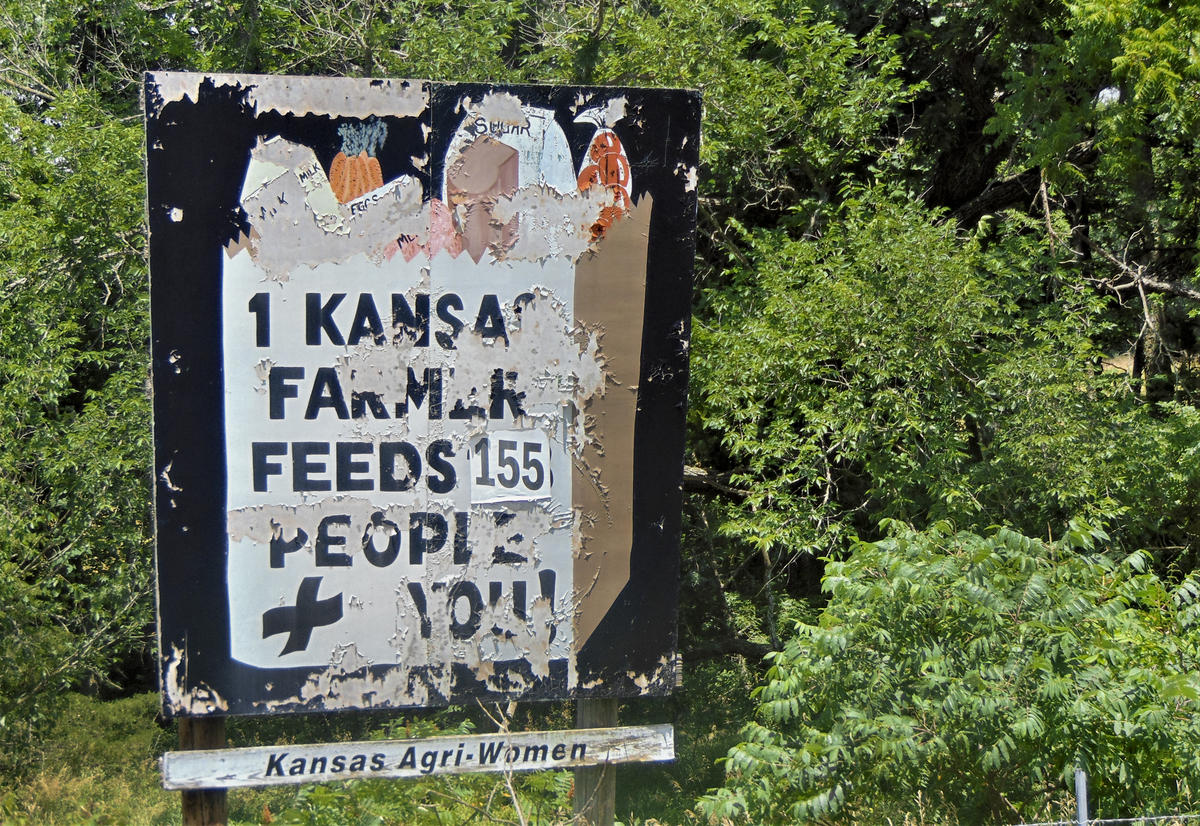
The message seems simple and straightforward: “1 Kansas Farmer Feeds 155 People + You!”
A closer look reveals it’s been crudely updated — an indication that the tally changes with some frequency.
The steady escalation of the number of people fed by a single Kansas farmer — from 73 in the 1970s to 155 today — reveals how lots of small farmers have been replaced by large farmers intent on getting even bigger.
That trend threatens scores of small towns that sprouted on the prairie in a different time, when larger numbers of small farmers depended on them.
Many of Kansas’ small towns look weathered, worn and neglected after more than a century of exodus. Most rose up more than a century ago, to meet the basic needs of farmers. They established banks and churches. Grocery stores and implement dealers prospered.
This sign stands along Interstate 70 between Topeka and Manhattan. Credit Jim McLean / Kansas News Service
Consider Atwood, the childhood home of former Gov. Mike Hayden.
The Atwood that Hayden knew growing up during the 1950s was a bustling town of about 2,000 people tucked into the northwest corner of the state. Well-kept shops lined Main Street. Hayden recalls six grocery stores, five car dealers, at least one pharmacy and a thriving local newspaper.
“It was,” he said, “Norman Rockwell’s America.”
Since then, the town lost nearly half its population. Most of those foundational businesses, Hayden said, “eroded away” and took the community’s core of civic leaders with them.
As governor in the late 1980s, Hayden spoke defensively about the decline of rural Kansas. A pair of East Coast academics — Frank and Deborah Popper — proposed returning expanses of rural Kansas and other Great Plains states to the buffalo as part of a massive nature preserve.
Hayden ridiculed the idea.
“I came out guns blazing,” Hayden said. “I thought the Poppers were off base and that they should perhaps go back east and we’d be just fine out here.”
He now says he was wrong.
“They were right about the out-migration they observed,” Hayden said. “In fact, it’s happening faster than they predicted.”
Several factors are responsible for the decline, Hayden said, including consolidation in the ag economy. He cited his family farm as an example.
In 1960, Hayden said, that farm supported 17 people. Most of them lived in and around Atwood. Today, it supports only three.
Today, that farm is bigger and churns out more grain than ever. But only one of the three people tending the land works at it full-time.
“My brother can do it all by himself,” Hayden said.
A report issued last year by the U.S. Department of Agriculture said that as recently as 1987, mid-sized farms between 100 and 1,000 acres covered nearly 60% of the nation’s cropland. By 2012, those midsize farms had lost about half their acreage to large farms — those of 2,000 acres or more.
Don Hineman’s western Kansas farm — located just south of Dighton — covered 3,000 acres when he returned from college in 1973 to help manage it.
It’s now 14,000 acres, or nearly 22 square miles, and still growing.
State representative and farmer Don Hineman has continually expanded the scale of his operation to keep pace with agriculture trends. Credit Chris Neal / For the Kansas News Service
“When you have opportunities for growth you’d better grab them,” said Hineman, a state representative who chairs the House Committee on Rural Revitalization.
Getting bigger, Hineman said, made him a more efficient farmer and a better steward of the land. He can afford the sophisticated equipment needed for the latest precision agriculture.
Those systems map fields in great detail and analyze nutrient levels in different patches of soil so satellite-guided planters and sprayers can deliver the smallest amount of seed and fertilizer to grow the most bountiful crops.
“It bothers me to some extent that what we’re doing on our farm is, in a way, contributing to the decline of the local community,” Hineman said. “But it’s a matter of self-preservation. You either get bigger or you get out.”
Gail Fuller contends that’s simply not true.
“We’ve been sold a bill of goods,” Fuller said.
He owns a small farm near Emporia and challenges the notion underlying much of U.S. agriculture policy that American farmers need to feed the world with commodity crops.
“We’re doing it at the expense of the climate, the environment,” Fuller said.
Large-scale commodity farming, he argues, puts farmers at the mercy of markets that often fail to return breakeven prices and saddles them with debt.
Fuller shrank his farm dramatically several years ago after a lengthy dispute over a crop insurance payment pushed him to the brink of bankruptcy.
“We’re a very diverse operation,” Fuller said, explaining that he grazes cattle on perennial grasses and grows only enough grain to feed his pigs and chickens.
Fuller markets pricey grass-fed beef and other products directly to consumers and said he’s just starting to turn a profit after years of being buried in debt.
Gail Fuller has turned away from commodity farming. Credit Jim McLean / Kansas News Service
“Most people hate paying income taxes,” he said. “I actually look forward to it after being beat up for 10 or 15 years.”
Even with farm bankruptcies on the rise, most ag economists say it’s unlikely that a significant number of Kansas commodity farmers will follow Fuller’s lead despite evidence that sticking with the status quo means the continued hollowing out of rural communities.
“We have seen these trends of population and economic decline going on for just about a century now,” said John Leatherman, a Kansas State University agricultural economist.
Those trends, Leatherman said, are being driven by major economic forces beyond the control of Kansas farmers, community leaders — or state policymakers.
Given that trajectory, Hineman, the state lawmaker and large-scale farmer, said he hopes that taxpayers in Kansas’ urban and suburban centers won’t tire of subsidizing rural communities as they fight for survival.
“We’re all in this together,” he said. “It’s unrealistic and unthinkable that urban Kansas would say, ‘Solve your own problems rural Kansas. We’re done with you.’”
This is the second in a series of stories investigating the decline in rural Kansas and efforts to reverse it. The next story looks at how communities can either shrink and whither, our find ways to thrive with a smaller population.
Support for this season of “My Fellow Kansans” was provided by the United Methodist Health Ministry Fund, working to improve the health and wholeness of Kansans since 1986 through funding innovative ideas and sparking conversations in the health community. Learn more at healthfund.org.
Jim McLean is the senior correspondent for the Kansas News Service, a collaboration of KCUR, Kansas Public Radio, KMUW and High Plains Public Radio covering health, education and politics. You can reach him on Twitter @jmcleanks or email [email protected].
KANSAS CITY, Mo. — In the seventh edition of the United Soccer Coaches national poll, released on Tuesday (Oct. 22), FHSU men’s soccer dropped to No. 23.
The Tigers were ranked No. 18 last week following victories over Oklahoma Baptist and Southern Nazarene. However, their latest loss to Northeastern State has seen Fort Hays State drop five spots. In their previous week of games, FHSU also defeated Rogers State, who received votes but did not enter into the Top-25 this week, for the second time in 2019.
Fort Hays State will play in a pair of pivotal home games this week against Harding University and Ouachita Baptist.
The match against Harding will occur on Thursday (Oct. 24). The Bisons hold second place in the Great American Conference. A black and gold defeat in this matchup would mean relinquishing first place in conference play as both teams would have accumulated 22 points on the season. FHSU has already beaten Harding in the current campaign, 8-1, after drawing against Ouachita Baptist. The two Tigers squads are slated to face off on Saturday (Oct. 26) for an 11 a.m. kickoff.
Years ago, a family brought a 25-year-old farmer into the emergency room with a gunshot hole over his heart and with no pulse or breathing for more than ten minutes. It was a self-inflicted wound and this young farmer would farm no more. The family was besides themselves with loud and sorrowful wailing that wrenched my soul. They told me that the impending harvest looked poor, the loan was coming due, and he had been isolating himself, drinking more and getting angry at every little thing. They had no clue he was at risk of suicide. Sure, he was a little down, but not this! He picked a permanent answer to a temporary problem.
Significant thoughts of suicide occur in one of four women and one of eight men. Although there are more attempts by women, more deaths occur by men. In 2017 there were 1.4 million attempts and 47,000 deaths due to suicide, and despite these high numbers, the money invested in depression and suicide research is sadly low.
Risk factors for suicide include family history or prior experience of depression or manic depression, a history of being abused or being an abuser, excessive use of alcohol, sleeping pills or substance dependence, a recent emotional loss or a significant medical illness. Also, there is higher risk during local epidemics of suicide in youth especially on reservations. Sometimes depression and suicide have no reason whatsoever.
How can any of us help ourselves or a person at risk? First, remember it never hurts to ask, “Are you thinking about suicide?” Those words will NOT bring it on but could encourage the person to find someone to give lifesaving assistance. If you sense there is an emotional downward change happening, encourage that person to get help. If depression is milder and NOT at the suicide level, nonmedicinal treatment can give relief. Examples abound such as daily 30-minute walks, regular interaction with friends and family and the regular opening of one’s heart to spiritual connectedness. If more help is needed, talk with your physician or care provider and consider medicines that effectively work for depression. Although two thirds of people with depression do not seek or receive help; when the one third who do get help are treated, four out of five of those folks are better in a month. Get help if needed.
Finally, if you are in crisis, call the Suicide Prevention Lifeline at 1-800-273-TALK (8255) which is available 24/7. Please don’t chose a permanent answer to a temporary problem.
Richard P. Holm, MD is founder of The Prairie Doc® and author of “Life’s Final Season, A Guide for Aging and Dying with Grace” available on Amazon. For free and easy access to the entire Prairie Doc® library, visit www.prairiedoc.org and follow Prairie Doc® on Facebook, featuring On Call with the Prairie Doc® a medical Q&A show streamed most Thursdays at 7 p.m. central.