We have a brand new updated website! Click here to check it out!

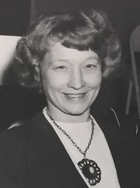
Betty Jean Byer

Betty Jean Byer, 95, died Friday, October 18, 2019 at The Ranch House in Garden City. She was born February 15, 1924 in Lewis, Kansas the daughter of Harold & Syvilla Ann (Strawn) Black.

Betty grew up and attended schools in Cimarron, Kansas. On July 19, 1941, she married Harold “Bud” Byer, Jr. in Cimarron. They lived Southwest of Ingalls, until 1987 when they moved to Garden City. They have lived in Garden City since. A homemaker and farm wife, Betty enjoyed crocheting, gardening, sewing, arranging flowers, and she especially loved to spend time with her family.

Survivors include four daughters Barbara Jean Adams of Garden City, Yvonne Annette Yost of Hays, Kansas, Debra Jane Atkinson of Garden City, & Cynthia Diane Frazier of Centennial, Colorado; five grandchildren; and ten great-grandchildren. Betty is preceded in death by her husband Bud who died on April 26, 2016. She is also preceded in death by her parents; a daughter Judith Deanne Byer; and two brothers William Black and Robert Black.

A graveside service will be held at 2:00 p.m. on Monday, October 21, 2019 at the Cimarron Cemetery in Cimarron, Kansas. Friends may call from 5:00 p.m. to 8:00 p.m. on Sunday and from 9:00 a.m. to Noon Monday all at Garnand Funeral Home in Garden City. The family suggests memorials given to Meals On Wheels in care of the funeral home.

Mary Anna Anschutz

Mary Anna Anschutz, 91, of Russell, Kansas, died on Saturday, October 19, 2019, at the Red Bud Village in Plainview, Kansas.

Services are pending at this time. Pohlman-Varner-Peeler Mortuary of Russell, Kansas, is in charge of the funeral service arrangements.

Marjorie Maxine (Nelson) Abell

Marjorie Maxine (Nelson) Abell, 91, of Grinnell, died Saturday, October 19, 2019, at the Gove County Medical Center in Quinter.

She was born May 31, 1928, to Walter and Ruby Nelson, and raised on a farm in the Clifton-Clyde area of central Kansas. She attended Kansas Wesleyan University in Salina, and graduated with a teaching degree from Kansas State University in Manhattan, Kansas. She went on to teach school in Republic, Lebanon, and Hoxie (KS.) On August 17, 1957, she married Robert (Bob) Abell, and together they built their family and became the 3rd generation to inherit and work the Abell family farming and ranching operation in Gove County.

Marjorie was a farm/ranch wife and mother, and returned to teaching as a substitute in surrounding schools for over 40 years. She was a member of the Grinnell United Methodist Church, active in the Kansas Farm Bureau, served on the Board of Directors for the Gove County Medical Center and the High Plains Mental Health Center, and remained active as a 4-H home economics judge at numerous county fairs over the years, including this past summer, and had already accepted invitations to return to several fairs for the summer of 2020.

Marjorie was preceded in death by her parents, her brothers Calvin Nelson and Robert Nelson, and her husband Bob.

She is survived by a brother, Chester Nelson of Corpus Christi, Texas, her children, Roger Abell, of Orion, KS, Dwight (Rhonda) Abell, of Oakley, KS, Gordon (Stacy) Abell, of Olathe, KS, Cathleen Abell, of Holcomb, KS, and Charlotte Bailey, of Olathe, KS; seven grandchildren, Hannah Pauls, Laura Holzmeister, Kelsey Brown, Kayla Abell, Wyatt Abell, Ethan Abell, and Nelson Bailey; two (plus one-on-the-way) great grandchildren; and many beloved nieces, nephews, cousins, and friends.

In honoring Marjorie’s specific request, cremation was chosen and no formal service will be held. Just as with Bob’s passing in April 2017, the family will be celebrating the life of Marjorie in a private tradition on the family ranch. Marjorie also specifically requested the family dissuade others from traditional gestures of grief support such as flowers, etc. In honoring that sentiment, the family would ask that in lieu of flowers, monetary gifts, cards, etc., that you ‘pay it forward’ as Marj would do – go out of your way to be kind to others, reach out and help someone, donate your time to a community board or charity, clip coupons and send in rebates for others, purchase groceries then make a meal for a family in need, deliver homemade bread to a widow or ‘shut in’, save and send newspaper clippings of interest to friend/family of article’s subject – basically do something, anything, to make someone else’s day a little better, their life a little easier, and remind them they are thought of and prayed for.

The family wishes to extend special gratitude and thankfulness to the team at the Gove County Medical Center for their exceptional respect and compassion during Marjorie’s stay in the swing bed unit; may loved ones of others receive the same loving care Marjorie did.
Viola Heronemus

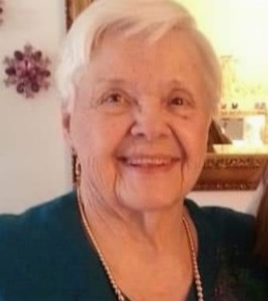
Viola Heronemus, age 96, of WaKeeney, died Saturday, October 19, 2019, at Trego County Lemke Memorial Hospital Long Term Care.

Arrangements are pending with Schmitt Funeral Home, WaKeeney.

Eagle Radio Auction continues online

If you missed out on last week’s Eagle Radio Auction don’t worry, there are still opportunities to bid on several items through the Eagle Radio Online Auction.

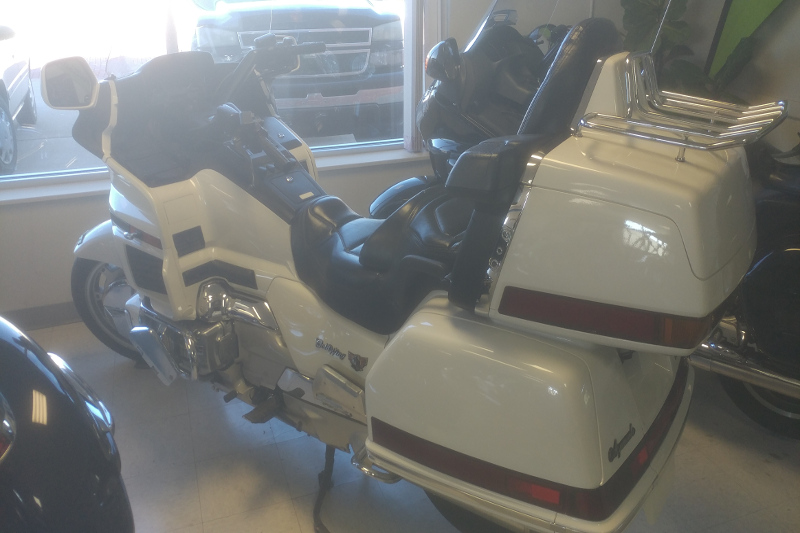
Among the items still up for bid includes a 1997 Honda Goldwing GL 1500 Aspencade motorcycle from Day Motorsports.

This bike looks new and is in great shape. Features include saddle bags, a trunk, a fairing, and is pearl white in color. The bike has 58,555 miles and was a local trade. The retail price of this motorcycle is $5,895. For more information on this motorcycle, call Day Motorsports at 785-743-5723.

Click HERE to check out items still available.

Two from Great Bend killed after plane crash in New Mexico

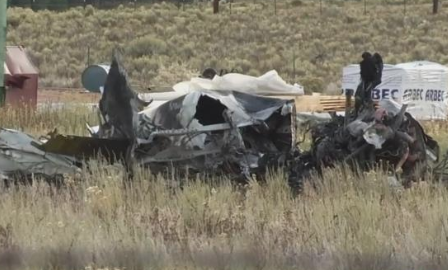
COLFAX COUNTY, New Mexico —Two people from Great Bend died in an accident Sunday in Colfax County, New Mexico.

Fatal plane crash Sunday in New Mexico photo courtesy KOB TV

Just before 9a.m. Sunday, multiple 911 calls were made regarding a plane down between Zebs and True Value, according to the Angel New Mexico Fire Department.

The Angel Fire Fire Department and additional first responders were on scene immediately and the fire was extinguished by 9a.m.
There are 2 confirmed fatalities identified a Richard Schenk, 65 and Anne Schenk of Great Bend.

 Schenk was an experienced commercial rated pilot, according to the fire department.

The cause of the accident is under investigation by the NTSB and the FAA. No cause has been determined at this time.

Watch out for Bambi; 131 vehicle-deer crashes in Ellis Co. last year

KDWPT

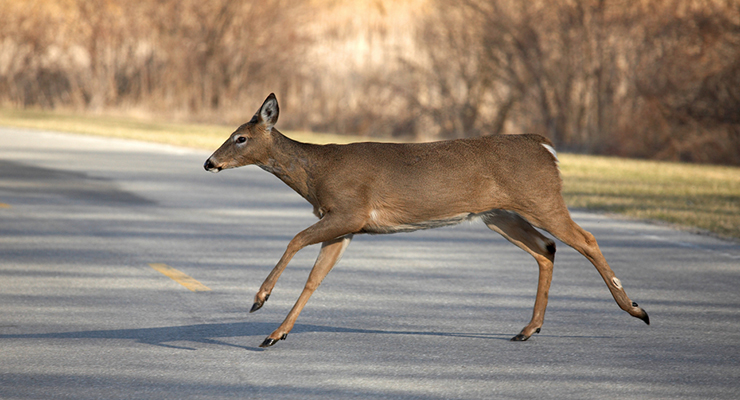
TOPEKA – Mating season and the quest for more secure habitat have deer on the move this time of year, increasing the chances of deer-vehicle collisions.

Typically, the greatest number of deer-vehicle crashes are in mid-November when the rut, or mating season, peaks. In addition to the rut, deer are also on the move in mid-fall seeking new food sources and shelter as crops are harvested and leaves fall from trees and shrubs, leaving them less secure than in their summer habitats.

“Wet weather this year may cause some deer to cross roads in new places and the additional vegetation growth could make deer harder to see until they are in the road. The approaching breeding season increases deer movement, and the cooler weather, along with young deer dispersing to find new home ranges, mean more deer may be crossing the roads.” said Levi Jaster, Kansas Department of Wildlife, Parks and Tourism Big Game Coordinator.

According to the Kansas Department of Transportation, 10,734 (16.5 percent) of the 64,933 vehicle crashes reported in 2018 were deer-related (crashes in which a deer and vehicle actually collided, or the presence of a deer was a contributing circumstance). Although crashes involving deer occur throughout the year in every Kansas county, the highest number of crashes typically occur where there are the most vehicles. Sedgwick County had 418 deer-vehicle crashes reported in 2018, the most of any county, while Butler County followed with 384 reported deer-vehicle crashes.

Ellis County reported 131 deer-vehicle crashes.


“In addition to potentially causing human injuries and loss of life, deer collisions often cause significant vehicle damage that can lead to large expenses for the vehicle owner if not properly insured,” said Shawn Steward, Public and Government Affairs Manager for AAA Kansas. “Of the animal strikes reported by AAA Insurance policy holders during the five year period between 2014 and 2018, the average cost per claim was nearly $4,300.”

The Kansas Highway Patrol (KHP) cautions drivers to refrain from making exaggerated maneuvers to avoid a deer in the road, lest a bad situation become even worse.

“If you are unfortunate enough to have a deer enter the highway in front of your car, it is best to hit the animal and not swerve to avoid it,” said the KHP’s Lt. Adam Winters. “Often, we find more serious crashes occur when you swerve to miss the deer, potentially losing control of your vehicle, leaving the road or veering into oncoming traffic.”

The agencies recommend the following to help motorists avoid crashes with deer:

  • Be especially watchful at dawn and dusk, when deer are more active.
  • If you see one deer, watch for others, as they seldom travel alone.
  • Reduce speed and be alert near wooded areas or green spaces, such as parks and golf courses, and near water sources such as streams and ponds.
  • Deer crossing signs show areas where high numbers of vehicle/deer crashes have occurred in the past. Heed these warnings.
  • Use bright lights when there is no oncoming traffic and scan the road ahead of you to watch for deer.
  • Don’t swerve to avoid hitting a deer—the most serious crashes sometimes occur when motorists swerve and collide with another vehicle or run off the road and hit an obstacle.
  • Always wear a seat belt and use the appropriately-fitted child safety seats—they are your best defense should you be involved in a crash.
  • Honk your horn with one long blast. A long blast on your horn may frighten large animals, such as deer, away from your vehicle. The Insurance Information Institute (I.I.I.) advises against relying on devices such as deer whistles and reflectors, which have not been proven to reduce collisions with animals.

If you do strike a deer, here are some additional tips:

  • Slow down, move your vehicle to the shoulder if possible, and call for law enforcement. KHP dispatch can be reached at *47, Kansas Turnpike at *KTA, and local law enforcement at 911. Make sure you tell the dispatcher if the animal or your vehicle is still in the road.
  • If you hit a deer or other animal, do not worry about removing the animal. Law enforcement can remove the animal from the road when they arrive. Don’t go near a wounded animal. A frightened and wounded animal can be unpredictable.
  • Turn on your hazard lights and remain buckled up inside your vehicle. You are more protected this way, should a secondary crash occur.
  • If you must be outside your vehicle, make sure it is as far off the road as possible, and do not stand between your vehicle and another one. Keep children buckled, and in car seats in the vehicle. Be vigilant and watch traffic to ensure they aren’t getting close to you.

Anyone involved in a vehicle-deer crash resulting in personal injury or property damage that totals $1,000 or more is required to immediately report the crash to the nearest law enforcement agency. Failure to report any traffic crash is a misdemeanor and may result in suspension of driving privileges.

A salvage tag is required to remove a deer carcass, or any part of the carcass, from the crash site. Tags can be issued by KHP troopers, sheriff’s deputies, or KDWPT game wardens.

Kansas felon arrested after high-speed chase in stolen jeep

SHAWNEE COUNTY — Law enforcement authorities are investigating a suspect after a high-speed chase and arrest.

Lauren Ortiz photo KDOC

On Saturday after, a deputy turned around on a Jeep Liberty that was speeding eastbound on NW 35th from NW Button Road in Shawnee County, according to Captain Danny Lotridge. 

As the deputy was attempting to stop the vehicle, the driver turned south onto NW Dawdy Drive, heavily accelerated and began to flee from the deputy.

The fleeing vehicle hit an occupied vehicle at NW 33rd Place and Dawdy Drive. The two occupants of this the Pontiac G8, were not injured. The driver and passenger of the Jeep were taken into custody without incident.

The driver of the Jeep was identified as Lauren A. Ortiz, 29, Topeka. She had an outstanding felony arrest warrant out of Jefferson County for theft and was driving on a suspended license.

The passenger of the Jeep was identified as Anterio Deshazer, 30, Topeka.

During the investigation deputies determined the license plate on the Jeep Liberty had been altered and did not belong on the vehicle. The Jeep was reported stolen from Leavenworth, KS. During a search of the Jeep deputies located a credit card reader machine and numerous fraudulent ID cards, social security cards, checks and counterfeit money.

Lauren Ortiz is being held on requested charges that include Possession of a Stolen Vehicle, Flee and Elude, Driving While Suspended, Possession of Counterfeit Money and multiple traffic violations. She has previous convictions that include forgery, identity theft and drugs, according to the Kansas Department of Corrections.

Anterio Deshazer was questioned by detectives and released.

Detectives with the Sheriff’s Office will continue to investigate the fraudulent documents found in the Jeep.

Exploring Outdoors Kansas: Zombie deer in Kansas

Steve Gilliland
Chronic Wasting Disease is a debilitating, fatal disease that attacks the central nervous system of whitetail deer, mule deer and Rocky Mountain elk, actually resulting in small holes developing in their brains.

CWD was first diagnosed in captive animals in Colorado and Wyoming in the late 1960s and 1970s, and was seen in free ranging animals in the early 1980s. Kansas’s fish and game officials have been testing hunter-harvested Kansas deer since 1996, and during the 2005 firearms season, the first documented case was discovered in a whitetail doe taken near the Cheyenne County town of St. Francis, in the northwestern corner of the state.

Later that year, KDWPT staff harvested 50 deer, 29 mule deer and 21 whitetails within a 15-mile radius of where the infected doe was shot. Tissue samples from each deer were collected at a field lab and sent to KSU for analysis, and all 50 dear tested negative for CWD. To date over 28,000 tissue samples have been tested, but sadly 216 Kansas deer have tested positive for Chronic Wasting Disease, with most found in Decatur, Rawlins, Sheridan and Norton counties in Northwestern Kansas.

In 2018, more than 350 tissue samples were tested from hunter-harvested Kansas deer, with the target area being the southwestern part of the state. Thirty-seven of those deer tested positive for CWD. Positive tests came from the counties of Cheyenne, Rawlins, Decatur, Norton, Phillips, Smith, Thomas, Sheridan, Gove, Rooks, Scott, Lane, Hamilton, Hodgeman, Ford, and Stafford, and sadly the counties of Haskell, Edwards, Pratt, Osborne and Reno were added to the list last year, showing that the disease is spreading south and east.

CWD appears to target animals older than I year, and it can be several months or up to two years before outward symptoms become apparent. Animals in advanced stages of the disease will seem listless, may walk in repetitive patterns with their head lowered, will probably exhibit excessive salivation and a blank expression, and will look to be in very poor overall health; in short, they will appear zombie-like. If you witness deer or elk with any of these symptoms, report it to a conservation officer immediately!

Despite ongoing research, there is currently no known cure for Chronic Wasting Disease, and quite frankly I don’t have a clue how a cure would ever be administered if one were found. To date, the only tool to prevent it’s spread is to restrict the transport of deer carcasses from areas where CWD is known to exist. Once an infective particle (a “miss-folded” protein called a prion) is deposited in the environment, either from an infected carcass or from a live infected animal, it may remain capable of infecting a healthy animal for decades. Other diseases of this same group are scrapie in sheep and goats and mad cow disease in cattle.

Although CWD is always fatal to infected deer or elk, humans have never been known to contract the disease. Cattle and other domestic livestock appear to be naturally resistant to CWD. Common sense should dictate not to consume any part of a known infected animal. Special precautions are also urged for hunters harvesting deer or elk from an area known to have produced an infected animal. All meat from these carcasses should be boned-out, and none of the brain, spinal cord tissue, eyes, spleen or lymph nodes should be consumed. Extra care should also be taken to thoroughly wash and disinfect hands and butchering equipment. Carcass waste should be left or buried on the property where the deer was taken or double-bagged and taken to a landfill. Online electronic check -in is available to allow hunters to transport boned-out deer harvested with an antlerless permit.

I like to end these columns with some snappy, witty comments, and I could get a lot of traction from the title Zombie Deer, especially near Halloween. But I can’t bring myself to go there this time, given the implications of Chronic Wasting Disease on the Kansas deer population and on Kansas deer hunting. Let’s pray that God allows research to find something to conquer this disease…. Continue to Explore Kansas Outdoors.

Steve Gilliland, Inman, can be contacted by email at [email protected].

Kansas teen dead, 1 hospitalized after SUV rollover crash

MORTON COUNTY — One person died in an accident just after 6p.m. Sunday in Morton County.

The Kansas Highway Patrol reported a 2000 Chevy Tahoe driven by Edgar Rodriguez, 16, Hugoton, was eastbound on Road Z at County Road 27 fourteen miles north of Rolla. The SUV ran off the roadway to the right, entered the south ditch overturned and ejected the driver.

Rodriguez was transported to the Stanton County Hospital where he died. EMS transported a passenger Juan Fraire, 16, Hugoton, to Wesley Medical Center. Rodriguez was not wearing a seat belt, according to the KHP.

Copyright Eagle Radio | FCC Public Files | EEO Public File