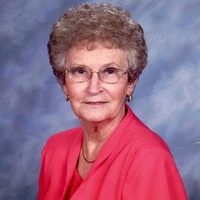
Edna Lee Degenhardt, 88, Hays, died Sunday, January 6, 2019 at HaysMed.
Funeral arrangements are pending and will be announced by Hays Memorial Chapel.
Edna Lee Degenhardt, 88, Hays, died Sunday, January 6, 2019 at HaysMed.
Funeral arrangements are pending and will be announced by Hays Memorial Chapel.
Macalene M. (Barnhart) Olson, 89, of Atwood, formerly of McDonald, KS, died Jan. 5, 2019. She was born August 15, 1929, in St. Francis, KS to Harvey and Irene Evelyn (Moore) Barnhart.
She attended a rural school near their home and later attended and graduated from St. Francis high school.
She worked as a telephone operator in McCook, NE for a time. She then married Alden “Hank” Olson from Ludell, KS. They were married in St. Francis on August 13, 1950. They made their home in Atwood, KS. They had five sons: David Alden, Randal Ames, Kent Douglas, Richard Lynn, and Gregory Alan.
They moved the family to McDonald, KS in 1959 for Hank’s new teaching job. Macalene was a stay at home mom for many years while the boys were growing up. She was hard working and took very good care of the home. She didn’t have much extra time for other activities. She did dabble in ceramics and enjoyed reading and listening to CD’s, especially country music. She later became interested in bird-watching.
In 1970, she began working at The Peoples State Bank in McDonald. Once the boys were grown, Macalene and Hank enjoyed traveling together.
She was preceded in death by her parents; her siblings, John, James, Manota, Jerdine, and Maurice and a great-grandson Lyndon.
Surivivors include her husband Alden; sons, Dave (Marty), Randy (Peggy), Kent (Karen), Rick and Greg (Sandee); 13 grandchildren; 10 great-grandchildren; sisters, Wilma Petsch and Willa Scott and numerous nieces and nephews.
Funeral services will be at 11 am, Wed., Jan. 9, 2019, at Baalmann Mortuary, Atwood. Visitation will be the hour prior to funeral service. Burial will follow the service at Fairview Cemetery, Atwood. Memorials are suggested to Hospice of McDonald or the Atwood Good Samaritan, in care of Baalmann Mortuary, PO Box 391, Colby, KS 67701. For information or condolences, please visit www.baalmannmortuary.com
WICHITA, Kan. (AP) — Shady telemarketers would face a tougher time operating in Kansas under a new bill.

Incoming Republican Rep. Bill Rhiley, of Wellington, says he pre-filed the bill after getting complaints about calls that appear to be from Kansas, but instead are automated sales pitches from telemarketers in other states or overseas.
The bill would set limits on the use of robocalling equipment and crack down on “neighbor spoofing,” the practice of making distant calls display as local numbers on caller ID. Rhiley says he’s recently had telemarketers spoof his own phone number.
One provision of the bill would prohibit anyone, including a phone company, from providing local phone numbers to an out-of-state entity unless the number is openly listed. Rhiley wants consumers to share their stories .
 Elsie Bittel, age 85, of WaKeeney, passed away Saturday, January 5, 2019, at Trego County Lemke Memorial Hospital – Long Term Care, WaKeeney.
Mass of Christian Burial will be 10:30 a.m., Wednesday, January 9, 2019, at Christ the King Catholic Church, WaKeeney, KS. Private family burial will follow at St. Anthony Cemetery, St. Peter, KS.
Visitation will be Tuesday evening, from 5 to 7, with a parish vigil following at 7 p.m. All will take place at the funeral home in WaKeeney.
IN LIEU OF FLOWERS, memorial contributions are suggested to the Trego Hospital Endowment Foundation (to benefit the long term care unit). Donations may be left at the visitation, service, or sent to Schmitt Funeral Home, 336 North 12th, WaKeeney, KS 67672.
A complete obituary is pending with Schmitt Funeral Home.
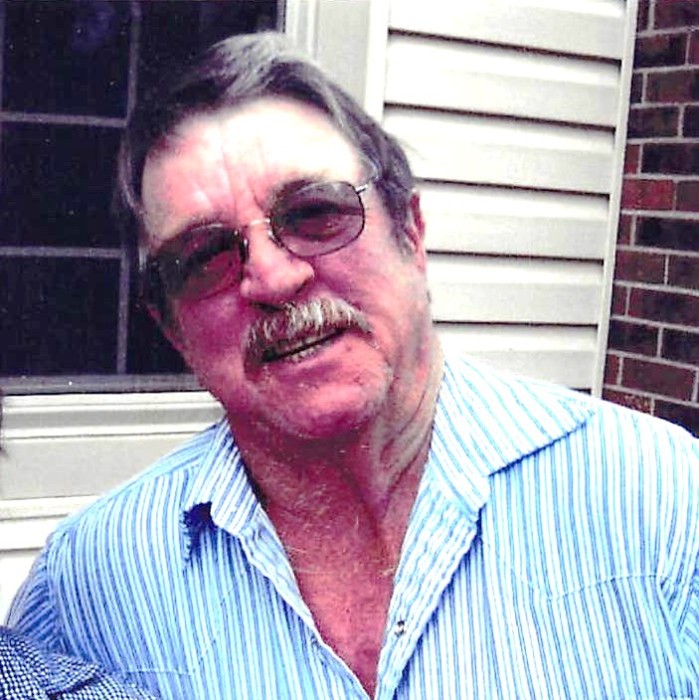
 Elvin Leroy Patee, age 75 of Ellis, Kansas passed away Thursday, January 3, 2019 at Trego County Lemke Memorial Hospital in WaKeeney, Kansas.
Memorial services will be 2 PM on Saturday, January 12, 2019 at the Ellis United Methodist Church. Inurnment will follow in the Mt. Hope Cemetery.
Memorial contributions are suggested to the Trego Hospital Endowment Foundation.
A complete obituary is pending with Keithley Funeral Chapel 400 E. 17th Ellis, KS 67637.
 Juanita G. Stieben, age 82, passed away on January 5, 2019 at Cedar Village Care Center, Ness City.
She was born on October 26, 1936 in Ness County to Orville John and Evelyn (Wilkens) Strait. She had two sisters Joyce and Marilyn. Juanita grew up on the farm in Southern Ness County. She graduated from Ness City High School in 1954.
She married Leroy Stieben at the St. Paul Congregational Church on May 11, 1958 in Bazine where she and Leroy made their home. To this union one son, Gary, was born. Juanita worked at the Ness County Hospital as a cook in the dietary department for over 40 years. She loved to cook for her family and work in her yard and garden. She loved dogs and most of her years she had one as a companion. When she had time, she would also help on the farm. Juanita was an avid KU Basketball fan watching any and every game she could.
She is survived by her son Gary Stieben and his wife, Chris; two step-grandchildren, Nick Schwien and his wife, Jess and Kendra Stukey and her husband, Brian; and two step great-grandchildren, Brenna and Kale Schwien. She was preceded in death by her parents, husband, Leroy, and sisters, Joyce Briscoe and Marilyn Strait.
Funeral Service will be held on Tuesday, January 8, 2018, 10:30 a.m. at Fitzgerald Funeral Home, Ness City. Friends may call at the funeral home on Monday from 9:00 a.m. until 8:00 p.m. with the family present from 6:30 p.m. to 7:30 p.m.
Memorial contributions, in lieu of flowers, may be given to the Bazine Cemetery Fund, Bazine Fire Department, or the St. Paul Congregational Church.

On one side of the road a wooded hill rose several feet above us; on the other side, the ground dropped 50 feet or so and opened up into a picturesque valley. We came to an opening where we could see plainly into the valley below, and a beautiful tawny colored whitetail doe stood grazing there in lush green grass still glistening with morning dew. Just a few feet away from the grazing doe stood a wild turkey hen, and as we watched, the hen jumped up onto a log less than 4 feet from the doe. Like actors on a stage, both animals held their positions for a precious couple of seconds before the turkey darted for cover. It was a National Geographic kind of moment! This was pre-smartphone days and my small digital camera was tucked into my pocket as usual, but any movement to retrieve it would have spooked both actors.
I’m just sayin,’ what if I’d had some sort of high-tech camera built into my glasses that would have allowed me to snap a photo by simply touching a button on the side of my glasses, or better yet, just by blinking my eye! A device like that would allow me to photograph whatever I could see. I don’t think I’ve ever ventured into the outdoors without seeing a multitude of sights that would have all made fantastic photos.
This got me thinking about all the inventions I’ve wished for over the years. My casting prowess with a fishing rod is the stuff of legends… bad legends! Each time I cast an expensive jig into the treetops or hang one up on the roots of a tree I wonder why someone hasn’t addressed this problem (heaven forbid I should just practice!) Suppose my fishing rod had a sight of some sort on it, a trigger in the handle and a device on the tip that would propel the bait. Haphazard casters like me could place the butt of the rod against our shoulder, align our intended target in the sight and merely squeeze the trigger, producing the perfect cast! I’m certain the money saved on lost jigs and such would pay for the device in 20 to 30 years. With inventions like these I’m sure we’d all be better sportsmen…or would we?
I’m betting our forefathers would roll over in their good old fashioned graves if they knew we used GPS technology rather than landmarks on the bank to find the best crappie brush piles. Or if they knew we could measure shooting distance with laser range finders rather than pacing off and mentally recording the number of yards to certain spots in our shooting lane. Or if they knew we had game calls that incorporate the latest in electronics.
I’ll always remember this story from 15 years ago (when I won’t remember what I had for breakfast.) I worked part-time for a guy who loved technology. He still had a flip phone, but when I came to work that particular morning he was nothing short of ecstatic about a new “app” on his old flip phone that let him type and send messages (now known as texting.) I thought to myself, “How dumb, that’ll never catch-on!
Don’t get me wrong, I’m not against change or against keeping up with the times if it brings me more enjoyment from my sport or helps me better utilize God’s creation. I’m just sayin’ that maybe we should each step back in time on occasion and do things like grandpa did them. If nothing else, it would bring us new appreciation for the outdoors prowess of our ancestors. These high tech toys are no substitute for knowing the habits and habitat of our quarry. Now, if you’ll excuse me, my trolling motor battery is dead and I was texting the entire time as my high-dollar GPS controlled trolling motor drove me to this spot on the lake, so I have no idea where I am.
I may or may not find my way back in time to write next week’s column, so if you hear nothing from me next week, please shoot me a text or an email and help me find the boat ramp! I’m just sayin’…..Continue to Explore Kansas Outdoors.
Steve Gilliland, Inman, can be contacted by email at [email protected].
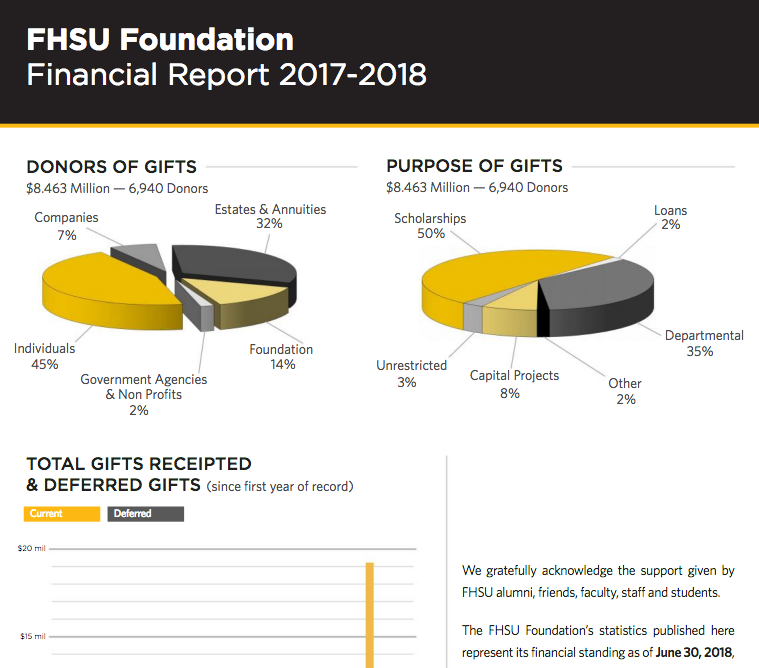
The Fort Hays State University Foundation recently released its 2017-18 financial report.
“We gratefully acknowledge the support given by FHSU alumni, friends, faculty, staff and students. The FHSU Foundation’s statistics published here represent its financial standing as of June 30, 2018, the end of the most current fiscal year,” the report says. “An honor roll of every donor from whom a gift was received between July 1, 2017 and June 30, 2018, is available on the Foundation website under the link “Donor Recognition” at https://foundation.fhsu.edu.”
Click below to view the report.
 Fort Hays State University is currently accepting applications for the position of University Police Officer. For a full description and a list of requirements, go to https://fhsu.wd1.myworkdayjobs.com/CAREERS.
Applicant must be at least 21 years of age, no felony convictions, no convictions for domestic violence, and must maintain a valid Kansas driver’s license.
Position open until filled.
LOGAN — The Dane G. Hansen Museum is pleased to offer dance lessons for beginning and advanced learners by instructors Kerry & Dezi Ferguson of Kensington.
Eight weekly sessions will be held on Sunday afternoons, starting Feb. 3. Beginners will meet from 2 p.m. to 3:30 p.m. and the advanced class will run from 3:30 p.m. to 5 p.m. Classes will be held at the City Building in Logan. Participants must be at least 13 years of age. Instruction may include, but is not limited to: waltz, two-step, swing, polka and cha cha.
This fun learning opportunity is offered to the public through the Hansen Museum’s Continuing Education Program with funding from the Hansen Foundation. Registration fees are as follows: couples $100 and singles $60. Discounts are available to Patron and Sustaining Hansen Museum Members. For more information, please contact Shari Buss at 785-689-4846.
The Museum is open weekdays 9-12 and 1-4; Saturdays 9-12 & 1-5; Sundays and holidays 1-5. We are closed Thanksgiving, Christmas, and New Year’s. The Museum is handicapped accessible and thanks to the generosity of the Dane G. Hansen Foundation, there is never an admission fee.
SUMNER COUNTY — A Kansas mother accused in the death of her 7-month-old daughter will go to trial for the alleged crime.

Shelby Johnson, 26, was bound over for trial in the case last week, according to the Sumner County Attorney’s office. Her arraignment is scheduled for 1:30p.m. March 7.
On April 1, 2018 Schuyler Hulett took his 7-month-old daughter Jesslin Hulett from the home he shared with Johnson in Wellington to the emergency room at Sumner Regional Medical Center because the child was not breathing, according to the criminal complaint.
Doctors in the ER did get a pulse and the child was transported to a Wichita hospital where she died April 5.
Court documents say Johnson killed her infant daughter either by “cruelly beating” or “shaking” the baby. The documents say the girl needed immediate medical treatment, but Johnson went back to bed and the baby’s father found her not breathing about an hour later. The baby’s injuries included three bone fractures to her skull.
An autopsy found the child suffered from blunt force trauma to the head, broken bones and other injuries, according to court documents.
The Associated Press contributed to this report.

By TOM PARKER
Kansas Rural Center
“That’s the thing about rural Kansas,” Corie Brown wrote. “No one lives there, not anymore.”
The Los Angeles author’s assessment on rural Kansas in particular and Kansans in general was the outcome of an odyssey across the state for an online article published in April 2018. Its title, “Rural Kansas is Dying: I Drove 1,800 Miles to Find Out Why,” set the stage for her thesis.
She interviewed farmers, university professors, politicians, local food system supporters and farm group leaders about the state’s rural population and community decline and what could be done to mitigate it. She found little hope in their responses.
While many felt some of her conclusions were accurate, many who were interviewed felt disappointed that she did not place more emphasis on the efforts being made to address the problems and challenges rural communities and farmers face. They ended up feeling used, and none more so than Marci Penner, who had recommended many of the locations and people for the interview.
As director of the Kansas Sampler Foundation and co-author of “The Kansas Guidebook for Explorers,” Penner has traversed the state countless times and talked with the same people Brown had, yet her assessment was totally the opposite.

“I feel very differently,” she said. “I’m not some Pollyanna who thinks we’re doing great, because we have many issues. There are reasons why it has changed over the years, and reasons why some towns aren’t thriving. But because of the people in this room,” she told a conference crowd last November, “I have confidence that we can create a new rural, a new paradigm, of what we want rural to be.”
Penner offered her upbeat perspective in “What’s Right about Kansas Farms, Food and Communities,” a panel discussion at the Kansas Rural Center’s annual Food and Farm Conference, held mid-November in Wichita, Kansas. Panelists were Luke Mahin, director of Republic County Economic Development and board member of the North Central Kansas Food Council; Debbie Beardon, Market Manager and secretary of the Allen County Farmers’ Market Board and founding member of the Core Leadership Team for Allen County Growing Rural Opportunity Works Food and Farm Council; Donna Pearson McClish, founder and director of Common Ground Producers and Growers, Inc.; Steve Swaffar, Executive Director of No-Till on the Plains; and Ed Reznicek, General Manager for Central Plains Organic Farmers Association. Keynote speaker Mary Hendrickson, a rural sociologist at the University of Missouri at Columbia, also offered insights about how rural communities can build social, financial, natural and cultural capital to address the changes facing rural America.
Luke Mahin, who was one of Brown’s sources, was puzzled at how few of the positive endeavors he mentioned made it into her article. While it’s true that Republic County has lost population, down from a high of 19,000 in 1890 to 4,700, by embracing economic development and investing in new technologies, the county offers more opportunities for entrepreneurs, small businesses and Internet-based businesses than most rural counties, he said.
Similar benefits apply to agriculture. Farmers are innovating and adapting new technologies, and there’s a lot of talk about pushing agriculture forward. “There’s no better time to come back to a rural area because of the flexibility it offers and the quality of life,” Mahin said. “Access to technology has leveraged all that.”
Several panelists felt that though Brown’s article highlighted the perils of commodity farming, it didn’t go far enough to recognize alternative methods farmers are using to go forward. Swaffar sees agricultural conservation practices reversing many of the ecological damages caused by conventional farming, and injecting hope among the state’s farmers.

“The folks I work with are very excited about dirt, though we don’t call it that anymore,” he said. “It’s soil. And soil is more than a growing medium—it’s a living organism.” Five years ago, he said, you wouldn’t have heard the term ‘soil health,’ but now it’s mainstream. Why? Because it turns farmers into biologists, and biologists are excited to see the soil come alive. For farmers, that translates into reducing input costs and being able to grow more than just wheat and corn and sorghum.
“Now that they see the capabilities, they’re thinking well beyond traditional commodity crops,” Swaffar said. “We’re seeing changes in the soil and in communities.”
For McClish, food and food production are the driving forces of rural sustainability, and nowhere are they more critical than in food deserts like rural Wichita and surrounding communities. Common Ground Producers and Growers began in 2014 after a friend asked McClish to provide fresh vegetables and produce to a low-income senior center where people had difficulty getting to the farmers’ markets. When other centers got word of it, they asked to be included. The company now serves 33 sites and several rural counties surrounding Wichita, through a network of growers and producers, and continues to expand. “Our motto is, ‘all are fed, no one is hungry,’” she said.
The experience taught her that food is an economic stabilizer and could contribute to the expansion and resurgence of family farms. “Rural Kansas can rebound,” McClish said. “We do good with adversity. We’re all looking at the same problems but we have different ways of solving them. Food is the basis of relationships. We can make this work together.”
Beardon also lives in a food desert in Southeast Kansas, and knows firsthand the importance of food for community growth. After a local farmers’ market folded, Beardon spearheaded a campaign to restructure the market. In the spring of 2010 it reopened with more than 60 vendors, 27 of whom were there for the entire season.
Beardon also worked with the county commissioners and the residents of Moran to purchase their grocery store, which now serves customers for 30 miles around. “There are needs out there beyond our imagination, and as an individual you may not think you can do a lot,” Beardon said. “Keep your ears to the ground and find out who else is interested, put your heads together and just start walking.”
Cooperatives like the Central Plains Organic Farmers Association (formerly Kansas Organic Producers) embrace a different approach by cooperatively marketing certified organic grains, Reznicek said. It is a system that resists corporate capitalism for a system that is ecologically sound, economically viable and socially just. “Because of its social goals and purpose, cooperatives represent a form of social economy, which is a much broader-based economy than the commodity and financially-driven market economy,” he said.
Public schools are one example of successful social economies. They function outside of market support with an unusual level of harmony, he said. The electrification of rural Kansas was another. Farmers contributed their time and machinery to set poles and string lines to reduce the indebtedness cooperatives would have to pay to electrical companies. The same model could be used again.
“That history is worth looking into,” Reznicek said. “The future of healthy rural communities is cooperative.”
To turn the tide of rural depopulation and economic decline, Hendrickson said in her keynote speech preceding the panel, communities are going to have to think creatively and to both identify and invest in capital—financial, social, natural, human, cultural and political. Of critical importance is resilience, the capacity of a system to absorb shocks and bounce back.
“There are different ways of thinking about what makes a community wealthy, but most mean the same thing—ownership, control, lasting livelihoods,” she said. “We need to put all the capitals together to make our food and farming systems resilient to shocks.”
Hendrickson compared the changes facing rural America to the changes farmers face with climate change. “It’s been weird, weird weather, but we’re in something we’ve never experienced before,” she said.
After asking people to identify what makes their community livable, the answers largely centered on its people. “People are engaged in a community and the dedication to its quality of life,” Hendrickson said. “This has to be measured, but nobody measures it. We don’t have a happiness scale, though that might be more important than the gross domestic product.”
Then again, maybe there is a happiness scale that can be measured in those who, in spite of the challenges and difficulties of living in rural Kansas, not only choose to stay, but strive to make them better. If so, Penner wants to be included in that group.
“If you’re rural by choice, I want to be in your tribe,” she said. “We can repurpose these small towns with the things you’re doing. This team we have can really make a difference for our communities to be livable, lovable, visitable, workable, with better health care and broadband, big things, but we have big hearts. And I want to thank Corie Brown for writing that article. I love getting fired up.”
Tom Parker is a freelance writer and photographer from Blue Rapids, Ks. who prepared this article for the Kansas Rural Center.