ATCHISON — Benedictine College has recognized those students who have distinguished themselves academically during the fall semester, which ended in December.
Area students included:
Bird City
Mary Anne Orten, Dean’s List
Hays
Bethany Kuhn, Dean’s List
Jordan Pfannenstiel, Dean’s List
Hoxie
Claire Friess, President’s List
Norton
Katelyn Engelbert, President’s List
Victoria
Makayla Crawford, Dean’s List
Any full-time student carrying a minimum of 12 hours and a perfect 4.0 grade point average through the spring term is named to the President’s list. Full time students with 12 hours and a grade point average of 3.5 are named to the Dean’s List. Of the 1,914 students on campus for 2018-2019 academic year, 127 made the President’s List and 623 made the Dean’s List.
Founded in 1858, Benedictine College is a Catholic, Benedictine, residential, liberal arts college located on the bluffs above the Missouri River in Atchison, Kansas. The school is proud to have been named one of America’s Best Colleges by U.S. News & World Report as well as one of the top Catholic colleges in the nation by First Things magazine and the Newman Guide. It prides itself on outstanding academics, extraordinary faith life, strong athletic programs, and an exceptional sense of community and belonging. It has a mission to educate men and women within a community of faith and scholarship.
As we near the end of my elected term as Kansas Commissioner of Insurance, we made a list of the accomplishments of the Kansas Insurance Department during the past four years. It turned out to be quite lengthy.
Our department staff is as talented and consumer-oriented group as I have ever known in the insurance industry. Their work under my stewardship for the past four years has been outstanding. Let me expound on some of their successes.
The Kansas Insurance Certificate – The need for quality, work-ready employees in the insurance industry in our state was the direct motivation for developing this public-private program involving institutions of higher learning throughout Kansas. We have set in motion a program that recognizes college graduate certificate holders for their insurance knowledge as they enter the work force. Learn more about the program at www.ksinsurancecertificate.org.
Don’t Text and Drive initiative – The need to emphasize driver safety through a no-texting-while-driving pledge contest had nearly 40,000 people throughout the state signing on to the program, all the while having fun by supporting their favorite state university. KID coordinated the pledge drive with the cooperation of the various universities, the Kansas Department of Transportation and insurance companies. This program undoubtedly reduced accidents and perhaps saved lives.
Financial Services Summit – Business leaders throughout the state met annually to discuss regulations and initiatives involved with financial services, especially insurance. Again, this is a public-private partnership program that attracted major players in the industry to collaborate on ideas and issues that would strengthen Kansas initiatives.
Integration of Securities Office with KID – KID proposed, and the Kansas Legislature passed, legislation that placed the Office of the Kansas Securities Commissioner under the jurisdiction of the insurance department and strengthened the enforcement activities of both agencies. The move streamlined state government and provided economies of scale in both operating budgets, with more yet to come.
Increased Health Insurance Choices – With the continued concerns over the Affordable Care Act and its consequences, KID has been able to work with prospective health insurance companies to add new carriers to the federal government marketplace. Unlike many areas of the United States, Kansas has been able to offer choices in health care coverage during the past four years, providing competition in both pricing and services. The KID Health and Life Division personnel deserve a huge thanks for aggressively recruiting carriers to serve Kansas consumers, with more likely to join in the future.
Consumer refinements – Our Consumer Assistance Division added programs that help reinforce our department’s mission to educate and advocate for Kansans. We were on the cutting edge of a Life Insurance Locator Service, which has now expanded into a national database through the National Association of Insurance Commissioners. We also added a website chat feature on our home page, which is staffed Monday-Friday from 9 a.m. to 4 p.m. This allows consumers to get a quick response for insurance concerns. It also created efficiencies in serving them.
Captive Legislation – We successfully sponsored legislation that would increase the number of businesses who could originate their own captive insurance companies, thereby enhancing current Kansas businesses. Originally, the captive statute was only for the aircraft manufacturing business.
Consumer Safety and Less Regulation – The Department initiated a fingerprinting requirement for new agents, helping to ensure the safety of Kansas insurance consumers. We also have worked hard to reduce the regulatory burden for companies operating in the state, so they can offer consumers more competitive products.
Workers Compensation Cleanup – Through much hard work in our legal division, we were able to reduce the caseload of backlogged workers compensation filings, closing more than 2,000 cases, some dating back to 1985. We were also able to oversee the reduction of workers compensation insurance rates for Kansas businesses for four consecutive years.
Improved Coordination with Other State Agencies – Our increased transparency and interest in working closely with other state agencies to better serve Kansans has benefited consumers across the state.
A Leaner, More Efficient Agency – Through retirements and attrition, we reduced the number of department employees by more than 20 while improving our efficiency and keeping our responsibility to Kansans at a peak level. We successfully consolidated several divisions, providing even better service and more efficiencies.
NerdWallet Award – The NerdWallet website recognized KID as one of the most responsive and consumer-friendly state insurance departments in the United States. Our employees deserve a big round of applause for earning this recognition!
There are many other accomplishments I could list that benefit Kansans, but those noted stand out. I have been privileged to have worked with such a conscientious, talented group of insurance professionals who will continue the department’s mission to “Regulate, Educate and Advocate.”
Ken Selzer, CPA, is the outgoing Kansas Commissioner of Insurance.
MANHATTAN — Faith Tuttle, junior in political science and international studies, grew up in Gove, Kansas, with a population of only 80. Her graduating class had 12 people. Now at Kansas State, she is the state relations director for Student Governing Association and the de facto chair of legislative advocates.
“I wanted a new experience because I came from such a small town,” Tuttle said. “Everyone [there] goes to Fort Hays. If I would’ve [gone to college] closer, it would have been a continuation of high school. K-State was somewhere I could really blossom and be my own person.”
As the local relations director for SGA, Corbin Sedlacek, junior in accounting and management, has worked with Tuttle extensively. He first met her during their freshman year when they were in leadership studies.
“At first, she’s really quiet,” Sedlacek said. “I didn’t know whether that’s because she was shy, but then I quickly realized, ‘Oh, she’s just absorbing information.’ She’s absorbing information, but then, if someone asks a question, she’s able to just answer it like that. She has a unique presence in a room.”
Tuttle said she easily gets bored and hates just sitting and doing nothing. She wants to always be doing something productive.
“I really enjoy what I do,” Tuttle said. “I think that’s really what drives people. If you had to do something you hated, you just get burnt out and you don’t want to do it. I keep doing it because I enjoy it. You’ve got to find something that you enjoy in life.”
Through legislative advocates, Tuttle leads a group of students who go out to the capitol building in Topeka to advocate for the interest of K-State students. Last year, legislative advocates pushed for restoration of the funding cuts to higher education.
“I’m a facilitator really,” Tuttle said. “[This year] our committee decided on sexual assault, mental health and universal transfer credits. If you take a credit in high school, it will transfer to any major Board of Regents schools in Kansas.”
As a member of the College Republicans, Tuttle said sometimes the asks of legislative advocates conflict with her personal political ideals, but she pushes her own beliefs aside to represent the student body.
“It’s not easy,” Tuttle said. “I’m not representing my beliefs as a Republican, I’m representing the students’ beliefs. As chair of legislative advocates, I’m not advocating my own conservative beliefs, I’m a facilitator for the committee. I facilitate and they decide on what we’re going to do. I think people give bipartisanship a bad name, but I think really the answer is usually in the middle.”
Although she is involved in a partisan group, Sedlacek said he believes Tuttle works very well with those across party lines.
“Overall, she’s brought a sense of professionalism, in the sense that she’s able to be very diplomatic and isn’t afraid to address things that need to be addressed,” Sedlacek said. “She does so in a non-confrontational way — being able to have real conversations that don’t result in real conflict.”
While at night she’ll be eating popcorn and watching Netflix like anyone else, in her free time during the day, Tuttle said she enjoys doing her extracurricular work.
“I’m involved in extracurricular activities; that’s what I do for fun,” Tuttle said. “That’s my fun. That’s what I love to do.”
After she leaves K-State, Tuttle wants to go Washington to work potentially in the office at U.S. Rep. Steve Scalise. She interned in Washington last summer.
“Either there, start as staff assistant, work my way up or any member office,” Tuttle said. “Something like that I think would be really cool, but really public service, I think that’s really interesting. I love politics.”
For now, Tuttle is content to stay in Manhattan to advocate for her peers.
“She has an internal motivation,” Sedlacek said. “She strives to make the lives of students better in all that she does, and that’s really apparent.”
WICHITA, Kan. (AP) — Wichita amassed more homicides in 2018 than in any year since 1995, in part because of an increase in self-defense killings.
First responders on the scene of a September fatal shooting-photo courtesy KWCH
At least 43 people died by homicide in Wichita over the past year, up five from 2017. Police said the five-person increase can in part be attributed to self-defense killings, which increased by five, from three to eight.
Kansas is among numerous states where citizens have no legal obligation to retreat from an attacker if they are lawfully present in a place. Before the stand-your-ground law was approved in Kansas in 2007, a person couldn’t use force before trying, if there was a chance, to escape violence or retreat.
A homicide is justifiable in Kansas when a person “reasonably believes” that the use of deadly force is “necessary to prevent imminent death or great bodily harm” to that person or a third party.
In the past three years, Wichita police have worked five times as many justifiable homicides as during the first six and a half years of the stand-your-ground law, according to numbers provided by police. From 2006 to the middle of 2012, Wichita police worked three justifiable homicide cases, police said at the time. From 2016 to 2018, there were 15.
Nationally, police shootings account for the majority of justifiable homicides.
Prosecutors can’t file charges against someone in Kansas in a self-defense killing unless the state can establish — beyond a reasonable doubt — that a person didn’t act in self-defense, said Marc Bennett, Sedgwick County’s district attorney.
Prosecutors must first decide whether a person believed he or she had to act when using deadly force. Then, prosecutors consider if that person’s belief was sensible under the facts known to that person at the time of the killing.
Bennett said charges can be dropped if evidence doesn’t show beyond a reasonable doubt that a person acted in self-defense.
RENO COUNTY — Investigators are working to determine the cause of a fire in Hutchinson.
Just before 7a.m. Tuesday, the Hutchinson Fire Department responded to the 909 South Main Street East for a reported commercial structure fire, according to Fire Chief Steven Beer.
The structure was a commercial property that was used for a wood hobby shop and was unoccupied at the time the fire was reported.
New Year’s Day fire on Main Street in Hutchinson -Photos Courtesy Hutchinson Fire Dept.
It was being utilized for a New Year’s Eve party until 3:30a.m. Tuesday.
First arriving units found fire coming through the roof of the structure. Crews immediately called for a 2nd alarm which brought all fire units from Hutchinson to the scene.
Two elevated master streams were in operation during the height of the fire from Hutchinson’s truck companies. Numerous handlines were also deployed to assist in containment. One minute prior to the report of this fire, Hutchinson fire was dispatched for a report of an electrical fire in a residential structure.
Sub zero wind chills hampered fire operations with a broken hydrant, freezing water, slippery conditions, and wet gear for the firefighters.
Approximately 40 firefighters were utilized to bring the fire under control. The building of origin is considered a total loss; however, firefighters were able to save two structures to the north and south of the fire building.
Hutchinson Fire Department was assisted by Hutchinson Police Department, Reno County EMS, Kansas Gas, Westar, South Hutchinson Mobile Command, and Hutchinson Public Works.
FINNEY COUNTY — Law enforcement authorities are investigating a burglary and alleged rape have a suspect in custody.
Couch -photo Sherman Co.
Just after 11:30 a.m. December 18, police were called to the southeast area of Garden City for a reported residential burglary in progress. Upon arrival, officers went inside the residence and located an adult woman, according to Sergeant Lana Urteaga
The victim told police an unknown man entered her residence armed with a weapon. Once inside, the man sexually assaulted the woman and caused significant injury to her, according to police. The suspect then fled the area. The woman was transported to St. Catherine Hospital by Finney County EMS with non-life-threatening injuries.
Over the holiday weekend, police identified and located a suspect. They also were able to identify a vehicle likely used in the incident. A tip was received from a citizen who recognized the vehicle from a recent social media post by the Garden City Police Department. Officers received additional information as to where the driver and the vehicle were located.
On Monday, police confirmed 45-year-old Michael W. Couch is currently in custody in Sherman County on local charges. A warrant for $900,000.00 (cash or corporate surety bond) was issued Monday and he is awaiting transport to the Finney County Jail where he will be held until his court appearance on requested charges of Aggravated Burglary, Aggravated Kidnapping, Aggravated Sodomy, Rape and Aggravated Battery, according to Urteaga.
The Kansas Highway Patrol reported a 1996 Mercury Mystique driven by Richard M. Fawcett, 38, Lawrence was fleeing from police westbound at the intersection of Branner and Greeley in Topeka.
Due to high speeds, the driver failed to negotiate the curve at NE Seward and NE Branner and struck the concrete barrier wall.
One passenger Kristin M Delong, 31, Topeka, was transported to Stormont Vail with a serious injury, according to the KHP.
Another passenger Justin D. Brown, 28, Topeka, and Fawcett were not injured. They were arrested. Brown was no longer in custody Monday.
Fawcett remains jailed on requested charges of fleeing or attempting to elude law enforcement, driving while license suspended, speeding, improper driving on a laned road and failure to stop at an accident, according to the Shawnee County jail records. He has a previous drug conviction in Douglas County, according to the Kansas Department of Corrections.
4th Tuesday 1/22/19 Phillipsburg – EMS Building; 9:30 – 11:30 a.m.
Smith Center – Courthouse; 1-3 p.m.
The Kansas Commission on Veterans Affairs assists veterans and authorized family members, free of charge, in matters pertaining to their VA claims and benefits.
All itinerants are on a first come first served basis. No appointment needed.
For more information contact:
Douglas Storie, VSR
Douglas Storie, VSR
Kansas Commission on Veterans’ Affairs
Veteran Service Representative
205 E. 7th Suite 107
Hays, KS 67601
Ph: 785-259-0364
e-mail: [email protected]
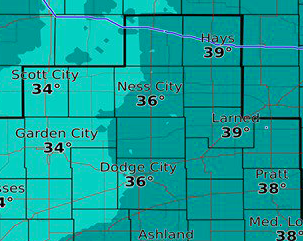
…A WIND CHILL ADVISORY IN EFFECT UNTIL 9 AM
CST TODAY…
New Year’s Day
Scattered flurries before 10am. Cloudy and cold, with a high near 15. Wind chill values as low as -15. North wind 8 to 18 mph, with gusts as high as 28 mph.
Tonight
Mostly cloudy, then gradually becoming mostly clear, with a low around 7. Wind chill values as low as -3. North wind 5 to 8 mph becoming west southwest after midnight.
Wednesday
Sunny, with a high near 33. Wind chill values as low as -6. West southwest wind 7 to 10 mph.
Wednesday Night
Mostly clear, with a low around 15. West wind around 6 mph.
Thursday
Sunny, with a high near 41. West northwest wind around 6 mph.
John Richard Schrock is a professor at Emporia State University.
The educational buzzword for this year is “personalized education.” This computerized revival of individualized instruction from the 1970s also wins the 2018 oxymoron award. Pitched by the techno-educational industry, so-called personalized education isolates a student in a digital world, progressing alone at their own speed, essentially the most “depersonalized” form of instruction possible.
If there was any bright light in the dark world of modern teaching, it was the demise of No Child Left Behind (NCLB). After over a decade of teaching-to-the-test to make Adequate Yearly Progress (AYP), the requirement that one hundred percent of students be proficient by 2014 was finally seen to be as unattainable as having one hundred percent of those who enter a hospital emerge completely cured. The best of doctors lose patients and the best of teachers lose students.
But its replacement (ESSA) has not restored teachers’ professional judgement or jurisdiction over classroom content and testing. External assessments remain. And AYP was replaced by AMD (annual meaningful differentiation) involving four different measures. It is applied building by building, rather than by district. The beancounting continues.
Veteran teachers continued to retire early or switch professions, often from assessment fatigue. Education Week reported the most common teacher had 15 years of experience in 1987-88, but today is in their first 3 years of teaching. Average age of a teacher was 55 in 2007-08, but is now in the mid-30s to mid-40s. Forty-four percent of new teachers continue to leave the profession within five years.
2018 data from Kansas regents universities show only 5,273 students are enrolled in programs leading to teacher certification, compared to 8,991 in 2011. An initial decline in students entering teaching that began with the introduction of NCLB in 2001 accelerated with the loss of teacher tenure in Kansas five years ago. In several states, including Oklahoma, where teacher salaries were very low and were significantly increased, college students have not returned to teacher-training programs. While the numbers of special education students nationwide has declined one percent, the number of special education teachers has fallen 17 percent.
Math scores on the ACT have dropped to the lowest level in twenty years, causing a call for major reform of teaching math nationwide. Scores fell for all subgroups, except Asian American students whose scores went up! Nevertheless, all blame was directed toward teachers and math curriculum without considering that the ethnic study-effort might be a factor. And while Asian-American students were a discussion point in the Harvard University affirmative action lawsuit, they are dramatically “over-represented” at the specialty science high schools in New York, leading Mayor DeBlasio to propose affirmative action against them at the secondary level.
Lumina and other educational policy groups have called for increasing high school graduation rates. Many school district administrations complied, raising high school completion from below 70 percent to the mid-80 percent and higher. However, many administrative actions resulted in passing students who were chronically absent or otherwise failing. Some schools are heavy users of “credit recovery” programs, computer-based easy click tests that are substituted for actual class achievement.
More Kansas high school students are taking dual credit courses that provide both high school and college credit. As of September of 2017, the high school instructors of such courses were to possess a masters degree including 18 graduate credit hours in the field taught. Since their courses awarded college credit, the Higher Learning Commission requires instructors to have one degree higher than the course being taught. Regents schools who accept those credits could apply for a time extension to get the high school instructors credentialed. However, some did not, and some Kansas high school students are continuing to take dual credit courses under non-qualified high school teachers. Neither the KSDE nor the KBOR polices these credentials. In addition, the Kansas Legislature has moved to increase funding to make dual credit available to high school students across Kansas whether they are college able or not.
The second most common reason for teachers leaving the public school classroom is student discipline problems. The continued movement toward “no touch” policies and “restorative discipline” talk sessions has caused some teachers to feel helpless to address physical misbehavior.
If tobacco use across America has gone down, the use of e-cigarettes or Juuling in schools is soaring. Vaping devices are particularly difficult to curtail; they are small and resemble recharge devices.
Meanwhile, use of opioids has caused life expectancy in the United States to actually decline, the only lifespan decline in a developed country in modern history. Meth addiction still remains a serious problem, contributing to an unprecedented need for foster homes. Combined with the growing rate of childhood poverty and homelessness, many more teachers find their job involves counseling, food distribution and much more than teaching.
But to end on a more sunny note, some middle and high schools are moving forward their start times to begin school after 8:30am. Initial reports suggest that their students are getting more sleep at home and improving their performance in classes and on assessments at school.
John Richard Schrock is a professor at Emporia State University.
MANHATTAN — A public hearing will be conducted at 10:00 a.m. Wednesday, Jan. 9, to consider the adoption of proposed regulations for the Industrial Hemp Research Program. The hearing will be held in room 124 on the first floor of the Kansas Department of Agriculture, 1320 Research Park Dr. in Manhattan.
Due to the passage of SB 263 by the 2018 Kansas Legislature, KDA is proposing the promulgation of new rules and regulations relating to the creation of the Industrial Hemp Research Program as authorized by the Alternative Crop Research Act, K.S.A. 2018 Supp. 2-3901 et seq. K.A.R. 4-34-1 through K.A.R. 4-34-21.
The regulations can be found at the KDA website, agriculture.ks.gov/ProposedRegs. Written comments can be submitted prior to the hearing at that web page as well.
All interested persons may attend the hearing and will be given the opportunity to express comments orally on the adoptions of the proposed regulations during the hearing. In order to give all parties an opportunity to present their views, it may be necessary to request that each participant limit any oral presentation to five minutes. Persons who require special accommodations must make their needs known at least five days prior to the hearing.
For more information, including special accommodations or a copy of the regulations, please contact Ronda Hutton, 785-564-6715.








 …A WIND CHILL ADVISORY IN EFFECT UNTIL 9 AM