4th Tuesday 1/22/19 Phillipsburg – EMS Building; 9:30 – 11:30 a.m.
Smith Center – Courthouse; 1-3 p.m.
The Kansas Commission on Veterans Affairs assists veterans and authorized family members, free of charge, in matters pertaining to their VA claims and benefits.
All itinerants are on a first come first served basis. No appointment needed.
For more information contact:
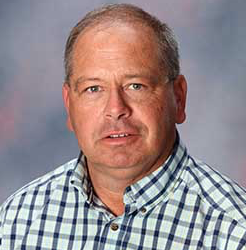
Douglas Storie, VSR
Douglas Storie, VSR
Kansas Commission on Veterans’ Affairs
Veteran Service Representative
205 E. 7th Suite 107
Hays, KS 67601
Ph: 785-259-0364
e-mail: [email protected]
Ron Wilson is director of the Huck Boyd National Institute for Rural Development at Kansas State University.
By RON WILSON Huck Boyd National Institute for Rural Development
Perspective. One’s perspective on how he or she sees things can make all the difference. Today we’ll meet a Kansas broadcaster who has shared an educational perspective with hundreds of students and thousands of listeners across our state.
Richard Baker is a longtime news director for the K-State Radio Network where he produced daily news plus a weekly radio program called Perspective. Richard is also an instructor in the Department of Communications and Agricultural Education.
Richard’s father was career military and served in World War II and Korea. Richard was born in the rural community of Seneca, population 2,039 people. Now, that’s rural. The family later moved to Manhattan when his father served at Fort Riley.
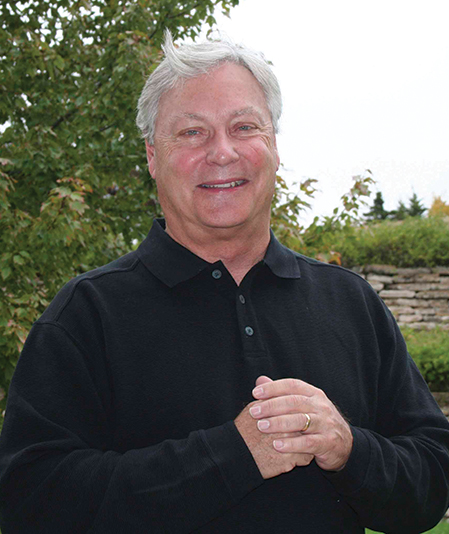
Richard Baker
Richard went to Manhattan High. As a kid, he mowed lawns, and that’s how he met a man named Ralph Titus who would become a lifelong mentor. Ralph worked for the K-State Radio Network.
Richard went to K-State but was unsure of his career choice. “I had not a clue,” Richard said. “I didn’t enjoy studying and I didn’t enjoy tests, but I loved learning things.”
One day a fraternity brother said to him, “You talk all the time. Have you ever considered radio?” With that inauspicious encouragement, Richard decided to give radio a try. He found he enjoyed it. He took some classes and in the summer, got his first radio job at KGNO in Dodge City for $85 a week. He later worked for KVGB in Great Bend.
Richard came back to northeast Kansas to take a job with KJCK in Junction City, where he was also able to finish his degree. He went on to graduate school at K-State and got a job as a student reporter doing news for the K-State Radio Network.
His next career step was a fascinating one. He went to work for a historically black music radio station in Omaha. “I’ve always loved soul music,” Richard said. He was typically the only Caucasian in the room, but he got to emcee concerts for groups such as The Spinners and Earth, Wind, and Fire.
In 1977, he returned to Manhattan where he joined the K-State Radio Network as news director. The university’s public radio station was called KSAC and was later called KKSU.
At this station, he was re-united with his mentor, the late Ralph Titus. “Everything I do was influenced by Ralph,” Richard said. “He had a way of asking thoughtful questions which really helped me improve.”
In addition to the one o’clock and five o’clock news on each weekday, Richard produced a weekly half-hour program called Perspective. This allowed a more in-depth exploration of key issues of the day.
Of all the interviews he has done through the years, which is his favorite one? “Every time I do an interview, it’s my new favorite,” Richard said. He has never lost that zest for learning.
In 2002, he took on the additional responsibility of teaching a communications class. “I try to incorporate diversity, management, and ethics into my classes,” Richard said.
In December 2018, Richard is retiring from K-State after 41 years. At 41 years times 52 Perspective programs produced weekly, that means he has produced more than 2,000 of those programs.
“There’s probably no one who has touched the lives of more Kansans than Richard Baker,” said Dr. Steve Smethers, associate director of K-State’s A. Q. Miller School of Journalism and Mass Communications. “Whether through local broadcasting or through extension’s radio outreach, Richard has been a longstanding voice in Kansas community journalism and he has provided information that has affected the lives of every man, woman and child in this state. Just as so many who have been part of K-State’s radio legacy, Richard was a valued voice of the KSAC/KKSU radio station, and he will never be forgotten.”
Perspective. It makes a huge difference in how we see issues. We commend Richard Baker for making a difference by keeping listeners informed and students enlightened about the key issues of the day. Through the years, his programming has provided a very important perspective.
PRATT – At a public meeting in Lawrence on Jan. 17, 2019, Kansas Wildlife, Parks and Tourism Commissioners will draw the names of seven conservation organizations that will receive special big game permits. The Commission Big Game Permit program allows eligible organizations a chance to draw one of seven big game permits, which can then be sold to raise funding for conservation projects.
Local chapters of nonprofit organizations based or operating in Kansas that actively promote wildlife conservation and the hunting and fishing heritage are eligible to apply. Organizations are not eligible to receive a Commission Big Game Permit more than once in a three-year period. Applications, which can be downloaded at ksoutdoors.com/KDWPT-Info/Commission, must be submitted by Jan. 1.
One elk, one antelope or up to seven deer permits are issued each year, depending on applicant preference. Deer permits are either-species/either-sex and are valid statewide during any season with legal equipment for that season; they do not count against other big game permits the license holder is eligible for.
Once the permit is sold, the cost of the permit, plus 15 percent of the total sale price, is subtracted and kept by the organization, while the remainder is remitted to the Kansas Department of Wildlife, Parks and Tourism with a proposal for a conservation project. When the project is approved, the money is returned to the organization to complete the project. An exception to this procedure would occur if Kansas Hunters Feeding the Hungry (KHFH) is drawn. In that case, KHFH keeps 85 percent of the funds to help pay for processing donated deer.
The National Western Stock Show, established in 1906 and defined as the nation’s premier livestock, rodeo and horse show, will be partly officiated by Fort Hays State University’s Kevin Huser.
Huser, an instructor of agriculture and a livestock judging coach, will officiate Denver’s South Devon show, a part of the National Western Stock Show, in January.
The show, a celebration of western lifestyles and communities, strives to strengthen American agriculture through enrichment programs and youth education in livestock, equestrian, farming, ranching, animal awareness and appreciation.
Some people have the mistaken idea that farmers and ranchers are harming our environment. You hear it everywhere: at the coffee shop, church, public forums, even in the grocery store where people buy the food farmers and ranchers produce for us to eat.
Children arrive home from school and tell parents about harmful practices farmers are using on the land. It’s easy to understand why folks think the way they do about today’s agriculture.
Few businesses are as open to public scrutiny as a farm or ranch in the United States today. While farming and ranching practices occur in the open where anyone can see, the only picture many have of agriculture is what they read in newspapers or see on television. Even fewer people have set foot on a modern farm.
The fondest wish of most farmers and ranchers is to pass their land on to their children. They work years to leave a legacy of good land stewardship. Most farmers learned about conservation and respect for the land from their parents.
Today’s farmers and ranchers are doing their part to protect and improve the environment. They use agricultural practices including early planting, pest control, good soil fertility, conservation tillage and many other innovations that help grow more food while protecting the environment.
Farmers adjust practices to meet individual cropping conditions. Such practices can vary from farm to farm – even from field to field.
As in any other business, farmers and ranchers must manage their operations on a timely basis and use all the technology available to improve quality and productivity. If they don’t, they will not be able to stay in business for long.
Today’s farmer has cut chemical usage by approximately 40 percent in many cases during the last couple of decades. Many no longer apply chemicals before planting. Instead, as the crop matures, farmers gauge potential weed pressure and apply herbicides only if needed.
Throughout the growing season, farmers do their best to provide nutritious food. From planting through harvest, they battle weather, weeds, insects and disease. Efficiency is their best defense against change including unstable world markets, political barriers and fringe groups who may attack their farming methods yet know little about this vital profession.
Ted and Lisa Guetterman own and operate a 1,100-acre row crop farm in Miami and Johnson counties. Ted represents the fourth-generation to farm and care for the land in far eastern Kansas. He and Lisa have four sons. One has returned to the farm, and the others continue to learn about the farm and conservation as they grow.
The family’s farm includes amylose and waxy corn, soybeans and soft winter wheat. Ted also feeds approximately 400 head of steers each year. Throughout the past 35 years Ted’s family integrated new practices, converting to drills, planters and sprayers equipped with GPS to become more efficient and 100 percent no-till.
Ted and Lisa identified soil erosion as a major concern in all their fields so the family-built miles of terraces and waterways. Ted also assists his landlords and other farmers in the construction of similar conservation practices.
Cropland isn’t the only focus for conservation for the Guettermans. Their livestock pens are designed so all runoff is directed to the grass filtering strips. The use of cover crops on the farm improves soil health, water infiltration and reduces erosion, all while providing feed for the cattle to graze.
The couple is passionate about taking part in programs that will benefit the land. They have enrolled in the Conservation Reserve Program, the Environmental Quality Incentives Program, Carbon Sequestering and the Conservation Stewardship Program. The Guettermans were honored as the Natural Resources award winners at the recent Kansas Farm Bureau annual meeting.
Yes, farmers and ranchers like the Guettermans and their counterparts across Kansas must live in the environment they create. They can and will do more to improve their environment. They can continue to rely less on herbicides, insecticides and fertilizers.
Agricultural producers can also conserve more water, plug abandoned wells, monitor grassland grazing and continue to implement environmentally sound techniques that will ensure preservation of the land.
In the meantime, farmers and ranchers will continue to take their stewardship seriously. They’ve devoted their lives to safeguarding their farms and families, while providing us with the safest food in the world.
John Schlageck is a leading commentator on agriculture and rural Kansas. Born and raised on a diversified farm in northwestern Kansas, his writing reflects a lifetime of experience, knowledge and passion.
Due to the observance of the Christmas holiday, Monday, December 24, 2018 and Tuesday, December 25, 2018, refuse/recycling route collection schedules in Hays will be altered.
Although collections may not occur on your normal day, collections will be completed by the end of the week. Crews anticipate that the collection route will be:
Monday, December 24, and Tuesday, December 25, refuse/recycling collections will be on Wednesday, December 26.
Wednesday. December 26, and Thursday, December 27, refuse/recycling collections will be on Thursday, December 27.
There are no anticipated changes to Friday, December 28th, refuse/recycling collection schedule.
It is anticipated that heavy volumes of refuse/recyclables will be encountered around the holidays. Please be sure to have your refuse/recycling out by 7:00 a.m. on the specified collection day, and keep in mind the trucks have no set time schedule.
City of Hays customers who may have any questions regarding this notice should contact the Solid Waste Division of the Public Works Department at 785-628-7350.
TOPEKA — A national report says that Kansas auto insurance premiums are among the 14 lowest in the United States.
Information from the National Association of Insurance Commissioners (NAIC) shows Kansans spent an average of $713.50 per vehicle for insurance in 2016, the last available reporting period. That number is 13th-lowest among the states, according to the NAIC.
The ranking assumes all insured vehicles carry liability coverage but not necessarily collision or comprehensive coverage. Consumers in Kansas aren’t required to carry collision and comprehensive, but coverage may be required by a lending institutions that carries the vehicle’s loan agreement.
The average cost of a policy in Kansas that contains all three types of coverage is $882.88, according to the latest NAIC figures, which ranks the state as 14th-least expensive in the nation in that category.
“The rankings show that Kansas has a healthy, competitive climate for vehicle insurance buyers, despite all the weather claims that we have seen over the past years,” said Ken Selzer, CPA, Kansas Commissioner of Insurance. “With more than 700 companies licensed to sell auto insurance statewide, the competitive rates are certainly good news for Kansas consumers.”
Factors that affect state-to-state differences in average expenditures and premiums include underwriting and loss adjustment expense; types of coverages purchased; driving locations; accident rates; traffic density; vehicle theft rates; auto repair costs; population density; medical and legal costs; per capita disposable income; liability insurance requirements; and auto laws, such as those concerning seat belts and speed limits.
A Kansas man was injured Christmas Day when he tried to avoid hitting an animal on the road.
The Kansas Highway Patrol reports Joseph A. Huiett, 18, Minneapolis, was driving northbound on Interstate 135 in Saline County 1.6 miles south of Interstate 70 at 7 p.m. Dec. 25.
An unknown animal ran out in front of the 2004 Dodge Durango. The vehicle veered off onto the right shoulder, striking the guard rail. The SUV veered back across the driving lane and came to a stop on the left inside shoulder of the roadway.
Huiett was transported to Salina Regional Medical Center.
A southwest Kansas woman was injured at 10 a.m. Dec. 25 during a one vehicle accident in Pawnee County.
According to the Kansas Highway Patrol, Jessica Trejo, 19, Liberal, was driving a 2001 Pontiac Firebird north on U.S. Highway 183 ten miles northeast of Kinsley. The car left the roadway to the right, over corrected and crossed the center line, left the roadway before overturning, and landed on its top.
Trejo was transported to Pawnee Valley Community Hospital in Larned.
SHAWNEE COUNTY — Law enforcement authorities are investigating a suspect for an alleged car theft and robbery.
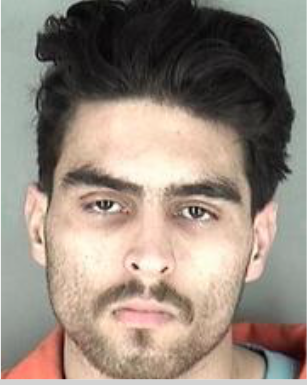
Jackson -photo Shawnee Co.
Just before 8:30p.m. Sunday, police responded to the area of 1600 Block of SW Fillmore in Topeka on the report of an Aggravated Robbery, occurring to an individual, according to Lt. Aaron Jones.
The victim reported a blue colored vehicle approached him, when a Hispanic male jumped out, wearing a gray and black striped hooded sweatshirt. The suspect approached him demanding his keys and wallet. During the robbery the suspect, indicated he had a weapon, but the weapon was never displayed and took the victims vehicle described as a Silver, 2011 Dodge Caliber, with Kansas tags.
Just before 6p.m. Christmas Eve, officers of the Topeka Police Department located the stolen Dodge Caliber near 13th and SW Harrison.
When they attempted to stop the vehicle, the driver failed to stop initiating a pursuit. The occupants abandoned the vehicle in the 600 Block of SE Lake east alley, according to Jones.
Information was developed leading to a house on the west side of the 600 block of SE Lake in search of the occupants. The house was surrounded as the vehicle was searched. 2 firearms were recovered from the vehicle; both used small caliber rifle rounds. At approximately 7pm, officers made contact with the homeowner. Police took five men and one woman from the house for questioning.
On Christmas Day, police reported Christopher Jackson, 25, was taken to the Shawnee County Department of Corrections under suspicion of aggravated robbery in relation to the theft of the silver Dodge Caliber as well as possession of stolen property in relation to the aggravated robbery of a white Pontiac G6.
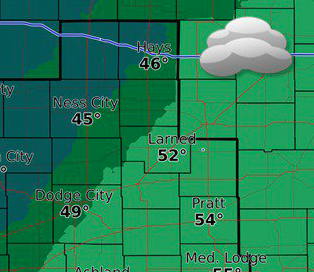
Today Rain, with thunderstorms also possible after 10am. High near 46. East wind 7 to 12 mph increasing to 13 to 18 mph in the afternoon. Chance of precipitation is 90%. New rainfall amounts between a half and three quarters of an inch possible.
Wednesday NightRain and possibly a thunderstorm. Low around 33. Southeast wind 9 to 15 mph becoming north after midnight. Chance of precipitation is 90%. New rainfall amounts between a quarter and half of an inch possible.
ThursdayRain and snow likely, mainly before noon. Some thunder is also possible. Mostly cloudy, with a high near 37. Breezy, with a northwest wind 14 to 23 mph. Chance of precipitation is 60%. Little or no snow accumulation expected.
Thursday NightMostly cloudy, with a low around 20. Blustery, with a northwest wind 15 to 20 mph.
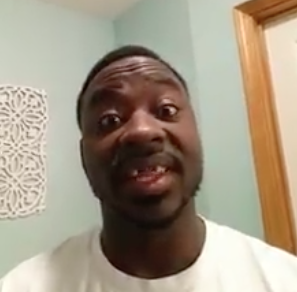
KANSAS CITY (AP) — A Kansas man’s wish for two front teeth for Christmas is coming true.
A local church and friends helped raise money for Olathe man Evans Kamuru’s dental implants.
Kamuru wrote on Facebook that one front tooth broke off when he was using his teeth to cut tape and wrap presents last Christmas season. He says the other one broke in January when he was eating a waffle.
Kamuru says both teeth had crowns and were weak.
His friends created a group to help raise money for implants. Lenexa’s Gospel Outreach Center chipped in $15,000 this month, and a dentist offered a discount.
The newspaper reports that it will take months to insert the implants, but Kamuru will have two new teeth by next Christmas.

 Veteran Service Representative schedule for January 2019


 PRATT – At a public meeting in Lawrence on Jan. 17, 2019, Kansas Wildlife, Parks and Tourism Commissioners will draw the names of seven conservation organizations that will receive special big game permits. The Commission Big Game Permit program allows eligible organizations a chance to draw one of seven big game permits, which can then be sold to raise funding for conservation projects.