
Richard Talks with Seniors from Trego Community High School involved in Winter sports
Author: Hays Post
Now That’s Rural: Joe & Cathy Broeckelman, The Satisfiers


By RON WILSON
Huck Boyd National Institute for Rural Development
“We had lots of happy taste testers.” That type of help in the kitchen, plus an old family recipe and an entrepreneurial spirit, has helped one family develop a remarkable business in rural Kansas. Their products are used year-round, including as customer appreciation gifts during the holidays. This is a special holiday edition of Kansas Profile.
Joe and Cathy Broeckelman are pork producers and founders and owners of a cookie dough business called The Satisfiers. Joe grew up on a farm, attended Colby Community College and K-State, met and married Cathy, and began a family farm near Selden. They had a big family: Eight children who are now raising 25 grandkids and three great-grandchildren.
“All eight were valedictorians or co-valedictorians of their classes,” Joe said proudly.
The Broeckelmans maximize the value of their hog production with niche marketing. “We market all of our pork privately,” Joe said. Rather than shipping generic hogs to a sale barn, Joe sells some as feeder pigs and grows out the rest, to have the meat processed and sold as individual cuts of meat. “We raise hogs to taste good and grow good.”
In addition to pork sausage, ham, pork chops, and bacon, they sell quarter-pound porkburger patties, brats, summer sausage, snack sticks and more. They also help non-profit groups market their production.
“We work with schools so they can do fundraisers selling our products,” Cathy said.
Over time, when the kids were still young, the Broeckelmans diversified their business. “I made cookies one day, and Joe said those were so good that we should sell them,” Cathy said. One night they both woke up, and said, “Let’s sell frozen dough.”
“We feel that this idea was given to us by God through the Holy Spirit,” Joe said.
The Broeckelmans mixed up a batch of dough from the family recipe and tried different flavors. With eight children, they had plenty of willing volunteers to taste the samples. “We had lots of happy taste testers,” Cathy said. Then they tried it out on friends and neighbors. The response was so enthusiastic that it became a business.
But what should the business be named? “We were talking to the kids about this, and we said, ‘Let’s go to the Bible,’ ” Joe said. They came upon a verse in Proverbs which spoke of heavenly satisfaction, which was the reaction they wanted from their customers. They named their products The Satisfiers.
Today, the Satisfiers includes a line of homemade food products based on the cookie dough. There are nine flavors: Chocolate chip, M&M, Reese’s, peanut & chocolate chip, peanut butter, butterscotch chip with pecans, sugar, oatmeal with butterscotch chips, and oatmeal with chopped raisins. The dough is marketed in two- or four-pound tubs.
Another popular product is hand-dipped nut clusters. Some businesses order these during the holidays to give to their customers as appreciation gifts.

Imagine a gift package containing hand-dipped chocolate nut clusters. That would tell me I’m on Santa’s good list. A biscuit and pancake mix has also been added to the product line.
With the kids grown, two women now assist Joe and Cathy with production. The products are marketed through area grocery stores and local meat lockers in western Kansas and Nebraska. The Dillons store in Colby carries their products, for example, as do many locally-owned stores.
“This has been a good family project. We think there are other couples who could benefit from this idea,” Joe said. It’s a creative way to generate value on a family farm in rural Kansas. The Broeckelman farm is located near the rural community of Selden, population 219 people. Now, that’s rural.
For more information, visit The Satisfiers on Facebook.
“Lots of happy taste testers” made for an excellent family project by the Broeckelman family. “This has helped our kids learn to work and to think,” Cathy said.
We commend Joe and Cathy Broeckelman and all their family for making a difference with entrepreneurship and creativity. That is helping this rural family get a taste of success.
“The Broeckelman family would like to wish everyone a very merry Christmas,” Joe said.
In Case You Missed It: Eagle Morning Show 12/10-12/14

It was another busy week on the KAYS Eagle Morning Show. Here’s what you missed last week!
Monday
Catholic Schools Report – TMP HS/JR Athletic Director Troy Shulte
Troy joined C.D. and Mike to talk about past and upcoming athletic events at TMP:
Basketball
Wrestling
Scholar’s Bowl/Fall Sports/Middle School Sports
You can visit the TMP website here.
Tuesday
County Commission Meeting Recap: County Administrator Phillip Smith-Hanes & County Commissioner Barb Wasinger
Change of Classification for Bridge Crew
Excess Sales Tax Proceeds
Wednesday
Protect & Serve: Hays Chief of Police Don Scheibler:
Chief Scheibler joined the show to talk about safety during the holidays:
Locking car doors and being safe while holiday shopping
Humane Society of the High Plains: Betty Hansen
Full inventory of animals
The upcoming Sour-R-Bowl and where to get tickets
The Humane Society of the High Plains is located at 2050 E Us Highway 40 in Hays and is open every day (except Mondays) from 1-5pm. Volunteers are free to come and go during open hours. You can visit their website here.
Thursday
USD 489 Report: Hays Middle School Assistant Principal Shauna Zweifel
Shauna joined us on the show to talk about what’s going on at Hays Middle School
Current activities at HMS
Selling Taco Shop cards
Join us next week on the Eagle Morning Show on KAYS (94.3FM & 1400AM), on hayspost.com (KAYS tab at top of page) or on the KAYS app (available for Apple and Android)!
Kansas gov.-elect: State’s condition ‘even worse than I thought’
By SCOTT CANON
Kansas News Service
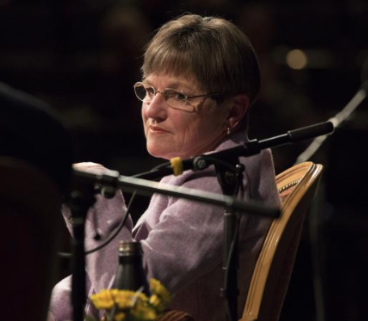
Kansas Gov.-elect Laura Kelly insists the state budget she’s preparing can fully fund the state’s schools, expand Medicaid coverage to another 150,000 people and begin to repair a troubled child welfare system — without a tax hike.
The Democrat said Wednesday night she’ll lean on experience and relationships built over 14 years in the Kansas Senate to carve out compromises with lawmakers on those priorities.
Yet she described her job as daunting and state government as broken in several key areas.
In little over a month since she beat Republican Kris Kobach in the race for governor, Kelly said she’s worked on a budget proposal to put to legislators in January and found serious problems in state government.
“No surprises … but I am disappointed that the devastation was even worse than I thought,” she told a crowd of 200-plus at Washburn University in Topeka. “The problems are broad and they’re deep.”
Her comments came at Kansas News Service event.
Kelly said rosy revenue projections — the state’s draw from taxes and fees has beat expectations for 18 months in a row — suggest the ability to deal with “school finances without breaking the bank.”
She’s braced for a push from conservatives in the Capitol to pass an amendment to the state constitution scrubbing out the demand for “suitable” financing to local districts from the state. Much of the Republican leadership in the state contends that would free lawmakers to decide funding levels without ongoing lawsuits dictating what the state should spend.
She promised to oppose such a move, although the Legislature could put a proposed constitutional amendment to voters without her approval. But that’s happened before, and failed.
“I have no doubt,” Kelly said, “the people of Kansas will reject that.”
The state may yet need to add money for aid to local school districts in the wake of a Kansas Supreme Court decision. A plan to add hundreds of millions to that formula in coming years was approved by the Legislature and Republican Gov. Jeff Colyer earlier this year.
But more money may still be needed to account for inflation. Kelly said she’s been studying the state budget and recent improvements in tax revenues.
“We will find when the budget comes out we can afford” to cover her top priorities, she said, without raising taxes.
Republicans have already begun to challenge her definition of a tax hike. Federal tax cuts pushed through by the Trump administration last year had the unintended effect of increasing what a small minority of taxpayers owe the state. Some people simply can’t itemize things like they did before.
That’s produced a windfall in state revenues. Broadly speaking, Republican lawmakers say failing to rewrite state tax law to return that money amounts to a tax hike.
Kelly sees it differently.
She argued again Wednesday that Kansas policymakers don’t yet fully understand the impact of the partial reversal in 2017 of sweeping tax cuts enacted under former Gov. Sam Brownback five years earlier. She also said state officials still need to better fathom how the Trump tax cuts will change state finances.
Only well into 2019, she said, will those things become clear.
“It’s at that point we can look” at whether to return the windfall, she said.
Yet she talked confidently about corralling votes in the Legislature for an expansion of Medicaid in line with the federal Affordable Care Act, or Obamacare.
She was vague about how much her plan for that expansion would cost Kansas taxpayers — and suggested it might not cost them anything. But Kelly promised to study other states in search of a model that can work in Kansas.
A fight will come in the Legislature, where conservatives are already girding for battle. In the end, she said Democrats and moderate Republicans — what she calls “the moderate majority” — can push through a plan.
This year’s elections replaced some moderates with either conservatives or Democrats. But Kelly said the math is roughly the same as when lawmakers approved expansion in 2016 and came just three votes shy of overcoming a Brownback veto.
The difference this year: “We don’t have to override vetoes.”
She used her most urgent language of the evening to describe the state’s shortcomings in how it cares for children.
A fast-growing foster caseload has added to chronic problems in recent years. Kids have been forced to spend nights in the offices of placement contractors. Some children were shuttled among more than 100 foster homes. Young people have been assaulted while in state custody.
That’s generated frustration with the Department for Children and Families.
“We are literally in a life-or-death situation on DCF,” Kelly said.
In a brief interview after her appearance on stage, the incoming governor said the state needs to hire more people to better manage the cases of children in crisis.
“There is no doubt that we have a lack of qualified social workers,” Kelly said.
DCF, helpd, needs to put more work into family preservation efforts to help parents keep their children. For those children who end up in foster care, Kelly said the agency needs to devote more people to helping them adjust when they’re reunited with their biological families.
“That’s a clear, critical need,” she said.
Yet she didn’t say how much improving those child welfare functions might cost. And Kelly said she’s not yet sure if she’ll approve DCF’s pending plans to expand the number of contractors it hires for that work to five firms from the current two.
Still, the lawmaker from Topeka said Kansas will have enough money for that problem, for robust school spending, for expanding Medicaid, for roads.
Among other things she said in a rare public appearance since her election:
- She’s exploring whether the state must enforce a law passed this year allowing some state-hired faith-based adoption agencies to deny placements with same-sex parents.
- Kelly will collect proposals on what she called “common sense” gun control, but seemed to suggest any proposal won’t come soon. “I’m not sure how quickly we can get that policy together and round up the votes.”
- Her efforts on climate change will focus on working with the state’s congressional delegation and western governors. She also promised to push for more renewable energy use in the state.
- Kelly said tighter welfare rules are part of the reason more kids are landing in foster care. Changing those rules, she said, is “a priority” for fixing DCF.
- She gave Brownback credit for his efforts to deal with the state’s dwindling water supply. “The problem is,” she said, “there was absolutely no funding, very little funding, put into it.”
- Kelly said the state’s criminal sentencing practices need dramatic reform and locks up non-violent offenders too often and for too long. “Those people belong in prison no more than you or I.”
Scott Canon is digital editor of the Kansas News Service. You can reach him on Twitter @ScottCanon.
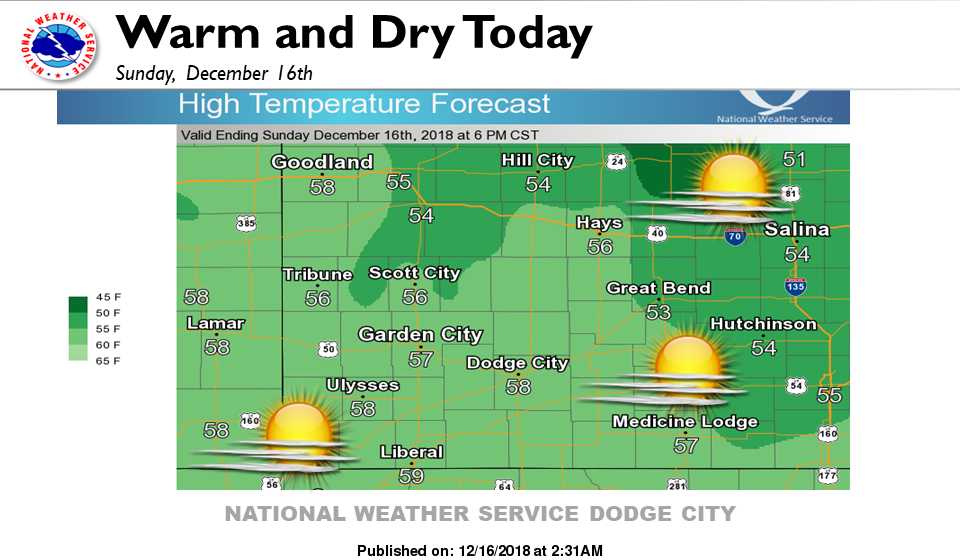
Sunny, mild Sunday
 Today
Today
Sunny, with a high near 56. Northwest wind 6 to 8 mph becoming north northeast in the afternoon.
Tonight
Clear, with a low around 24. Northeast wind around 5 mph becoming calm in the evening.
Monday
Sunny, with a high near 55. Light south southwest wind becoming south 12 to 17 mph in the morning.
Monday Night
Increasing clouds, with a low around 32. South wind 7 to 10 mph.
Tuesday
Mostly cloudy, with a high near 52. South southwest wind 5 to 7 mph becoming northwest in the afternoon.
Tuesday Night
Mostly cloudy, with a low around 30.
Wednesday
Mostly sunny, with a high near 56. Windy.
Wednesday Night
Partly cloudy, with a low around 34. Breezy.
Thursday
Sunny, with a high near 50. Windy.
Sharing American holiday customs with international students at FHSU
 By DIANE GASPER-O’BRIEN
University Relations and Marketing
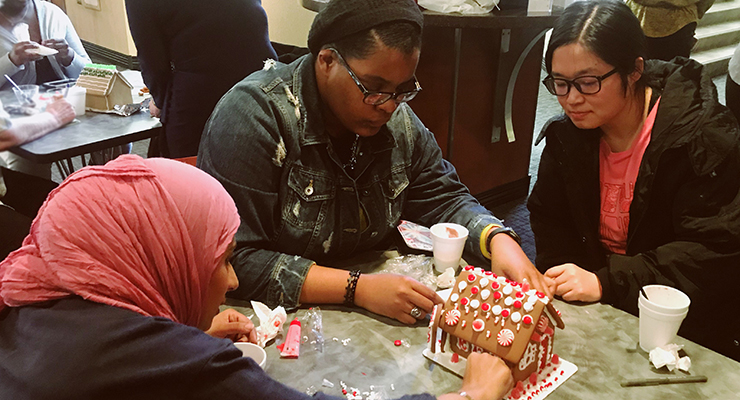
In an effort to familiarize international graduate students with some of the American holiday customs, the Fort Hays State University Graduate School sponsored a holiday reception for those students in the Memorial Union Monday.
Dr. Jennifer Bonds-Raacke, dean of the Graduate School, said she and her staff were brainstorming one day and came up with the idea of building ginger bread houses. So she ordered several kits that included everything to build a house, including a large tube of frosting and a variety of tiny candies for decoration.
“We were thinking what would be fun for our international students to experience some of the traditional holiday culture,” she said. “I think it’s going pretty well.”
Indeed.

Fatimah Alhazmy, a graduate student from Saudia Arabia, was taking a little ribbing about how professional her ginger bread house looked.
Alhazmy, a fine arts major with an emphasis in ceramics, was part of a team that included Linda Ganstrom, professor in the Department of Art and Design.
“We’re just a construction crew here,” Ganstrom said as all four people at her table took turns adding their personal touches to their house.
A table nearby with hot chocolate and other holiday goodies helped provide a festive atmosphere for the students.
“We need to make shutters for our windows,” Aminata Diarra said as she worked on a house with Leslie Paige, director of the Office of Scholarship and Sponsored Projects in the Graduate School.
Diarra – a native of Mali, a country in West Africa – is a freshman who now lives in Denver. She said she chose Fort Hays State because her older sister, Yamoudji, is a current FHSU student and has had a good experience here.
While Diarra is not a graduate student, all international students were welcome to participate. Diarra said that when she heard about the event, she thought it would be a good way to take a break from studying for finals.
Diarra already had taken two finals and said, “This is relaxing before I go study for more.”
She said she had never made a ginger bread house before but that this wouldn’t be her last.
“This is pretty cool,” Diarra said. “Maybe I’ll go buy one. This could be something for our family to do together.”
There are 67 international students enrolled in on-campus graduate programs at FHSU this fall. That is 20 percent of all on-campus graduate students. Nearly two dozen of those participated in Monday’s event.
“We really want our international students to know they are wanted at FHSU. Our international students make the Graduate School complete,” Bonds-Raacke said. “Our one goal of this event was to show them how much they are valued.”
Native countries of other students participating in the event included Germany, England and Brazil and represented majors ranging from biology to music to clinical psychology.
During the house building, personnel from the Graduate School helped created a “hope chain,” where students, faculty and staff responded to questions such as “What is your favorite part about FHSU?” The responses on black and gold paper were linked together and hung in the Graduate School.
“We hope this activity helped remind everyone of what really matters, especially at a stressful time during the semester,” Bonds-Raacke said.
The faculty and staff seemed to enjoy the event as much as the students.
“It was a great opportunity to connect informally with our students,” Bonds-Raacke said, “and learn more about them on a personal level.”
KDA to exercise foreign animal disease response
 KDA
KDA
Manhattan — The Kansas Department of Agriculture will lead an emergency preparedness exercise, named Rampart, Dec. 17–20, 2018, in Manhattan, Kansas, to practice the state’s response plan to a foreign animal disease event.
The four-day functional exercise, which will be based out of KDA headquarters in Manhattan, will enable KDA and its partners in other state agencies, federal and local government, industry, university and 16 other states to practice the state’s foreign animal disease response plan. More than 200 individuals will participate in the Rampart exercise, which will be based on a fictional scenario involving the confirmation of foot-and-mouth disease in the United States.
In addition to KDA, which will operate as the Incident Command Post for the exercise, the Kansas Division of Emergency Management and multiple Kansas counties will activate emergency operations centers as part of the Rampart exercise.
Foot-and-mouth disease was last identified in the United States in 1929. FMD is a highly contagious disease of cattle, sheep, swine, goats, deer and other cloven-hooved animals. It is not a human food safety concern nor a public health threat. It is a primary concern for animal health officials because it could have potentially devastating economic consequences due to disrupted trade and lost investor confidence.
The exercise has been partially funded with a grant provided by the U.S. Department of Homeland Security.
KBI: 15-year-old shot after strangling woman, escaping on horse
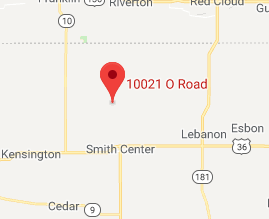
SMITH COUNTY – The Kansas Bureau of Investigation (KBI) is investigating the attempted murder of a woman in Smith County, as well as an officer involved shooting which occurred as police attempted to apprehend the 15-year-old suspect.

According to a KBI media release, just after 10:20 a.m. Saturday, the Smith County Sheriff’s received a 911 call, and responded to 10021 O Road in Smith Center. Upon arriving, they located a 66-year-old white female victim who reported being restrained, beaten, and strangled. She was taken to a local hospital, and is expected to recover.
The suspect, a 15-year-old black male, fled the area on horseback. When he was located by Kansas Highway Patrol troopers at 100 Road and L Road, in Smith County, he was armed with a firearm. KHP and Smith County Sheriff’s deputies spent a few hours attempting to apprehend the suspect. Then just before 2:20 p.m. the suspect fired at troopers. Two troopers returned fire, striking the subject.
They rendered medical aid and EMS responded. EMS transported him to a local hospital. He was then flown to a Kearney, Nebraska hospital where he underwent surgery. His condition is currently unknown. The identity of the subject will be withheld because he is a juvenile.
No law enforcement officers were injured during the incident.
Kan. business owner observes burglary suspects on security system
SHAWNEE COUNTY — Law enforcement authorities are investigating two suspects on burglary charges.


Just before 5a.m. Friday, sheriff’s deputies responded to a burglary alarm in the 2700 block of NW Button Road, according to Shawnee County Sgt. Todd Stallbaumer.
The business owner was able to view a suspicious vehicle on the property through a security surveillance system.
Deputies responded in the area and located a white four-door Buick with two male occupants.
Deputies arrested two suspects in connection with the burglary.
Jacob M Johnson, 32 years old, of Carbondale, was booked into the Shawnee County Department of Corrections with charges of Criminal Trespass and Theft.
James G Emitt, 44 years old, of Topeka, was booked into the Shawnee County Department of Corrections on charges of Criminal Use of a Weapon, Theft, Criminal Trespass, and Driving While License Suspended.
Massive fire destroys 28,000 square-foot Kansas warehouse
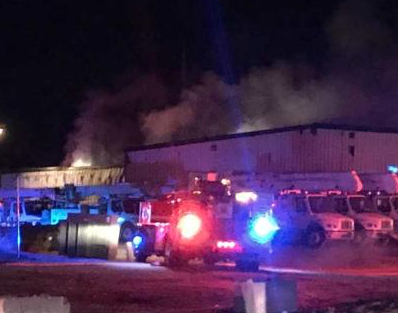
PARK CITY, Kan. (AP) — Authorities say a massive fire has destroyed a 28,000 square-foot warehouse in a Wichita suburb.

The fire at the Park City warehouse was reported around 9 p.m. Friday. Arriving firefighters found the huge warehouse fully engulfed in flames.
No injuries were reported in the fire that saw five area fire departments respond to help battle the flames. It took more than two hours to get the blaze under control.
Sedgwick County Fire Capt. Bill Herold says the loss from the fire is estimated at $1.6 million.
The warehouse held two businesses — a maintenance facility for 18-wheelers and an electrical company.
KU given $6.9 million gift to research early human life
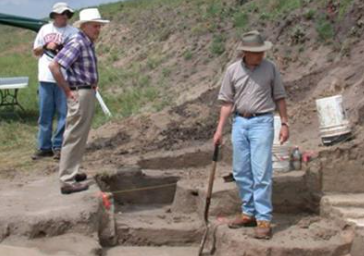
LAWRENCE, Kan. (AP) — A $6.9 million gift from a late geologist and his wife will be used to help University of Kansas researchers better understand early human life in the Americas.

Joseph and Maude Ruth Cramer established the Odyssey Archaeological Research Fund at the university in 2002 with a $1 million gift. The additional $6.9 million was recently received after their deaths.
The KU Endowment said in a news release that the gift will benefit research by the Kansas Geological Survey and the university’s archaeology program.
Cramer grew up in Wichita and graduated from the University of New Mexico. His was a petroleum geologist, but he had a lifetime interest in archaeology and a passion for searching for the earliest people in the Americas.
___
🎥 MARSHALL: Doctor’s Note: Dec. 15

Friends,
This week the House and Senate answered farmers and ranchers call to action and passed the 2018 Farm Bill. Having the opportunity to see this bill from start to finish has been a surreal experience. What we put forth is a great bill that looks at agriculture from all angles. The final bill strengthens our safety net, prioritizes trade promotion, fully protects crop insurance, improves the dairy program, invests in broadband and rural health, and so much more. I couldn’t be more proud of the hard work that has been done on this bill, and I hope that producers back at home know that we listened!
This Bill Delivers!
Ahead of the 2018 Farm Bill vote, I addressed the members of the House to advocate for its passage. Kansans sent me to Congress to get a Farm Bill done. And I’m proud to say we’ve delivered for Kansans. Our bill delivers a stronger safety net for all of rural America – preserves crop insurance to help producers manage risk, makes research investments to fuel the ag economy of tomorrow, includes tele-health coordination at USDA and refinancing for rural hospitals to ensure we have healthcare available, $350 billion in a broadband loan and grant program to expand the reach of high-speed internet that is so critical to doing business in the world today, reprioritizes conservation programs so that our working lands will be productive for generations to come, and we’ve made new investments in our overseas marketing programs to ensure our producers can take advantage of every market available to them.
Plugging In
On Wednesday, the Federal Communications Commission voted unanimously to provide appropriate support to recipients of the Universal Service Fund’s high-cost program. The USF high-cost program is a critical part of closing the digital divide in rural America, as it helps providers expand broadband service in areas where the cost of deployment is high. Access to broadband helps create jobs; increases opportunities for education, healthcare, and agriculture; and boosts local economies. As our country becomes increasingly connected, we must continue to work to establish the same internet capabilities in rural communities that are readily available in urban centers. Every Kansan should have access to a reliable high-speed Internet connection, and the FCC’s action yesterday will ensure that our broadband providers are better able to meet the needs of communities across the district.
 ReConnecting
On Thursday, I was honored to join Agriculture Secretary Perdue as he launched a new broadband pilot program called ReConnect. The program will offer a combination of loans and grants to assist with broadband expansion in the most underserved rural areas, and looks at factors such as population density and network speeds when considering applications. Telecommunications companies along with rural electric companies, utilities, municipalities, and non-profits will be able to apply for funding, and the application process will open in February 2019. I think this is another great tool to help connect rural America, and applaud Secretary Perdue for his commitment to ensuring that everyone has access to reliable broadband no matter where they live.
 Responsibility.org Leadership Award
I was honored to accept Responsibility.org’s Leadership Award. Every year, the award is bestowed upon legislators who show leadership in the fight to eliminate impaired driving and underage drinking. Impaired driving claims the lives of far too many Americans each year, and must continue to be addressed.
Bill of Rights Day
On December 15th we celebrate one of the most important documents ever created in human history, the Bill of Rights.
It not only laid the foundations for the essential rights and civil liberties we enjoy today, but it also set a shining example for the rest of the world to follow. Freedom of speech, press, and religion is the fundamental bedrock of our Constitutional Republic, and it should never be taken for granted.
 I pledged when I joined the Army to support and defend these values from enemies foreign and domestic, and I will uphold that pledge to the best of my ability while serving Kansas’ 1st District in Congress.
I am so proud to report that this new Farm Bill strengthens our safety net, prioritizes trade promotion, fully protects crop insurance, improves the dairy program, and expands rural broadband and health coverage. The battle to pass this bill was fierce, but, thanks to the confidence and trust of our farmers, agricultural markets will now enjoy more stability for the next five years.
Friday, I joined Bloomberg to discuss the passage of the 2018 Farm Bill, trade with China, and border security. Providing farmers and our agriculture community with a strong five-year bill was not just a goal of ours, it was a responsibility we took on when Kansans elected us to be their voice in D.C.
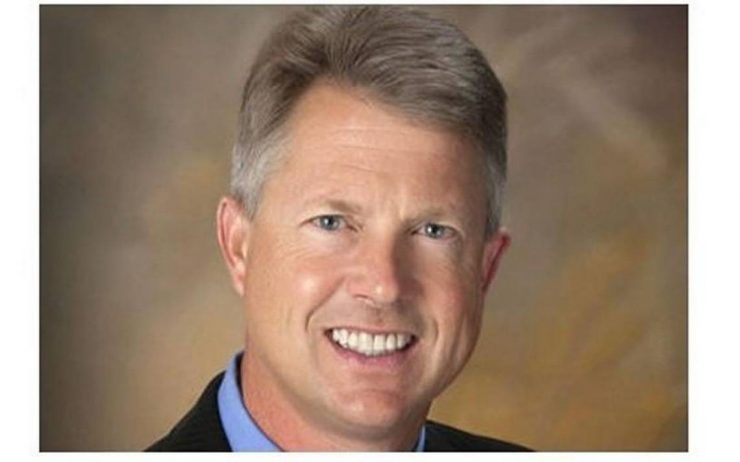
Dr. Roger Marshall, R-Great Bend, is the First District Kansas Congressman.
Arrests made for widespread deer poaching in Kansas, 2 other states
OZARKS, Mo. (AP) — Members of a southwest Missouri family have been caught after a lengthy investigation into the illegal killing of hundreds of deer, in what state conservation agents called one of the largest poaching cases in state history.

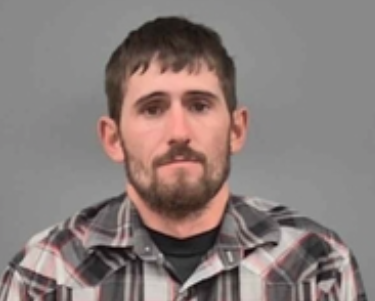
David Berry Sr. of Springfield and two of his adult sons, David Berry Jr. of Brookline and Kyle Berry of Everton, were arrested in August after an 8½- month investigation by state, federal and international agencies that also involved cases in Kansas, Nebraska and Canada.
The Missouri Department of Conservation said in a news release Thursday that information gained from the investigation led to 14 Missouri residents facing more than 230 charges in 11 counties.
“The deer were trophy bucks taken illegally, mostly at night, for their heads, leaving the bodies of the deer to waste,” said Lawrence County Prosecuting Attorney Don Trotter. He said investigators believe some of the heads were stuffed and mounted for sale.
David Berry Jr. was sentenced Thursday to 120 days in jail in Barton County for a felony firearms probation violation. On Dec. 6, he was given a one-year jail sentence in Lawrence County after pleading guilty to taking wildlife illegally in that county.
In 2016, David Berry Sr. and another son, Eric Berry of Everton, were convicted of taking gamefish by hand in Dade County. While awaiting his court appearance in that case, Eric Berry and another person were caught in 2017 spotlighting deer in Lawrence County. David Berry Sr. is awaiting a probation revocation hearing for the poaching violations in Lawrence County.
David Berry Sr. and David Berry Jr. have had their hunting, fishing and trapping privileges revoked for life. Eric Berry and Kyle Berry had hunting and fishing privileges revoked for 18 years and eight years, respectively. Jerimiah Cline of Republic, who took wildlife illegally and assisted the Berrys, had hunting privileges revoked for five years, the conservation department said.
The investigation into the Berrys began in late 2015 when the conservation agency received an anonymous tip about deer poaching in Lawrence County through Operation Game Thief, a toll-free enforcement hotline.