We have a brand new updated website! Click here to check it out!

Sewer cleaning in south Hays starts Friday

Sewer cleaning

CITY OF HAYS

The city of Hays Water Resources Department contracted with Pro-Pipe to conduct sewer line cleaning and inspections for the 2018 year. The project included locations in the northwest part of Hays. Cleaning and inspection of that area is complete.

Additional cleaning and inspection work will be completed in areas of downtown Hays. Cleaning will occur Friday, December 14, 2018 through Tuesday, December 18, 2018 and resume after the holidays.

Door hanger notices will be placed on homes and businesses affected before the cleaning.

See the map below for detailed locations.

During this process, residents may experience a rumbling sound, in addition to the possibility of water entering your sink, bathtub and/or toilet. Sewer lines can develop air pressure or a partial vacuum from the cleaning process. Usually any excess air pressure or vacuum will dissipate through the plumbing vents, but occasionally there are facilities with inadequate plumbing vents (i.e.: no vents, undersized vents or obstructed vents). In this case of inadequate venting, air pressure could escape through the toilet, floor, sink, tub or shower drains, causing water to splash out or a vacuum could draw the water out of the fixture traps allowing unpleasant odors.

If you will not be home or on vacation during the time of sewer line cleaning, please protect your home by keeping your toilet lids down.

The city of Hays apologizes for any inconvenience this may impose.

Performing this preventative maintenance by cleaning the sanitary sewer will improve the sewer’s performance and significantly reduce the chance for future sewer backups and related problems.

Should you have any questions or concerns, please feel free to contact us at the Water Resources Office at 785-628-7380 or via email [email protected].

Tip leads police to Kansas felon with firearms

SHAWNEE COUNTY— Law enforcement authorities are investigating a suspect on weapons charges.

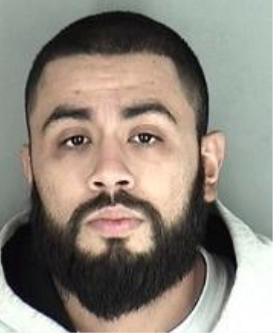
Munoz -photo Shawnee Co.

Just after 6:30p.m. Wednesday, police were led to Motel 6 at 709 SW Fairlawn in Topeka by a tip from the Gun Stoppers program, according to Lt. Aaron Jones.

During the follow-up contact with 27-year-old Elena Munoz  of Topeka, officers located two firearms in the hotel room.

Officers took Munoz to the Shawnee County Department of Corrections under suspicion of criminal possession of a firearm, possession of methamphetamine with intent to sell within 1000’ of a school, possession of cocaine, and possession of drug paraphernalia.

Search continues for missing 11-year-old Kansas boy

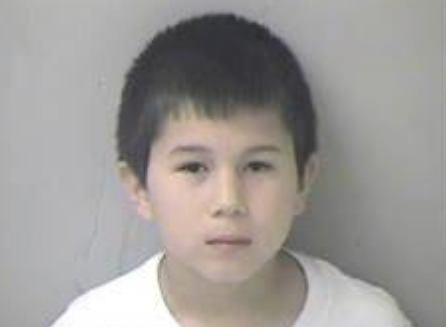
SEDGWICK COUNTY  — Law enforcement authorities continue to search for a missing 11-year-old boy.

Joan Ibarra -photo courtesy Wichita PD

Just after 10:15a.m. Thursday, Joan Ibarra walked away from Hamilton Middle School, 1407 South Broadway in Wichita, according to office Paul Cruz.

He was last seen in the area of Harry and Broadway and was  wearing black pants, and gray sweater. He is Hispanic approximately 4-foot-8, 80 pounds with black hair and brown eyes.

Please call 911 with any information.

Sunny, cool Friday and not as windy

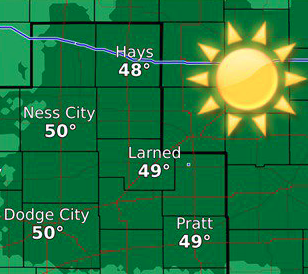
Today Sunny, with a high near 48. North northwest wind 7 to 9 mph.

Tonight Clear, with a low around 21. North northwest wind 5 to 7 mph becoming west southwest after midnight.

Saturday Sunny, with a high near 56. South southwest wind 6 to 11 mph.

Saturday Night Partly cloudy, with a low around 26. South southeast wind 5 to 7 mph becoming northwest after midnight.

SundaySunny, with a high near 53. North northwest wind 5 to 7 mph.

Sunday NightClear, with a low around 26.

MondaySunny, with a high near 55.

Tainted romaine lettuce traced to at least 1 farm

WASHINGTON (AP) — U.S. health officials have traced a food poisoning outbreak from romaine lettuce to at least one farm in California.

People infected with the outbreak strain of E. coli by state of residence, as of December 13, 2018 CDC image

But they cautioned Thursday that other farms are likely involved in the E. coli outbreak and consumers should continue checking the label before purchasing romaine lettuce.

The Food and Drug Administration said 59 people in 15 states have now been sickened by the tainted lettuce. That’s seven more cases than previously reported, but regulators said they are fairly confident that the lettuce which first triggered the outbreak has been removed from the market. The FDA told consumers to avoid romaine lettuce just before Thanksgiving.

Officials said a water reservoir at Adam Bros. Farms in Santa Barbara County tested positive for the bacterial strain and the owners are cooperating with U.S. officials. Officials from the FDA and the Centers for Disease Control and Prevention have not determined how the water reservoir — which is used to irrigate lettuce — became contaminated.

The bacteria can get into water and soil through multiple routes, including waste from domesticated animals or wild animals, fertilizer and other agricultural products.

The FDA’s Dr. Stephen Ostroff said investigators have linked the tainted lettuce to multiple distributors and processors, suggesting it must have come from several farms.

A man who answered the phone at Adam Bros. Farms said he could not comment on the government announcement. According to the company’s website, it only grows vegetables products, including broccoli, cauliflower, celery and various types of lettuce.

The government also narrowed the source of the outbreak to three California counties: Santa Barbara, Monterey and San Benito. That’s down from six California counties under investigation when regulators began warning the public last month.

Regulators said people should only buy lettuce with a label listing where and when it was harvested. Lettuce from outside the three California counties that was harvested after Nov. 23 should be safe to eat.

Romaine harvesting recently began shifting from California’s Central Coast to winter growing areas, primarily Arizona, Florida, Mexico and California’s Imperial Valley. Those winter regions weren’t yet shipping when the illnesses began.

E. coli, the bacteria often associated with food poisoning, usually causes sickness two to eight days later, according to health authorities. Most people with the infection get diarrhea and abdominal cramps. Some cases can be life-threatening, causing kidney failure and seizures.

___

Man who fled to Mexico after Kan. slaying enters plea deal

TOPEKA, Kan. (AP) — A gang member who fled to Mexico after a Topeka killing will be sentenced in February.

Fernando Diaz-photo Shawnee Co.

Fernando Diaz, 25, pleaded guilty last week to involuntary manslaughter in the death of 22-year-old Christopher Galvan. In July 2015, Galvan was found wounded in a crashed car. He died three days later.

Diaz initially was charged with second-degree murder and fled the state after a warrant for his arrest was issued. The U.S. Marshals Service announced this September that Diaz had been arrested in Mexico.

Court records say that as part of the Diaz’ plea agreement, prosecution and defense attorneys recommended that Diaz be sentenced to 10 years and eight months in prison. Prosecutors also will ask that his probation be revoked in a law enforcement assault case.

Kansas art gallery reports break-in, theft of 8 pieces

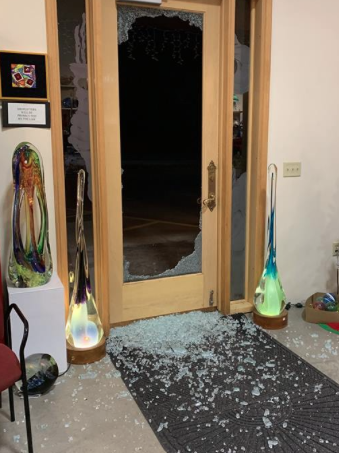
WICHITA, Kan. (AP) — A Wichita art gallery says eight pieces of glass art were stolen during a break-in.

Photo courtesy Karg Art Glass

The founder of Karg Art Glass, Rollin Karg, says he discovered the break-in and theft early Wednesday.

Gallery officials estimated the loss was about $2,500.

Police are investigating.

Kara Art Glass is generally regarded as the city’s foremost glassblowing studio and gallery.

Kansas EMT pleads guilty to stealing morphine

WICHITA, KAN. – An EMT in Jackson County, Kan., pleaded guilty Wednesday to stealing morphine from vials, according to U.S.Attorney Stephen McAllister.

Colby W. VanWagoner, 33, Mayetta, Kan., pleaded guilty to one count of obtaining a controlled substance by deception and one count of making a false statement during an investigation.

The crimes took place while VanWagoner was working for the Jackson County Emergency Medical Service in Holton, Kan.

In his plea, VanWagoner admitted he tampered with vials of morphine sulfate. He replaced morphine with saline solution and put the vials back into narcotic boxes on ambulances and in office stocks. Tests showed the concentration of morphine in vials that had been tampered with was low as 1 percent or less. The concentration of morphine should have been 100 percent.

Sentencing is set for March 12.

Nita Louise (Culley) Lambert

Nita Louise (Culley) Lambert, age 74, passed away Thursday, December 13, 2018 at the Hays Medical Center in Hays, KS.

She was born February 29, 1944 in Omaha, NE to Charles and Elaine (Walden) Culley. She was a homemaker.

Survivors include her husband Dennis of Thornburg, KS; sons Andy (Betsy) of Bethany, OK, Tim (Roxie) of Lindsborg, KS, Chuck (Kim) of Hutchinson, KS and John of Smith Center, KS; daughter Jodi (Brian) Fish of Arnold, MD; brothers Chuck (Barbara) Culley of Salina, KS and John (Linda) Culley of Concordia, KS and 21 grandchildren.

Click HERE for service details.

Former Kansas man pilots Virgin Galactic ship into space

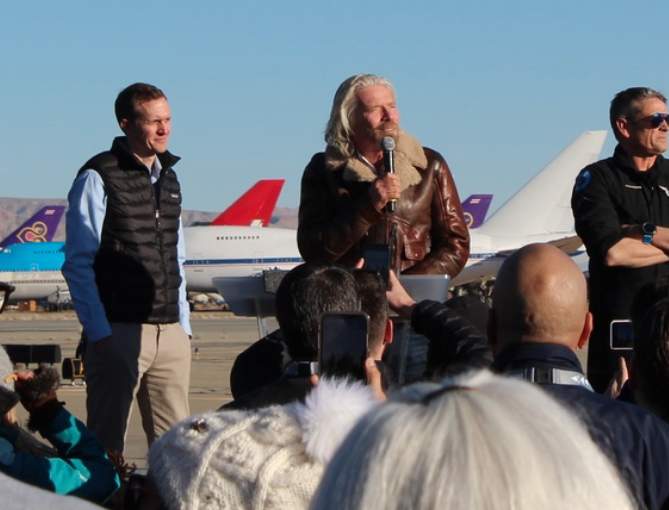
Richard Branson (second from left) speaks art post-flight ceremonies Thursday at Mojave Air and Space Port with (from left) Virgin Galactic CEO George Whitesides and pilots Mark Stucky and C.J. Sturckow. Photos courtesy SpaceNews/Jeff Foust

MOJAVE, Calif. (AP) — Virgin Galactic’s tourism spaceship climbed more than 50 miles high above California’s Mojave Desert on Thursday, reaching for the first time what the company considers the boundary of space.

One of the test pilots, Mark Stucky, is a 1976 graduate of Salina High School South.

The rocket ship hit an altitude of 51 miles (82 kilometers) before beginning its gliding descent, said mission official Enrico Palermo. It landed on a runway minutes later.

“We made it to space!” Palermo said.

Thursday’s supersonic flight takes Virgin Galactic closer to turning the long-delayed dream of commercial space tourism into reality. The company aims to take paying customers on the six-passenger rocket, which is about the size of an executive jet. Virgin Galactic founder Richard Branson has said he wants to be one of the first on board.

Branson greeted the two pilots after the test, declaring “Space is Virgin territory!”

Virgin Galactic considers 50 miles (80 kilometers) the boundary of space because that is the distance used by the U.S. Air Force and other U.S. agencies. That’s different from a long-held view that the boundary is at 62 miles (100 kilometers). Virgin Galactic CEO George Whitesides noted that recent research favors the lower altitude.

Whitesides said a review of the flight’s data will last into the new year, and there will be more test flights, some with company employees as passengers. He wouldn’t estimate when commercial passenger trips might begin.

“This is a huge step forward and once we look at the data we’ll see what that pathway is,” he said.

At the start of the test flight, a special jet carrying the Virgin Space Ship Unity flew to an altitude near 43,000 feet (13,100 meters) before releasing the craft. The spaceship ignited its rocket engine and it quickly hurtled upward and out of sight of viewers on the ground. The spaceship reached Mach 2.9, nearly three times the speed of sound.

The two test pilots — Mark “Forger” Stucky and former NASA astronaut Rick “CJ” Sturckow — will be awarded commercial astronaut wings, said Federal Aviation Administration official Bailey Edwards.

“It was a great flight and I can’t wait to do it again,” said Sturckow, who flew on the space shuttle four times.

Virgin Galactic’s development of its spaceship took far longer than expected and endured a setback when the first experimental craft broke apart during a 2014 test flight, killing the co-pilot.

“People have literally put their lives on the line to get us here,” Branson said. “This day is much for them as it is for all of us.”

More than 600 people have committed up to $250,000 for rides that include several minutes of weightlessness and a view of the Earth far below. The spaceship will also be used for research: NASA had a science experiment on the test flight.

SpaceShipTwo ignites its rocket motor shortly after release from its WhiteKnightTwo carrier aircraft Dec. 13 in the skies above Mojave, California.

The endeavor began in 2004 when Branson announced the founding of Virgin Galactic in the heady days after the flights of SpaceShipOne, the first privately financed manned spacecraft that made three flights into space.

Funded by the late billionaire Paul G. Allen and created by maverick aerospace designer Burt Rutan, SpaceShipOne won the $10 million Ansari X Prize. The prize was created to kick-start private development of rocket ships that would make spaceflight available to the public.

When Branson licensed the SpaceShipOne technology, he envisioned a fleet carrying paying passengers by 2007, launching them from a facility in southern New Mexico called Spaceport America.

But there were significant setbacks. Three technicians were killed in 2007 by an explosion while testing a propellant system at Scaled Composites LLC, which built SpaceShipOne and was building the first SpaceShipTwo for Virgin Galactic.

Then, in 2014, SpaceShipTwo broke apart during a test flight by Scaled Composites when the co-pilot prematurely unlocked its unique “feathering” braking system and it began to deploy. The co-pilot was killed but the injured pilot managed to survive a fall from high altitude with a parachute.
During descent, the craft’s twin tails are designed to rotate upward to slow it down, then return to a normal flying configuration before the craft glides to a landing on a runway.

New versions of SpaceShipTwo are built by a Virgin Galactic sister company and flight testing is now in-house. Its previous test flight reached 32 miles (52 kilometers).

Branson isn’t alone in the space tourism business: Jeff Bezos’ Blue Origin is planning to take space tourists on trips, using the more traditional method of a capsule atop a rocket that blasts off from a launch pad. SpaceX’s Elon Musk recently announced plans to take a wealthy Japanese entrepreneur and his friends on a trip around the moon.

The Salina Post contributed to this story.


Authorities: Bomb threats in Kansas, across US appear to be hoax

NEW YORK (AP) — Authorities say bomb threats sent Thursday to dozens of schools, government buildings and other locations across the U.S. appear to be a hoax.

In Kansas, The Barton County Sheriff’s Office as well as the Great Bend Police Department responded to numerous bomb threats Tuesday afternoon, according to the organization’s social media page.

“As of 3 p.m. 13 bomb threats have been received in Barton County. We also believe several bomb threats have been received in Reno County. As of this time, no suspicious devices have been found. It is further believed the threats have been emailed from Russia. We do not believe there is reason for alarm at this time, we just ask that citizens be aware of their surroundings and alert for any suspicious packages.”

Law enforcement agencies across the country dismissed the threats, which they said were meant to cause disruption and compel recipients into sending money and are not considered credible.

Some of the emails had the subject line: “Think Twice.” The sender claimed to have had an associate plant a small bomb in the recipient’s building and that the only way to stop him from setting it off was by making an online payment of $20,000 in Bitcoin.

“We are currently monitoring multiple bomb threats that have been sent electronically to various locations throughout the city,” the New York City Police Department’s counterterrorism unit tweeted. “These threats are also being reported to other locations nationwide & are NOT considered credible at this time.”

Other law enforcement agencies also dismissed the threats, which were written in a choppy style reminiscent of the Nigerian prince email scam.

The Palm Beach County, Florida, sheriff’s office and the Boise, Idaho, police said they had no reason to believe that threats made to locations in those areas were credible.

The FBI didn’t immediately respond to a request for comment.

Across the country, some schools closed early and others were evacuated or placed on lockdown because of the hoax. Authorities said a threat emailed to a school in Troy, Missouri, about 55 miles (88 kilometers) northeast of St. Louis, was sent from Russia.

The bomb threats also prompted evacuations at city hall in Aurora, Illinois, the offices of the News & Observer in Raleigh, North Carolina, a suburban Atlanta courthouse and businesses in Detroit.

“Organizations nationwide, both public and private, have reported receiving emailed bomb threats today,” Michigan State Police spokeswoman Shannon Banner said. “They are not targeted toward any one specific sector.”

Penn State University notified students via a text alert about threats to a half-dozen buildings and an airport on its main campus in State College, Pennsylvania. In an update, the school said the threat appeared to be part of a “national hoax.”

Officials at Columbine High School in Colorado were dealing Thursday with a bomb threat of a different sort. Students were being kept inside for the rest of the school day after someone called in a bomb threat against the school.

The Jefferson County, Colorado, Sheriff’s Office said the caller claimed to have placed explosive devices in the school and to be hiding outside with a gun.

There is nothing to validate the threat was found at Columbine, where 12 students and a teacher were killed by two students in 1999, according to Sheriff’s spokesman Mike Taplin.

Two dozen other Colorado schools were also temporarily placed on lockout, meaning their doors were locked but classes continued normally, as the threat was investigated.

AP Exclusive: Iranian hackers hunt nuclear workers, U.S. targets

By RAPHAEL SATTER
AP Cybersecurity Writer

LONDON — As U.S. President Donald Trump re-imposed harsh economic sanctions on Iran last month, hackers scrambled to break into personal emails of American officials tasked with enforcing them, The Associated Press has found — another sign of how deeply cyberespionage is embedded into the fabric of US-Iranian relations.

The AP drew on data gathered by the London-based cybersecurity group Certfa to track how a hacking group often nicknamed Charming Kitten spent the past month trying to break into the private emails of more than a dozen U.S. Treasury officials. Also on the hackers’ hit list: high-profile defenders, detractors and enforcers of the nuclear deal struck between Washington and Tehran, as well as Arab atomic scientists, Iranian civil society figures and D.C. think tank employees.

“Presumably, some of this is about figuring out what is going on with sanctions,” said Frederick Kagan, a scholar at the American Enterprise Institute who has written about Iranian cyberespionage and was among those targeted.

Kagan said he was alarmed by the targeting of foreign nuclear experts.

“This is a little more worrisome than I would have expected,” he said.

The hit list surfaced after Charming Kitten mistakenly left one of its servers open to the internet last month. Researchers at Certfa found the server and extracted a list of 77 Gmail and Yahoo addresses targeted by the hackers that they handed to the AP for further analysis. Although those addresses likely represent only a fraction of the hackers’ overall effort — and it’s not clear how many of the accounts were successfully compromised — they still provide considerable insight into Tehran’s espionage priorities.

“The targets are very specific,” Certfa researcher Nariman Gharib said.

In a report published Thursday , Cerfta tied the hackers to the Iranian government, a judgment drawn in part on operational blunders, including a couple of cases where the hackers appeared to have accidentally revealed that they were operating from computers inside Iran. The assessment was backed by others who have tracked Charming Kitten. Allison Wikoff, a researcher with Atlanta-based Secureworks, recognized some of the digital infrastructure in Certfa’s report and said the hackers’ past operations left little doubt they were government-backed.

“It’s fairly clear-cut,” she said.

Calls to Iranian officials were not returned late Wednesday, the beginning of the weekend in the country.

Iran has previously denied responsibility for hacking operations, but an AP analysis of its targets suggests that Charming Kitten is working in close alignment with the Islamic Republic’s interests. The most striking among them were the nuclear officials — a scientist working on a civilian nuclear project for the Pakistan’s Ministry of Defense, a senior operator at the Research and Training Reactor in the Jordanian city of Ramtha, and a high-ranking researcher at the Atomic Energy Commission of Syria.

The trio suggested a general interest in nuclear technology and administration. Others on the hit list — such as Guy Roberts, the U.S. Assistant Secretary of Defense for Nuclear, Chemical, and Biological Defense Programs — pointed to an eagerness to keep track of officials charged with overseeing America’s nuclear arsenal.

“This is something I’ve been worried about,” Roberts said when alerted to his presence on the list.

Still more targets are connected to the Iran deal — a 2015 pact negotiated by former U.S. President Barack Obama’s administration and other world powers that called for Tehran to curb its uranium enrichment in exchange for the lifting of international sanctions. Trump tore up the deal in May over the objections of most of America’s allies and has re-imposed a series of punishing restrictions on Iran since.

One of Charming Kitten’s targets was Andrew J. Grotto, whose tenure on the U.S. National Security Council straddled the Obama and Trump administrations and who has written about Iran’s nuclear ambitions.

Jarrett Blanc, the State Department coordinator responsible for the implementation of the nuclear deal under Obama, was also on the list. He said news of his targeting was no shock.

“I’ve retained contact with Iranian counterparts since leaving government,” he said. “I’d be very surprised if there were not Iranian groups trying to hack into my various email accounts.”

Like the Russian hackers who have chased after America’s drone, space and submarine secrets, the list indicates that Iranian spies were also interested in the world of U.S. defense companies. One of those targeted is a senior director of “breakthrough technology” at the aerospace arm of Honeywell International Inc., the New Jersey-based industrial conglomerate; another is a vice president at Virginia-based Science Applications International Corp., a prominent Pentagon contractor.

Honeywell said it was aware that one of its employees had their personal account “exposed,” adding that there was no evidence that the company’s network was compromised. SAIC said it found no trace of any hacking attempt against its employee’s account.

There were Iranian targets too, including media workers, an agronomist and a senior employee of the country’s Department of Environment — a possible sign that Tehran’s crackdown on environmentalists , which began earlier this year, continues apace.

Hacking has long been a feature of the tense relationship between the United States and Iran, whose militant brand of Shia Islam has challenged American interests in the Middle East since 1979.

It was against Iran that U.S. and Israeli spies are said to have deployed the pioneering, centrifuge-rattling computer worm dubbed Stuxnet in a bid to sabotage the country’s uranium enrichment capabilities. Iranian hackers in turn are blamed for denial of service assaults on American banks and computer-wrecking cyberattacks in Saudi Arabia, Iran’s regional archrival.

The Charming Kitten campaign uncovered by Certfa is far less sophisticated, generally relying on a password-stealing technique called phishing. Two Nov. 17 emails provided to the AP by Jim Sisco of Enodo Global Inc., a Virginia-based risk advisory firm that was targeted by Charming Kitten, mimic the look and feel of Gmail security alerts, a technique used by hackers across the globe.

An analysis of Certfa’s data shows the group targeted at least 13 U.S. Treasury employees’ personal emails, including one belonging to a director at the Financial Crimes Enforcement Network, which fights money laundering and terror financing, and one used by the Iran licensing chief at the Office of Foreign Asset Control, which is in charge of enforcing U.S. sanctions. But a few employees’ LinkedIn profiles referenced back office jobs or routine tax work.

That suggested “a fairly scattershot attempt,” said Clay Stevenson, a former Treasury official who now consults on sanctions and was himself targeted by Charming Kitten.

Others’ experience suggests a more professional effort.

Georgetown University professor and South Asia security expert Christine Fair said she had only recently returned from a conference in Afghanistan attended by Iranian officials and a visit to the Iranian border when she learned she was in the hackers’ sights.

“The timing is uncanny,” she said.

Another Charming Kitten target was an intern working for the Foundation for Defense of Democracies, a Washington think tank that has been one of the Iran deal’s fiercest critics. How the intern — whose email isn’t public and whose name appears nowhere on the organization’s website — crossed the hackers’ radar is not clear. The foundation issued a statement calling the revelation “yet another indicator that Iran must be viewed as a nefarious actor in all theatres in which it operates.”

Kagan, the scholar, said most signs pointed to a serious, state-backed operation.
“It doesn’t look like freelancers,” he said.
___
Monika Mathur and Desmond Butler in Washington contributed to this report.

Balloons will carry high school experiments up 100,000 feet

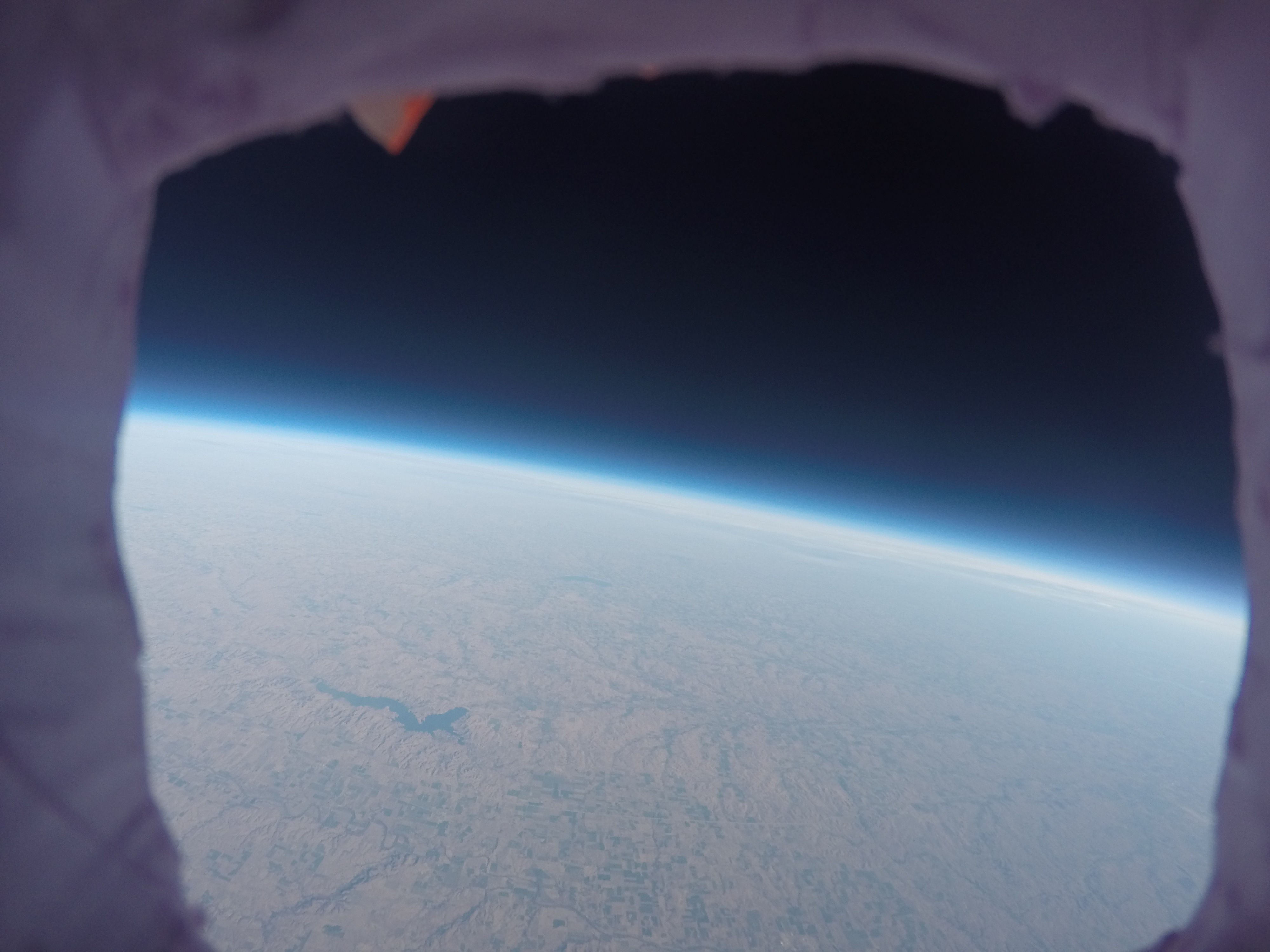
The view from 90,000 feet.

FHSU University Relations

Two balloons will be launched from the Gross Memorial Coliseum parking lot at Fort Hays State University and could reach as high as a hundred thousand feet before bursting and falling back to earth.

On the way up, instruments in eight payloads will take measurements for experiments designed by area high school students, said Dr. Paul Adams, dean of the College of Education and director of the college’s Science and Mathematics Education Institute.

Dr. Paul Adams

The launch will be shortly after 9 a.m. Friday.

The payloads come from students in Hays, Smith Center, Lyons and Barton County Special Services.

“FHSU is the launch and recovery system,” said Adams. “Consider us the Space X of the Plains.”

The instruments on board will measure such things as temperature, pressure, oxygen level, UV radiation and cosmic rays, said Adams.

“It is also a test of coding for instrumentation,” he said.

The launch is funded in part by the Kansas NASA Space grant to conduct teacher training workshops and school flights.

The balloons, from a company called Kaymont and designed for high-altitude flights, cost about $100 each. On the ground, they are about 8- to 10-feet across. By the time they burst and begin their descent, said Adams, they will expand to about 30 feet.

“We hope to get to 100,000 feet up – 30 kilometers,” said Adams.

The balloons will also carry cameras.

In addition to Adams, the launch crew will be G.G. Launchbaugh, coordinator for the College of Education, and students Mackinzie Foster, Topeka senior majoring in mathematics, and Erin Foster, Hays freshman majoring in history.

Copyright Eagle Radio | FCC Public Files | EEO Public File